
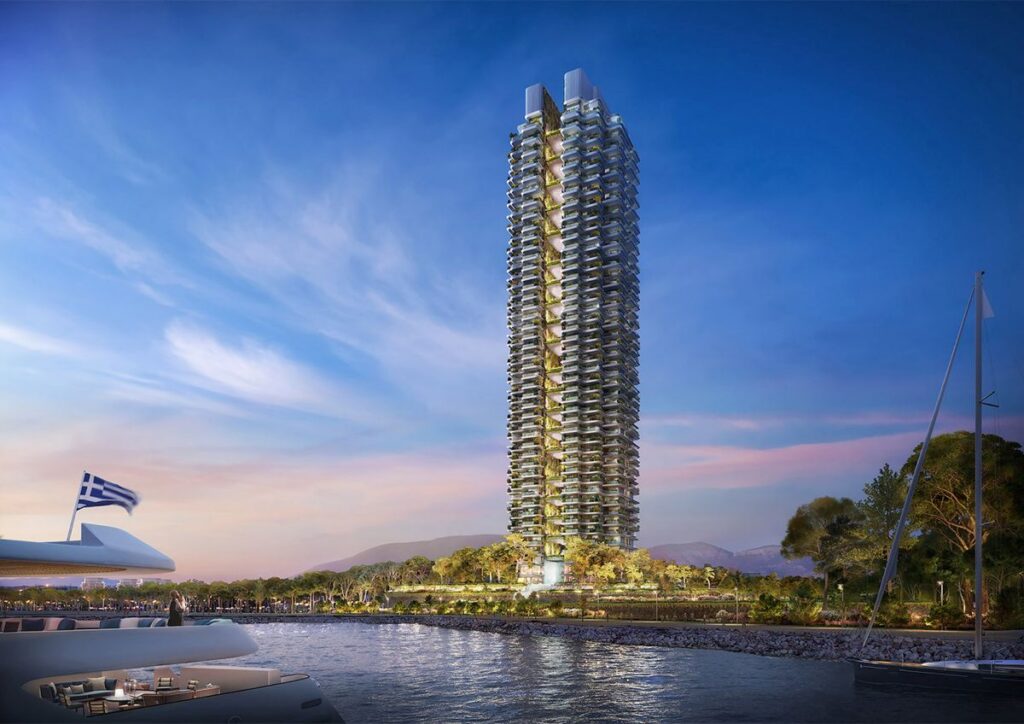
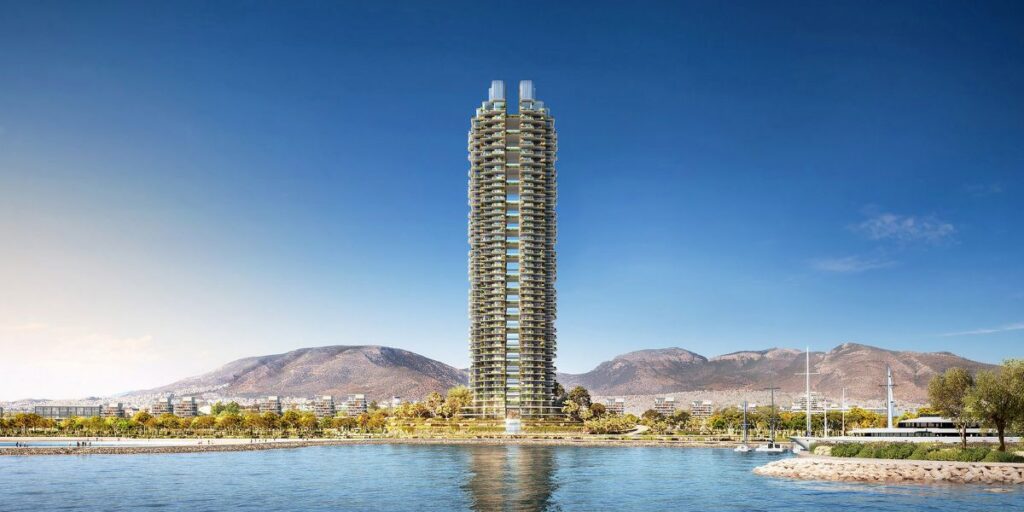
Aerial view of Riviera Tower rising above Dubai Marina and its waterfront skyline © Foster + Partners
Curated by ArchiRev Editorial | Published August 14th, 2026 | Source: Foster + Partners
Project Details
Architect: Foster + Partners
Location: Amsterdam, Netherlands
Typologies: Office, Workplace, Commercial
Themes: Workplace Design, Sustainable Architecture, Smart Buildings, Employee Wellbeing, Environmental Design
Status: Completed
Client: OVG Real Estate
The Dubai Marina has become synonymous with tall buildings, views of the water, and an ever-changing skyline. Amidst this dense urban environment, the building known as Riviera Tower by Foster + Partners presents a form of residential architecture that gives importance to form, outdoor space, environment, and the views of the water. Unlike many other towers that depend on height alone to make their mark, this tower is proportionately designed and articulated in order to create a unique silhouette within its environment.
Riviera Tower is located in one of the oldest residential areas of Dubai and serves as an outstanding addition to the city’s skyline as well as a participant in the life of the marina on foot level. The tall, slender appearance of the building gives it elegance, and the careful treatment of its massing allows the design to be responsive to its special location on the waterfront. This combination of visibility and participation in the environment is essential to the nature of the project. The building is not a stand-alone entity but rather a part of the larger landscape of streets, residences, public space, and water.
The architectural language of the building is represented by the horizontal bands, which embrace the entire building. They form spacious terraces for the residences, thus creating a rhythm in the façade of the building and providing every apartment with an additional outdoor space. In the hot climate of Dubai, these terraces serve the function of protecting the glazed façade from excessive sun rays.
It becomes a façade that is characterized by consistency in terms of aesthetics and variety in terms of housing. It is not a totally flat wall of glass; the structure is influenced by different levels of terraces, projections, and cut-outs. This creates shadow on the façade and makes the tower look different at different times of the day due to varying sunlight.
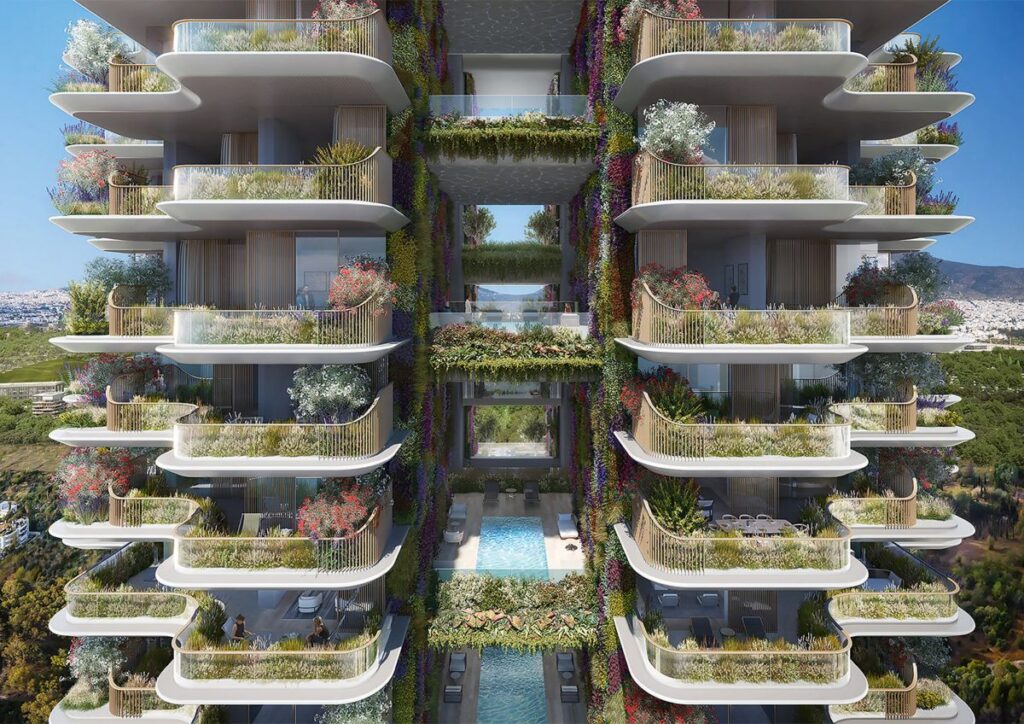
Close exterior view showing the tower’s layered terraces, horizontal bands, and sculpted façade © Foster + Partners
Within, the apartments have been designed keeping in mind the concepts of openness, adaptability, and views. Floor-to-ceiling glass walls allow sunlight to filter through the interiors while providing views of Dubai Marina, Palm Jumeirah, and beyond. The living and dining areas flow seamlessly into the terraces, thus establishing the connection between the indoors and the outdoors. Thus, the design provides the residents with the chance to enjoy the waterfront not just as a view, but as an integral part of their daily routine.
Privacy continues to play an important role in this relationship. Through careful planning of the layouts, setbacks, and terraces, individual units can achieve privacy while at the same time enjoying wide-ranging views. This makes the high-rise living style unique in its treatment of outdoor space as a vital part of the home itself.
The arrival sequence further enhances this feeling of subtle luxury. A landscaped entrance directs residents to a double-story lobby in which the use of natural materials, volumes, and modern detailing creates a calming experience, contrasting with the intensity of Dubai Marina. It is not through exaggeration that the arrival sequence of the architecture creates an atmosphere of refinement but rather by employing proportions, scale, material, and lighting.
In addition to the private residences, the development has a series of amenities that cater to recreation and well-being. Podium gardens offer a tranquil environment above the hustle and bustle of the city, whereas pools, well-being amenities, lounges, and recreational facilities provide places for rest and social interaction. Thus, the landscape plays a very important role in the residential experience, providing a place of retreat in an intensely urban setting.
Landscaped podium with swimming pool, gardens, and resident amenities overlooking Dubai Marina © Foster + Partners
Environmental aspects are incorporated into the architecture itself rather than being an additional layer. Glazing and solar shading and building services are supposed to help lower energy consumption while enhancing comfort inside. Moreover, the orientation and form of the tower also play a role in how the building reacts to the local climate conditions, since the deep terraces offer shade from the sun to the glazed interior space.
The choice of materials reflects the modest architectural concept. Glass, stone, and metal in well-thought-out details provide a material palette that is expected to be able to survive in the tough marine environment while still looking good. The limited choice of materials helps the identity of the project to become apparent through proportions, rhythm, depth, and detailing rather than decorations. On the ground floor, more transparency creates a link between the building, the pedestrians, and the waterfront.
On an urban level, Riviera Tower represents the ongoing development of Dubai Marina as a dense residential district. The building’s design with its private residences, landscaped facilities, pedestrian access, and waterfront location indicates a change in luxury housing towards spaces that provide more than just views and floor space. In this case, the design elements of architecture, landscape, climate response, and lifestyle are combined in one residential experience.
Riviera Tower by Foster + Partners finally proves how a high-rise residential building can develop its own identity without being disconnected from its context. With its layered façade, spacious terraces, extensive glazing, landscaped facilities, and climate response strategy, the project successfully integrates the visual appeal of Dubai’s landmark with a more intimate approach to the residential experience in high-rise buildings.