
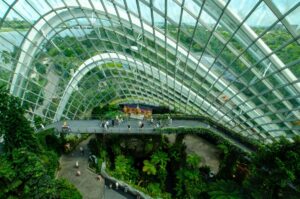
The relationship between nature and architecture is best described as the former embellishing the latter. A courtyard is meant to offset the dense development. A green wall serves to uplift the lobby. A roof garden makes up for the loss of ground-level gardens. All of these are significant steps towards greening a building and its immediate environment but fail to address the question of how architecture could serve to alter the function of a city.
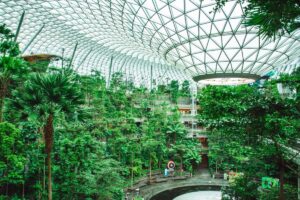
Biophilic design, which has been around for decades now, has concentrated on the development of the connection between nature and humans from the point of view of their emotional and psychological well-being. Daylight, natural materials, water, and vegetation are elements of office, school, hospital, and home spaces. While these strategies are indeed very effective and make the environments more pleasant and healthy, their benefits stop at the building’s borders. The city keeps being built using engineered infrastructure.

The new direction has begun to form. Instead of looking for places where plants can be introduced into architecture, questions have been asked about the way ecosystems could do the job that is typically done by infrastructure. Trees take the place of cooling systems. Wetlands become flood protection measures. Forests provide not only improved biodiversity but also serve as pedestrian streets.
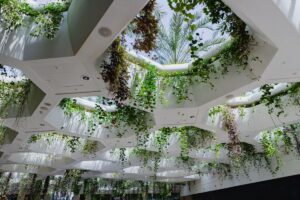
Green roofs store rainwater. In this system, nature is not a decoration of architecture anymore. This paradigm shift calls for a rethinking of the project concept. Infrastructure has always been considered to be about concrete, steel, pipes, and mechanisms. All these components still make sense but should not necessarily function on their own.
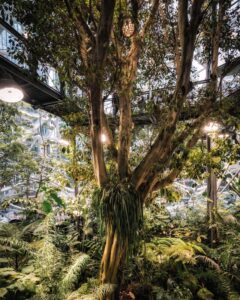
Ecological systems can provide rainfall absorption, air filtration, temperature regulation, soil stabilisation, and support to wildlife all at once. Unlike conventional infrastructure, the effectiveness of the ecological one increases over time. Trees get bigger canopies. Wetlands grow into better habitats. Soils enhance their ability to hold water. Time is an ally rather than an enemy.
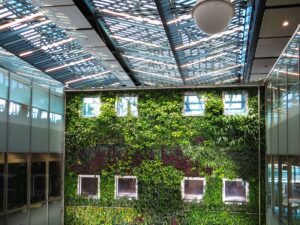
The advantages of the approach go beyond environmental performance. The cities built according to the principles of ecological infrastructure provide healthier environments to engage in walking, recreation, and social activities.
Streets filled with mature trees will be cool places to walk on very hot days. Parks provide not only habitats for species but also spaces for people to use. Corridors connect ecosystems and people. For this kind of strategy to scale, there needs to be a deeper appreciation for collaboration within the design process. The landscape architect, ecologist, engineer, urban planner, and architect need to come on board at the very beginning of the project instead of coming one after another.
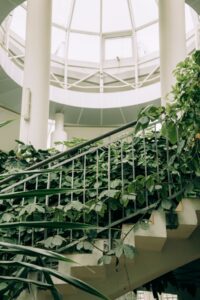
An ecological approach cannot be applied only after the completion of the master plan. It needs to determine street layouts, placement of buildings, drainage systems, and other aspects of the design from the very start. Each of these decisions affects the function of the ecosystem as a whole. This process is aided by technology, which allows one to simulate the environmental conditions before the project is even started.
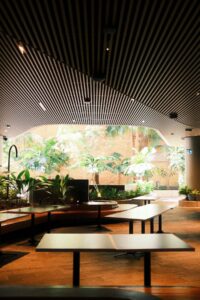
The digital twin can help us understand how the plants will develop not in several years but in several decades. Artificial intelligence can help analyse ecological data in an entire district and figure out places where living systems can either complement or substitute the existing infrastructure. An evolving economic understanding needs to go hand in hand with design practice.
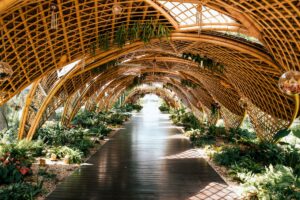
Nature-based infrastructure has been questioned due to supposed maintenance costs and a longer establishment period. However, this analysis fails to consider the life-cycle value of the natural system. Traditional infrastructure will deteriorate and continuously need replacement.
Well-managed ecosystems, in many cases, gain strength and provide numerous benefits simultaneously. The very same urban forest can cut energy bills for cooling, improve public health, capture carbon, handle stormwater, and raise the value of property. Only focusing on building costs does not make sense when considering the economic performance of living systems.
There are some issues that cannot be neglected. Ecological infrastructure presupposes long-term management in contrast to one-time installation. Plants have to adapt to local climate conditions and not to fashion. Water systems will need proper management. Strategies for maintenance have to be considered in governance just like in design.
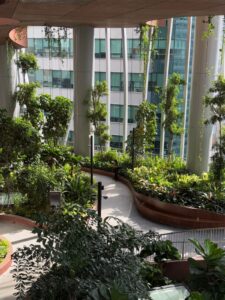 Besides good design, ecological infrastructure depends on the commitment of the city government, community, and even property owners. More attention should be paid to the question of equity. Access to nature is quite unequal in many urban areas, where wealthy neighbourhoods are surrounded by tree-lined streets, parks, and healthy environments, while poor neighbourhoods are marked by high temperatures, poor air quality, and less public green space. Nature as infrastructure transforms this problem into a new discourse in which green systems become public services and get strategic funding like transportation, utilities, and healthcare systems.
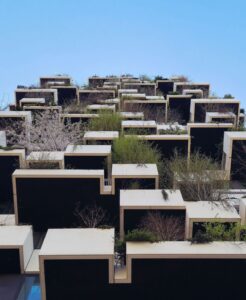
Architects are perfectly poised to make this shift because all buildings are part of an ecological system. Buildings gather rainwater. Their surfaces create microclimates. Their foundations affect the water table. Their public spaces affect biodiversity. Whether it’s adding or subtracting, each and every building is strengthening or weakening its ecological environment. By designing with this in mind, architects will no longer be making inert objects but rather creating participants in living urban ecologies.
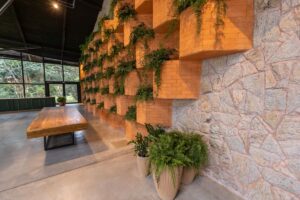
Biophilic design will succeed not by counting the number of interior plants or green facades in architectural photography. It will be successful if, in the coming years, we can see cities in which ecological systems are silently doing their work to sustain urban life. Cities that remain cool through heat waves.
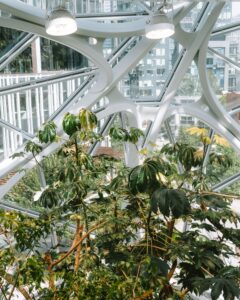 Urban landscapes that absorb floods without failing. Habitats that support biodiversity while humans thrive. Neighbourhoods that incorporate nature into the rhythms of everyday life. By treating nature as infrastructure, architecture will go well beyond the realm of mitigating damage to the environment. It will become an agent for regenerating environments. It might just be one of the most important transitions in contemporary urbanism, not because it changes the aesthetics of the buildings but because it changes what cities do.