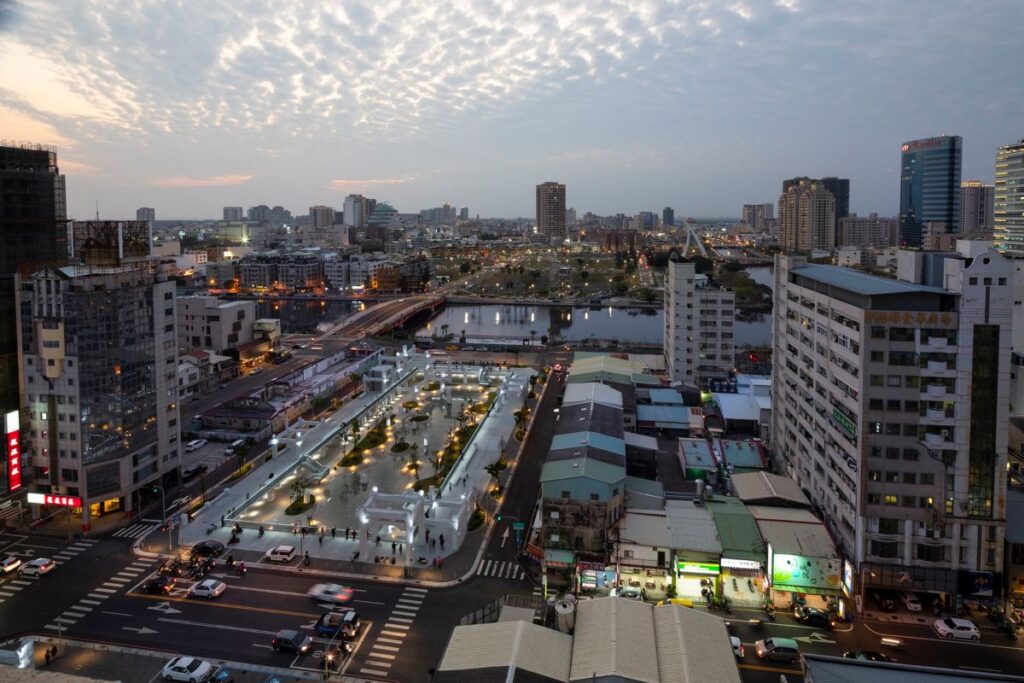
Curated by ArchiRev Editorial | Feature Story | Published November 11th, 2026 | Source: MVRDV
Project Details
Architect: MVRDV
Location: Tainan, Taiwan
Typologies: Public Space, Urban Design, Landscape, Adaptive Reuse
Themes: Leisure, Sustainability, Transformation, Circular Economy, Public Realm, Landscape Integration
Status: Realized
Year: 2016–2020
Surface Area: 54,600 m²
Budget: €4.7 million
Client: Tainan City Government
Principal in Charge: Winy Maas
Partners: Wenchian Shi, Jeroen Zuidgeest
Project Coordinator: Hui Hsin Liao
Photographer: Daria Scagliola
Awards: 2024 International Urban Project Award — Shortlisted; 2021 FIABCI World Prix d’Excellence Awards — Silver Award; 2020 Taiwan Environment Lighting Award — Winner.
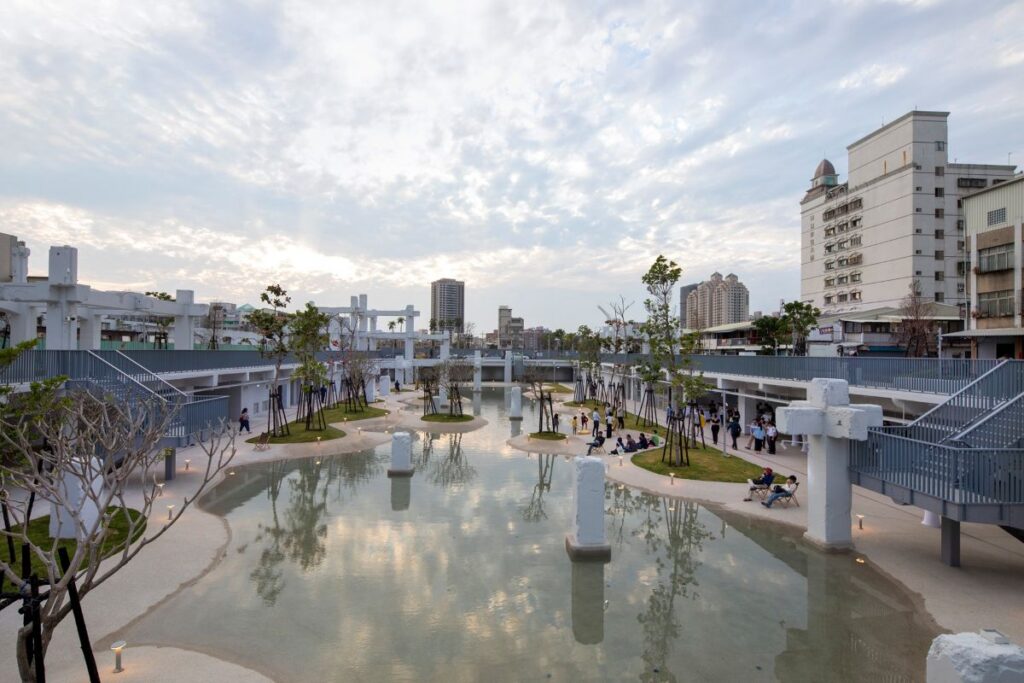
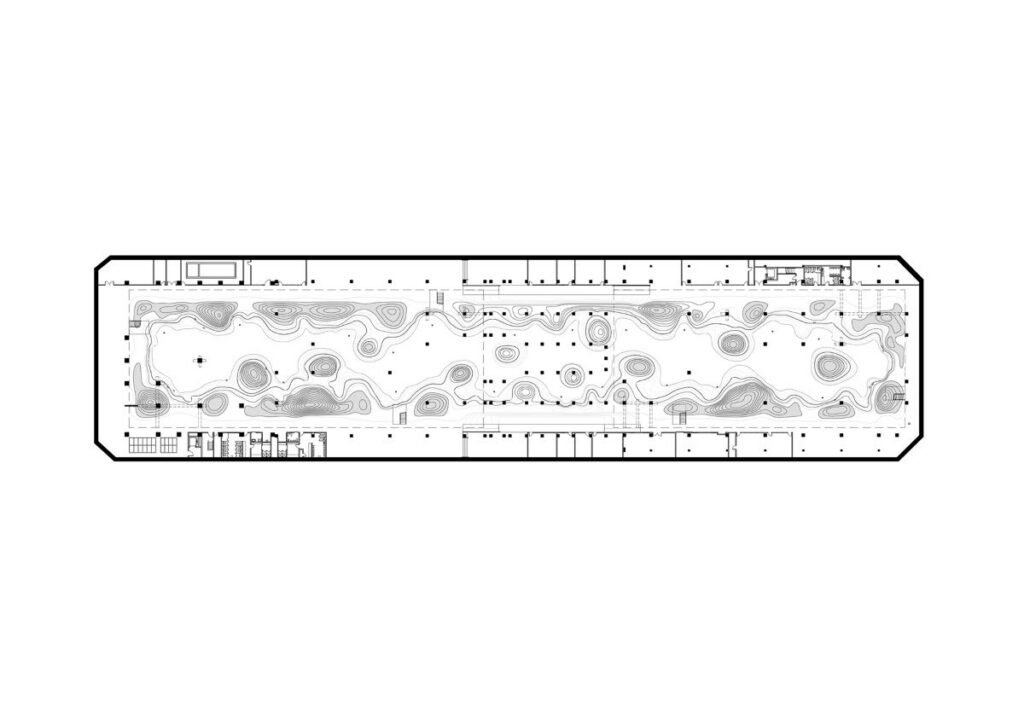
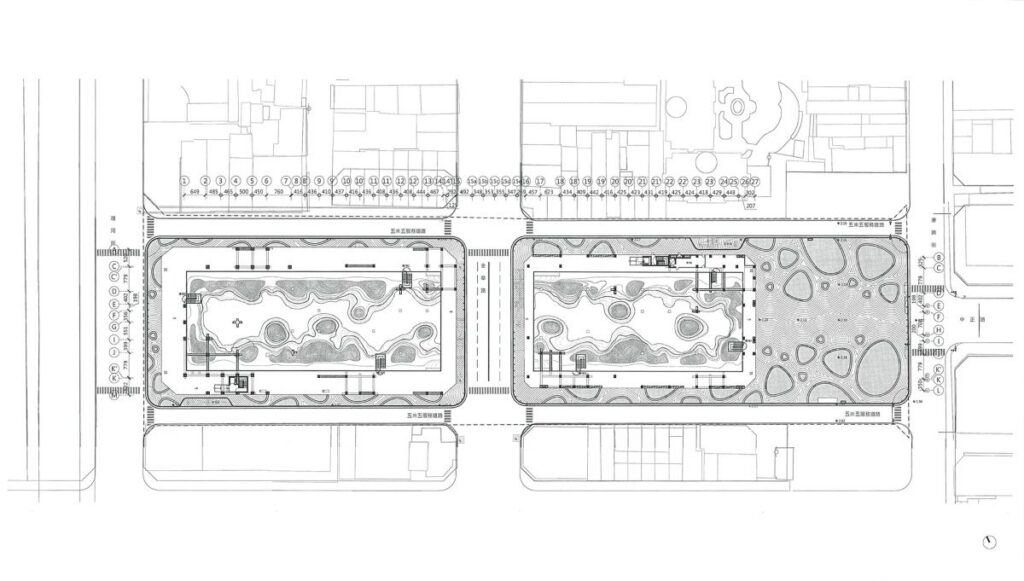
And how would one turn an unsuccessful shopping centre not only into ruins but also into some other element of the city? Tainan Spring by MVRDV proves how to do it with a new urban landscape that turns the abandoned commercial centre into a public lagoon, thus linking Tainan to water and vegetation. Built in 1983 and located on the site of the China-Town Mall next to the Tainan Canal, the former mall was constructed above the former port of the city. But rather than being demolished because of the building’s failure, MVRDV decided to make the best use of what was already there. The former mall was destroyed, and all its components were used again; the sublevel that used to be occupied by parking became a public space. And the key point of the whole complex is an urban swimming pool that replaced the commercial function of the building.
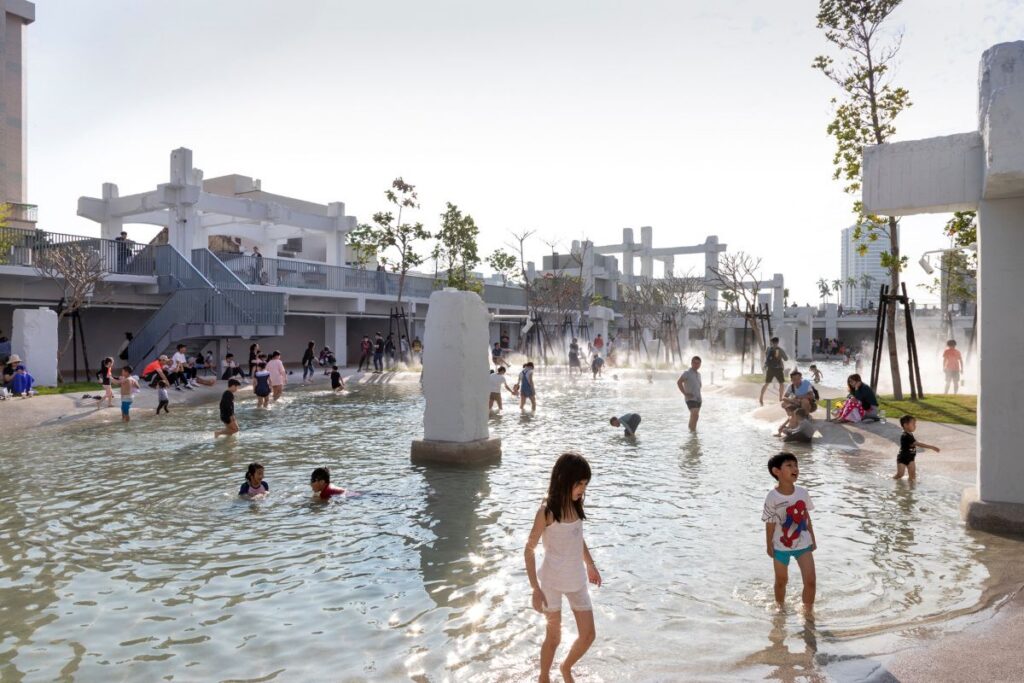
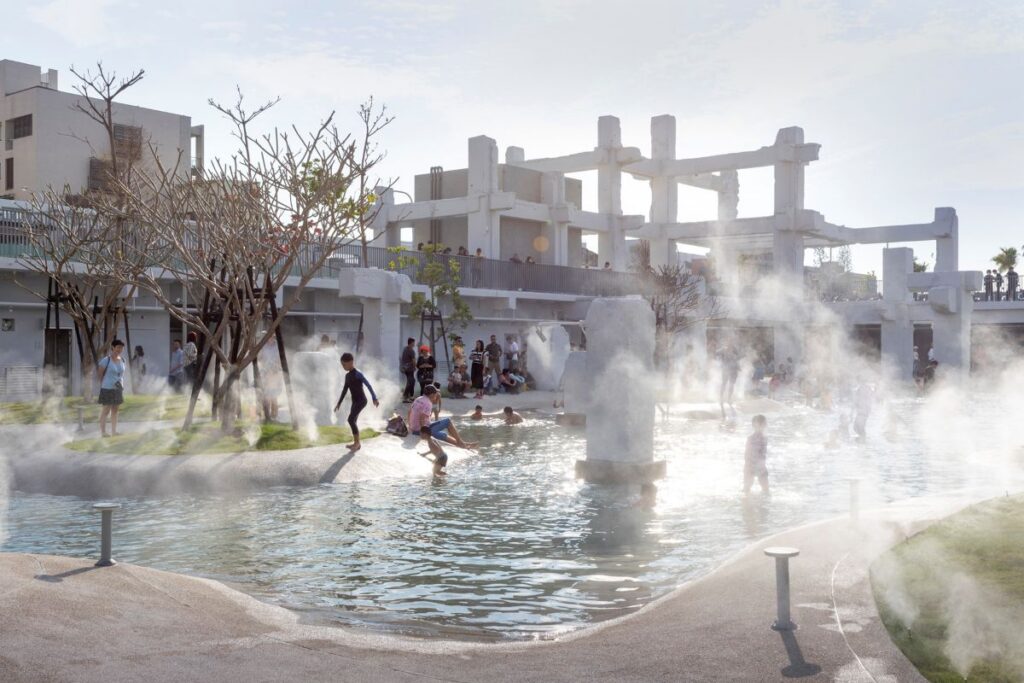
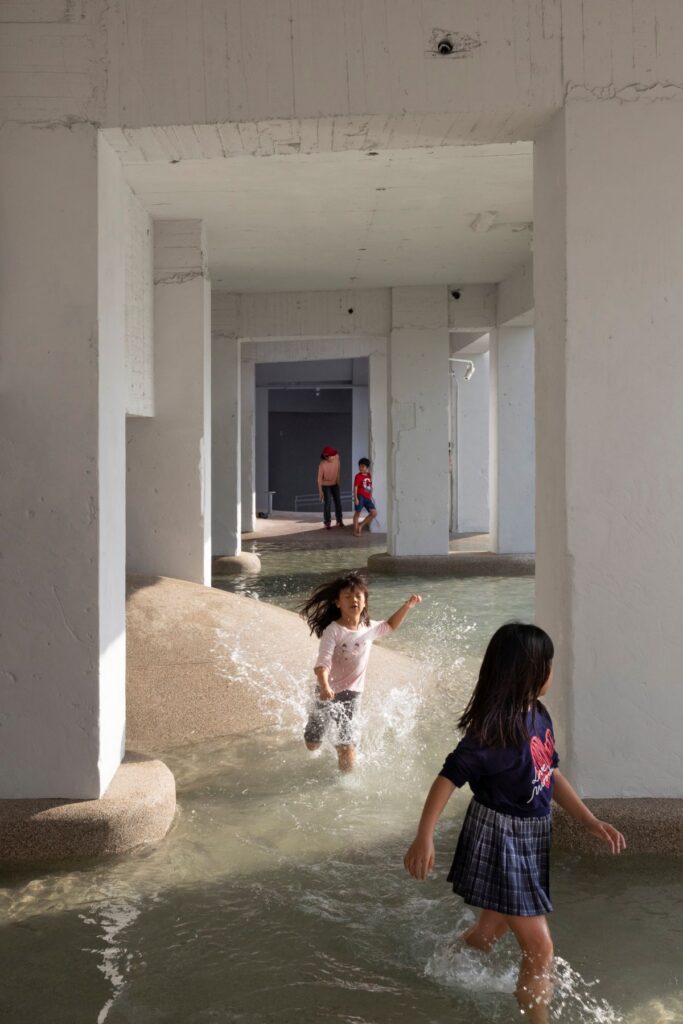
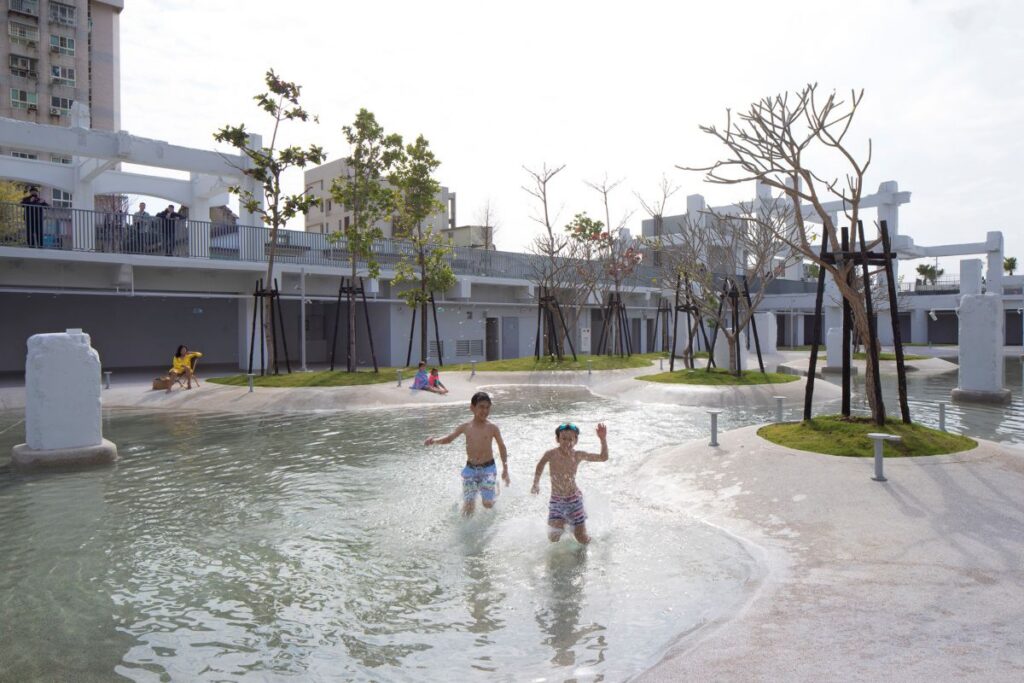
The shallow urban pool introduces water, recreation, and shaded gathering spaces within the former mall structure © MVRDV
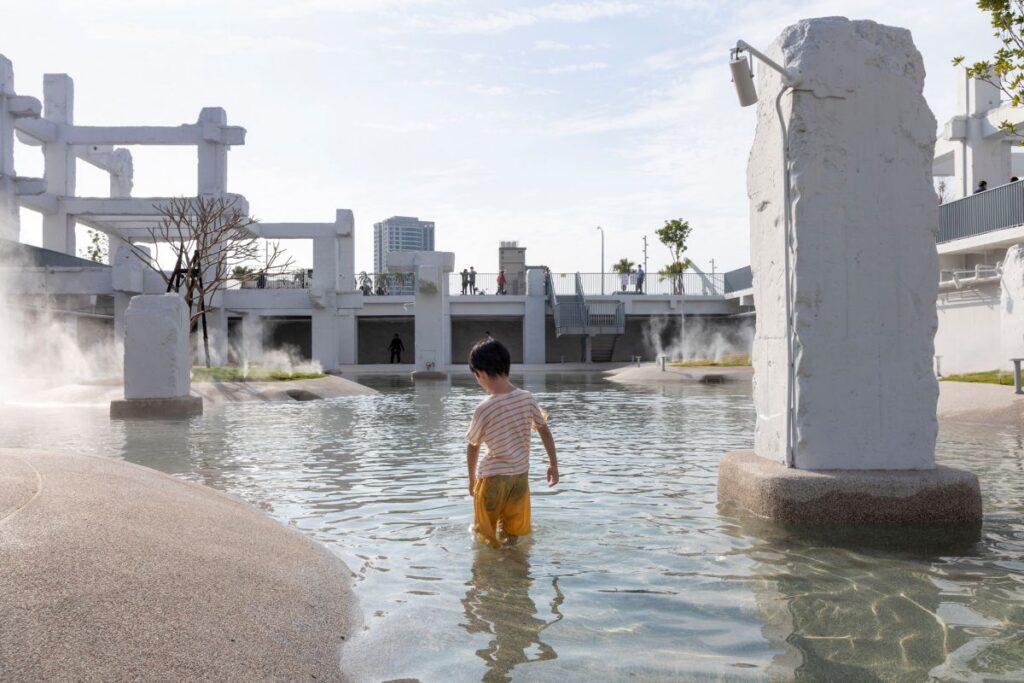
Water is the main architectural component of the design, and the water level varies according to the rain or dry seasons, while mist sprayers cool off the hot season. Thus, the lagoon is part of the public space rather than an object for decoration. The remnants of the old shopping mall form shade of the arcade, and the concrete follies form the background and the frame for new stores, stalls, and other facilities. Playgrounds, gathering places, and performance stages make this place lively. Thus, Tainan Spring turns out to be a unique place in terms of history as well. Without reconstruction and demolishing of the old mall, MVRDV managed to keep visible those parts of the building that remain. Even there is a glass floor allowing us to see the second basement of the building.
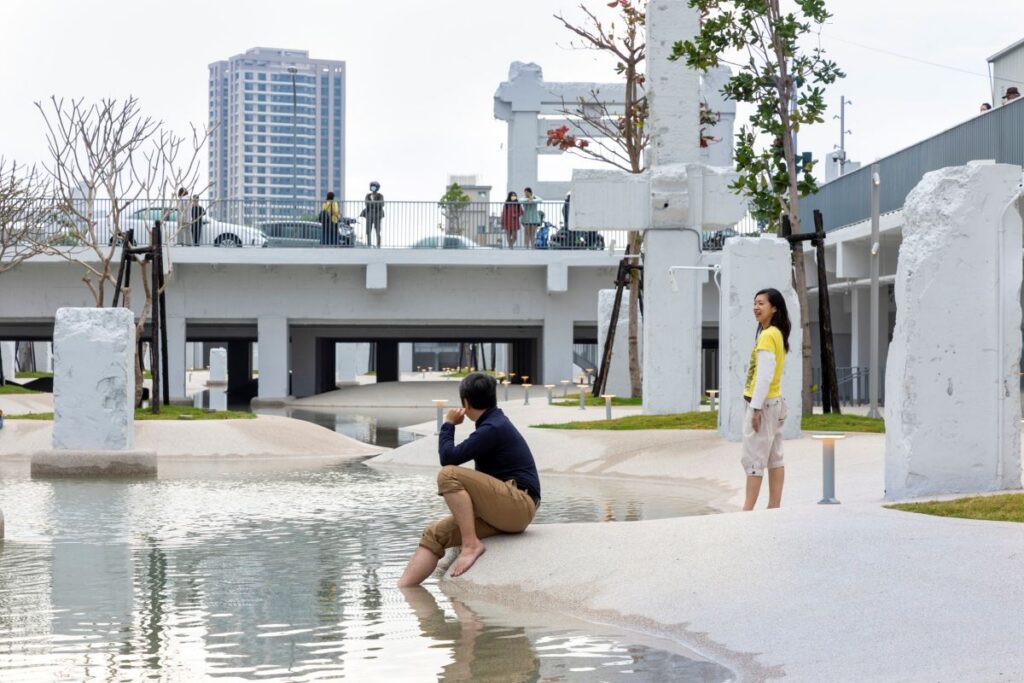
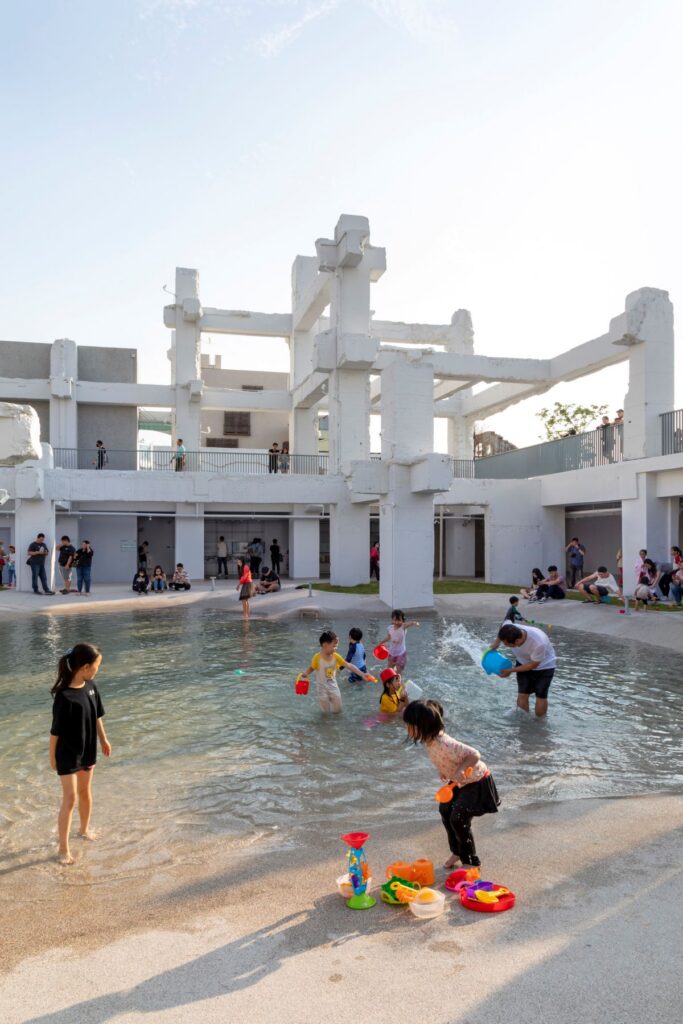
Retained concrete structures and exposed underground elements preserve visible traces of the site’s commercial past © MVRDV
It is a way to preserve that does not depend on the integrity of a building. Foundations and parts of the building appear through the land like an excavation, as described by MVRDV when speaking about their creation of a modern Roman Forum. The history of the former mall remains obvious instead of disappearing under redevelopment. Nature has as much of a crucial importance in this transformation as architecture. Extensive landscaping is found around the plaza and expands even towards Haian Road, using native plants as layers of trees, bushes, and grass. Landscape in this transformation is used due to the green nature of the area that is located east from Tainan, making the urban hard ground more natural. In this instance nature was meant to change in time. New plant areas should evolve into gardens as imagined by MVRDV.
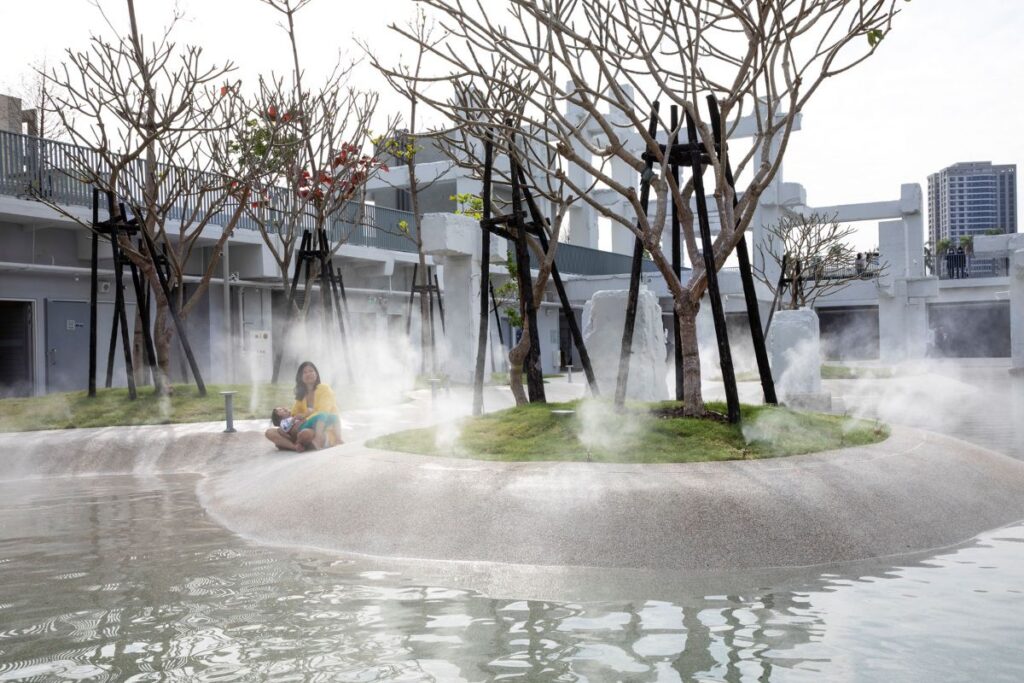
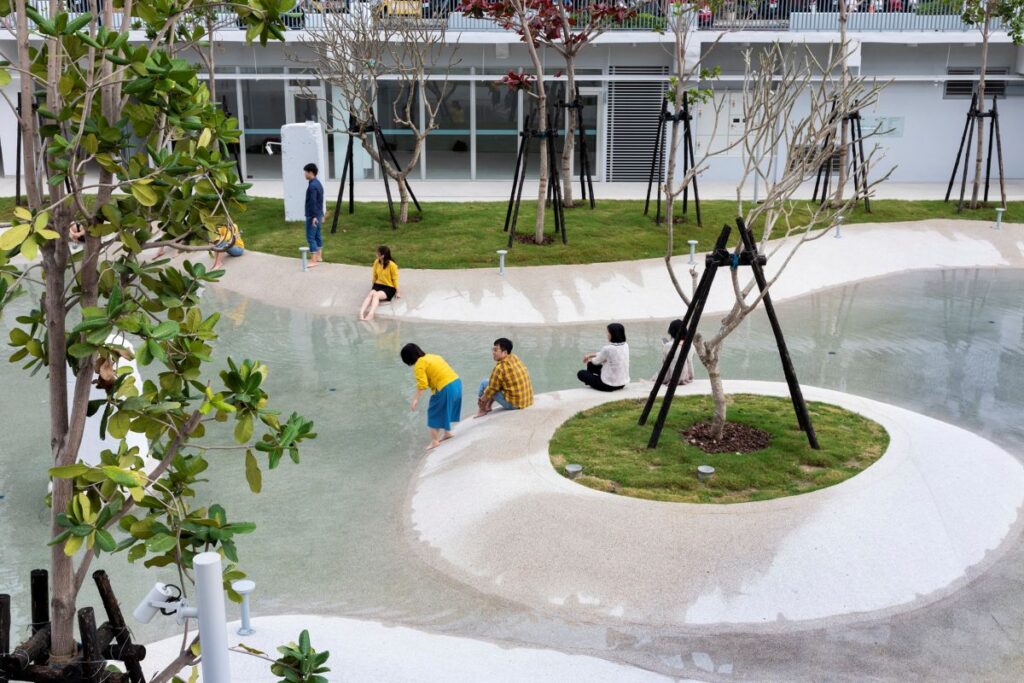
Layers of trees, shrubs, and grasses soften the former commercial landscape and frame the renewed public realm © MVRDV
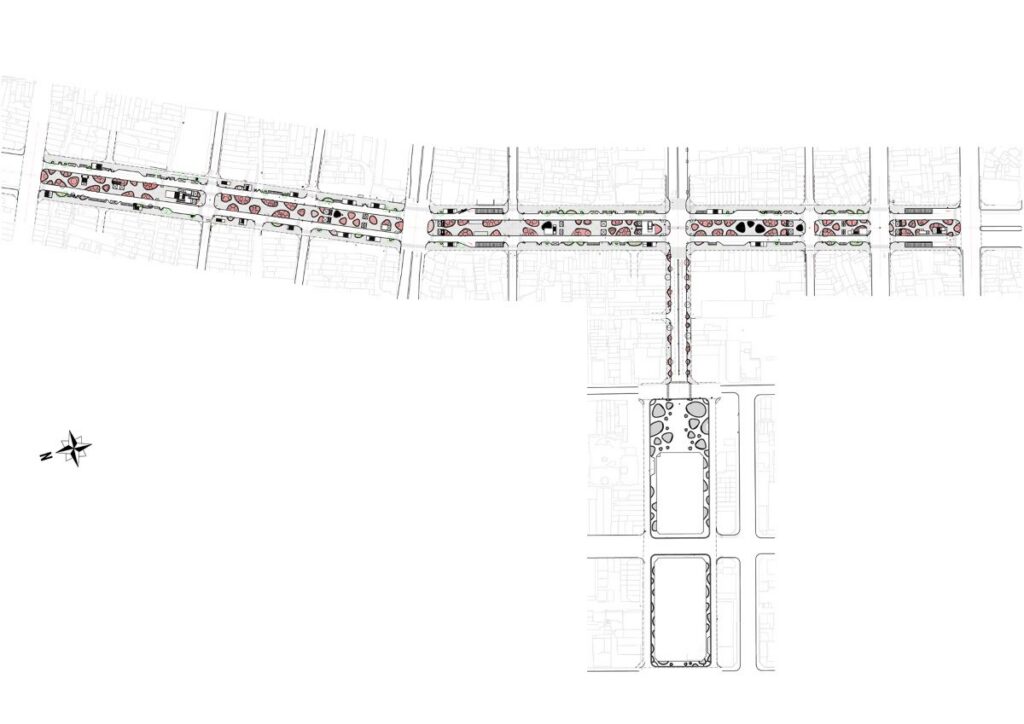
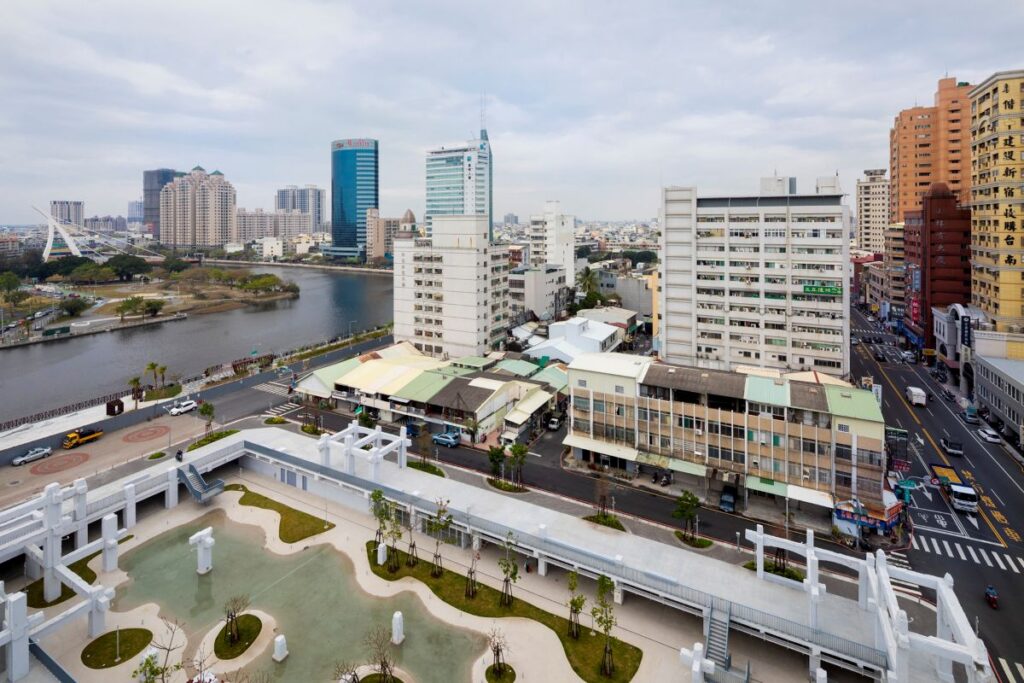
The change is far beyond the traditional shopping centre. Tainan Spring is one part of the overall project, which renovates T-Axis in Tainan City and covers one kilometre of Haian Road. This renovation has allowed decreasing the number of cars, building pedestrian pathways, and creating uniform pavement, as well as planting trees. The elements of the infrastructure that could not be renovated are a part of the solution to the problem. The ventilation pipes coming from underground became harmonious and were later painted by local artists selected by the city administration. Therefore, those elements of the infrastructure that would have been obstacles become the next layer of the streetscape.
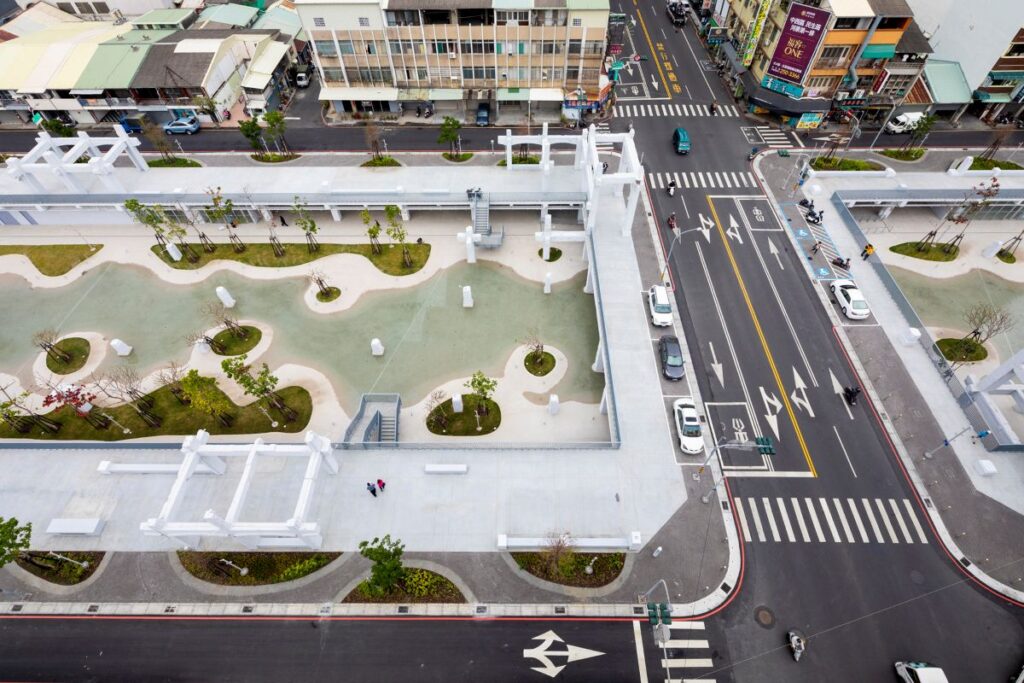
The renewed Haian Road extends the project’s landscape and pedestrian strategy beyond the lagoon itself © MVRDV
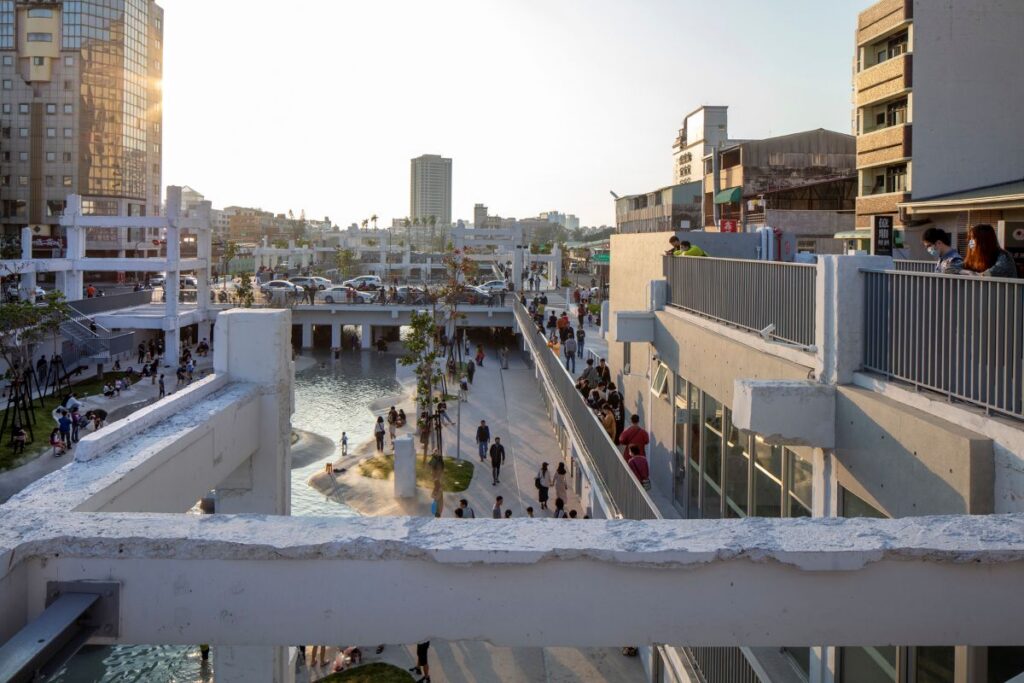
Instead of working on the building’s design traditionally, the concept of this project is to change the perception of the city through the means of water, vegetation, pedestrian movement, architecture, and activity as the components of the united urban landscape. The key idea of the transformation is the transformation of the program of the building that was supposed to be commercial into the place where people can communicate, play, rest, move around, and watch the performances in order to perceive the landscape. It should be noted that the project serves as a good example of the application of the circular design in the urban environment. Unlike considering the shopping centre as the barrier to the development, MVRDV recycles the material from the destroyed construction and uses the parts of the building in the new landscape. Thus, Tainan Spring turns out to be a good example of the transformation, as its architectural features result not from the concealment of the past but from the integration of old and new contexts.
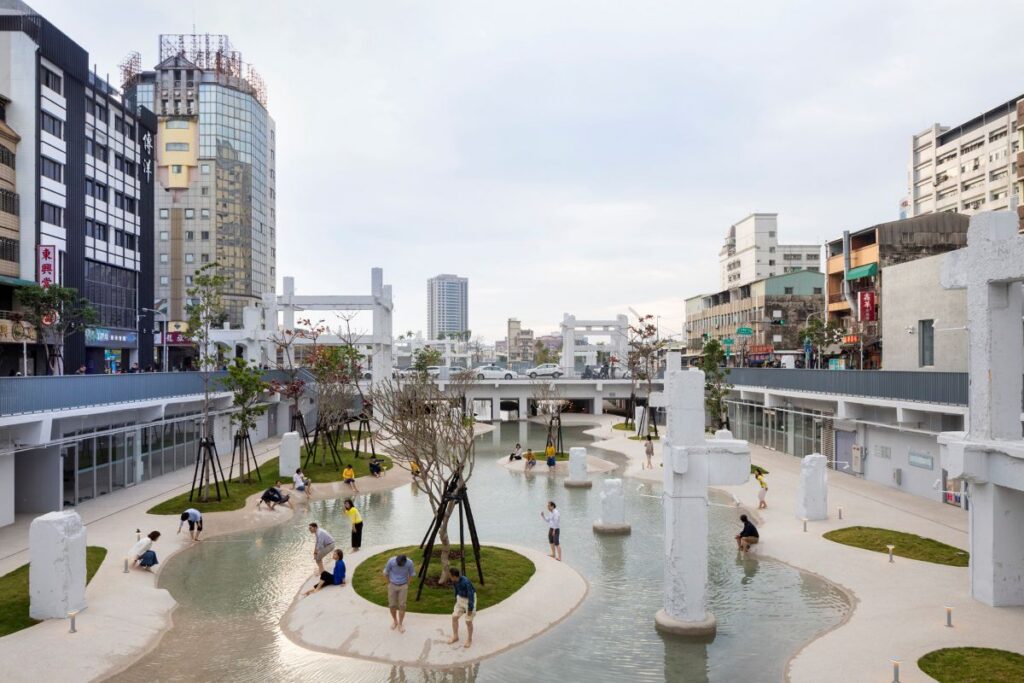
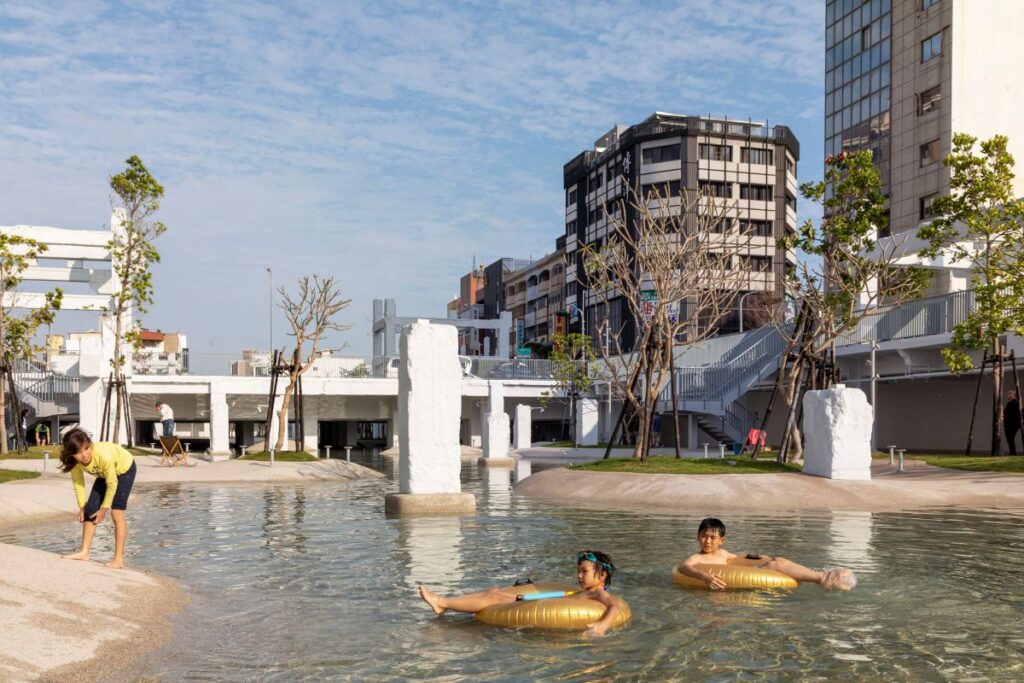
The completed Tainan Spring brings water, greenery, retained structures, and public activity together as a new civic landscape © MVRDV
Also, this project restores the link that used to exist between the city and its water historically. Tainan was famous for its network of water, which facilitated its fishing and maritime industry, while the former shopping mall represented its breakaway from the link. With the help of Tainan Spring design, the city will again be brought closer to water. Instead of further inside-out transformation of the destination area, MVRDV connects the former commercial property with the city. The lagoon becomes the unifying platform for architecture, landscape, memories, and public life.
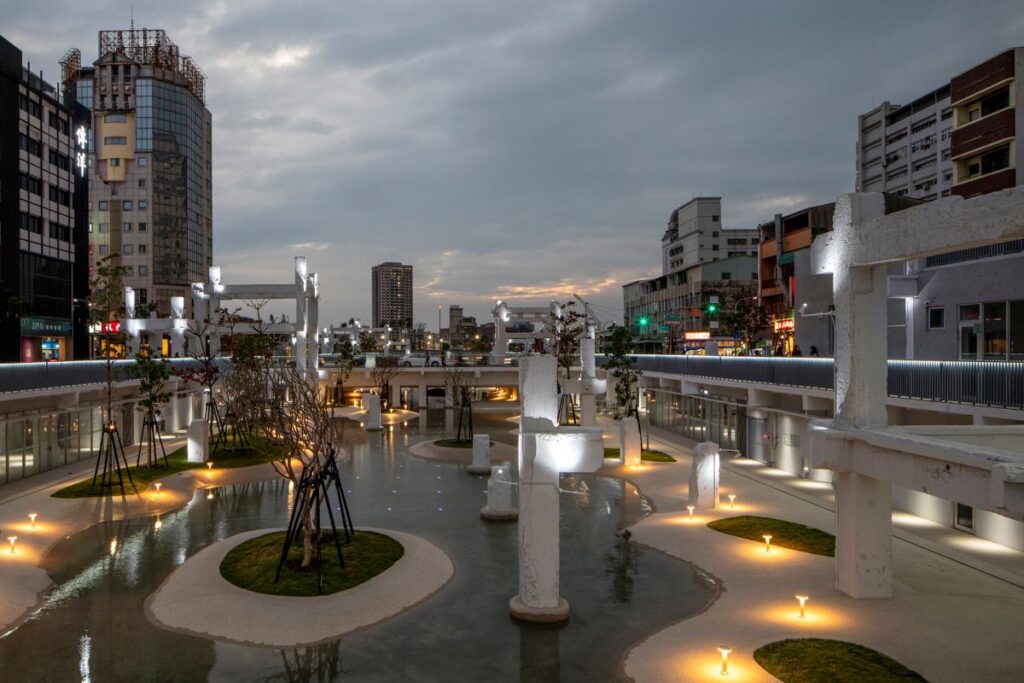
Regeneration of the site is left unfinished. The growth of plants and seasonal changes in the landscape are included in it, as well as the reuse of existing buildings for their new functions. Therefore, Tainan Spring is not supposed to become an eternal monument but an evolving environment. It allows MVRDV to transform the redundant commercial structure into the base for urban regeneration without having to start from a tabula rasa. In Tainan Spring, one sees an example of how leftovers from the failed development project can become a new, green, and transparent gathering place. In other words, the absence of the shopping mall is a matter of secondary importance for Tainan Spring; the main thing is what might happen at the place of its construction and because of it. Water takes the place of the mall, plants surround it, and the ruins of concrete remind us about its past.
GALLERY