

Urban erasure is one of the key phenomena of contemporary city-making, even though it has not been widely discussed. In fact, it means the constant elimination of old buildings, public spaces, and landmarks that have once formed an important part of the collective memory.
Although cities keep changing, erasure implies a particularly fast destruction of buildings and memories. Demolition might seem like a rather neutral phenomenon, since old buildings give way to new ones and cities need regular renewal in order to survive. However, urban erasure does not imply physical replacement of buildings but removal of landmarks that form the perception of a city by its inhabitants.

It is not necessary for the landmark to be monumental. It should just be recognized, understood, and incorporated into the daily life of residents. As a result, the impact on the culture of a city is significant because each demolished building or redesigned area might seem insignificant individually, but all of them together create an impression of loss of identity of a city.

Architecture has an important part to play in this process. Modern development theories typically focus on efficiency, density, and financial optimization. The existing structures are assessed mainly for their economic value rather than their cultural one. Within such a system, replacement is equated with improvement, despite the fact that the latter destroys valuable elements of culture and society.
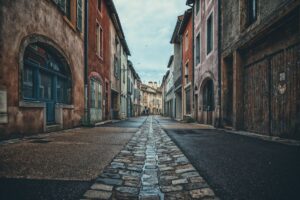
Erasure of urban landscapes is especially evident in developing cities, where the process of redevelopment is quick, and land prices are high. Housing blocks from the middle of the twentieth century, industrial structures, and early commercial buildings are often destroyed before becoming acknowledged as an architectural legacy. Something, which is out of date at the moment, could have become a replacement for something else a short while ago.
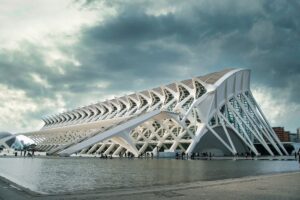
Erasure does not only affect monumental architecture. On the contrary, often it is everyday life spaces that carry the biggest cultural value. Corner stores, local movie theatres, small squares, and transport hubs make up what can be called the background architecture of everyday life. Their erasure is not perceived as a spectacle but as a disorienting phenomenon as people cease to recognize the city they live in.

Memory in an urban setting is spatial and physical, rather than abstract and conceptual. It involves a series of paths, transitions, textures, and repeated encounters. Urban erasure uproots such memories since it alters and eliminates the physical references upon which they are built.
The redesigning of a street can not only affect the way in which people move through it but also the way they remember it. Such a phenomenon is accentuated by the trend of architectural homogenization on a global scale.
With cities adopting similar building materials, forms of buildings, and strategies for branding themselves, there emerges a need for local differentiation that gets lost due to the standardization of architecture. Urban erasure does not merely consist of destruction but also consists of rebuilding using interchangeable and globally marketable forms.
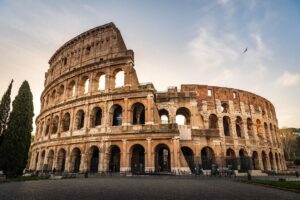
The process of demolition also has a political aspect, as demolition is never a neutral process. It embodies priorities regarding which parts of history should be remembered and which forgotten. In some cases, the entire neighbourhoods are renamed or rebuilt in order to change the identity of their users and to create new references for memory.
The role of infrastructure plays a hidden role in all of this. Road widening, transit changes, and utility upgrades frequently involve the demolition or modification of the built forms surrounding these infrastructural changes. Such interventions tend to be described as essential modifications. But they may also erase delicate urban fabric that has grown up with the older conditions of infrastructure. The city transforms according to the logic of flows over continuity.

Climate adaptation brings an additional dimension of necessity to this process. Flooding prevention measures, energy system upgrades, and other adaptive strategies often call for major physical intervention. These changes, while important and necessary, risk further destruction of the city’s historic fabric.
Urban erasure under the logic of climate adaptation poses challenges to debates about preservation and transformation. But the erasure of landmarks is not necessarily a fait accompli. There are many tools available for cities to effect change without complete erasure. The question is in how to decide what should be continued and how to continue it into the future.

Digital mapping and documentation provide at least part of the solution. The extent to which cities can now be documented at a fine level of resolution means that archives of the lost can now be created; buildings that have disappeared forever can be documented before they are entirely gone. But documentation is not presence. A digital archive is not an actual physical entity.
The process of erasing an urban environment thus cannot be overcome through memory. There is also the matter of scale. Not everything within a city can or should be preserved. Cities are dynamic things that thrive on change. The point is not to prevent change but to ensure that whatever changes are enacted do not destroy the conditions under which a city continues to function. Otherwise, the city ceases to become a place.

Ultimately, the cultural cost of urban erasure takes the form of identity loss. Cities are about more than just infrastructure and economic function. They are sites of collective memory. When the landmarks are lost, the common point of reference is lost along with them. People may still live in the same city, but the city itself is lost.
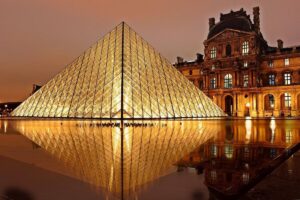
Architecture must thus learn how to incorporate into its definition of value things other than novelty and efficiency. Architecture must understand the importance of memory and continuity as design values.
The phenomenon of urban erasure brings to light a key dilemma that is inherent to contemporary urbanism, which is the tension between modernization and memory. Resolving such a dilemma cannot be done through policy alone. It calls for an alteration in the architectural discourse whereby the existing urban texture becomes a basis for continuity rather than an impediment.
With the erasure of landmarks, the city is not merely made more modern, but it also becomes harder to interpret, understand, and share. Urban erasure is thus a physical phenomenon as much as it is a cultural one.