
Adaptive Reuse as Cultural Defiance
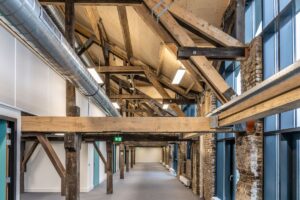
Adaptive reuse architecture is no longer merely about sustainability. It is an act of cultural defiance in rapidly redeveloping cities where demolition is often considered the norm. In the pursuit of increased floor area, efficiency, and return on investment, history is frequently cleared away. Instead of repairing old buildings, new buildings tend to replace them. Adaptive reuse challenges this logic by seeing potential in an existing building rather than treating it as a burden.
There are economic reasons why demolition can become inevitable. As land values rise, old, low-density buildings are often considered candidates for replacement with newer, more profitable ones. Adaptation offers another perspective. The existing building becomes a resource containing embodied energy, spatial logic, and cultural value that cannot easily be replicated in new construction.
Buildings as Layers of Memory
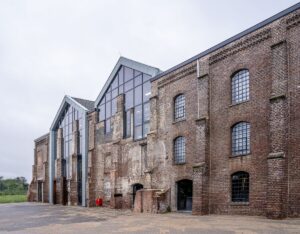
There is always more to a building than meets the eye. Buildings contain several layers of history because their materials weather, their uses change, and they are informally adapted over time. Much of this history is not documented through conventional architectural processes; it is experienced directly. Adaptive reuse architecture embraces this layering rather than attempting to erase it.
Demolition culture tends to prefer clarity over continuity. Complexity is replaced with clarity in order to start afresh. Cities, however, are not linear phenomena. They are cumulative environments made from overlaps, contradictions, and repeated acts of reuse. Adaptive reuse introduces friction into this system by retaining fragmentary structures, spatial memory, and material inconsistencies.
Designing Within Existing Constraints
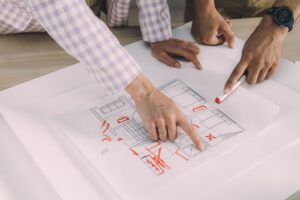
Technically, reuse means dealing with limitations that already exist. Existing load-bearing systems, irregular geometries, and outdated building codes must be reinterpreted to remain useful. This often results in a deliberate mixture of new interventions and old structures. Instead of architectural purity, coexistence becomes the objective, allowing different periods of construction to exist within a shared architectural logic.
Material reuse is an important part of this process. Load-bearing systems such as steel frames, brick walls, and concrete shells can be preserved, enhanced, or partially revealed. This reduces embodied carbon while physically maintaining continuity with the past. Yet adaptive reuse architecture extends beyond sustainability. Its deeper value lies in keeping the identity of changing places recognizable.
Preserving Spatial Relationships
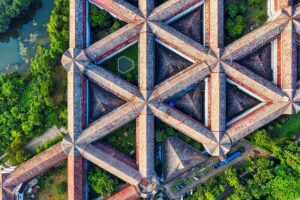
Architectural identity has traditionally been associated with façade and form. In adaptive reuse architecture, however, spatial relationships often carry greater memory. Courtyards, stairs, structural spans, and circulation routes can retain more of a building’s identity than its outward expression.
These relationships can survive even when a building undergoes a dramatic program change. A former industrial building can become housing, a warehouse can become a cultural space, and a station can become a commercial destination. The program changes, but the architecture can continue to communicate something about its origin.


Resisting Spatial Amnesia
Cities experiencing intense redevelopment pressure can suffer from what might be called spatial amnesia. Change happens so rapidly that collective memory becomes dispersed. Adaptive reuse architecture offers an alternative to this condition.
When a factory becomes residential units, a warehouse becomes a cultural space, or a station becomes commercial space, the retained architecture continues to tell the story of its origin. The building becomes a physical record of transformation rather than an obstacle to it.
The issue is also social. Demolition can displace communities not only physically but also socially. Existing relationships between people and places are disrupted when familiar environments disappear. Adaptive reuse can help retain this spatial memory by allowing places to evolve without completely severing their connection to the communities that experienced them.
Preservation Is Not Automatically Socially Just
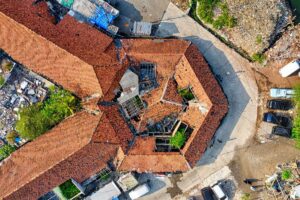
Yet adaptive reuse is not always inclusive. In many cases, existing buildings are upgraded into high-value assets, creating conditions for gentrification. Preserving a structure does not necessarily mean preserving social justice. This creates an obligation for architects and urban planners to consider not only what is being preserved, but also who ultimately benefits from that preservation.
The question therefore extends beyond architectural conservation. A successful adaptive reuse project should consider the social consequences of transformation alongside its physical and economic dimensions. Retaining a building while making its surrounding community inaccessible can preserve architecture without preserving the social value that made the place significant.
The Existing Building as Co-Author
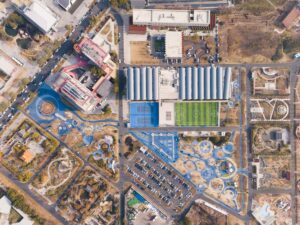
Adaptive reuse also demands a different understanding of architectural authorship. An architect works with a site that already exists and cannot be completely controlled. The project therefore begins with a form of pre-existing authorship.
The building itself becomes a co-author of the design, influencing what can be retained, removed, modified, or added. Existing structures establish constraints, but those constraints can also generate architectural opportunities. Design becomes less about imposing a predetermined vision and more about negotiating with what is already there.
This produces a distinctive aesthetic language. Adaptive reuse projects often contain deliberate contrasts between new and existing elements, smooth surfaces and rough textures, and precise geometries and irregular structural grids. Their significance does not necessarily come from achieving visual uniformity. Instead, their strength often lies in their sincerity.

Beyond Architecture: Institutional Flexibility
The challenges of adaptive reuse extend beyond design. Although regulatory frameworks are beginning to change in support of reuse practices, many planning regimes remain oriented towards new construction. Building standards, financial frameworks, and risk assessments are often structured around the assumption that a project begins with a blank site rather than an existing reality.
Adaptive reuse therefore requires more than architectural creativity. It requires institutional flexibility. Regulations, financing models, planning systems, and risk assessments must be capable of responding to the complexity of existing buildings if reuse is to become a meaningful alternative to demolition.

Climate Change Strengthens the Argument
The climate crisis adds further legitimacy to reuse. The environmental impact of demolition and new construction has become increasingly difficult to justify when existing buildings already contain substantial embodied carbon within their structures.
Yet even here, the central argument for adaptive reuse is architectural rather than purely environmental. Continuation matters. The value of an existing building is not limited to the carbon embedded within its walls. It also contains material memory, spatial relationships, cultural associations, and evidence of how a place has evolved.

Architecture as Selective Continuation
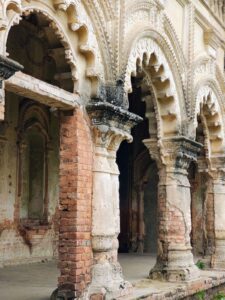
Ultimately, adaptive reuse architecture resists the idea that progress requires the erasure of the past. It advocates for development through addition rather than substitution. This does not mean preserving everything. Instead, it means making careful decisions about which elements deserve continuation and how they can contribute to a new future.
In a culture of demolition, reuse means slowing down. It means acknowledging that architecture is not only about adding something to the world but also about allowing some things to remain. Preservation becomes an active architectural decision rather than an act of inaction.
Adaptive reuse therefore occupies an important position between transformation and memory. It accepts that cities must change, but challenges the assumption that they must forget to do so.