
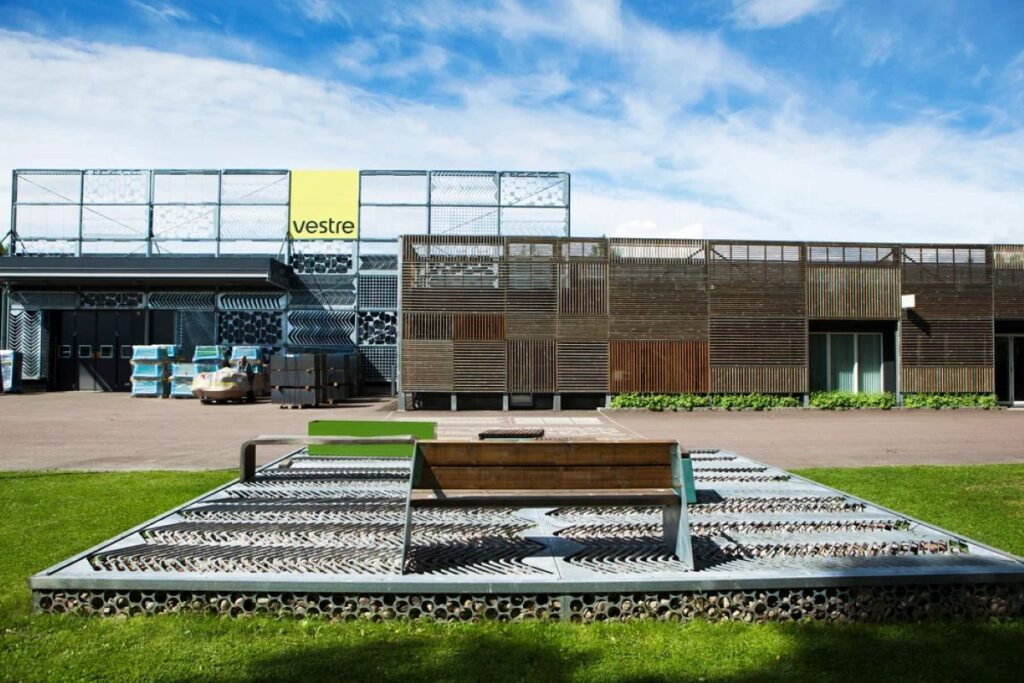
Exterior factory with timber cladding and bold signage © Snøhetta
Curated by ArchiRev Editorial | Feature Story | Published April 24th, 2026 | Source: Snøhetta
Typologies: Transformation & Expansion, Workspace & Production Facility
Status: Completed
Location: Torsby, Sweden
Client: Vestre AS
Size: 3000 m2
Since its founding more than a century ago, Vestre, a manufacturer of high-quality furniture for public urban areas, has dedicated itself to excellence. The Vestre Production Facility is a physical representation of the company’s core beliefs and dedication to publicly engaging in society.
The Vestre Production Facility in Torsby was created by the design firm Snøhetta and functions as a production facility as well as a tangible embodiment of the company’s three guiding principles: precision, durability, and functionality. The updated production facility, which opened in 2013, has assisted in coordinating their production procedures with a more unified spatial identity.
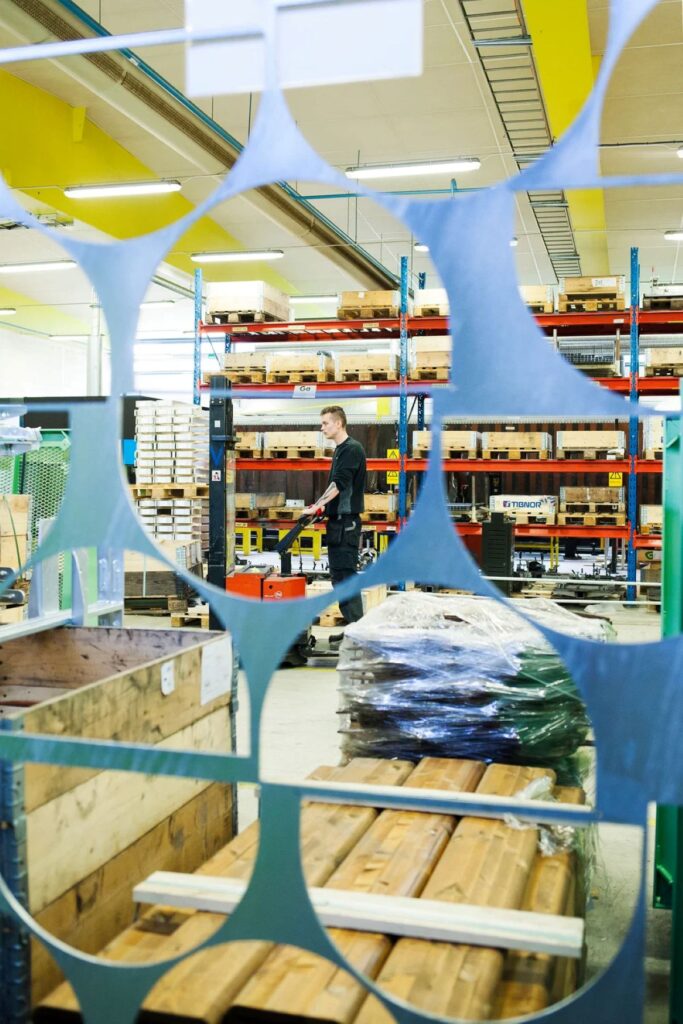
Daylight and machines in an open production hall © Snøhetta
Vestre’s personnel and overall production output have grown significantly since they launched their first facility in Torsby in 1997. As a result, their present production facility is under increasing pressure to adapt to these operational changes. By improving operating efficiencies and designing layouts that enable closer links between administrative and production work spaces, their facility expansion responds to these demands.
The new Vestre facility, which will be more than 3,000 square meters (about 32,000 square feet) in size, is intended to support both indoor and outdoor activities with its open and spacious production facility architecture. In order to enhance working conditions and visibility across the production plant, lighting has also been built to offer the ideal quantity of light.
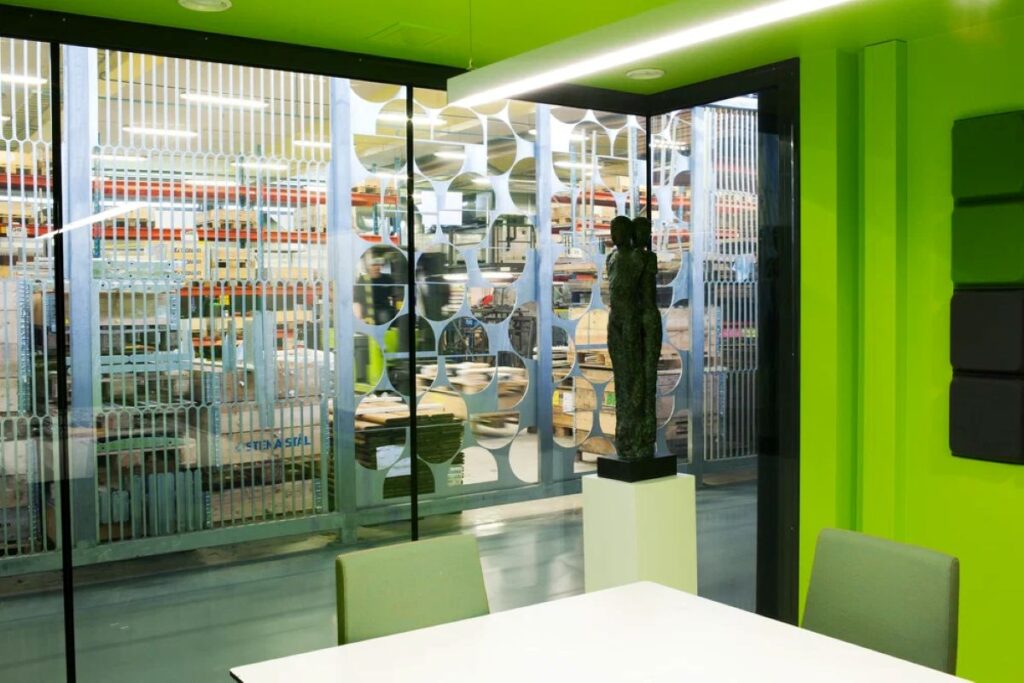
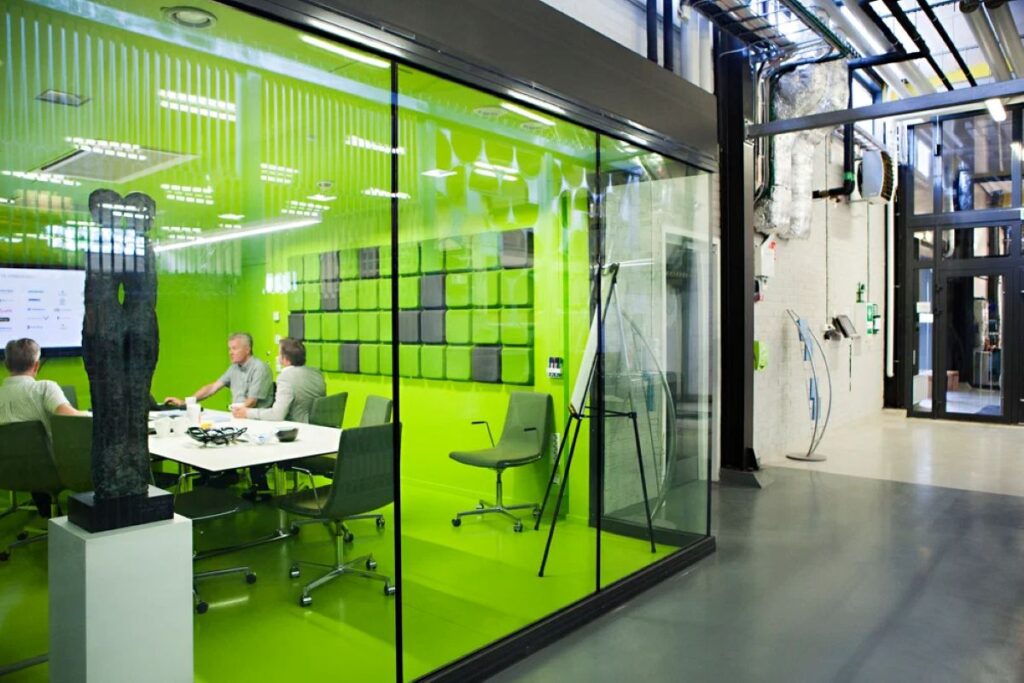
Interior displaying the link between production and the office © Snøhetta
The project’s approach to sustainability permeates every step of the process and extends to the building’s exterior. New conference rooms have also been added to the office areas, which have been renovated to be closer together. This section of the facility features a new kitchen, canteen, and employee amenities. Using production leftovers as building cladding and installing a recycled heating system are two examples of the environmental choices made during the site’s construction.
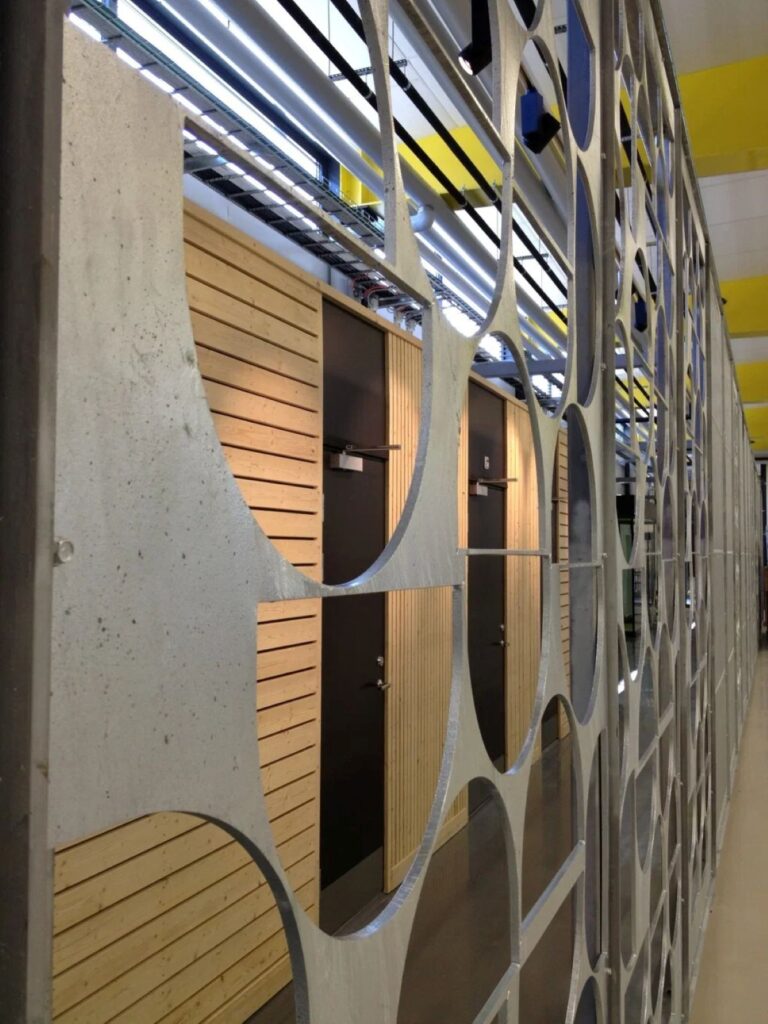
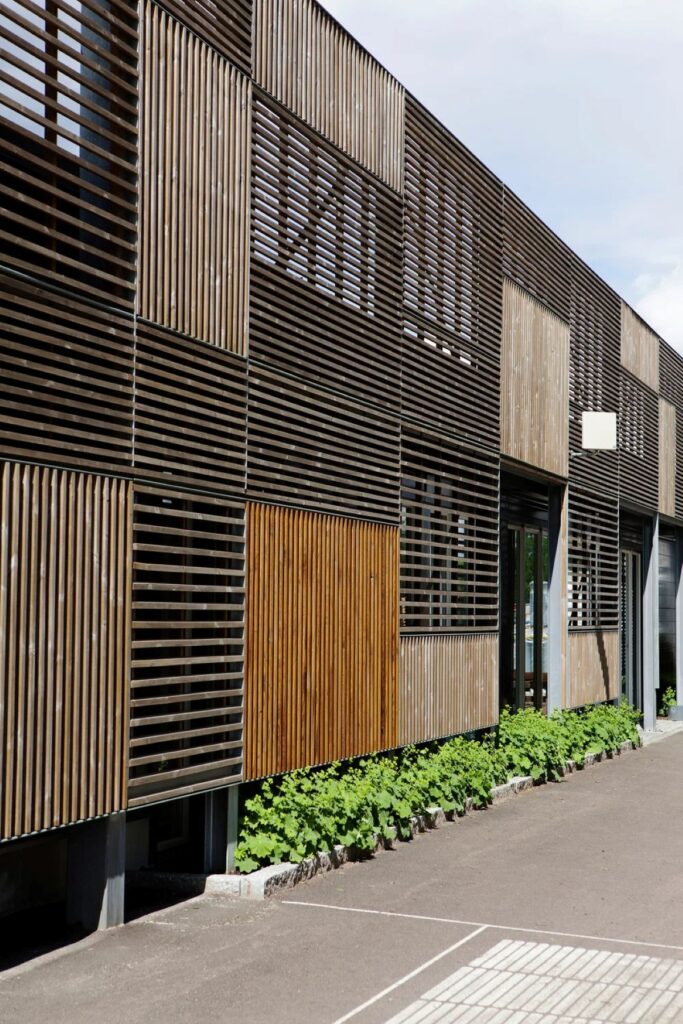
Steel and wood ribs with perforations on the facade © Snøhetta
Vestre’s output is closely associated with the architectural language. In addition to extending the east side of the building and giving passing cars more visibility, the addition of a new façade composed of perforated steel sheets and timber members from leftover production materials mimics the material logic used to create their case good products. It also serves to “ground” the building in its immediate surroundings.