
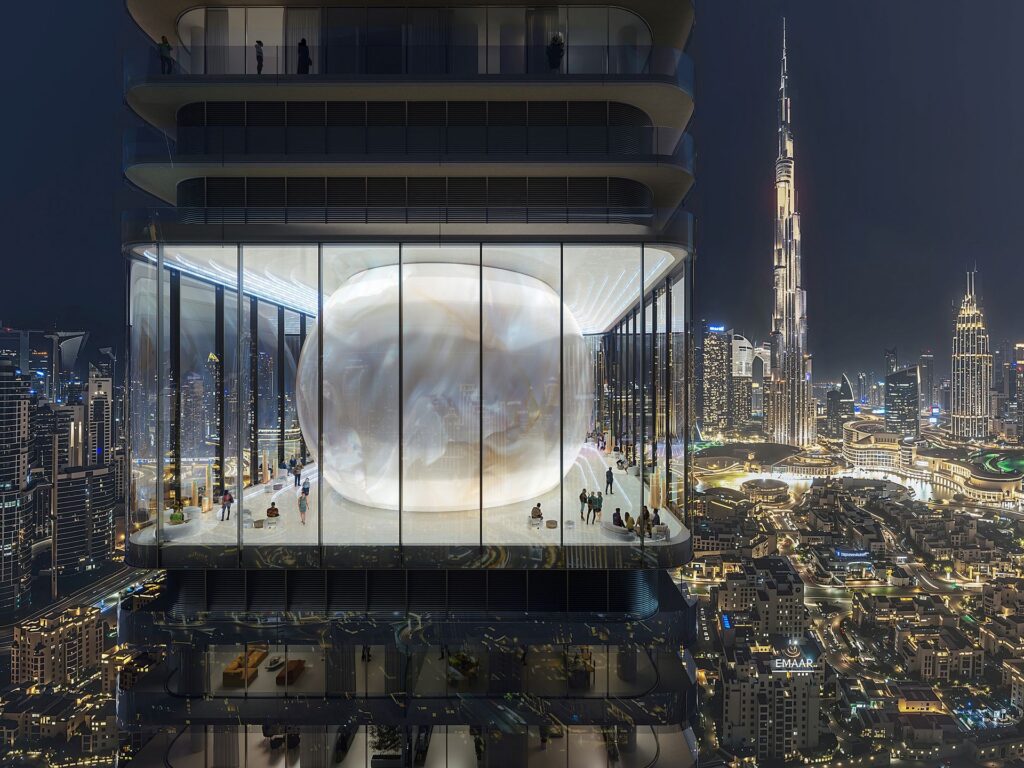
Hero render of Inaura tower in the Downtown Dubai skyline © MVRDV
Curated by ArchiRev Editorial | Feature Story | Published May 20th, 2026 | Source: MVRDV
Typologies: Hotel, Mixed Use, Residential, Bar-Restaurant, Wellness
Themes: Architecture, Housing, Leisure, Mixed Use
Status: In Progress
Location: Dubai, United Arab Emirates
Year: 2025–
Surface: 33,533 m²
Client: Arada Developments LLC
Certifications: LEED Gold
The Inaura Dubai, designed by MVRDV, is a 210-meter-high luxury hotel and apartment tower, which offers an alternative design for what has been seen as one of the hardest tasks in architecture—designing an iconic building in Downtown Dubai.
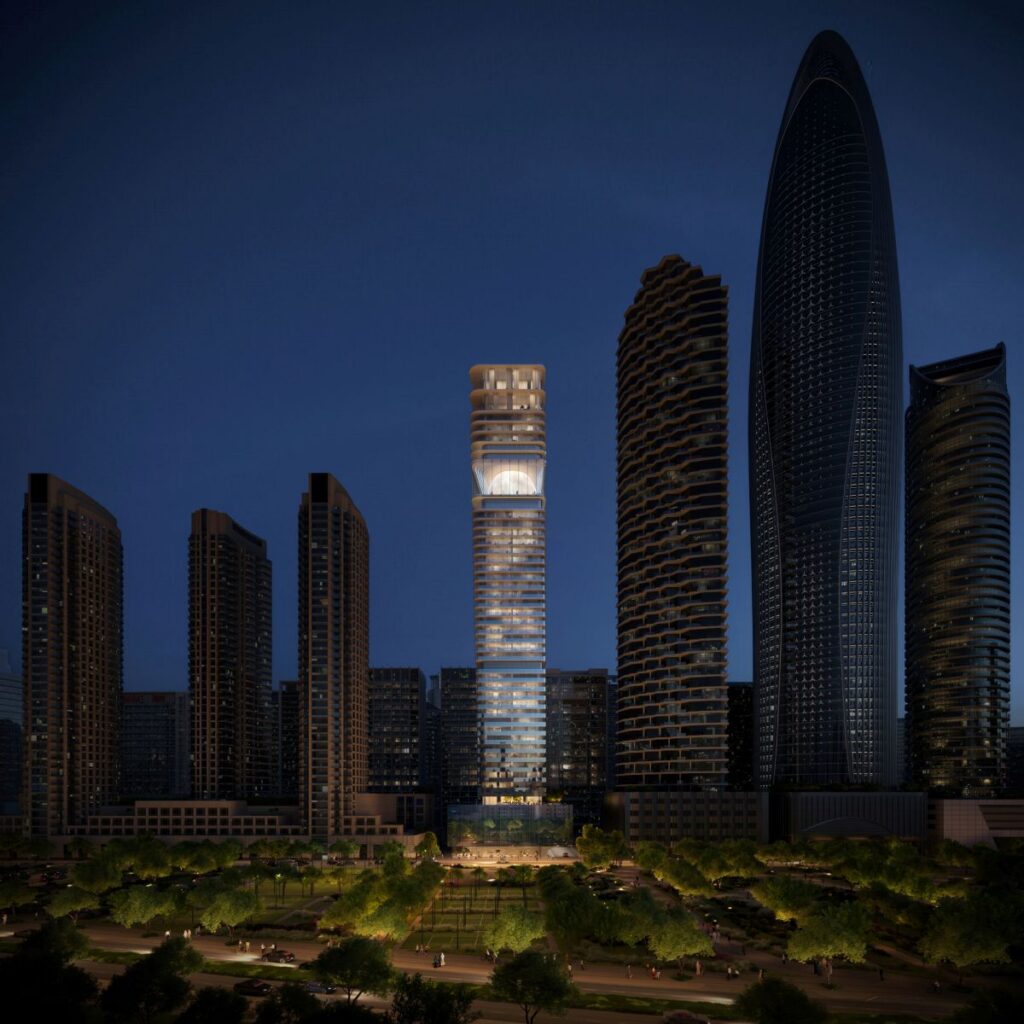
Located in between Downtown Dubai and Business Bay and directly facing both the Burj Khalifa and the Dubai Fountain, this tower does not vie with them in either of their attributes. Instead, it gives them one of its own: a perfectly located luminescent ovoid inserted into the body of the tower about three-fourths up its height, which acts as its Sky Lounge and iconic silhouette.
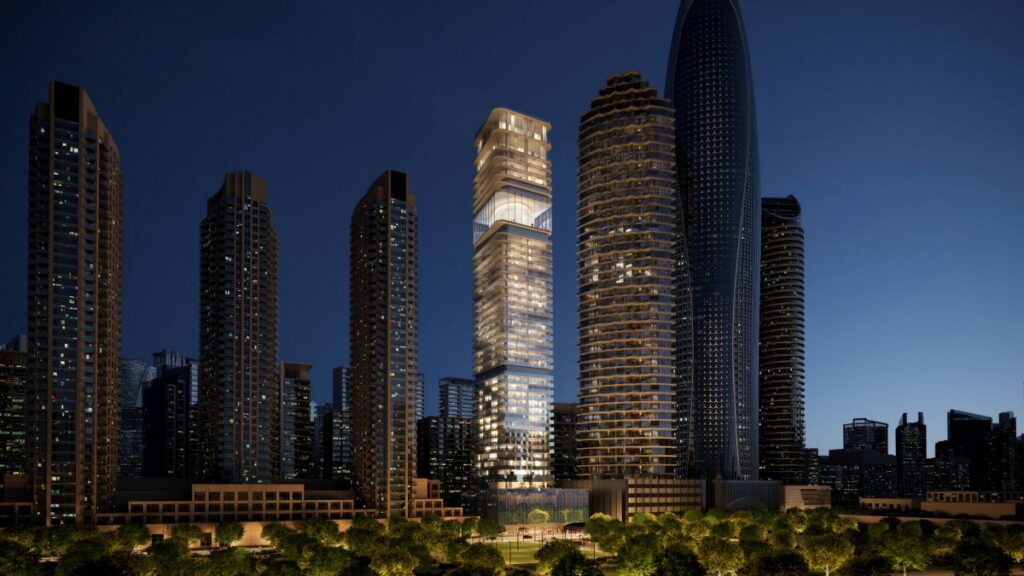
As raised by Arada, the central question in the brief was rather straightforward; how could an iconic tower be created within the realm of what is undoubtedly one of the most famous skylines in the world? Dubai’s meteoric ascent into prominence created a skyline defined by a series of ever-higher record breakers, bizarrely sculptured shapes, and highly intricate crowns, with each structure vying for prominence in the shadow of the world’s tallest skyscraper. MVRDV’s solution takes this paradigm and rejects it out right.
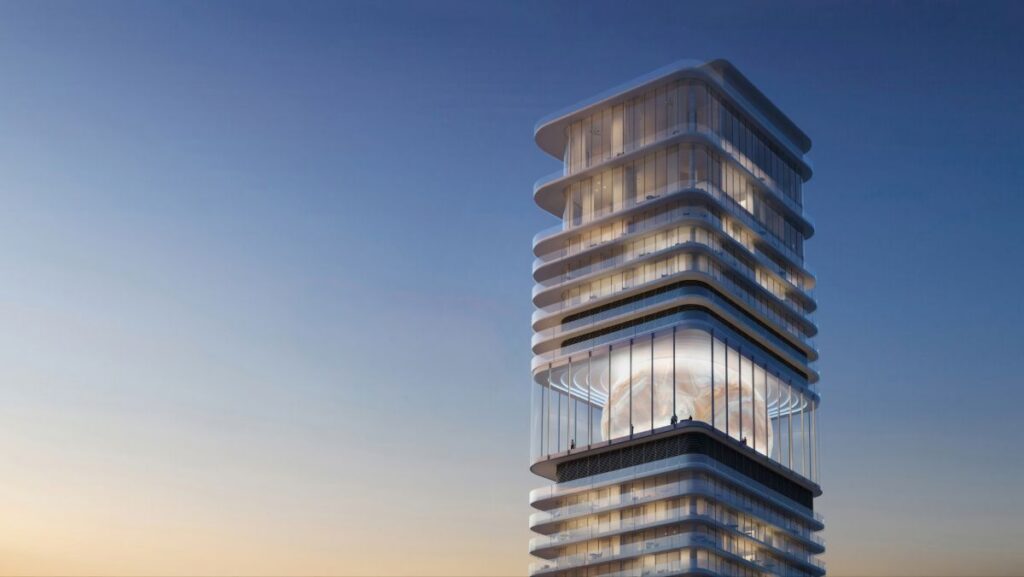
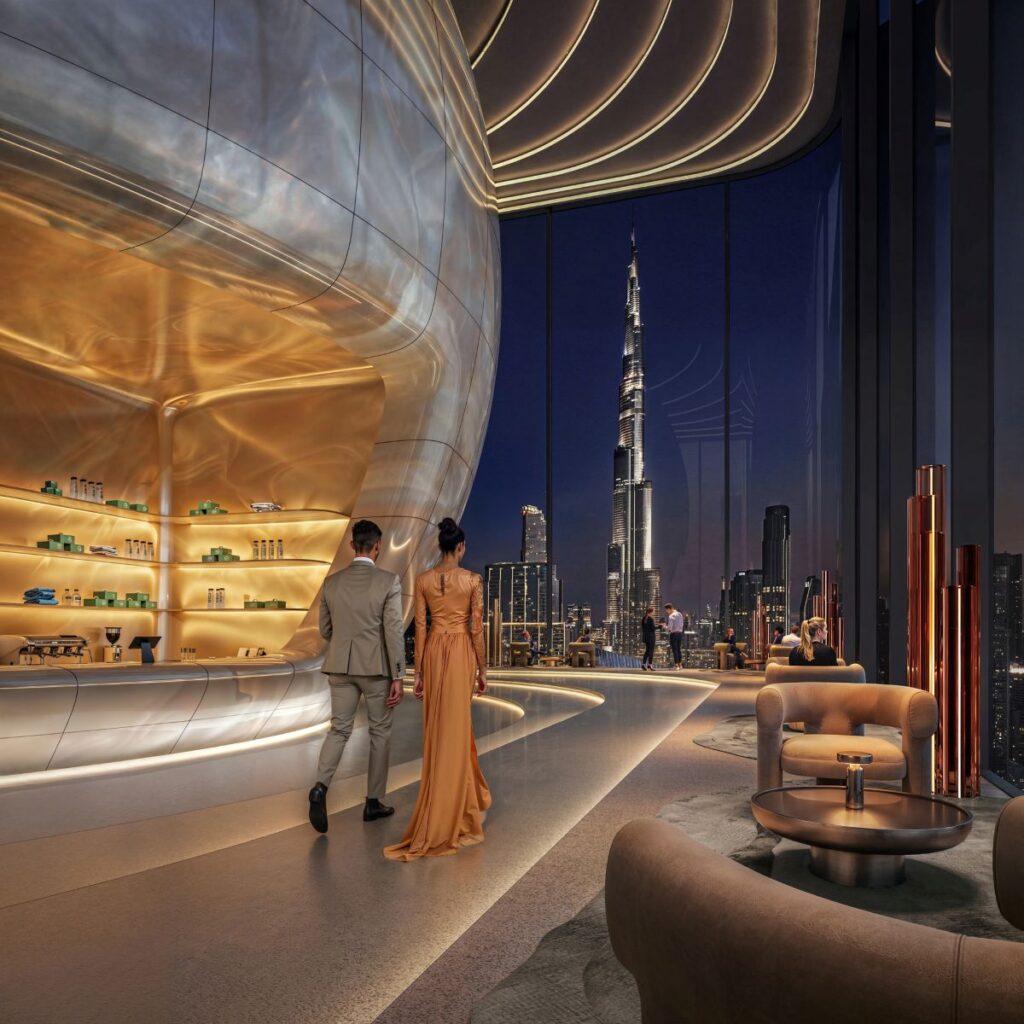
Render of the glowing ovoid Sky Lounge embedded within the tower floors © MVRDV
The ovoid shape, situated within the raised upper floors of the tower, is perhaps the most innovative aspect of the design. This is due to its location and impact on the overall design: viewed from afar, it becomes an element of recognition, a beautiful object which intrigues the viewer but does not overpower him. Jacob van Rijs, founding partner at MVRDV, elaborates on the concept of Inaura, stating that “Inaura offers a new character to the Dubai skyline, one that has not been seen before. It is beautiful but understated at the same time.”
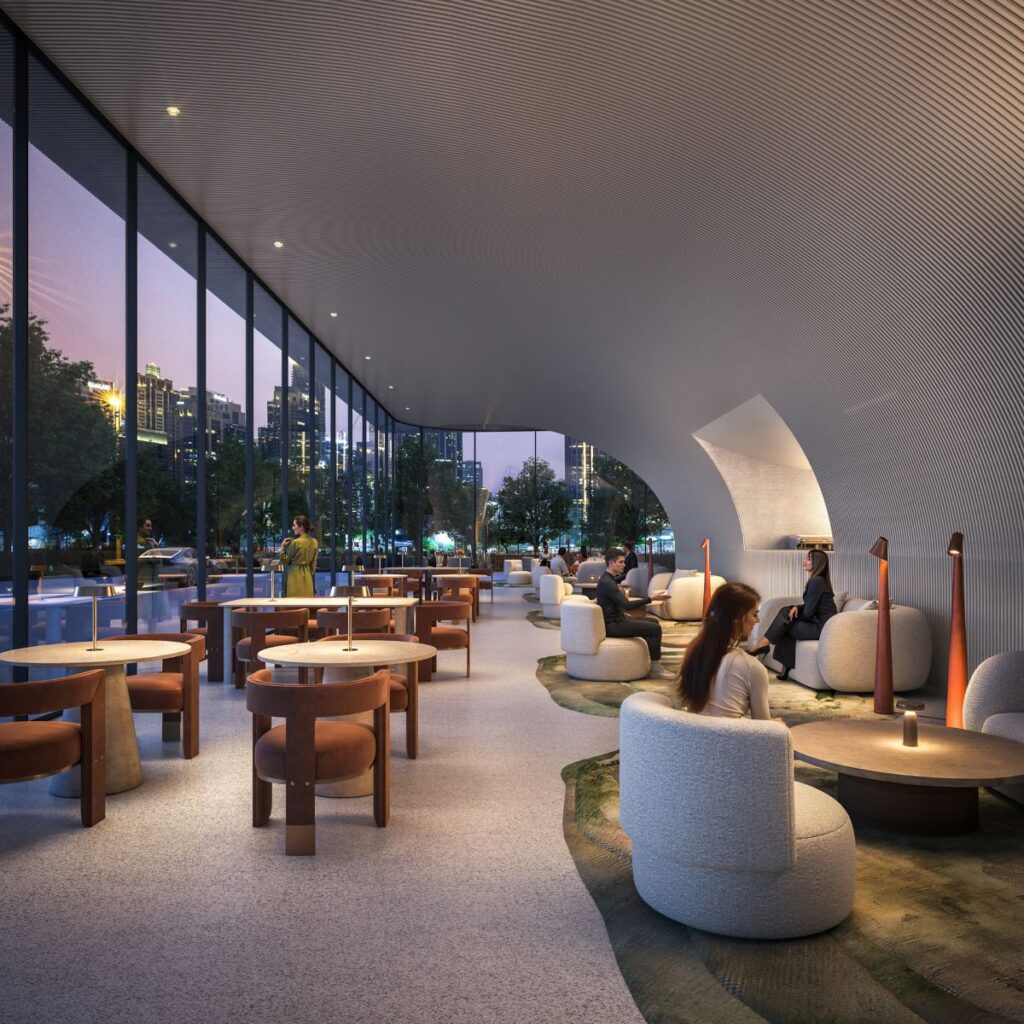
Interior render of the Sky Lounge club with Burj Khalifa views © MVRDV
The Sky Lounge not only provides an aesthetic function but a practical one as well. The ovoid form, as stated above, holds a space for VIPs. The area around the form provides entrance to a club which has full views of the Burj Khalifa and other buildings of the Dubai skyline, creating a location from which the residents and guests of the hotel feel like they are a part of the life happening beneath them.
According to Van Rijs, there was a practical motive behind choosing such a form: “The tower uses efficient, rectangular floor plans; there is no wasted vanity height. Instead, the Sky Lounge helps organize and convey the program of the building to the city below and skyline above.”
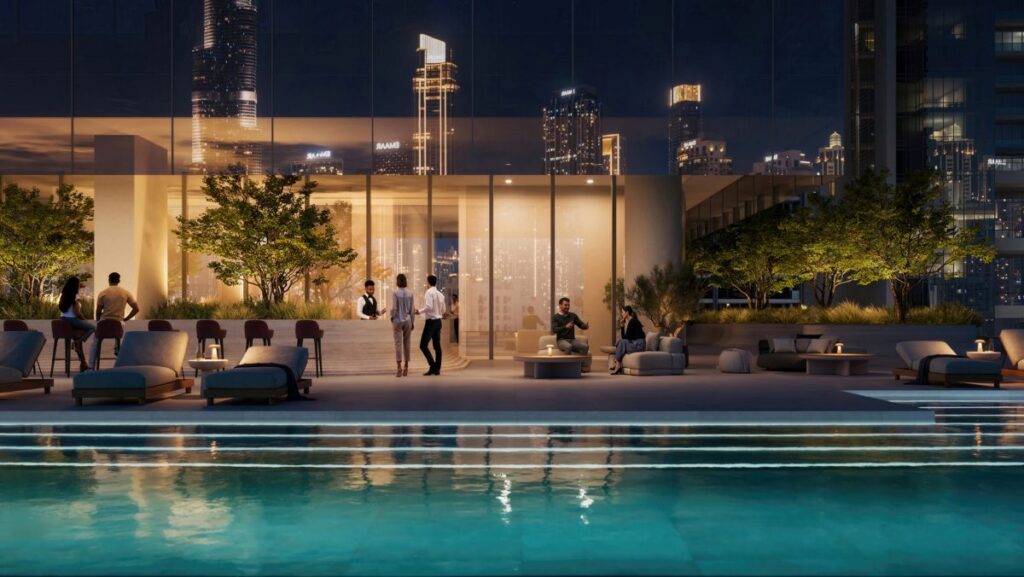
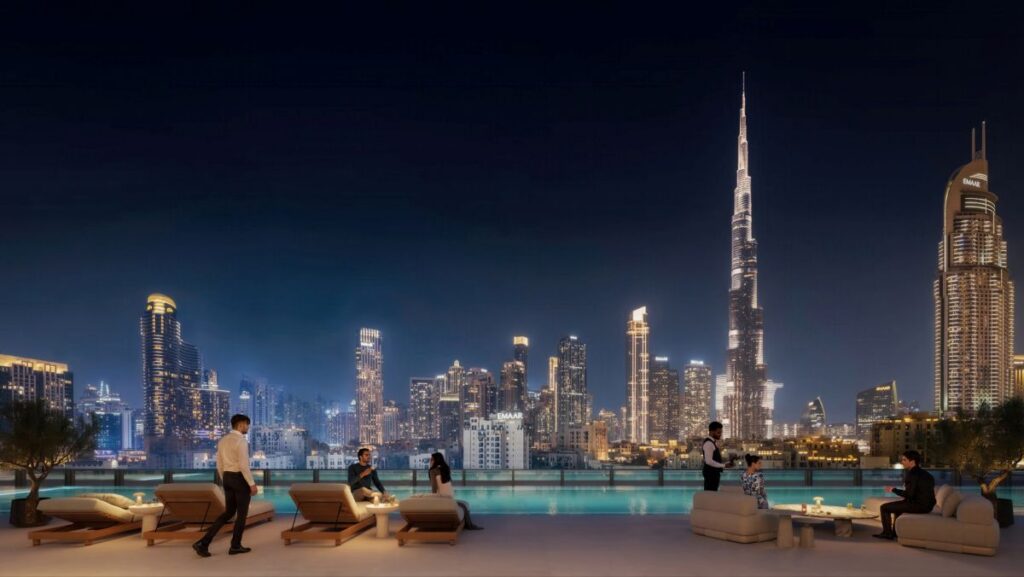
The building’s program is arranged on a distinct vertical stratification level. The four-level podium at the bottom level consists of a restaurant and lobby at the ground level with a three-story fitness facility on top of it.
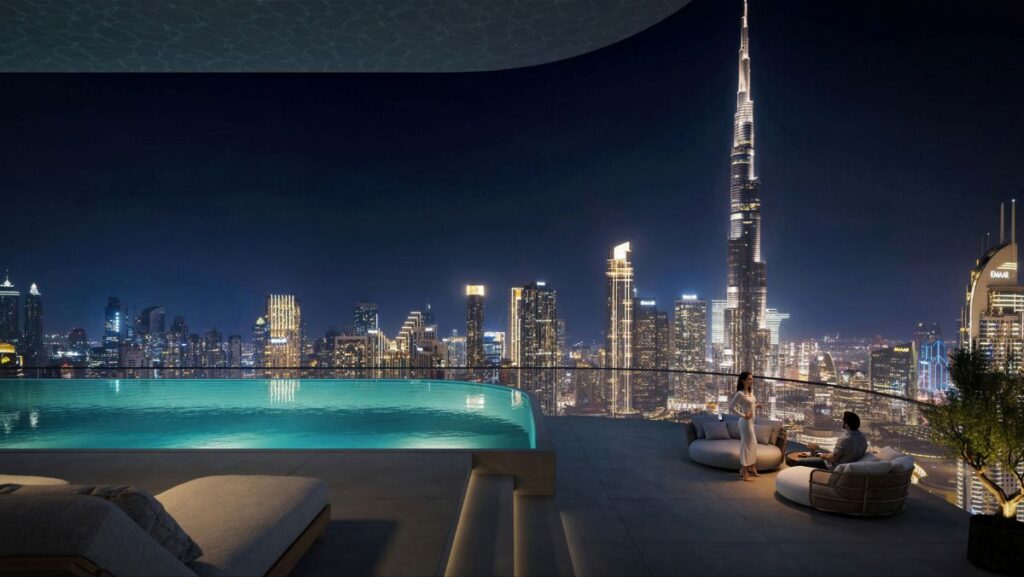
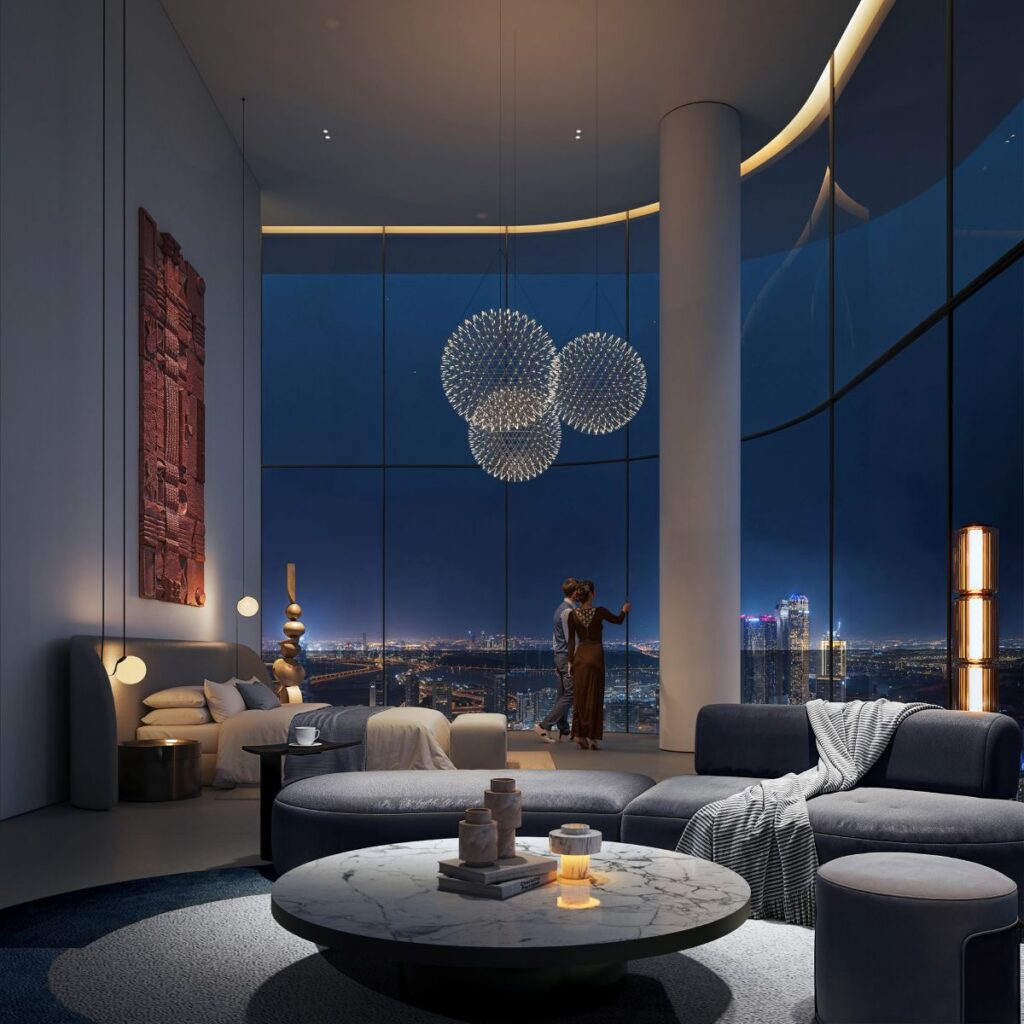
An infinity swimming pool tops the podium, while a spa is found just one floor higher than that. The lower levels of the tower consist of 101 hotel suites and 105 units of one-to-three-bedroom urban apartments. Located seven stories above the Sky Lounge are nine four-to-six-bedroom Sky Villas.
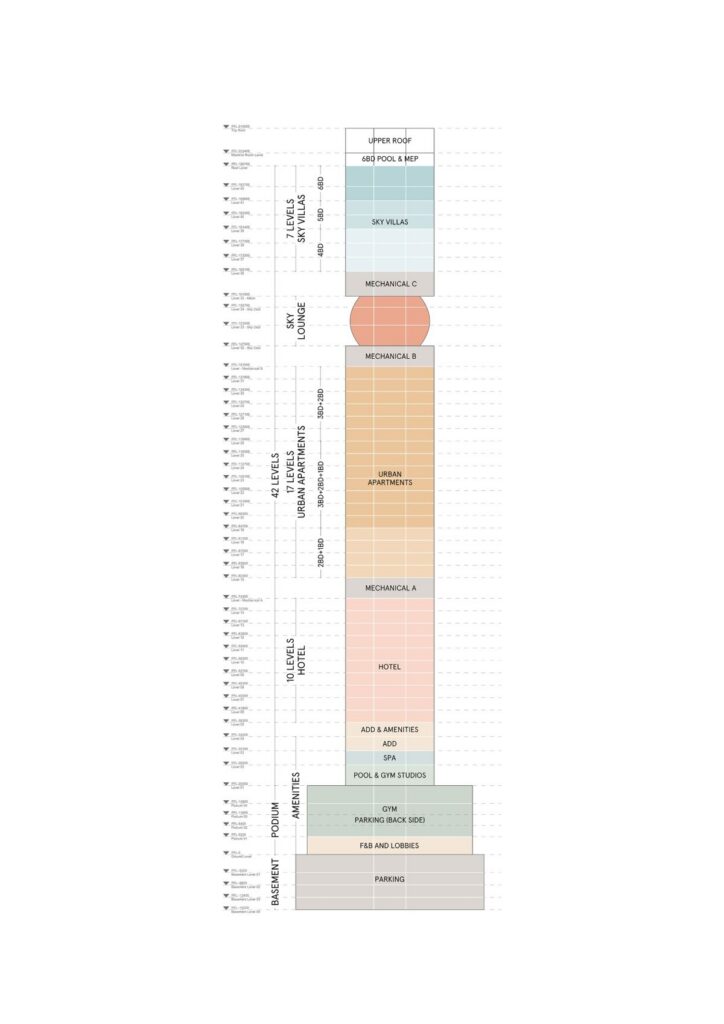
Section diagram showing the full vertical programme from plinth to Sky Villas © MVRDV
The facade helps to emphasize the “city to sky” theme of the tower through gradual transitions in materials. Balconies, which extend two meters deep along the outside of the tower, form strong horizontal lines that provide shade to the interiors of the building and give the building its rhythm. In the lower portions of the building, the corners are sharp and glass is reflective, mirroring the city below. As the tower gets higher, the corners become curved and the glass changes from reflective to transparent, making the building progressively open itself up to the sky above.
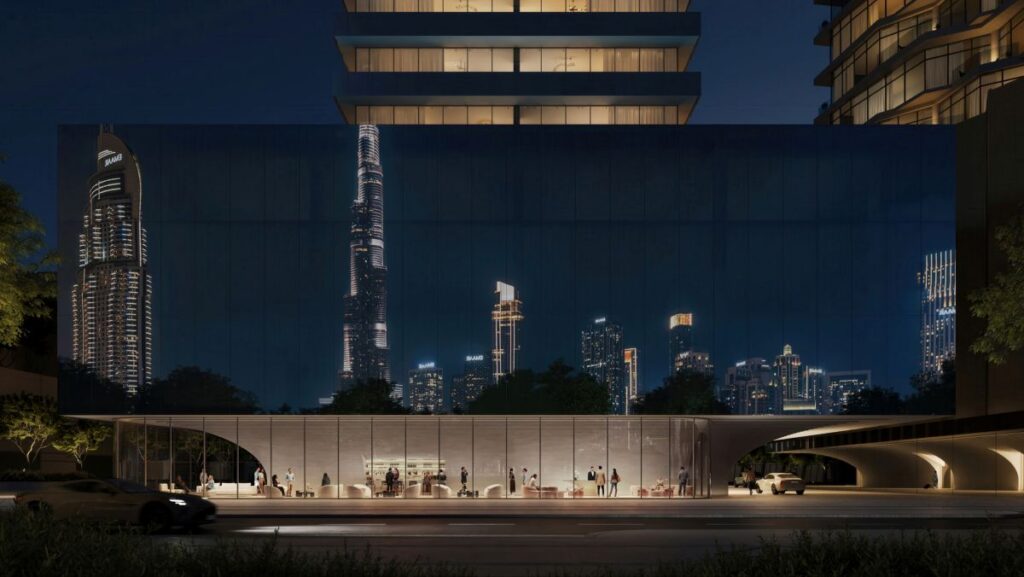
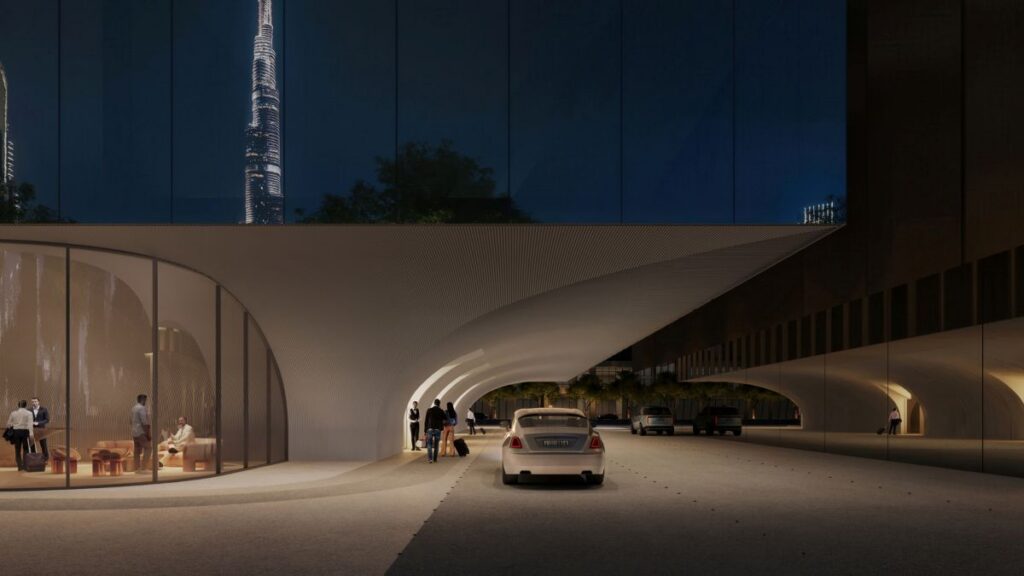
Façade detail render showing horizontal balconies and the transition from mirrored to transparent glass © MVRDV
The aim is to get the LEED Gold rating for Inaura. The sustainability approach was created through a joint venture between Climatize, WSP on façade engineering, and Nulty Lighting on lighting design. The efficient use of rectangular floor plates ensures minimal use of materials for the available area.
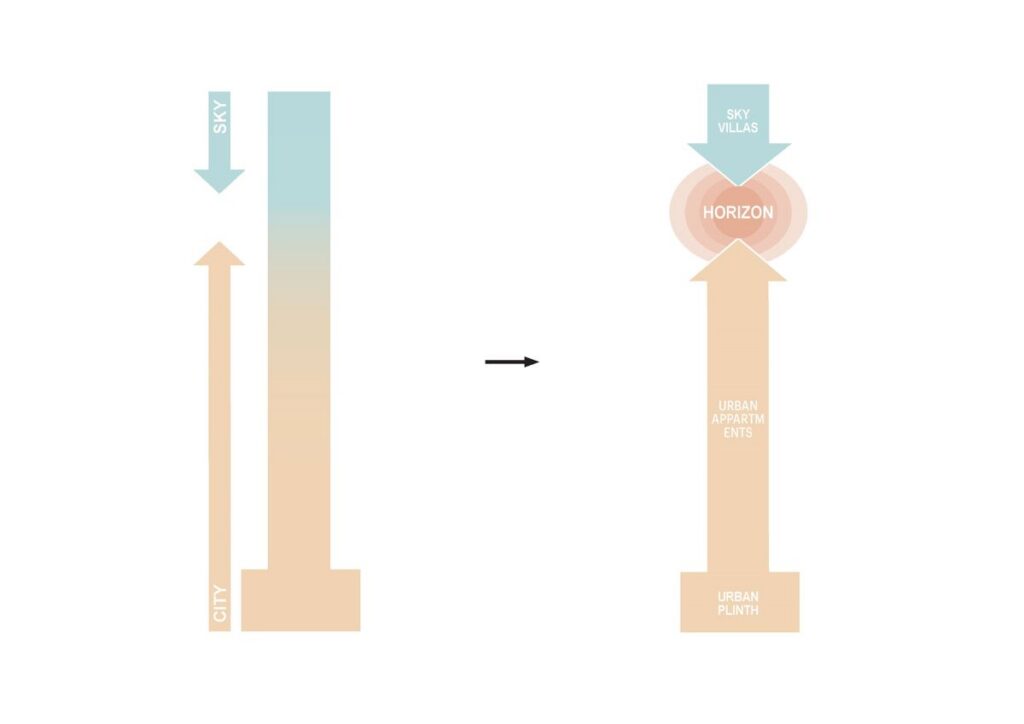
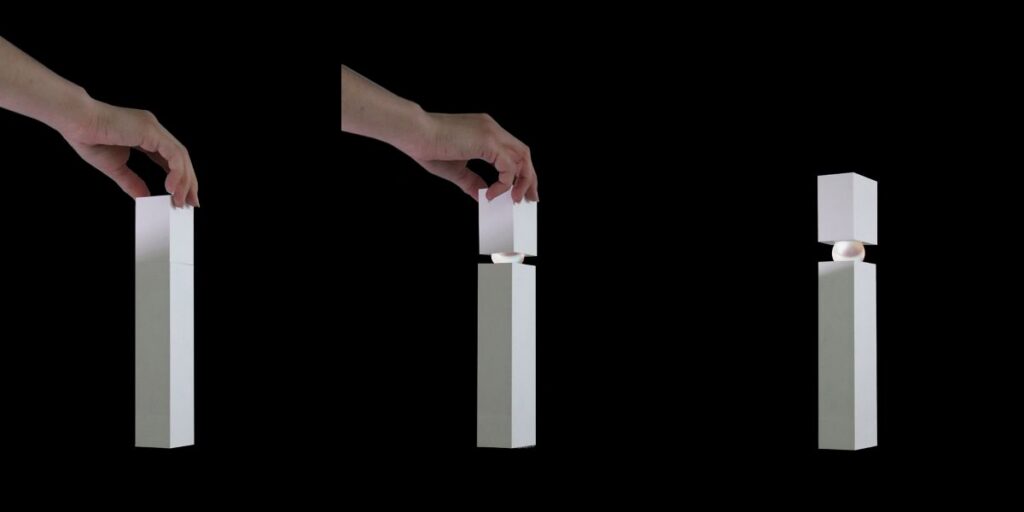
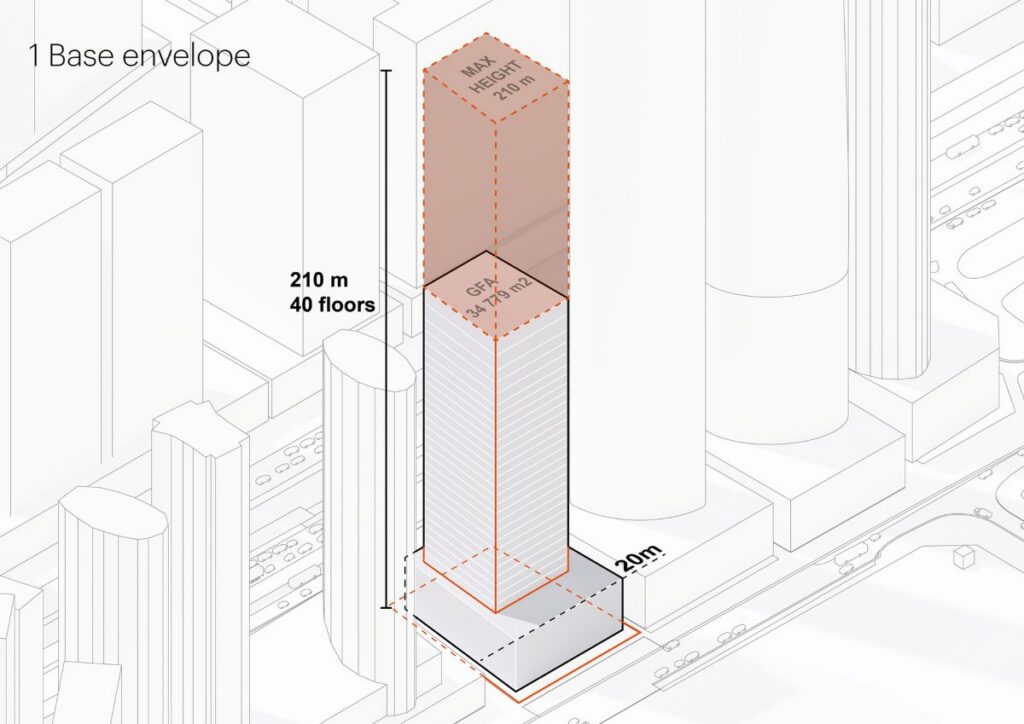
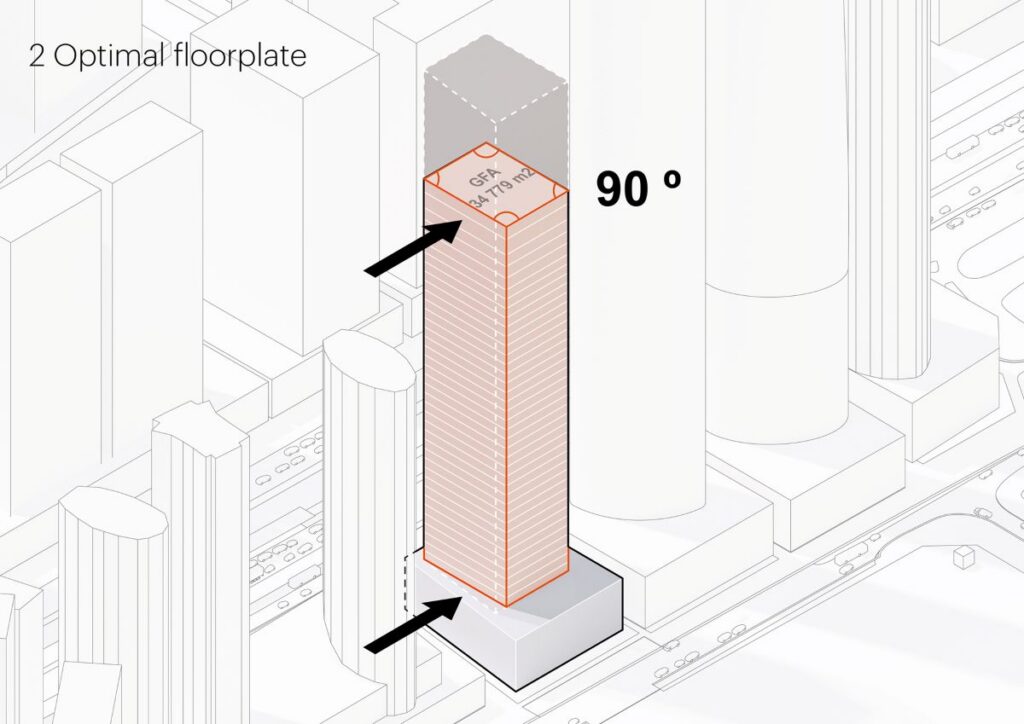
Concept diagram showing the design steps from base envelope to final tower form © MVRDV
Inaura is currently in progress. Client: Arada Developments LLC. Visualisations © The Boundary and © MVRDV.