
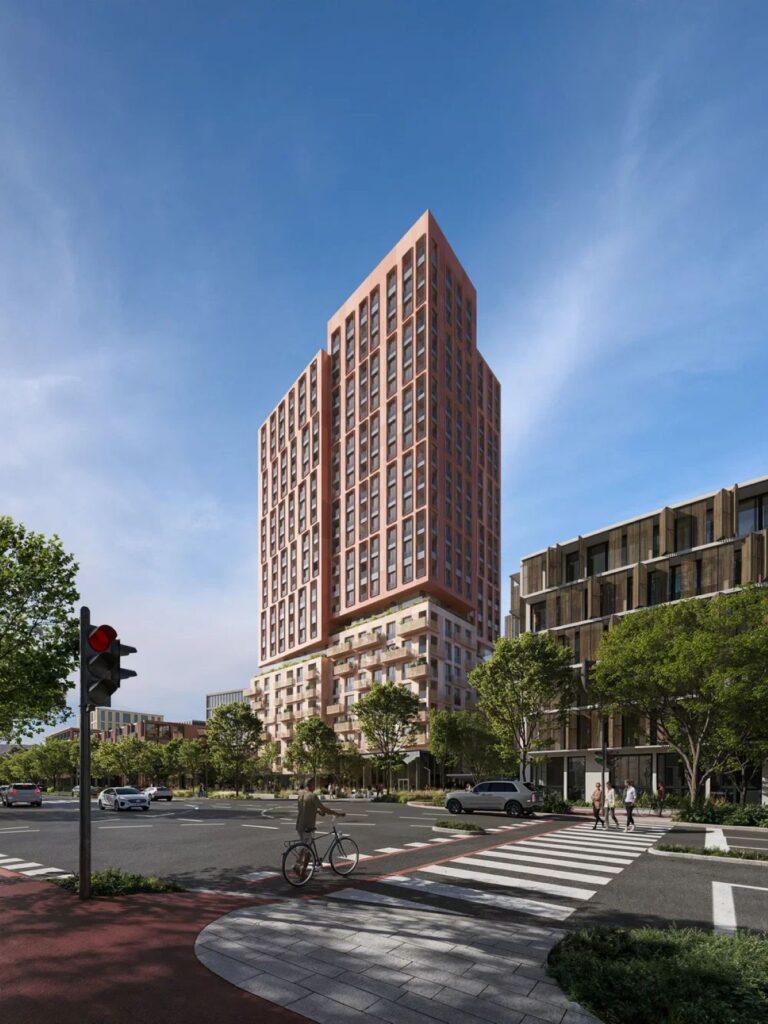
Nordika tower in the station area and skyline of Ljubljana © Snøhetta
Curated by ArchiRev Editorial | Feature Story | Published April 24th, 2026 | Source: Snøhetta
Status: Ongoing
Location: Ljubljana, Slovenia
Client: Corwin
Size: 27,250 m²
With the upcoming construction of a new 23-story tower, Nordika, an essential part of Ljubljana’s skyline, represents a new phase in the city’s development. The towers, which are situated close to the main train station, are part of the overall plan of the region that is changing from a dispersed collection of buildings and activities to a densely populated and interconnected urban neighbourhood. The new high-rise skyscraper will have a unified civic base thanks to the site’s integration of a public plaza, manicured grounds, and daily services into a single urban unit.
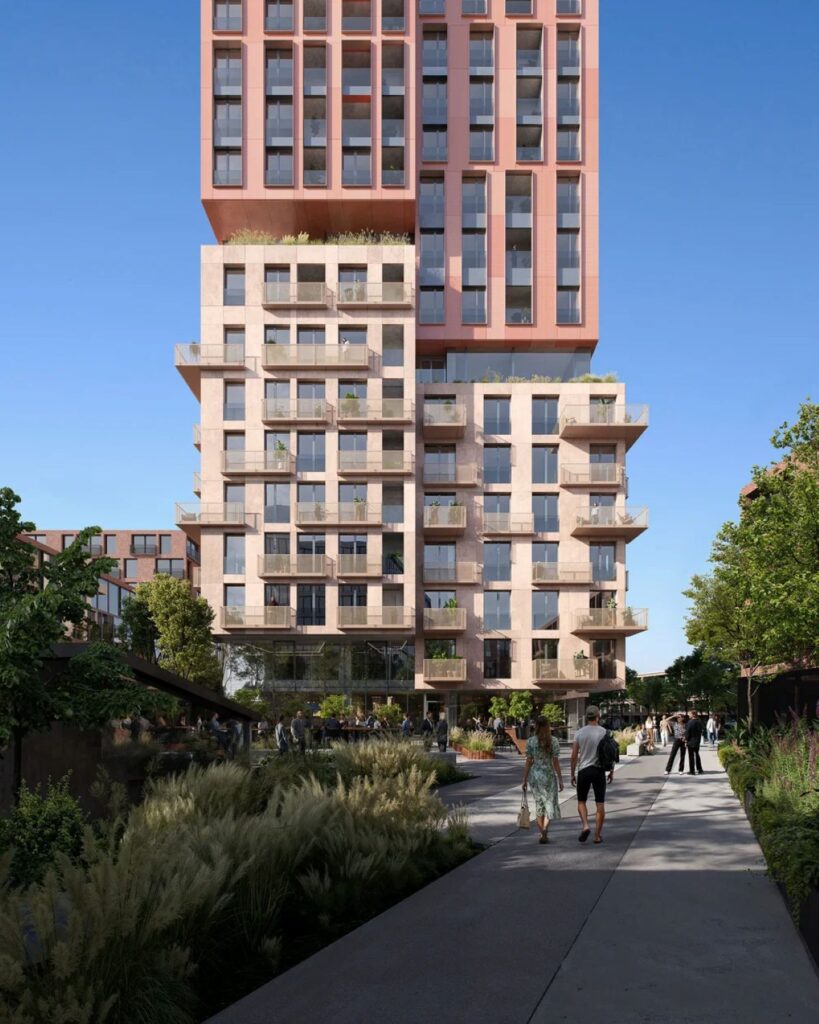
Stepped block-like form and volumetric composition of the Nordika tower © Snøhetta
Snøhetta created Nordika’s design for their client Corwin. The structure will be 82 meters (about 290 feet) tall and hold up to 290 residential units, grouped in several configurations according to domestic living arrangements. In order to blend in with the current urban fabric, the project has been planned as a single high-rise residential building that offers density, access to light and views from the residential building, and advantages from outdoor common areas.
One high-rise residential structure in a largely low-scale setting was a challenge for the design, which was centred on the immediate surroundings. Smaller stacked volumes were used to create the tower’s massing, which resulted in a disjointed impression of the tower’s overall massing. The resulting differences in form offer the chance to improve views, create more desired sun exposure, and develop visual identity.
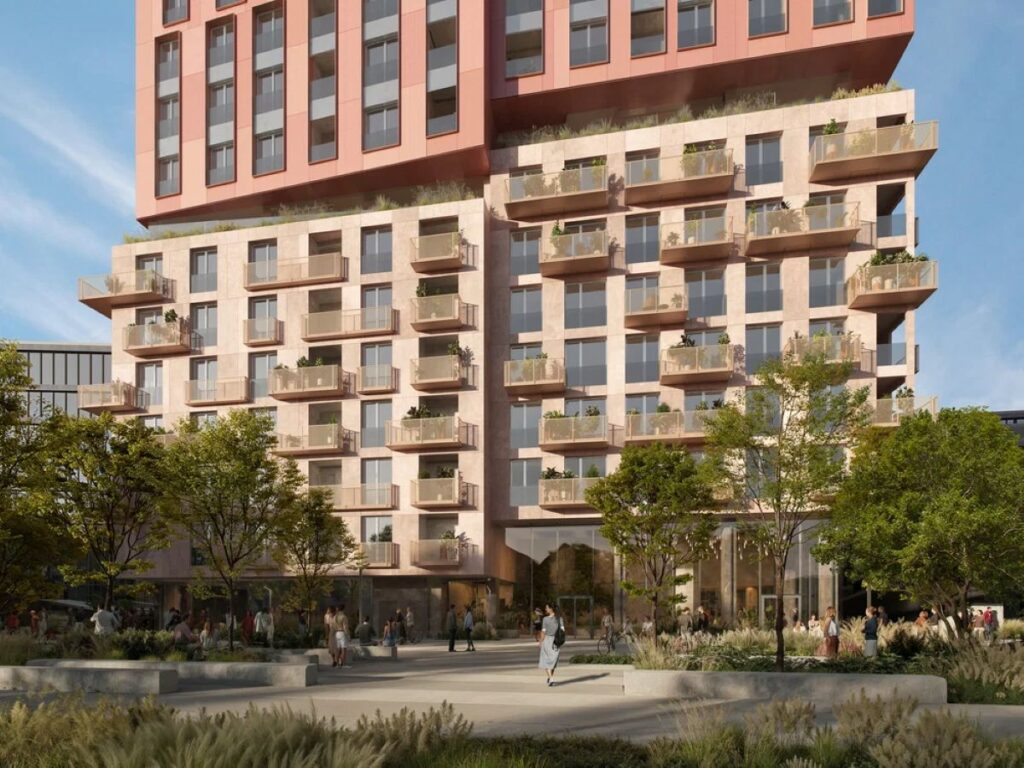
Close-up of the modular balcony pattern on the facade of the Nordika residential tower © Snøhetta
The skyscraper has formed a dialogue with the current urban setting because of its height in relation to nearby projects. The tower’s divided shape provides a rhythm that works well with nearby building scales. Additionally, the tower’s façade is varied by changes in the building’s massing. As housing clusters are specified within the broader development, this approach promotes the idea of vertical neighbourhoods.