
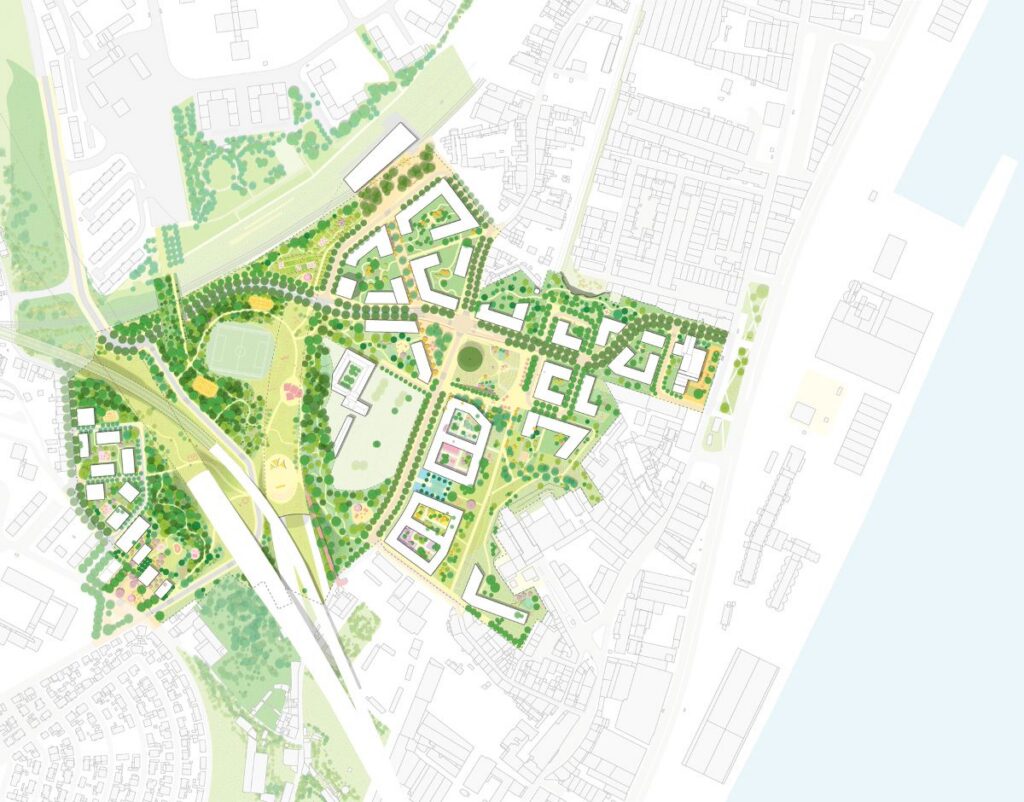
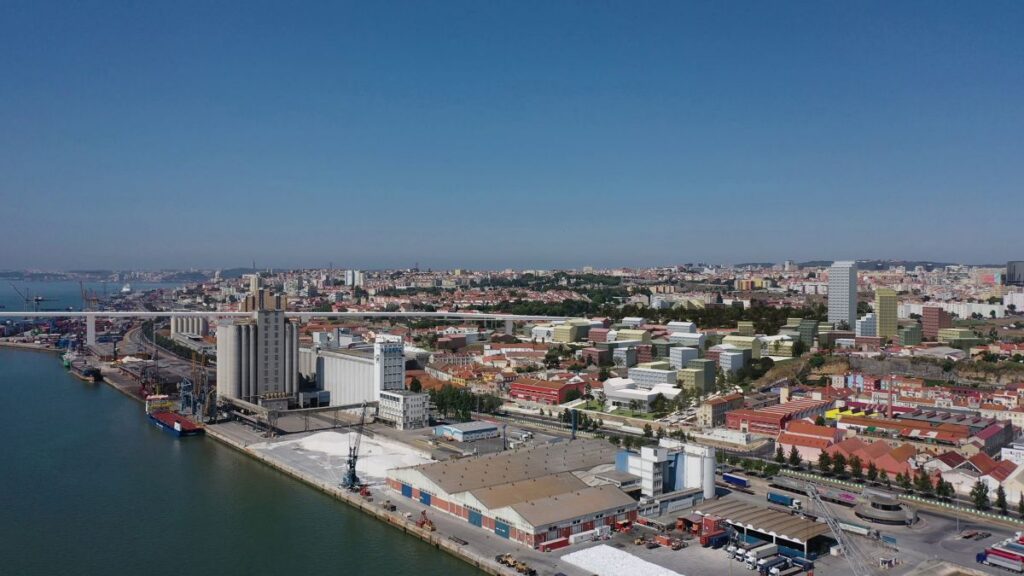
Aerial render of the full Marvila Masterplan site along Lisbon’s riverfront © MVRDV
Curated by ArchiRev Editorial | Feature Story | Published May 18th, 2026 | Source: MVRDV
Typologies: Mixed Use, Residential, Industrial, Infrastructure, Master Plan, Public Space
Themes: Public, Mixed Use, Urbanism
Status: In Progress
Location: Lisbon, Portugal
Year: 2022–
Surface: 278,896 m²
Client: 1875 Finance
The Marvila Masterplan Lisbon, designed by MVRDV and OODA, is among the most important urban renewal schemes being implemented in Portugal today. Spanning an area of about 28 hectares within the Marvila and Beato districts along the eastern riverside of Lisbon, the scheme entails the transformation of a disintegrated and mainly unoccupied site to an organized urban centre, complete with 1,400 housing units.
The place is burdened by history. Formerly agricultural land belonging to the well-off people of Lisbon, it was progressively marked by industrialization since the late 18th century. The railway tracks that criss-cross the locality were an obstacle that ultimately separated the neighborhood from its environment as well as from the River Tagus. In spite of its favorable location between Lisbon’s historical city center and the district of Parque das Nações, the neighborhood had been relatively isolated – an ensemble of empty lots, outdated structures, and undeveloped land.
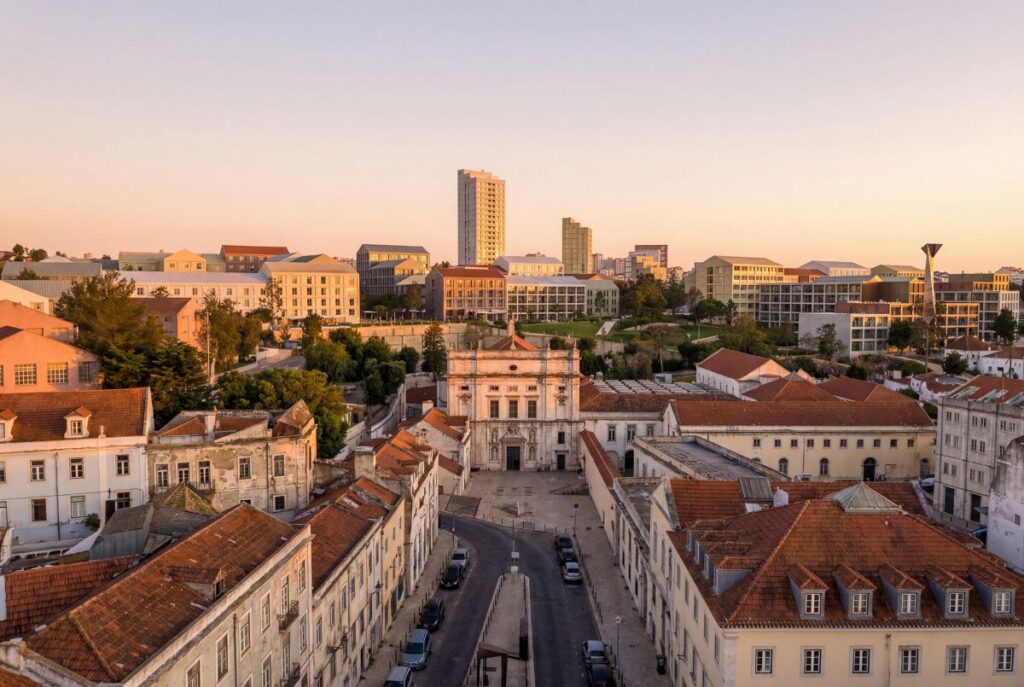
Render showing the four cluster zones and their relationship to the riverfront © MVRDV
Four Clusters, One Continuous City
The masterplan is organised into four distinct clusters — Açúcar, POLU, Beato, and Madre Deus — each connected to its adjacent neighbourhood while forming part of a continuous urban system. Building heights and densities vary across the four zones. Courtyards, open blocks, and public routes ensure permeability throughout. The size and placement of each building responds to topography, views, and the surrounding urban fabric, creating gradual transitions in scale that minimise disruption to neighbouring areas.
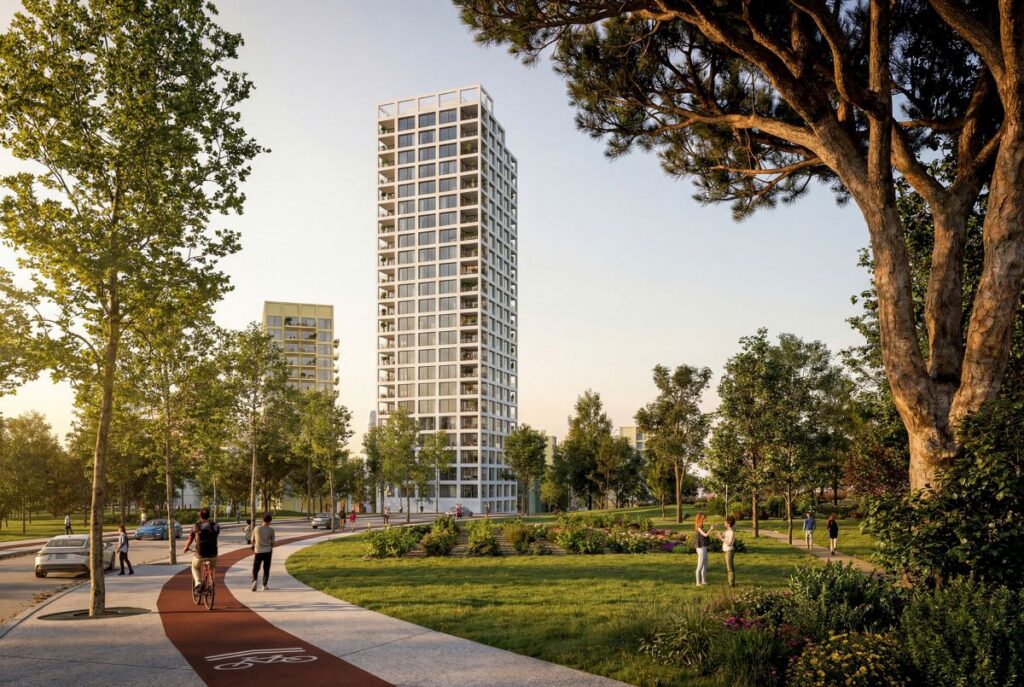
An urban park links the four cluster zones through a series of squares, courtyards, and green corridors. The park contains facilities for walking and cycling, sports, urban agriculture, and events, providing recreation as well as a community focal point. It also takes into account the effect of the proposed Third Tagus Bridge that will traverse the site, where green buffers and some structural coverage help lessen its influence.
Reconnecting the Waterfront
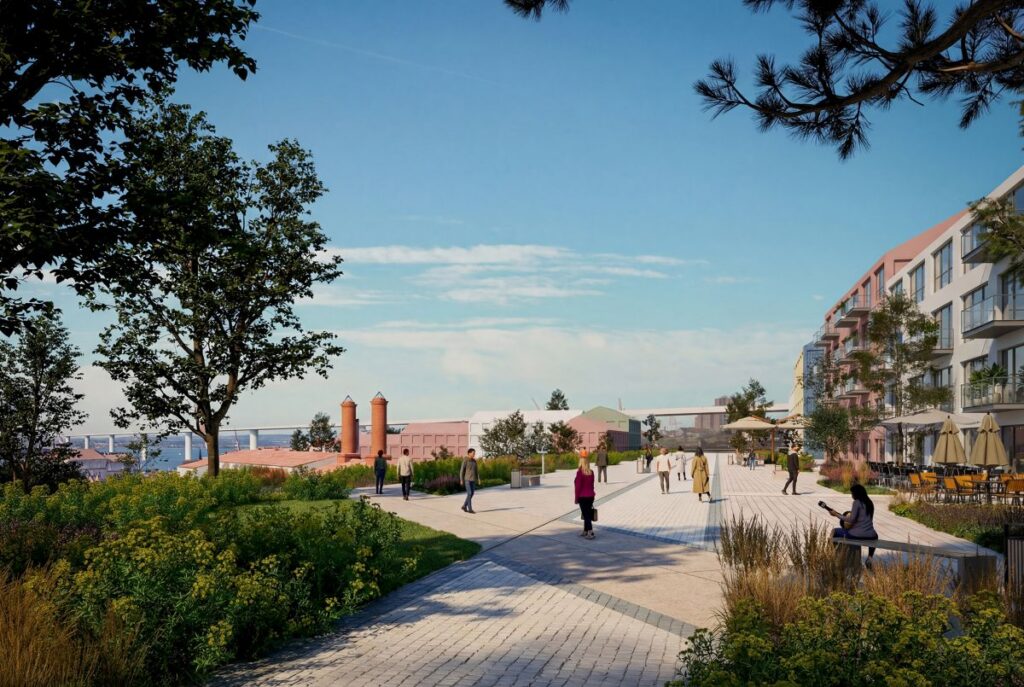
Another significant decision made by the masterplan concerns the current railway infrastructure. By building a new deck above the Northern Line, the previous barrier that separated the site has been removed, allowing pedestrians to move freely from the train station to the riverside. In addition to creating a new space and new vistas toward the Tagus, the new roads link up different levels and encourage walking and cycling within the area.
Render of the new deck covering the Northern Line railway tracks © MVRDV
There is also a proposal to develop a new structure for Marvila station that will enhance the integration of the site with the larger public transport system. The development process for each stage involves the simultaneous creation of both public spaces and green infrastructure.
Heritage, Housing, and Sustainability
The programme accommodates a variety of housing typologies, including affordable and social housing, alongside a day centre, a care home, and spaces for commerce and services. This mix of functions keeps the area active throughout the day and serves a diverse range of residents and visitors.
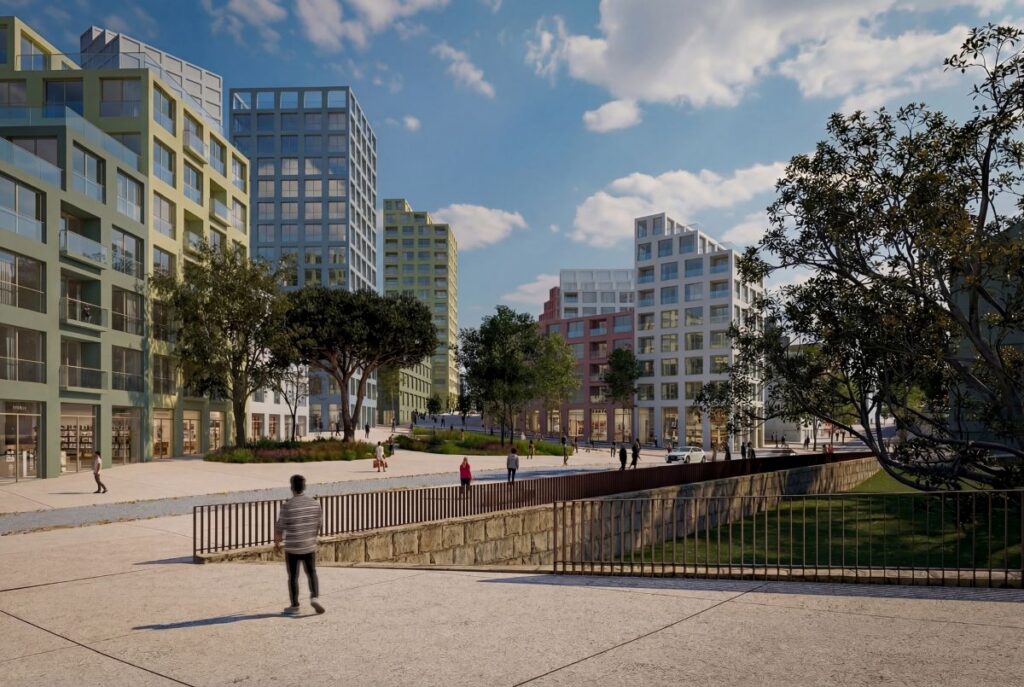
Render of the Convento do Beato integrated into the new public space © MVRDV
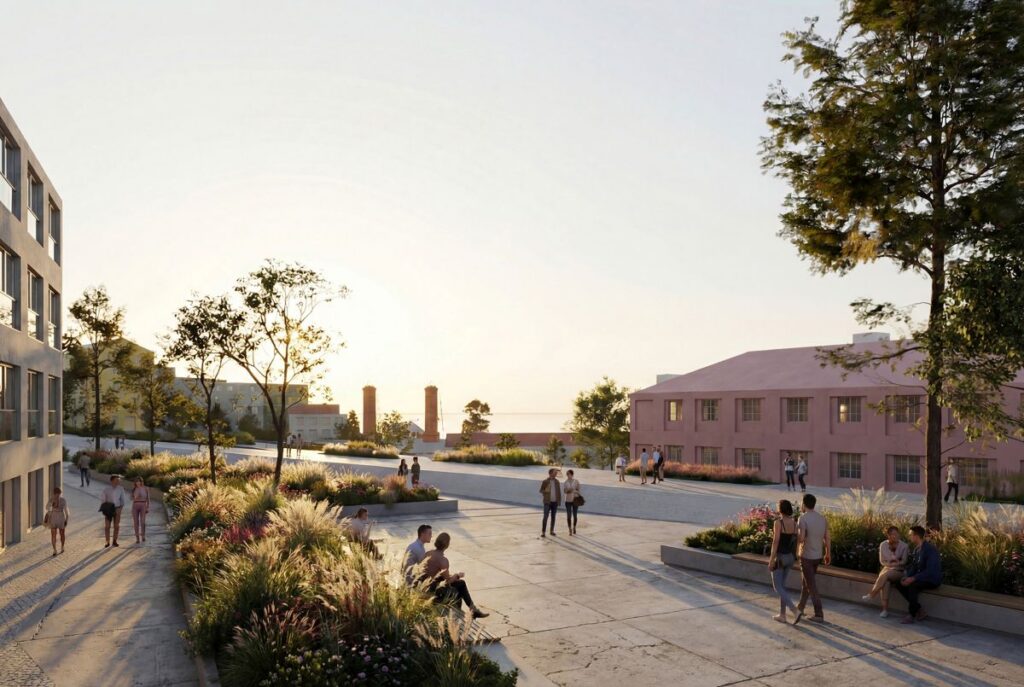
The existing heritage and nature become part of the plan and not its replacement. The Beato Convent remains intact and incorporated into the design. An ancient rubber tree becomes the focal point of an entirely new public space. Solar panels and new materials play their role in minimizing the carbon footprint of the development. Water retention areas and habitats become part of the landscaping approach, promoting biodiversity in the process.
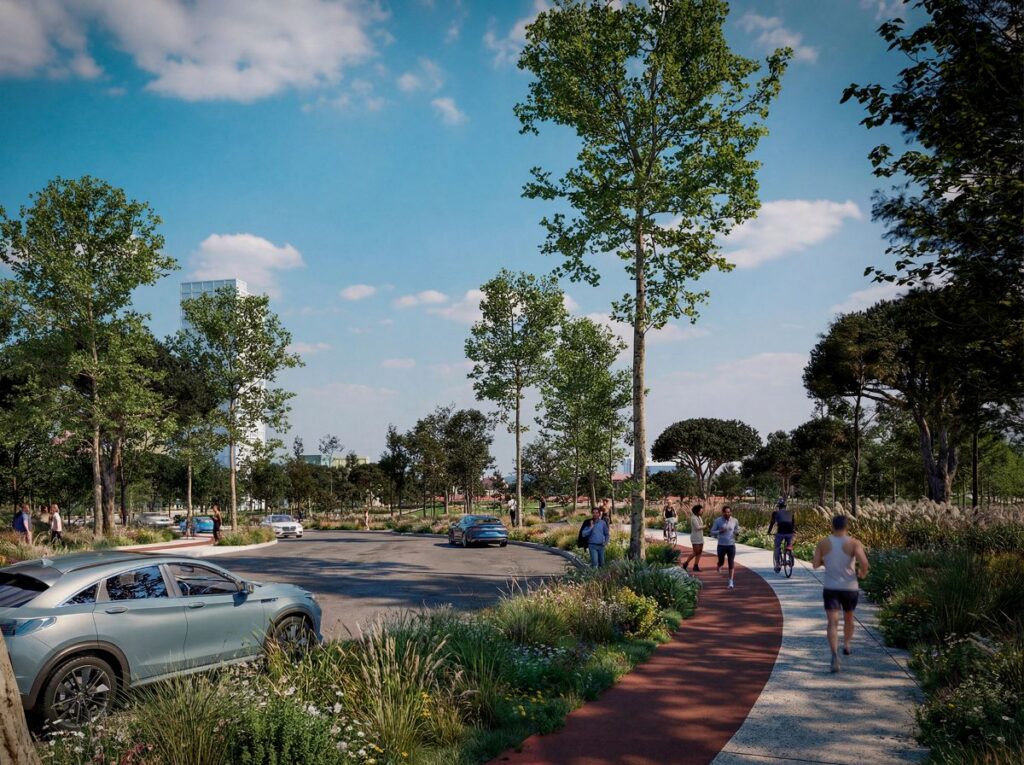
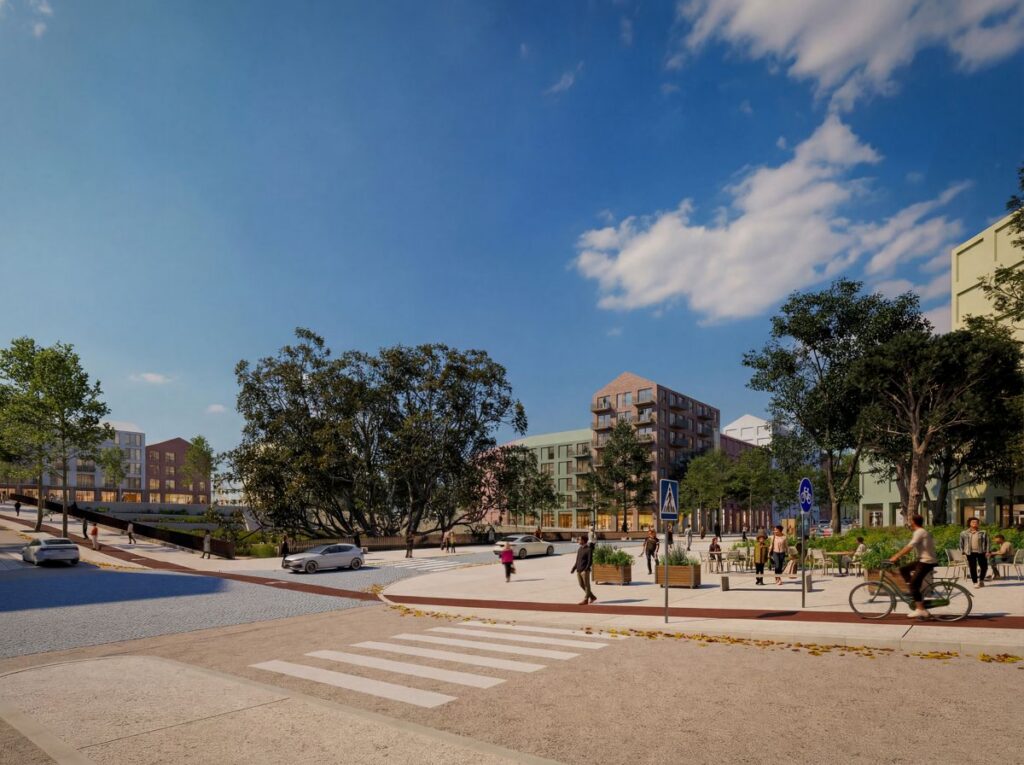
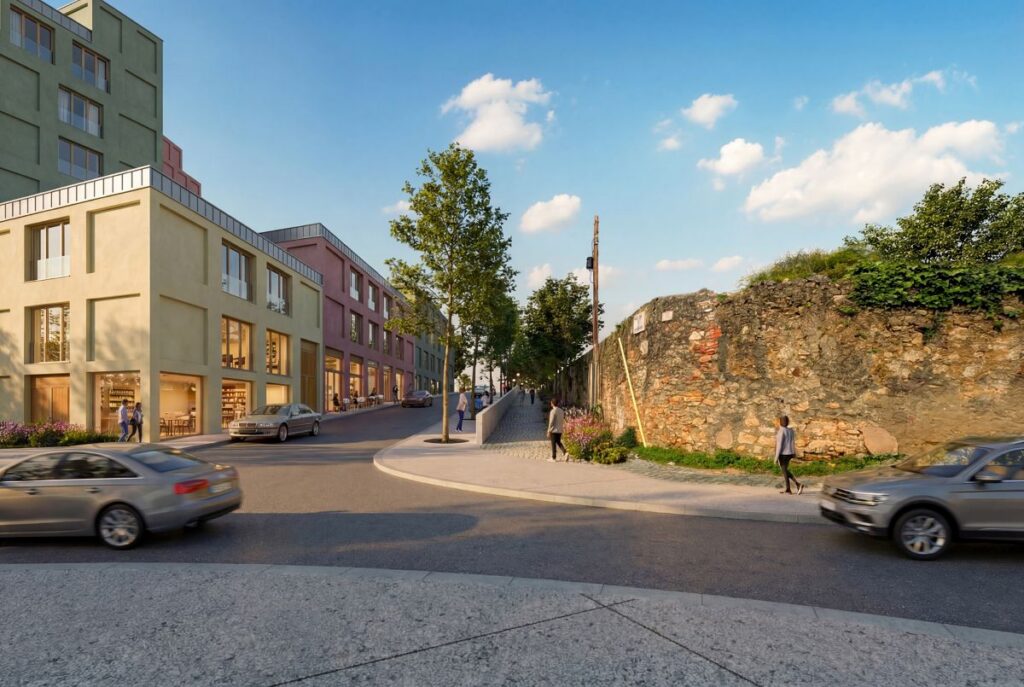
Render of the rubber tree public square at the heart of the masterplan © MVRDV
Architect: MVRDV
Founding Partner in Charge: Jacob van Rijs
Partner: Fokke Moerel
Design Team: Stephan Boon, Maria Stamati, Thiago Maso, Enno Zuidema, Laura Huerga, Nahid Aghaie Tabrizi, Xiaochun Sheng
Business Development: Sruti Thakrar
Copyright: MVRDV — Winy Maas, Jacob van Rijs, Nathalie de Vries
Collaborators:
Co-Architect: OODA
Landscape Architect: LOLA Landscape Architects
Structural Engineer: Thornton Tomasetti
Project Coordination: PFXCO
Images: © OODA