
Curated by ArchiRev Editorial | Feature Story | Published March 9th, 2026
Source: Snøhetta
Project: Shanghai Grand Opera House
Typology: Performance Space / Public Space
Location: Expo Houtan neighbourhood, Shanghai, China
Architect: Snøhetta
Client: Shanghai Grand Opera House
Status: Under construction
Size: 146,786 m2
Collaborators:
East China Architectural Design & Research Institute (ECADI)
Theatre Projects
Nagata Acoustics
Schlaich Bergermann partner
Meiss Architecture & Engineering Office
Main Performance Spaces:
2,000-seat main auditorium
1,200-seat secondary stage
1,000-seat flexible theatre
Programme:
Performance halls, restaurants, galleries, exhibitions, museums, education centres, libraries, small cinemas, and public gathering spaces
The Shanghai Grand Opera House is going up near the Huangpu River in the Expo Houtan neighbourhood of Shanghai. This place is going to be a deal for the city. The people in charge had a contest to see who would design it. They picked Snøhetta to do the job. Snøhetta is working with some architects from Shanghai called ECADI.
The opera house is still being built. It is part of a plan to make Shanghai a more important city around the world. The government has a plan called the Five-Year Plan and this project is a big part of it. They want to make Shanghai a city that is known for its culture. They want to make the city stronger in terms of money and science.
The Shanghai Grand Opera House is going to be a place where all sorts of people can go. The Shanghai Grand Opera House will have opera performances but it will also have Chinese opera and classical concerts. The Shanghai Grand Opera House will even have some shows that are meant to be fun, for younger people.
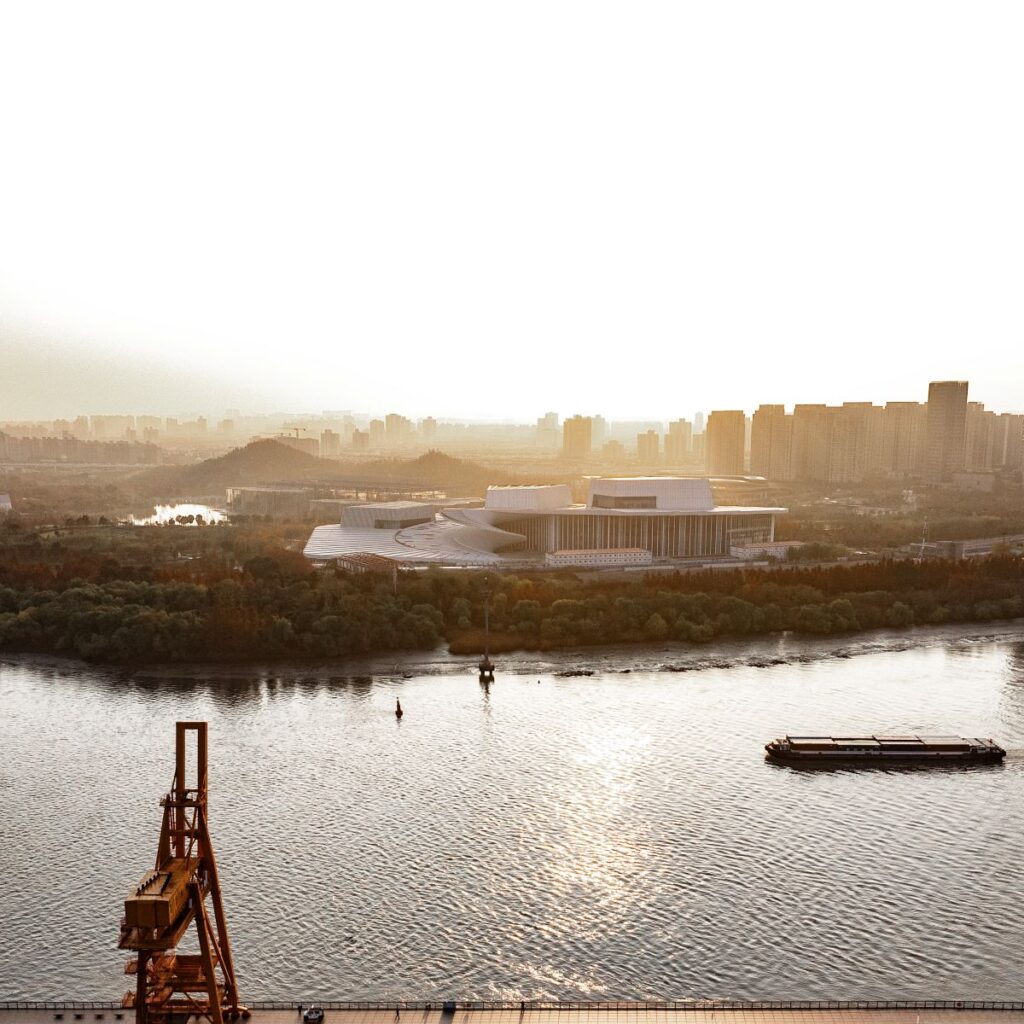
Aerial rendering of the Shanghai Grand Opera House along the Huangpu River © Snøhetta
The opera house is in the Expo Houtan district by the Huangpu River. The area is designed to be eco-friendly and use carbon, which fits with the goal of making the opera house a public cultural spot that everyone can access.
The landscape plan around the building uses a design that matches the shape of the opera house. This helps people see the building and the city, around it clearly and also frames the views of the river. The opera house stays visible. Stands out in the city because of how its connected to the landscape.
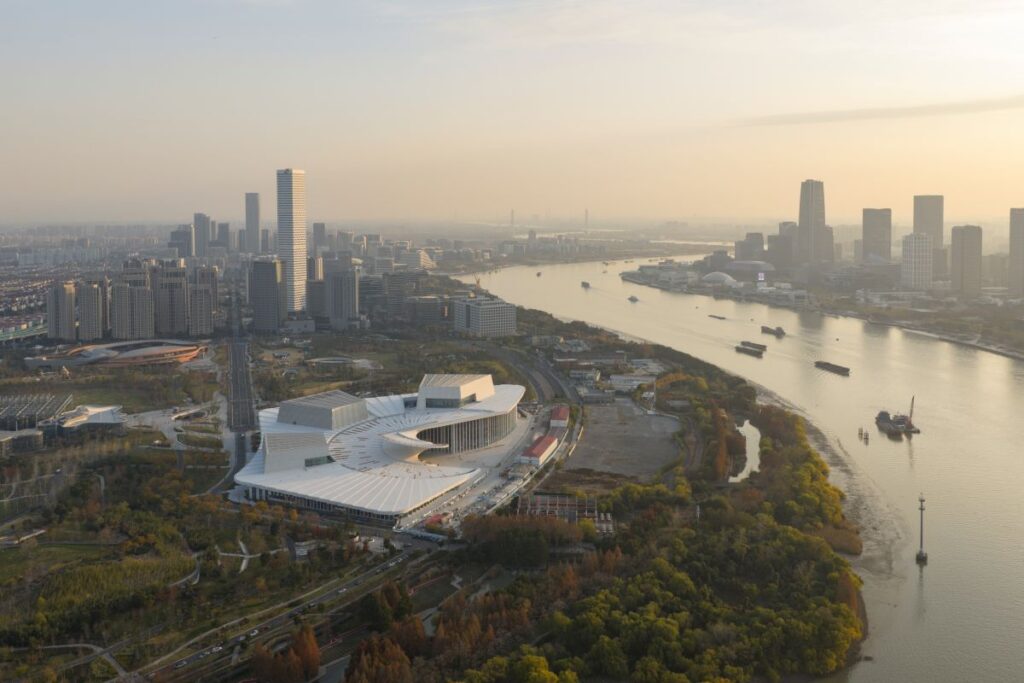
Aerial view showing the radial landscape layout and riverfront context © Snøhetta
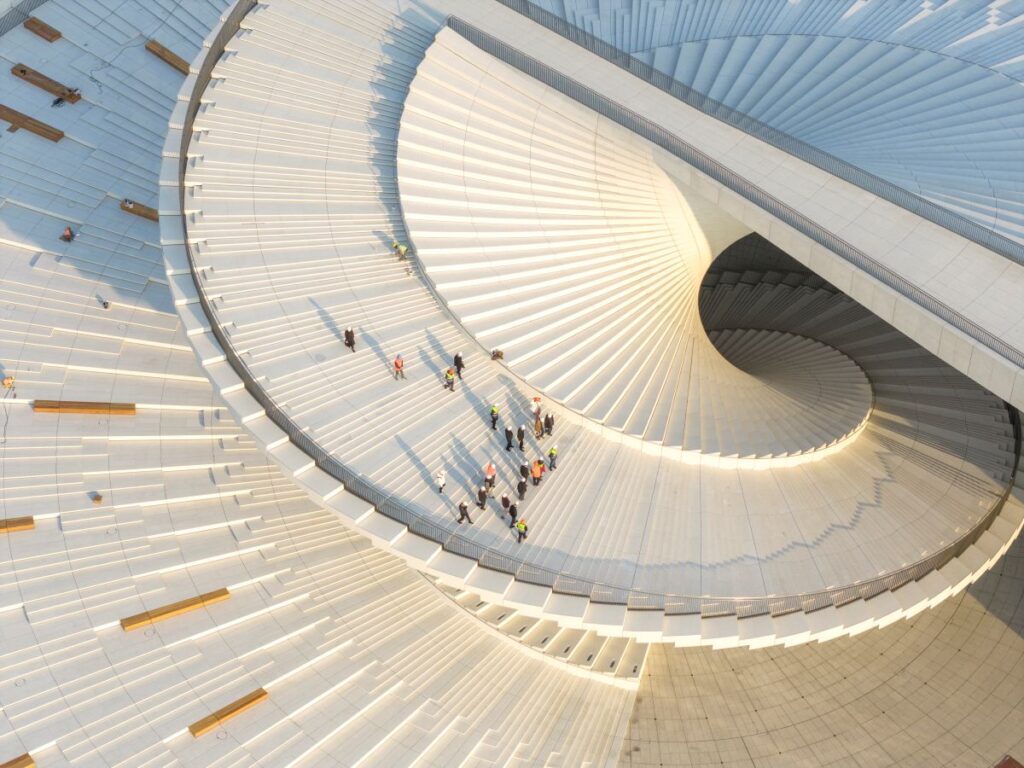
The projects roof is really something. It is a curve that twists and turns like a fan. This roof is meant to remind people of a Chinese fan that opens up. It gives the feeling of movement like people are dancing or performing.
The roof is shaped like a circle that opens up as it goes up. This makes a lot of space and a special surface. As the roof twists and turns it makes a staircase that connects the ground to a higher area where people can walk around. When people walk on this path they see the city and the Huangpu River from angles. This makes the building feel like it is part of the experience of being in the city.
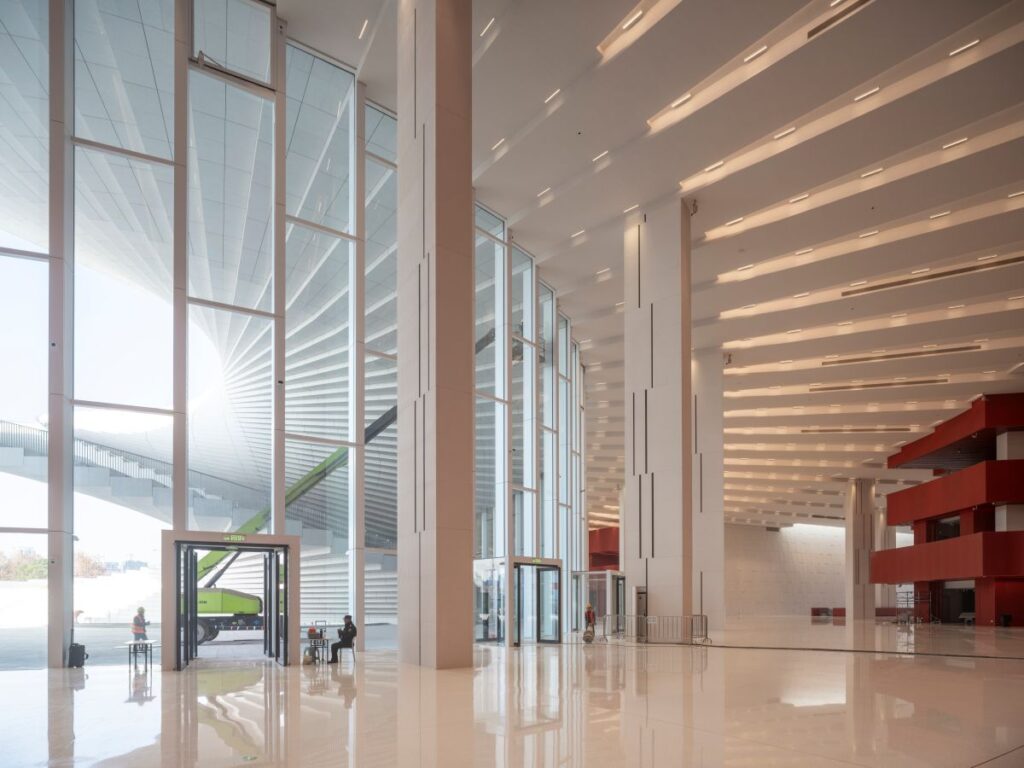
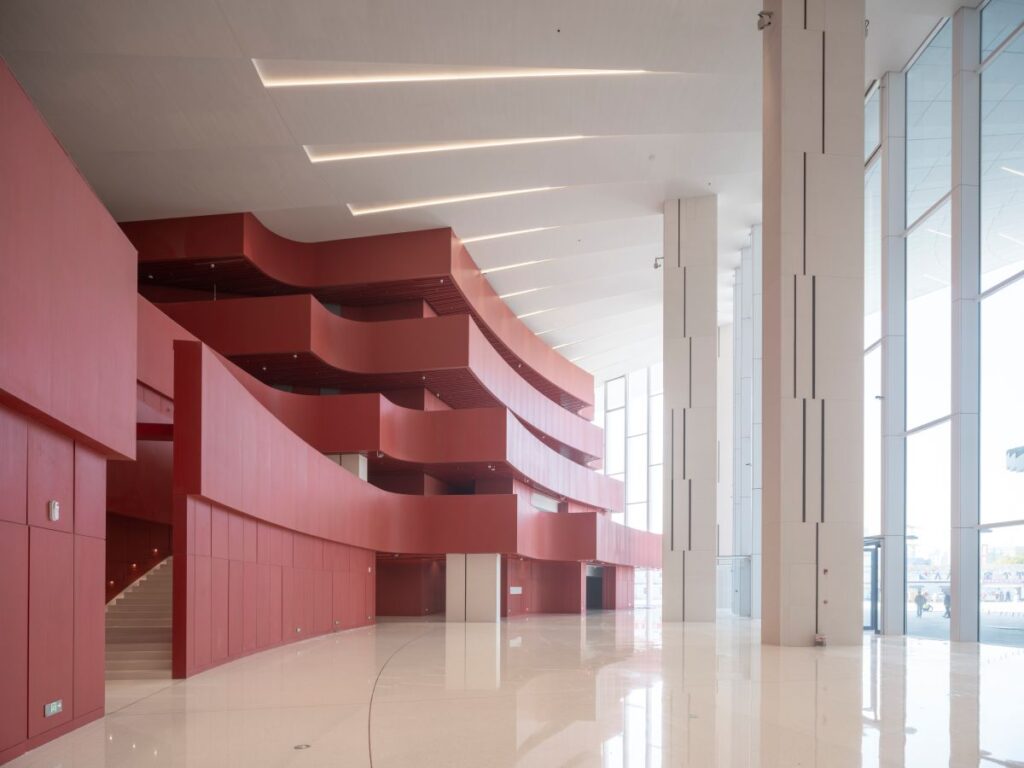
The twisting movement of the roof is also inside the building. It shapes the areas where people wait the paths they walk on and the three big rooms where people perform. The projects logo even looks like a fan that’s open. The opera houses logo has this shape, which is easy to recognize. The whole project is connected by this idea of a twisting, turning shape, like the project itself the opera house.
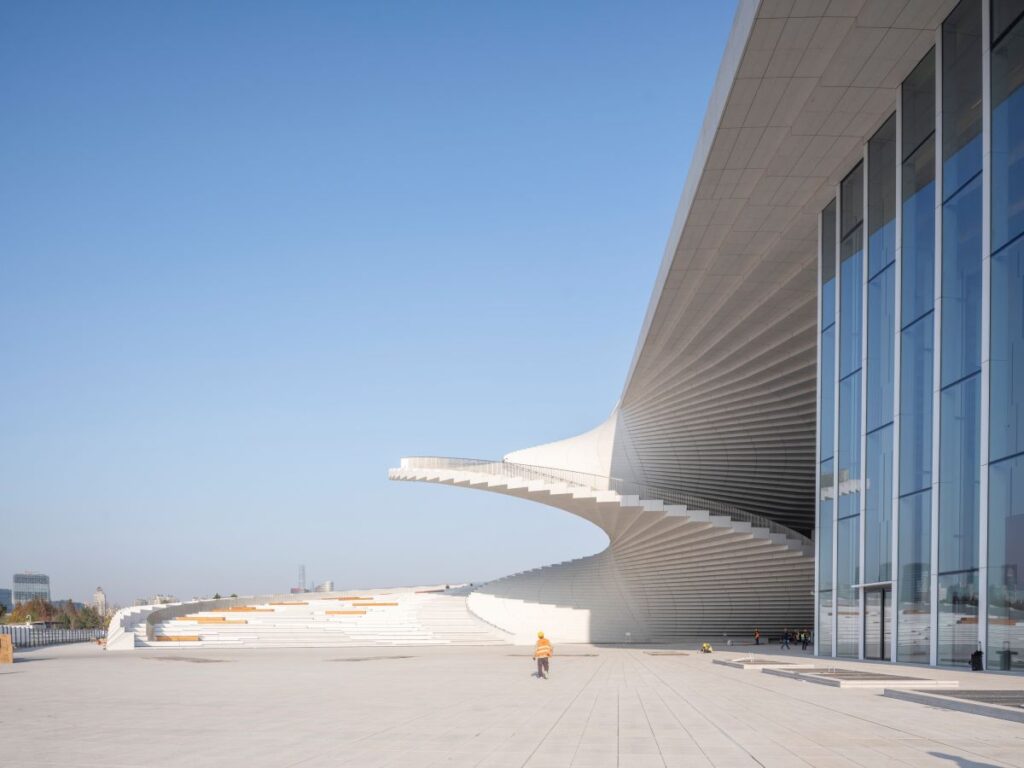
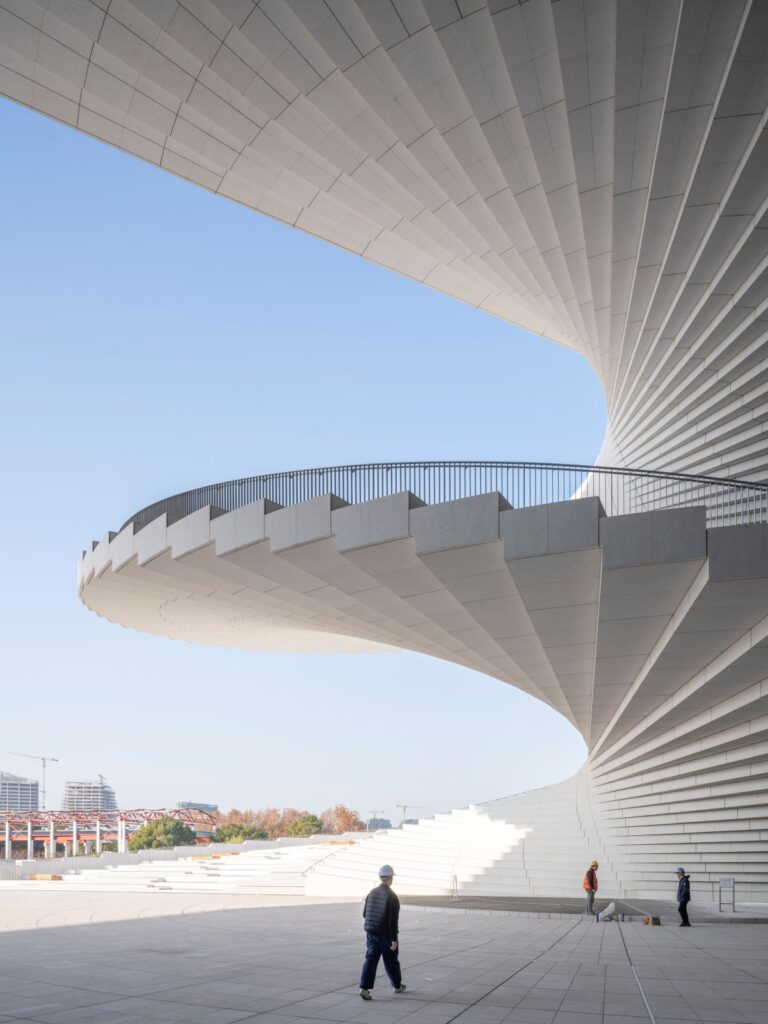
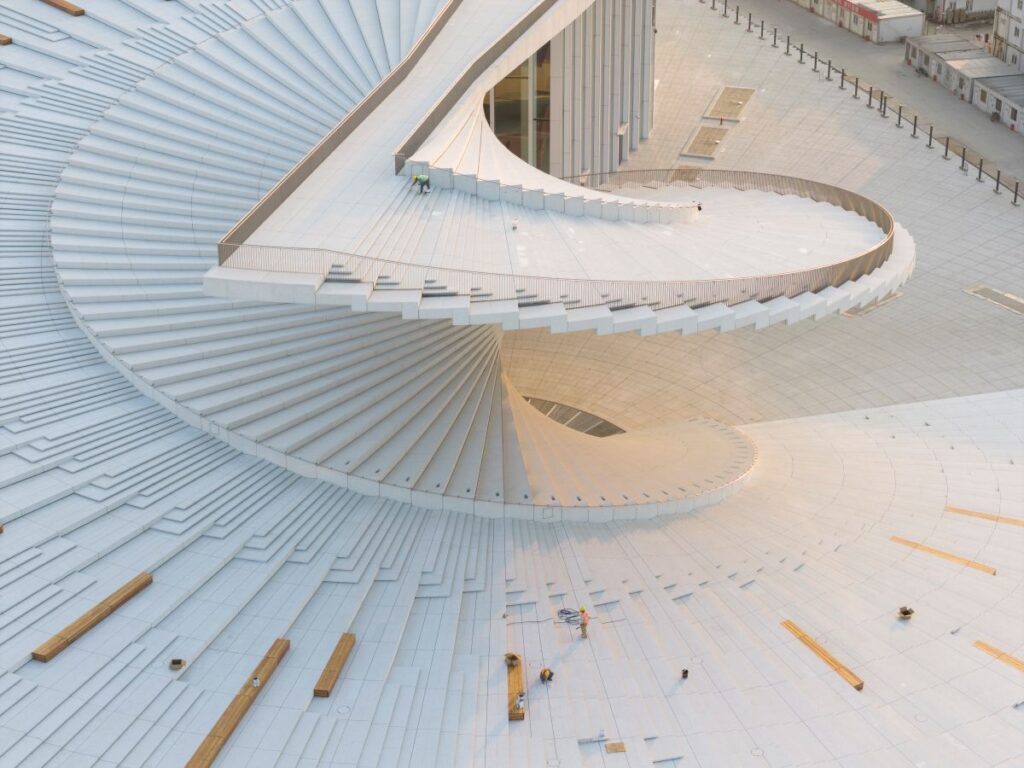
Exterior perspective highlighting the fan-shaped roof and spiralling public pathway © Snøhetta
At the centre of the building are three performance venues designed to support a broad range of productions. The main auditorium, with seating for 2,000 people, is conceived as the primary stage for major operatic productions and concerts. Engineered with advanced technical systems and acoustic design, the hall functions as a highly calibrated performance environment.
A second stage with 1,200 seats provides a more intimate setting for smaller performances. Meanwhile, the third stage offers seating for 1,000 people with flexible arrangements that allow for experimental productions and alternative stage configurations. Together, these venues enable the opera house to host both traditional performances and contemporary interpretations of the art form.
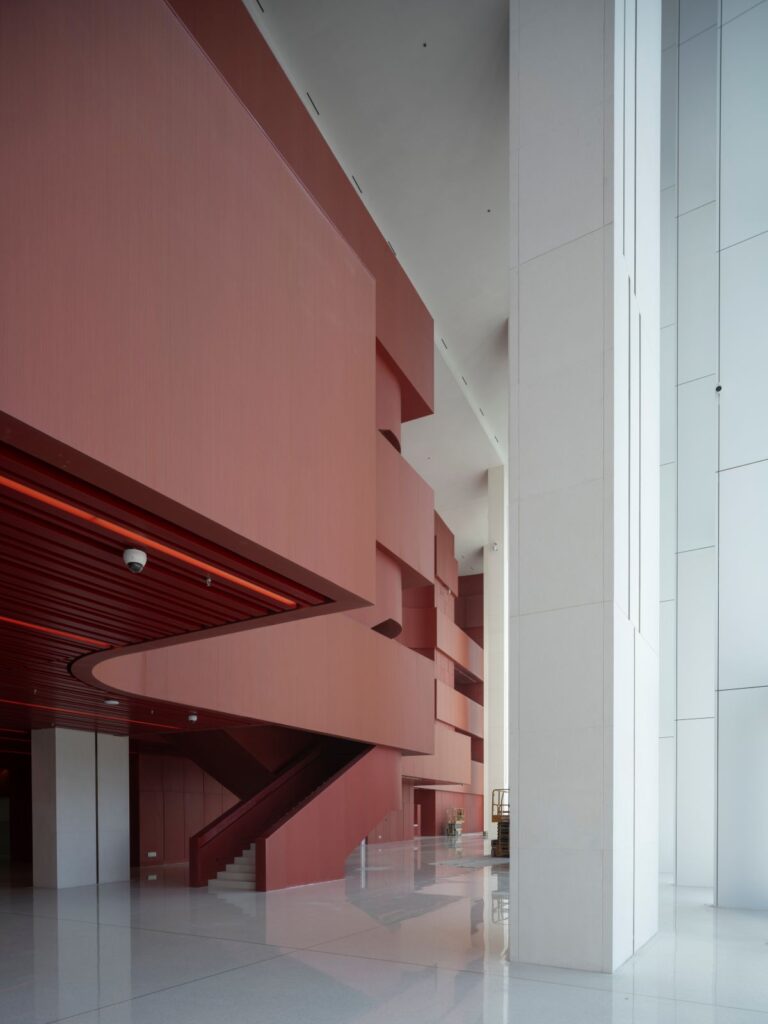
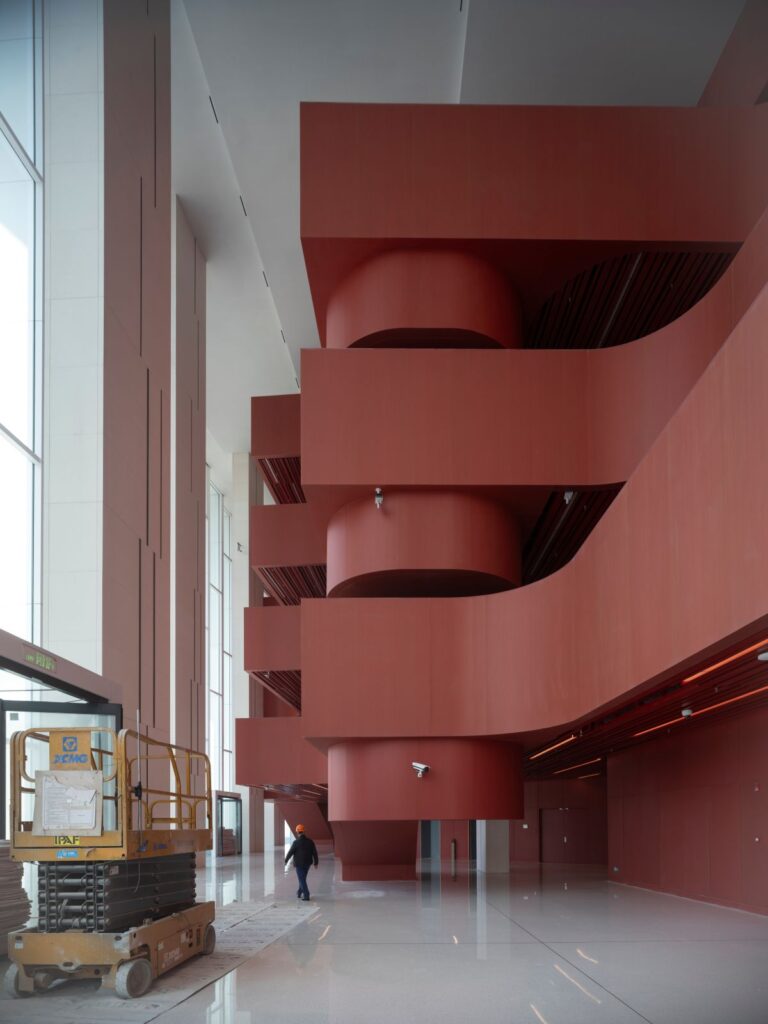
Interior rendering of the main auditorium © Snøhetta
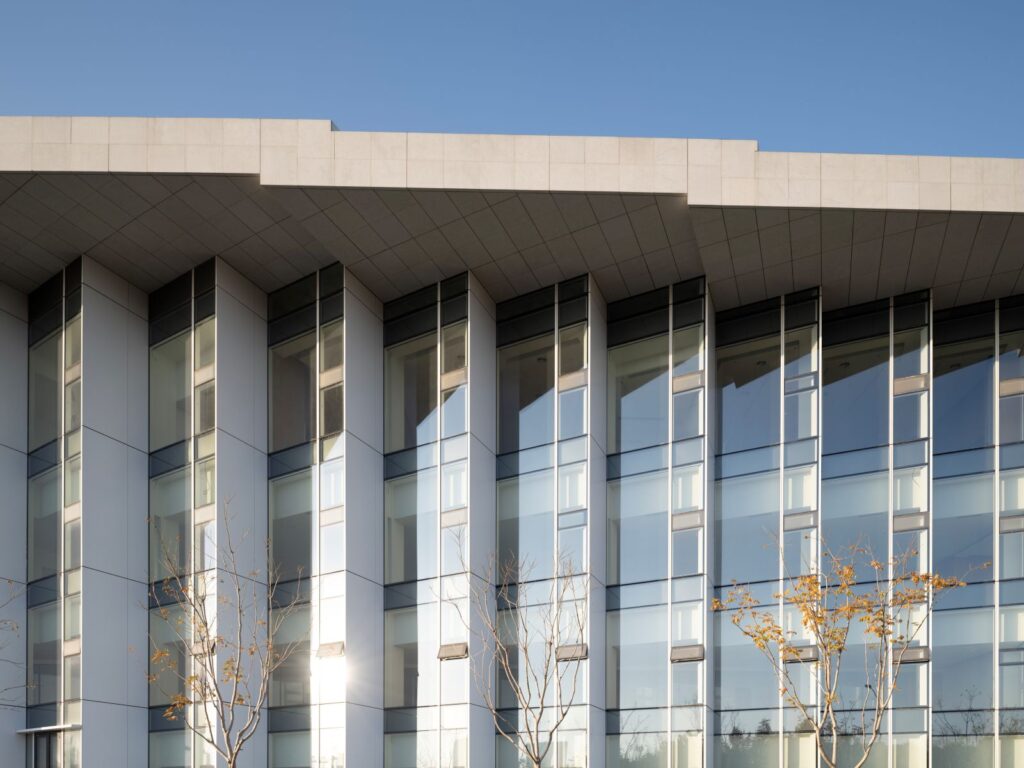
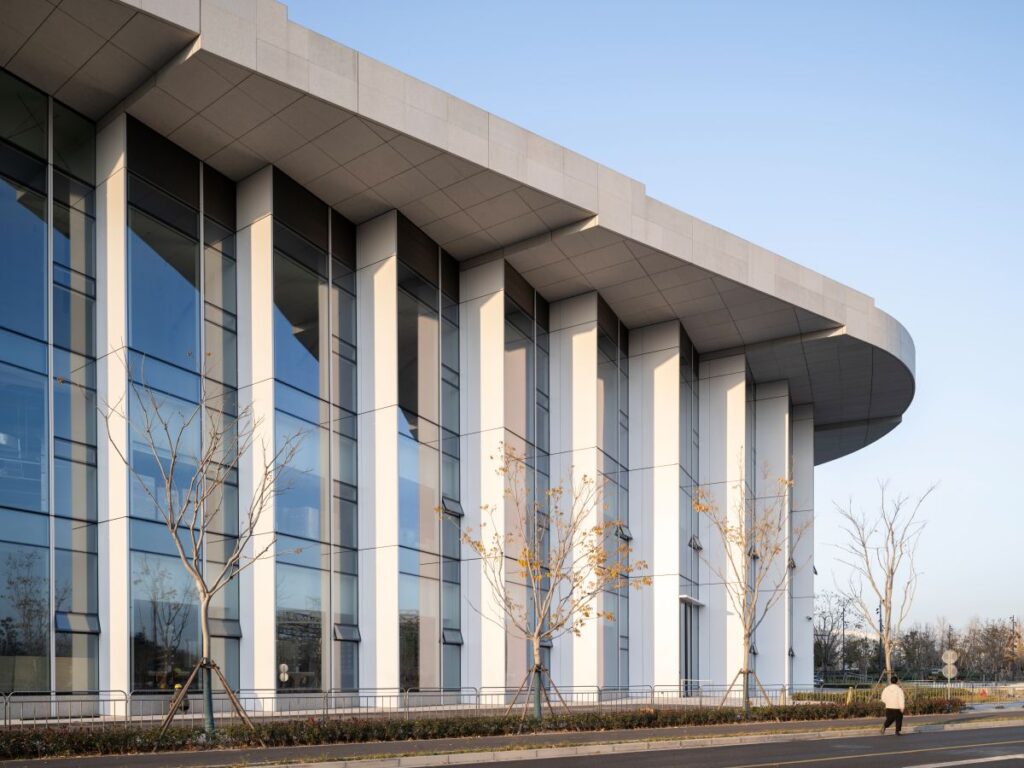
Material choices throughout the building combine technical performance with visual warmth. The exterior of the opera house is defined by a white façade, contrasting with the soft silk lining used within the interior spaces.
Oak wood is used extensively for gallery floors and the main hall interiors, supporting acoustic performance while establishing a tactile architectural character. Within the main auditorium, the wood is stained in dark red tones, enhancing the visual depth of the performance space.
Large expanses of glass introduce natural light into the main hall, allowing the atmosphere of the building to shift throughout the day and across seasons. At night, lighting transforms the stage towers into glowing lanterns that illuminate the roof and skyline, reinforcing the opera house’s presence within the city.
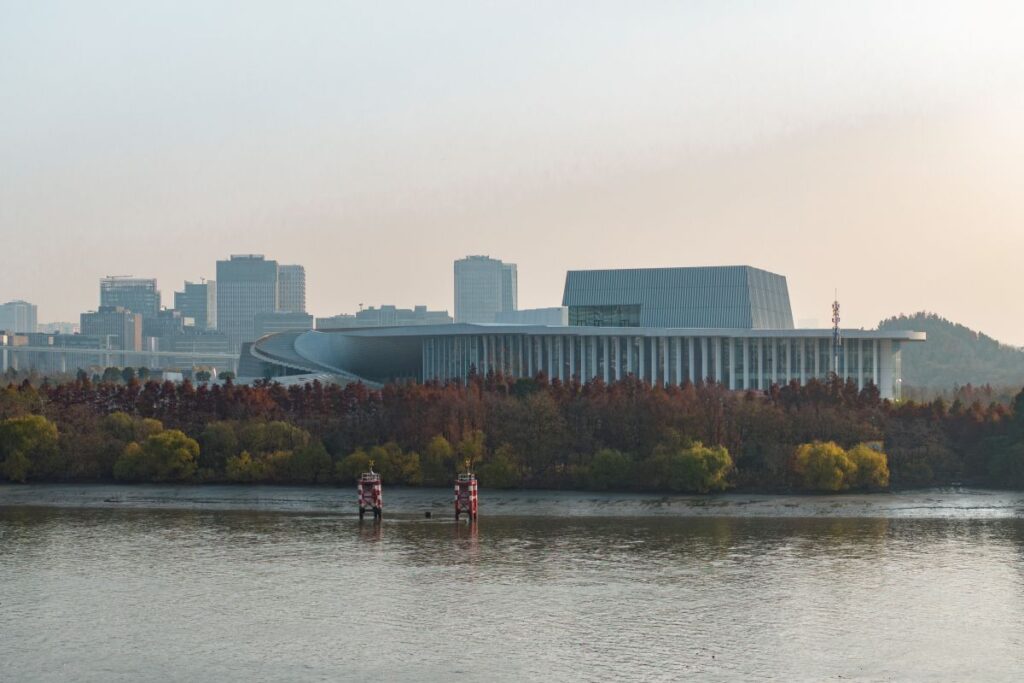
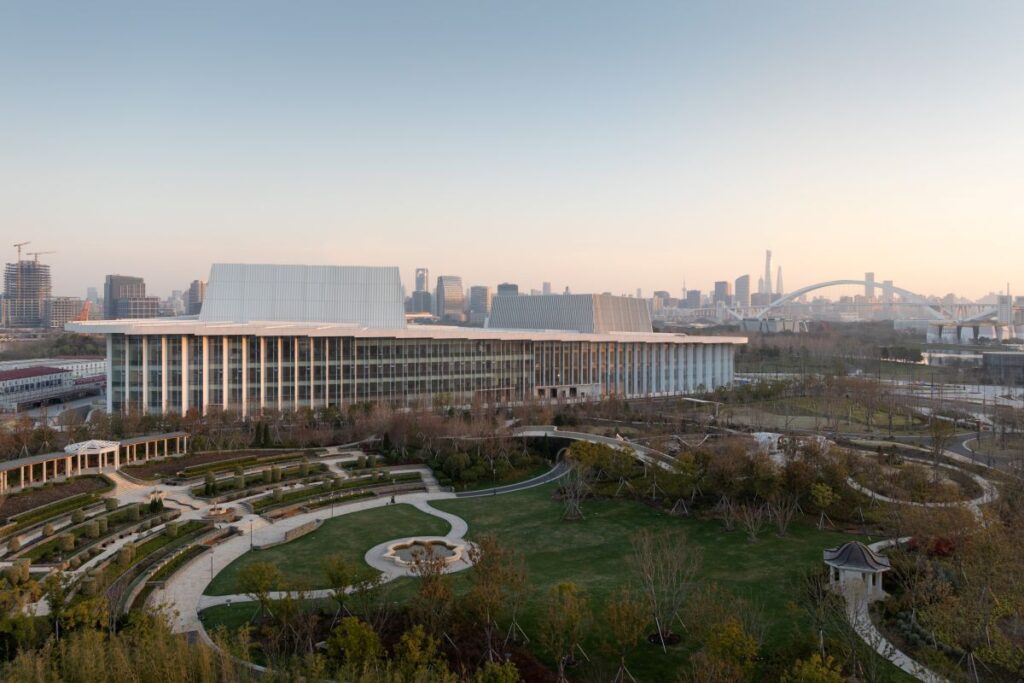
Night view showing illuminated stage towers and roofline © Snøhetta
Beyond the performance halls, the Shanghai Grand Opera House is designed as a public destination accessible throughout the day and year. The rooftop becomes an elevated civic platform capable of hosting both everyday visitors and large public events.
A network of cultural and social spaces—including restaurants, galleries, exhibitions, museums, education centres, libraries, and small cinemas—extends the building’s function beyond performance. Together, these elements encourage continuous public engagement and reinforce the opera house’s role as a shared cultural environment.
As the construction moves forward the Shanghai Grand Opera House is becoming a landmark that brings together buildings, shows and community life.
The buildings unique design and public areas make it a project that aims to make Shanghai a major cultural hub.The Opera House wants to be a place for the city and its residents, not a fancy building.
It reflects a goal to make Shanghai a global centre, for culture.
The distinct form and open spaces will make it a place where people can come together.