
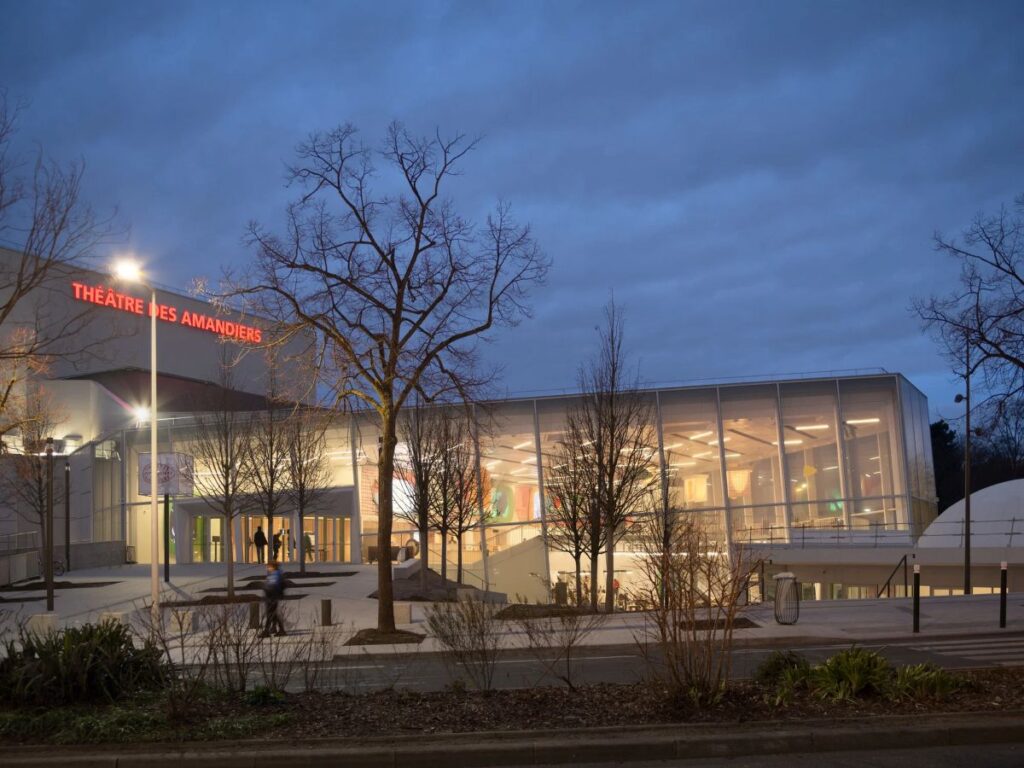
A wide evening shot of the theater’s glowing glass facade, showing the interior activity visible from the surrounding plaza © Snøhetta
Curated by ArchiRev Editorial | Feature Story | Published April 13th, 2026| Source: Snøhetta
Typologies: Performance Space
Status: Completed
Location: Nanterre, France
Client: City of Nanterre
Collaborators
Associate Architect: SRA Architectes
Set Designer / Scenographer: Kanju
Structural Engineer: Khephren Ingénierie
Envelope & Environmental Design: EGIS Concept – Elioth
Building Services / MEP Engineer: EGIS
Acoustician: Studio DAP
Cost Consultant / Quantity Surveyor: Sletec Ingénierie
Landscape Architect: Snøhetta with Atelier Silva Landscaping
Lighting Designer: Light-Cibles
Project Management / Construction Coordinator (OPC): Omega Alliance
Size: 10000 m²
Photography: Jared Chulski
The refurbishment of the Nanterre Amandiers National Drama Centre aims to reform French theatre to be an accessible and pleasurable experience for everyone. The organization has been committed to providing arts access to everybody since it began in 1965 when Pierre Debauche pitched a circus tent at La Côte-des-Amandiers. Debauche’s mission was to engage people who would not normally have the opportunity to visit the theater.
By the 1980s, under Patrice Chéreau’s direction, the theater built a reputation for being a locale in its own right. This vision continues to be the foundation of the renovations from 2018 to 2026. The intent of these renovations is to reflect the original thermal mass of the 1976 theater. At the same time, refurbishing will result in a modern-style theater while enhancing its appearance and visual appeal.
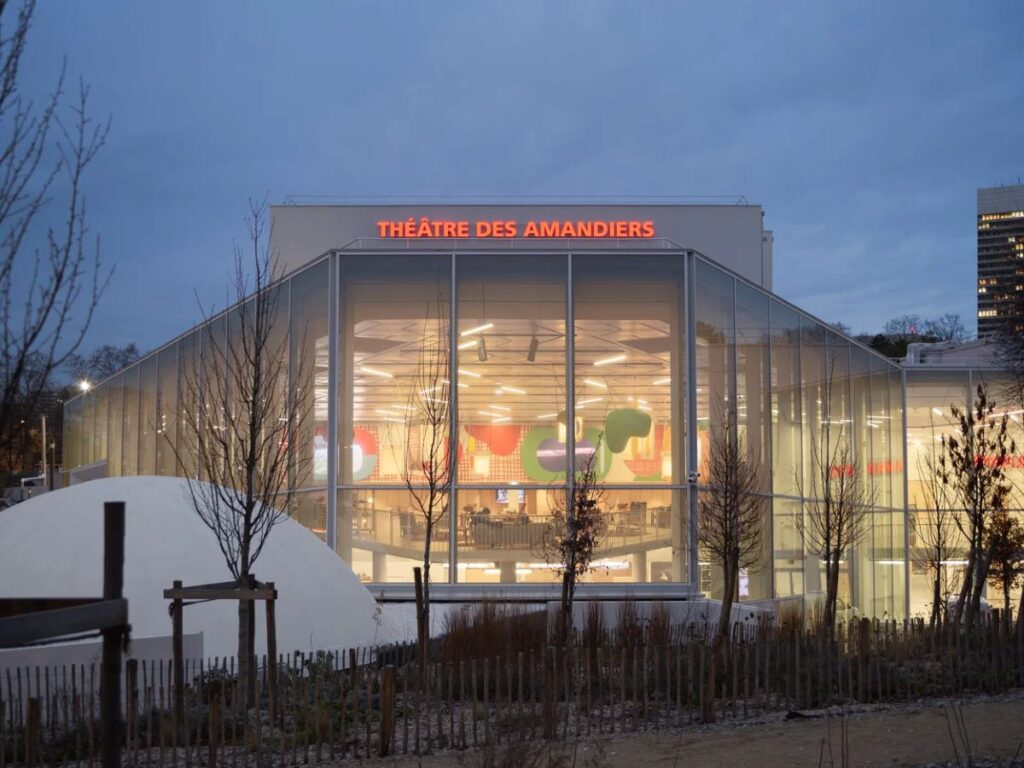
The seamless threshold between parkland and theatre © Snøhetta
The design philosophy of the renovations is simplicity in design. The architectural intent of the renovation is to keep the architectural design of the theater inherently simple and uncomplicated, allowing the artwork on stage and the artistic process to be the true emphasis. In an effort to give the theatre a connection to its natural environment, the project will alter the existing grades of the land between André Malraux Park and the Nanterre Amandiers National Drama Centre building by changing the slope and grading of the land.
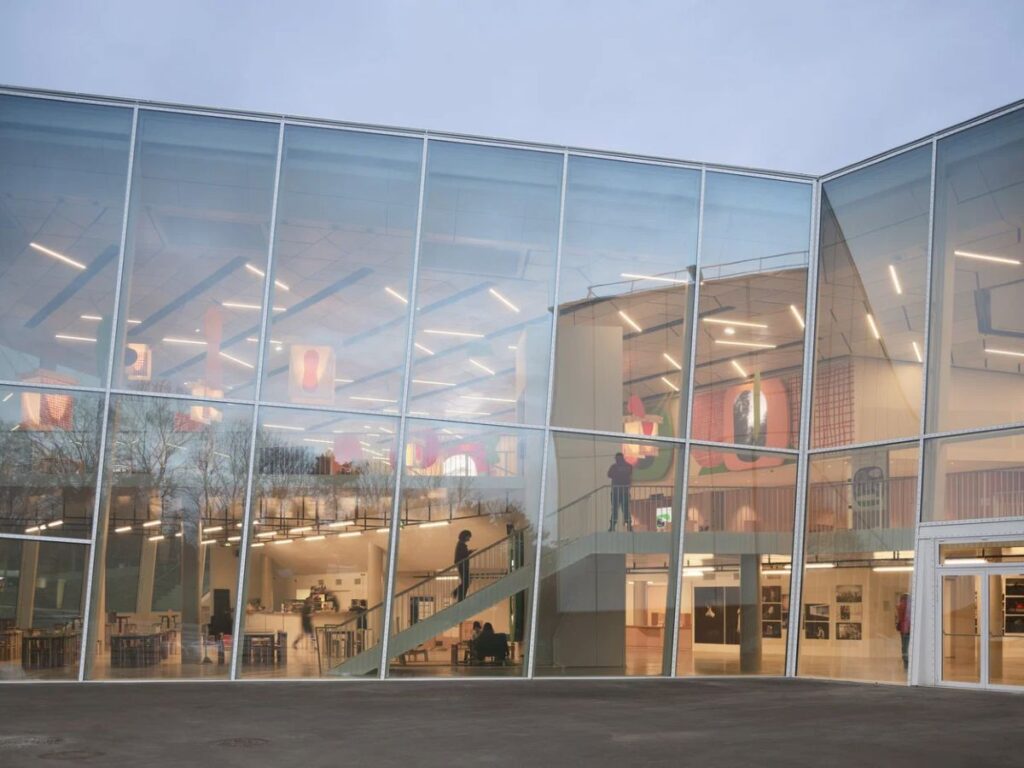
A view of the Grand Hall’s interior, highlighting the new mezzanine level and the way natural light fills the concrete and timber space © Snøhetta
The modifications help make it possible to take a stroll through nature. They emphasize that the outdoor performance venue is embedded into the existing landscape. This integration allows the Nanterre-Amandiers National Drama Centre to join together two disparate elements of Nanterre, the La Défense business park with residential neighborhoods. The Nanterre-Amandiers National Drama Centre continues to profess its commitment to convenient access and social involvement. The Centre will also continue to adapt as an inclusive community facility.
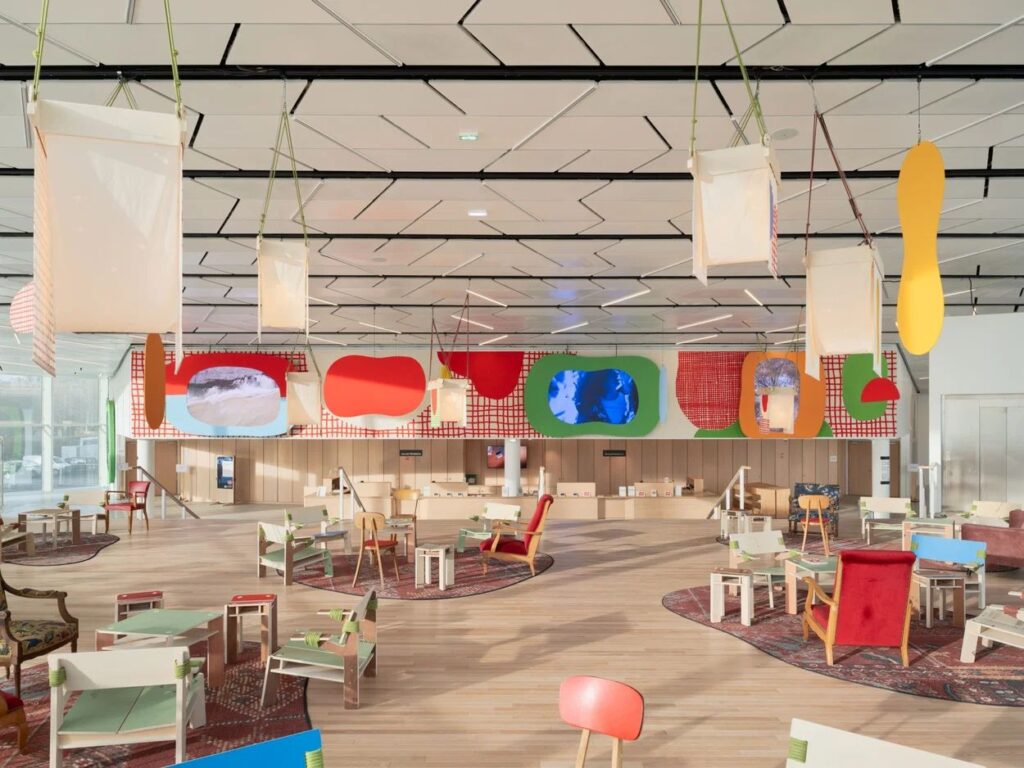
Interior shot of the central atrium looking upward, highlighting the timber structure and the play of light through the patterned glass © Snøhetta
On the city side of the center, the venue meets residents at Avenue Pablo Picasso, anticipating the new light rail (tram) station to be constructed near the theater. The primary face of the theater will feature a large public plaza in front, and the plaza has been designed to have some portion of the area paved and some planted in order to create usable space for “waiting” at the theater and as an open-air stage for the performing arts.
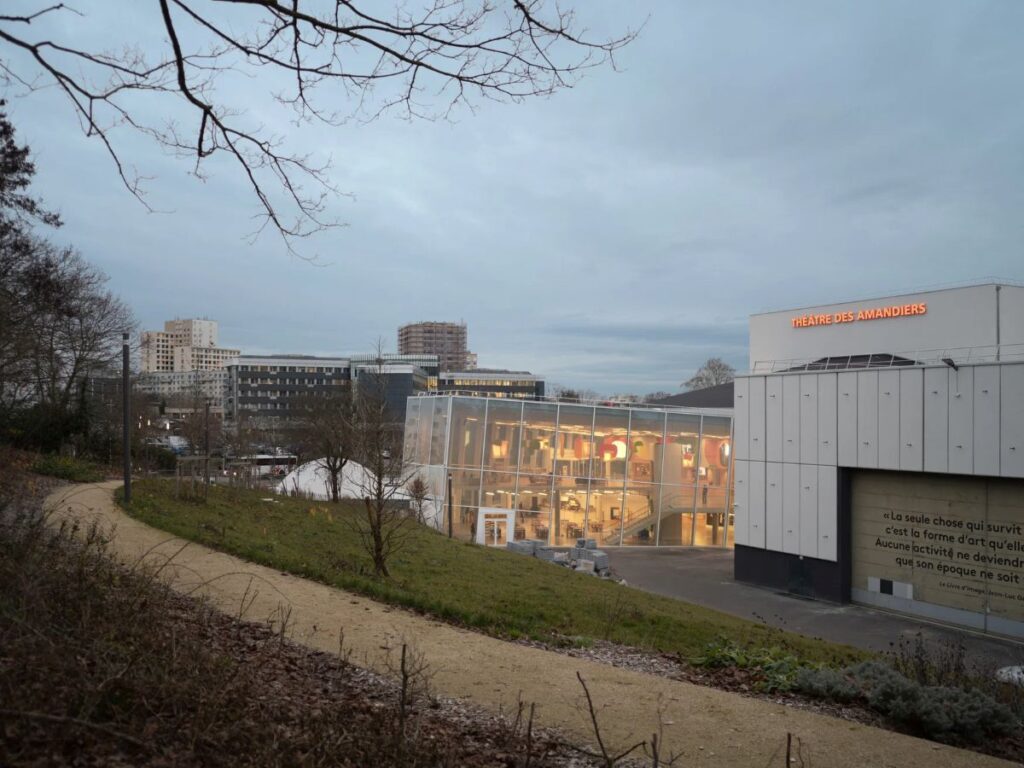
The exterior glass facade showing the artistic dappled pattern, with sunlight filtering through to the wooden interiors © Snøhetta
To enhance the accessibility of the theater and provide a more welcoming first impression, the grade of the land was lowered to create a plaza immediately adjacent to the theater’s face and create a direct physical connection to the lower levels of the theater by way of the plaza. In doing so, the theater demonstrates that there is an abundance of social spaces that exist at the lower levels of the building and connects the theater with the surrounding city through its interior life.
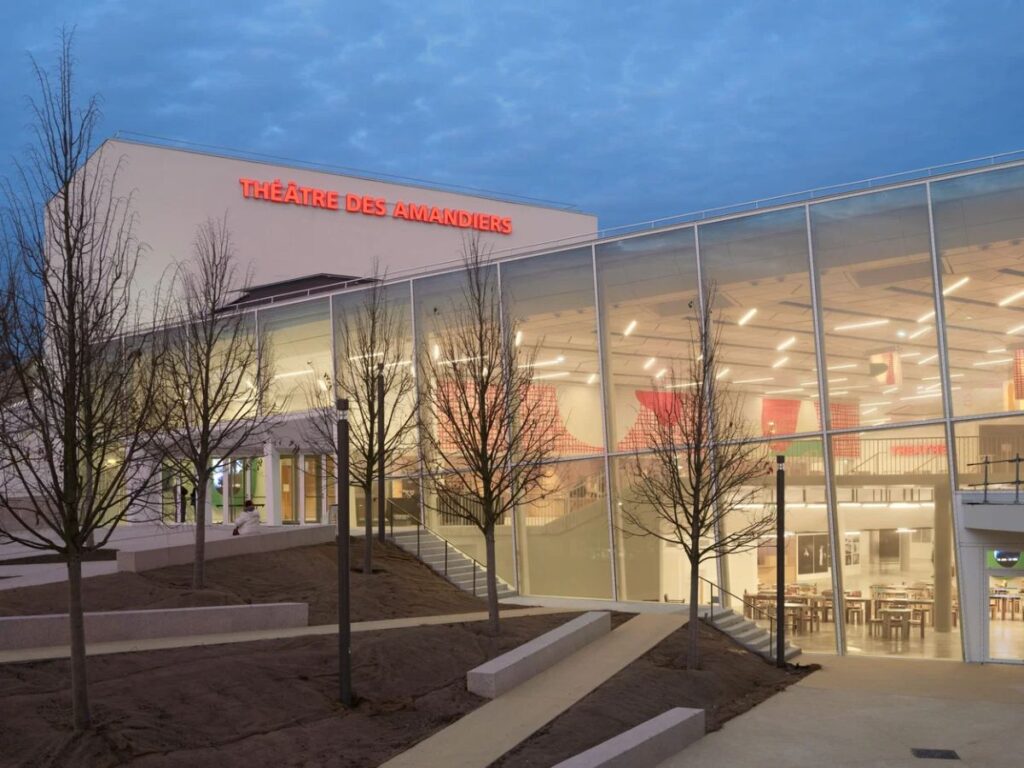
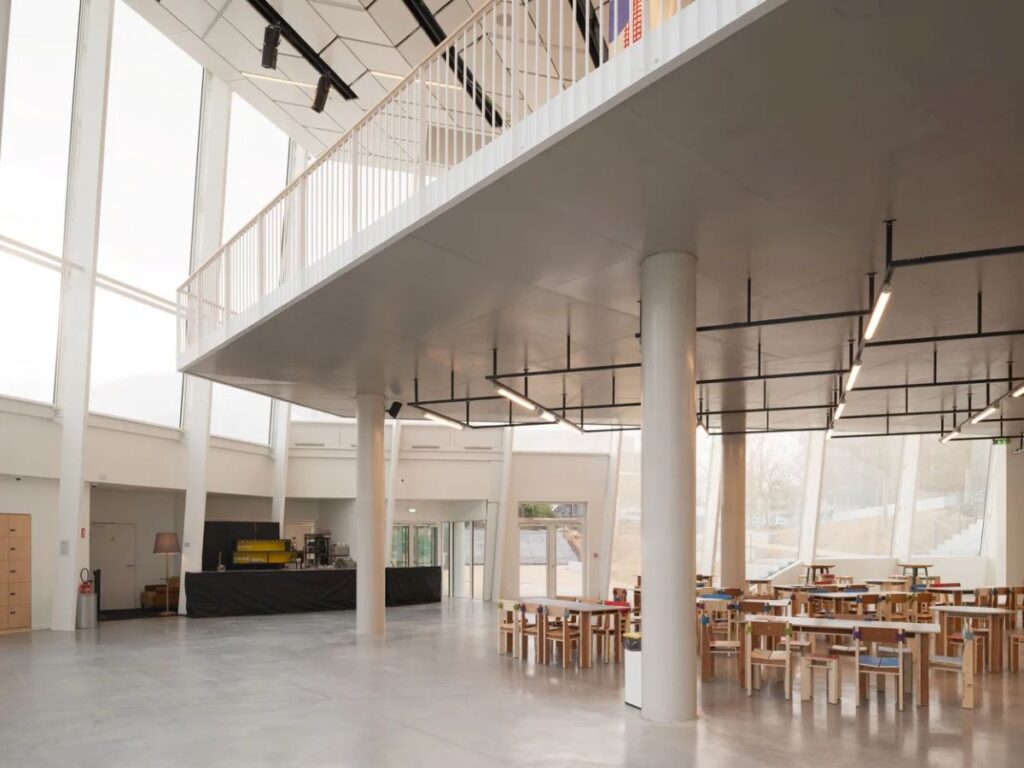
A vertical space that draws in light and connects the interior volumes © Snøhetta
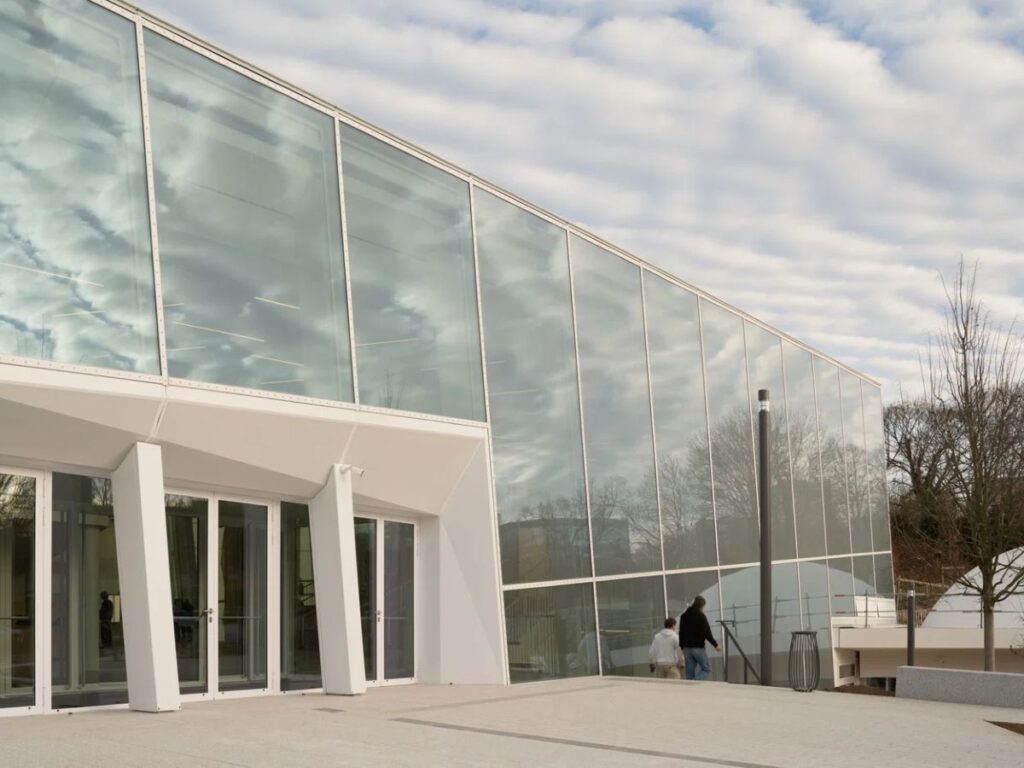
The Grand Hall: A Vibrant Core Linking City and Park © Snøhetta
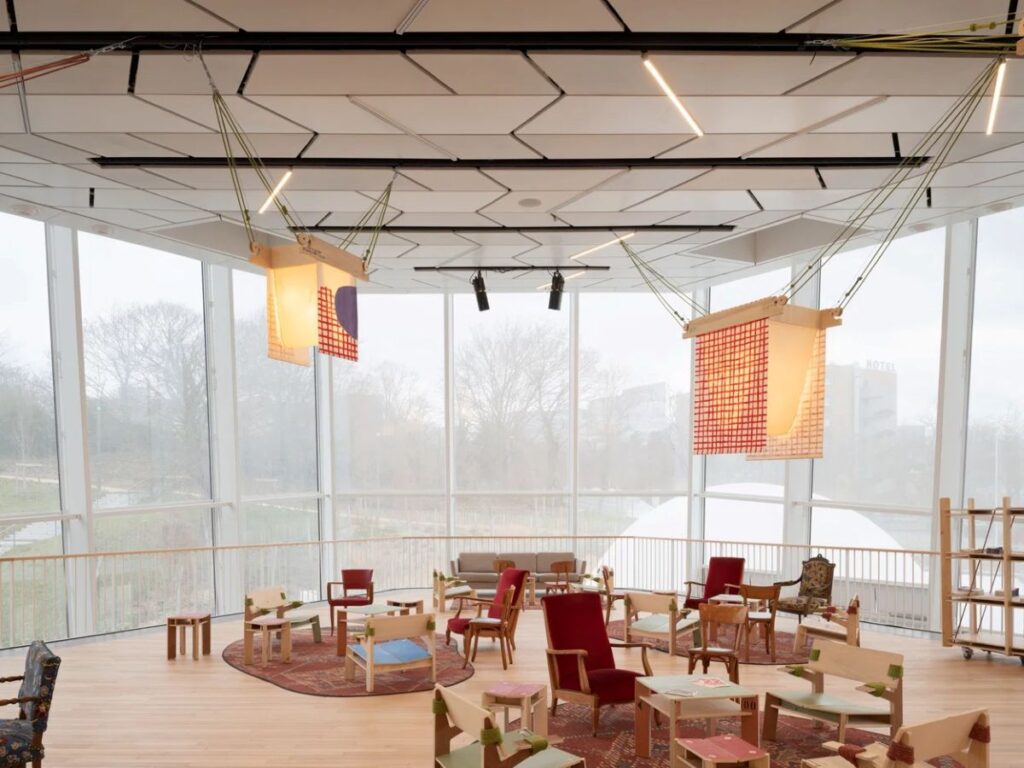
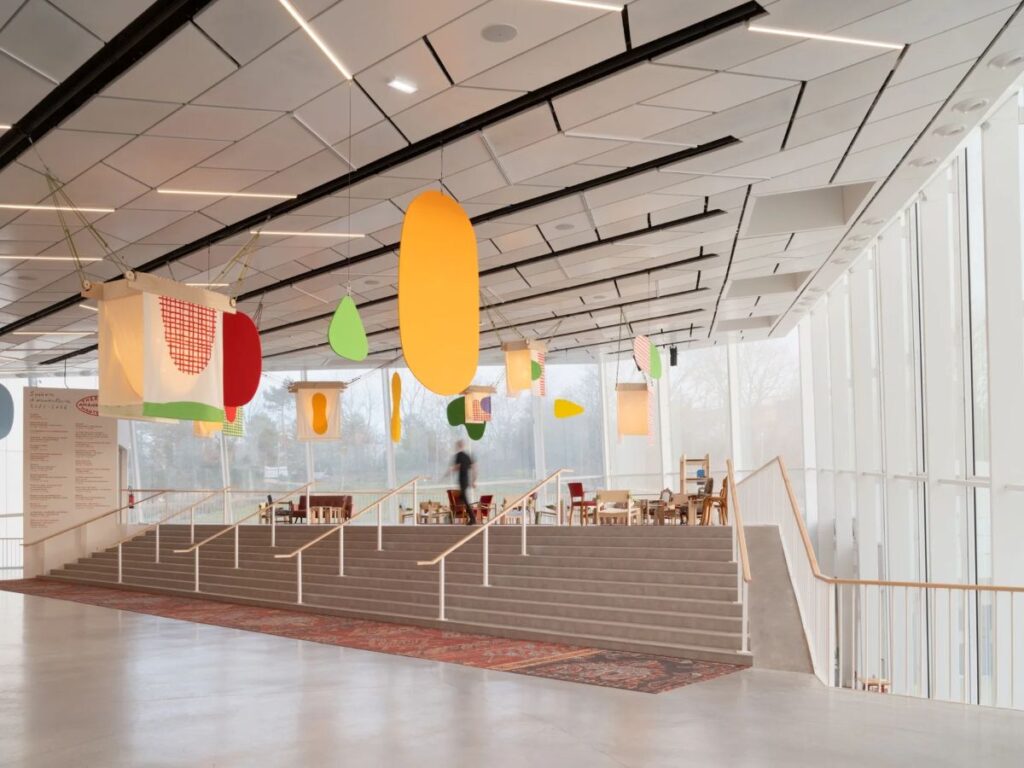
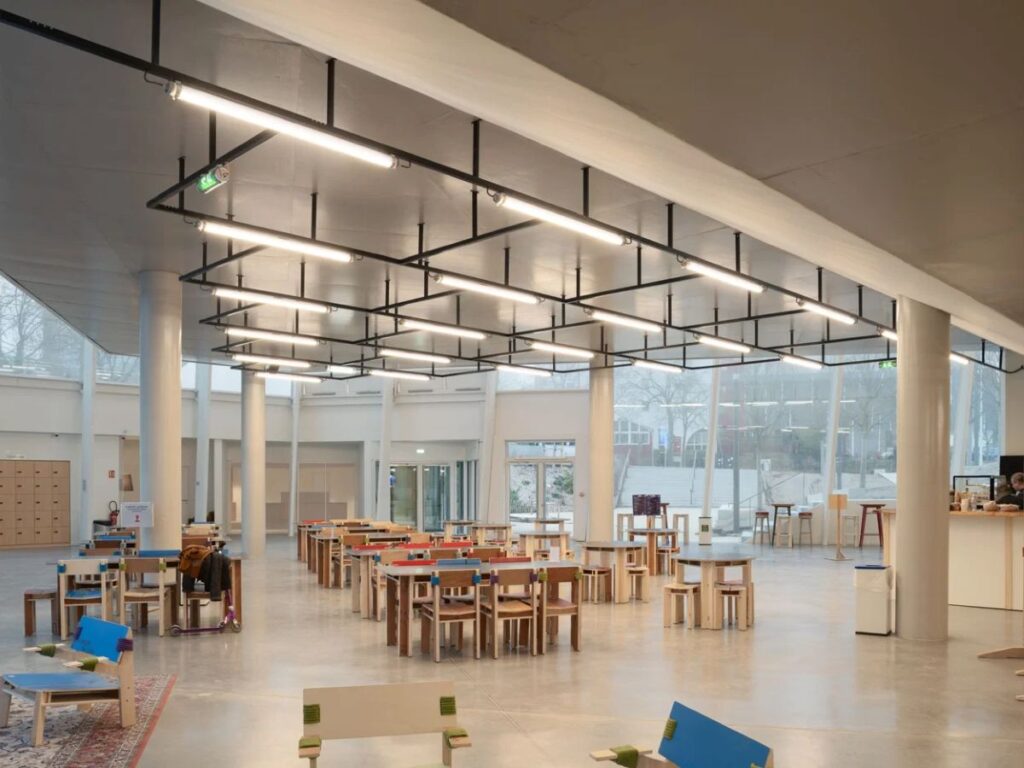
The Grand Hall serves as both the project’s metabolic center and as a reimagined, expansive volume connecting both the city and the park; it is no longer just a corridor for circulation but rather an active interior promenade featuring multiple levels and double-height ceilings. The fluidity of movement around the entire building is enhanced through both the upper forecourt and lower plaza entrances, and it also provides the ability for exhibitions and/or spontaneous performances to occur at various locations within the space. The minimalist character of the interior reinforces the ability of the audience to experience the size of the volume while allowing it to readily change with the programs expected to take place in the theater.
From a technical perspective, the hall has been expanded upward through the addition of a new roof and downward through the addition of a basement level in the sunken plaza, allowing for an easy understanding for users of the entire through-volume, which can be used as another venue for creative dissemination from the stage by way of high-performance stage equipment integrated within the ceiling. This adaptability is further assisted via the transparency throughout the facility, with large areas of glazing ensuring park vegetation serves as an ongoing visual background for all who visit the Grand Hall. Overall, this has created a warm, inviting environment that will be used and enjoyed long after operating hours.
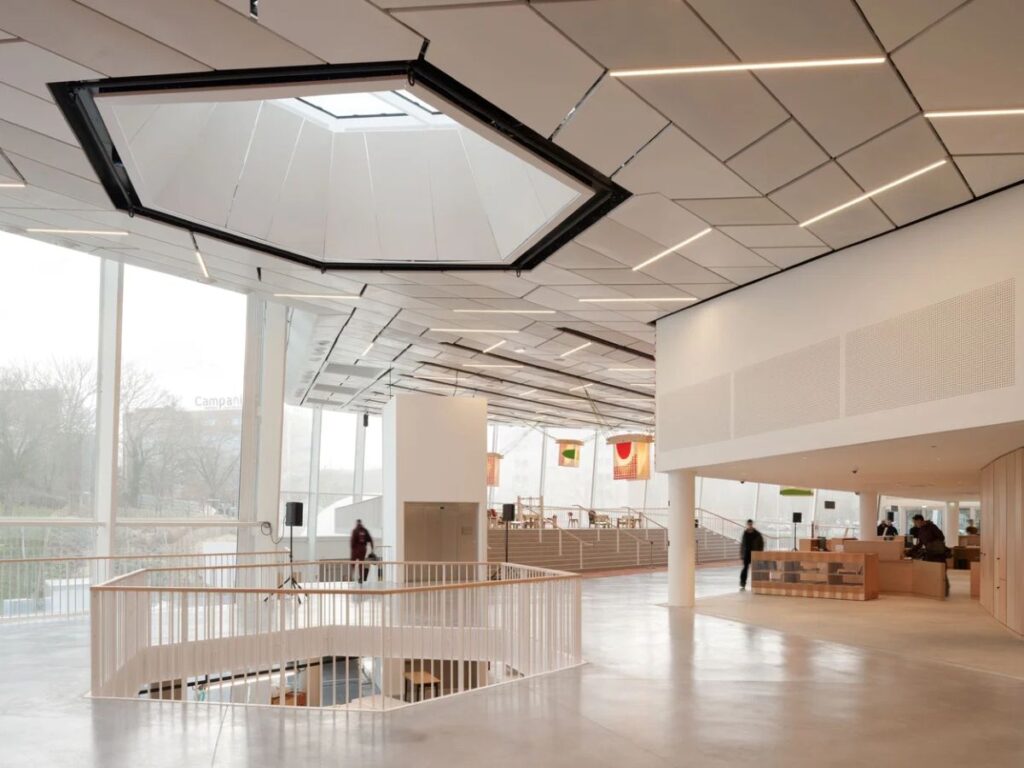
The seamless threshold between parkland and theatre © Snøhetta
The Main Auditorium is the oldest part of the Nanterre-Amandiers site and has had extensive work undertaken to create a more technically efficient facility for audiences to enjoy. With the entire seating area redesigned in accordance with the iconic curved outer shell of the auditorium, the auditorium will contain 800 seats that will create an improved sightline and allow for a greater amount of space between rows. Integrated curtains in the auditorium allow for a reduction to a maximum of 600 seats so that the architectural integrity of the building is preserved while accommodating the diverse production needs and requirements. Four new ground-level entrance points have been provided to improve access and ensure that the facility is 100% accessible to every patron.
Reimagined seating within the historic auditorium shell © Snøhetta
The stage house has been completely rebuilt, including a new proscenium wall that extends two meters into the original backstage area, allowing for compliance with the European theatrical standards for all theatrical formats. The enlargement of the proscenium opening provides a more direct connection between performers and audiences and adds a significant level of intensity to the performance. The proscenium grid located above the front row provides additional opportunity for staging options, and the rearrangement of the technical catwalks has eliminated load breaks in the proscenium. The control room was moved to the rear of the auditorium, providing a clear view of the stage volume and providing a modern creation tool for the development of contemporary theater works.
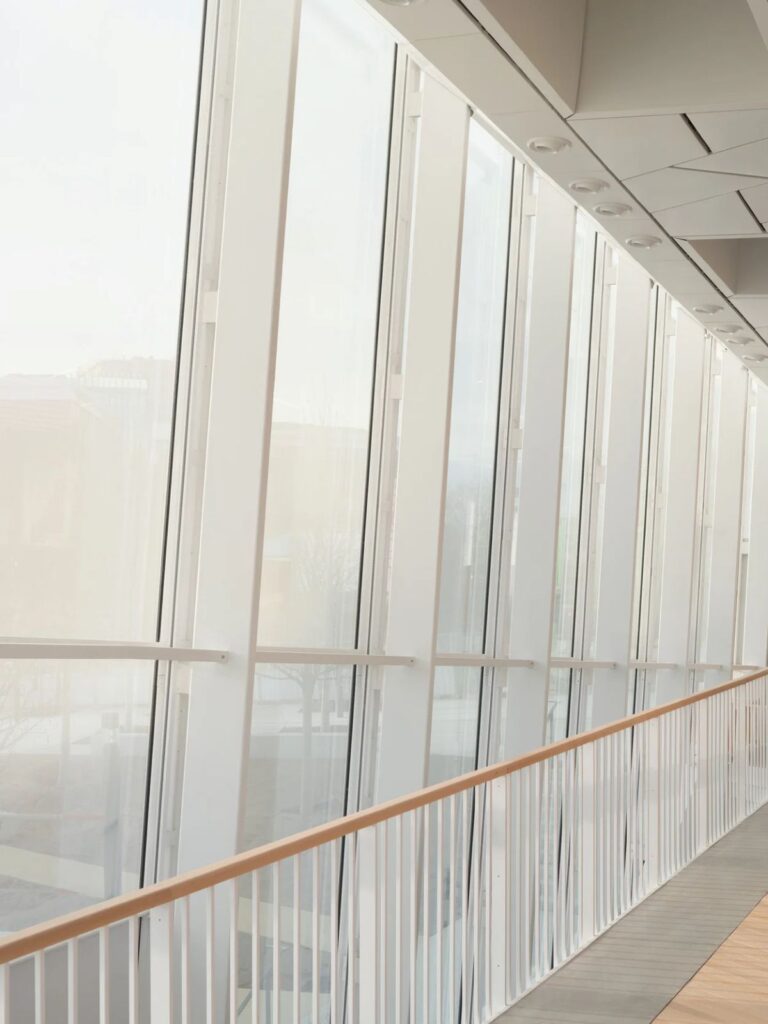
Rhythmic interior promenade of the Grand Hall © Snøhetta
With these two additional performance venues, the CDN adds two types of flexible performance spaces for the performance of experimental and intimate works. The work completed to reconfigure the existing flexible auditorium provides a completely new interior to the auditorium.
The auditorium now has special seating and flexible arrangements that can be set up in different ways for performances, quickly switching between front-facing, two-sided, and four-sided layouts, while still keeping a connection to the outdoor theater atmosphere. These developments ensure that the CDN will continue to encourage the use of its space for immersive work while also providing uninterrupted circulation for audiences to experience the work within the CDN.
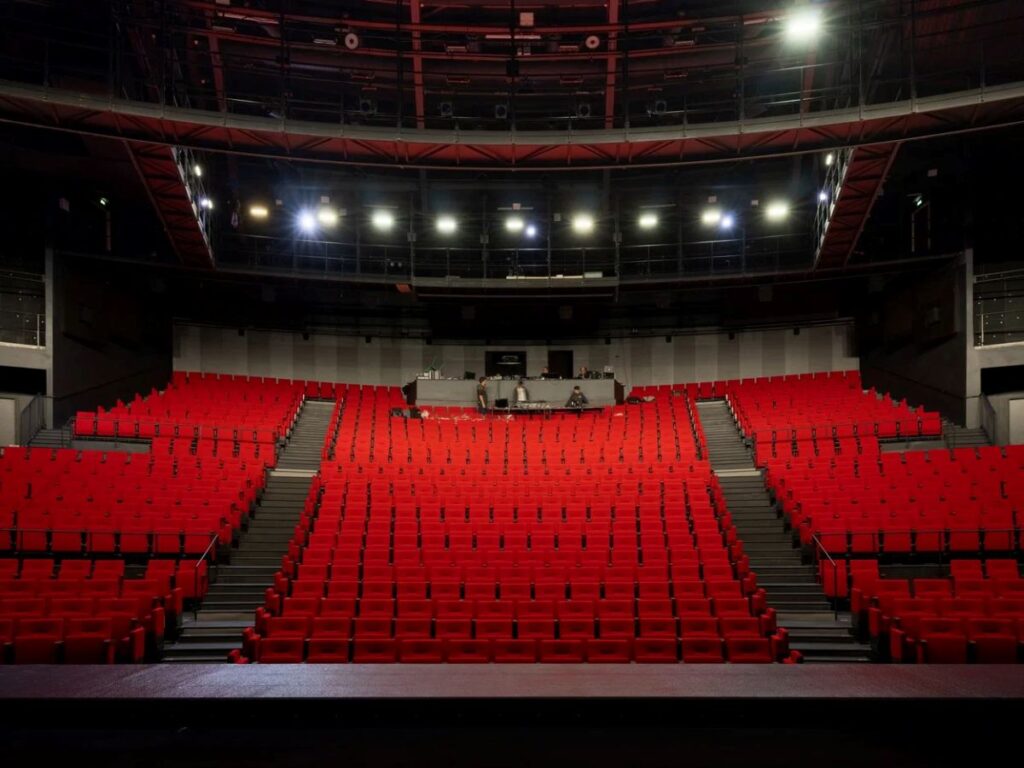
Reimagined seating within the historic auditorium shell © Snøhetta
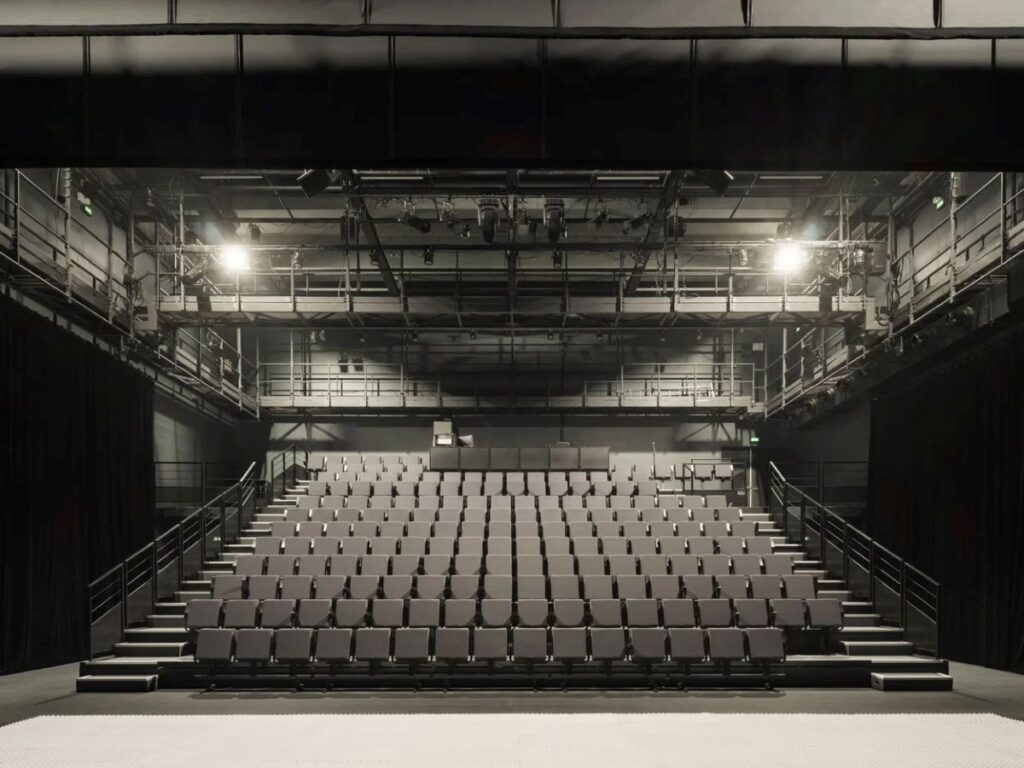
Motorized platforms configuring the flexible performance space © Snøhetta
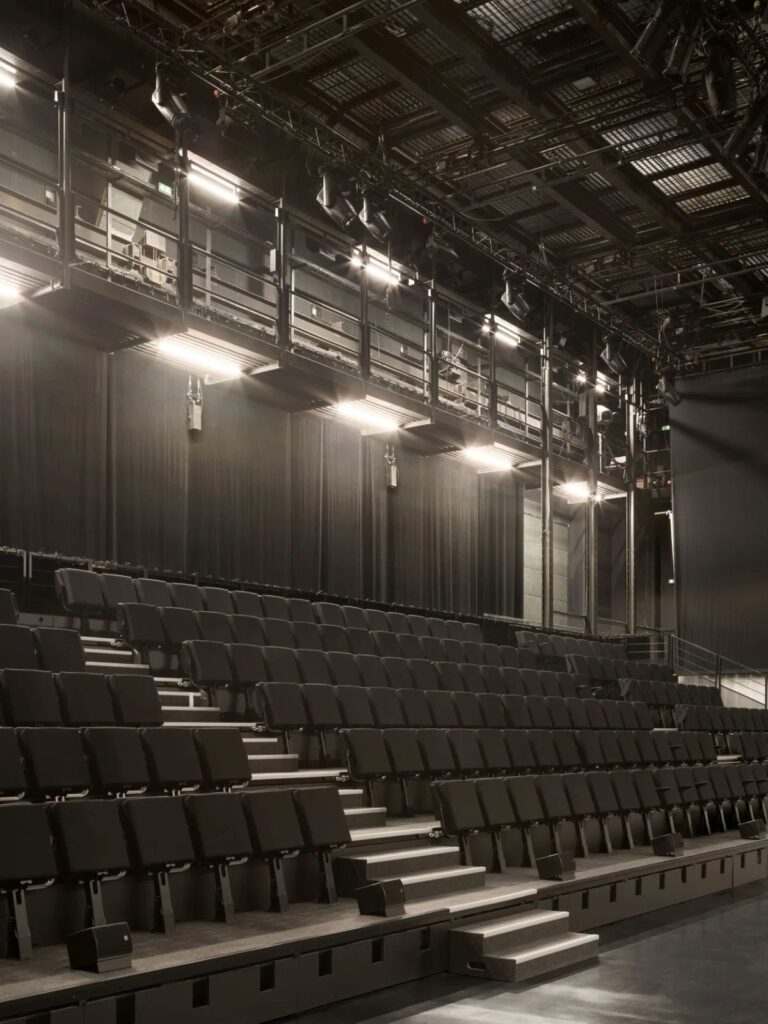
Along with the flexible space, the CDN has developed a new 200-seat small auditorium to provide a more intimate setting for the performance of experimental and alternative types of drama. The new small auditorium utilizes a motorized telescoping seating system and is located adjacent to the dressing rooms and technical areas for ensuring the most efficient operation of the CDN.
The finished annex and the improvements made to these flexible spaces will create a well-organized area where the three auditoriums are grouped together with shared workspaces, making it easier for the CDN to operate effectively every day. The renovations undertaken on the CDN complete the design of a place that will continue to be a primary location for continuing to make a strong contribution to the arts and to the French arts community into the future.