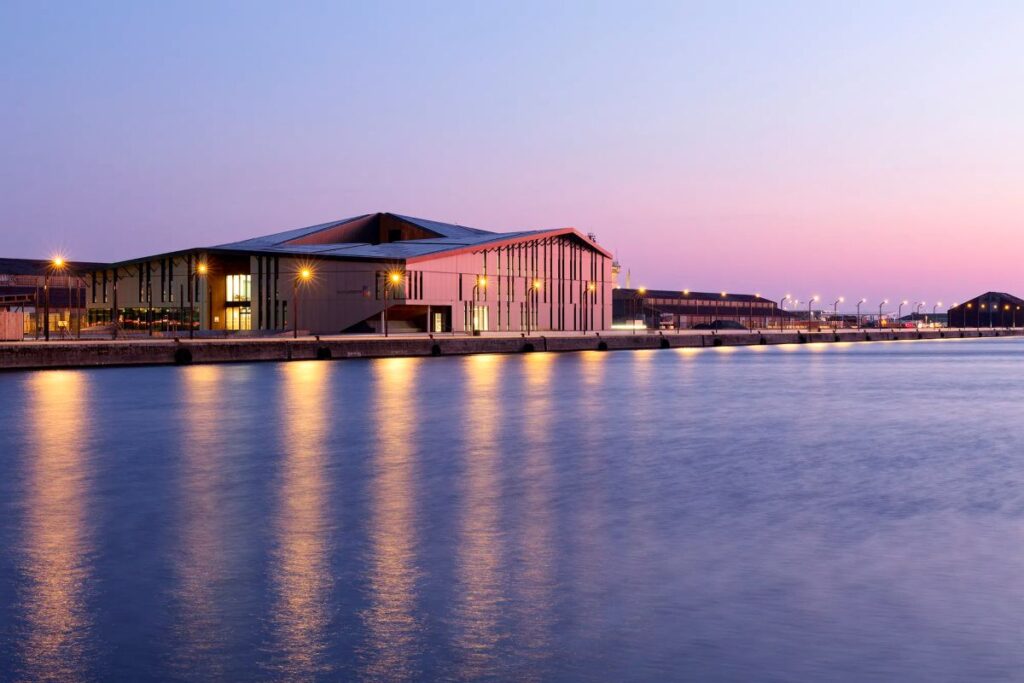
Curated by ArchiRev Editorial | Feature Story | Published March 28th, 2026
Source: Snøhetta
Typology: Workspace & Production Facility / Sustainability
Status: Completed
Location: Dunkirk, Northern France
Client: SPAD on behalf of Dunkirk Urban Community
Architect: Snøhetta
Size: 3,570 m²
Collaborators:
• Santer Vanhoof – Local architect / Execution architect
• RVB Paysage – Landscape
• Impact Ingénierie – Environmental engineer
• CET Ingénierie – Building engineer
• GAMBA – Acoustic engineer
Certification: Level 3 of the “Bio-Sourced Building” label
Photography: Nicolas Fussler
Video: Christophe Vinçon & Nicolas Fussler
Within the context of Dunkirk’s port landscape, Écosystème D appears as a building that combines technical innovation with urban narrative. It is a positive energy building, meaning it produces more energy than it consumes, and thus places itself at the forefront of France’s energy transition initiatives.
The building combines all its functions under one roof: incubator, technology hall, training center, and showroom. This integration of functions encourages cross-functionality and exchange, providing a space for research, experimentation, and sharing on renewable energy.
From a technical standpoint, the building represents low-impact architecture, or bioclimatic architecture, where its design responds to its industrial and environmental context by optimizing natural lighting, ventilation, and energy consumption.
In addition to its technical achievements, Écosystème D contributes to a larger narrative of regional transformation. It has transformed the industrial landscape of Dunkirk by reinventing its urban and industrial landscape, thus creating a new urban and industrial dynamic within the Hauts-de-France region. It has become a center of innovation and a symbol of sustainable development, demonstrating how architecture can be used as a tool to build a future for energy and urban development.
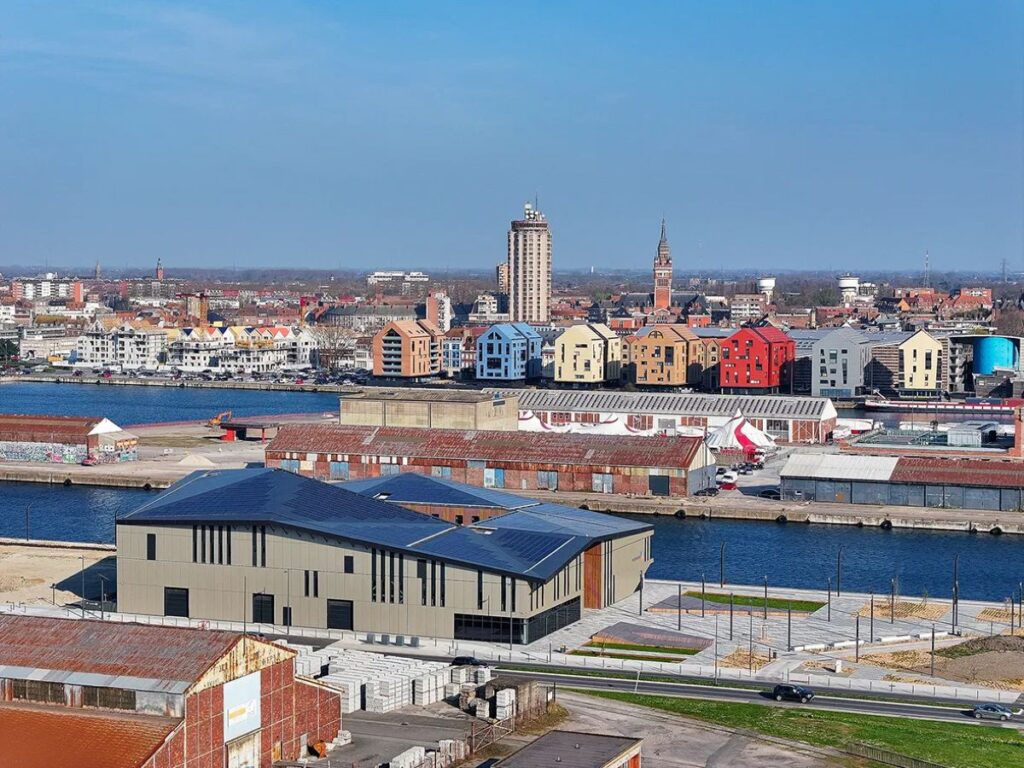
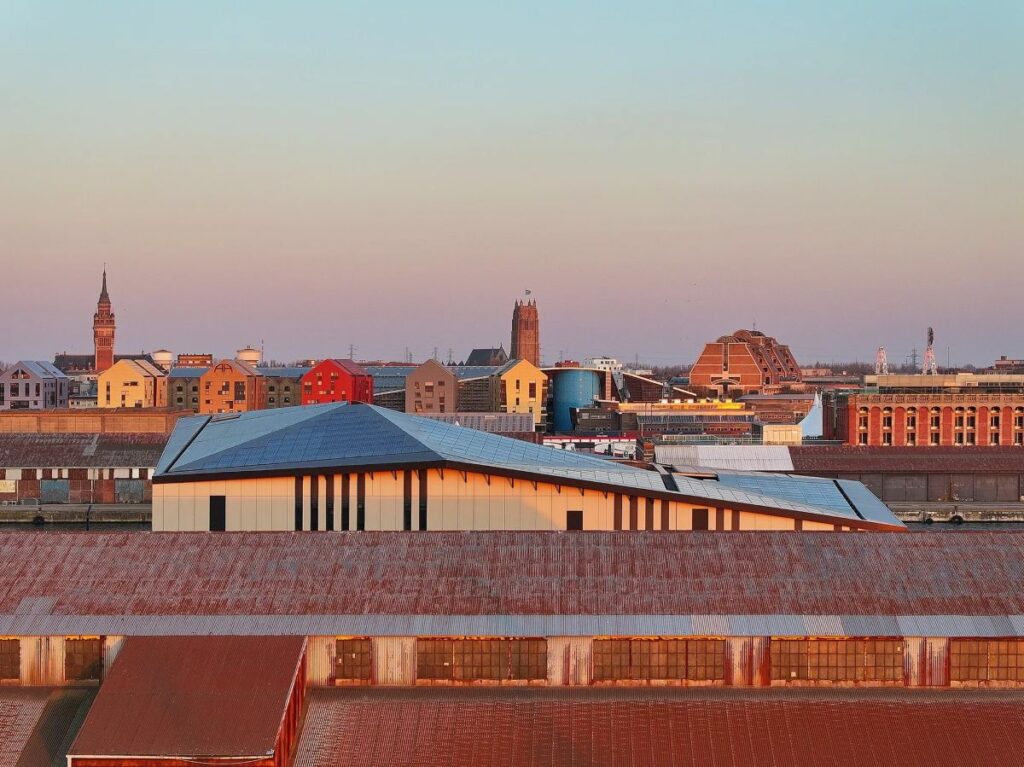
Aerial view of Écosystème D and surrounding urban fabric © Snøhetta
Ecosystème D is a building of prime importance in the dynamic transformation of Dunkirk’s industrial port. Situated on Mole 2 in the old port area, it is a fundamental component of the “Neptune” urban planning strategy, a strategy that has been implemented over the course of several decades since the 1990s to link the city’s industrial areas with the city center and foster urban growth while respecting the environment.
The Ecosystème D building is the result of a concerted approach by local, technical, and environmental actors. Its location, programmatic clarity, and high energy performance make it a flagship of Dunkirk’s urban transformation. Ecosystème D’s integration into the port’s urban renewal strategy illustrates the potential of architecture to meet both practical and urban planning objectives.
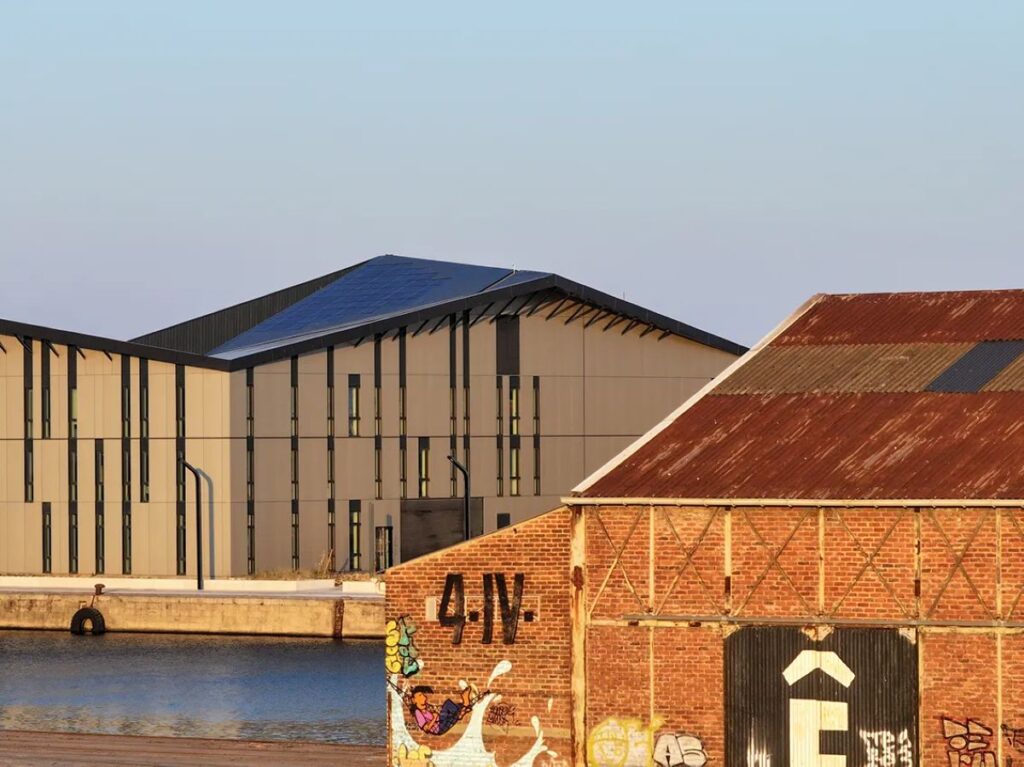
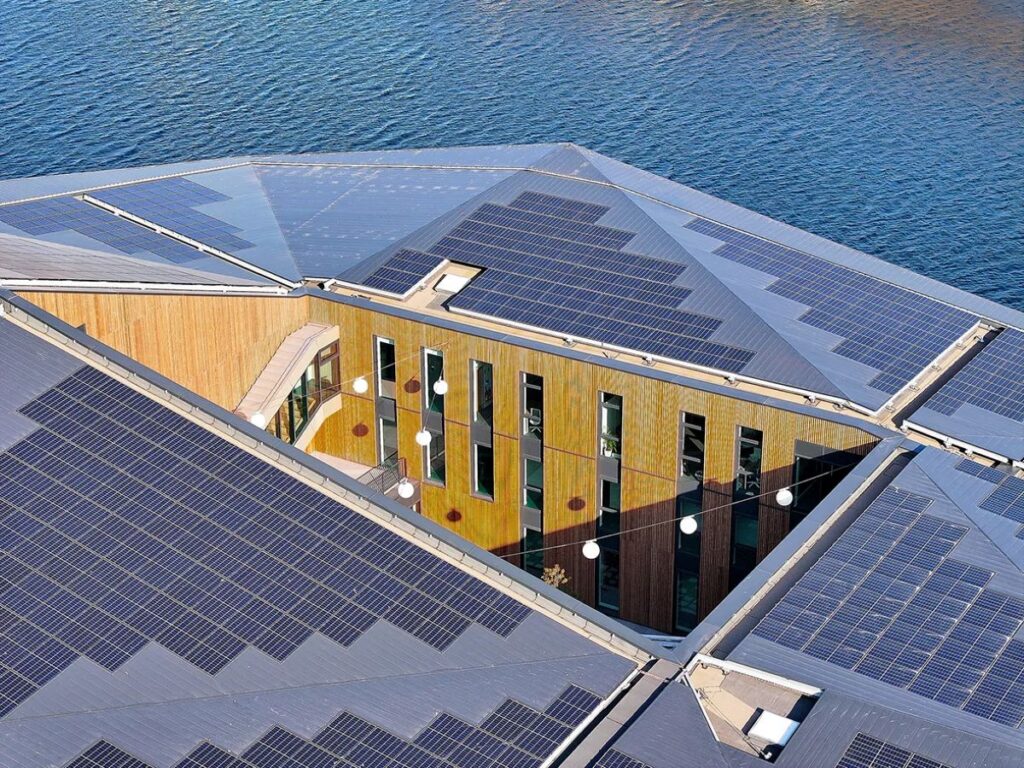
Rooftop photovoltaic panels and bioclimatic systems © Snøhetta
The Ecosystème D building was designed as an energy hub that generates more energy than it consumes. This sets a precedent for future buildings. The rooftop solar panels of 1,200 m², combined with the bioclimatic design of the building, enable it to generate sufficient energy to meet its needs and contribute to the energy loop of the adjacent innovation park.
The Ecosystème D building was designed with the core values of the Powerhouse concept. This concept focuses on the maximum energy generation, energy consumption reduction, and the development of a high-quality environment. As Kjetil Trædal Thorsen, the founding partner of Snøhetta, states: “Positive energy buildings are the buildings of the future. The mantra of the design industry should not be ‘form follows function,’ but ‘form follows environment.’”
The Ecosystème D building thus demonstrates a high level of technical expertise combined with architectural philosophy.
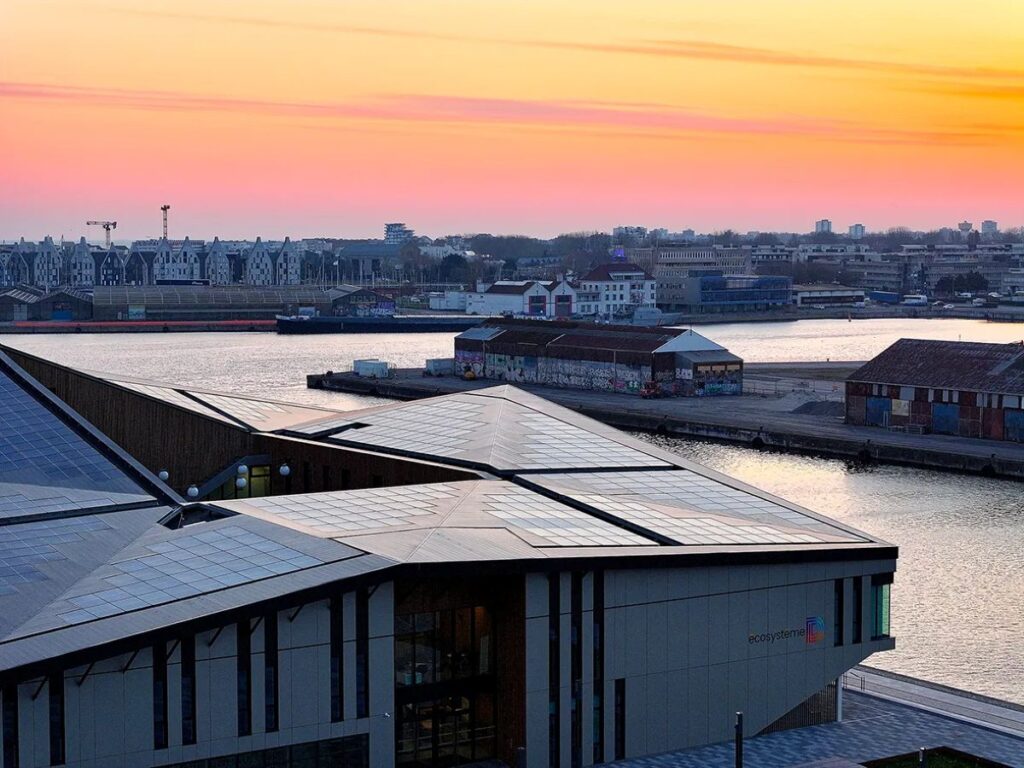
Rooftop photovoltaic panels and bioclimatic systems © Snøhetta
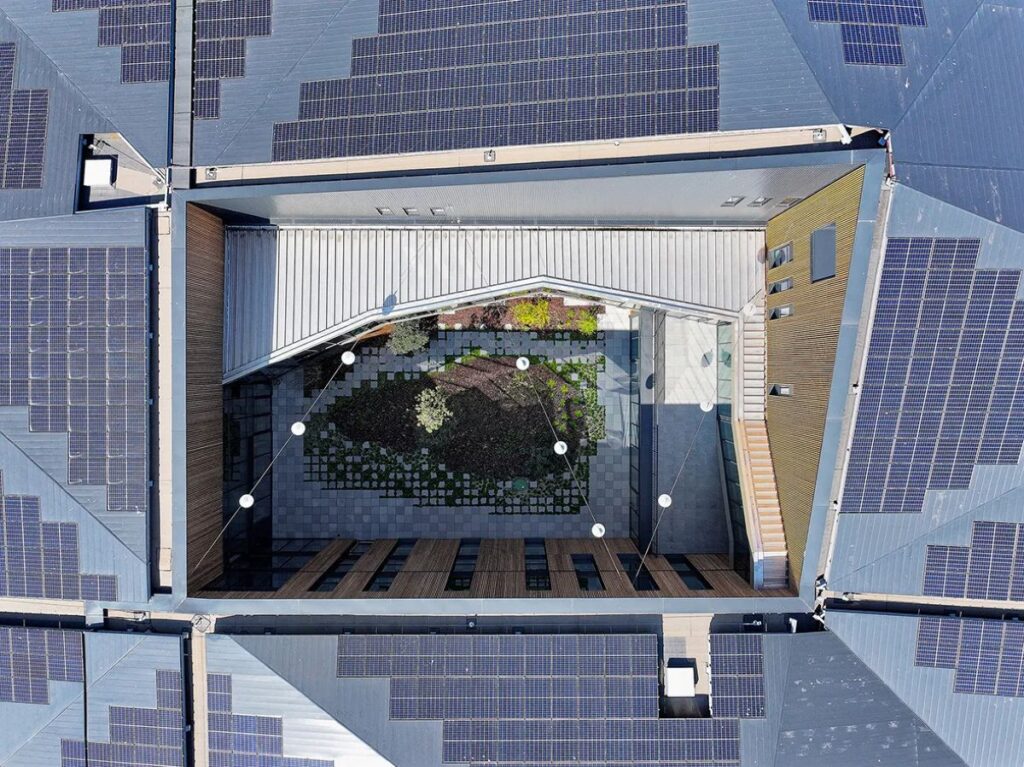
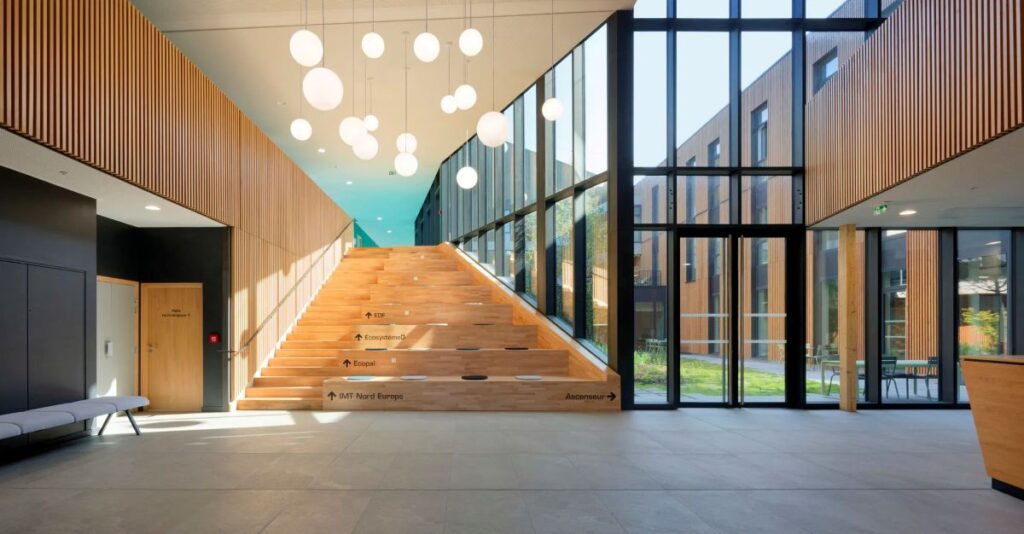
Interior view of central patio and circulation spaces © Snøhetta
Écosystème D is part of a network of institutional and industrial partners, including the Urban Community of Dunkirk, AGUR, Dunkerque Promotion, Pôlénergie, Ecopal, CCI Littoral, Grand Port Maritime of Dunkirk, ULCO, and IMT Lille Douai. This partnership establishes the building as a center for innovation, research, and sharing of knowledge.
The building houses a hall for large-scale prototyping, a training room, an incubator, a showroom, and flexible workspaces. The partnership with engineering schools and companies specializing in decarbonization reinforces its position as a center for training, experimentation, and sustainable development.
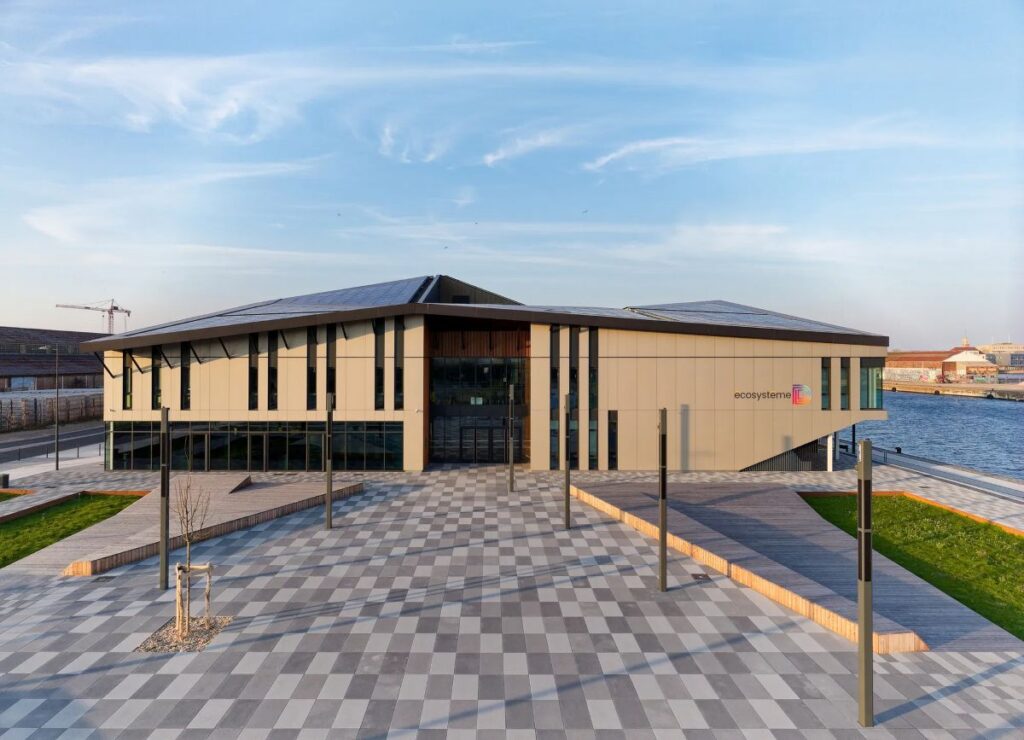
The building’s design is characterized by openness and transparency, its link to the forecourt and its internal spaces’ permeability being a reference to its intention to connect innovation with its territory and its community, making it a technical and social landmark.
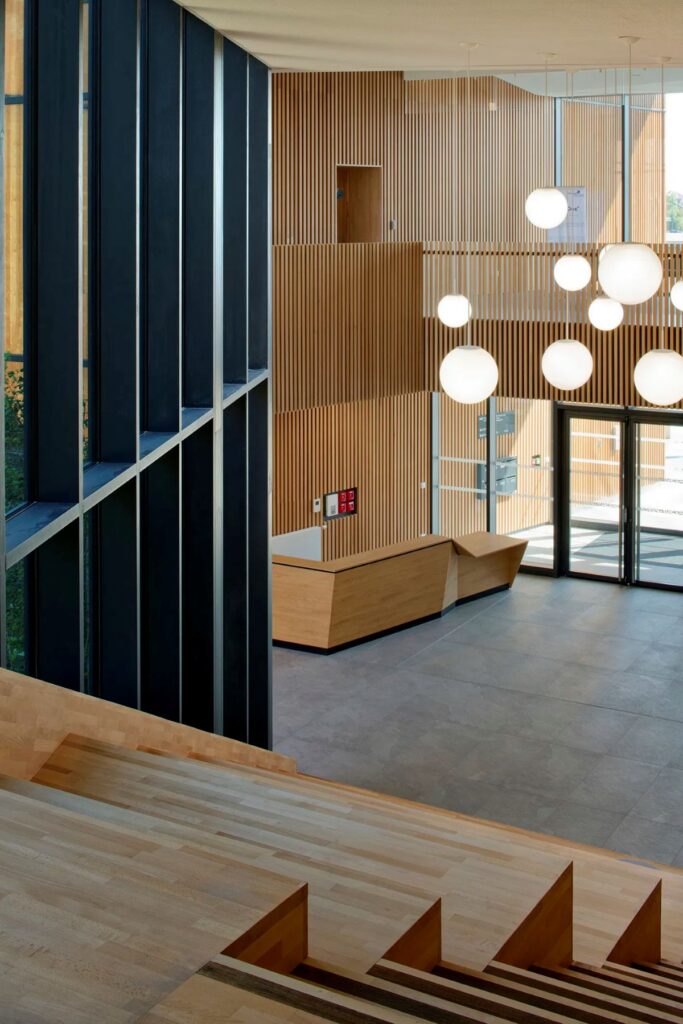
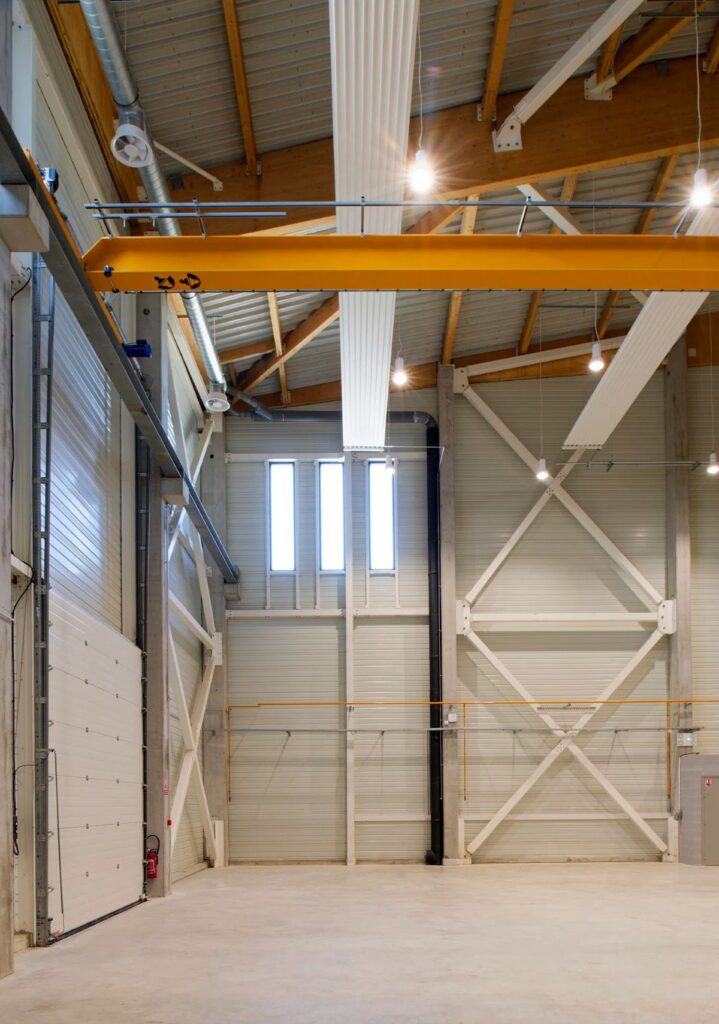
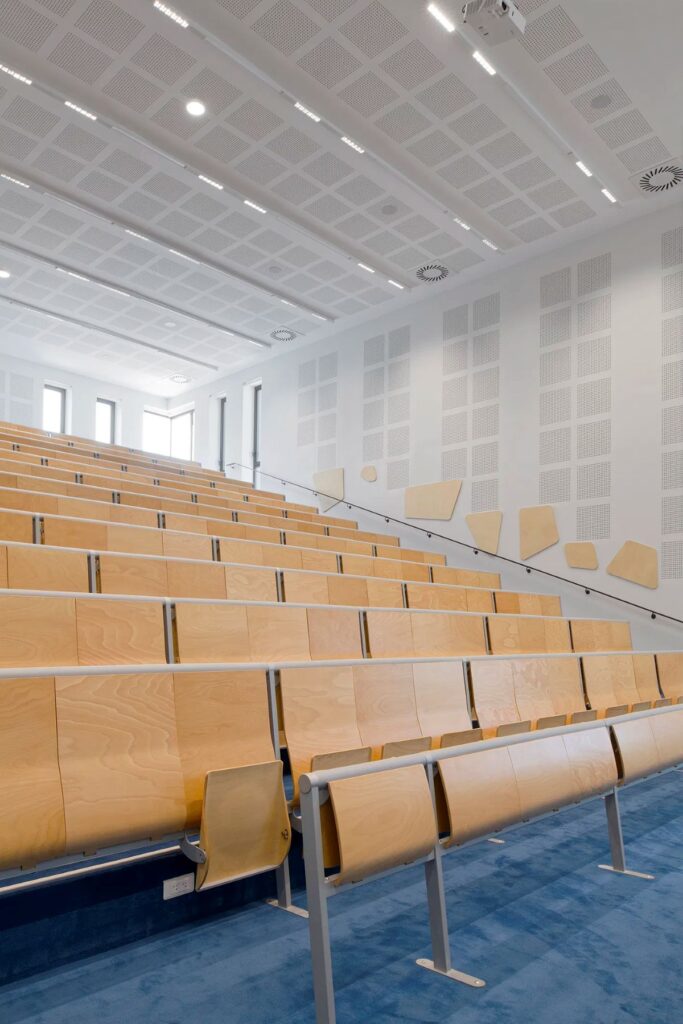
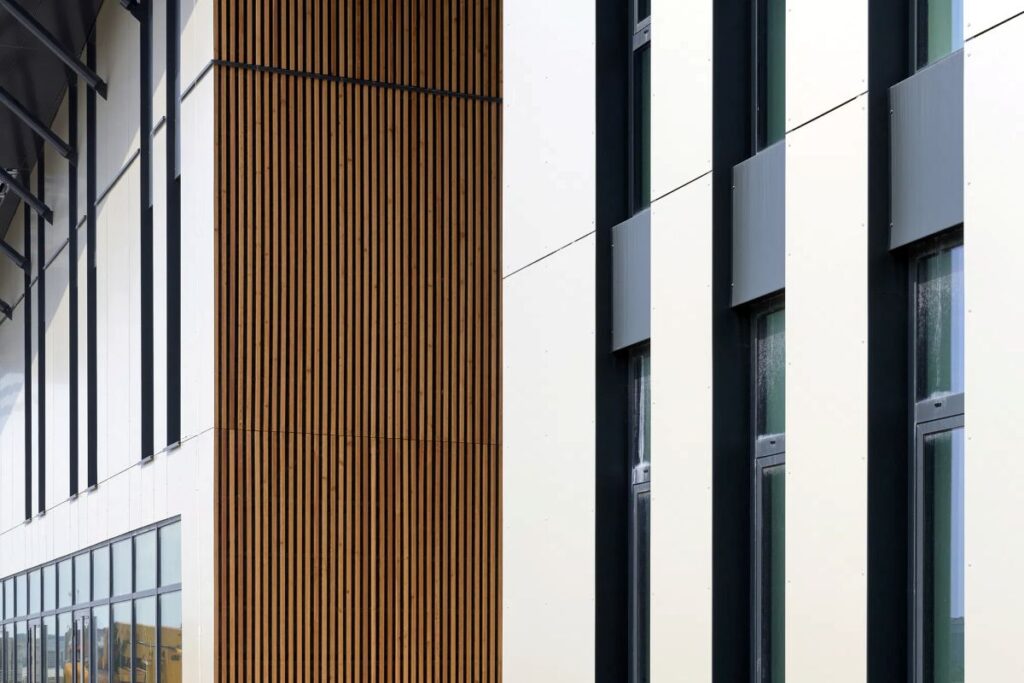
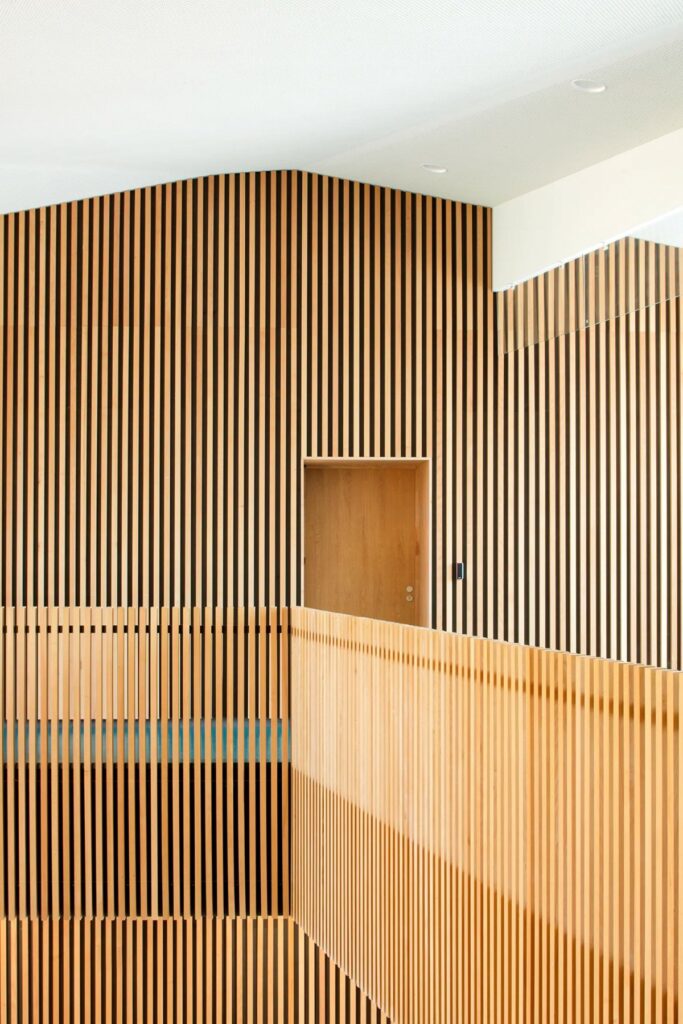
Close-up of bio-based materials and sustainable construction details © Snøhetta
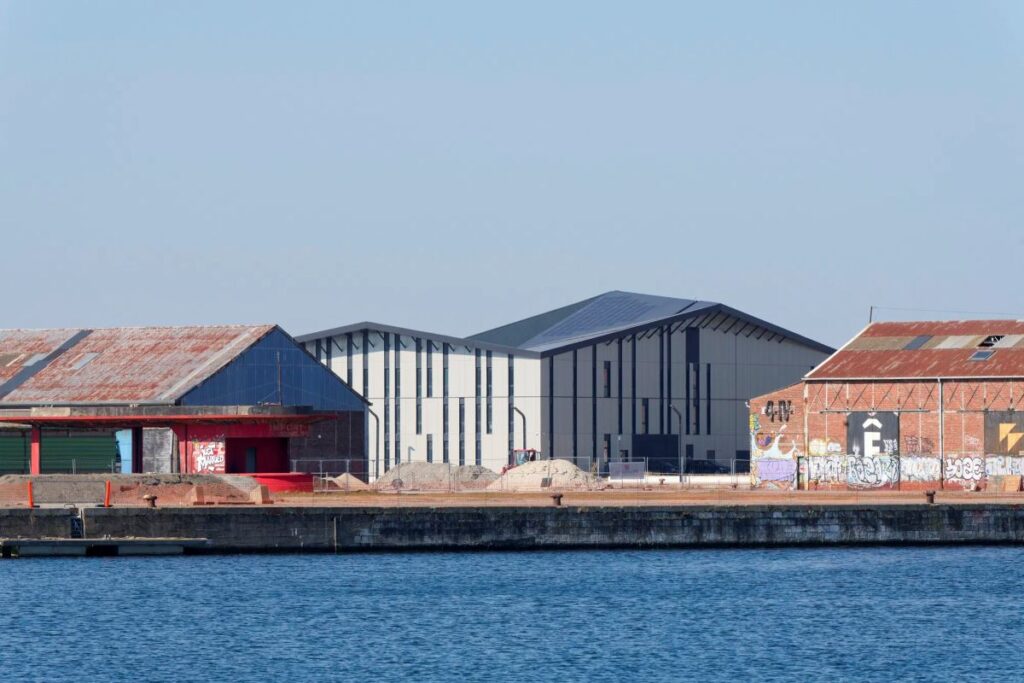
The design of Écosystème D is highly contextual to its industrial and climatic context. Placed at a mere 5 meters above sea level, the building has been affected by the winds and conditions created by the surrounding infrastructure. The building’s form and orientation are a direct result of this contextual influence.
The building’s height ranges from 9 to 18 meters depending on internal programmatic requirements. However, the folding of the roofs has created a cohesive look for the entire building by integrating the different volumes into a single entity. Inspiration has been drawn from traditional warehouses of old ports to create a visually dynamic relationship with the surrounding urban axes, such as the Citadel, Chaussée des Darses, Jetée 1, while also providing optimal conditions for the building’s energy systems.
This has created a cohesive piece of architecture that not only tells a spatial story but also a contextual one, making the building a landmark in Dunkirk’s port city.
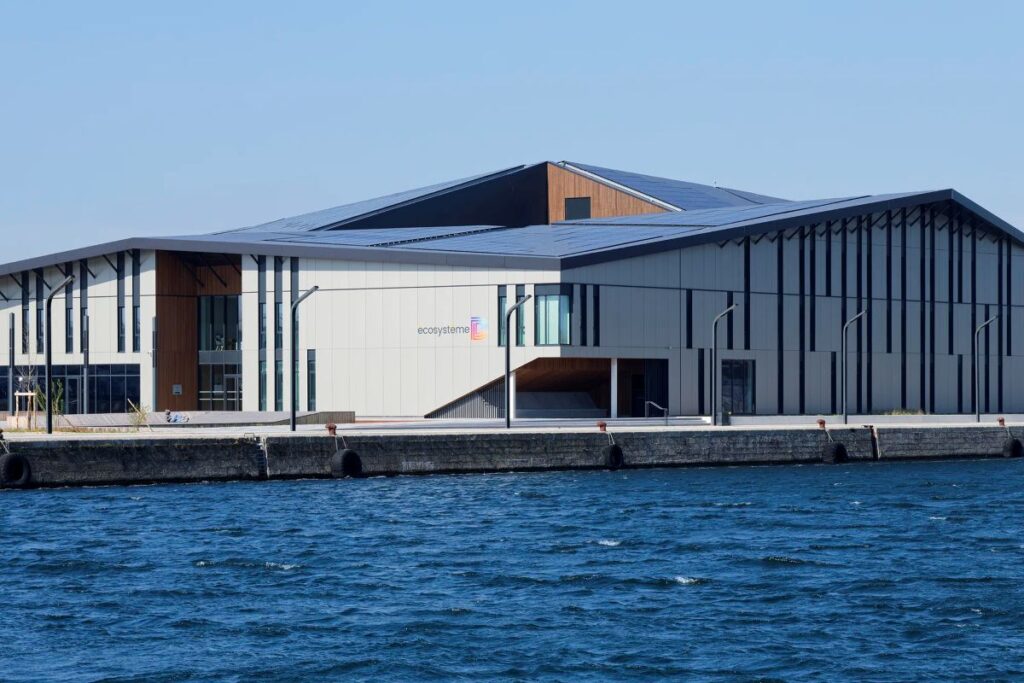
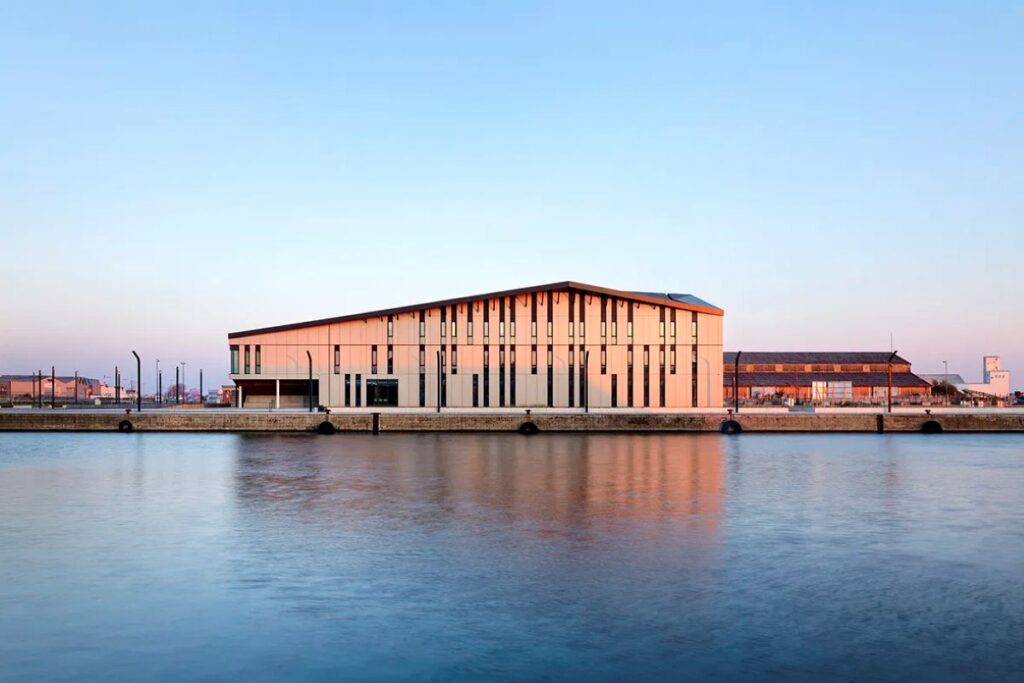
Glazed showroom with forecourt and educational installations © Snøhetta
The architectural approach of Écosystème D’s design is also informed by a structured bioclimatic approach that focuses on five key elements that bring together performance, sustainability, and user experience:
- Compactness and natural light: The rectangular design of the building, measuring 50 x 60 m, features a wind-protected patio at its center. The functional spaces are located around the patio to maximize natural light and interaction among users.
- Passive and high-performance thermal envelope: The triple glazing of the building’s windows, insulation levels, high-performance joinery, roof overhangs used as sun shades, and the metal cladding with reflective coatings ensure uncompromising performance in terms of thermal comfort.
- Natural cooling without air-conditioning: The adiabatic cooling system, combined with natural ventilation and the location of the building relative to the sea, eliminates the need for air-conditioning systems to maintain comfortable temperatures internally.
- Bio-based and local materials: The use of a solid wood structure enables the building to achieve Level 3 certification under the “Bio-Based Building” label by using over 36 kg of bio-based materials per square meter. The materials used are also local, which reinforces the sustainability approach of the project.
- Simple maintenance and long-term durability: The building’s design prioritizes long-term functionality with accessible and robust systems that require minimal maintenance to ensure long-term performance.
The approach ensures that the building’s design responds to technical and environmental needs while also being sensitive to user experience. This fluid circulation integrates the learning center, workspaces, experimental spaces, and administrative areas. The design of the building fosters visual and physical connectivity among users. This approach maximizes the potential of Écosystème D as a hub that brings together innovation, community, and the urban environment.
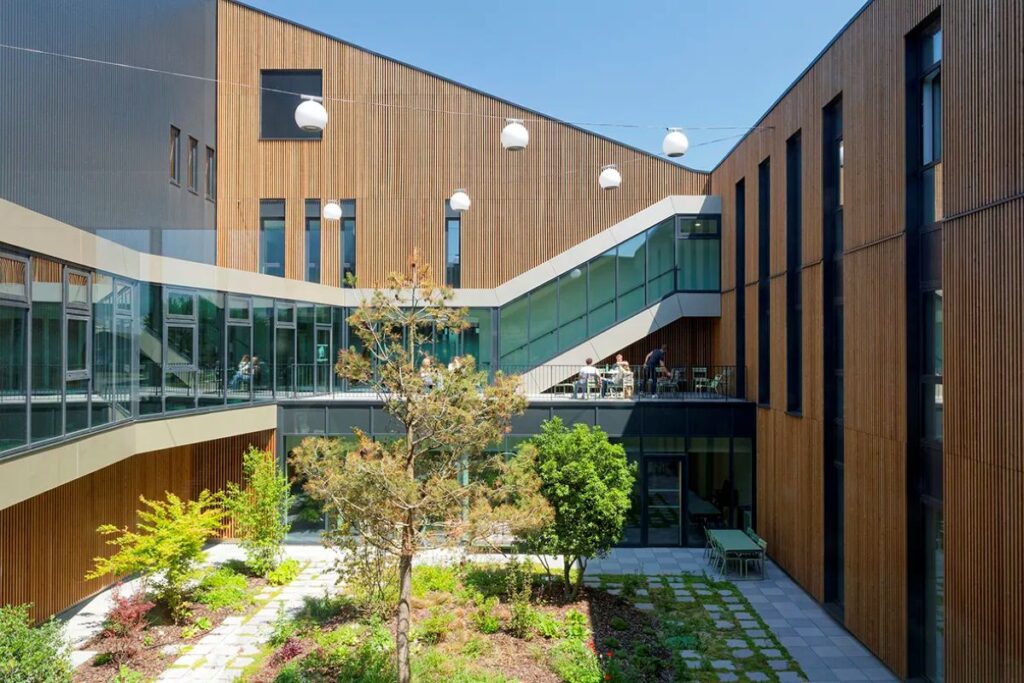
Interior view of the central patio, showcasing light, interaction, and circulation © Snøhetta
Placed at the interface of the port and city of Dunkirk, Écosystème D asserts itself as a new architectural landmark. It also reinforces the visual relationships with the iconic structures that surround it and contributes to the revitalization of the port’s docking area.
The building extends into a dynamic forecourt, an outdoor extension of the glazed showroom with street furniture, connected platforms, and educational content on renewable energy.
The building’s interior has a core space centered around the patio for social interaction, while a large staircase connects different levels of the building, acting as a vertical connection, socializing area, and viewing platform.
This fluid connection of different components of the building includes the learning center, workspaces, experimental labs, and office space. Through the promotion of visual and physical connectivity, the design reinforces the building’s potential as a hub for innovation, community, and the urban environment.