
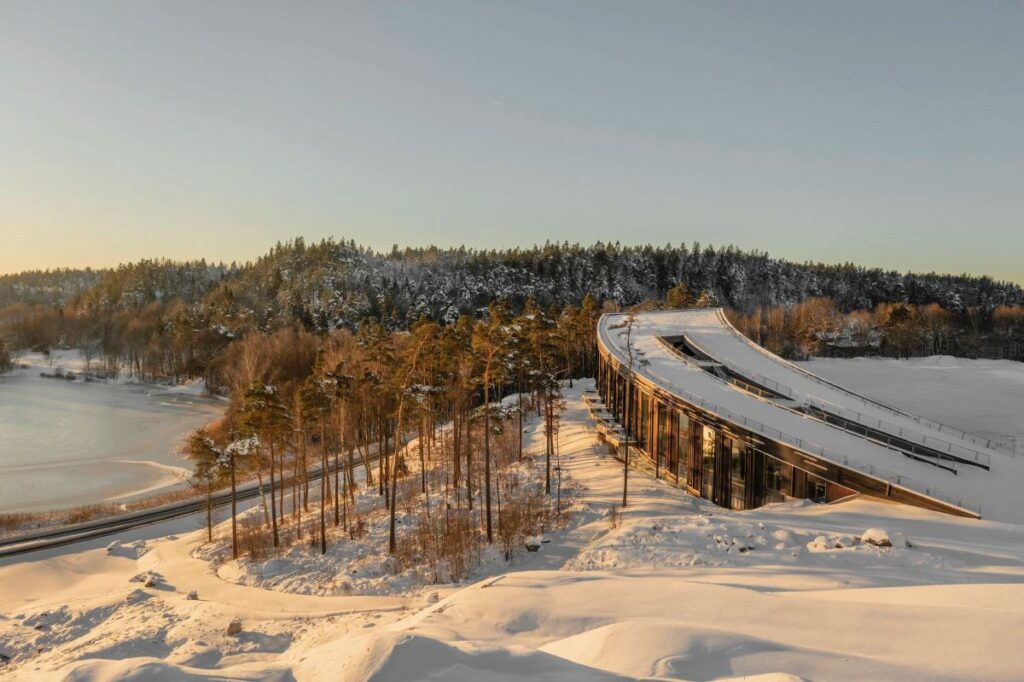
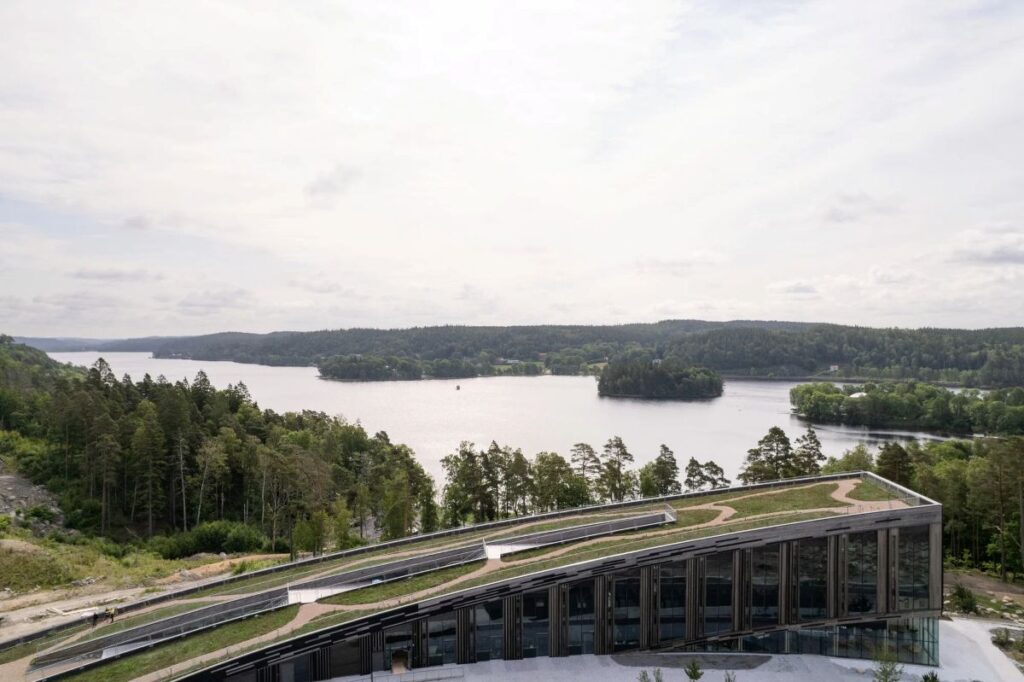
Aerial view of the circular timber Lakehouse with a green roof blending into the Swedish landscape © Snøhetta
Curated by ArchiRev Editorial | Feature Story | Published April 9th, 2026| Source: Snøhetta
Typologies: Mixed Use
Status: Completed
Location: Mölnlycke, Sweden
Client: Next Step
Size: 6,264 m2
Contractor: BRA Bygg
Landscape Architecture, street level: White arkitekter
Interior Architecture, rental areas: Arkitektbyrån Design
Photo: © James Silverman Photograph
The conversion of an abandoned quarry into a lively community has transitioned from a quarrying site to an entire ecological area. The Lakehouse at Wendelstrand is located in Mölnlycke just outside of Gothenburg and will serve as the main anchor for a brand-new, eco-friendly city centre that will one day house approximately 1,000 residents.
The development began in 2017 and will continue to develop until 2025. It was designed to create a place to “heal the incurable” way of living that has been shaped by years of quarrying and excavation. Instead of waiting for all of the homes around it to be constructed, the builders of this large swimming center provided a place for people who will eventually be living in these houses to find common space together through shared resources to help provide them with a way to stay fit by providing them with fitness facilities and eating facilities even before they move into their new homes.
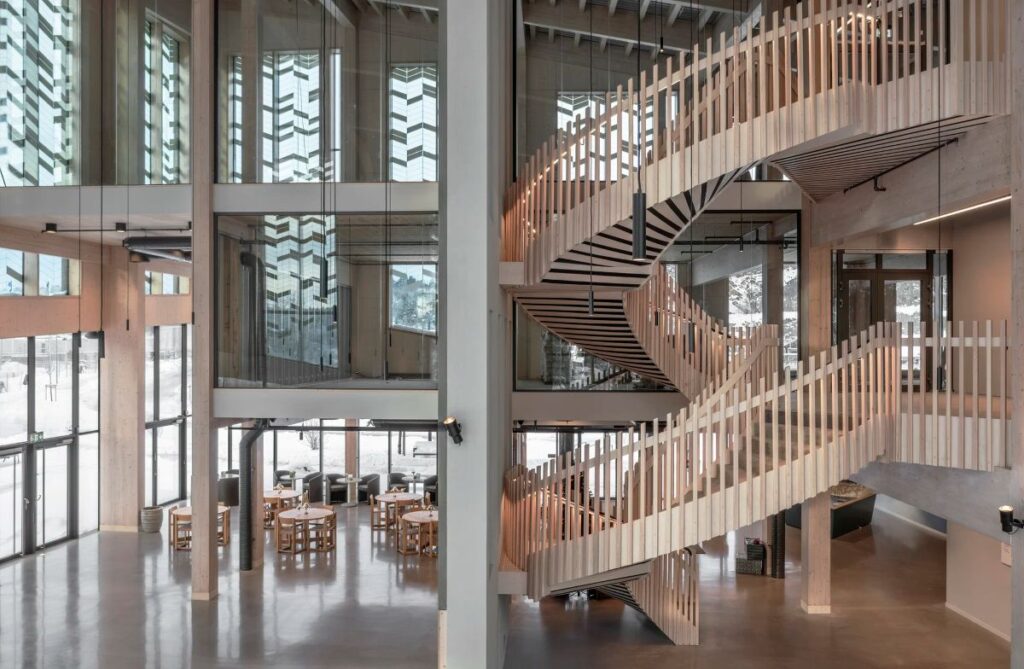
Light-filled restaurant with exposed mass timber and floor-to-ceiling lake views
© Snøhetta
The shape and style of the Lake House are influenced by the physical contour and character of the land surrounding it. The Body of the Lake House is designed as a large figure that ties together the wall of granite quarries on the south and the beautiful/great greeneries that surround Lake Moss (the northern boundary). The base of the lower two levels (subterrain) of the Lake House is structurally anchored with concrete and stone materials and is therefore well (sound) connected to the geologic history that the land represents.
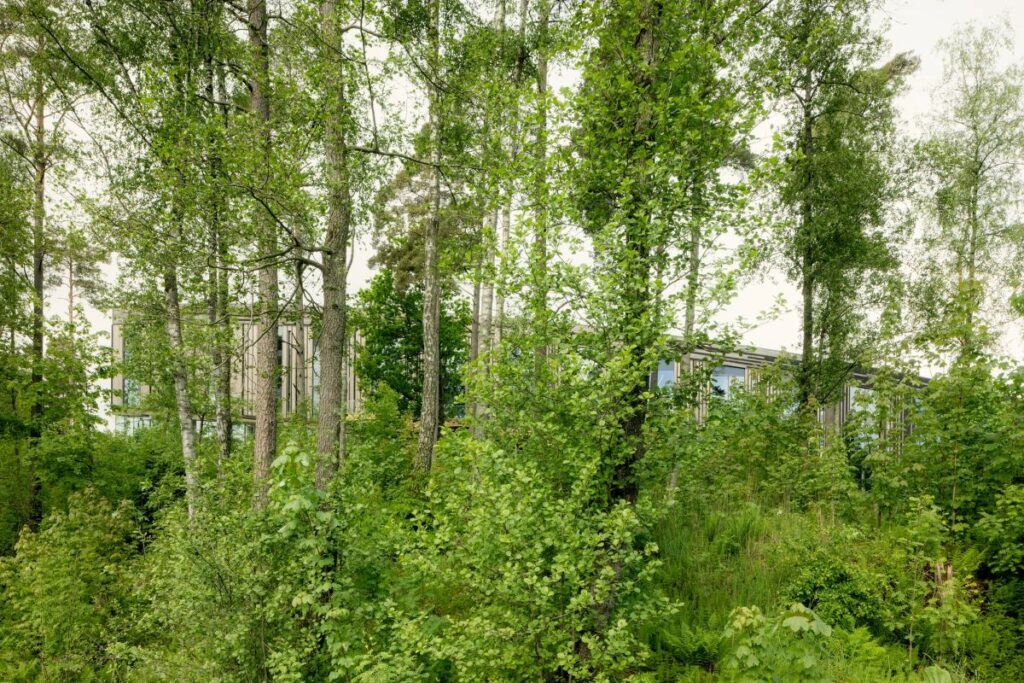
The materials selected for the third level of the Lake House will continue to reproduce visual representation of the tree cover that comprises the surrounding property. The use of glulam and laminated wood (from old growth Sweden and Norway) will further enhance the aerial quality for both floors three and four.
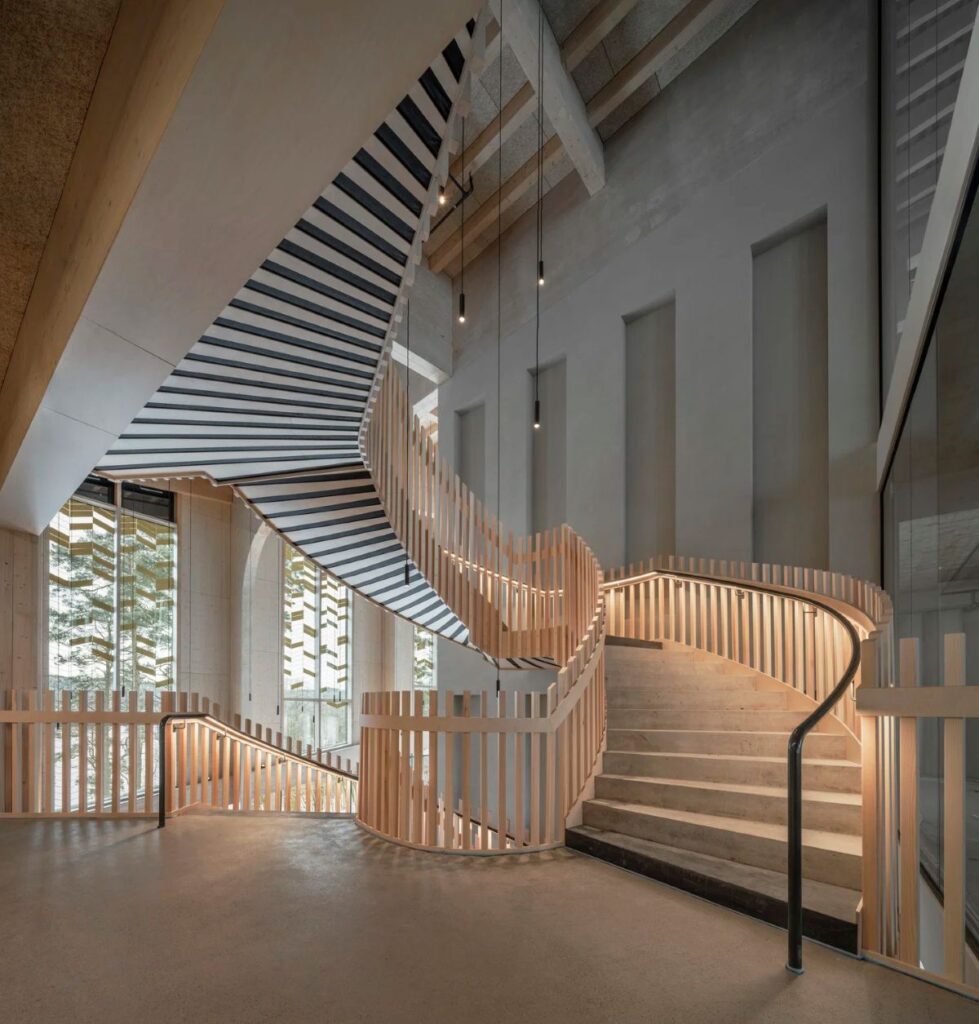
Central atrium view with timber structure and filtered light through patterned glass © Snøhetta
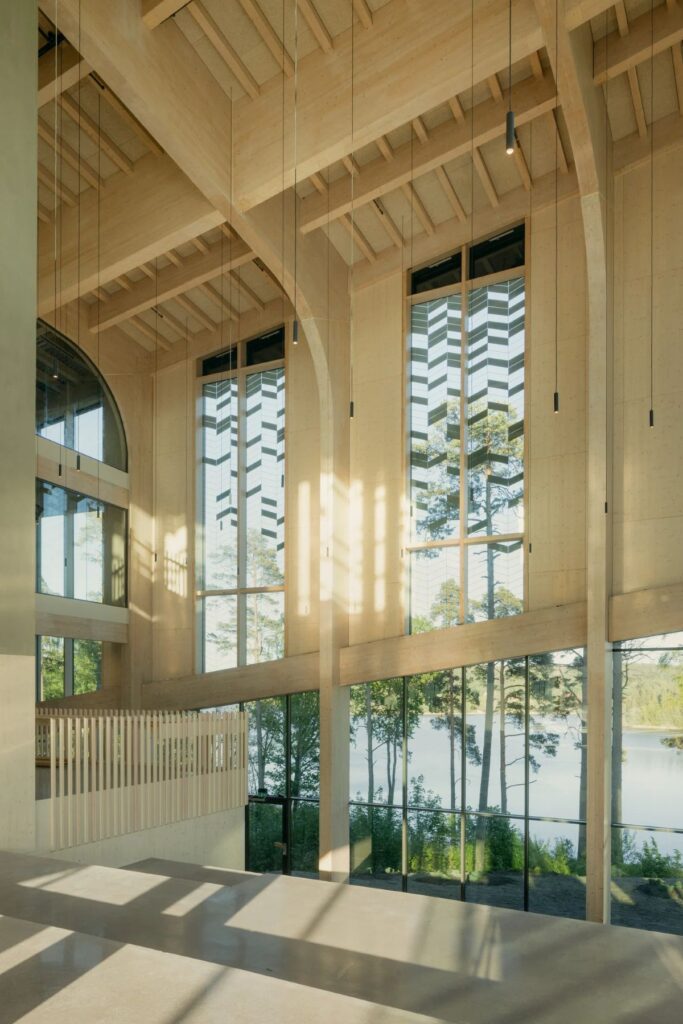
Glass façade with dappled pattern casting filtered light into timber interiors © Snøhetta
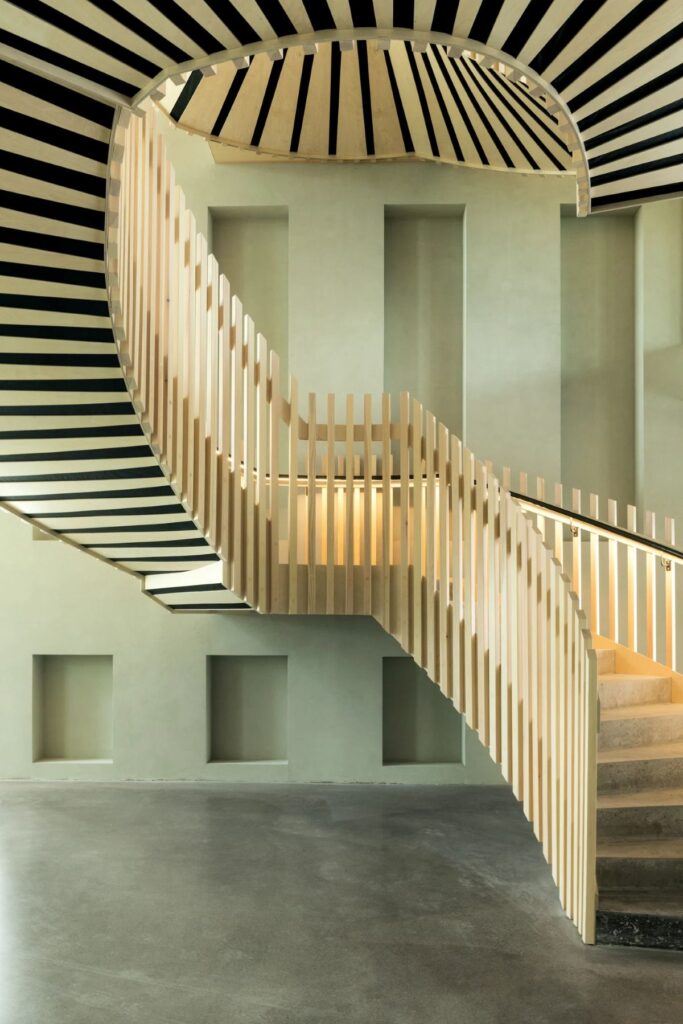
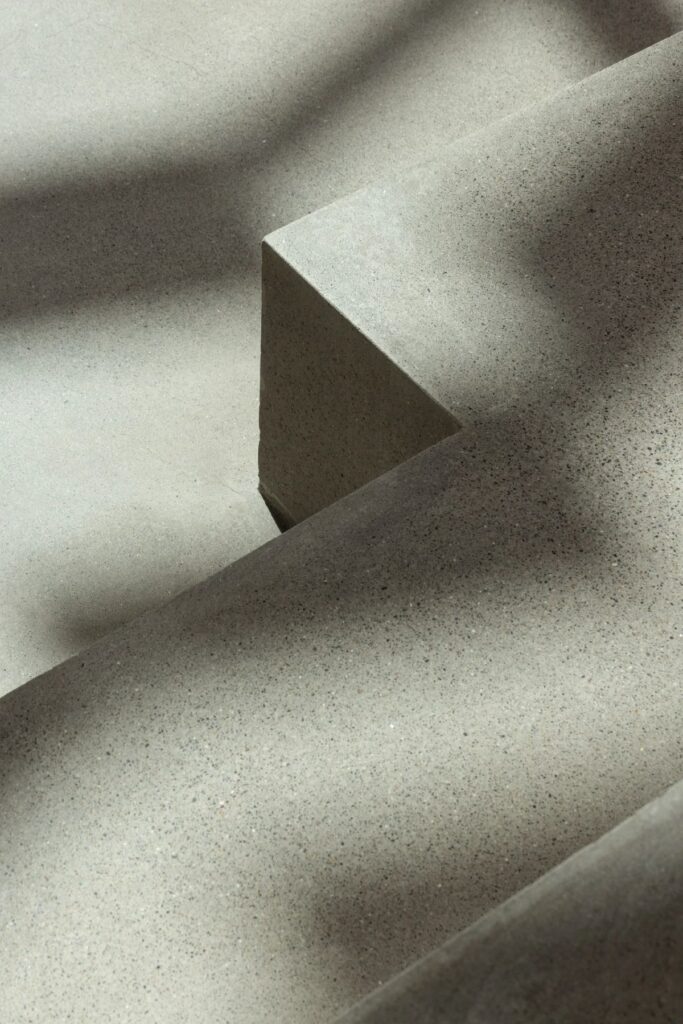
Light-filled vertical core linking interior volumes © Snøhetta
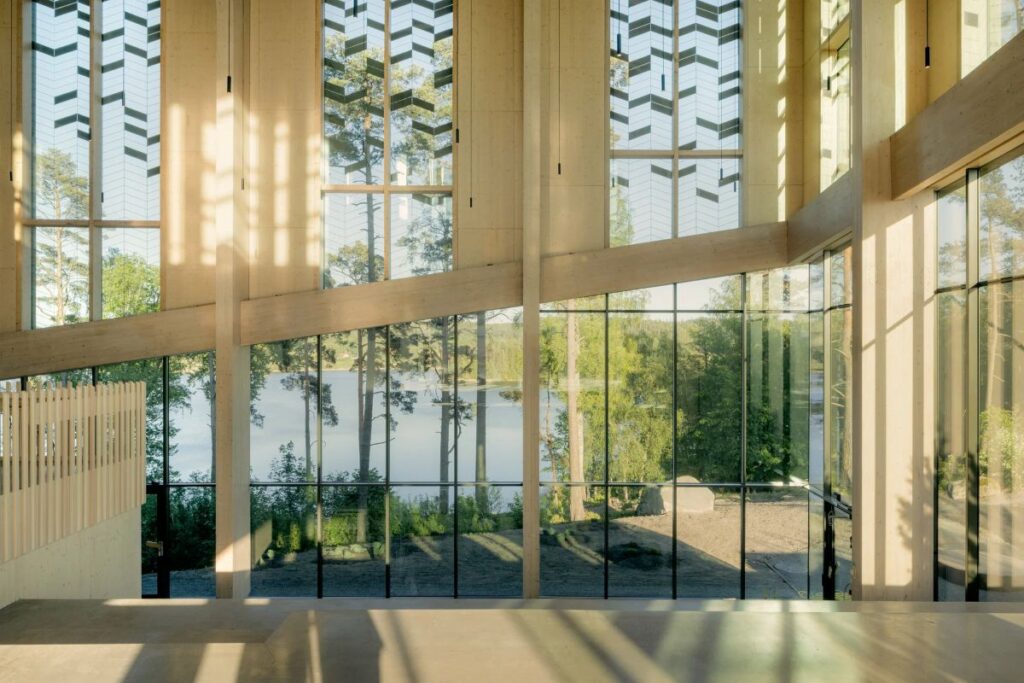
Photo: Kalle Sanner © Snøhetta
At the core of the building’s interior logic is an impressive vertical atrium that extends from the ground level upwards through every level of the building. This atrium serves many purposes and is where the social heart of the building lies; here, natural light flows down into each of the building’s floor plates while linking the different functional zones of the building. The atrium can also be utilized for concerts and performances, with seating that flows out naturally from the inside of the building to an open-air amphitheater with views of the lake. These relationships allow for an easy transition between private working areas and public gathering areas, thereby keeping the building active throughout the entire day.
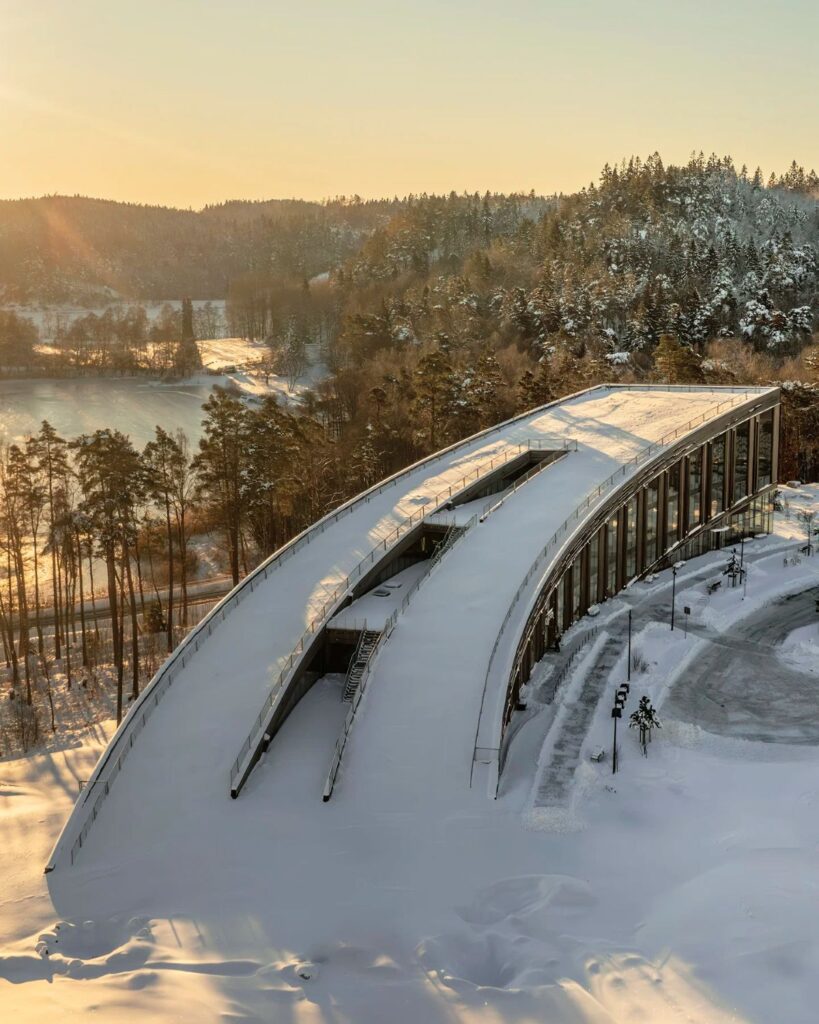
Rooftop garden detail with native planting and walkway overlooking the new housing district
Photo: James Silverman Photography © Snøhetta
Technical innovation has been integrated into the building’s exterior through large glass panels having a strategically defined artistic pattern across them. This pattern serves two purposes: It both provides a dappled light effect, which resembles natural sunlight filtering through the canopy of trees in a forest, and also reduces solar gain through the glass; thereby, eliminating the need for traditional sunshading and providing the ability to maintain visual transparency without sacrificing thermal performance. Attention to detail has also been given to the roof as it is composed of “forest floor mats” made up of native moss, heather and wildflowers. This living roof manages rainwater runoff, mitigates heating, supports local biodiversity and essentially returns the building’s footprint to the ecosystem.
As a mixed-use facility spanning over 6,000 square meters, the Lakehouse is more than just an office or a gym; it is a catalyst for a pedestrian- and bike-friendly lifestyle. By integrating essential services and social spaces into a single, highly crafted timber structure, the project sets a precedent for how modern developments can foster immediate community bonds. The result is a space where the technical rigors of mass-timber construction and the narrative of ecological healing converge, creating a permanent landmark that invites people to live, work, and connect within the restored landscape.