Typologies: Mixed Use, Offices, Retail, Residential, Bar-Restaurant
Themes: Architecture, Housing, Mixed Use, NEXT
Status: Realised
Location: San Francisco, United States
Year: 2018–2023
Surface: 34,900 m²
Client: SF Giants + Tishman Speyer
Certifications: LEED Gold
Awards: SARA NY Design Awards 2025 — Design Award of Honor; CTBUH Annual Awards 2024 — Award of Excellence, Best Tall Building Under 100 Meters; CTBUH Annual Awards 2024 — Award of Excellence, Best Tall Building, Americas
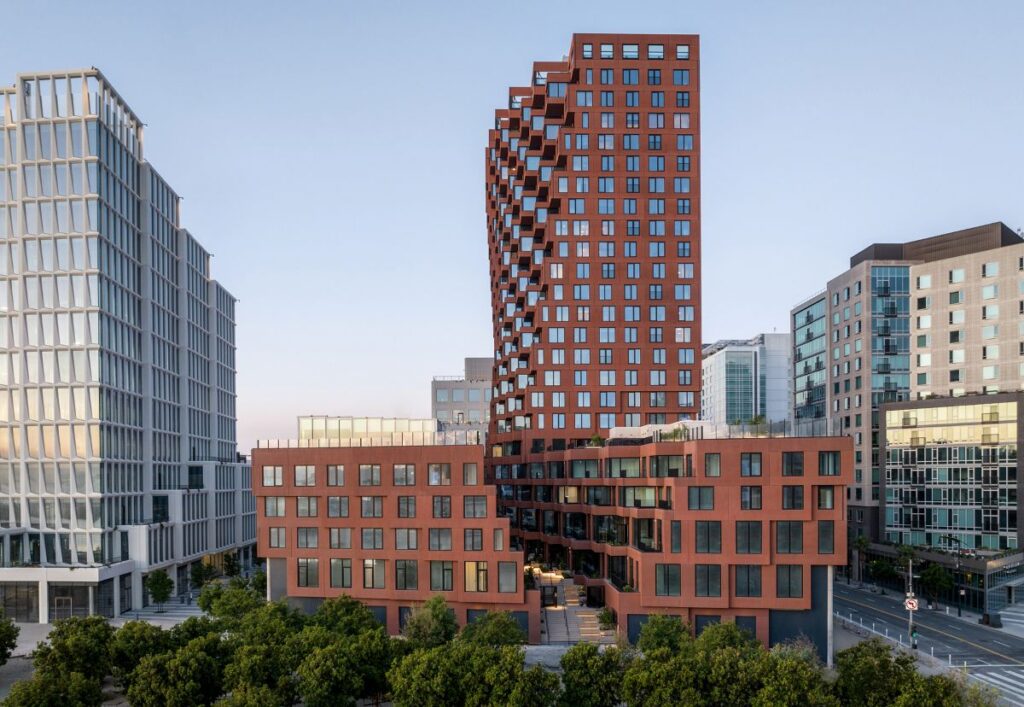
The Canyon San Francisco, designed by MVRDV, is a 34,900-square-meter residential tower that was built in 2023 on the waterside of San Francisco Bay, which marks the first completed project by the architectural studio in the western part of the USA.
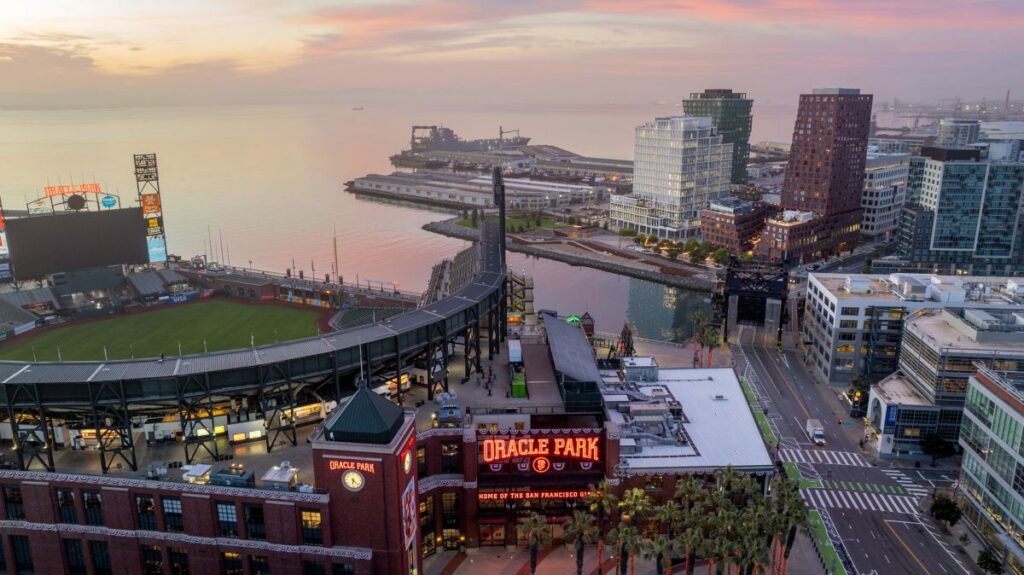
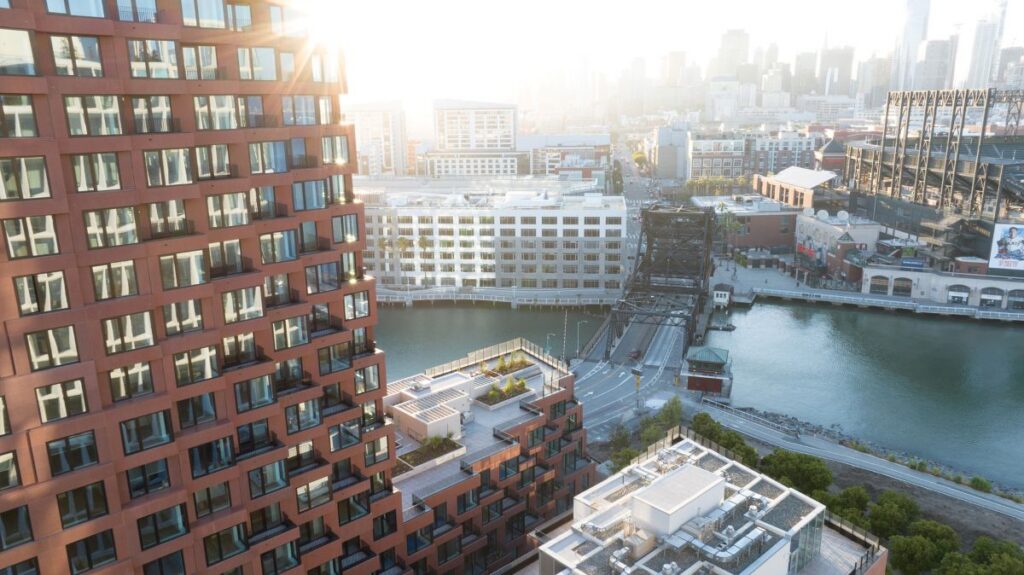
The 23-story building sits at the north-west end of Mission Rock – the entire new neighborhood created on an 11-hectare landmass on the other side of Oracle Park. Named after the dramatic geologic formations of the Californian landscape, the building finds its right place in one of the most architecturally conscious cities of the world.
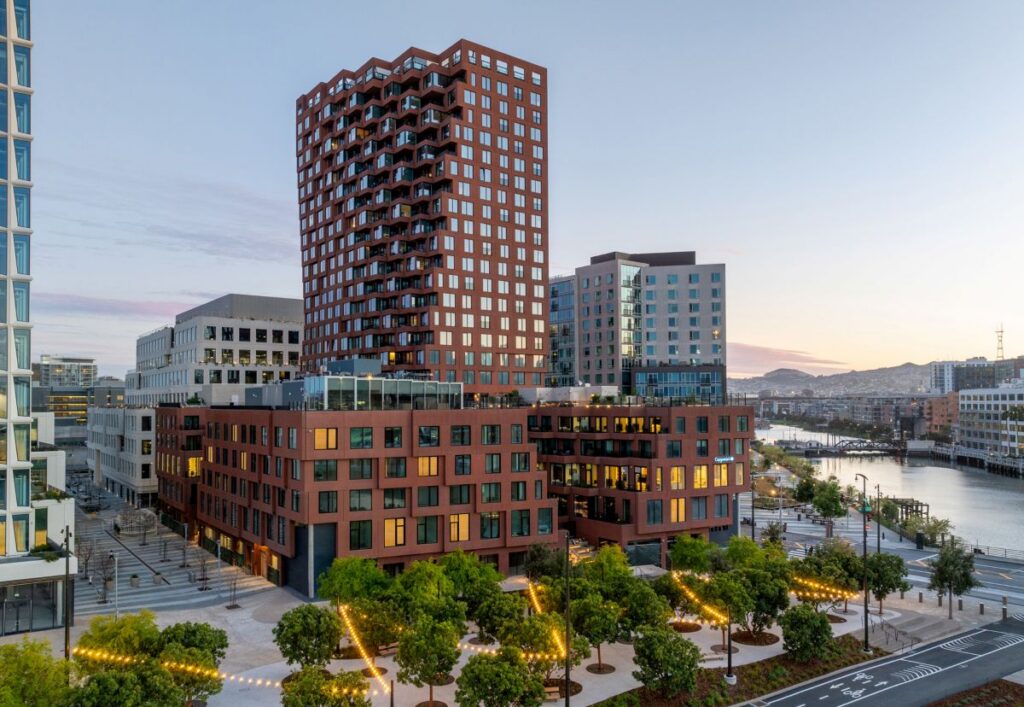
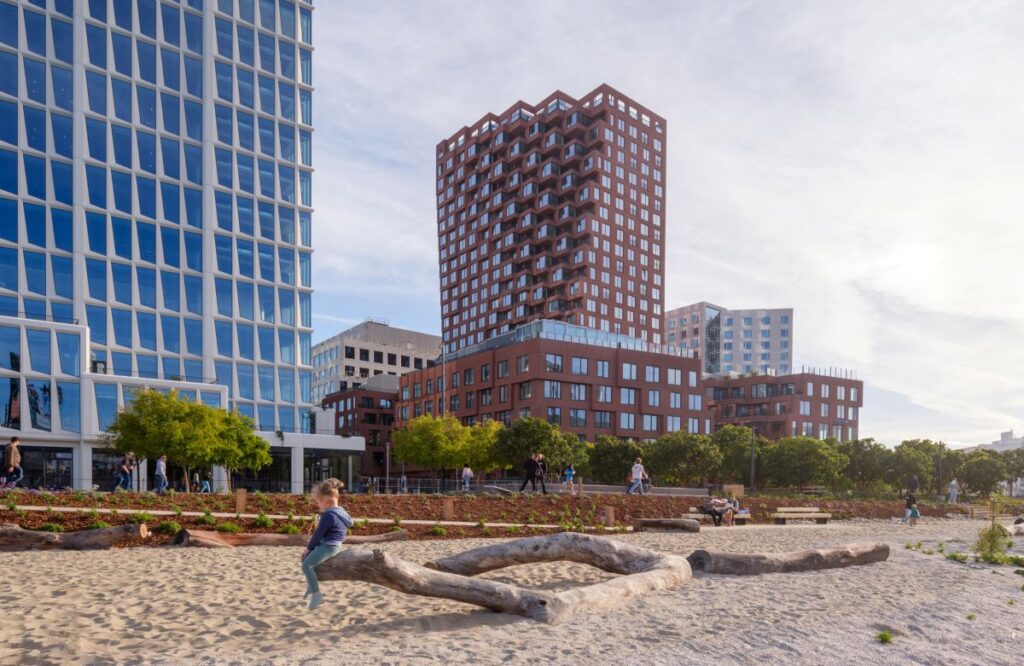
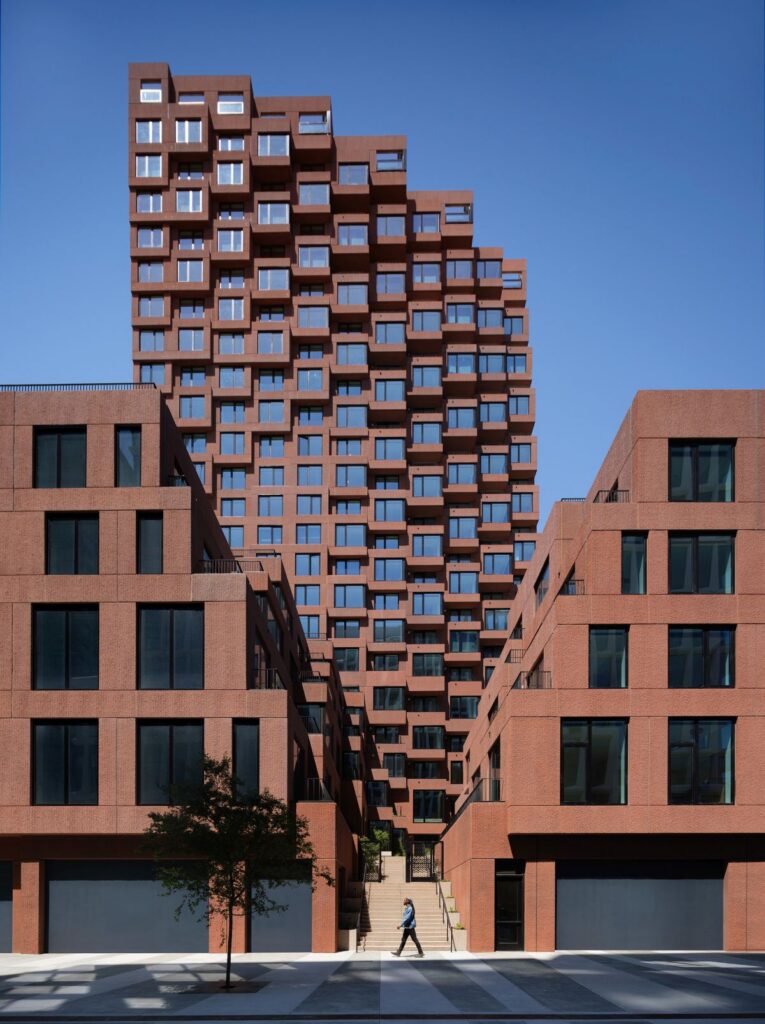
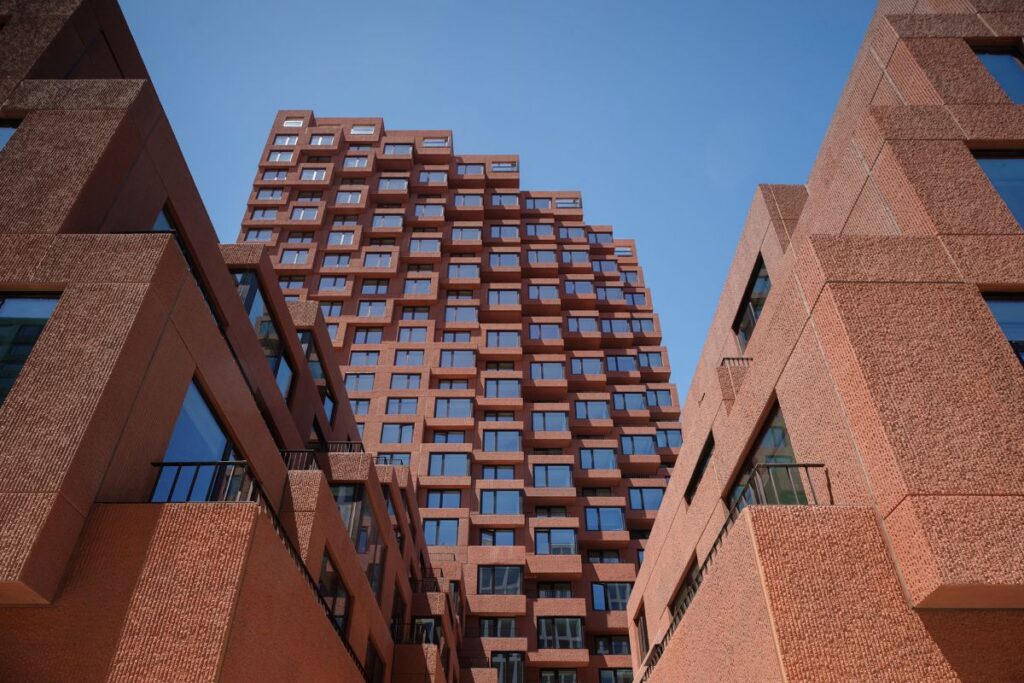
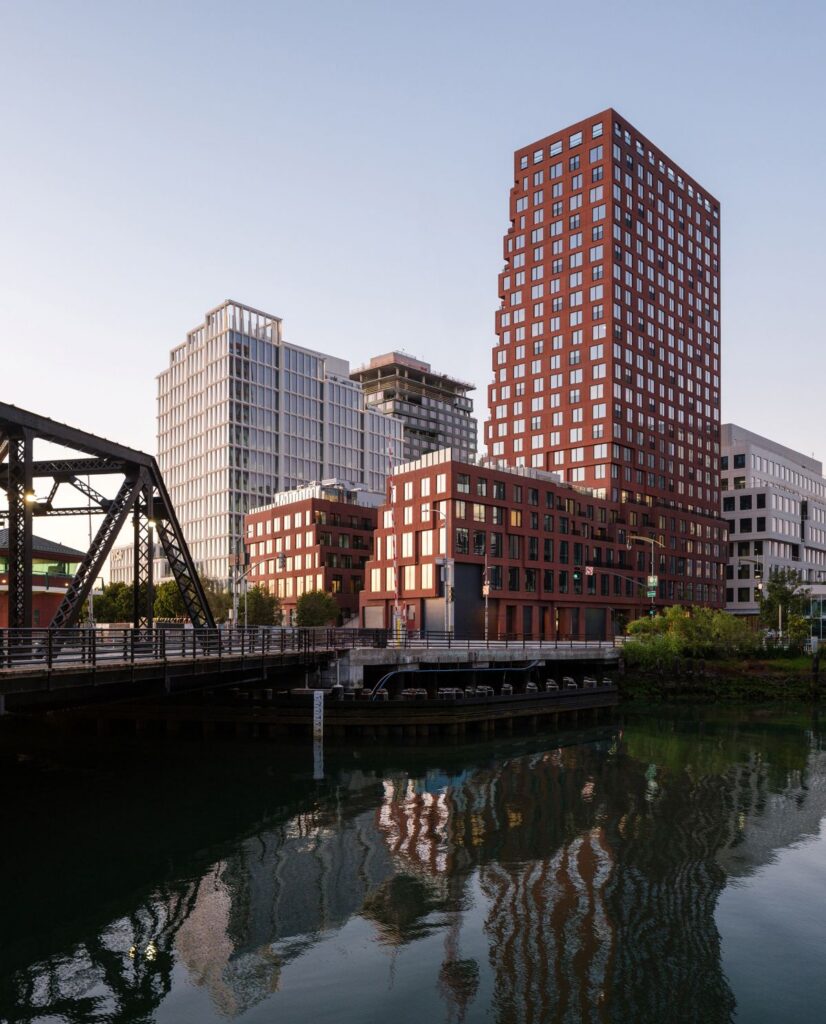
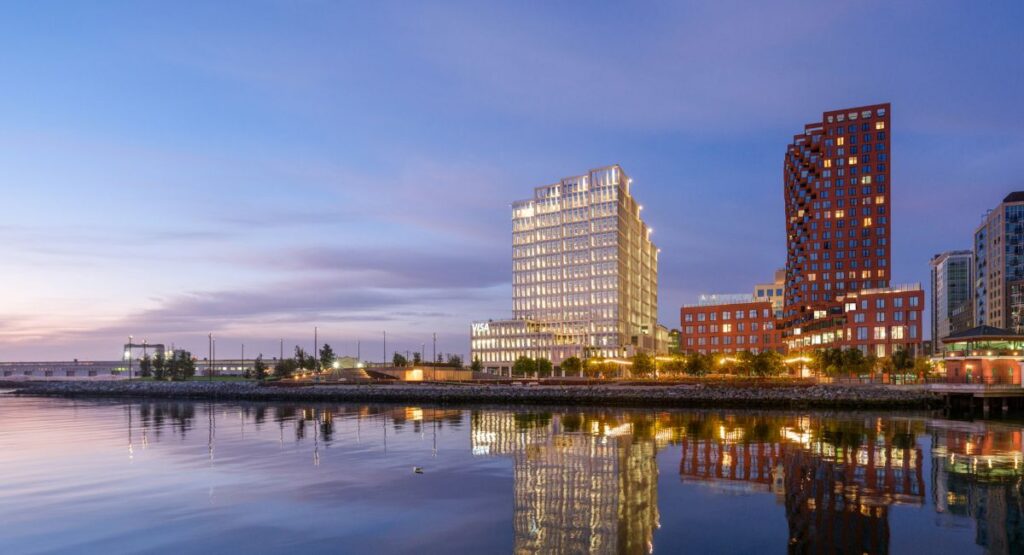
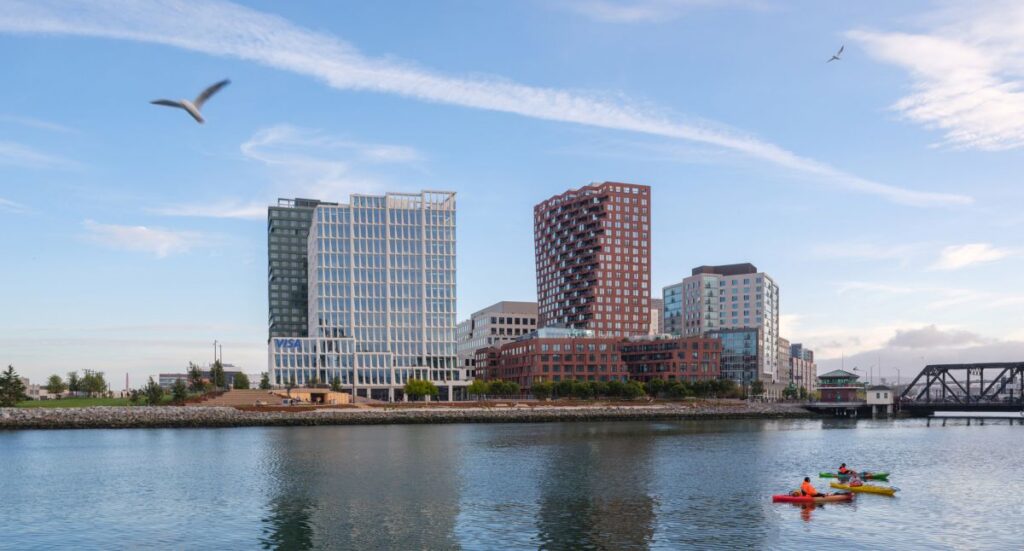
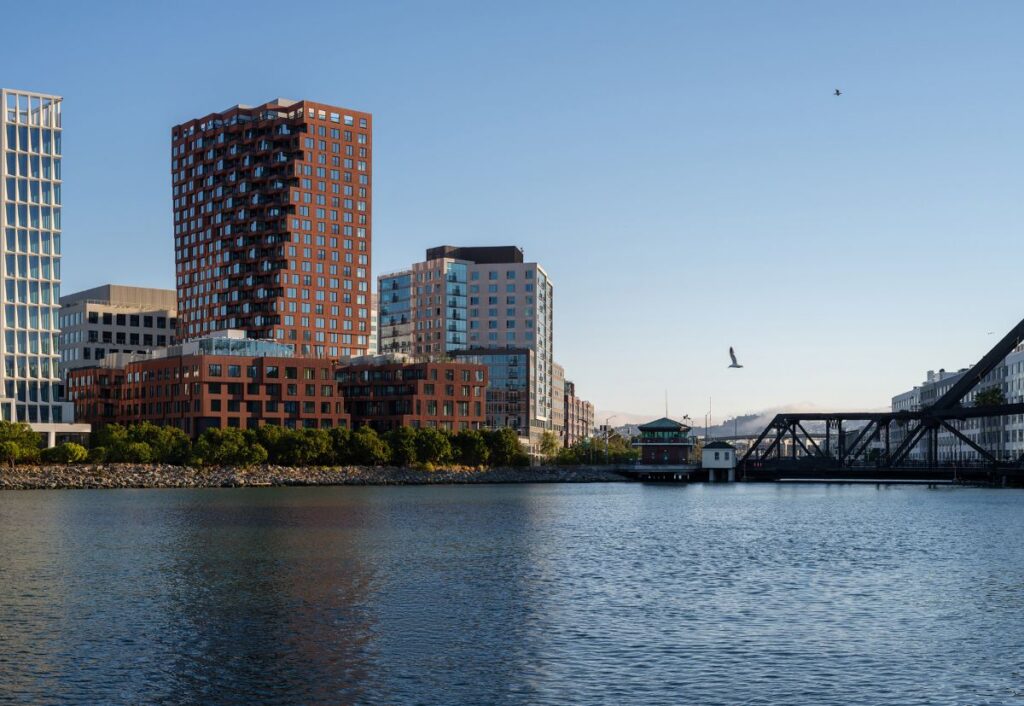
Exterior view of The Canyon showing the full 23-story massing, the ruggedly textured red-brown GFRC façade, the step-backs and overhangs of the tower’s jagged profile, and its relationship to China Basin Park and the San Francisco Bay waterfront © MVRDV
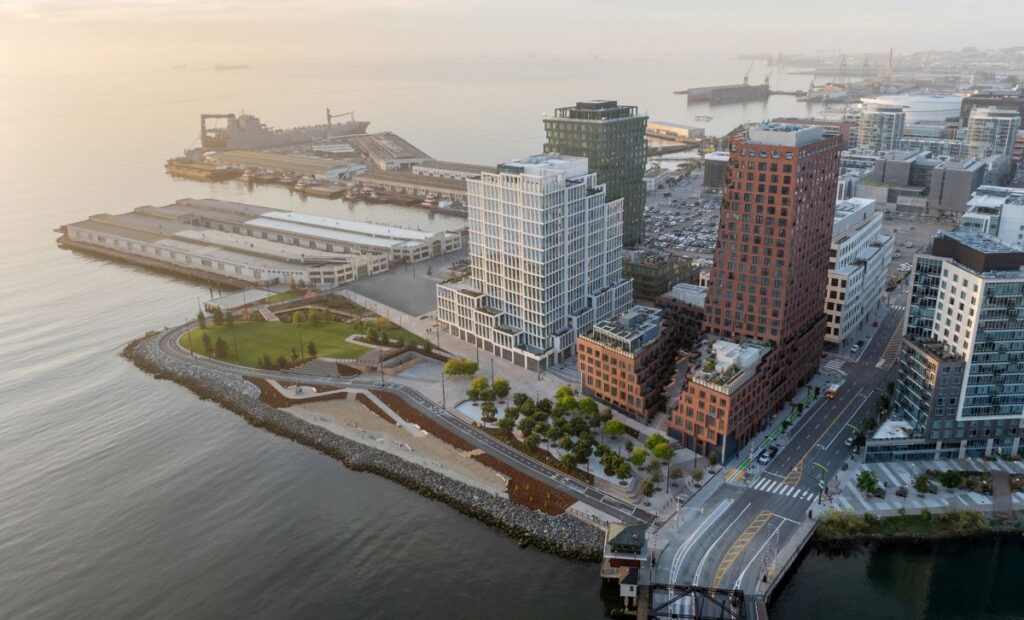
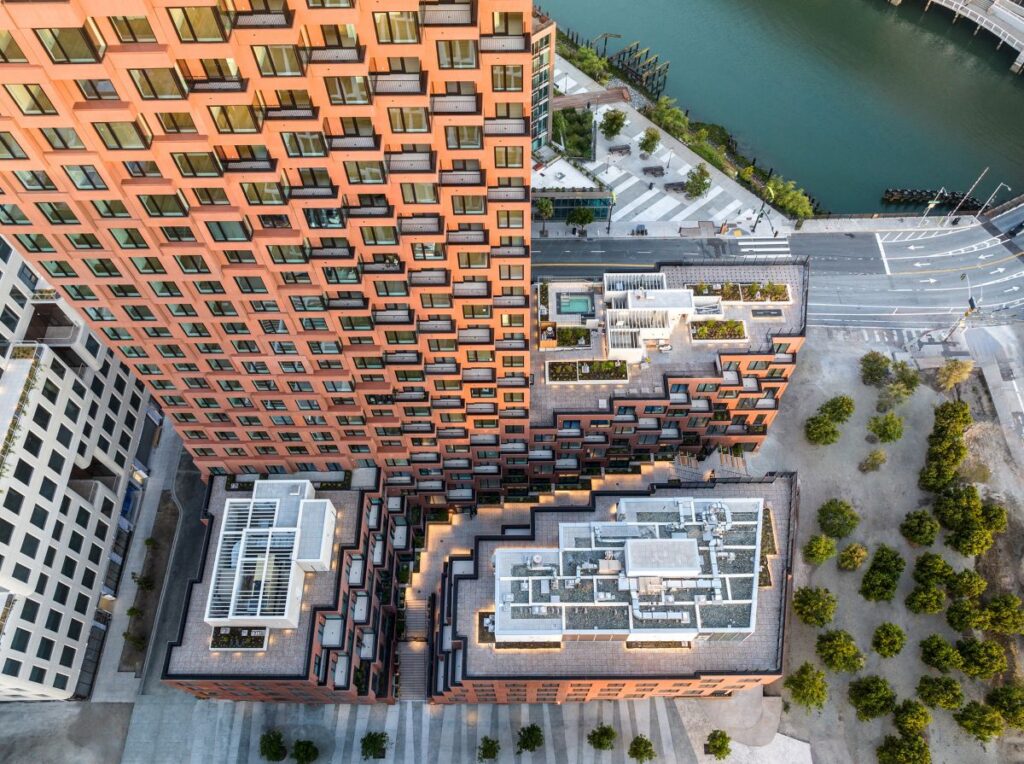
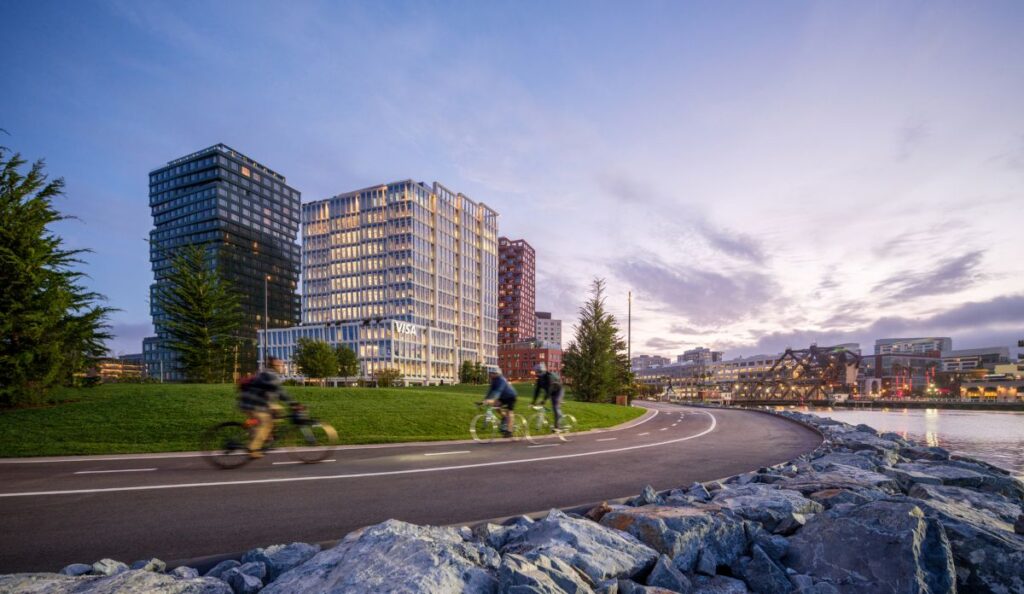
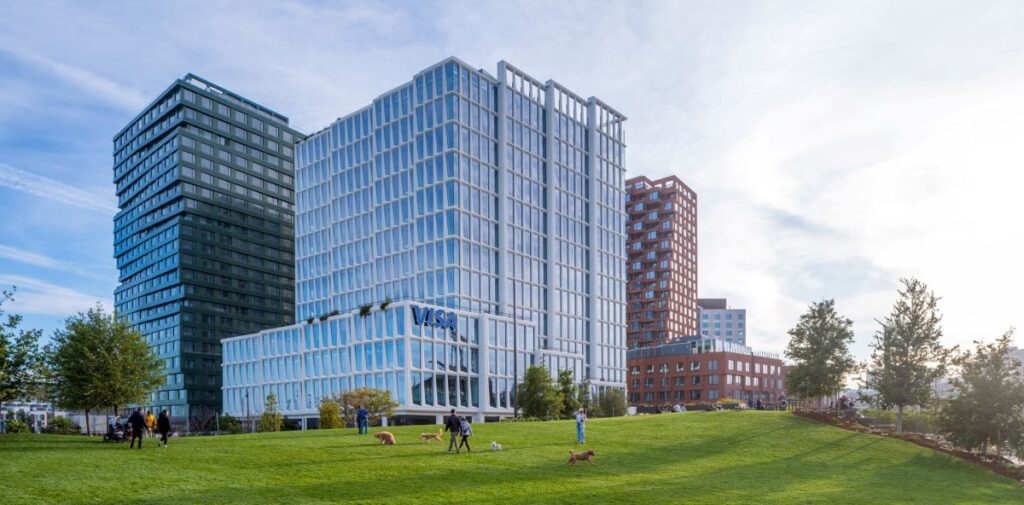
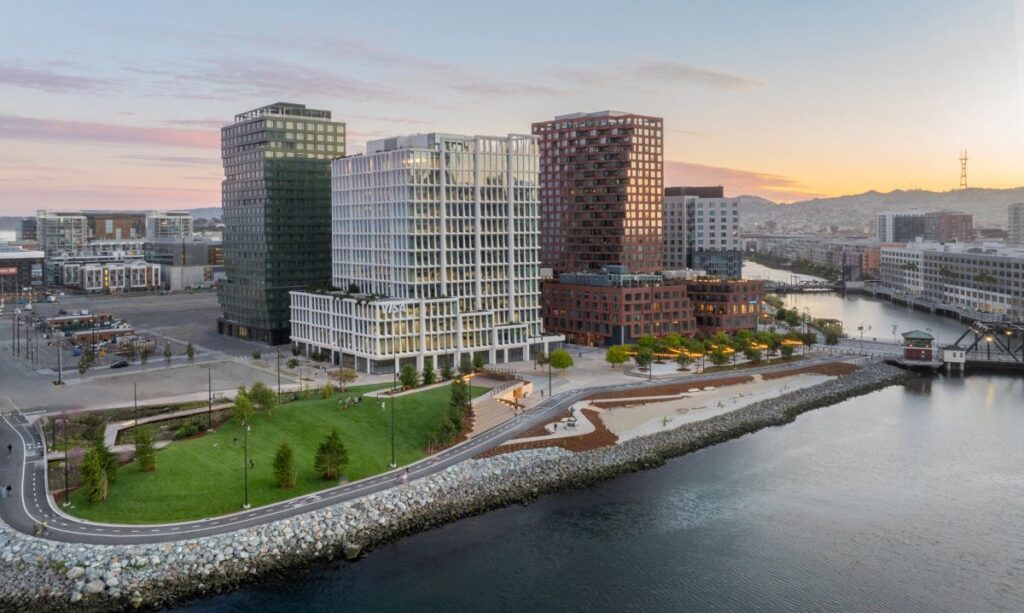
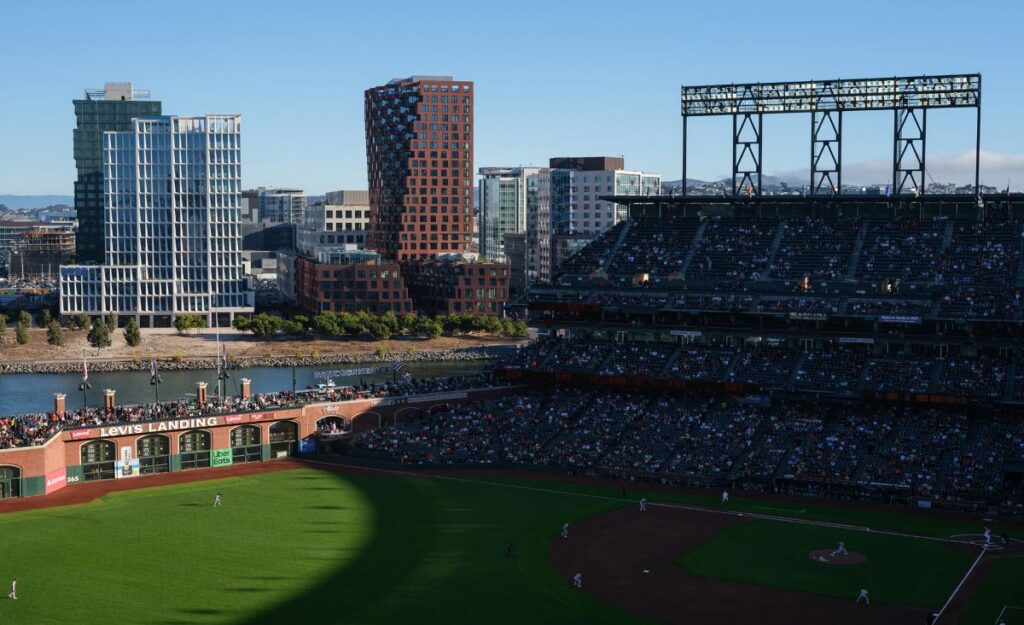
Aerial or wide view of the Mission Rock neighbourhood showing The Canyon’s position at the north-west corner of the masterplan, its relationship to the three other first-phase buildings by Studio Gang, Henning Larsen, and WORKac, and the China Basin Park waterfront frontage © MVRDV
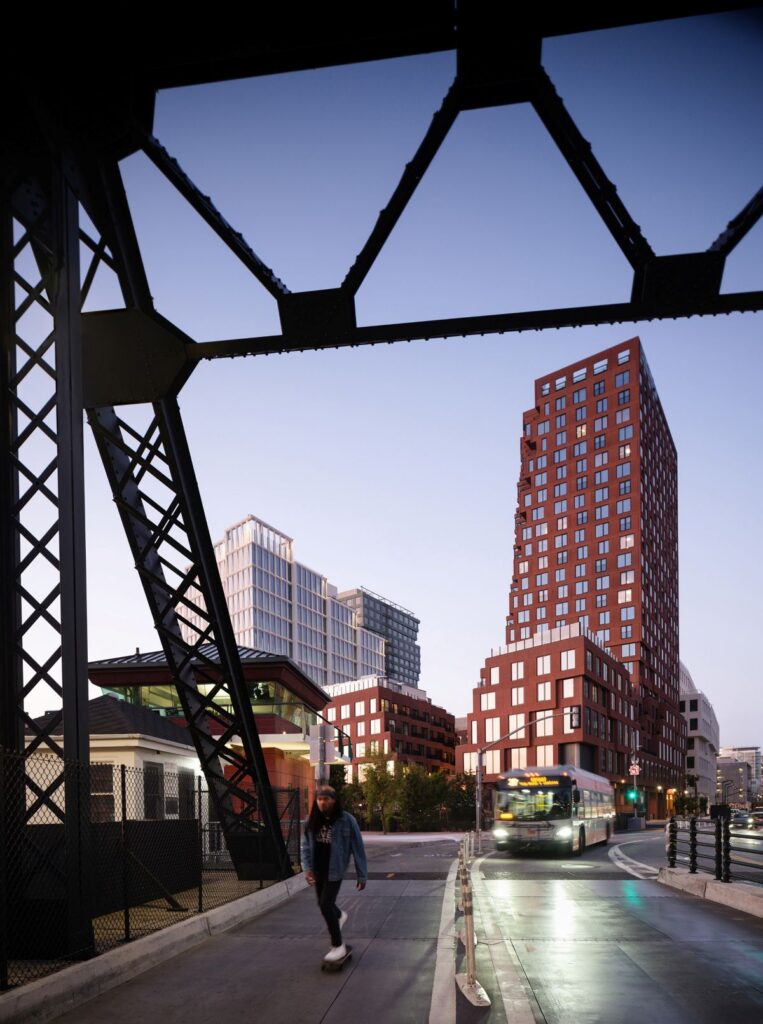
Mission Rock results from a collaboration among the San Francisco Giants, Tishman Speyer, and the Port of San Francisco to develop a mixed-use neighbourhood on a waterfront site previously underutilized. Four internationally renowned architecture firms – Studio Gang, Henning Larsen, WORKac, and MVRDV – were engaged to design concurrently four structures making up the neighborhood’s first phase in an exercise of architectural identity that would create four unique structures while still remaining an integrated whole. As the first building that a visitor sees when approaching Mission Rock across the Lefty O’Doul Bridge, The Canyon functions as the neighbourhood’s gateway building.
The structure is designed with a five-story plinth that houses a 73-meter tower towards its western end. On the ground floor are smaller-sized shops and restaurants that enliven the street facade and ensure that the community identity emphasized in the Mission Rock master plan is carried forward in each of its first-phase buildings. Occupying floors two and three above ground are offices, topped by 283 residential apartments where over a third can be rented at a below-market price by middle-class families. Out of this number, 102 apartments have been offered through a lottery process, tackling head-on the issue of housing unaffordability plaguing San Francisco.
Street-level view of The Canyon plinth showing the activated retail and restaurant frontage, the entrance to the landscaped canyon passage, and the pedestrian connection to China Basin Park © MVRDV
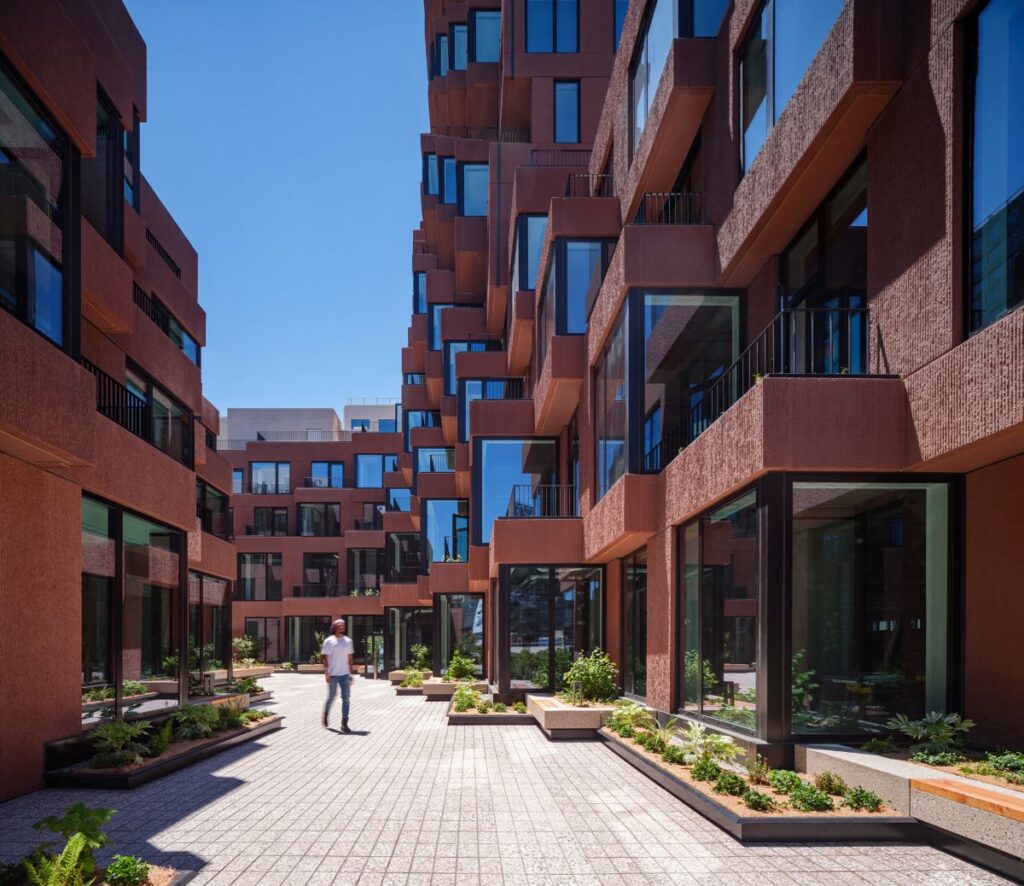
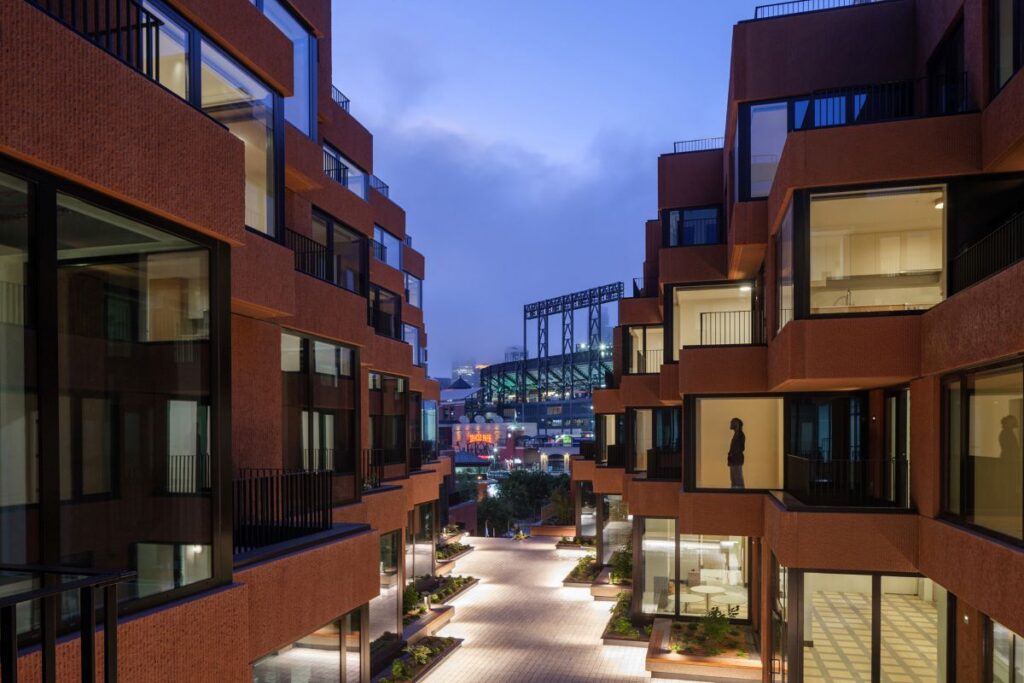
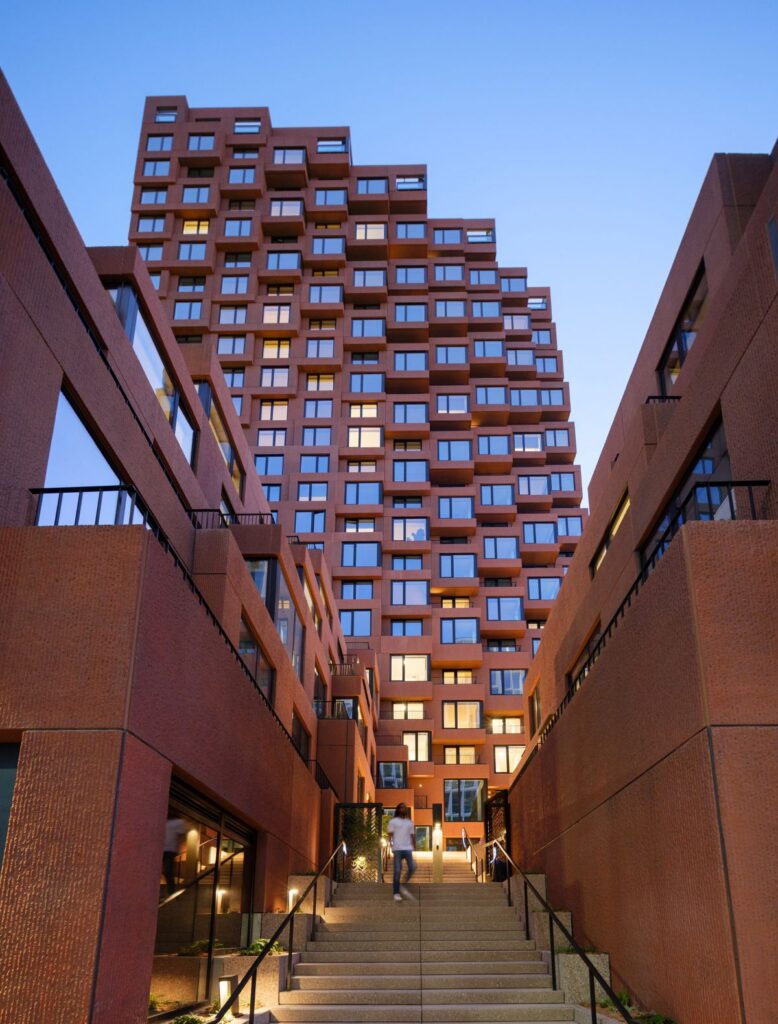
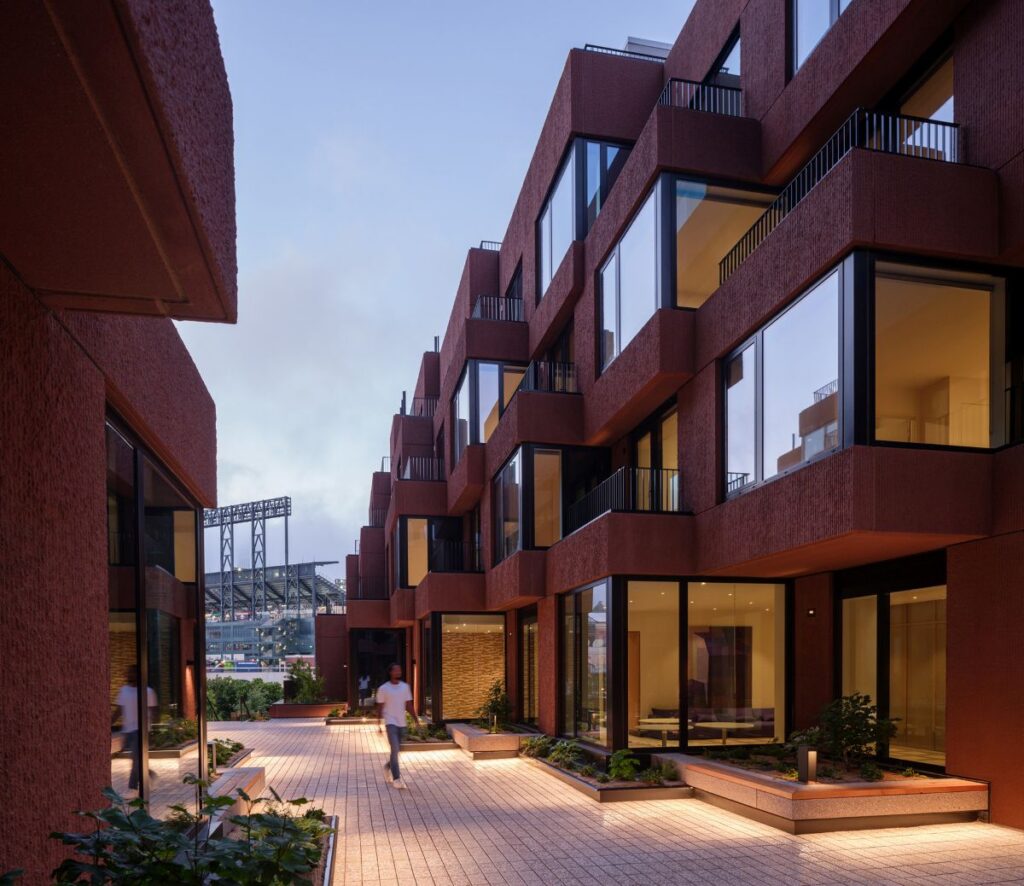
View of the landscaped public canyon cutting diagonally through the plinth, showing the jagged rock-like wall surfaces, cascading planting, step-backs and overhangs, and the spatial sequence connecting the park frontage to the interior neighbourhood © MVRDV
The structure is designed with a five-story plinth that houses a 73-meter tower towards its western end. On the ground floor are smaller-sized shops and restaurants that enliven the street facade and ensure that the community identity emphasized in the Mission Rock master plan is carried forward in each of its first-phase buildings. Occupying floors two and three above ground are offices, topped by 283 residential apartments where over a third can be rented at a below-market price by middle-class families. Out of this number, 102 apartments have been offered through a lottery process, tackling head-on the issue of housing unaffordability plaguing San Francisco.
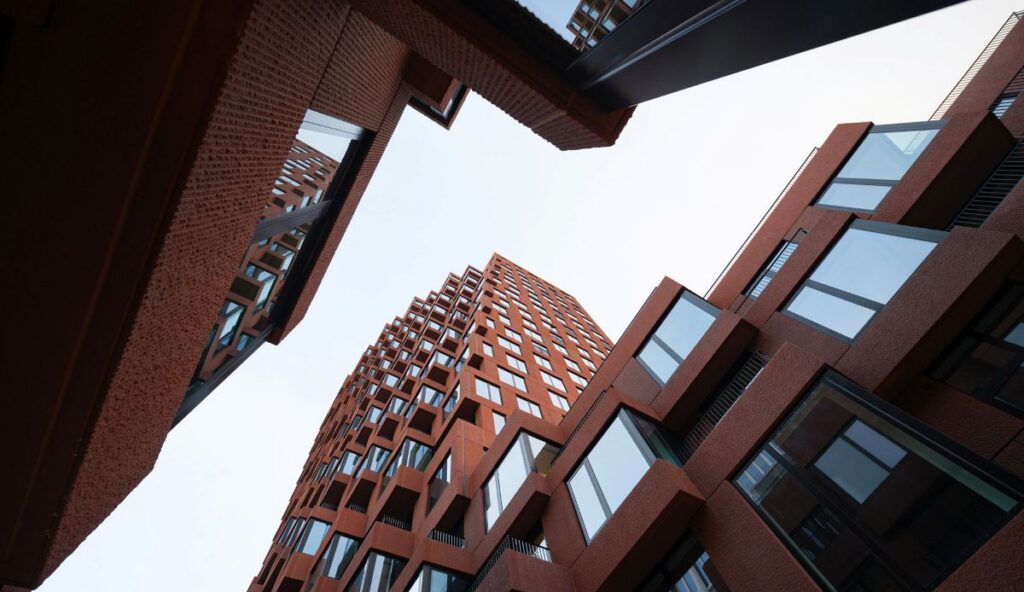
View from within the canyon passage looking upward, showing the tower rising above the jagged plinth walls, the native planting of the landscaped canyon floor and walls, and the bay window residential units overhanging the space © MVRDV
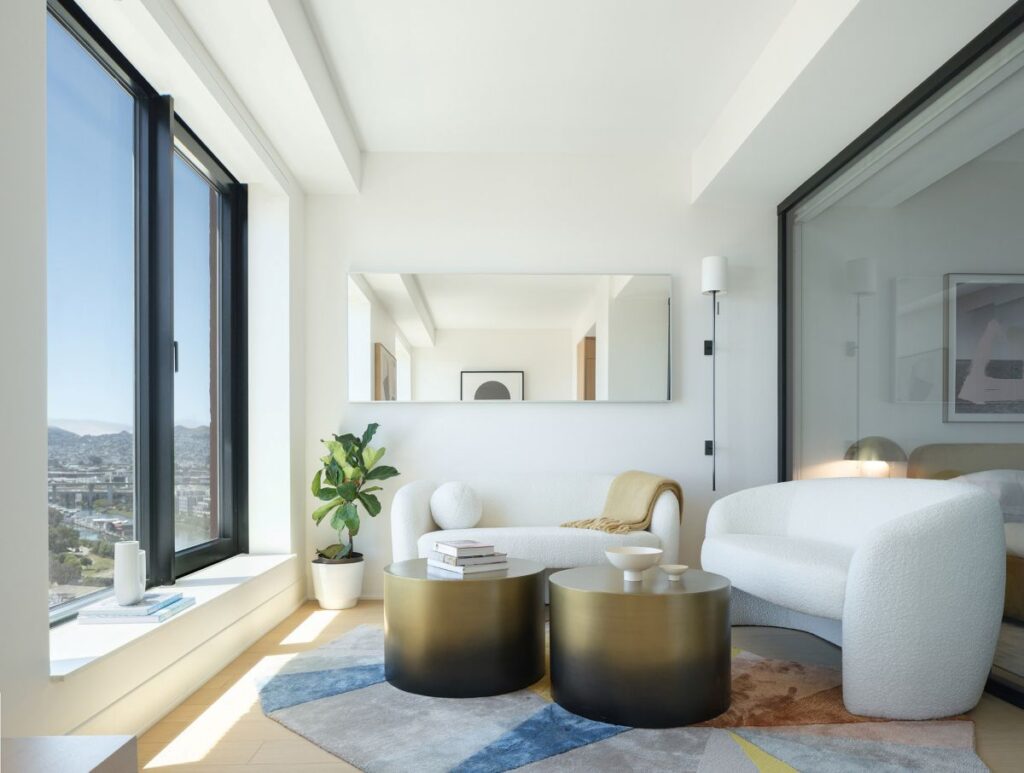
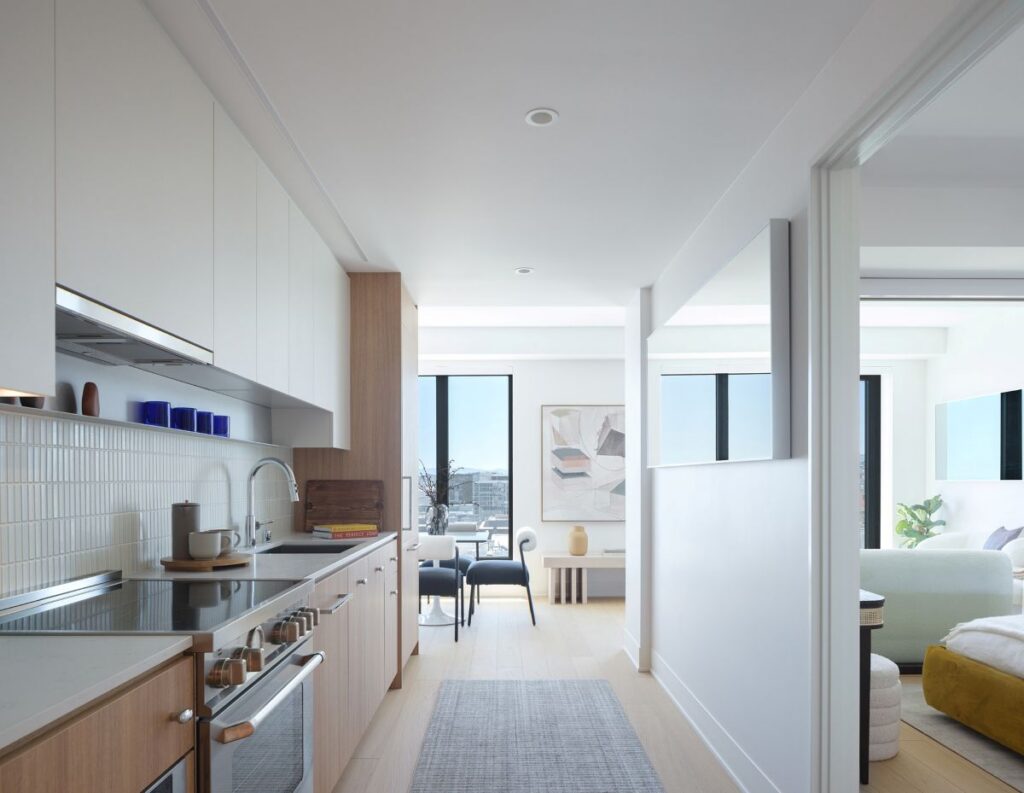
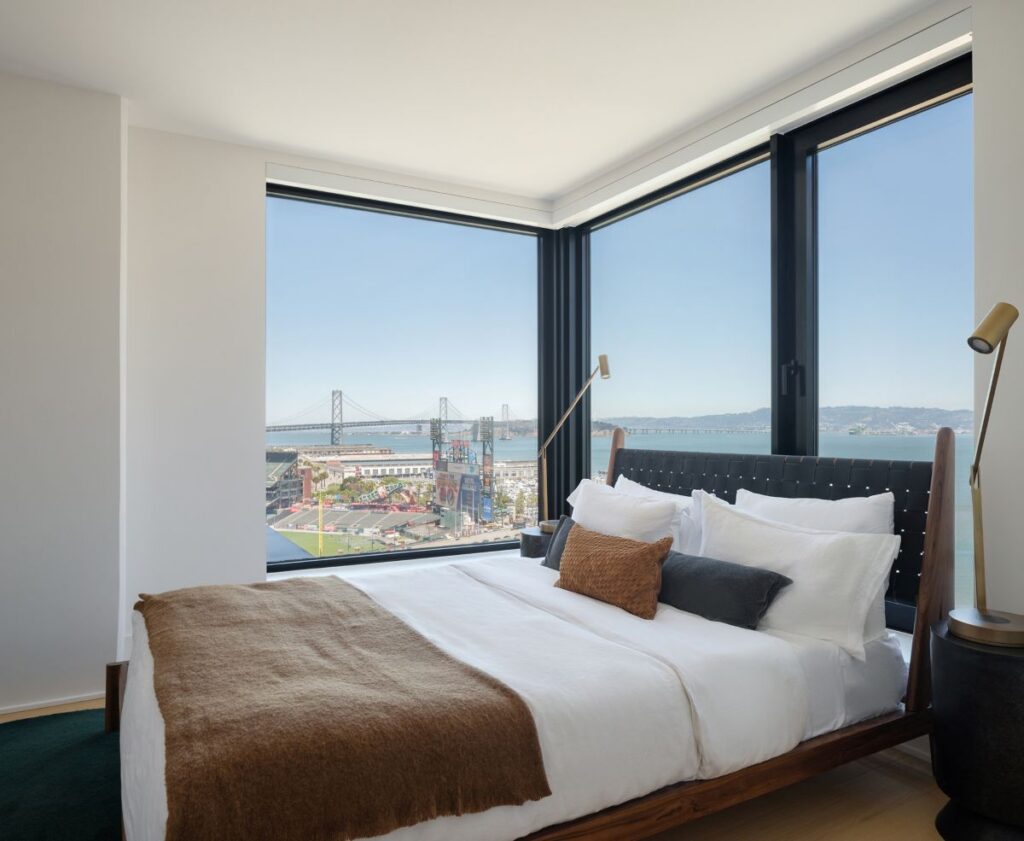
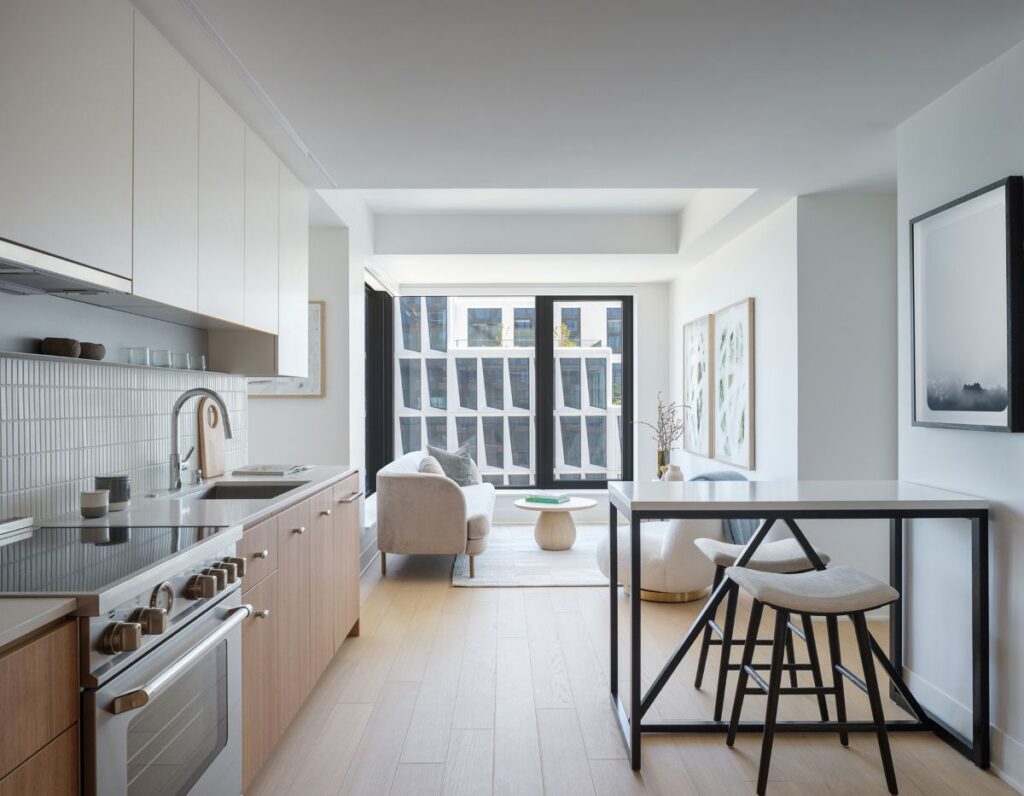
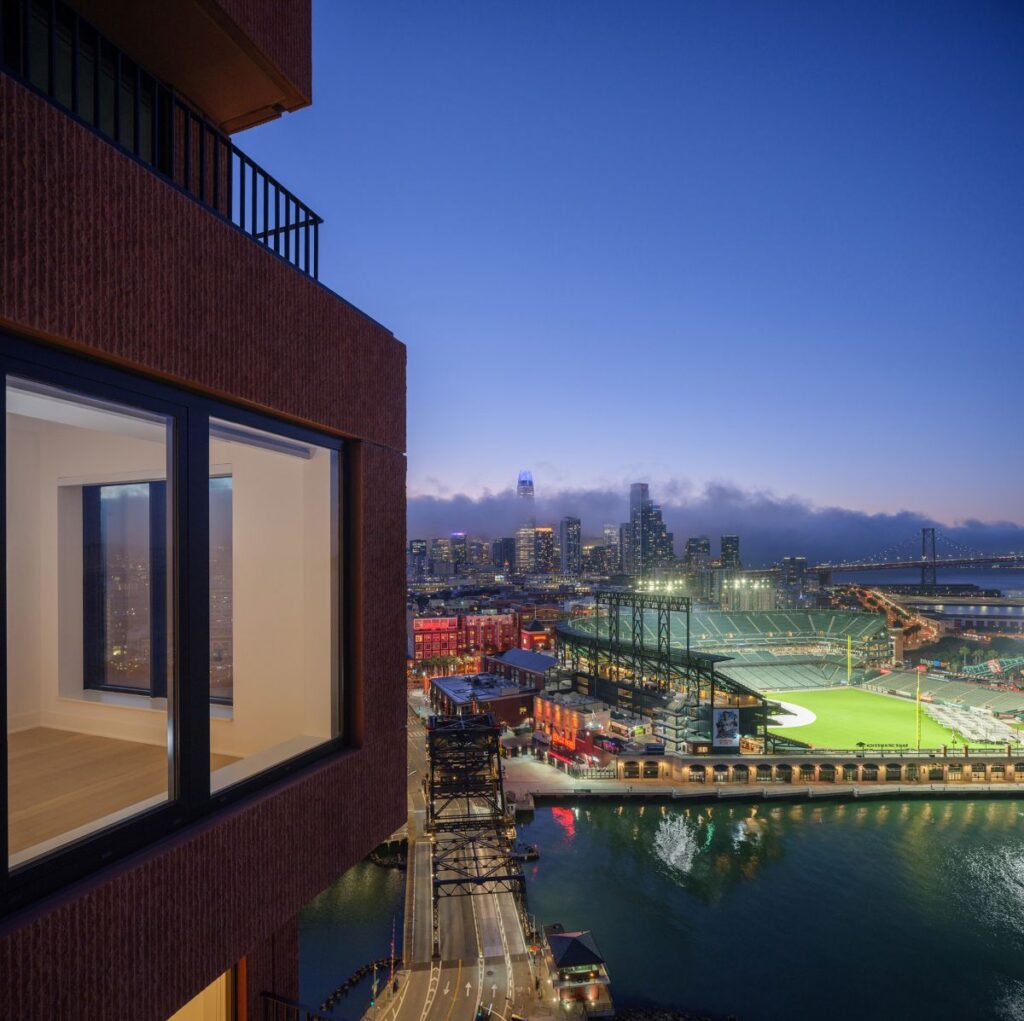
Residential apartment interior showing bay window configuration framing views over China Basin Park and San Francisco Bay, demonstrating the spatial relationship between the canyon geometry and the residential programme above © MVRDV
The sustainability solution has been incorporated into the building design and tied into its surrounding Mission Rock infrastructure. An elevation increase exceeding five feet was provided in anticipation of sea level rises. This is part of the sustainable design incorporated within the sections of the building and not just part of flood protection efforts separate from the structure itself. Glass fibre reinforced concrete, weighing less but offering similar properties to precast concrete, has been used as an external cladding material.
The Canyon will house all the mechanical equipment required in the neighborhood’s district heating system. This is due to the water temperature in the nearby San Francisco Bay, which can provide both heat and cooling for all structures in the Mission Rock area.
Detail of the GFRC façade panels showing the textured surface treatment, the colour palette referencing Californian geological formations, and the fenestration pattern of the tower’s upper residential floors © MVRDV
The Canyon San Francisco by MVRDV is proof that affordability, geologic story-telling, and sustainability are not mutually exclusive considerations when developing mixed-used buildings; they are the basis upon which the most successful architectural project can be created. Construction year: 2023.
Architect: MVRDV
Founding Partner in Charge: Nathalie de Vries
Partner/Director: Frans de Witte
Design Team: Competition: Fedor Bron, Mick van Gemert, Fouad Addou, Matteo Gramellini, Marina Kounavi, Sandra Jasionytė, Ievgeniia Koval, Paul van Herk, Kamila Korona Schematic Design: Fedor Bron, Mick van Gemert, Fouad Addou, Matteo Gramellini, Teodora Cirjan, Andrea Manente, Claudia Consonni, Aneta Rymsza, Sandra Jasionytė, Nicolás Garín Odriozola
Copyright: MVRDV — Winy Maas, Jacob van Rijs, Nathalie de Vries
Collaborators: Executive Architect: Perry Architects Landscape Architect: GLS Landscape/Architecture Structural Engineer: Magnusson Klemencic Associates MEP: PAE Engineers Contractor: Swinerton Builders Photography: © Jason O’Rear