Typologies: Office, Laboratory, Education, Bar-Restaurant, Research
Themes: Architecture, Sustainability, Workplace, Innovation, Circular Design
Status: Realised
Location: Amsterdam, Netherlands
Year: 2017–2023
Surface: 13,000 m²
Client: Matrix Innovation Center
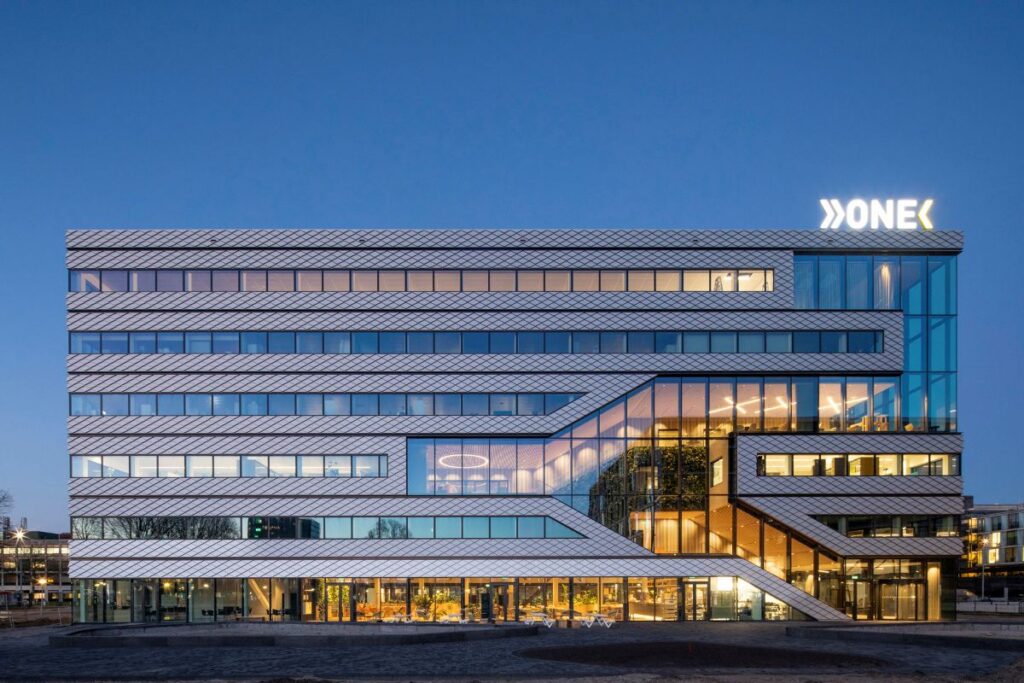
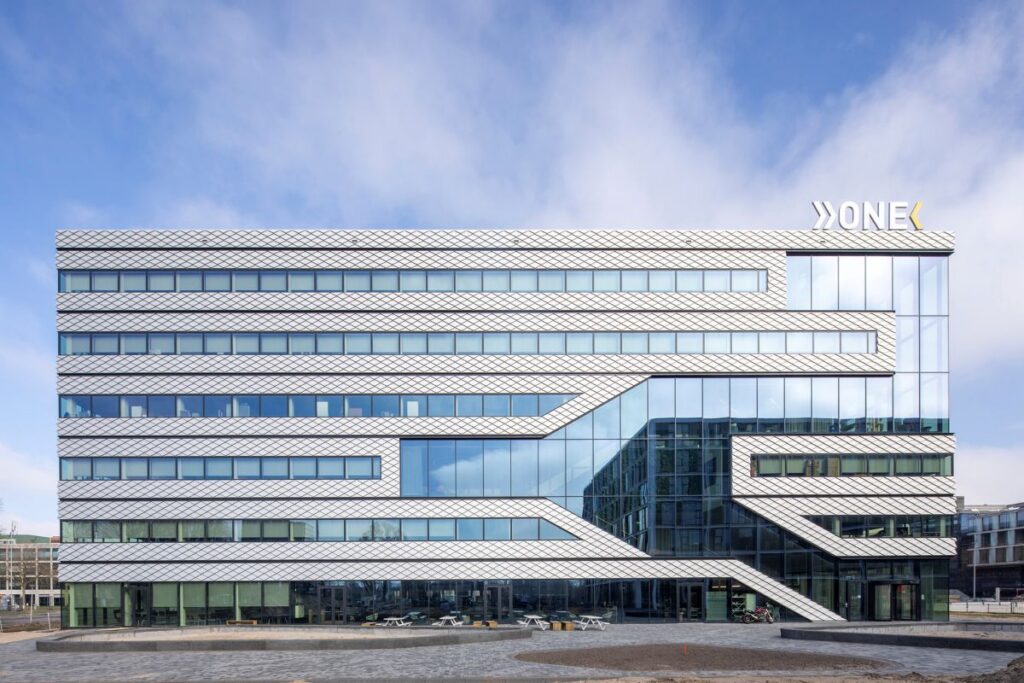
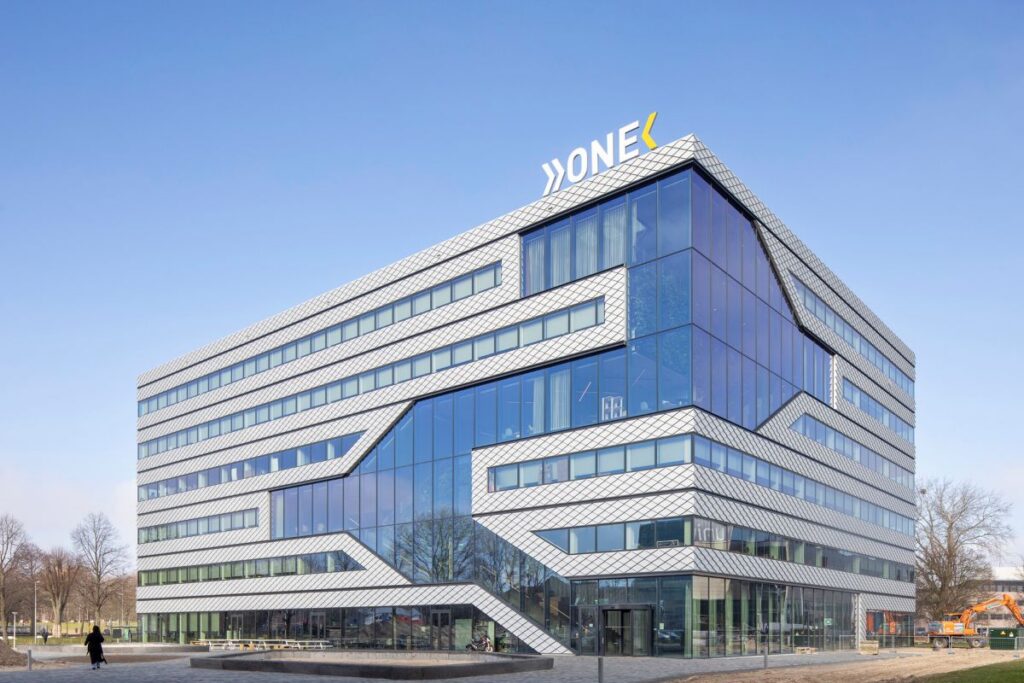
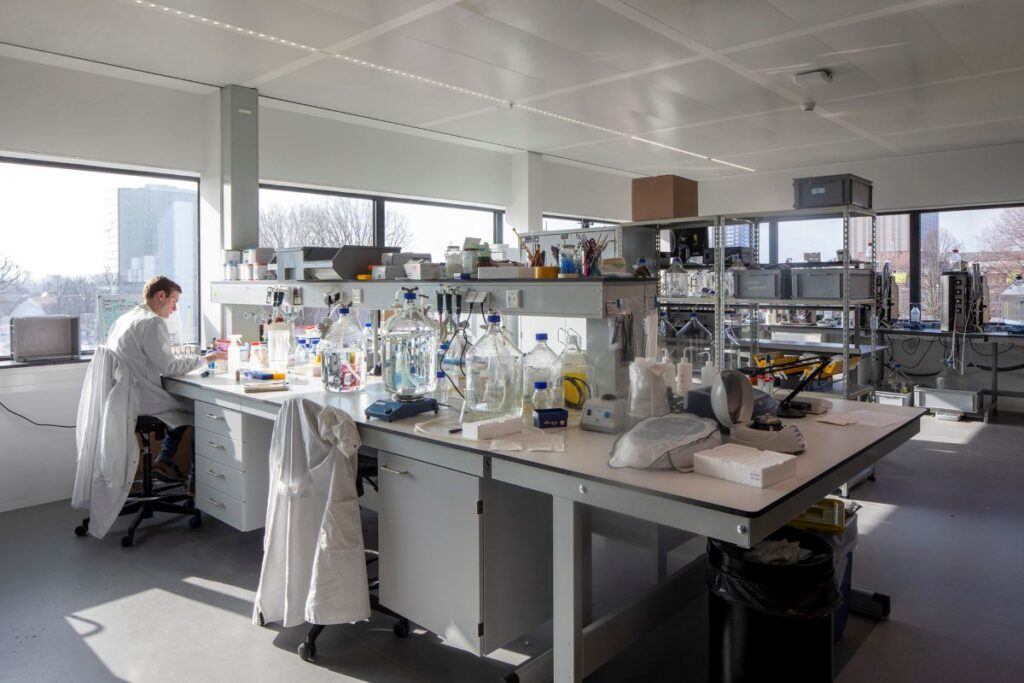
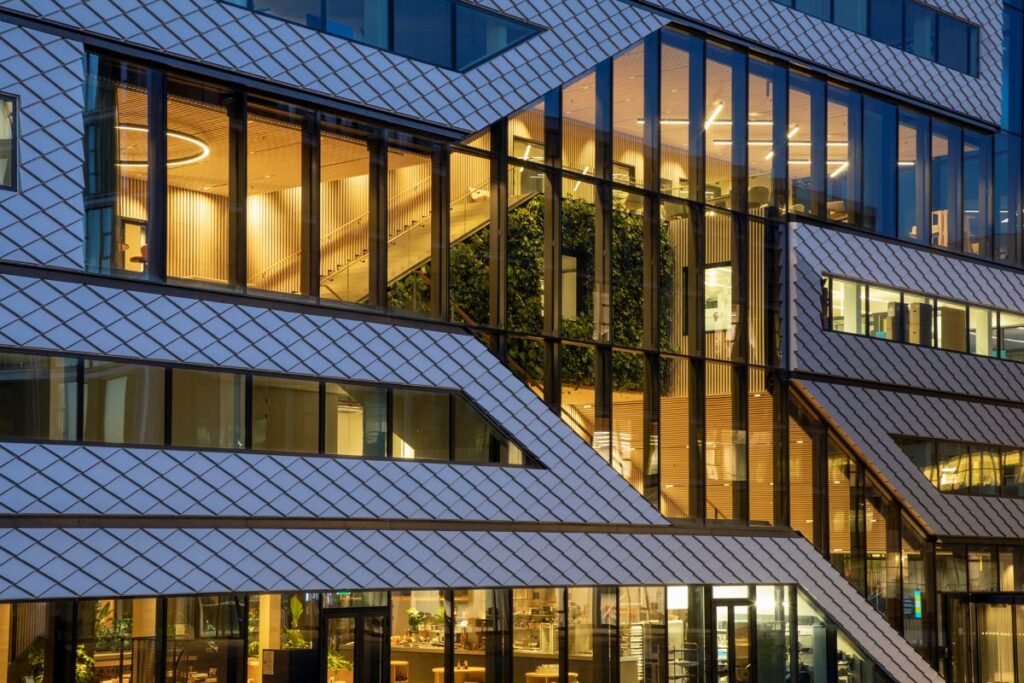
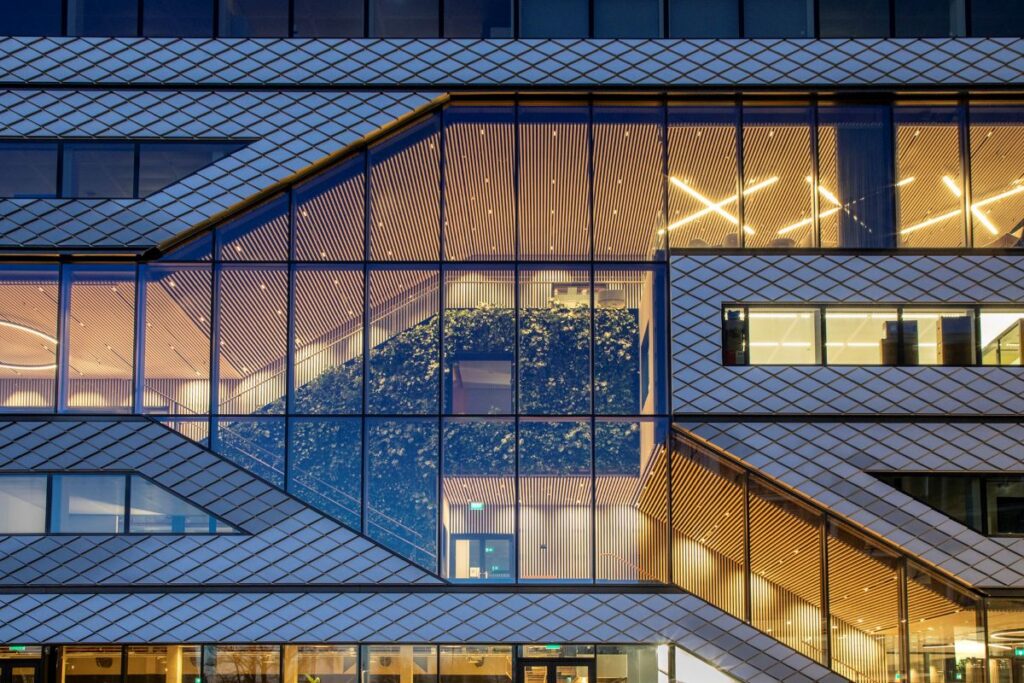
Matrix ONE, created by MVRDV, is an innovative facility consisting of six levels in the Matrix Innovation Centre of Amsterdam Science Park. The innovative building of 13,000 square meters is a hybrid office combining laboratories, workplaces, and social structures in one place to accommodate flexibility, circularity, and longevity of use. This building not only serves as an office but also serves as a prototype for future buildings that will grow without being demolished.
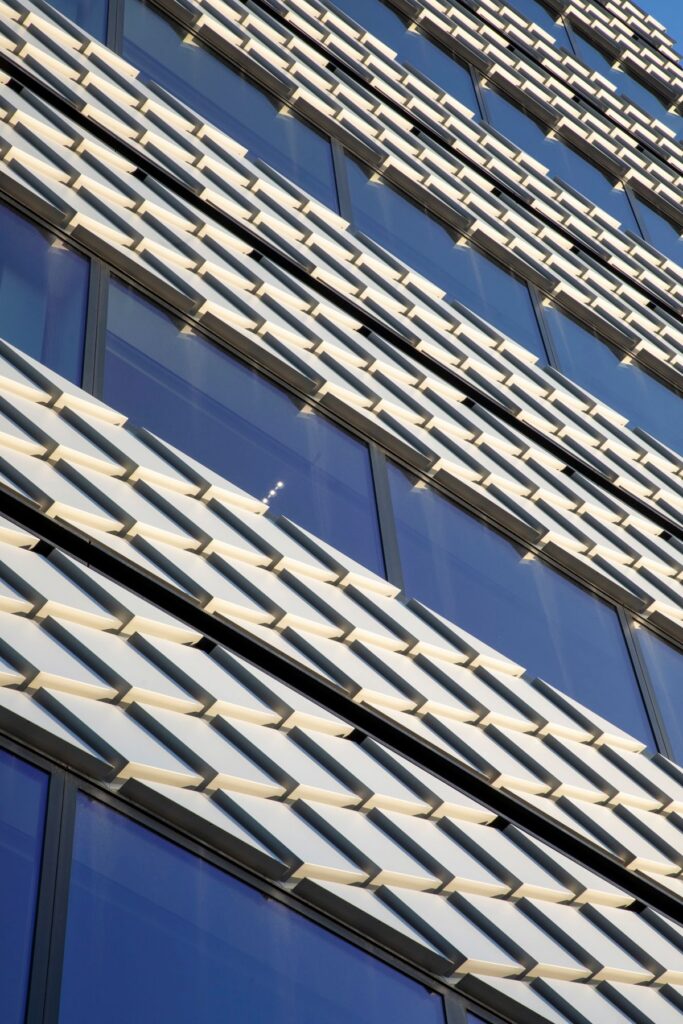
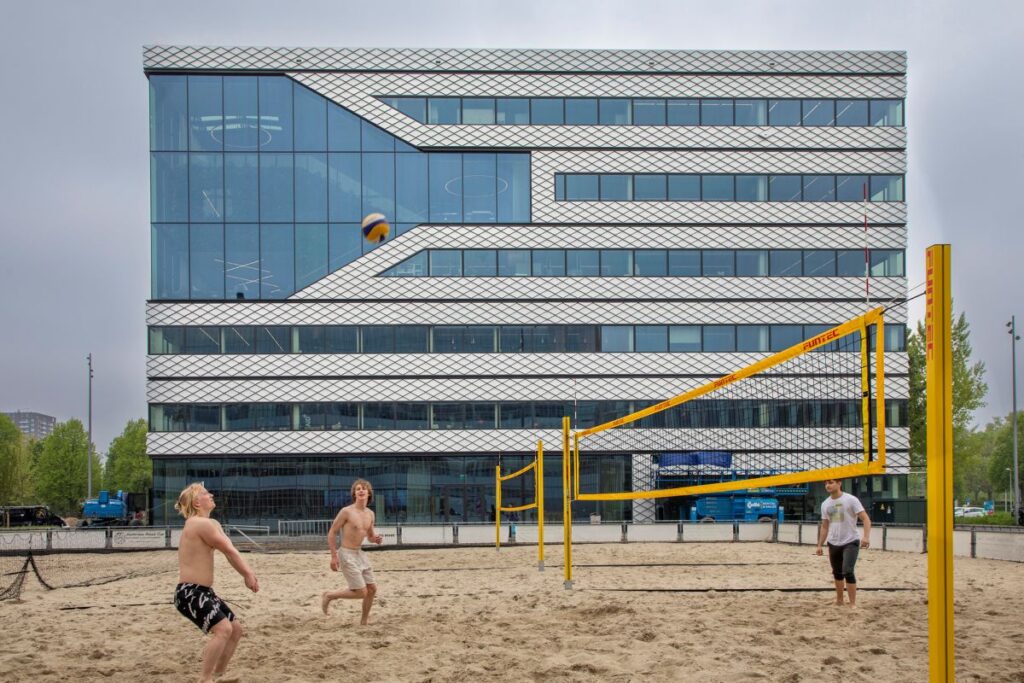
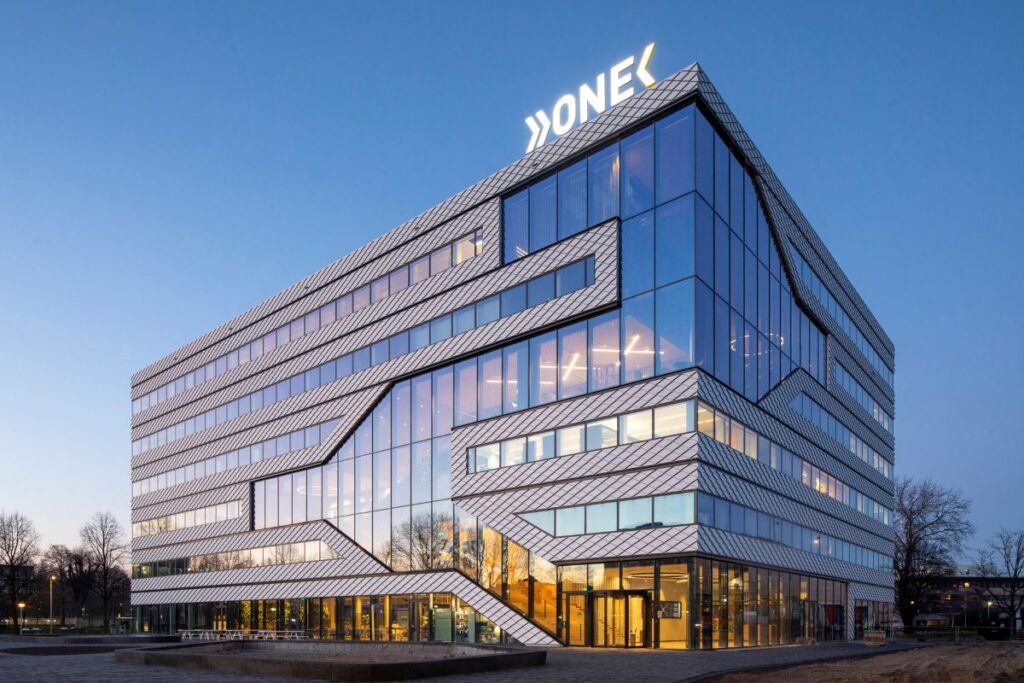
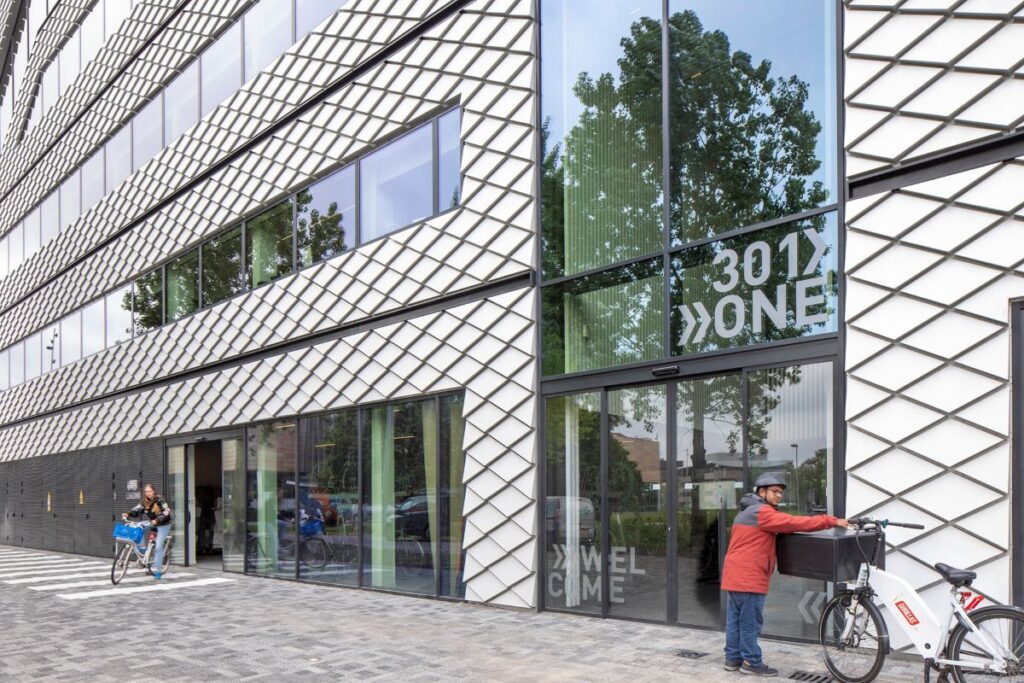
Exterior view of Matrix ONE showing glazed façade and entrance plaza with visible social stair © MVRDV
The building operates within a larger ecosystem of research centres and technology companies engaged in sustainability-based innovation. This aspect is critical in contextualizing the project. Matrix ONE is not a stand-alone building but a key node in a campus complex where knowledge creation, experimentation, and collaboration occur in one physical space. In recognition of these circumstances, the design of the building focuses on permeability, transparency, and commonality rather than segregation.
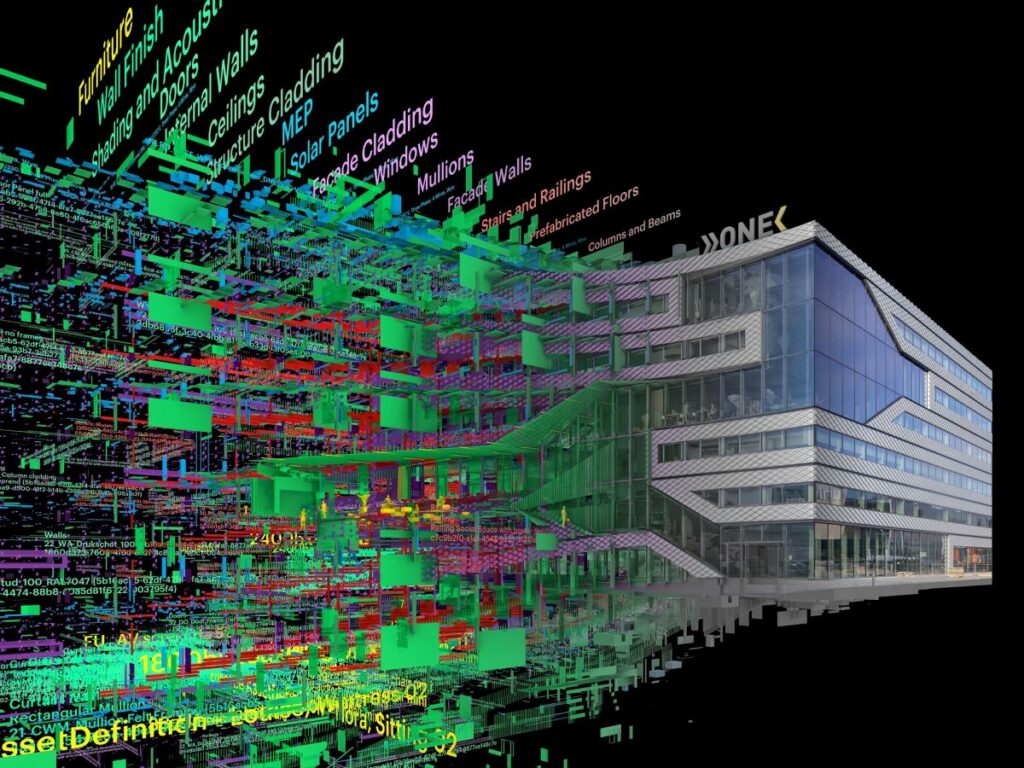
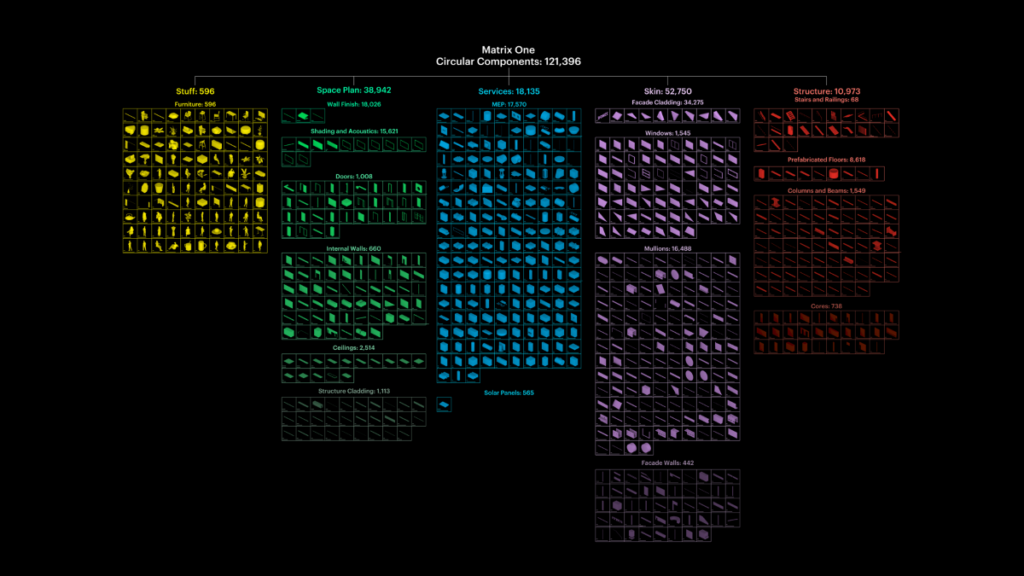
An important characteristic of the building’s design is the demountability of its structural members. The structure is designed to be deconstructed in the future, with bolted connections and prefabricated members that can be taken apart and reused in a new configuration. Floor slabs and mechanical systems inside the building are seen as integral parts of the larger material cycle, rather than a static assemblage of fixed materials.
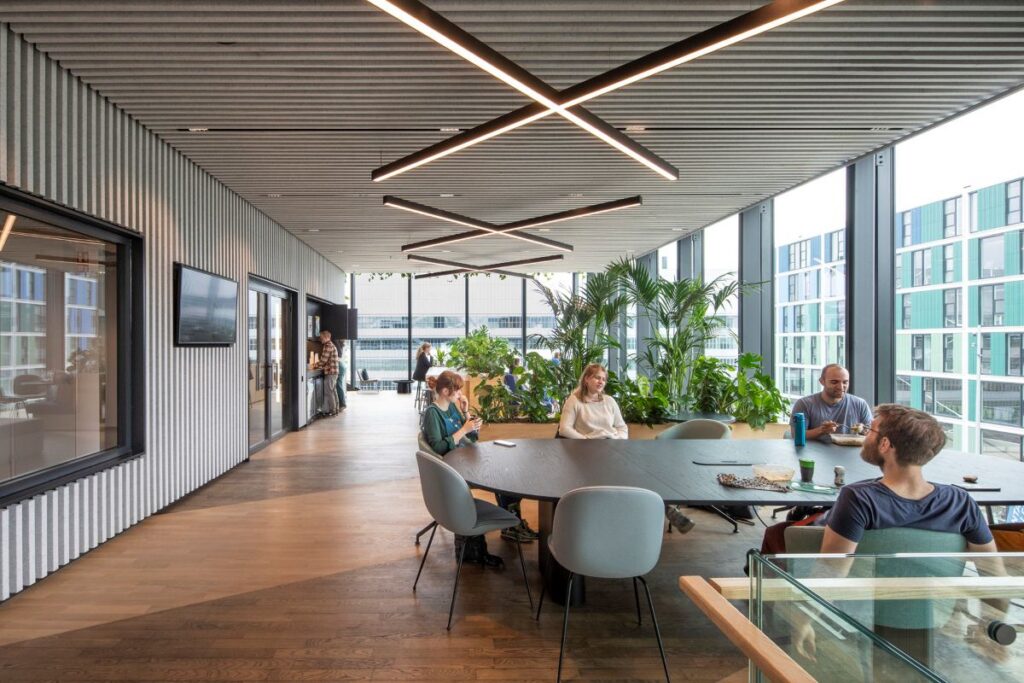
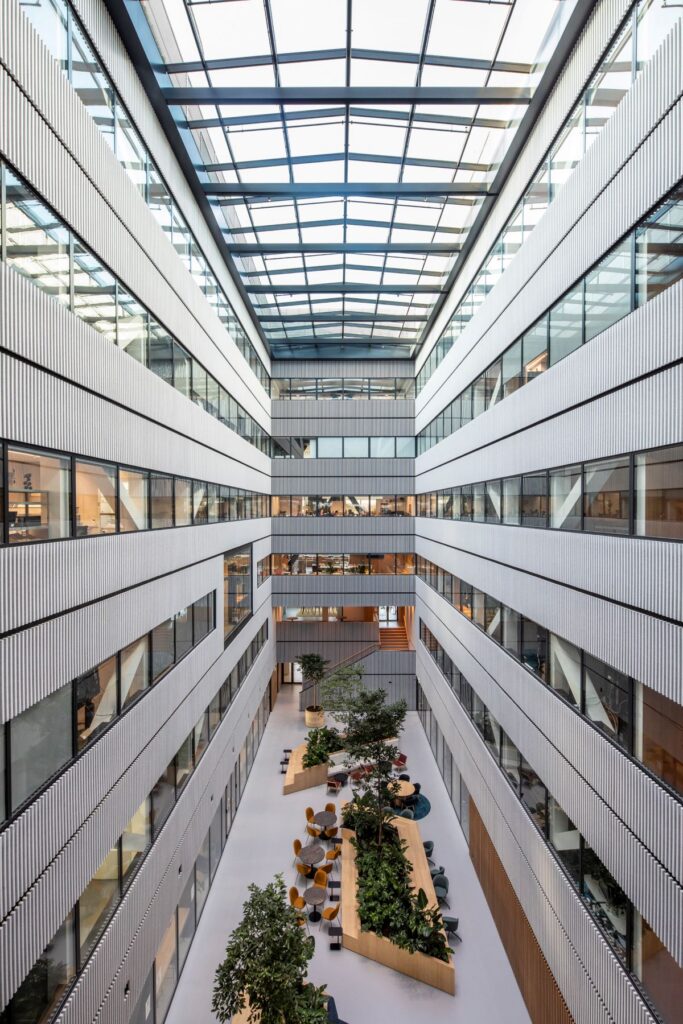
Interior view of structural grid and flexible laboratory-office layout showing modular construction logic © MVRDV
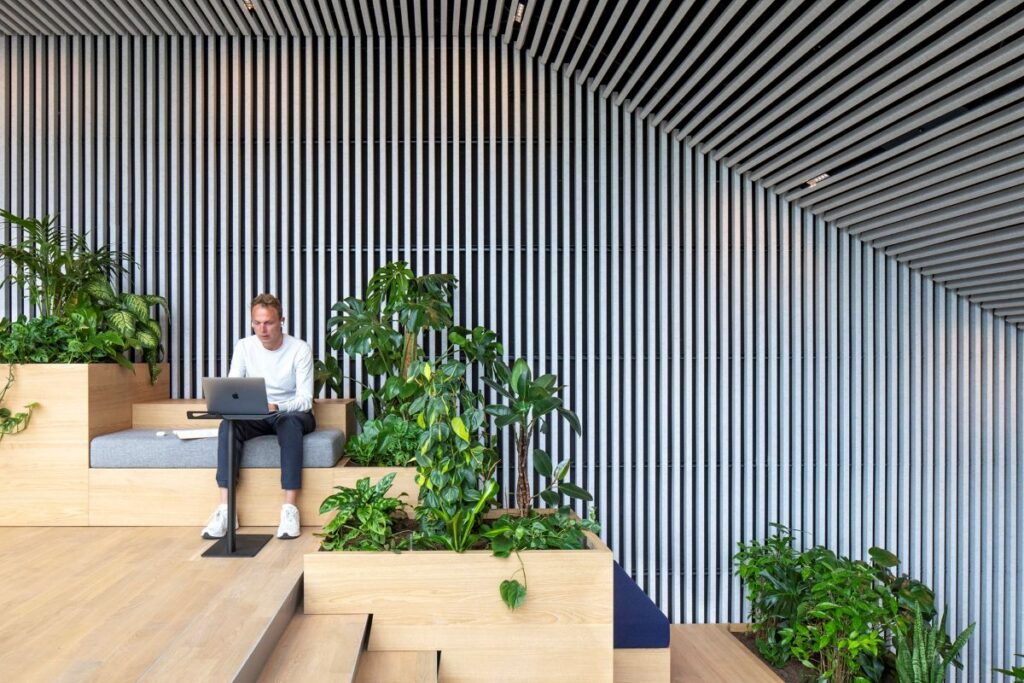
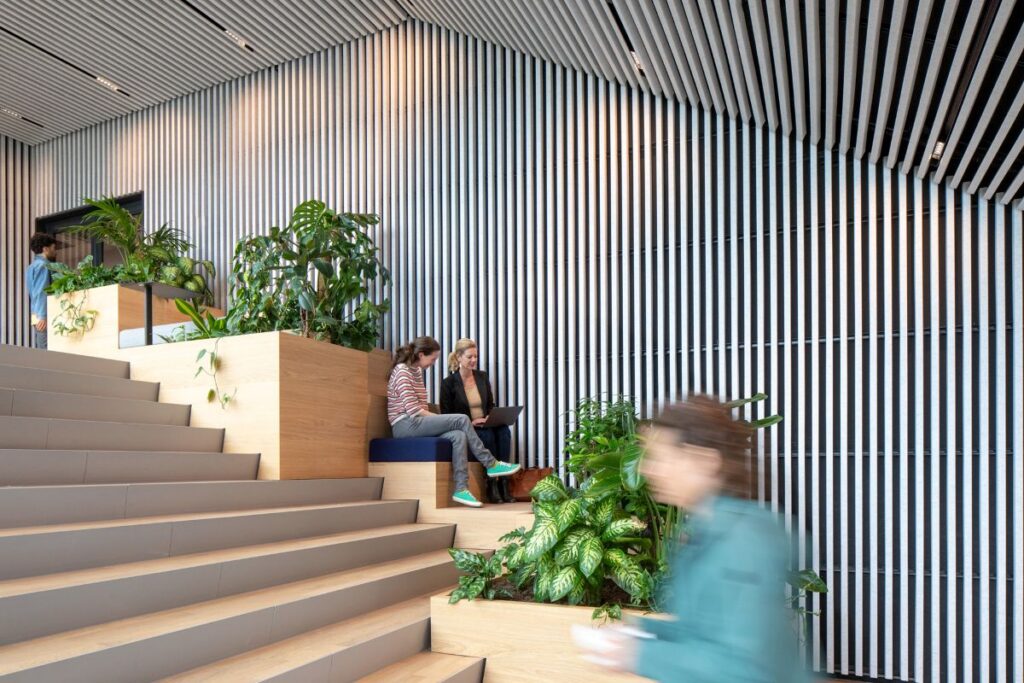
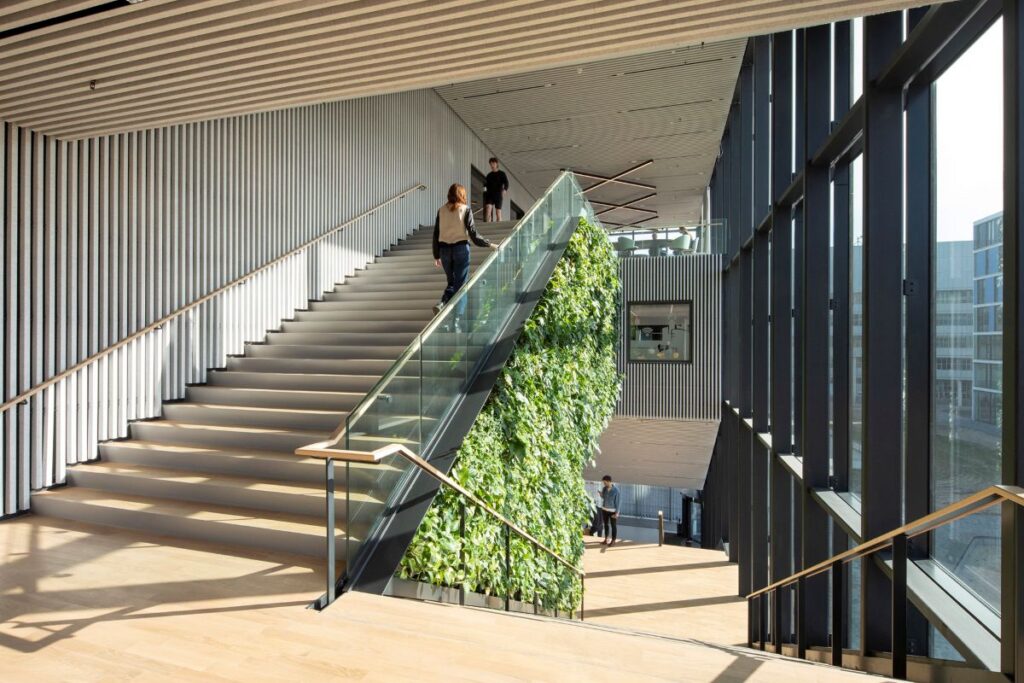
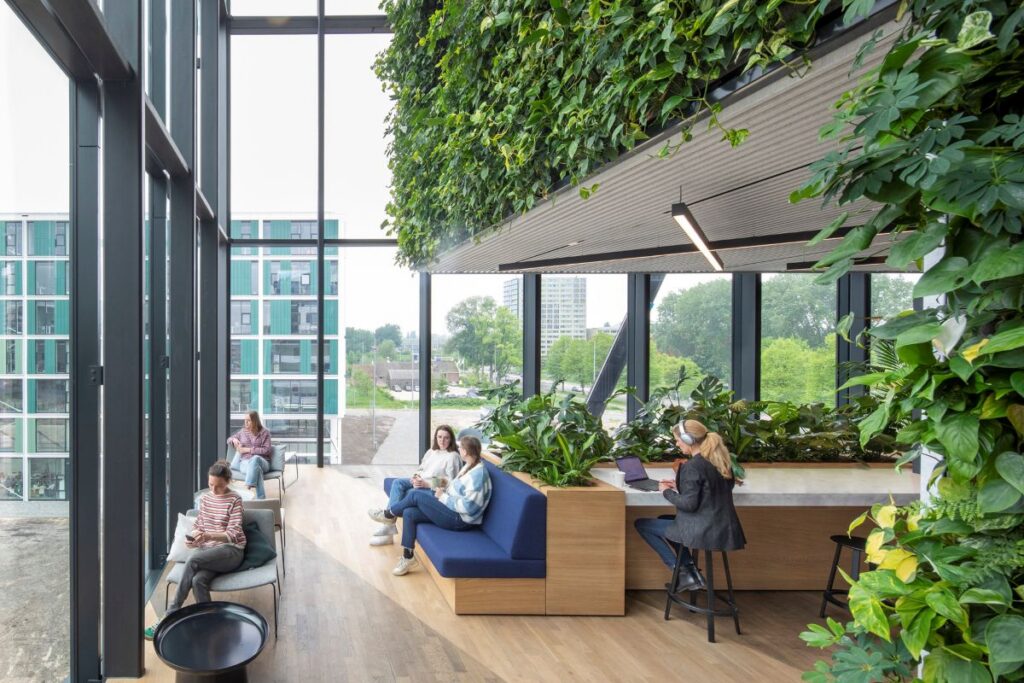
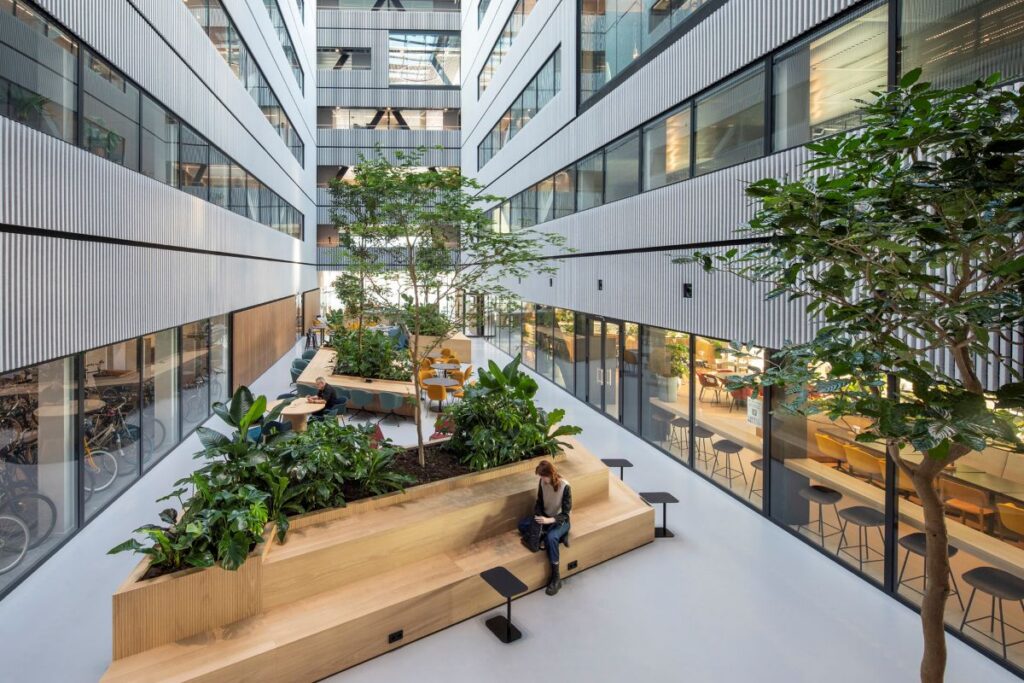
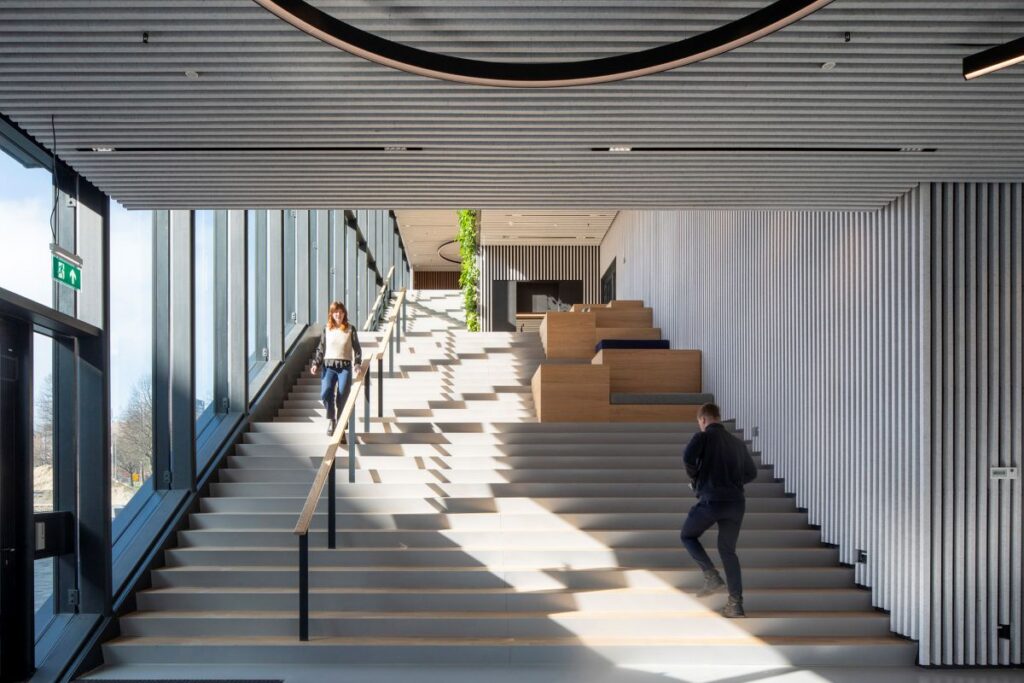
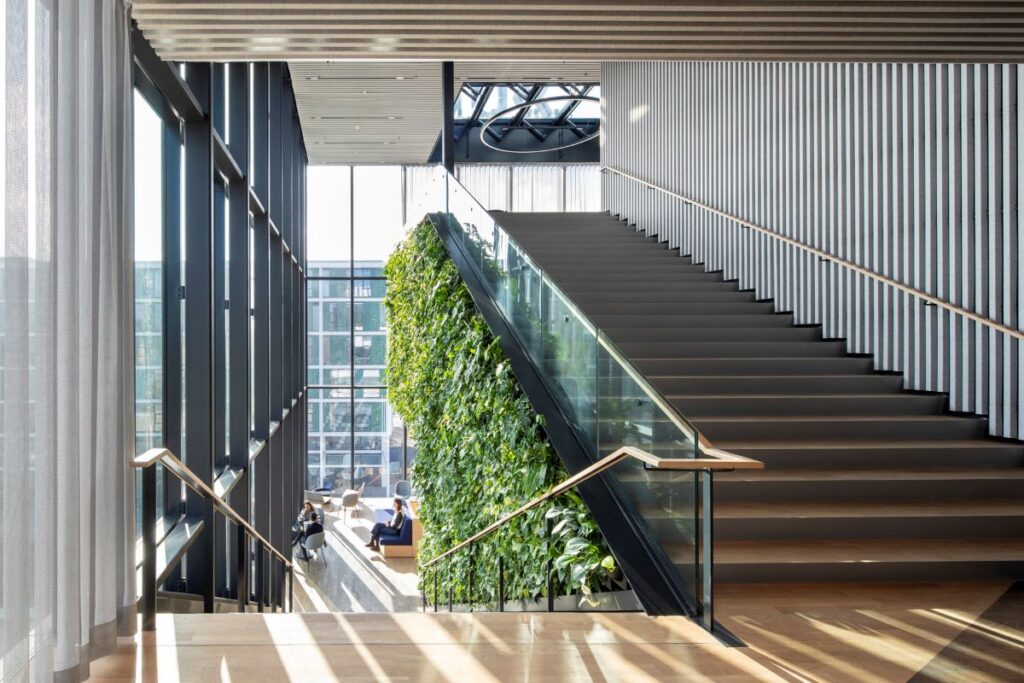
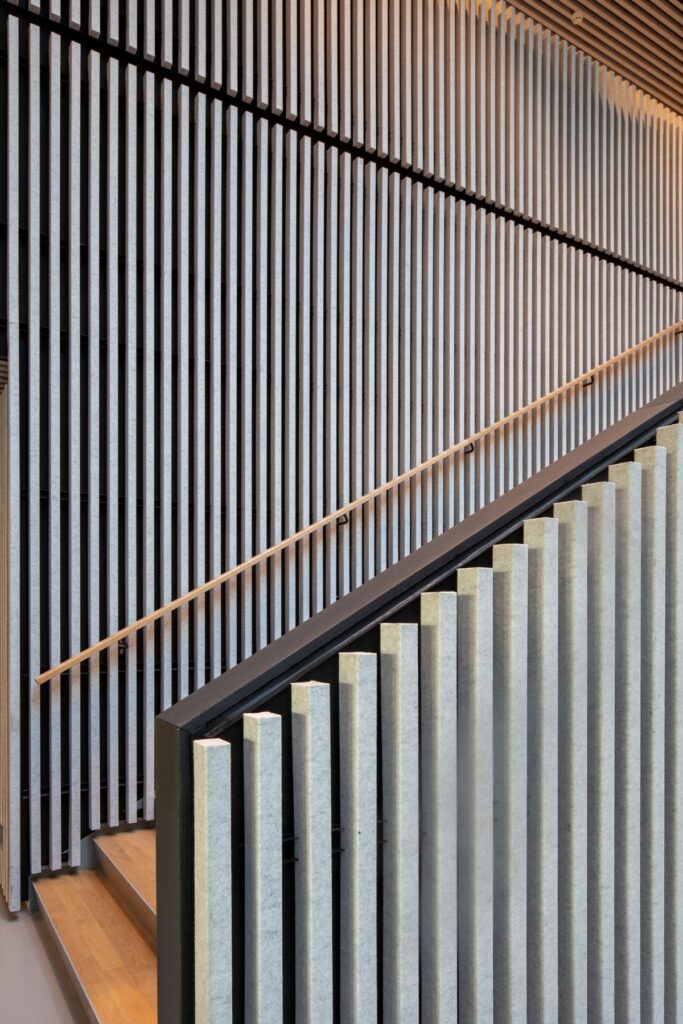
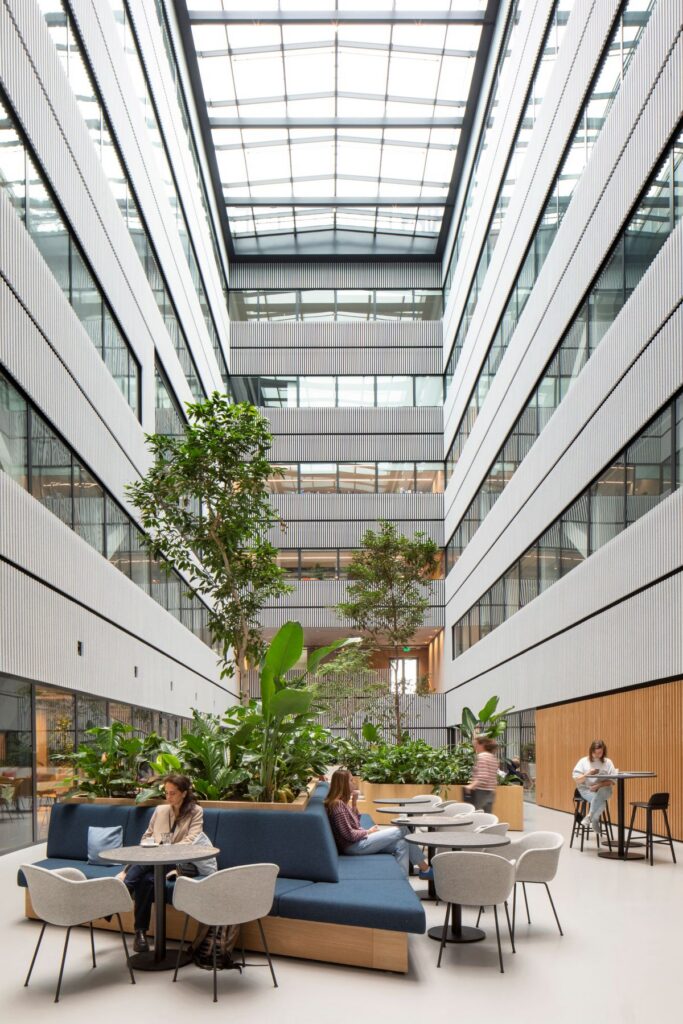
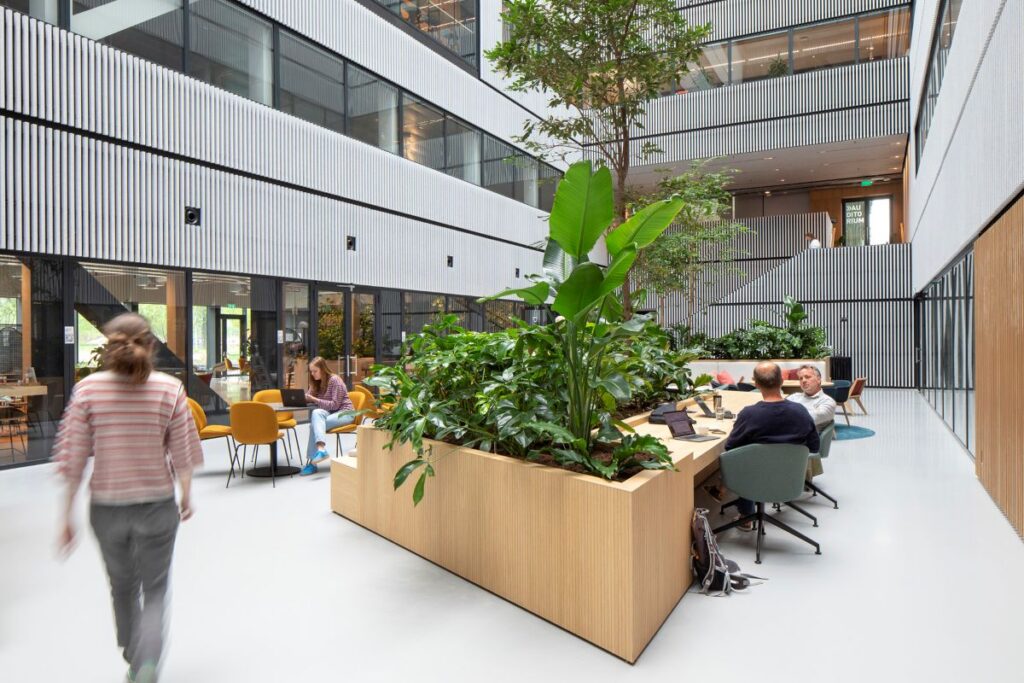
At the heart of the social activities in the building lies the large “social staircase,” which is situated close to the building’s main entrance. This feature plays dual roles; not only does it help move individuals from one point to another, but it also serves as a place of interaction. The staircase takes the place of the conventional lobby, where people interact through various spaces ranging from steps, seating, meeting spots, and areas for presentations within the staircase itself.
In addition to this, the social staircase is also designed according to behavioural principles. Movement through the building becomes visible, deliberate, and spatially rewarded. This feature makes participation more attractive than segregation.
Social staircase interior with seating terraces, informal gathering spaces, and glazed façade connection © MVRDV
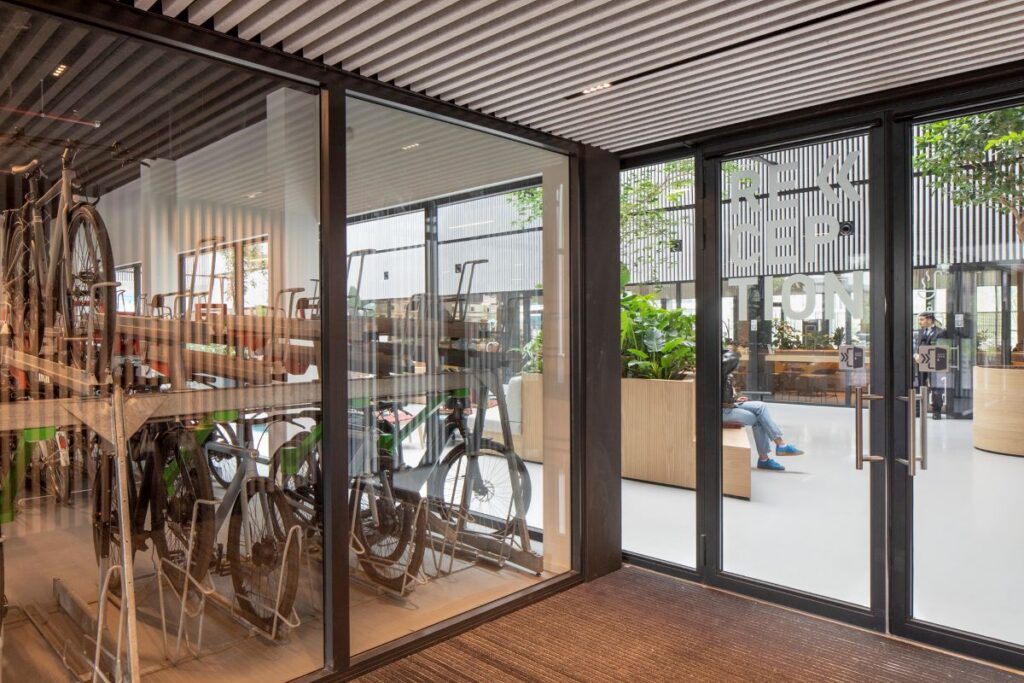
The elements of sustainability are created through a series of systems that operate interdependently. The installation of solar panels on the rooftop facilitates energy production, while smart lighting and climate control systems minimise the amount of energy consumed. Bicycle paths are installed to reflect the importance of bikes in the city of Amsterdam. It is important to note that all of the above-mentioned aspects do not stand alone but rather complement each other.
One of the major characteristics of the sustainability concept is flexibility. This means that the interior design of the building can be adapted for either laboratories or offices without the need for renovation. As a result, the lifespan of the construction can be extended, thus making it sustainable.
Rooftop view showing solar panels and technical systems integrated into building crown © MVRDV
The concept of material intelligence once again creates a logical circle. The system of material passports allows tracking materials and making use of them in the future. In effect, the building turns into a material bank, as materials are still valuable even after their first application. Thus, instead of merely consuming materials, architecture becomes the means of managing them.
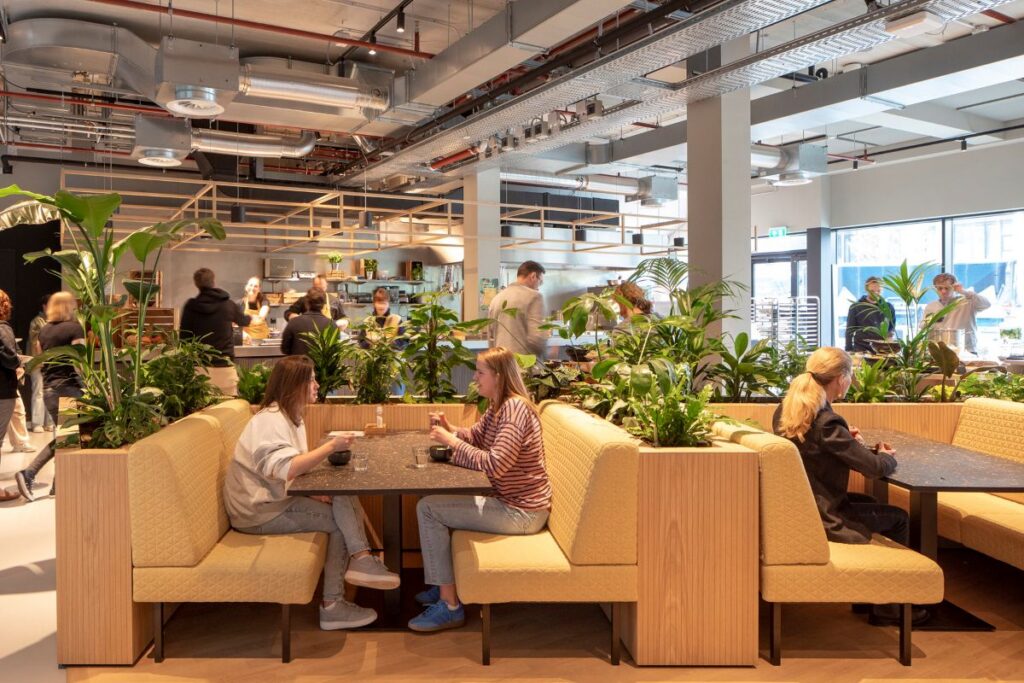
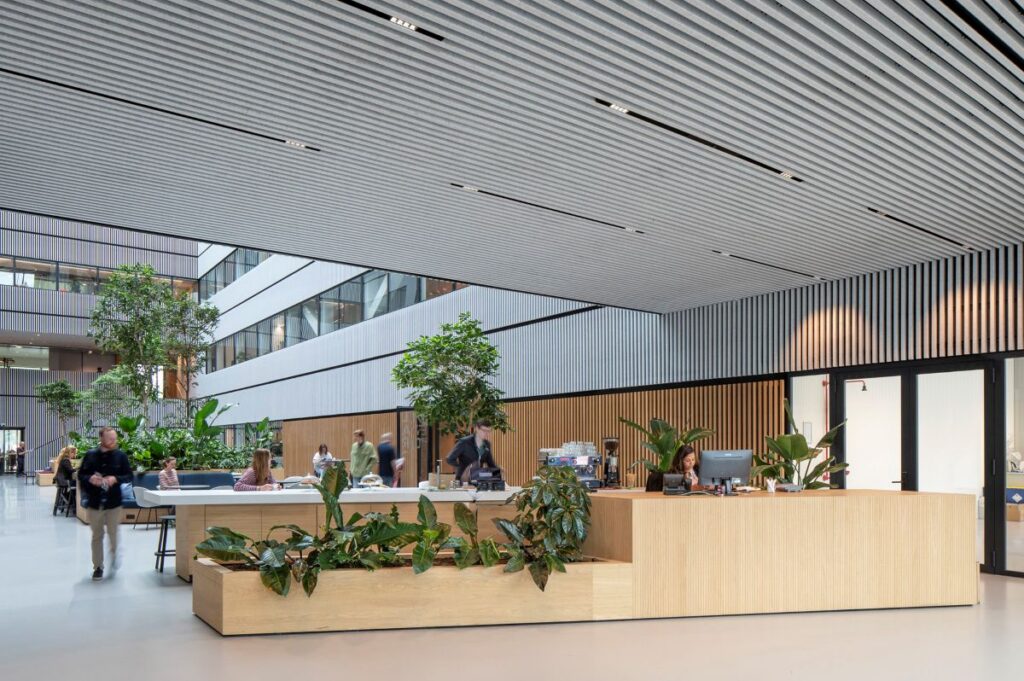
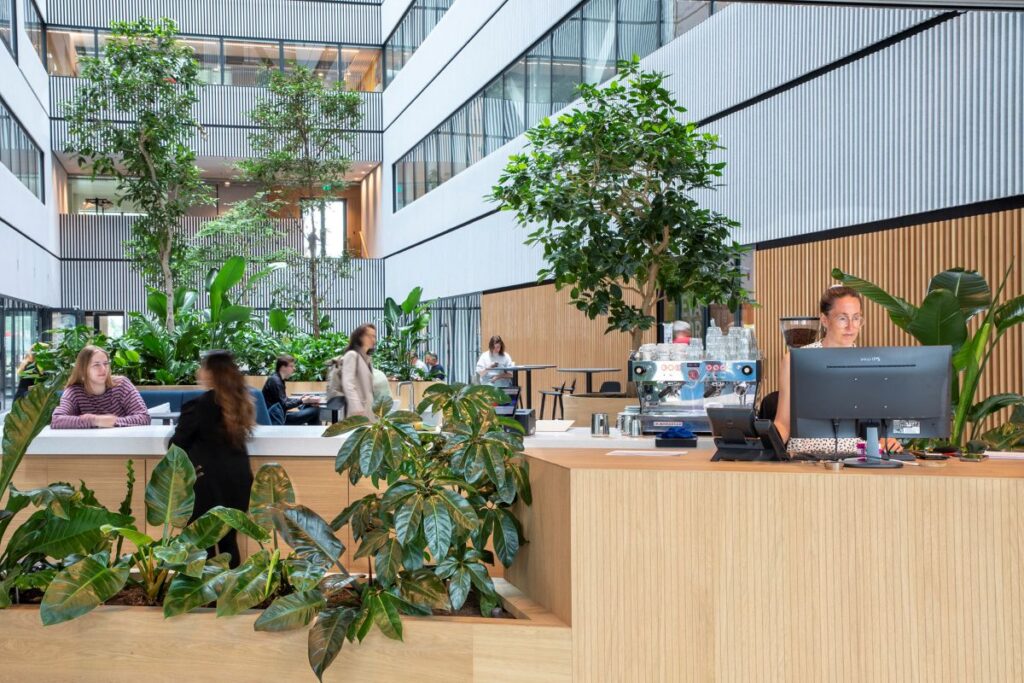
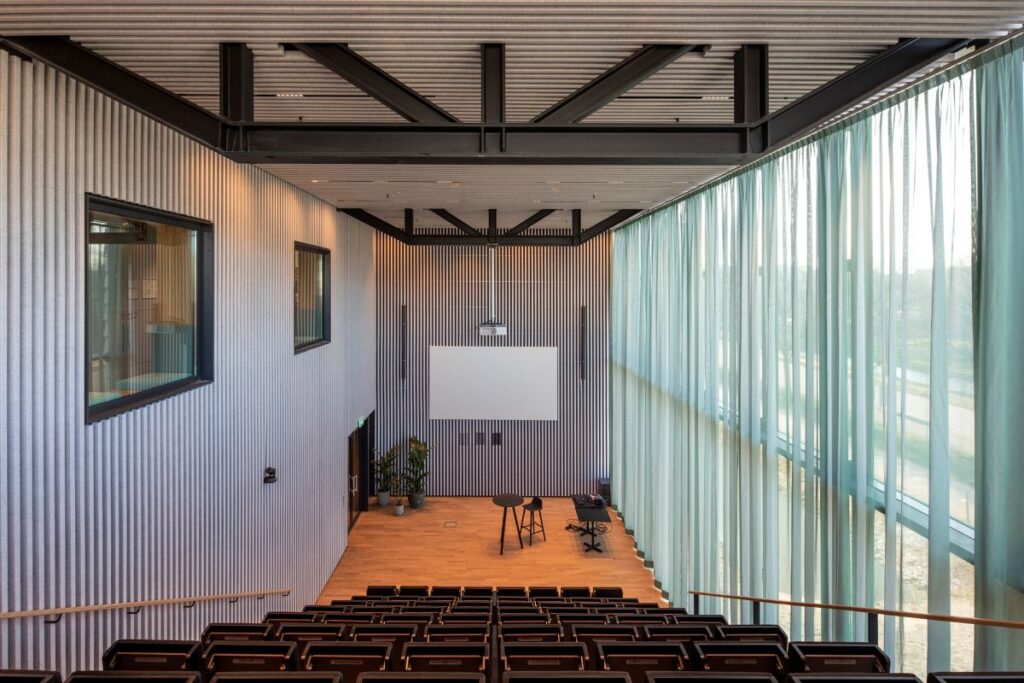
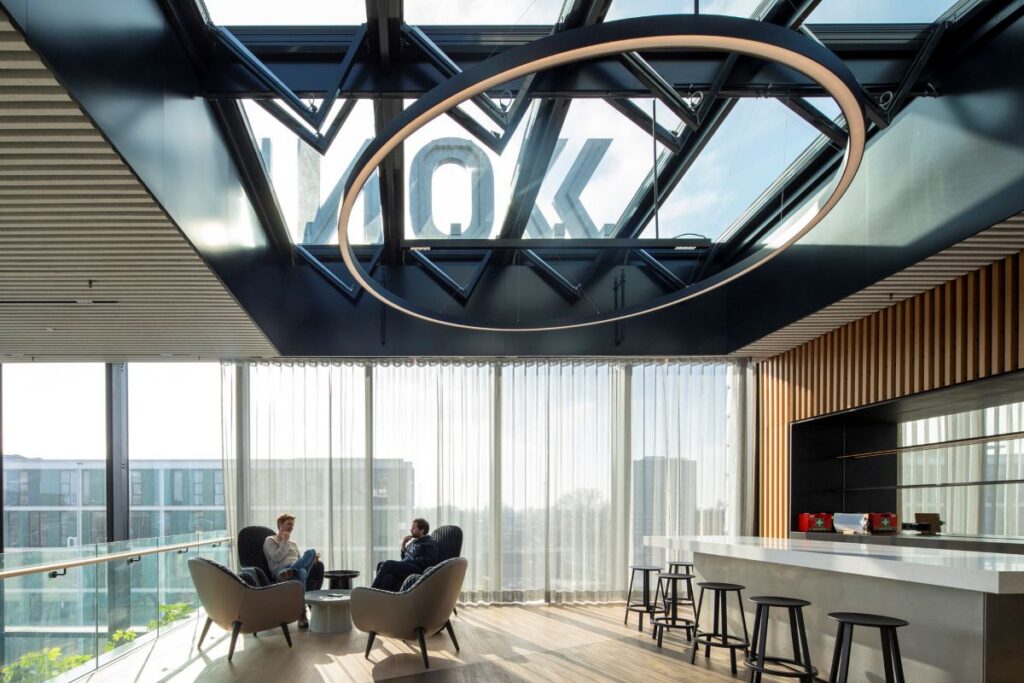
The ground floor provides the final layer of social and civic program for Matrix ONE. The space of a restaurant and its facilities provide the second level of the building’s civic interface. The auditorium creates opportunities for knowledge sharing on a campus scale. Thus, Matrix ONE functions not just as a working place, but also as a center of collective activities.
Ground floor public interior showing café, auditorium access, and active social zones © MVRDV
The design of Matrix ONE thus ends up challenging the typological rigidity of the office/laboratory by embracing the building type as a fluid process in which structure, occupation, and material throughput are not necessarily bound but rather flexible and open-ended. Architecture, in this sense, ceases to be a static process and instead becomes one of controlled mutation.
The importance of Matrix ONE as an architectural project resides precisely in its ability to rethink and expand upon this conceptual approach. Through the design of a high-performing research facility capable of thriving within a circular economy of materials while also delivering a vibrant built environment, Matrix ONE succeeds in serving both functions simultaneously.