Typologies: Hotel, Mixed-Use, Offices, Auditorium, Interior
Themes: Architecture, Public, Mixed Use, Transformations, NEXT
Status: Realised
Location: Shenzhen, China
Year: 2019–2023
Surface: 57,900 m²
Client: Shum Yip Group Limited
Awards:
International High-Rise Award 2024 — Finalist;
WAF Awards 2024 — Shortlisted,
Best Use of Colour Prize;
WAF Awards 2024 — Shortlisted, Retrofit Category
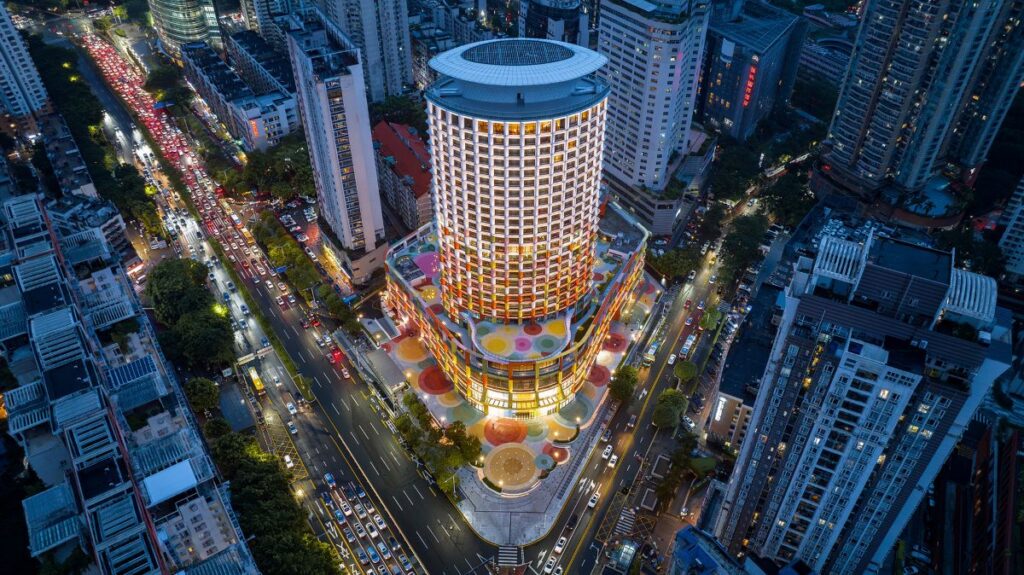
The reconstruction of the Shenzhen Women and Children’s Centre done by MVRDV is one of the most important renovations of an existing skyscraper performed worldwide in recent years. The building is located in the district of Futian in Shenzhen and occupies 57,900 square meters in size. The project includes the renovation of a skyscraper, which was constructed in 1994 and has been vacant for decades due to its problems with fire safety and inefficiency of its spatial layout, into an active, colourful complex of different purposes, becoming one of the key symbols of the city.
Completed in 2023, this project can be seen as a breakthrough both in the sphere of architecture and policy-making, as it has been chosen among 24 other building reconstructions by the National Development and Reform Commission of China as a part of their attempts to reach carbon peak by 2030 and carbon neutrality by 2060.
Exterior view of the completed Shenzhen Women and Children’s Centre showing the full 100-metre tower height, the multicoloured façade frame grid in yellow, orange, pink, and green, and the building’s presence within the Futian district urban context © MVRDV
Comparative view showing the building before transformation — the original white 1990s office tower — alongside the completed colourful façade treatment, demonstrating the full scope of the exterior intervention © MVRDV
The building had initially been constructed to make use of a time of rapid expansion that occurred in Shenzhen; the building had been built rapidly, without much thought put into the fire safety features, and the building had not been completed. By 2019, it was clear that the building had become redundant. Rather than demolish and rebuild the building, MVRDV chose to renovate the building using its current structure, which meant that they saved 24,000 cubic meters of concrete that would otherwise have been wasted along with the demolition of the building.
Above all else, one will notice that there is a new façade. This façade is made up of the grid of coloured frames, which stretch a meter deep into the façade itself, thus ensuring that there is additional shading and less heat gain from the solar radiation. Yet, at the same time, there are openings on the inside that ensure ventilation of this building. The new façade ensures that the building itself performs better as well as gives it a new identity. It is important to point out that the choice of colours used in the design was not random.
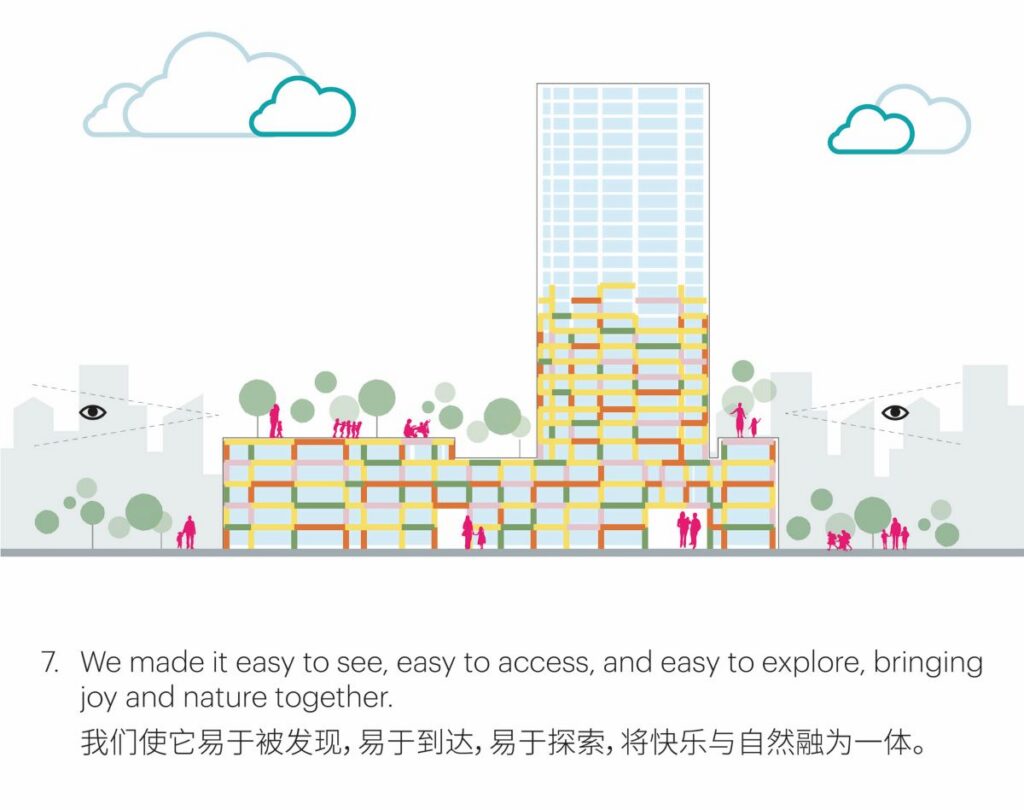
To start with, there is a multicoloured plinth whose colour speaks about the building program—this is where services for mothers and children are provided. Higher up the tower, the colours give way to the white colour since this building program changes—the hotel program comes into play here. There are four main entrances to the building complex at the ground level, and each of them has its own colour.
Close-up of the façade frame grid showing the full-metre depth of the exterior frames, the multicoloured panel arrangement, the openable natural ventilation panels, and the solar shading performance of the new envelope © MVRDV
Colour strategy diagram showing the programme-to-colour logic across the building—multicoloured plinth, white hotel tower, and colour-coded entrance conditions at ground level © MVRDV
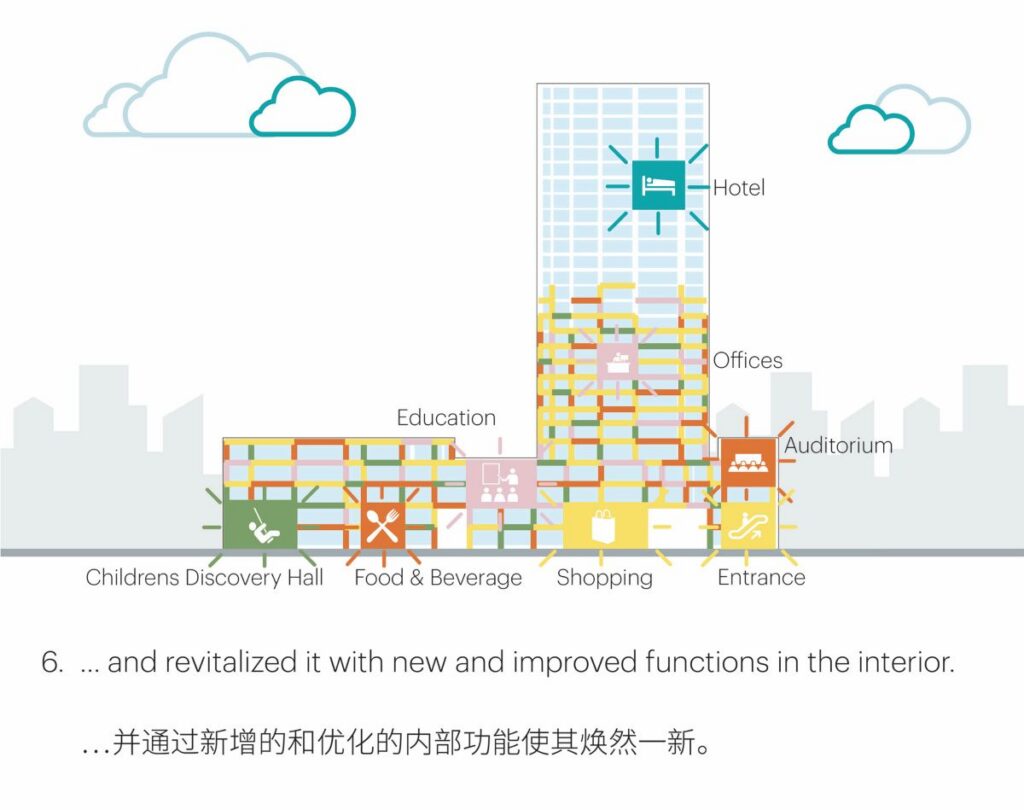
The impact of the transformation goes beyond the skin and affects the building in many aspects concerning the urban environment around it. First, the parking area in the courtyard shape has been transformed into something more useful, namely the food court, therefore, transforming the empty public space into something useful. Moreover, the access point for the metro of the city, which was scattered across the pavement near the base of the building, has been relocated inside the building, hence creating a connection between the building and the public transportation system, putting it into the common flow of development towards cars’ abandonment.
View of the converted courtyard showing the food court programme, public space activation, and the spatial relationship between the ground-level public realm and the building’s plinth façade © MVRDV
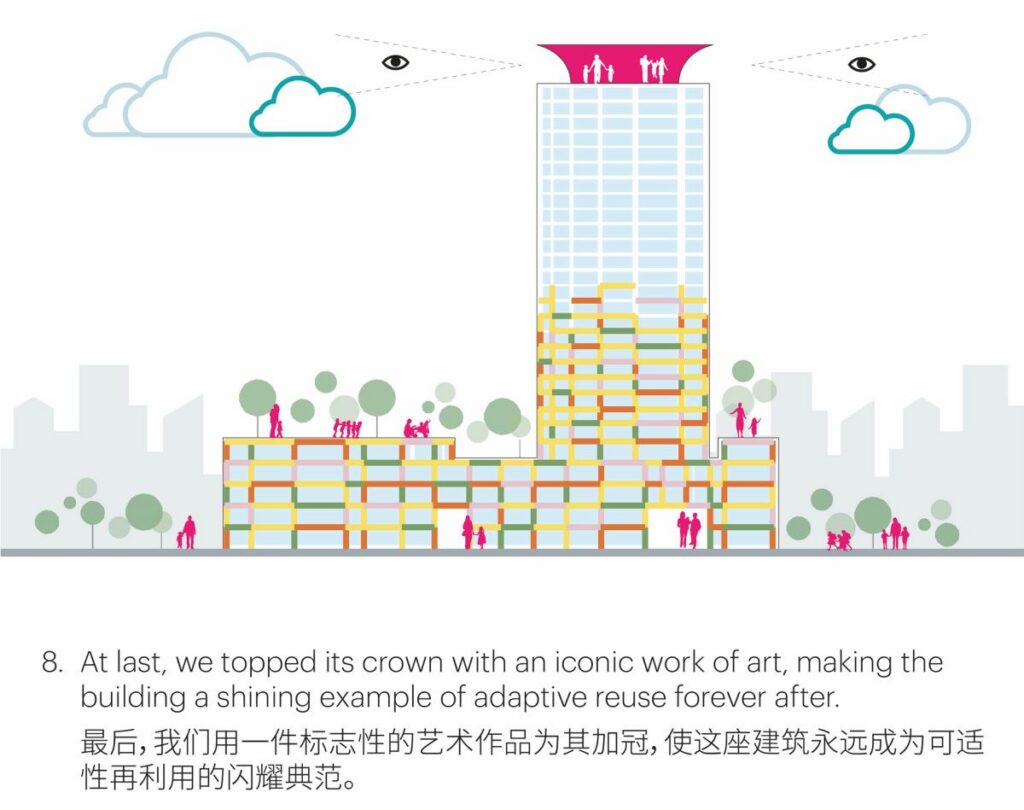
Rooftop terrace view showing the accessible crown level, the 360-degree panorama of the Futian district, and the canopy structure providing weather protection for the outdoor programme © MVRDV
Interior spaces such as the library, auditorium, children’s theatre, discovery centre, therapy rooms, offices, and a hotel have been incorporated in the design of the building in a way that the integration of all these spaces is done depending on the welfare of women and children; this is the very essence of the building. The interior foyer of the building consists of a complex that includes nine rooms, which are meant for various purposes to make a fun play area for children.
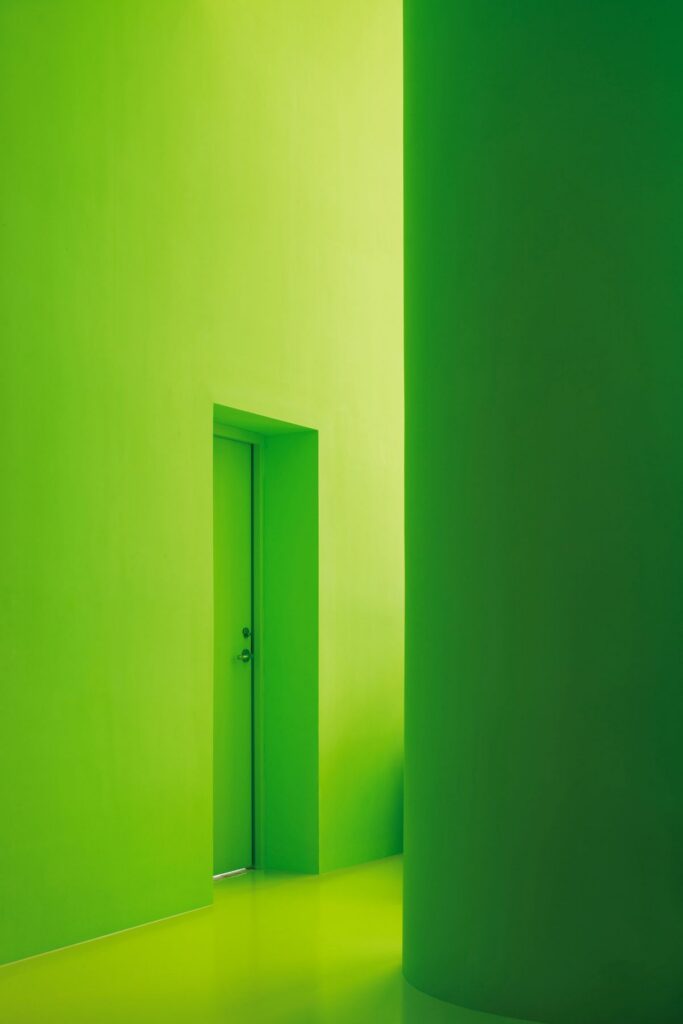
Interior lobby view showing the nine-room playground structure, the colourful interior spatial sequence, and the child-centred programme arrangement at the building’s ground floor arrival experience © MVRDV
It is illustrated through the Shenzhen Women and Children’s Centre in MVRDV, where a tower of 100m height has been redeveloped technically as well, and there is architectural value. In terms of finances, the tool is very powerful and cannot be overlooked, as the tool itself can be quantified with carbon emissions. The completion year of the project was 2023.