
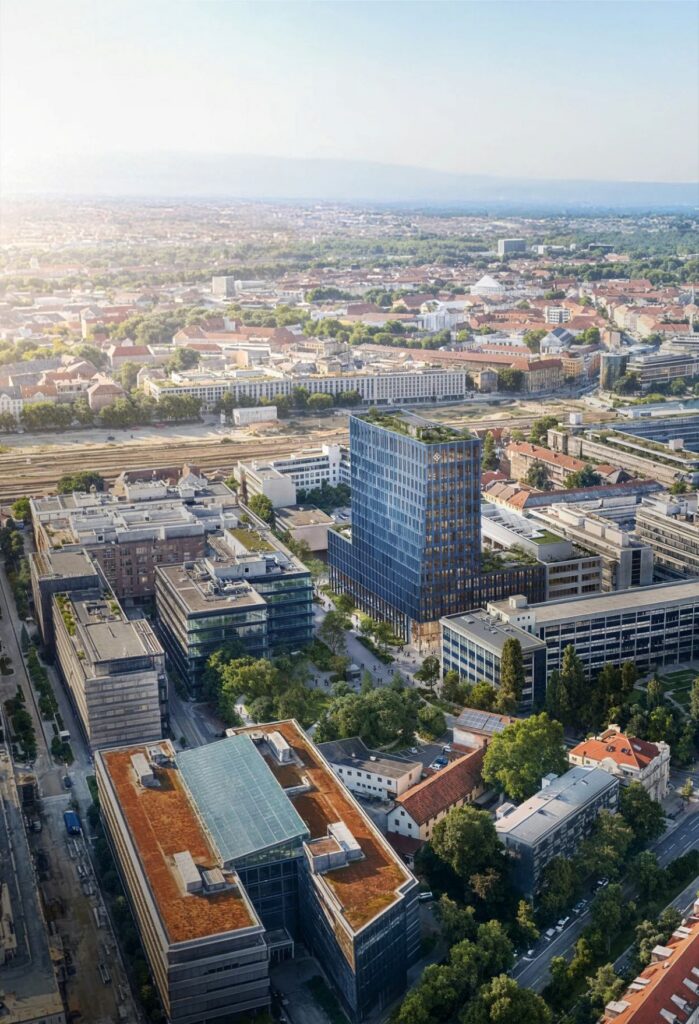
Aerial rendering of the proposed campus showing the tower, lower buildings, landscape connections, and urban context © Snøhetta
Curated by ArchiRev Editorial | Feature Story | Published June 11th, 2026 | Source: Snøhetta
Typologies: Workspace & Production Facility, Research, Campus
Themes: Architecture, Workplace, Innovation, Sustainability, Technology
Status: In Progress
Location: Munich, Germany
Client: Rohde & Schwarz
The concept of the Rohde & Schwarz Campus by Snøhetta represents a novel approach to envisioning the future workplace. As its name suggests, this project is meant for one of Germany’s foremost technology companies, and the existing corporate headquarters in Munich is redesigned into a campus-like workplace district. In the context of this project, the site is no longer treated as a set of standalone buildings but rather as a cohesive work district that combines architecture and landscape.
Situated on the periphery of the evolving city, the campus will be designed as a space in which the dynamics of changing work conditions can be seen clearly. Through research, innovation, collaboration, and socialisation, a campus is created in which there will be exchanges between people, disciplines, and ideas. Consequently, there emerges a space that challenges traditional ideas of an office space, creating an interesting dynamic workplace.
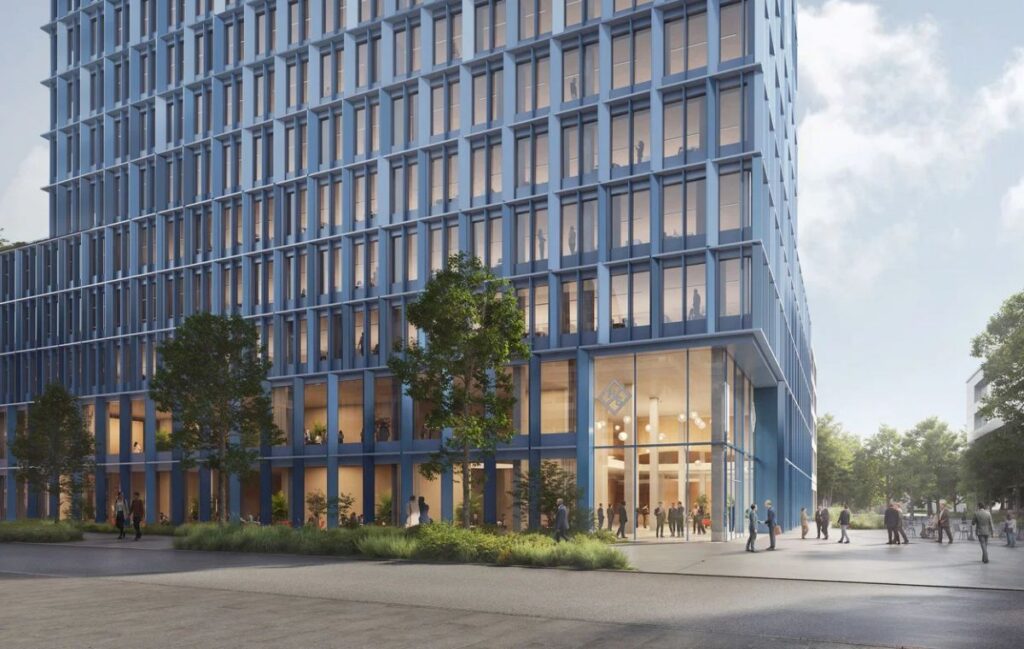
The key element of the project lies in the creation of a tower, through which the character of the campus will be defined. Being a part of the skyline, the tower will not only act as a landmark but will also contribute towards accommodating future growth at the company. The design of its façade is inspired by the technology produced by the firm.
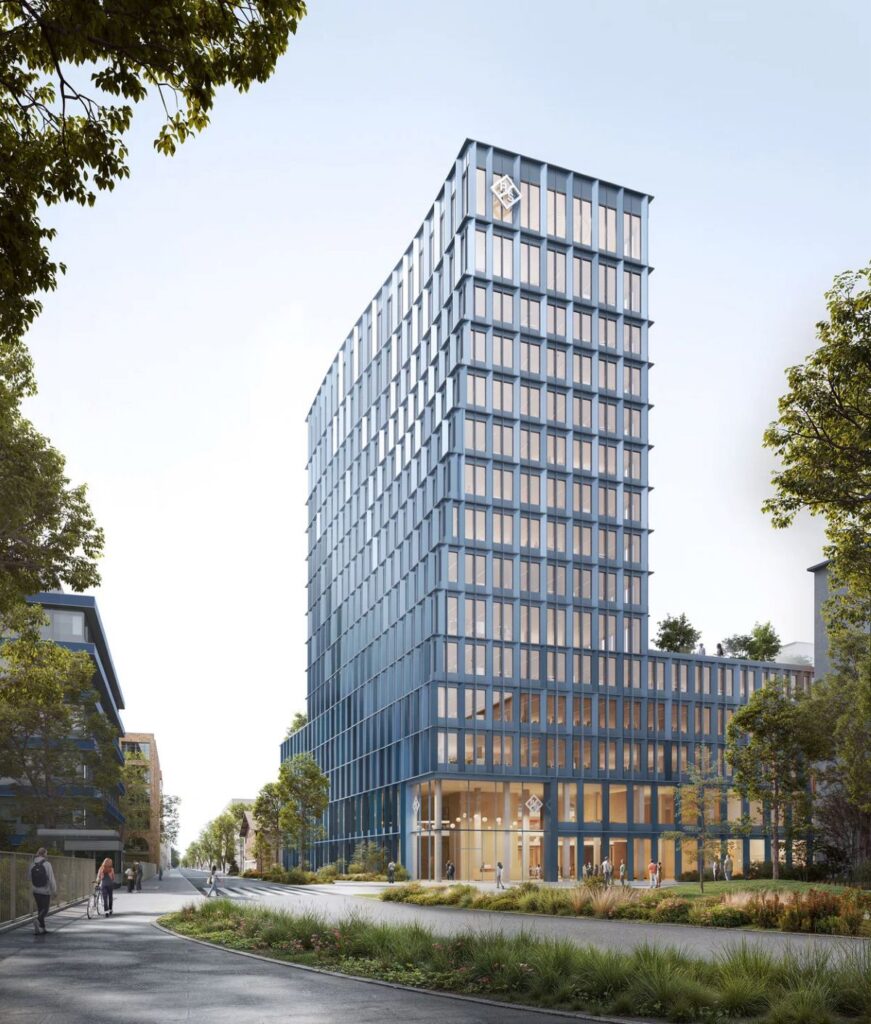
Perspective view of the campus tower highlighting the sculpted façade and vertical expression © Snøhetta
The tower is supported by a smaller building, providing an enhanced sense of urbanity to the project. Both contribute to a well-balanced design that raises the density but keeps in mind the human scale and proximity to the surroundings. With additional office space, research space, and workstations, the new headquarters will be able to develop in parallel with the development of the company.
Landscaping takes an important part in the project. There is a green belt on the campus, connecting all buildings with circulation paths. Beyond its aesthetic value, it is a place for physical and mental relaxation. In addition to providing links with the surroundings and enhancing biodiversity, it also adds to the sustainable character of the project.
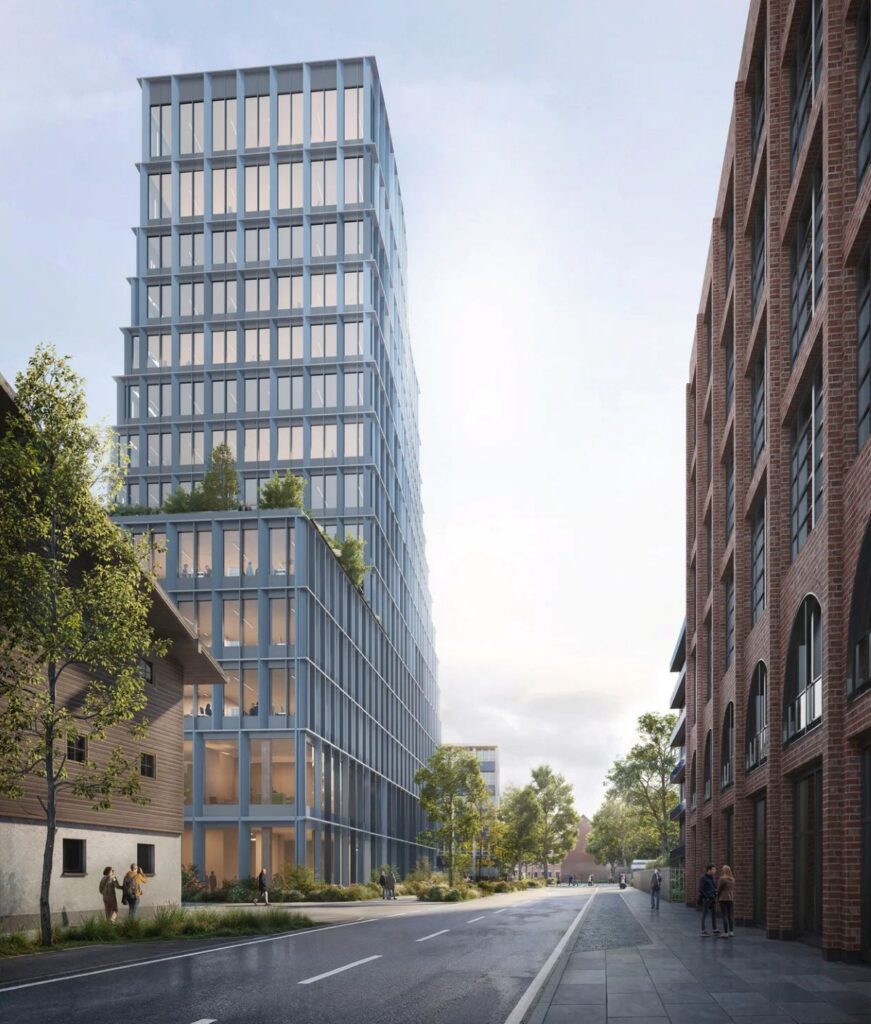
Landscape rendering showing the green campus band with pedestrian routes and gathering spaces © Snøhetta
The flexible nature of this strategy allows for a collaborative process in the workplace. In today’s world of fast technological advancements, many firms need an office environment that allows for concentrated work alongside spontaneous communication. This is taken into consideration through the provision of various areas of work that would facilitate different types of activities in order to promote creativity.
The connection between the firm and the public is one of the aspects of the strategy, and in order to achieve this purpose, specific areas of the campus should serve as areas that allow for the interaction of the visitors with the innovations of the company in regard to technology, research, and discoveries.
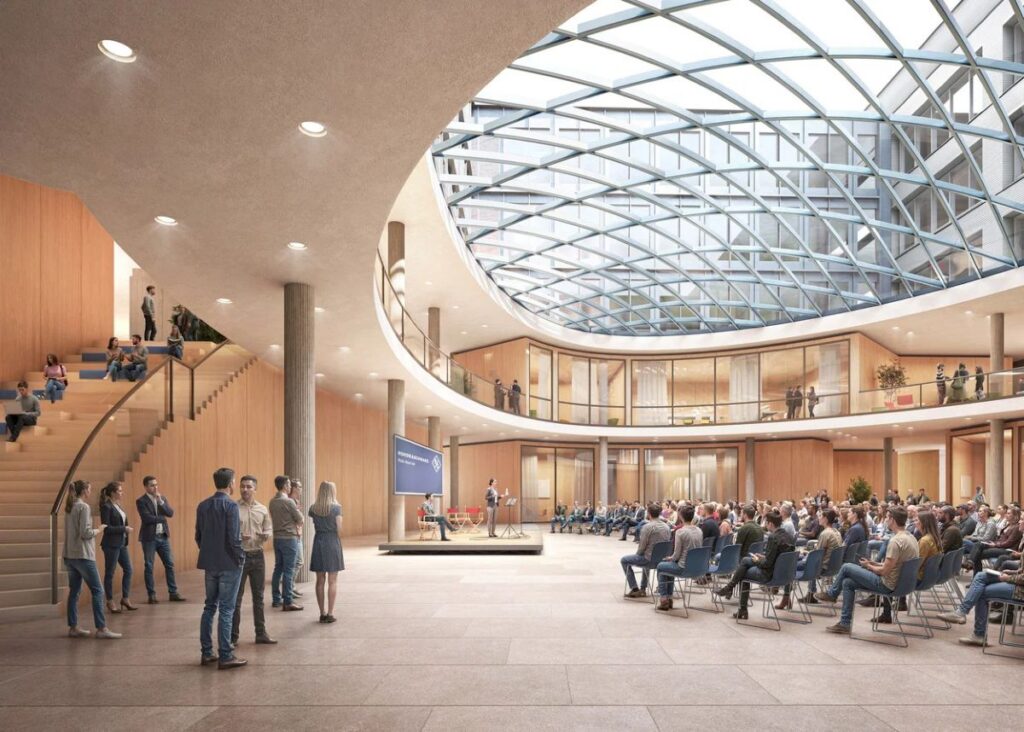
Interior visualization of collaborative workspaces and shared social areas © Snøhetta
The concept of sustainability runs through the project’s vision. Efficient land use is possible through high construction density, while the inclusion of the landscaping scheme ensures that natural elements are incorporated, creating an environmentally friendly environment. In addition, adaptability over time is emphasised, since the campus should be able to adjust to different technologies and organisational structures.
The language of architecture combines rationality with its identity. Rational shapes of buildings reflect the technical nature of processes occurring inside, while the articulation of façades helps to create a unique identity for the campus. The two aspects of design are needed because it is not only about the process and technology but also about people’s interaction.
Evening rendering showing the illuminated campus and active public realm © Snøhetta
The Rohde & Schwarz campus is a great example of how modern workplace architecture is moving forward beyond the concept of the standard corporate headquarters.
Combining research, landscape, teamwork, and public activity into one place, Snøhetta manages to create a campus that will contribute to innovations while maintaining close ties with the urban environment. This project represents the concept of a proactive and flexible workplace ecosystem that allows the exchange of ideas and contributes to future innovations.
Architect: Snøhetta
Client: Rohde & Schwarz
Location: Munich, Germany
Status: In Progress