
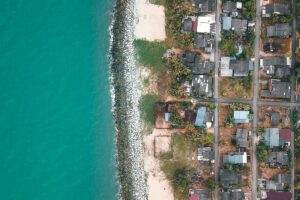
The water is already moving.
Responding to rising sea levels can no longer be thought of as an abstract task limited to hypothetical predictions made by climate scientists and discussed in academic circles. This is arguably one of the greatest challenges facing coastal cities, and time is running out far quicker than most local governments would care to admit publicly.
In coastal regions that have experienced tidal flooding relatively infrequently in the past, this phenomenon now happens multiple times a year. Floods that were previously said to occur on a one-hundred-year cycle now happen once a decade. The problem faced by architects, urban planners, and local government authorities isn’t whether or not to address rising sea levels; it’s whether or not to do so intelligently and in time.
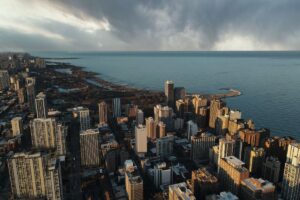
The sheer scope of exposure needs to be addressed. Hundreds of millions of individuals reside in coastal areas at risk of being flooded within the next hundred years. Cities of global economic and cultural significance, such as Miami, Jakarta, Mumbai, Amsterdam, Shanghai, New Orleans, and many more, are under the threat of losing their present shape.
The built environments that shelter these communities are products of hundreds of years of investments as well as social and cultural infrastructure. The mere thought of relocating or abandoning these structures is not an adequate approach to the magnitude of the problem at hand. What is needed is design intelligence that operates on multiple scales at once.

Beyond the Seawall
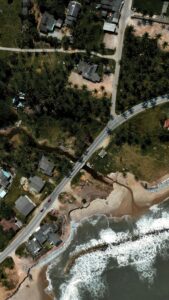
For years, the reaction to flooding has been the seawall—the protective barrier between the metropolis and the ocean. The seawall is effective in its way and will continue to be a feature of coastal metropolises moving forward. However, building coastal defences that only take into consideration rising seas as a threat is itself a dangerous approach. The seawall is costly, controversial, and destructive to ecosystems. It also represents risk at one central point, where breaching or overflowing results in a disaster and not a slow increase. Finally, a seawall can lull people into a sense of safety that encourages the development of dangerous flood zones.

The increasing number of sophisticated solutions being explored within our coastal metropolises shifts the thinking from one based on exclusion to one that accommodates the flooding waters. Amphibious structures, which are designed to float on their supports when water levels rise but then settle back down to their normal positions once the water begins to recede, have become much more than theory. They are prototypes that continue to evolve.
Grounds elevated above street levels, lower floors that are floodable, and landscapes designed to hold back and capture the water rather than divert it constitute an entirely new way of interacting with the elements that threaten to overwhelm the city. At the heart of all of these strategies is one core assumption: water, in great enough quantity and frequent enough intervals, can never really be permanently excluded.
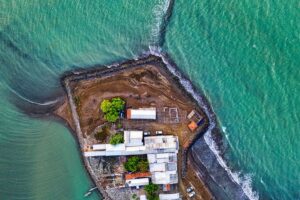
The Landscape as Infrastructure
Perhaps some of the biggest and most important decisions about design in coastal cities have nothing to do with architecture at all. Rather, they pertain to what lies between the city and the sea: the tidal flats, the mangroves, the dunes, and the wetlands that used to serve as natural buffers against storm surges and coastal erosion.
Centuries of development have wiped out these natural defences in vast swaths of coastlines, leaving cities vulnerable to flooding that nature protected previous generations from. The restoration and expansion of this coastal ecosystem is not an environmental argument opposed to urban development. Rather, it is a design argument for urban development: the realization that the most cost-effective and resilient means of coastal defence is evolution’s handiwork over millions of years.
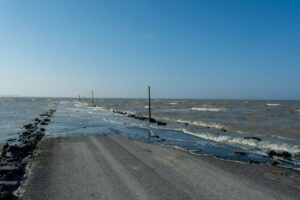
For an approach to urban design along our coasts that integrates landscape infrastructure, we need a different relationship among architects, landscape architects, ecologists, and hydrological engineers from what we’ve been accustomed to in the field. We need to be willing to operate on timescales beyond those of our usual projects. And we need to have the political courage to realize that, no matter how much we wish otherwise, some parts of current coastal development will have to be relinquished over time because managed retreat is the only option.
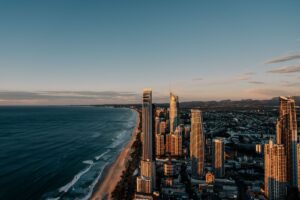
Equity at the Water’s Edge
Any talk about rising sea levels and city planning cannot afford to overlook the equity issues associated with the matter at hand. The neighbourhoods most prone to flooding are largely made up of citizens who have no means of protecting themselves from the disaster, whether politically or economically.
High-value developments along waterfront areas in cities where the people are financially well-off receive a lot more attention as far as building protection against flooding is concerned. What this translates into is the fact that the areas behind such development receive less investment, even though they face much higher levels of threat. In designing for the impacts of rising sea levels, one cannot afford to ignore this issue.

For any coastal city looking to design its way out of rising sea levels, the need to ensure equal investment in protection facilities should be seen as a prerequisite.