Curated by ArchiRev Editorial | Feature Story | Published June 11th, 2026 | Source: MVRDV
Typologies: Sports
Themes: Public, Sustainability, Architecture
Status: Realised
Location: Multiple—M’bera, Mauritania; Boa Vista, Brazil; Azraq, Jordan
Year: 2022–
Surface: 14 m²
Client: KLABU
The KLABU Clubhouse by MVRDV is among the most spatially modest and socially significant projects the Dutch practice has undertaken—a 14-square-meter modular sports facility housed within a modified ISO shipping container, designed for deployment in refugee camps, settlements, and cities across the world.
In collaboration with KLABU, which is a social enterprise based in Amsterdam, whose name is Swahili for “club,” the clubhouse provides something that the vast majority of humanitarian infrastructure fails to offer: a space that is characterized by the possibility rather than the management of happiness.
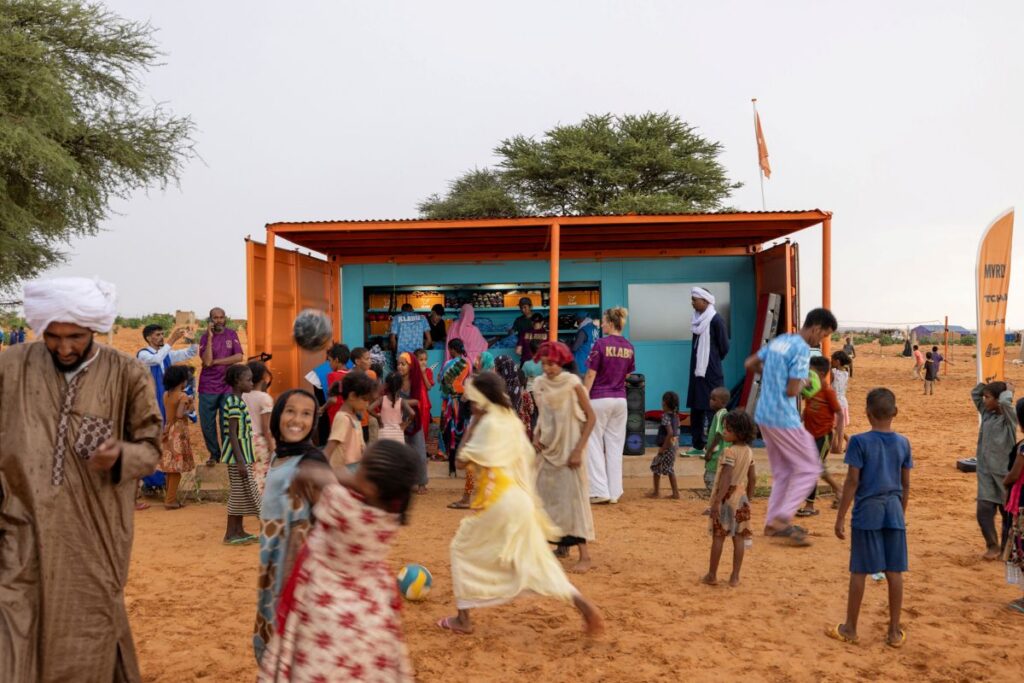
Exterior view of the KLABU Clubhouse at the M’bera refugee camp in Mauritania showing the orange-clad container with laser-cut logo, canopy extension, and its presence as a focal point within the camp settlement © MVRDV
The underlying principle of KLABU is that sports is not an amenity for displaced peoples; it is the very means of recreating identity, empowerment, and sociability that displacement takes away from them. KLABU constructs clubhouses within refugee camps and settlements with access to sports equipment, activities, televised games, and even Wi-Fi Internet, making use of spaces for people whose physical and social infrastructures have been pared down to the bare necessities provided by emergency intervention.
MVRDV’s contribution, made entirely pro bono, was to design something that could actually be built, shipped, installed, and maintained in the simplest possible manner to ensure functionality in these far-flung locations.
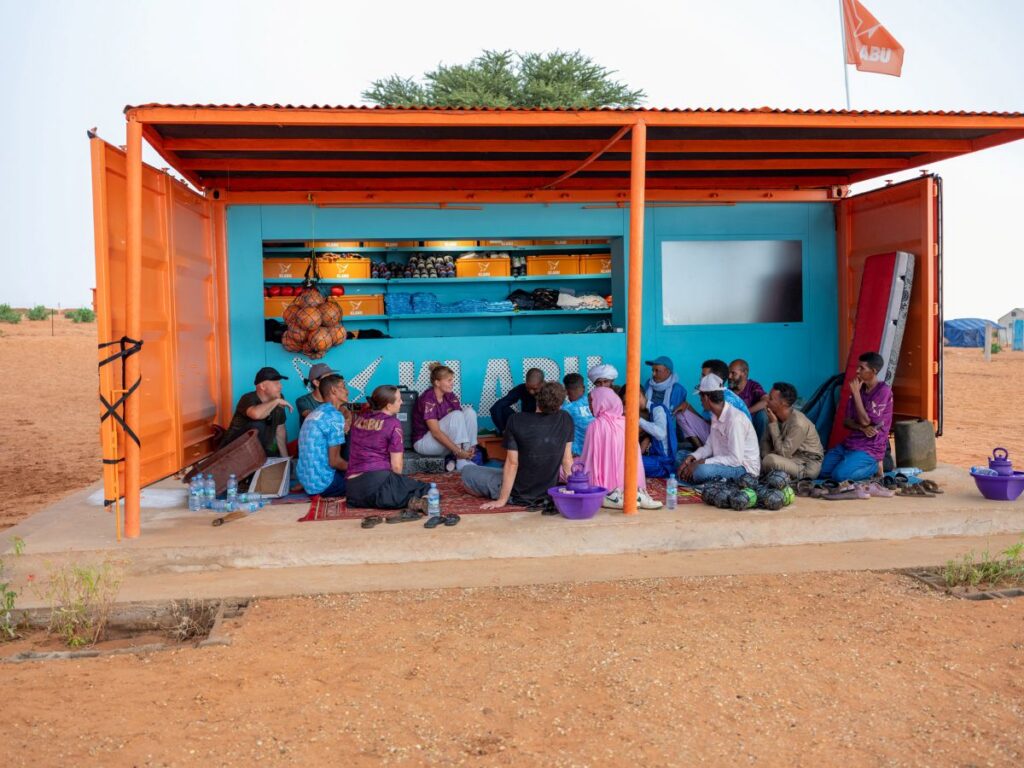
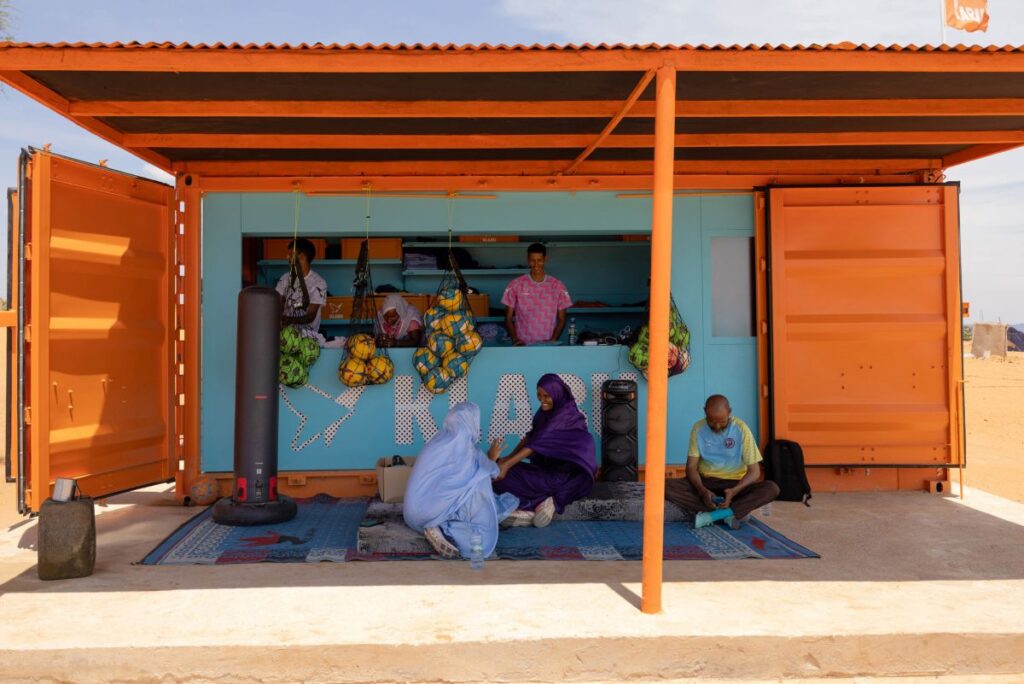
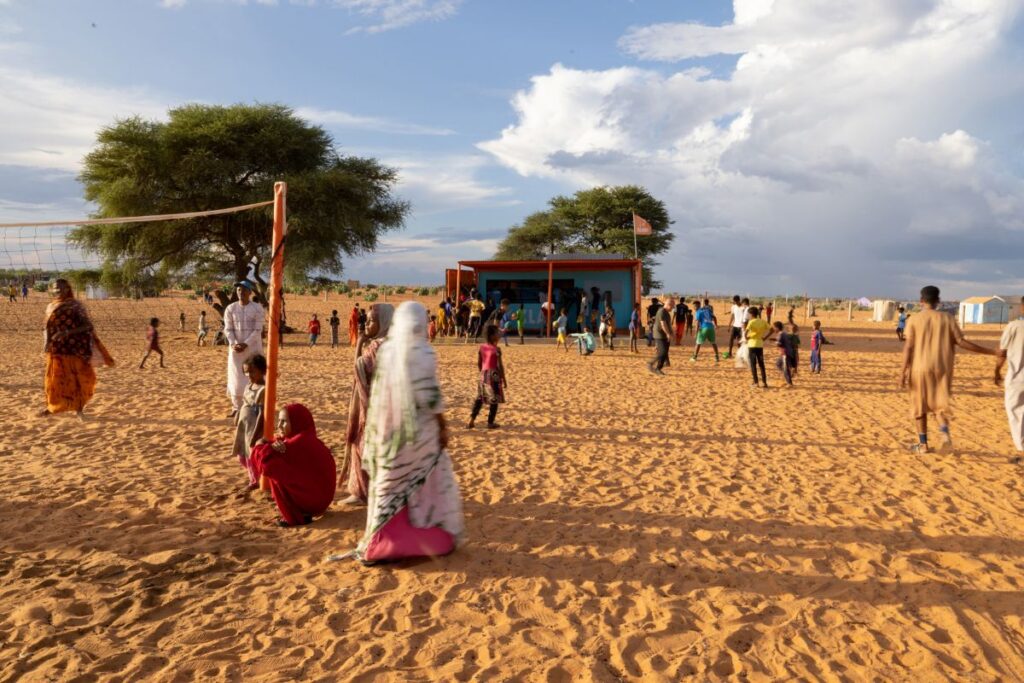
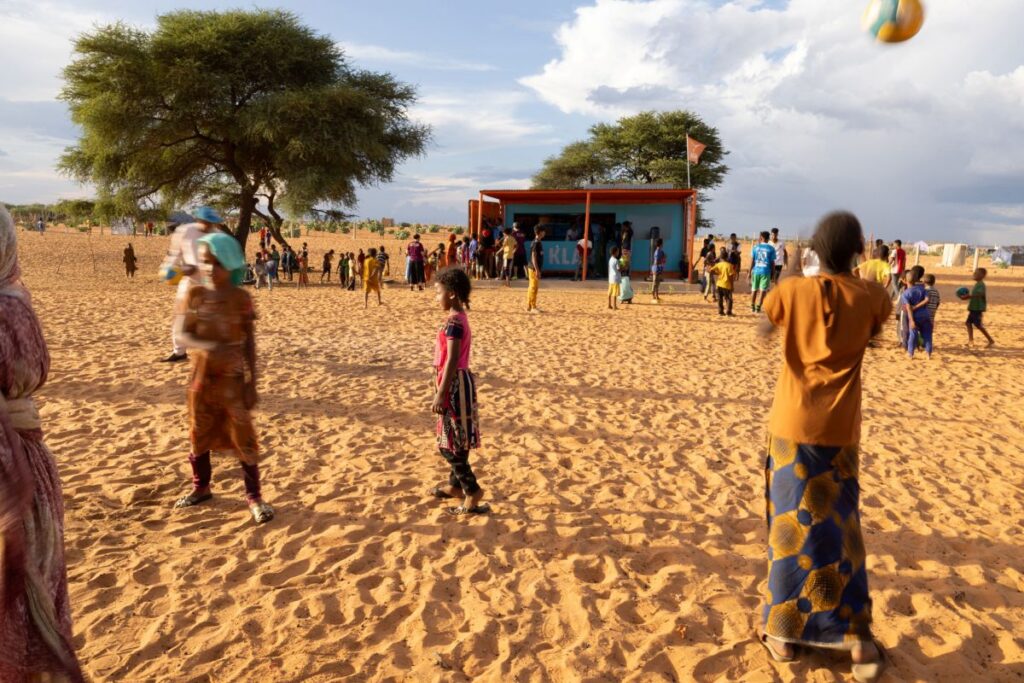
View of the clubhouse open-side configuration showing the 20-foot side opening, large television screen, canopy shade structure, and the animated community activity around the container in a camp setting © MVRDV
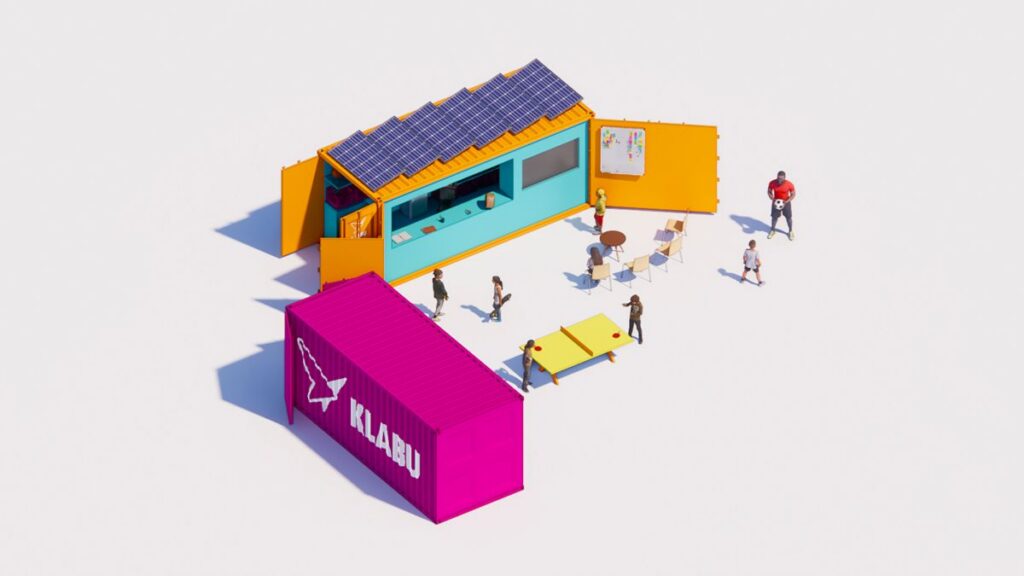
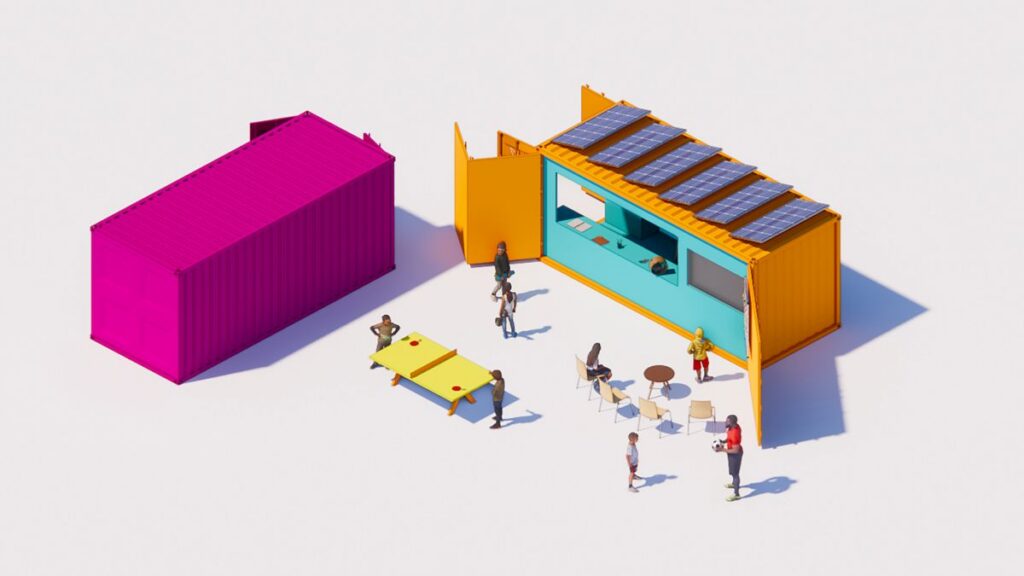
Axonometric diagram of the clubhouse showing the structural modifications to the ISO container, the open-side opening mechanism, canopy deployment, solar panel roof mounting, and interior modular fixture arrangement © MVRDV
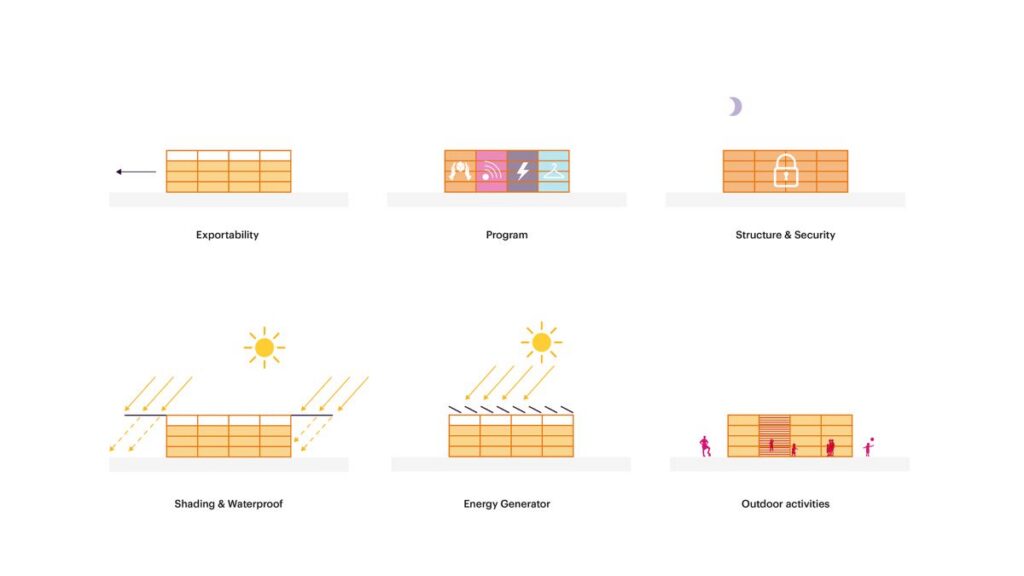
The basic module used as a basis for the design is an ordinary ISO dry shipping container, selected primarily due to its robustness and resistance to any kinds of thefts and weather conditions. And while the latter feature should be viewed rather as a plus, the ability to integrate into the global logistics system should also be taken into account. Indeed, due to the selection of the container as the main module, KLABU will be able to ship a fully equipped clubhouse in one go.
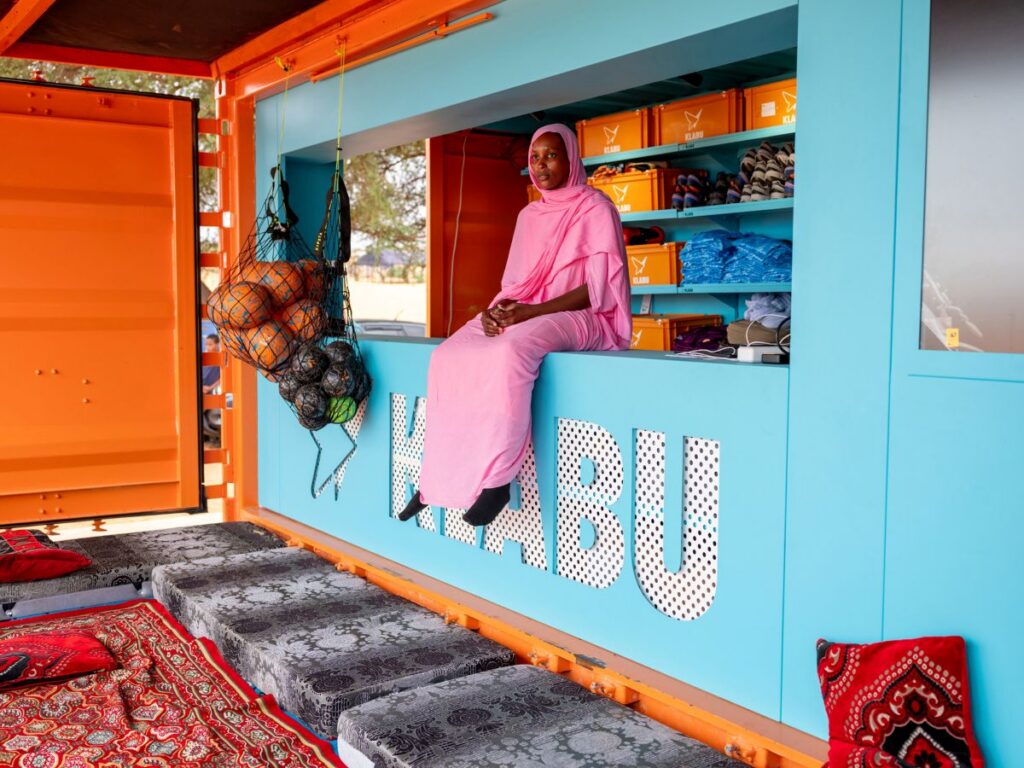
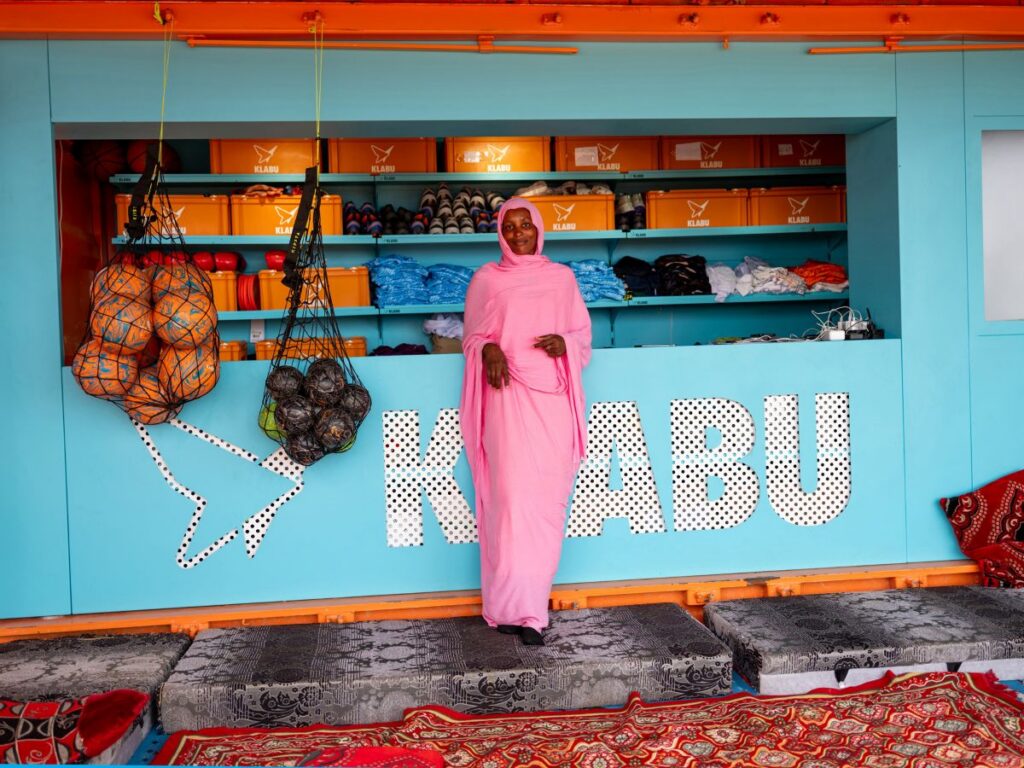
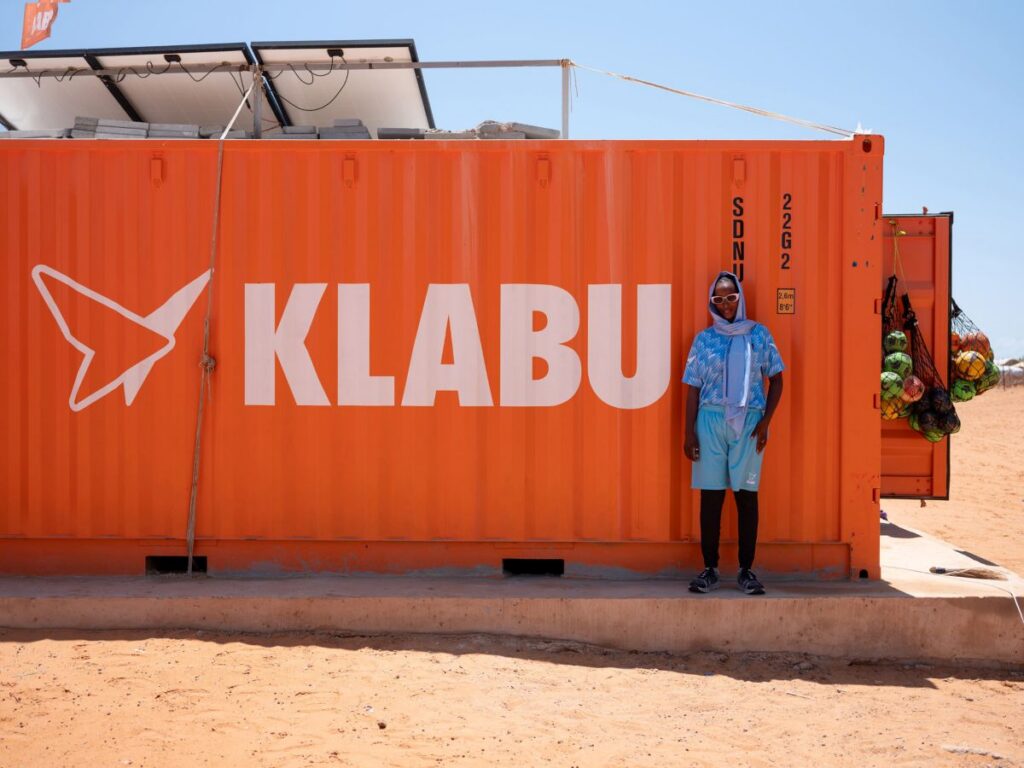
Finally, the whole construction is finished with bright orange color, cut with the logo of the brand using a laser, thus creating a recognizable image within an environment where a camp-style architecture prevails. This is the contrast between the bright-orange facade of the clubhouse and its sky-blue interior that makes the difference.
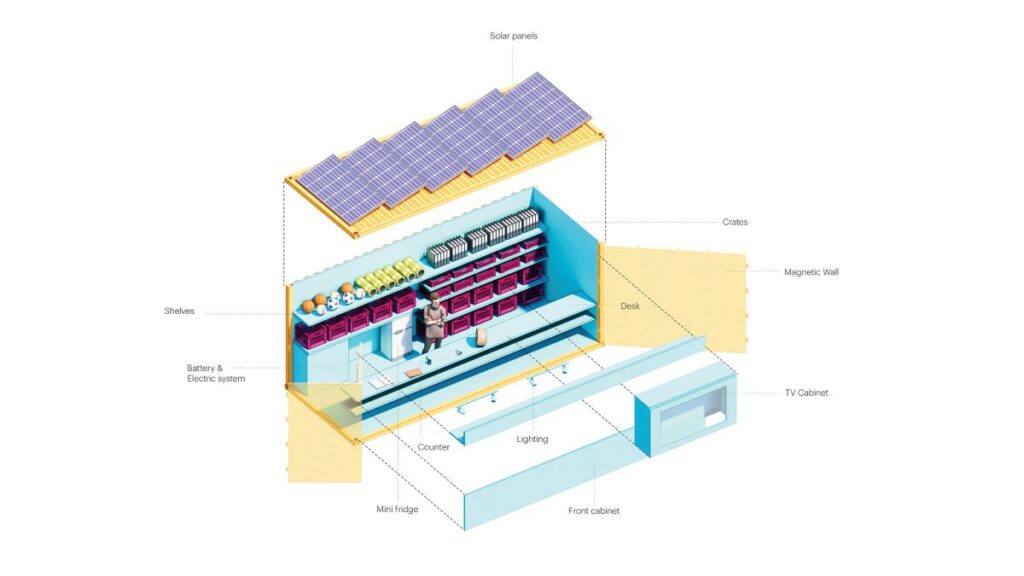
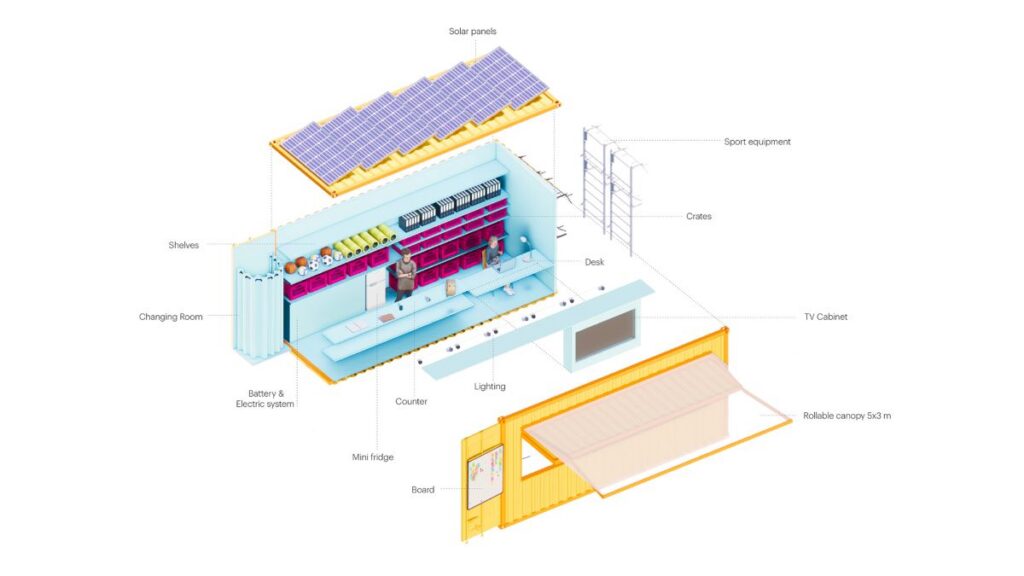
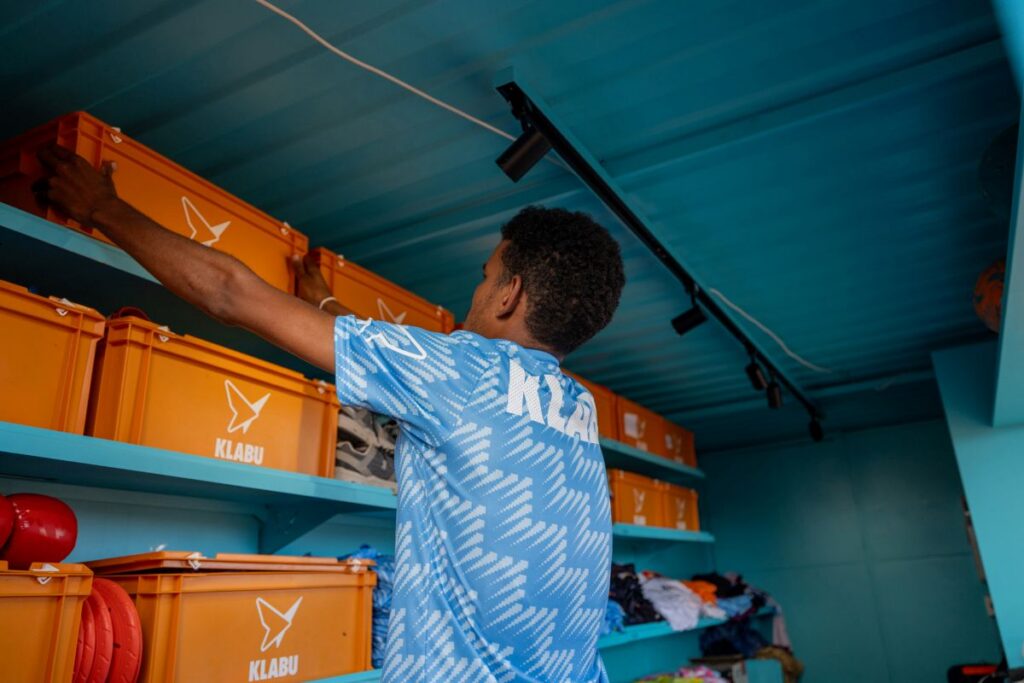
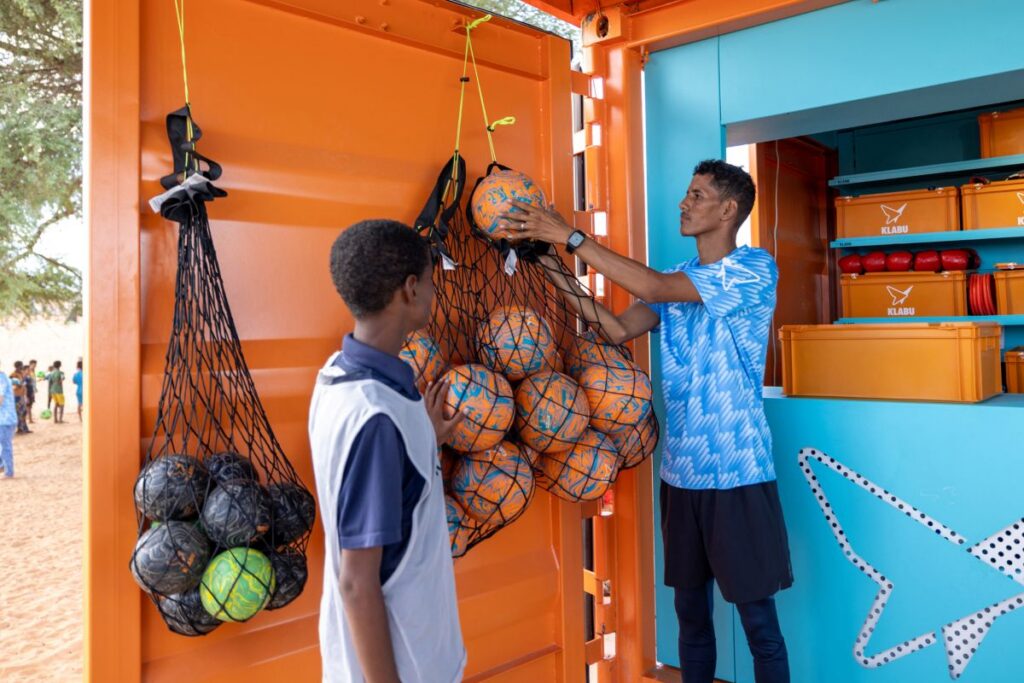
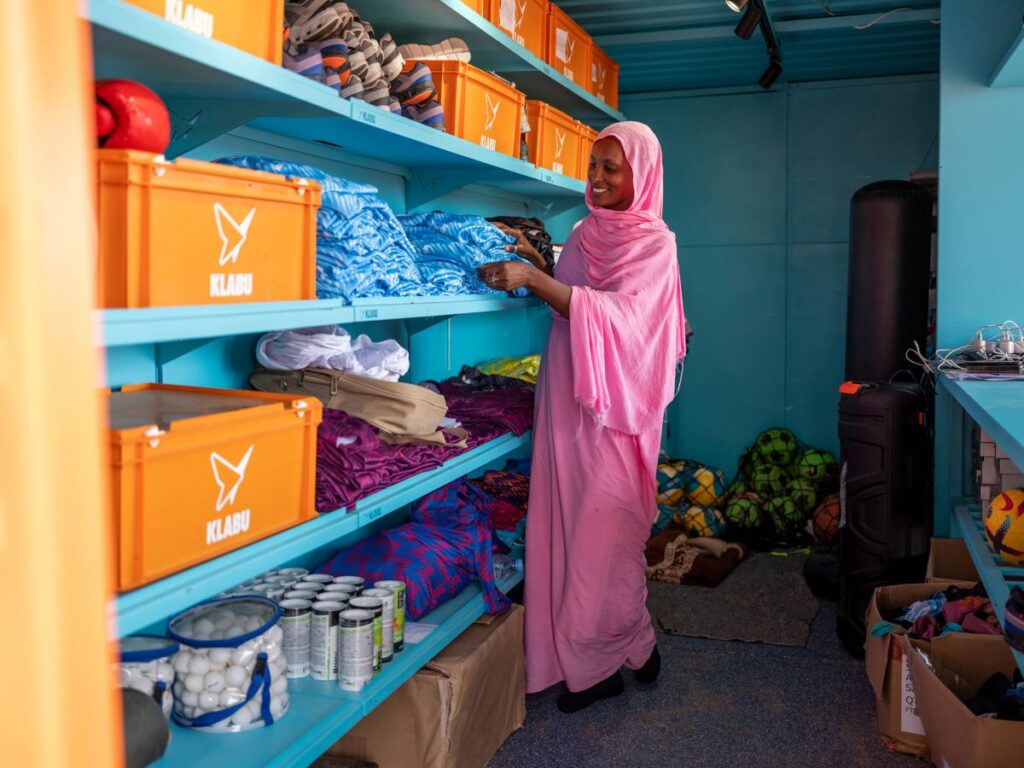
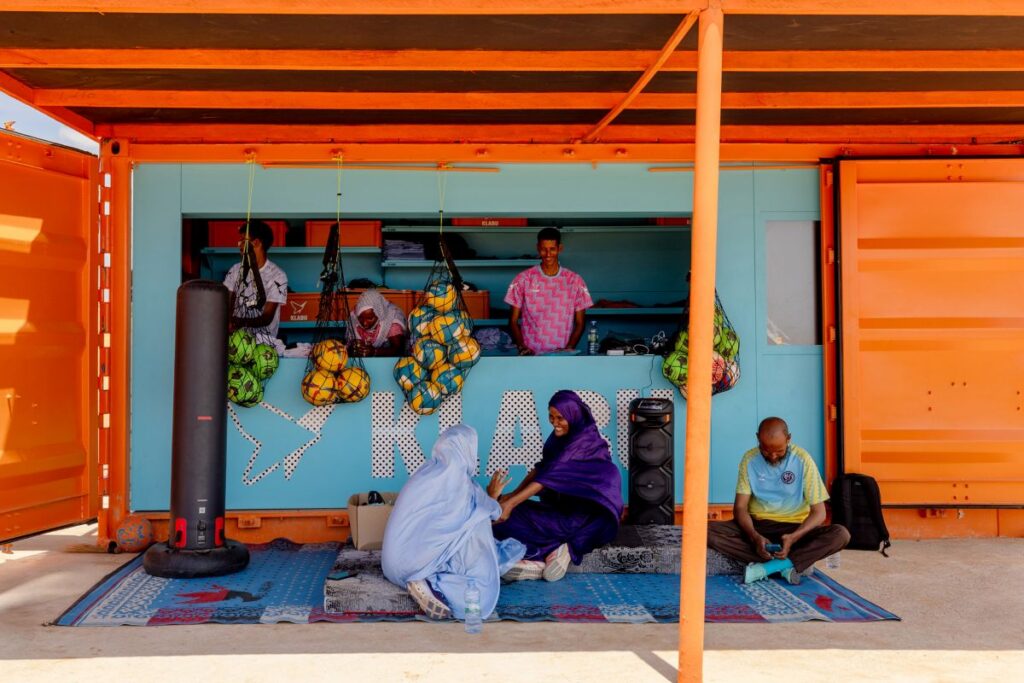
Interior view of the sky-blue modular interior showing compact storage installations, charging points, equipment organisation, and the spatial quality of the fitted container interior © MVRDV
The design is currently on its third iteration, with each iteration created through collaboration between the client KLABU, construction partner TCHAI, and the clubhouse managers at the camps. Through this method, the design has evolved into an increasingly functional and versatile building. Iteration three sees the introduction of the open-side container concept, where in addition to the two end doors, the whole 20-feet long side door opens up, significantly increasing the interface between the clubhouse and its surroundings.
The extension creates a shaded area outdoors where other activities like table tennis can take place and increase the program of the clubhouse twofold without increasing its square footage. The large TV screen mounted outside the building allows live sports events to be watched and attracts people from the entire camp, thus creating a communal feeling and providing displaced people access to the worldwide sports culture they are physically cut off from.
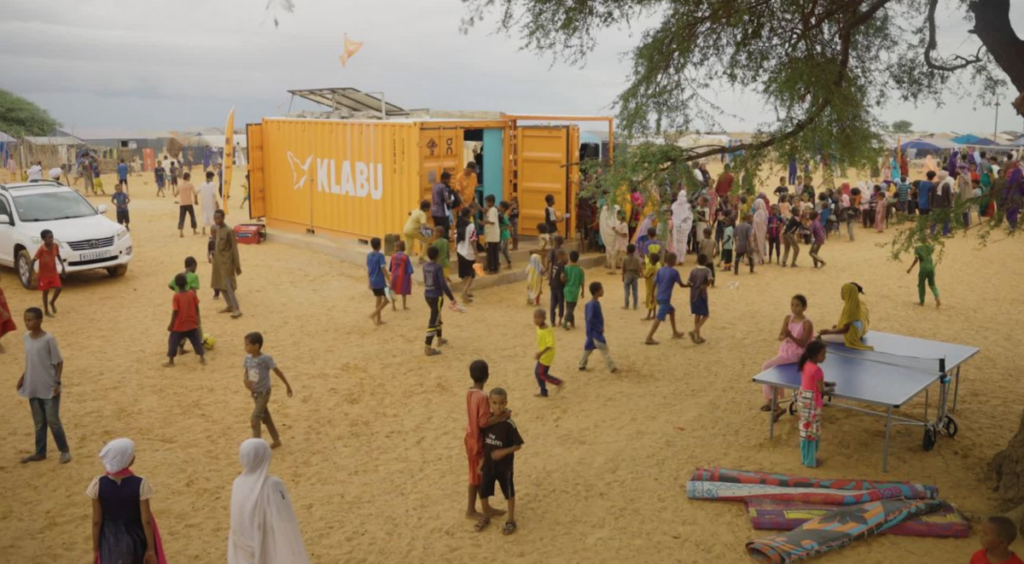
View of the canopy extension in use showing shaded outdoor activity space, table tennis, and community gathering around the open container side in the camp environment © MVRDV
The solar panels on the roof provide energy for this facility, enabling the many sources of electricity and internet access in the form of charging and wireless connections that enable the clubhouse to provide services not only for its sport programme but also for learning and connectivity.
The strong nature of the container ensures that these systems are protected from the severe weather conditions of heat, dust, moisture, and wind present in various types of locations where the clubhouse is utilized. The interior fittings were chosen particularly for their durability and ability to be easily transported past custom borders.
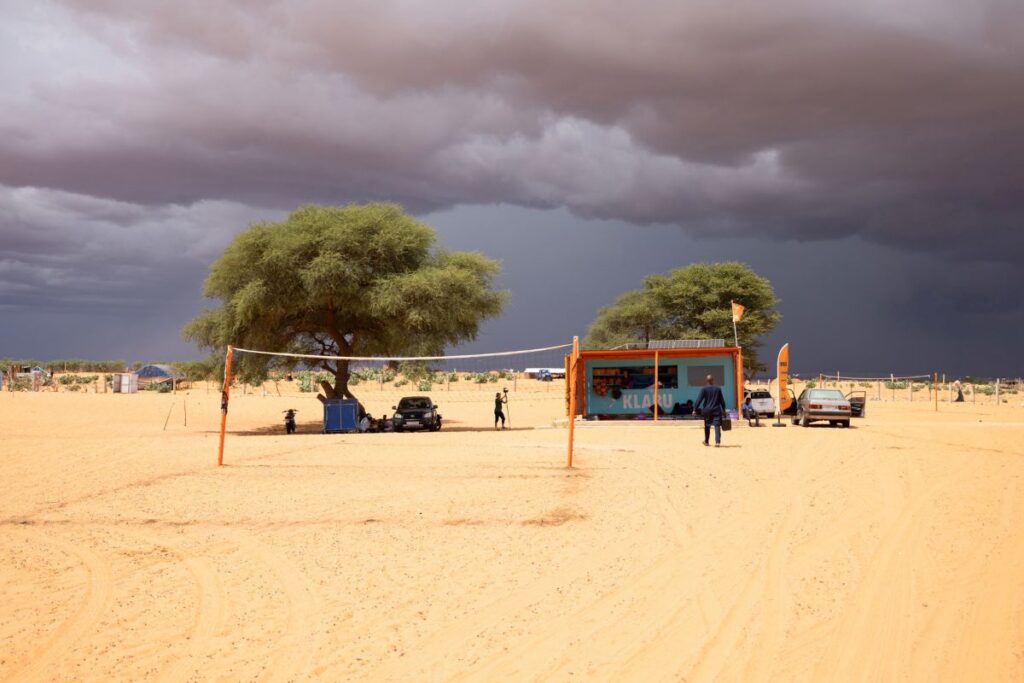
Exterior view of the clubhouse roof showing the solar panel array, structural container modification, and the integration of renewable energy generation within the compact 14 m² footprint © MVRDV
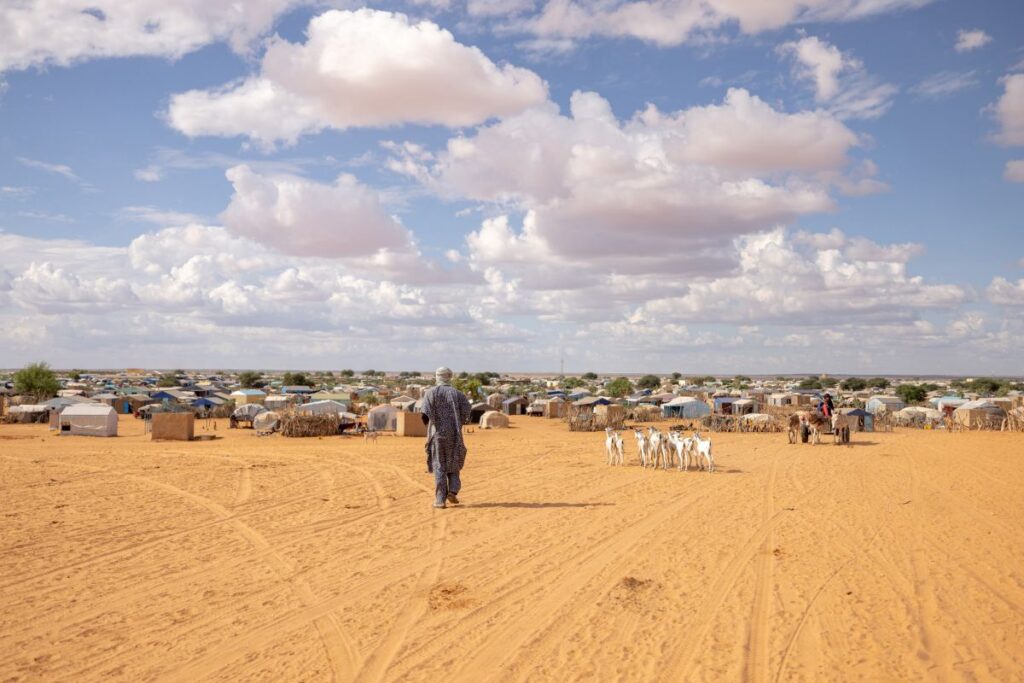
The clubhouse is currently available in operation at M’bera refugee camp in Mauritania, which hosts 100,000 Malian refugees and at Waraotuma a Tuaranoko refuge in Boa Vista, Brazil, helping indigenous Venezuelan people displaced from their native place. The third one is to be installed in Azraq refugee camp in Jordan, where 41,000 Syrian refugees live. The goal of KLABU organization is to replicate the idea into more than 50 locations around the globe within ten years, thus creating a network of sports community centers for a forcibly displaced population of more than 120 million people. There are already seven active clubhouses, hosting more than 36,000 members.
The best designs are often born out of the simplest ideas,” says Gideon Maasland, director at MVRDV. “The fact that a shipping container, an ordinary and mundane object, can be converted into a colorful and functional clubhouse offering sporting activities to refugees is very rewarding work for us.”
The KLABU Clubhouse is realised and ongoing.
Architect: MVRDV
Partner: Stefan de Koning
Director: Gideon Maasland
Design Team: Valentina Chiappa Nunez, José Garcia Garcia, Herman Gaarman
Business Development: Sruti Thakrar Copyright: MVRDV — Winy Maas, Jacob van Rijs, Nathalie de Vries
Collaborators: Contractor: Loods 121 Fabrication & Fitout: TCHAI
Photography: © Coco Olakunle, © Richard Hu
GALLERY