
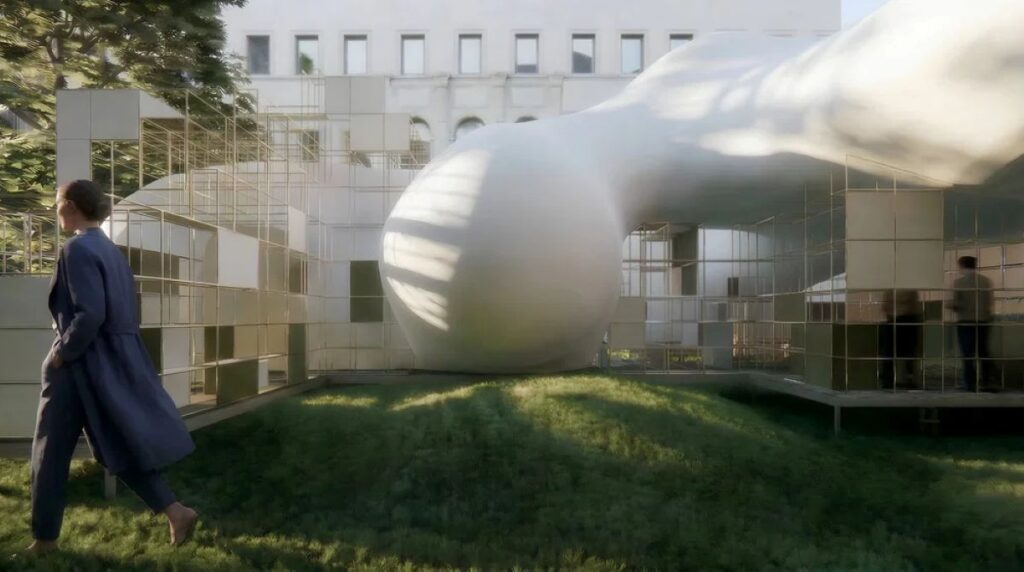
Installation displaying the structural framework in an exhibition room © Snøhetta
Curated by ArchiRev Editorial | Feature Story | Published April 24th, 2026 | Source: Snøhetta
Typologies: Installation & Commissions
Status: Completed
Location: Fondazione Luigi Rovati, Milan, Italy
Client: USM Haller
Collaborators: Annabelle Schneider
Photo: USM Haller
At Fondazione Luigi Rovati in Milan, Italy, during Milan Design Week 2026, Snøhetta and USM Modular Furniture exhibit Renaissance of the Real, a multisensory installation. The project, which was created in collaboration with Swiss designer and artist Annabelle Schneider, explores how physical space may re-engage the senses in a time of continual connectivity and digital saturation.
The project suggests a slower, more attentive manner of spatial experience in reaction to growing disengagement from the physical world. It considers the conflict between embodied presence and digital immersion, establishing an environment where human interaction and perception are once again clear.
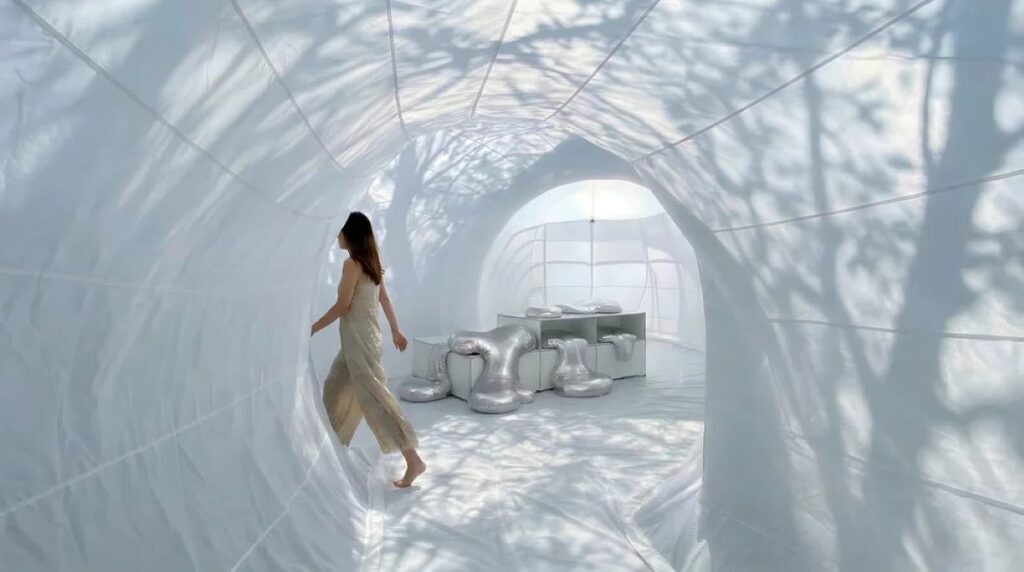
Guests entering a dimly lighted installation area © Snøhetta
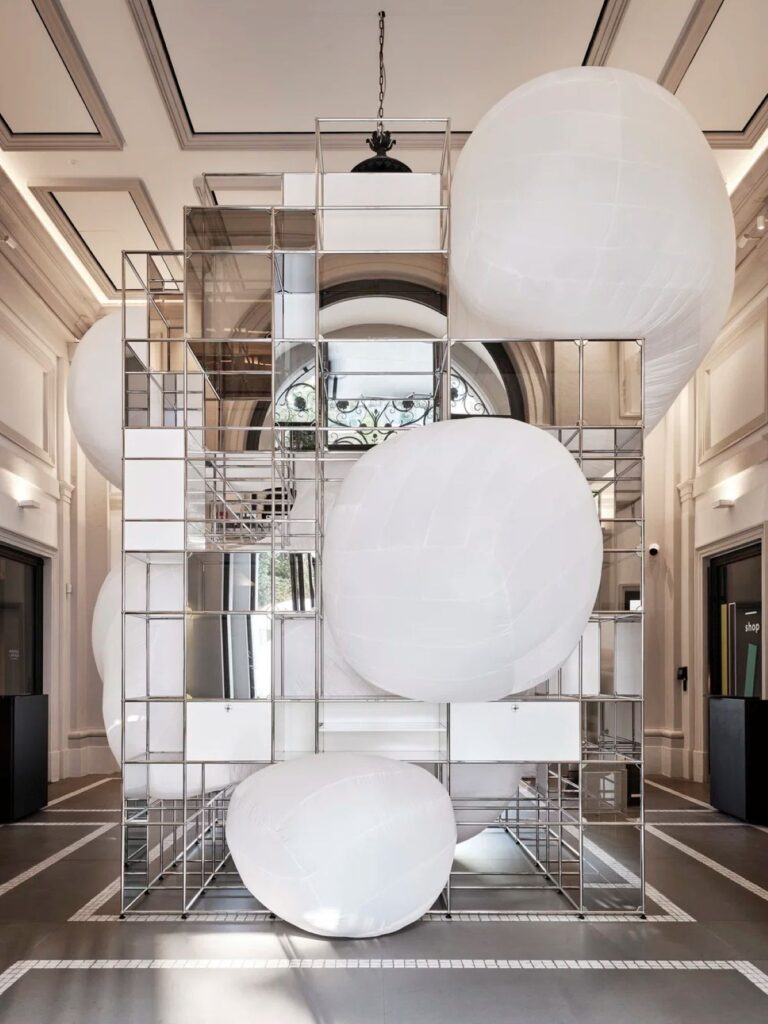
Fundamentally, the idea goes beyond its practical roots to rethink the USM Haller modular system. A soft textile membrane that expands and contracts inside the building is supported by the precise steel grid, which turns into a spatial framework. The spatial atmosphere is defined by the subtle tension between stability and softness generated by this connection between hard geometry and fluid containment.
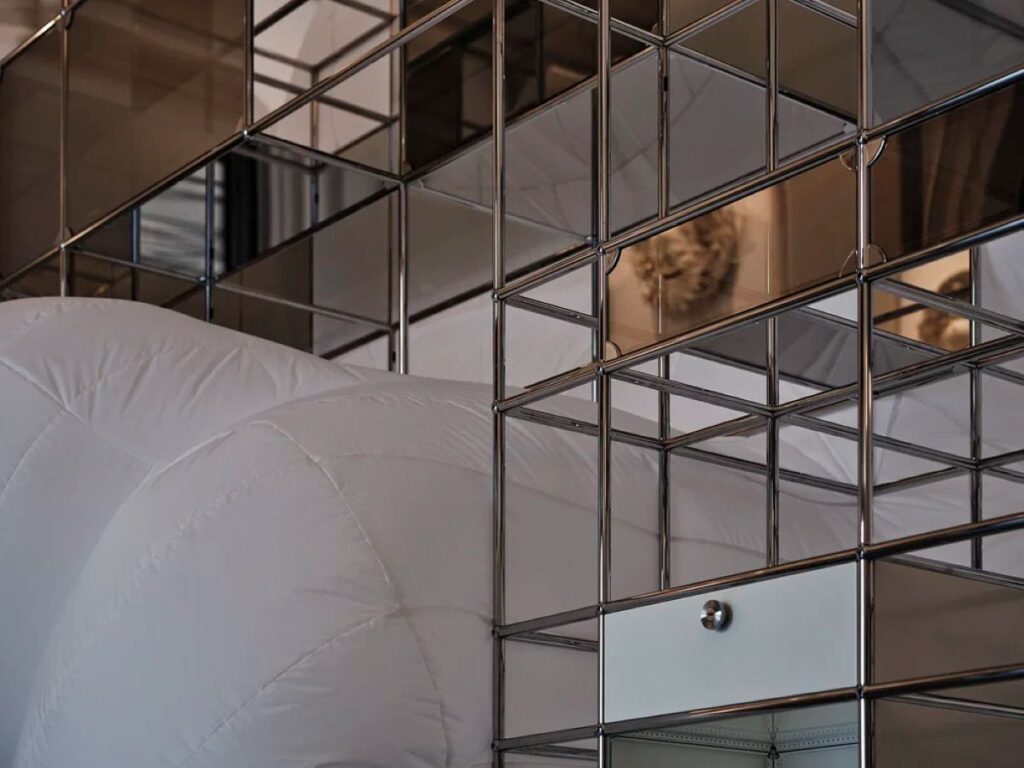
Modular steel frame with textile skin hung © Snøhetta
A progressive sensory shift is the design of the tourist experience. A warm towel is the first sign of entry, signifying a transition from the outside world inside the installation. Diffused lighting, ambient sound, aroma, and tactile surfaces are among the many sensory aspects that make up the interior space. Each element is designed to slow perception and increase awareness.
Layered light and materials create an interior sensory environment © Snøhetta
A progressive sensory shift is the design of the tourist experience. A warm towel is the first sign of entry, signifying a transition from the outside world inside the installation. Diffused lighting, ambient sound, aroma, and tactile surfaces are among the many sensory aspects that make up the interior space. Each element is designed to slow perception and increase awareness.
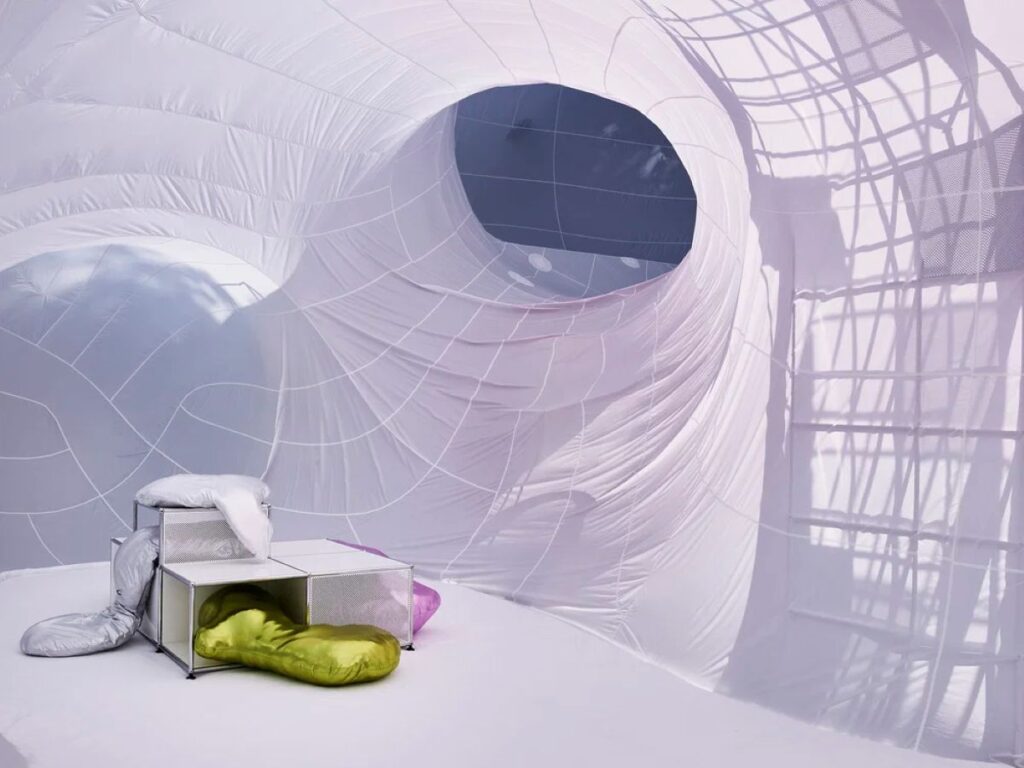
Listening to vinyl during installation © Snøhetta
One of the main spatial layers is sound. Devon “OJAS” Turnbull, an artist and audio engineer, leads daily vinyl listening sessions that create an analogue presence in juxtaposition to the surrounding digital environment. The sense of calm and concentrated attention is strengthened by this auditory element.
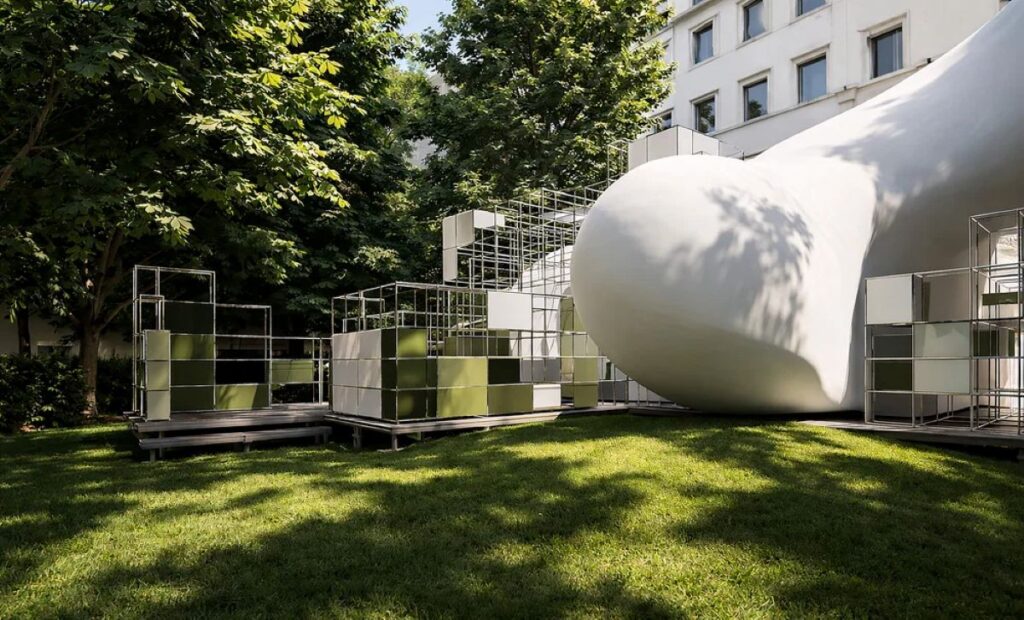
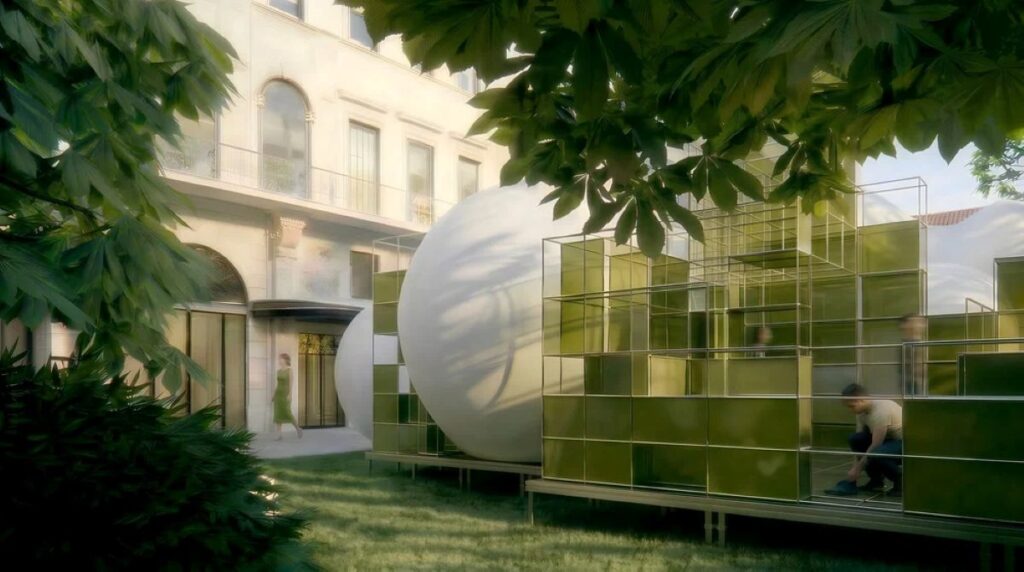
Beautiful outdoor scene © Snøhetta
The work serves as a transient spatial haven rather than a spectacle. By establishing a regulated space where guests are urged to stop, take in, and re-establish a connection with their immediate surroundings, it turns architecture toward experience.
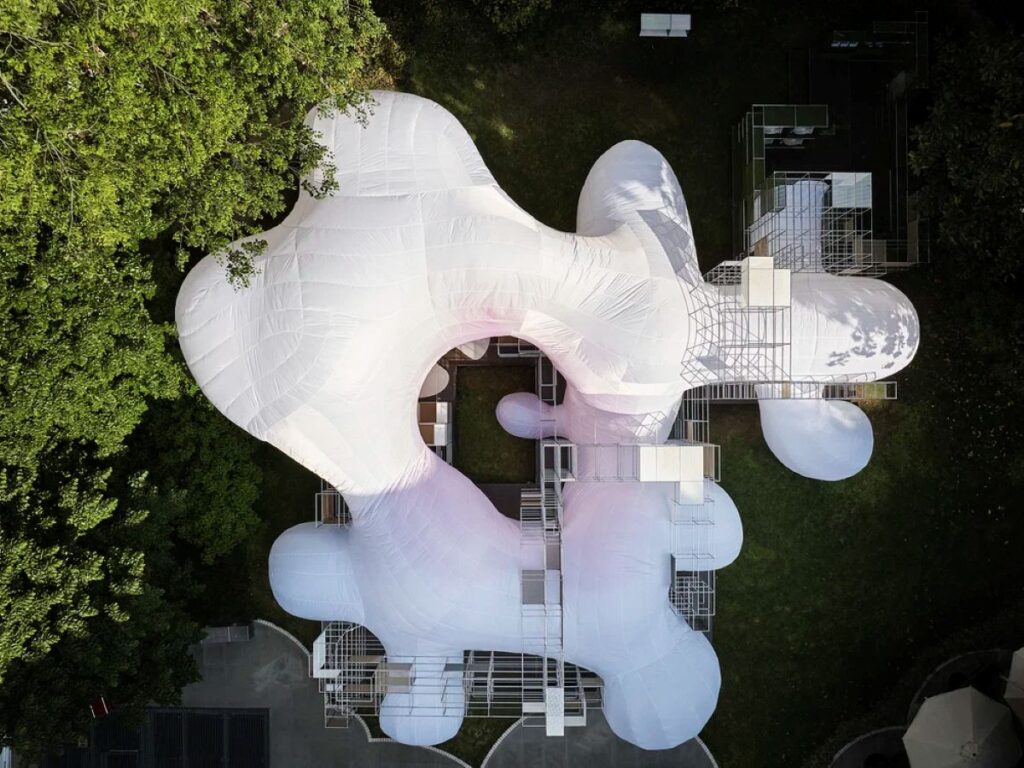
Complete spatial composition of the overall installation environment © Snøhetta
Renaissance of the Real frames architecture as a vehicle for presence through sensory accuracy, material contrast, and spatial restriction. It offers a grounded and instantaneous method of interacting with space by refocusing attention away from speed and distraction.