Typologies: Workspace & Production Facility
Status: Completed
Location: Taichung
Client: Good Finance
Size: 800 m 2
Scope: Interior Architecture
Photos: Millspace
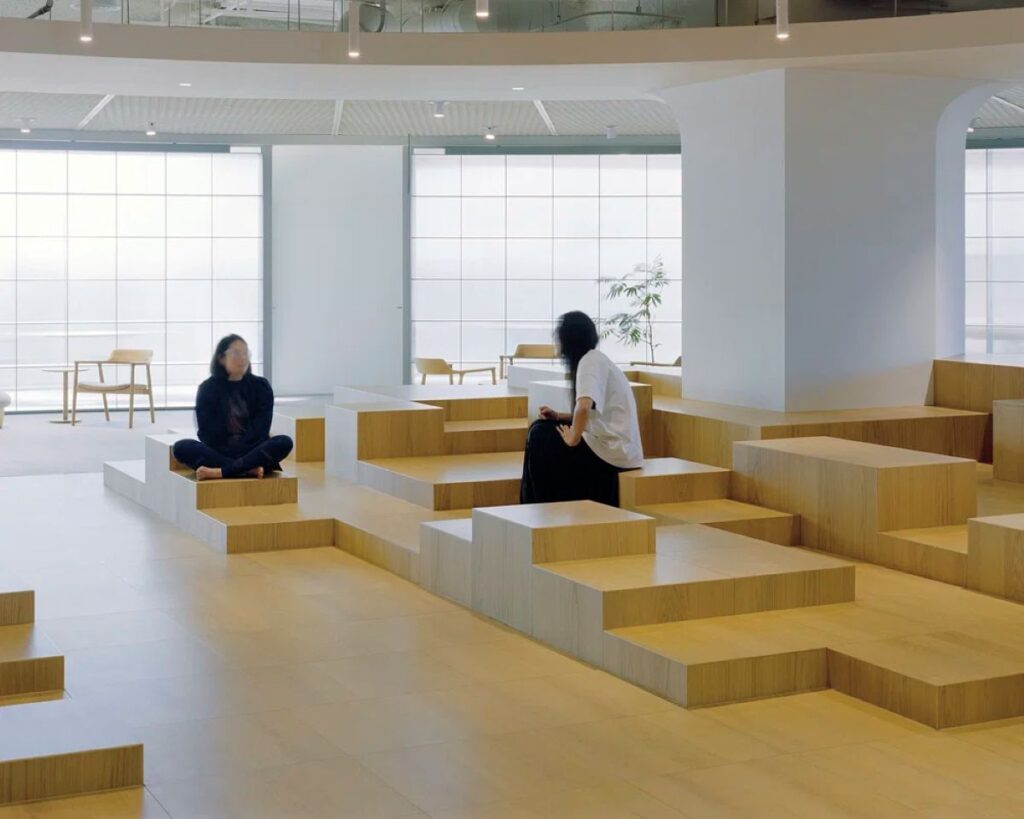
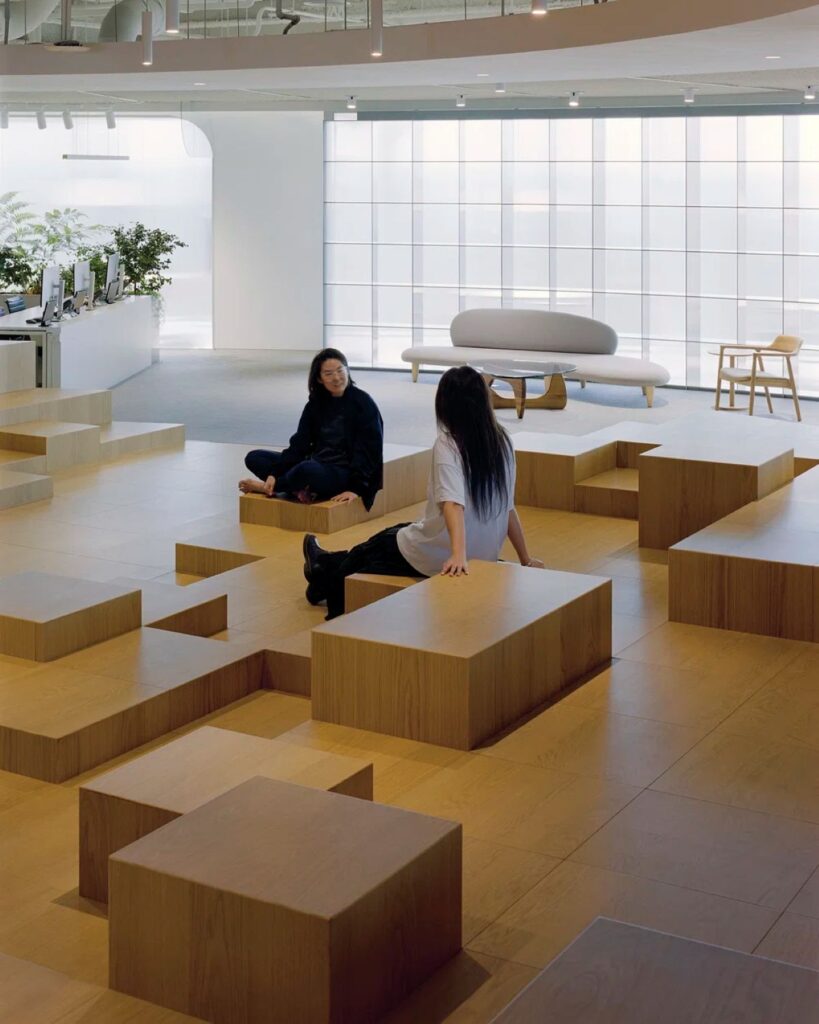
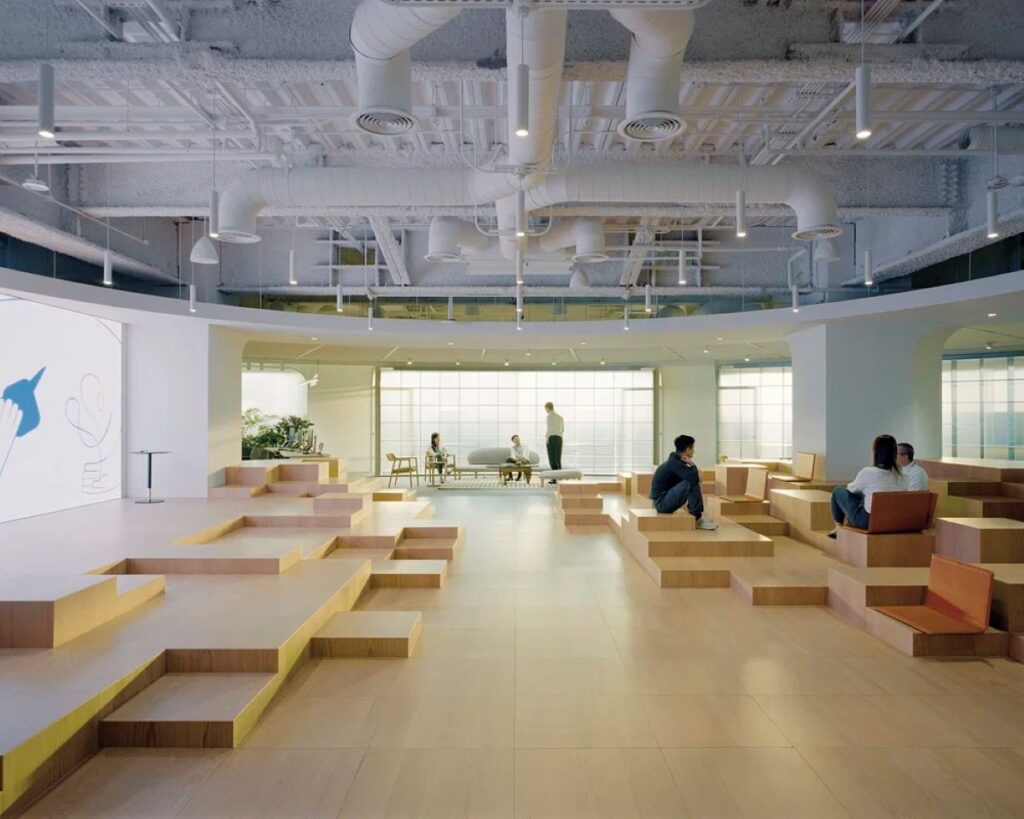
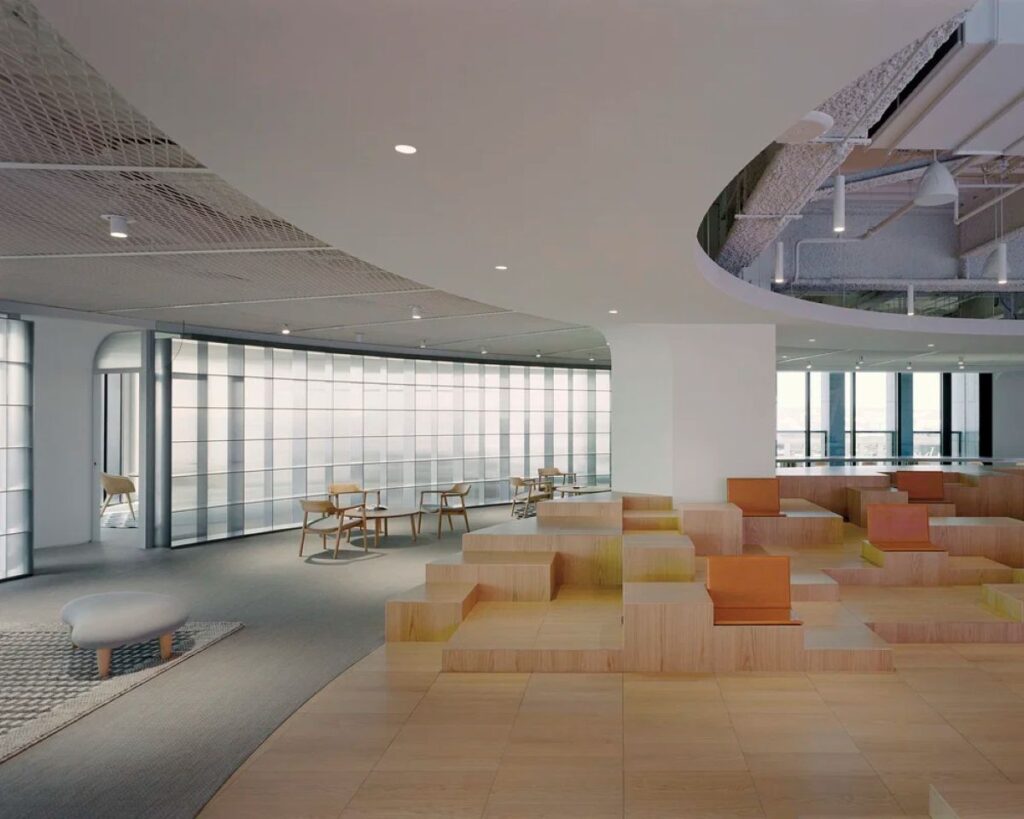
The design concept of Snøhetta’s office space is based on open and interactive relationships between individuals who are physically working together in an environment created by a shared experience where all employees have the same place rather than numerous highly segregated areas created by using a lot of lockers.
People may work together, hold meetings, and exchange ideas inside a continuity of space thanks to the studio’s architecture, which permits all facets of collaborative work to take place without isolation from one another.
Natural light and an open, collaborative workstation in an office © Snøhetta
Every member of the team, regardless of status, occupies the same space in the studio’s horizontal, non-hierarchical structure. By encouraging communal authoring, the elimination of common office obstacles improves the team dynamic and facilitates the open flow of information. Throughout the day-to-day operations, the studio is built to accommodate both concentrated and unstructured labour.
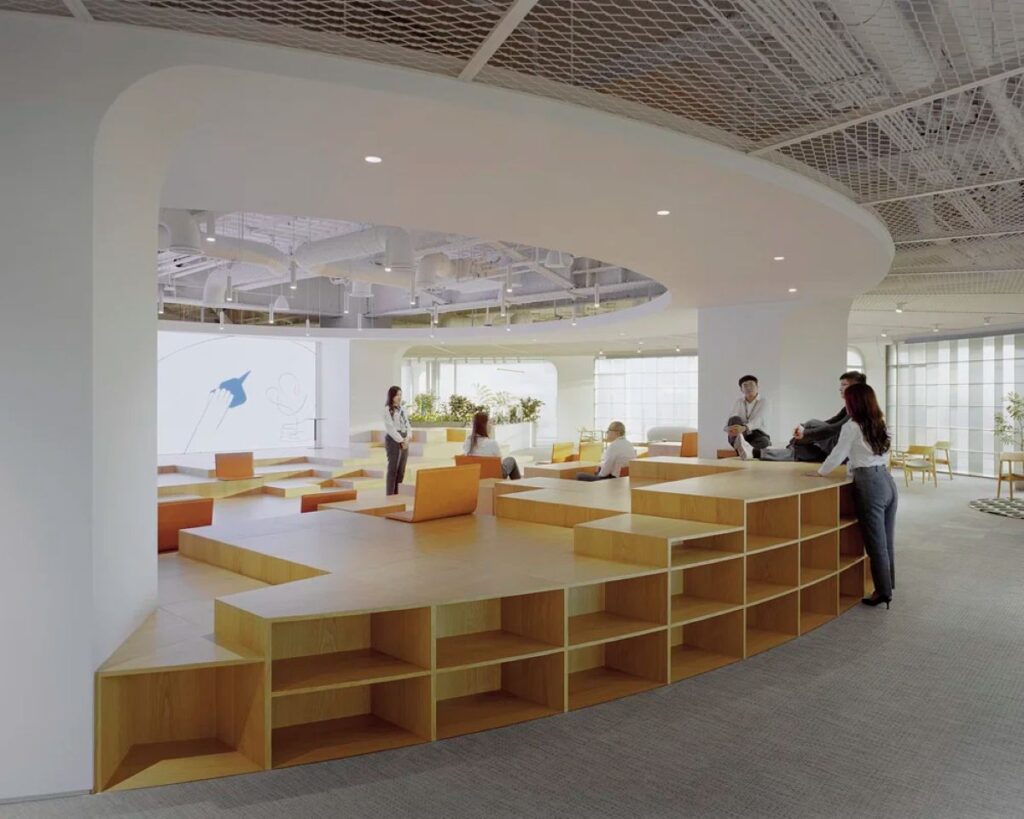
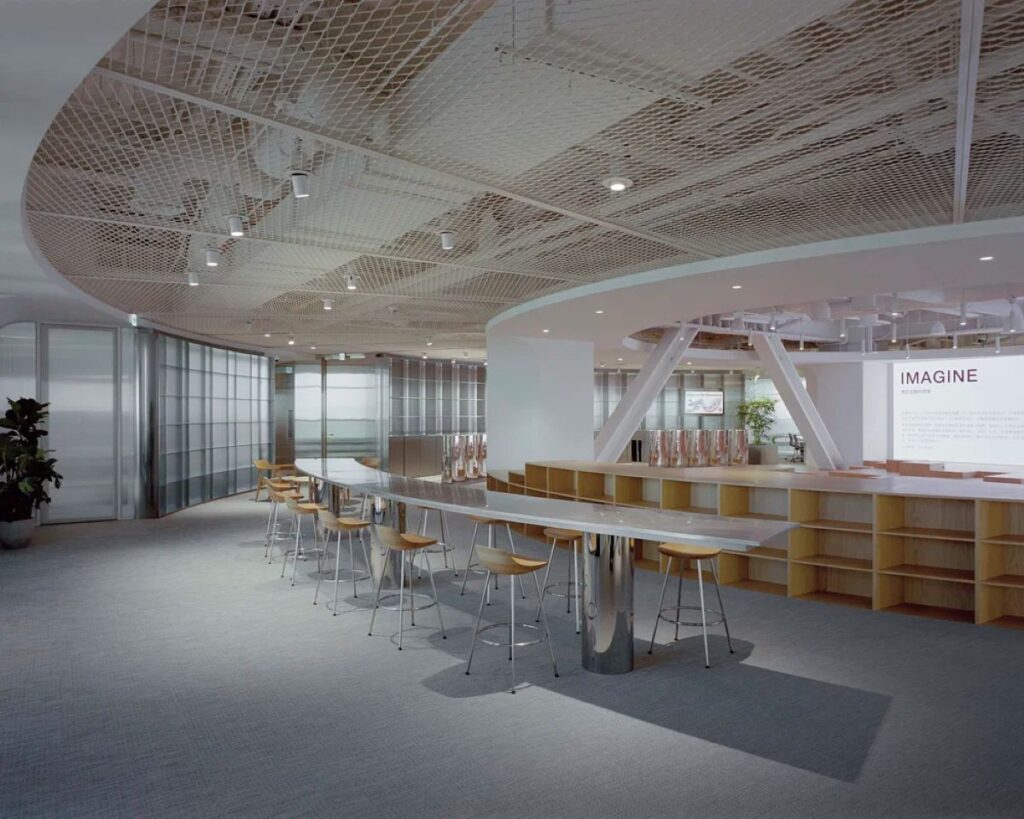
Integrated seating and circulation in a central shared workstation© Snøhetta
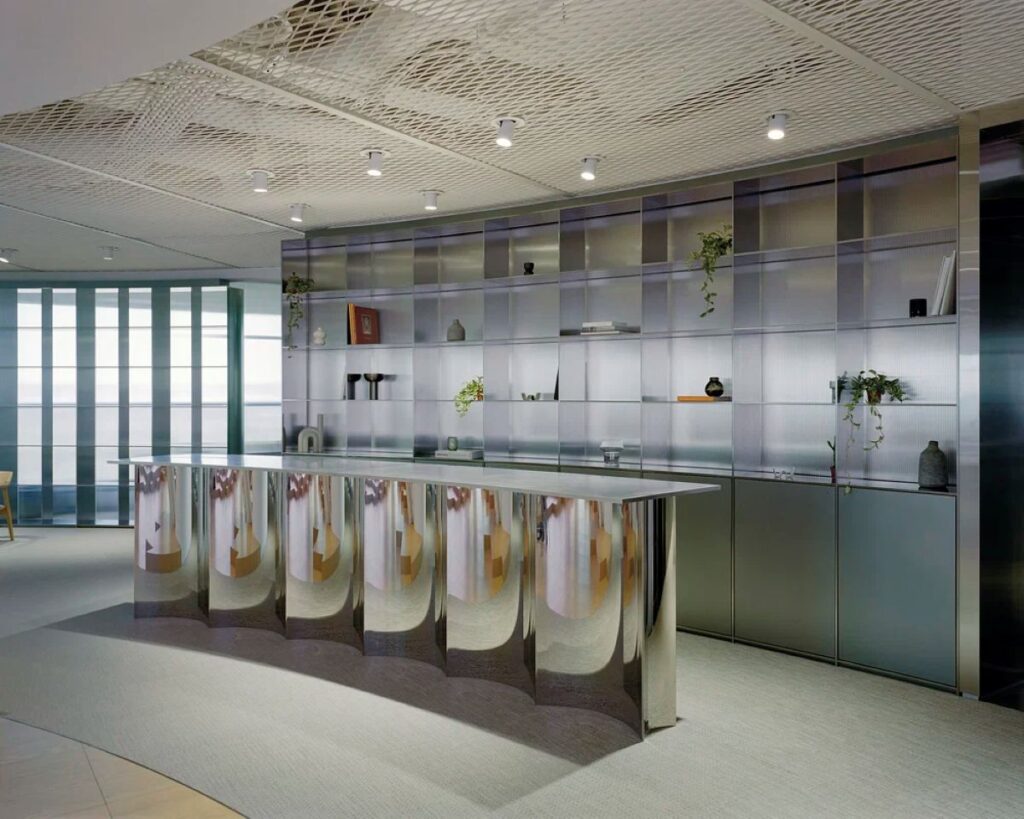
The studio’s main gathering and working space is a sizable social table. This table will be utilized for group lunches, “having quick staff meetings,” and collaborative work sessions, with a focus on workers getting together to talk about design work. In keeping with the studio’s philosophy of equal involvement and transparency, this table will also be a public space where anybody can utilize it.
Meals and meetings at the communal table © Snøhetta
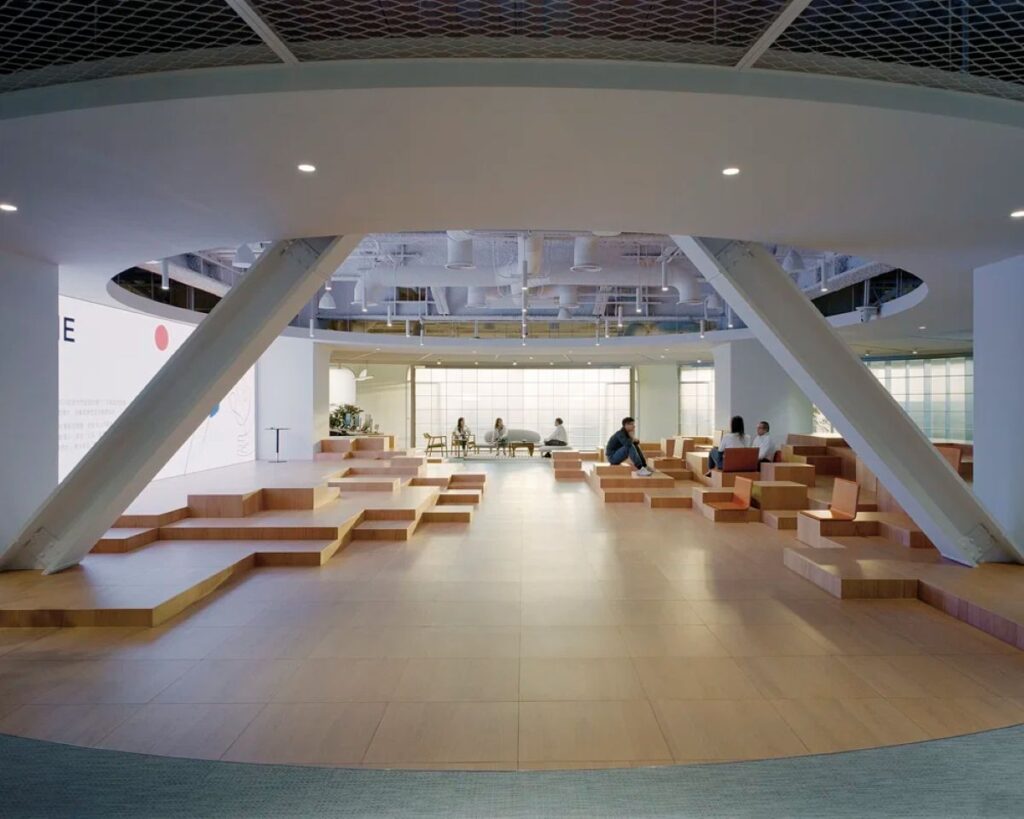
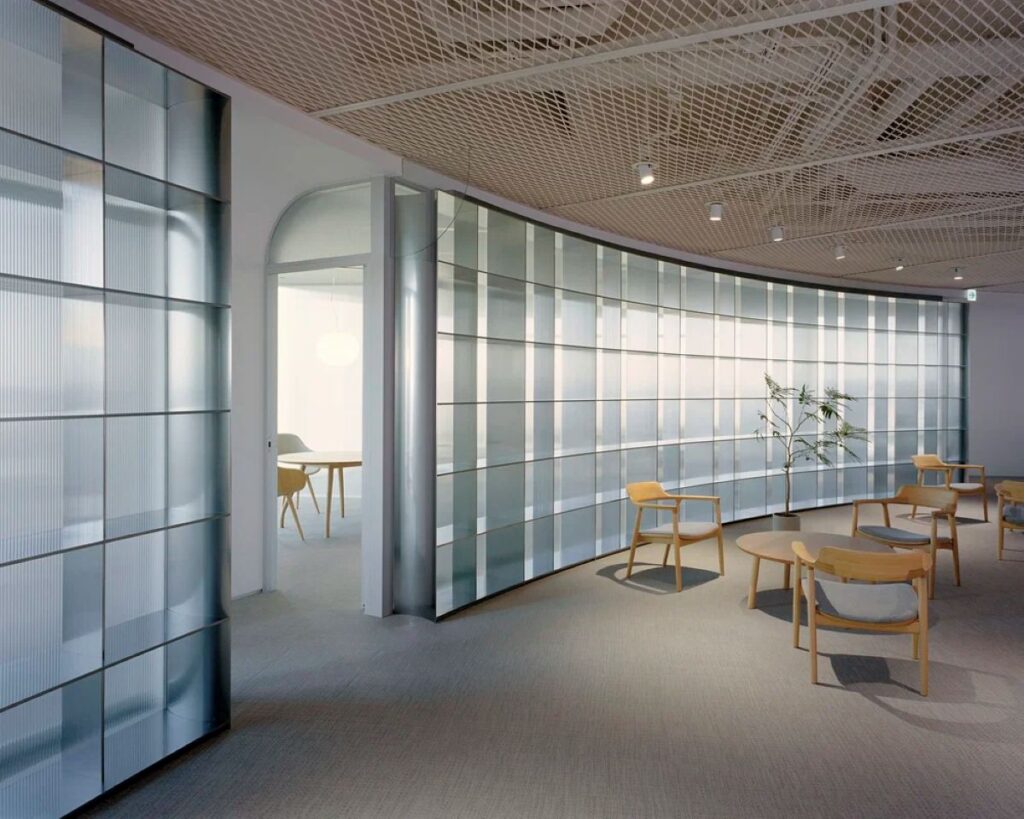
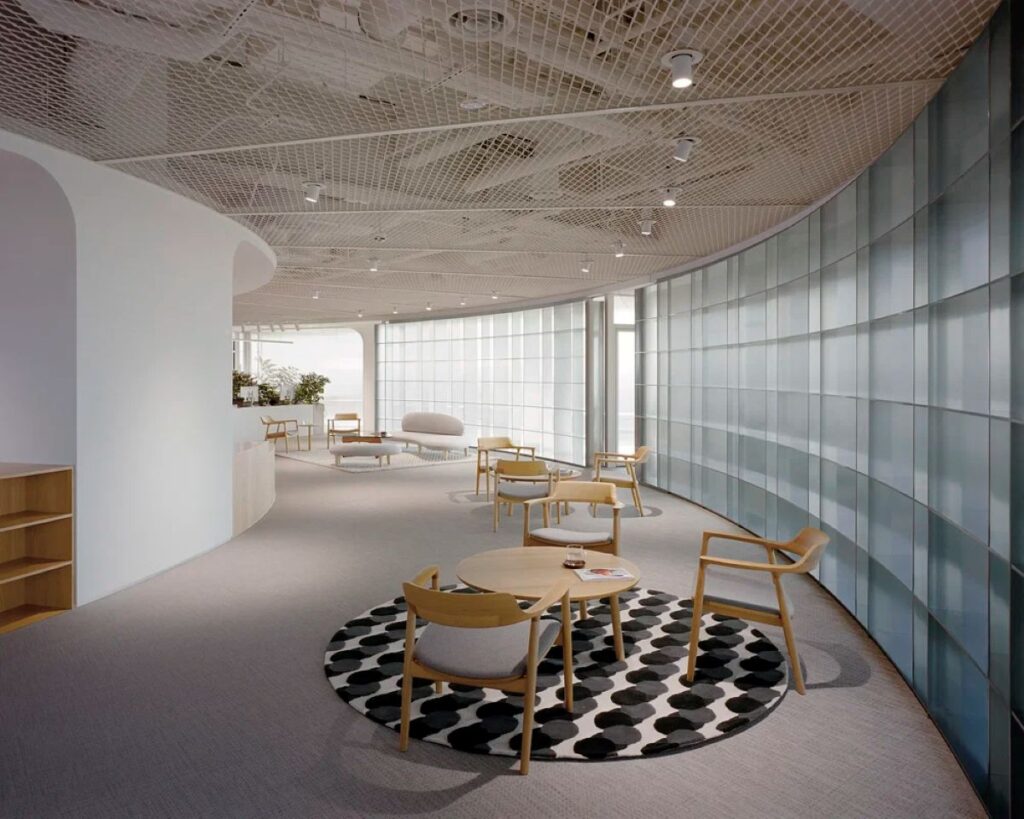
The spatial strategy facilitates flexibility and teamwork. The workplace’s environment facilitates ongoing activity transitions (e.g., casual to formal discussion). The workplace can expand and alter in proportion to use without losing its fundamental openness because there are no set bounds.
Adaptable workspace with areas for casual collaboration © Snøhetta
By using this strategy, the workplace becomes more than just a place to work; rather, it becomes a collaborative area where people can engage and communicate through a variety of design elements that are visible, reachable, and continuously improved by the people working there.