Typologies: Educational, Cultural, Industrial, Bar-Restaurant
Themes: Architecture, Leisure, Public, Culture
Status: Realised
Location: Rotterdam, Netherlands
Year: 2020–2025
Surface: 3,533 m²
Client: Port of Rotterdam
Awards: Dezeen Awards 2025 — Longlisted, Culture Category; Archello Awards 2025 — Longlisted, Cultural Building of the Year
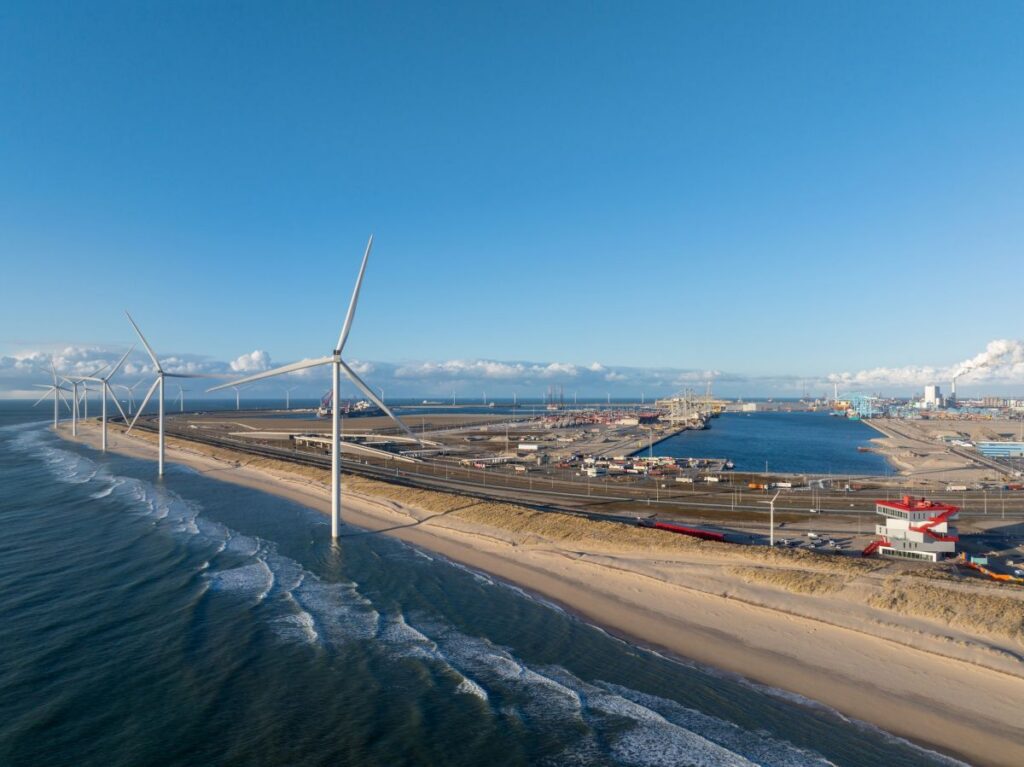
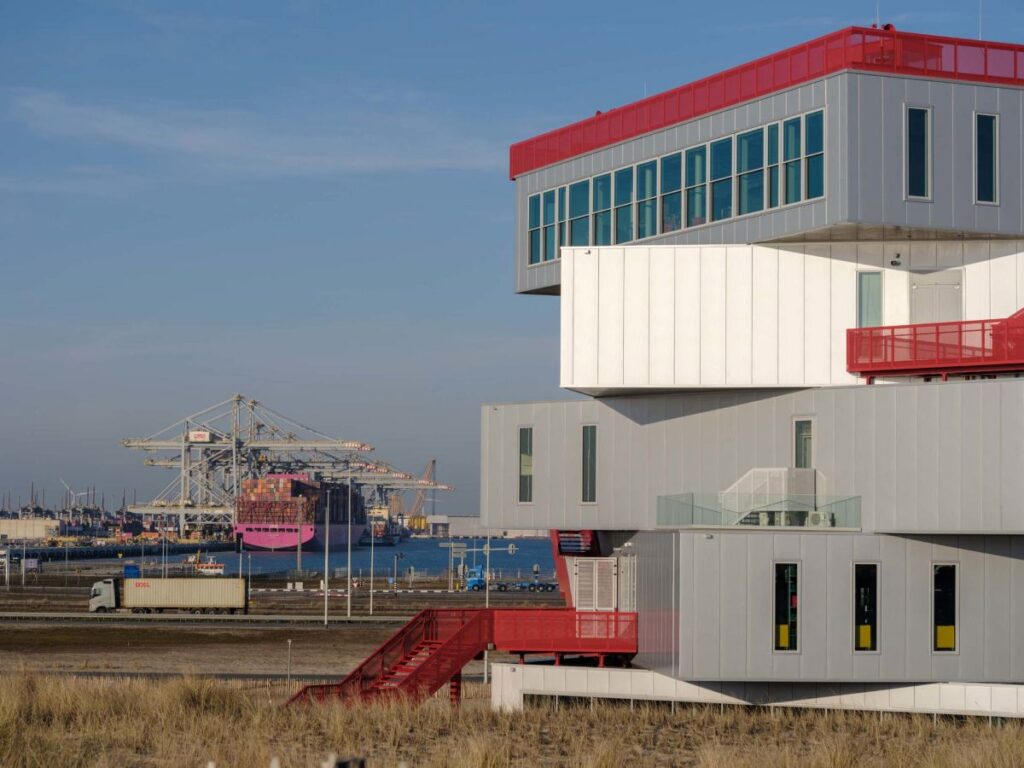
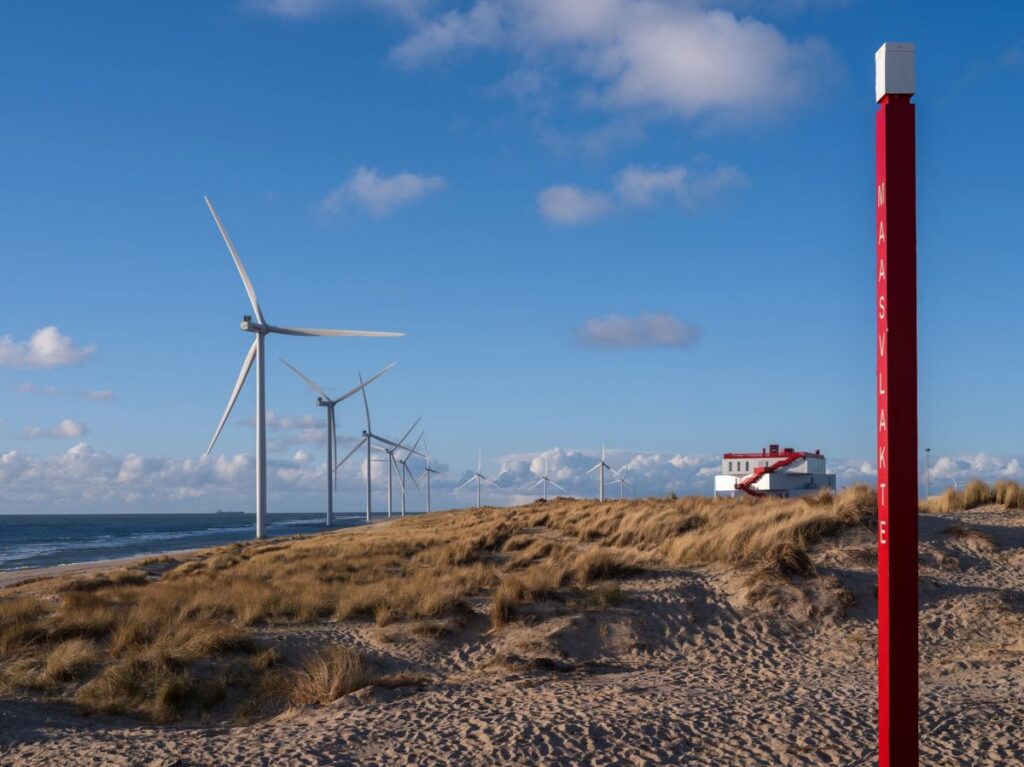
The Portlantis Rotterdam building designed by MVRDV is a visitor center that occupies a total area of 3,533 square meters constructed for the Port of Rotterdam at its western extremity of the Maasvlakte 2 artificial expansion – one of the most extreme and heavily industrialized locations in the country.
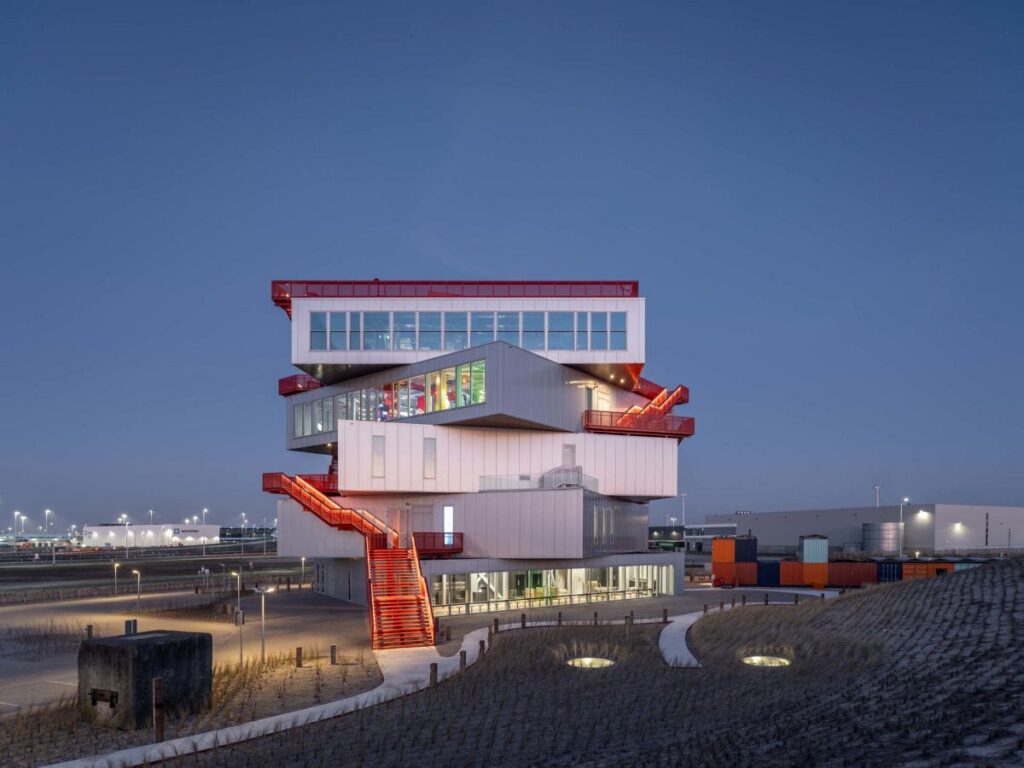
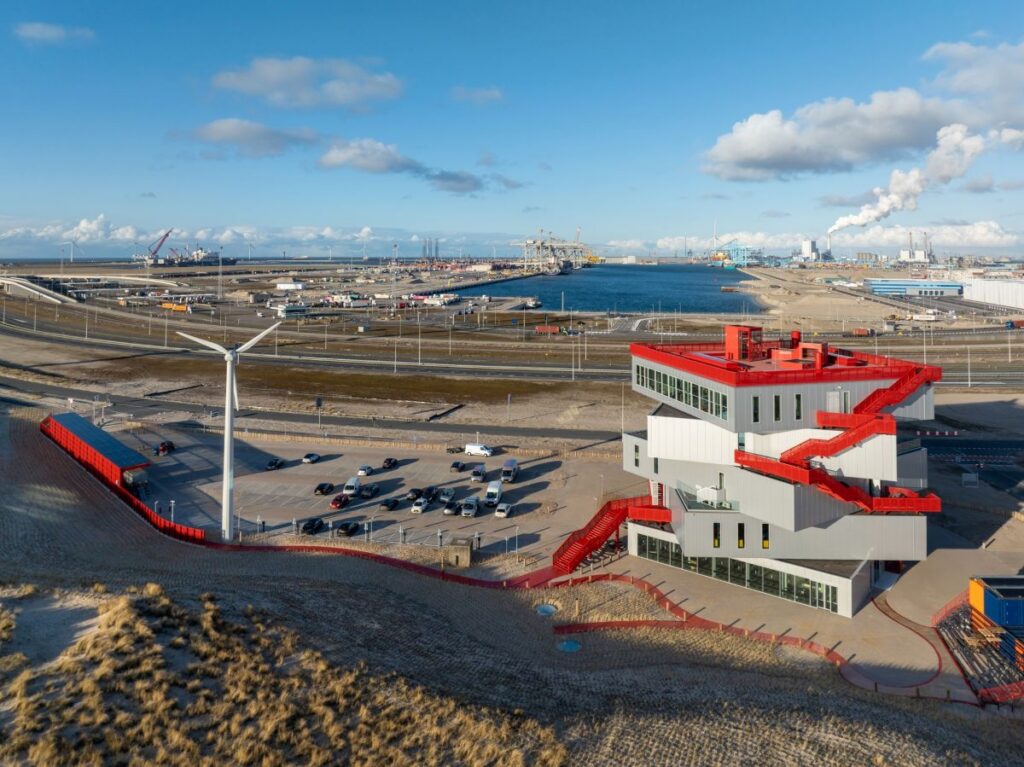
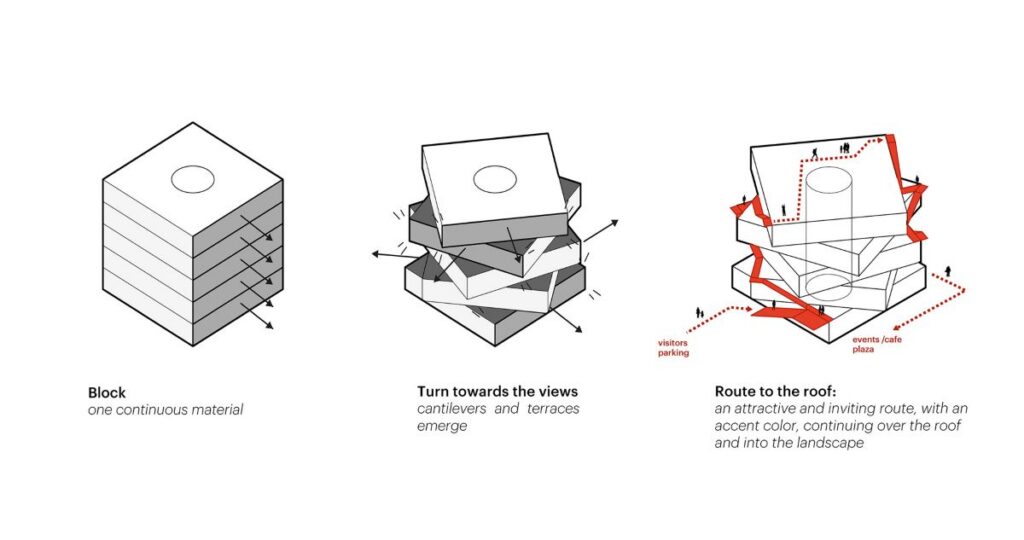
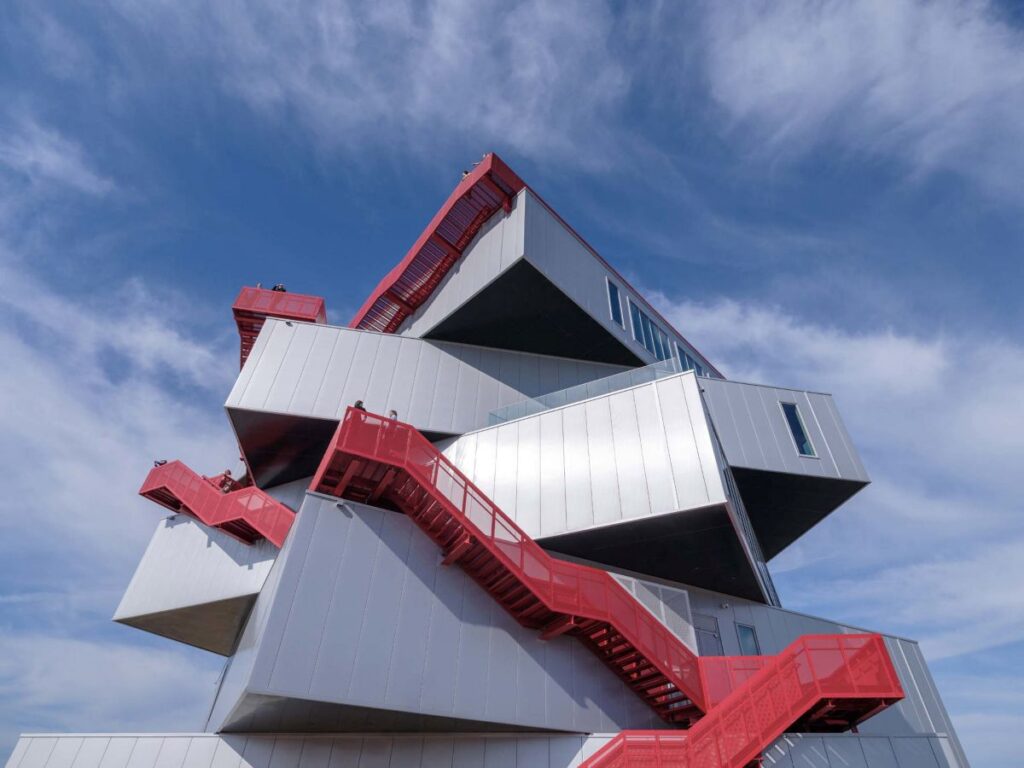
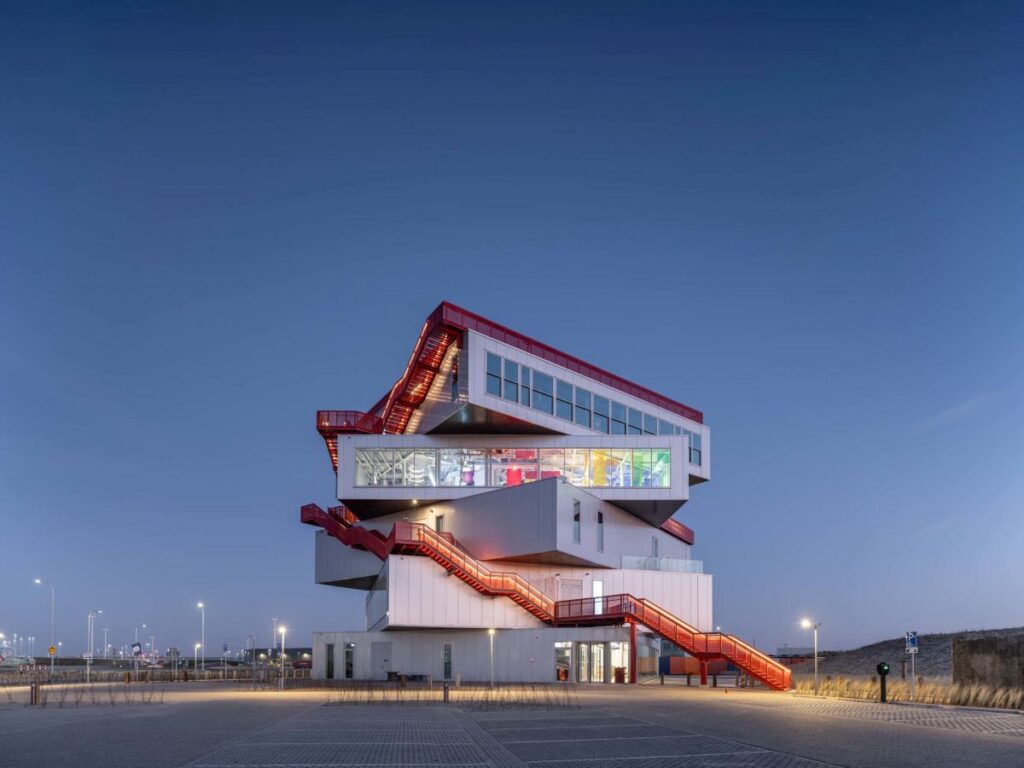
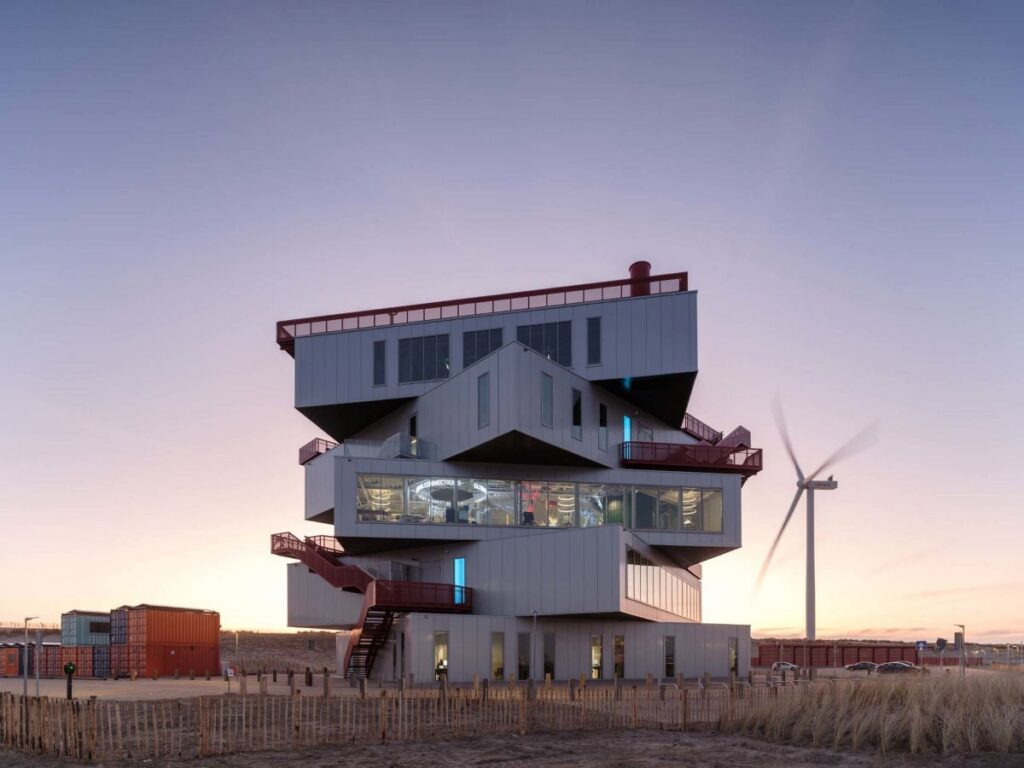
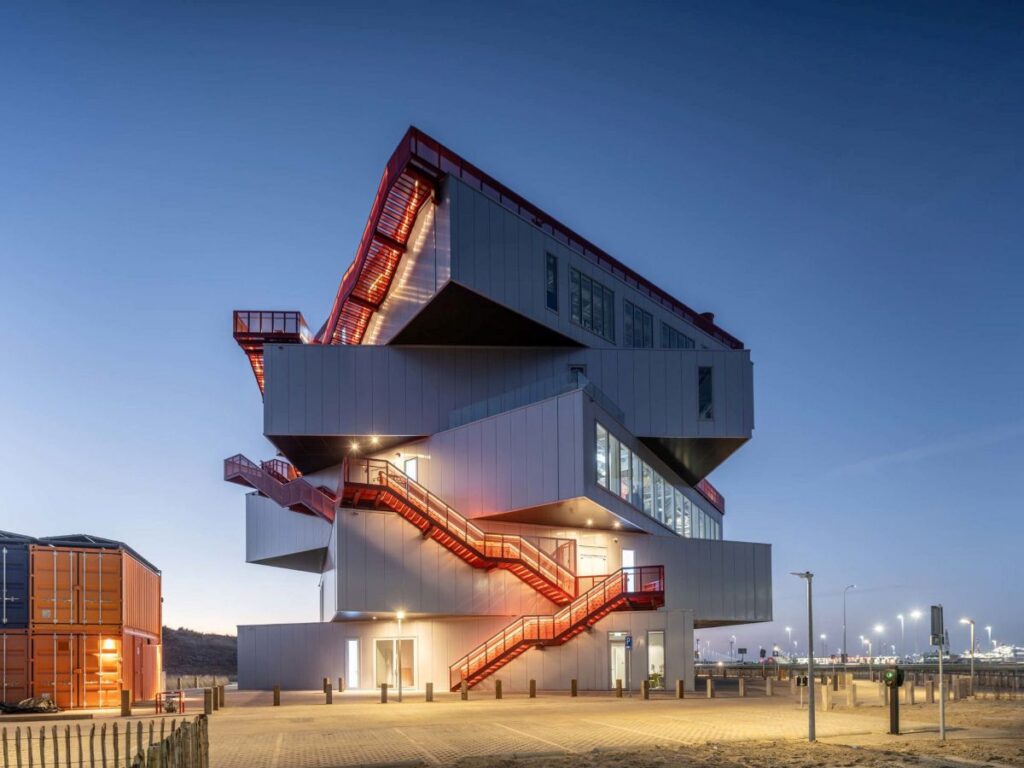
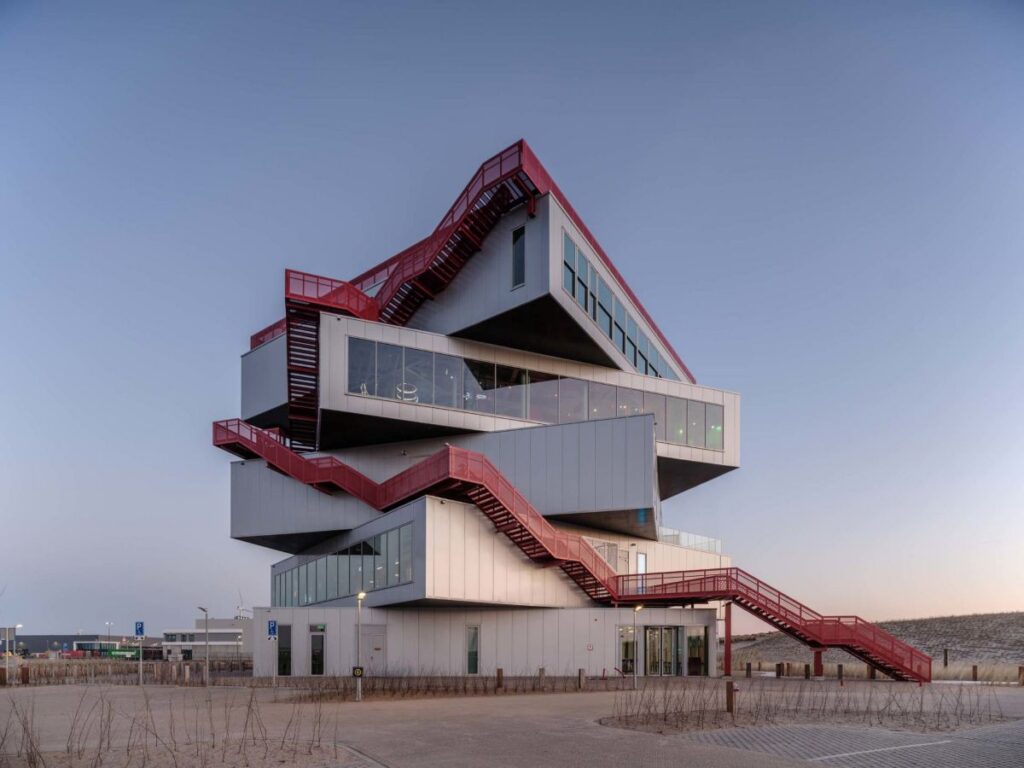
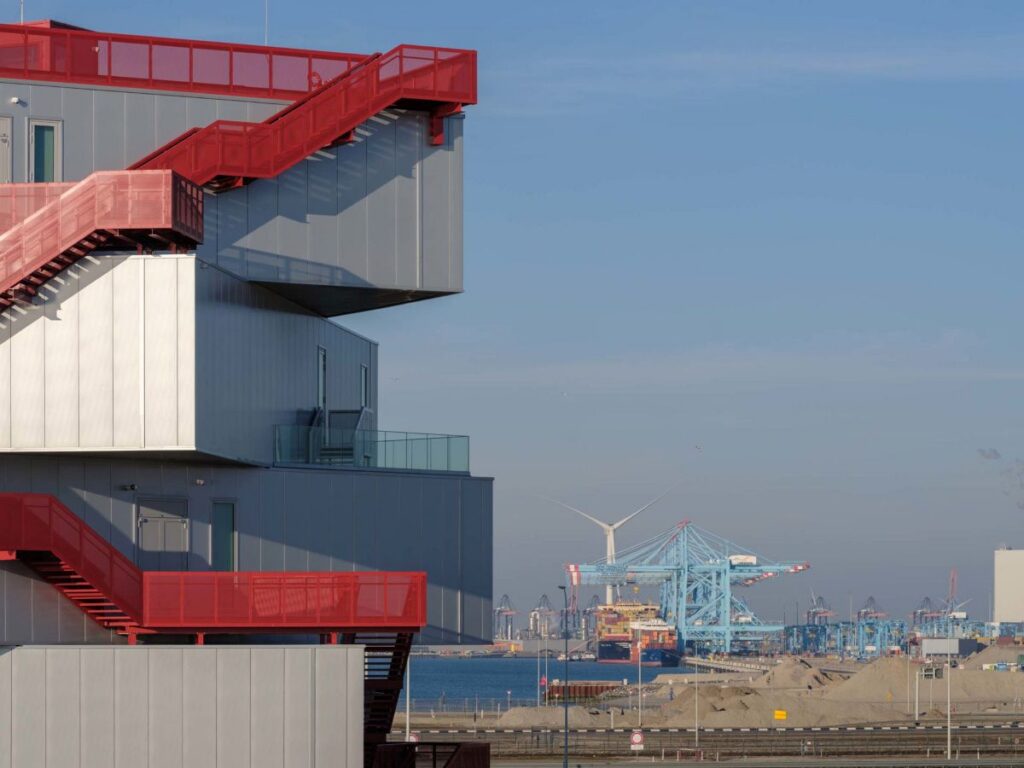
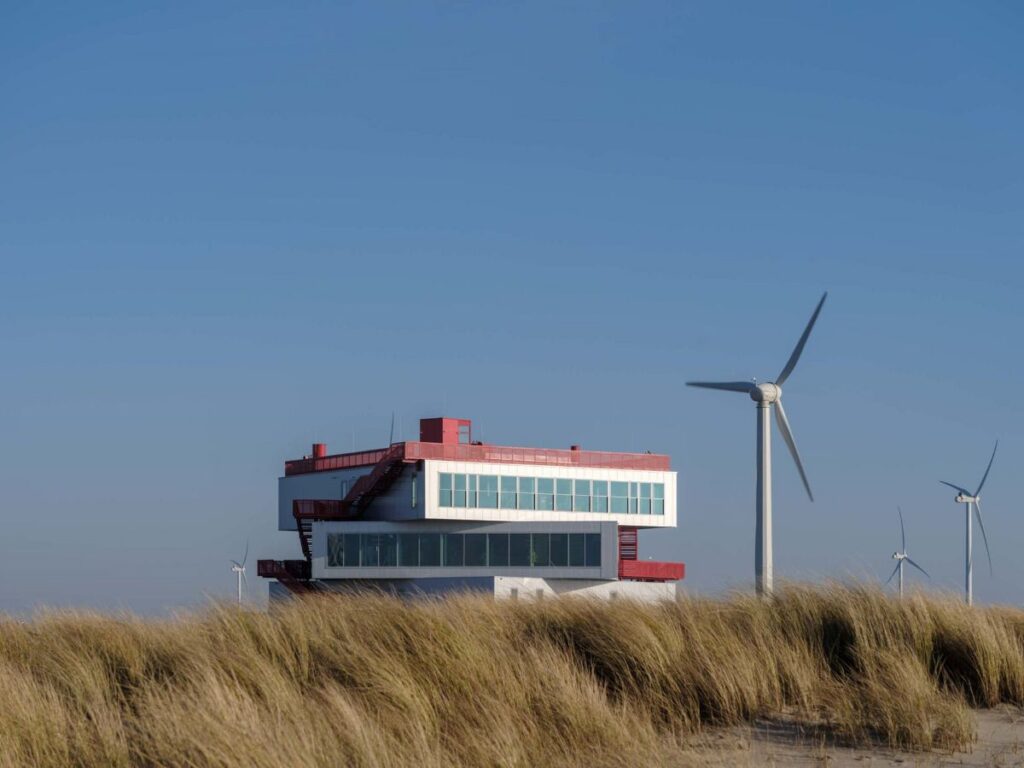
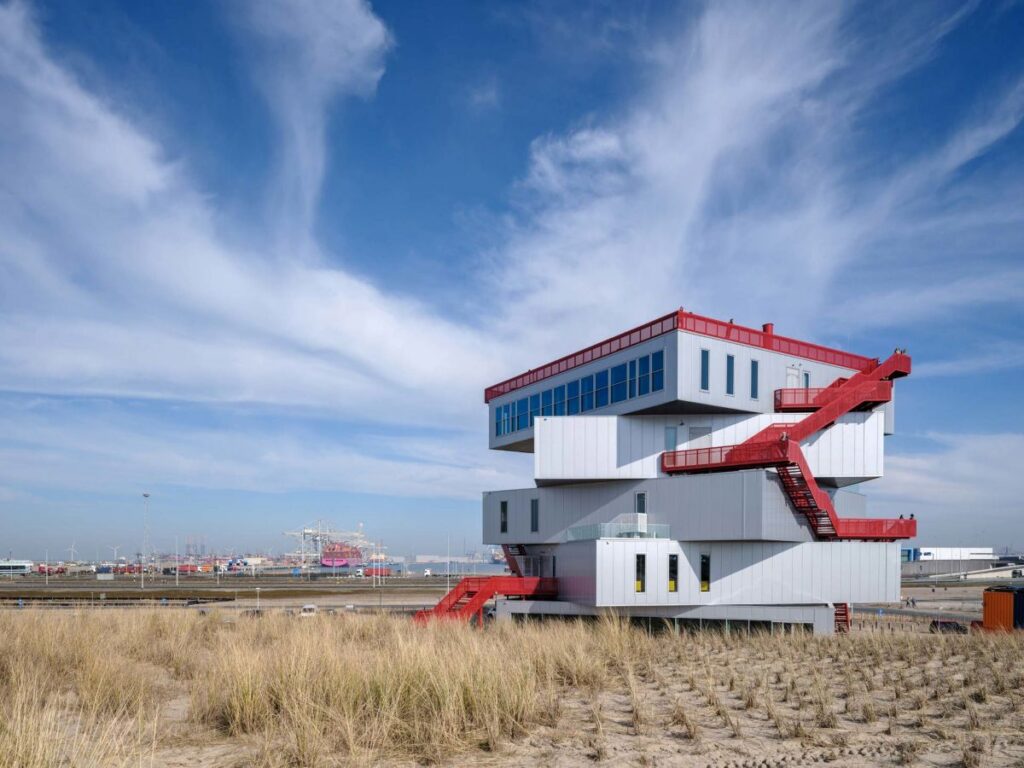
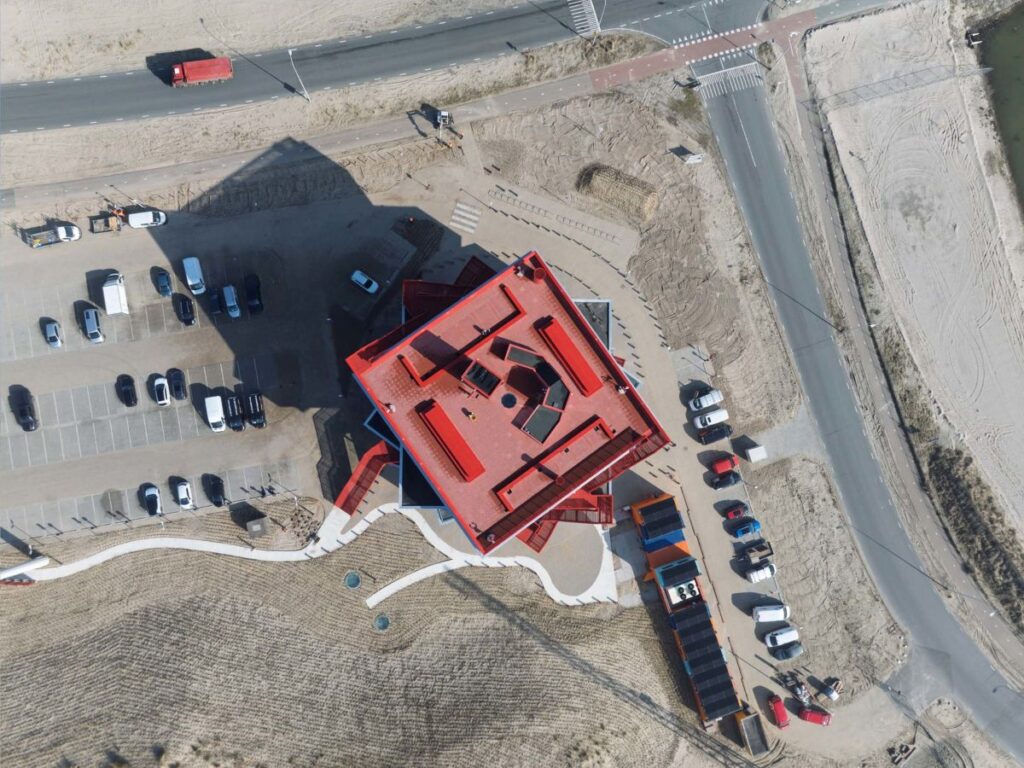
Built in the year 2025, the building consists of a stack of five rotated square floors oriented differently so as to provide an impressive view of the surrounding landscape and enclosed by an easily recognizable crimson red exterior route that runs from the dune landscape to a publicly accessible rooftop.
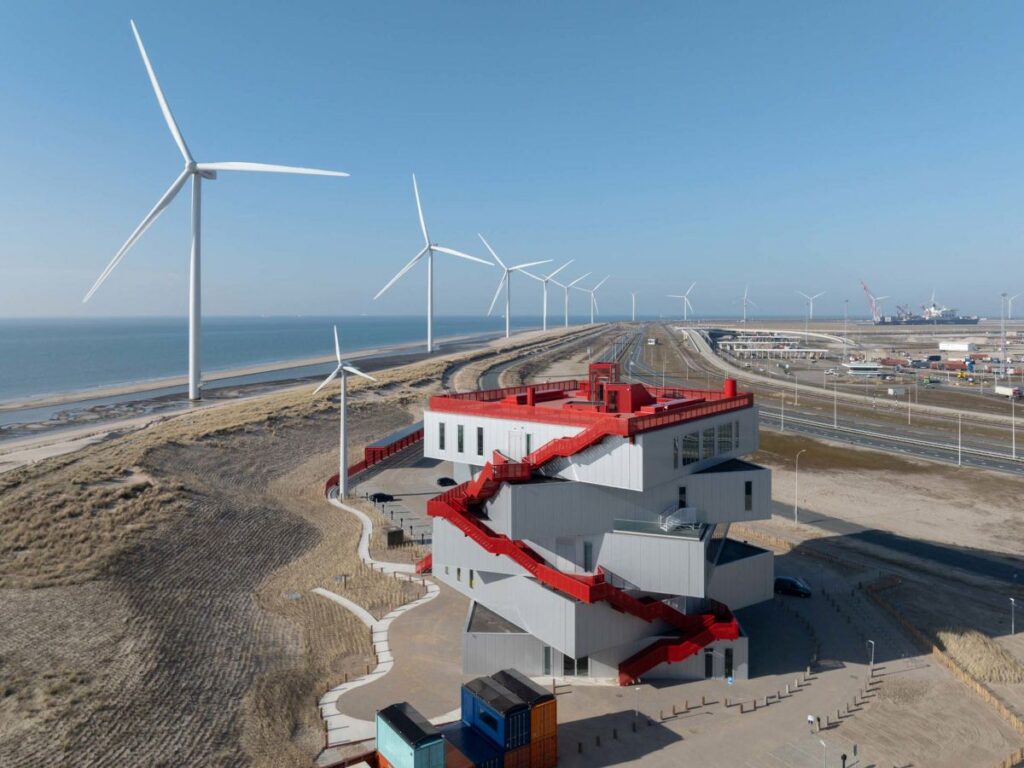
Exterior view of Portlantis on the Maasvlakte 2 beach showing the full stacked massing of five rotated floors, the crimson-red public staircase route, and the building’s beacon presence within the flat industrial port landscape © MVRDV
Aerial or wide-angle view showing Portlantis’s relationship to the North Sea coastline, the dune landscape, and the surrounding port infrastructure of Maasvlakte 2 © MVRDV
The port and Rotterdam have developed together for many years. In the present day of the 21st century, the port is experiencing a period of transformation like none other, in the direction of energy-efficient processes that most citizens of Rotterdam have never personally experienced before. This was precisely the intention when Portlantis was designed – to create understanding about the complex workings of the port, to make this visible to the people of the city, and to provide a viewpoint to observe these changes.
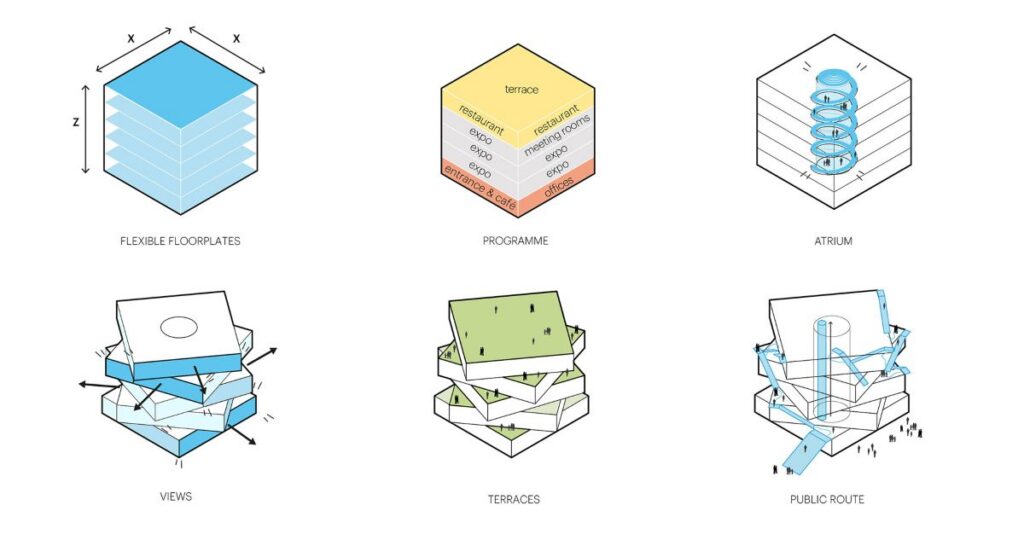
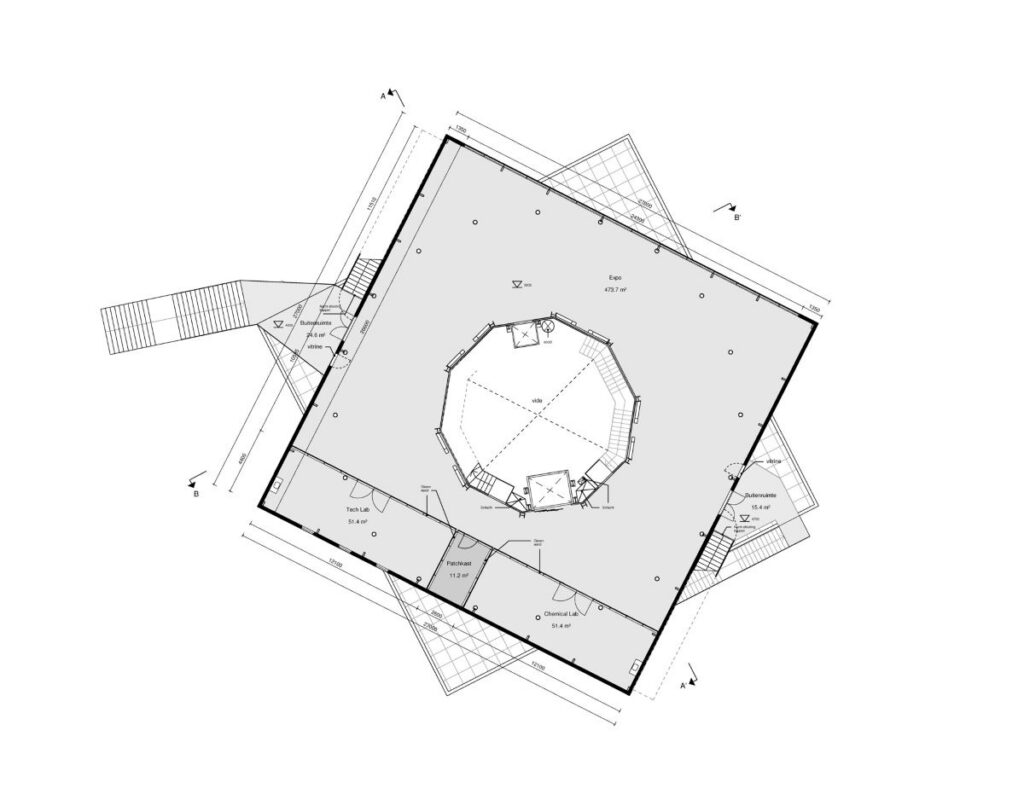
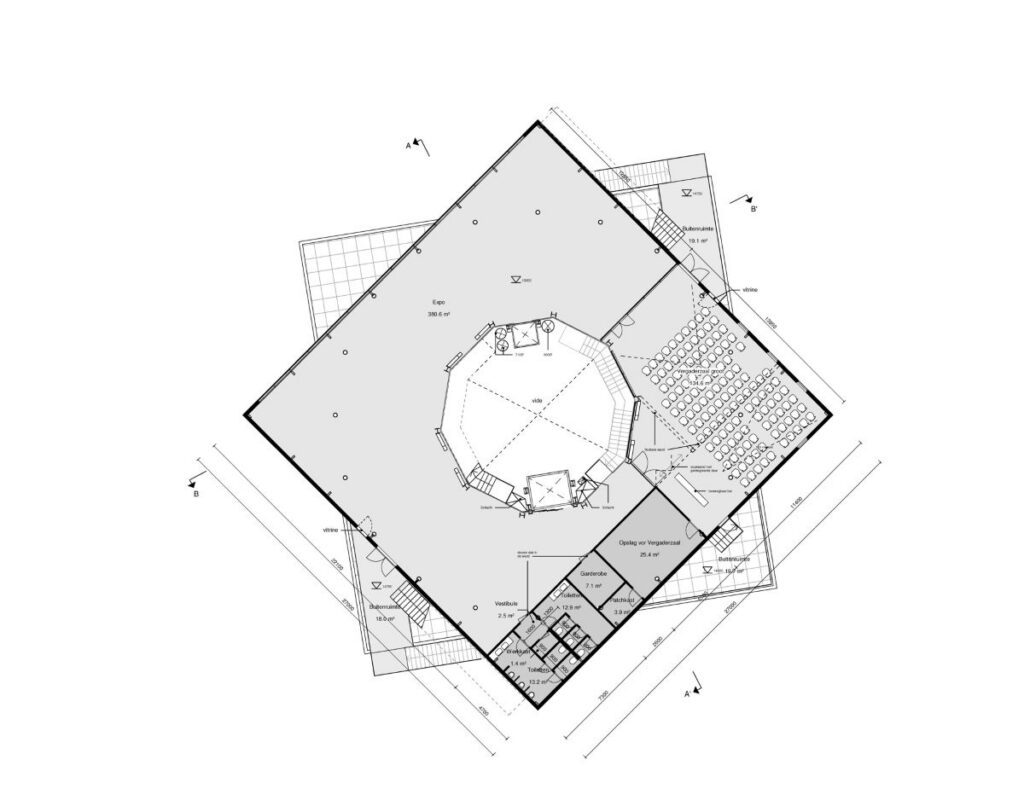
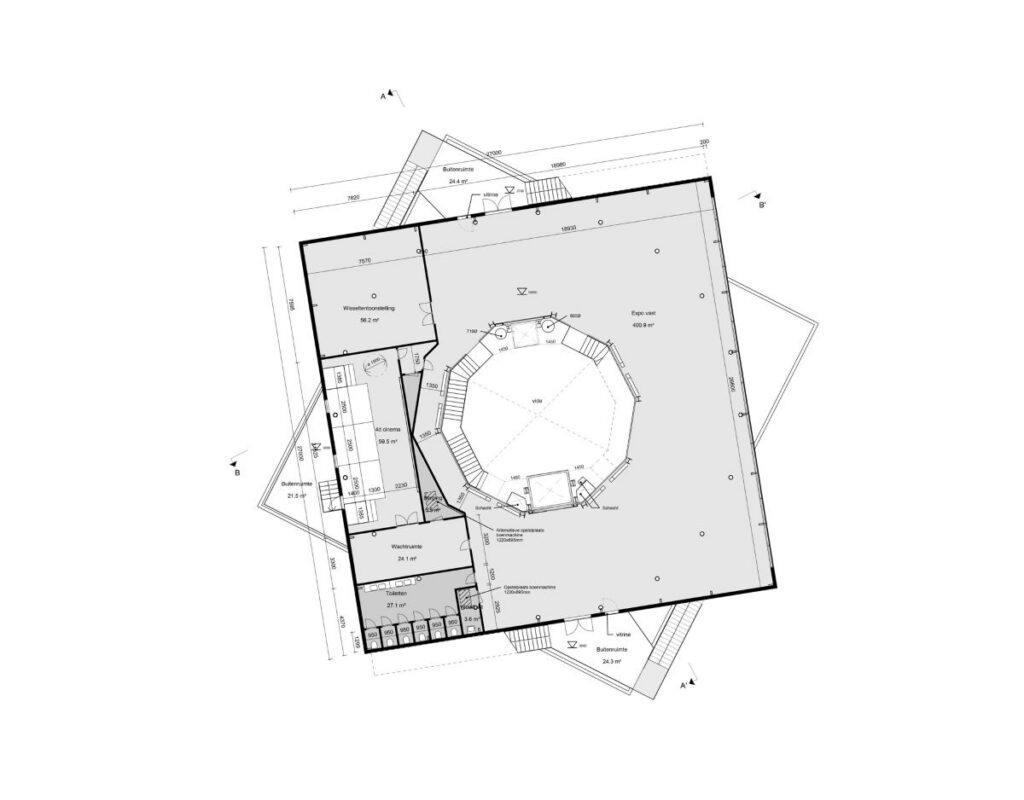
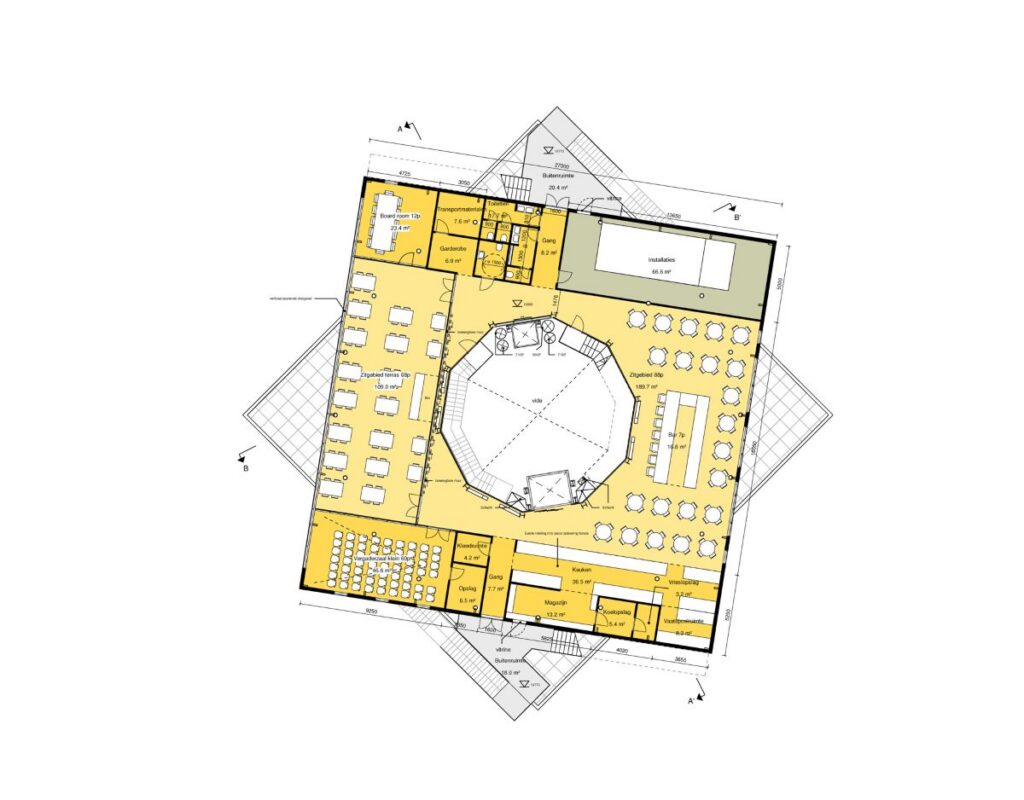
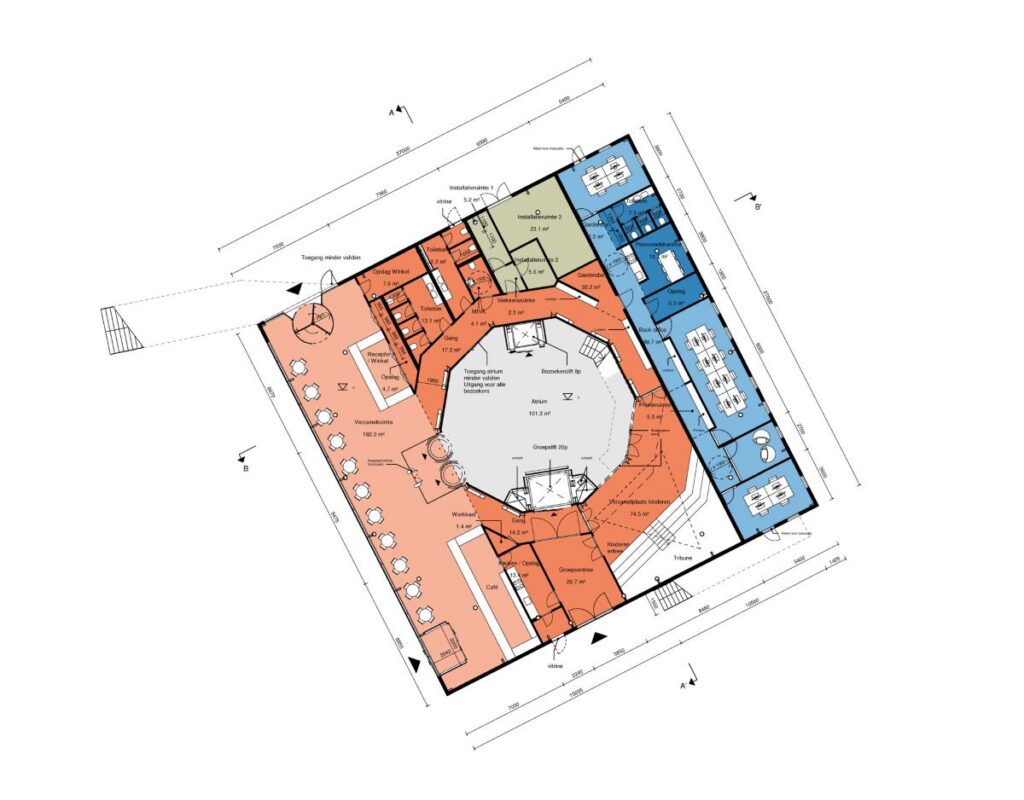
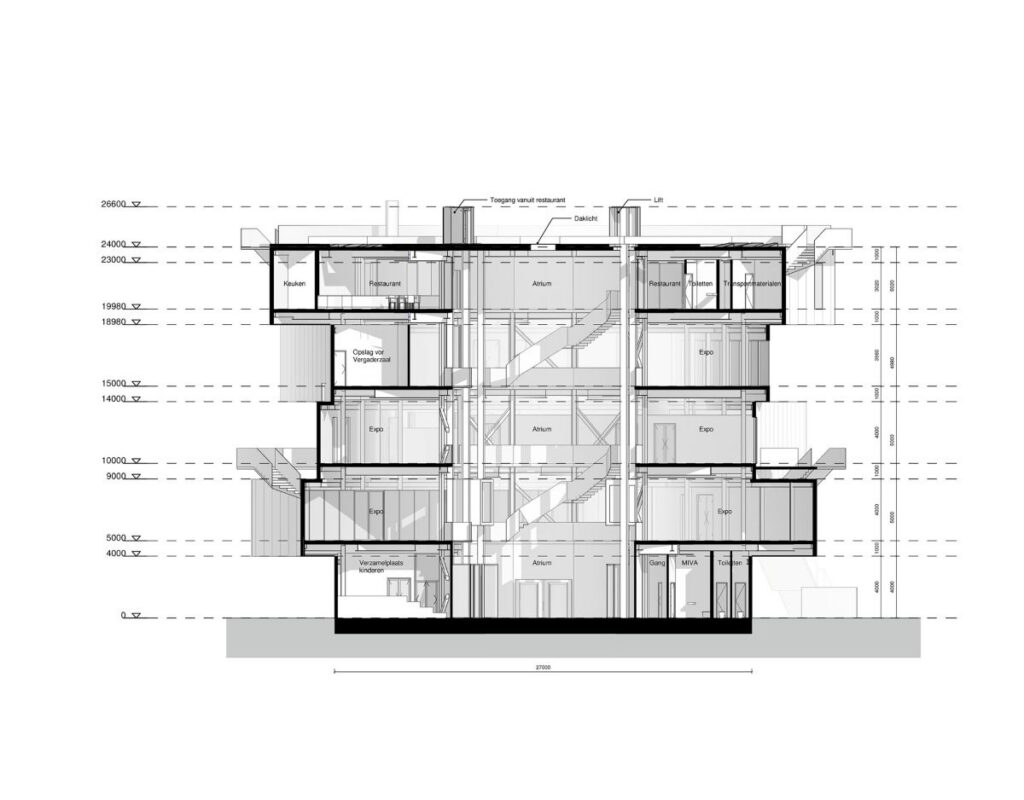
The plan for each of the five stories in the structure is that of a square that is twisted from the story below it to provide an outdoor platform on every floor and give the structure its iconic stacked look. The twisting of each floor does not have any architectural meaning; rather, it is functional. Every story in the structure twists in the same direction as the contents of its program, which is identified through the panorama windows.
Floor plan sequence showing the rotational logic across all five levels — ground floor café, three exhibition floors, and fourth-floor restaurant — with the orientation of each panorama window indicated in relation to its programme © MVRDV
The café located on the ground floor is placed in such a way that it looks outwards towards the dunes to the west, giving a view that emphasizes the close connection between the site and nature. From the fourth floor, there is a magnificent view of the sunset over the North Sea as well as of the lights from the port’s skyline at night. These three floors dedicated to exhibition have their specific focus of the port in relation to the exhibition held there.
Interior view of the fourth-floor restaurant showing the panorama window framing views of the North Sea horizon and the night-illuminated port skyline, demonstrating the programme-to-orientation logic © MVRDV
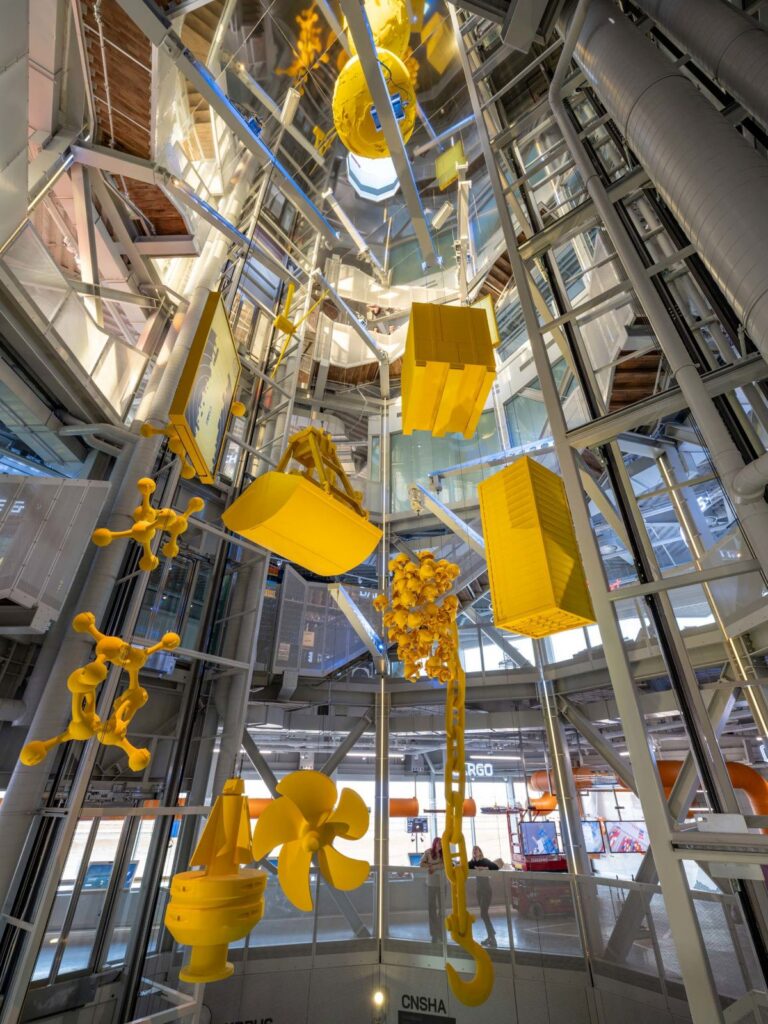
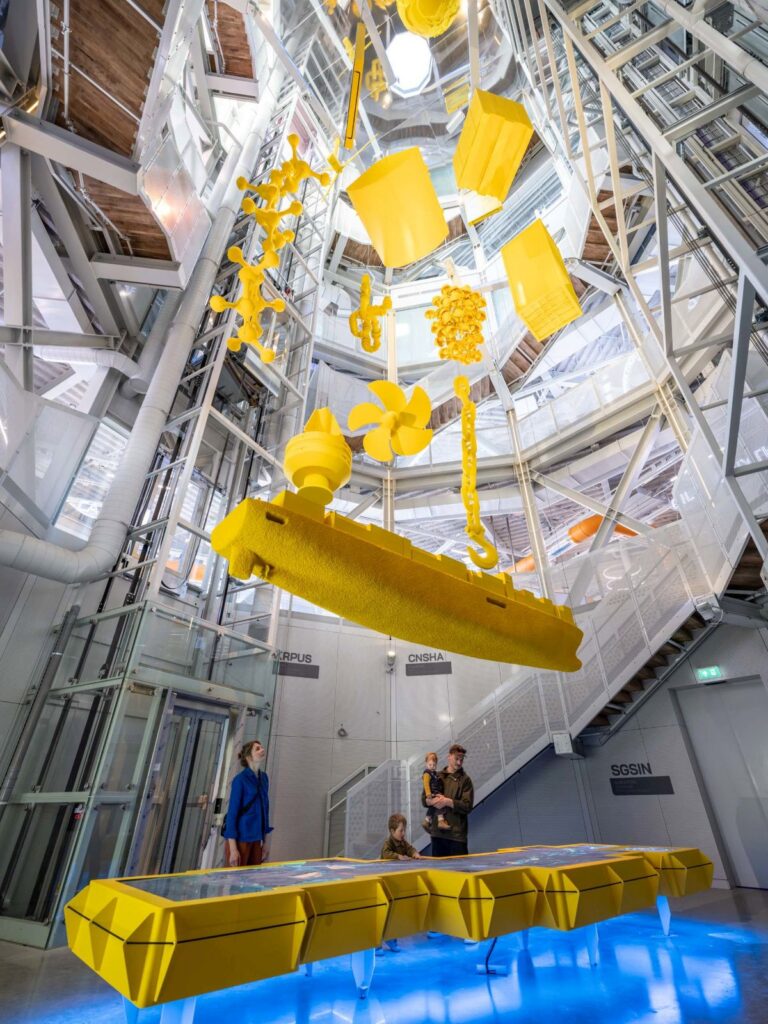
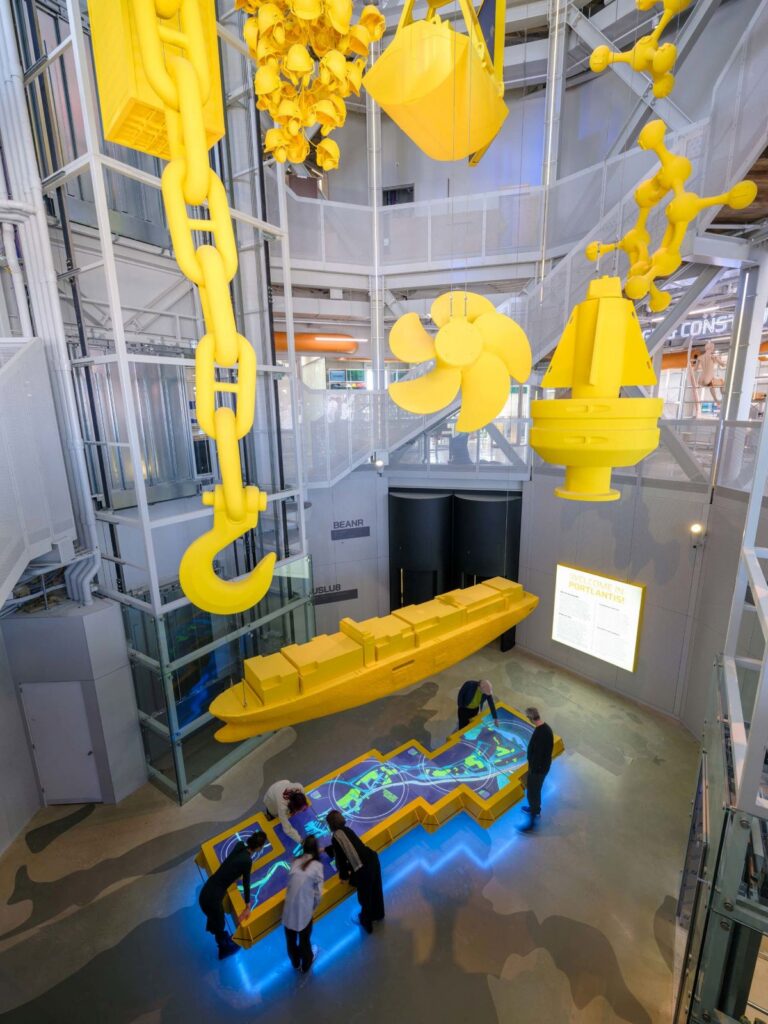
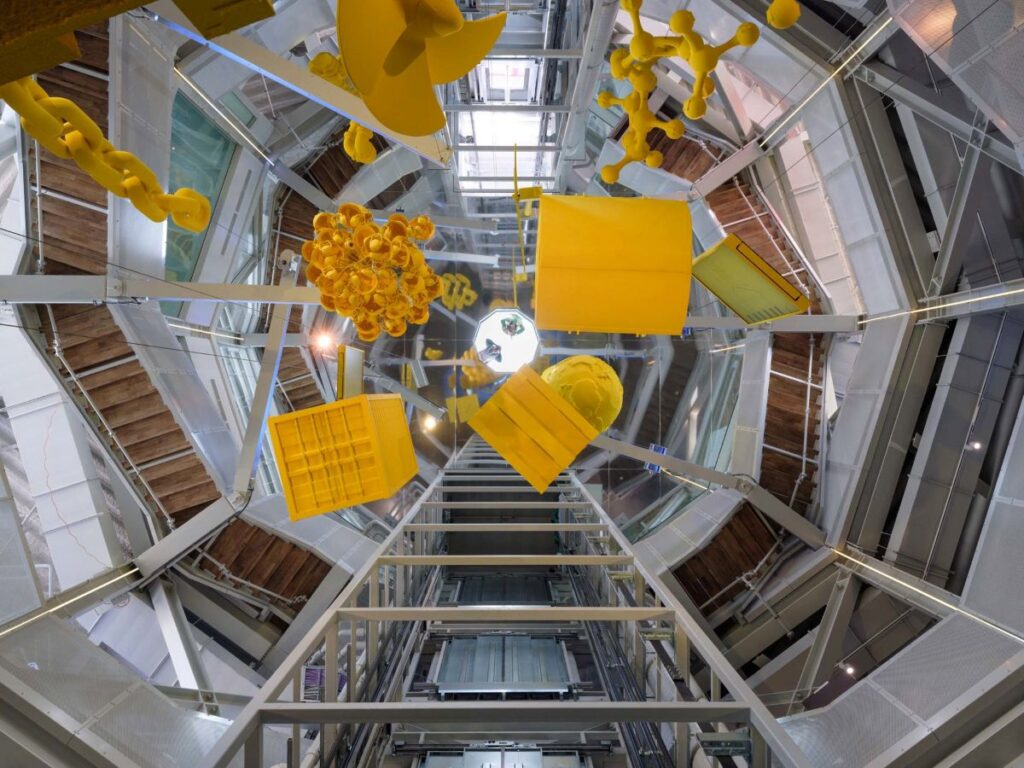
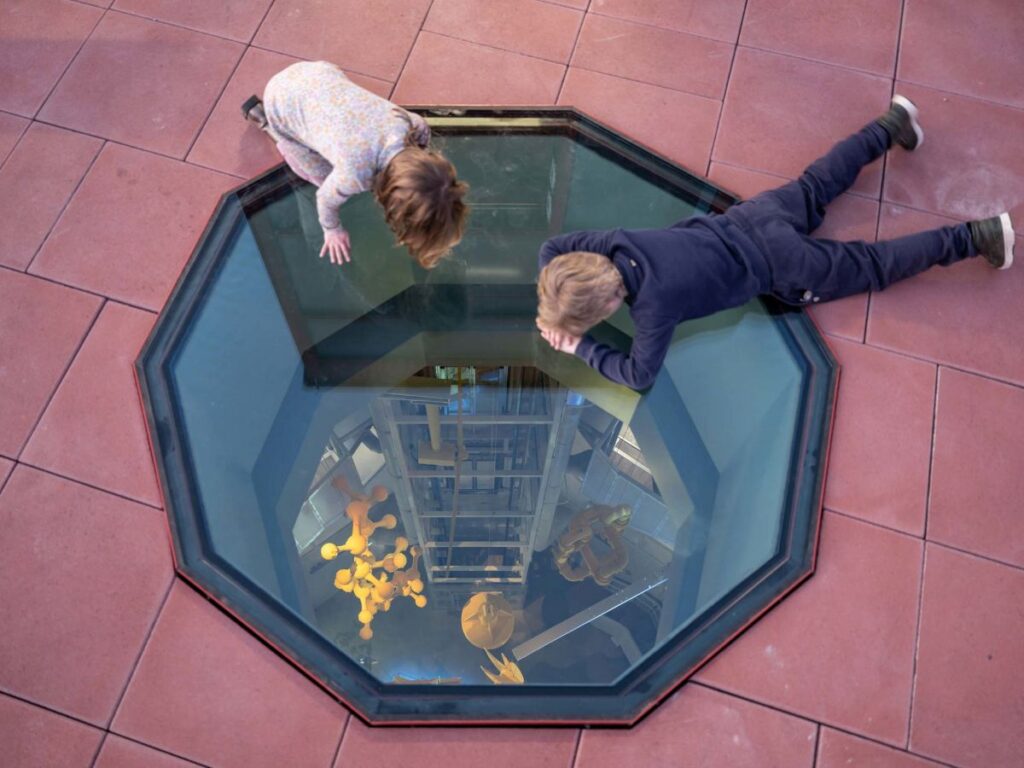
The building’s heart is a 22-meter-high atrium, which itself serves as an exhibit hall. A kinetic sculpture is suspended within the atrium. On the ground floor, directly in front of the visitor upon entering the building, is a model of the Port of Rotterdam. This sense of grandeur within the atrium is heightened through the use of a reflecting ceiling, doubling the height of the atrium, and by the entrance into the building, which consists of a revolving door withholding the view of the atrium from the visitor.
Interior view of the 22-metre atrium showing the full vertical spatial quality, the kinetic sculpture suspended in the void, the mirrored ceiling, and the port scale model on the ground floor © MVRDV
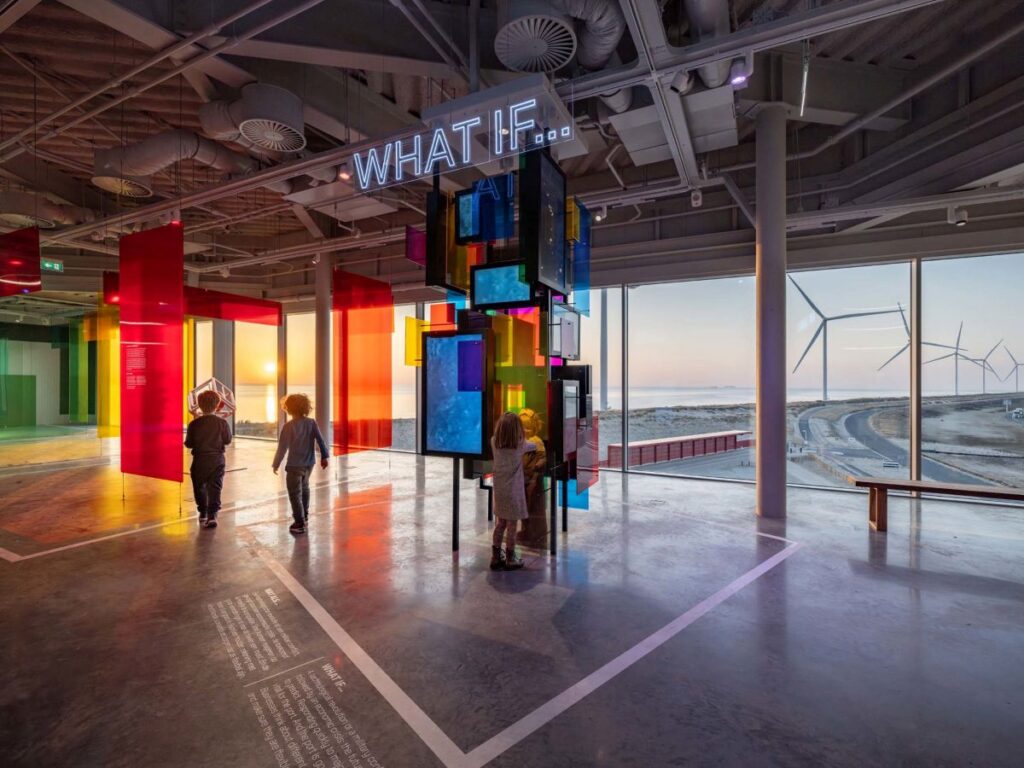
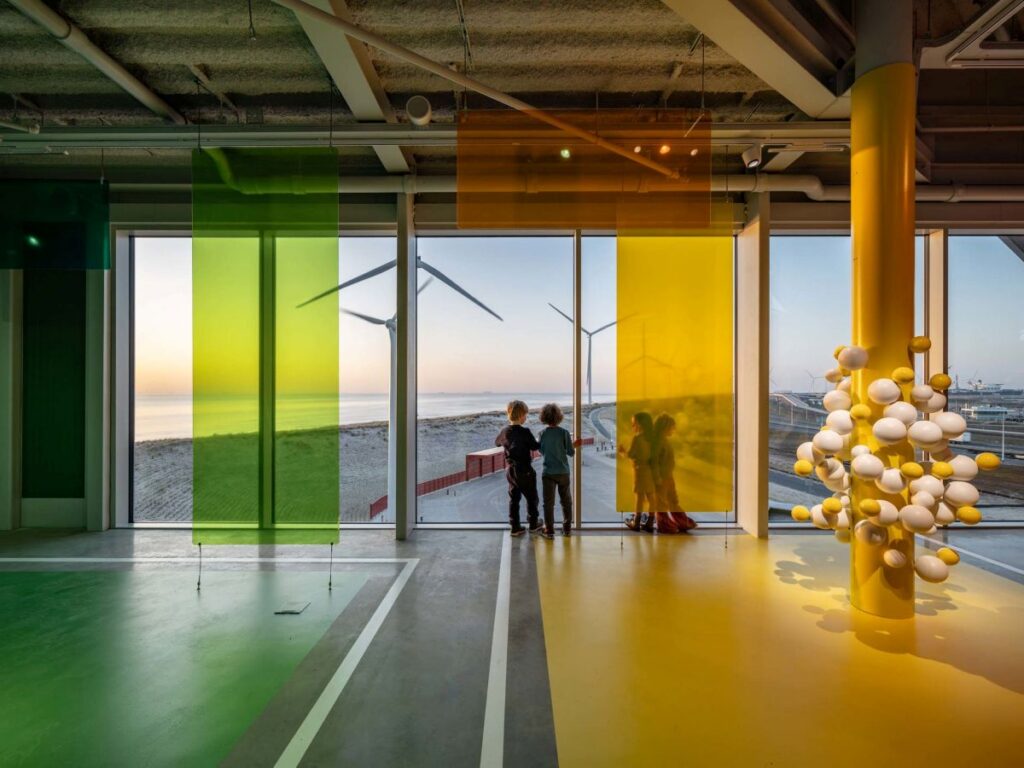
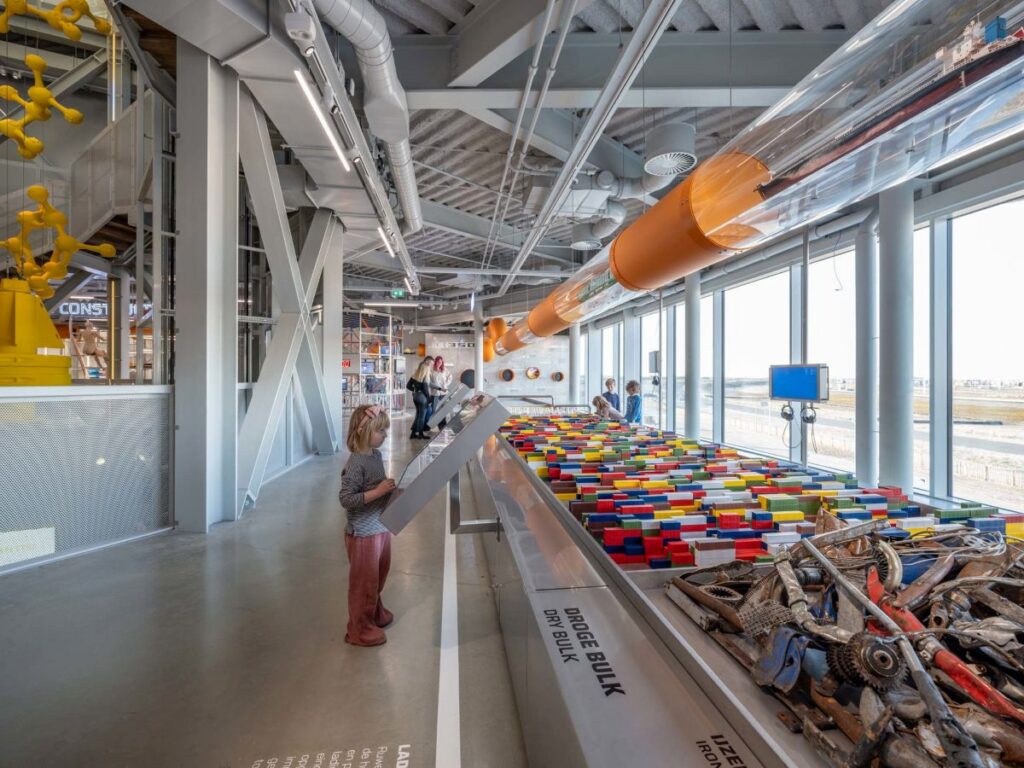
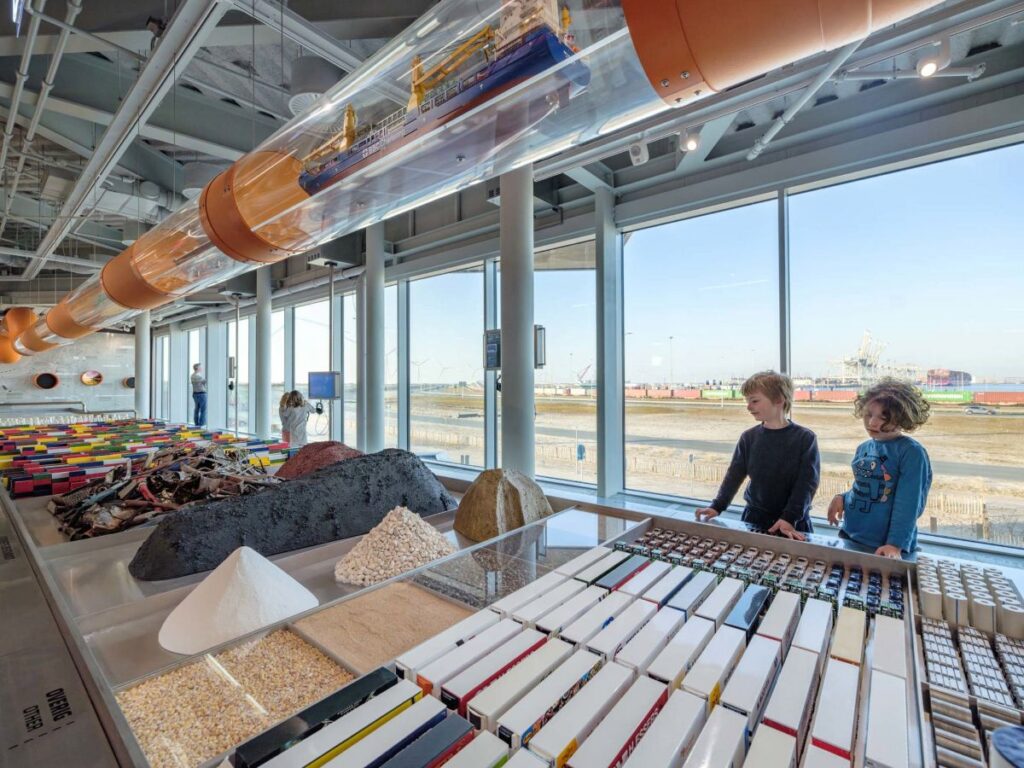
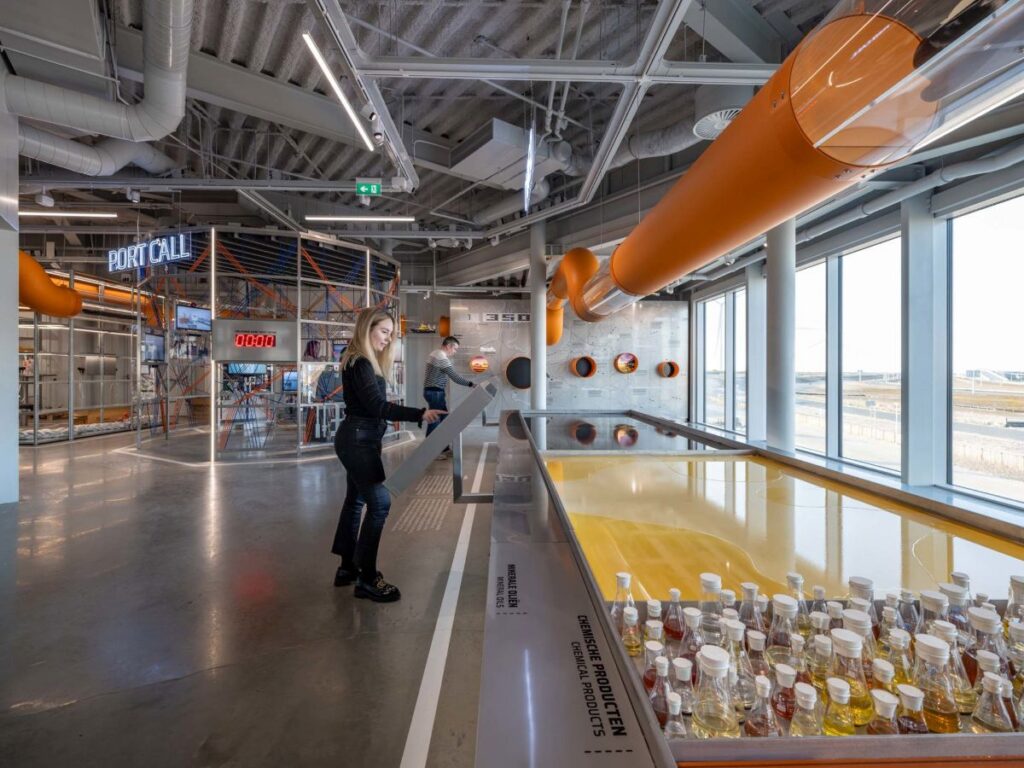
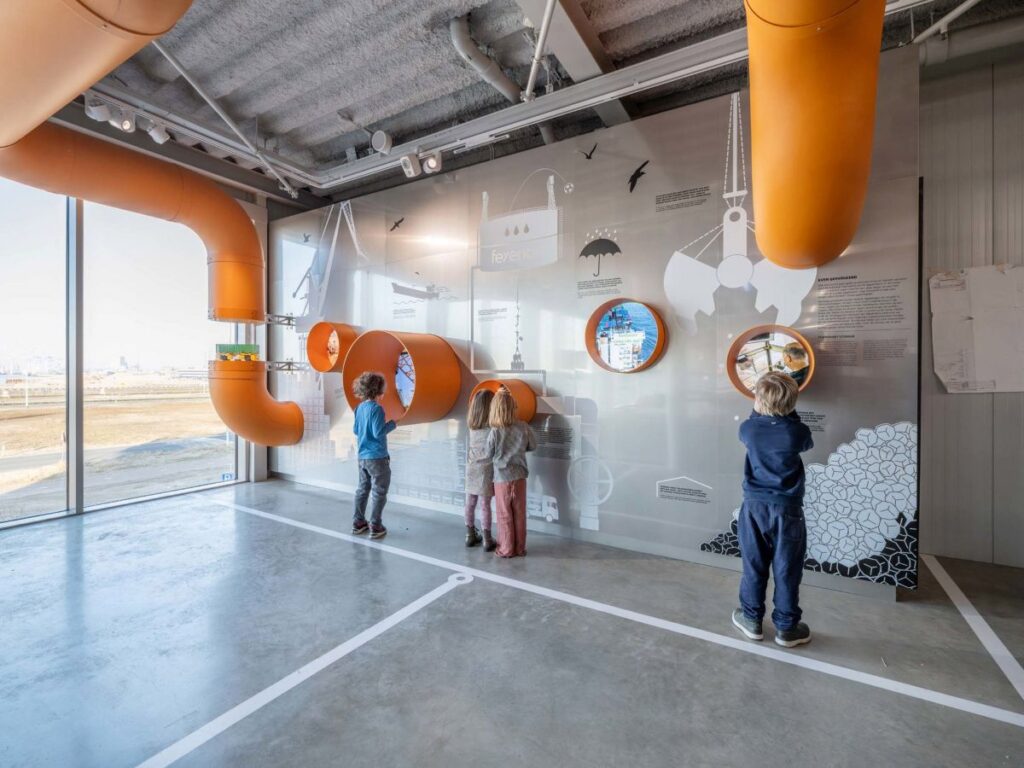
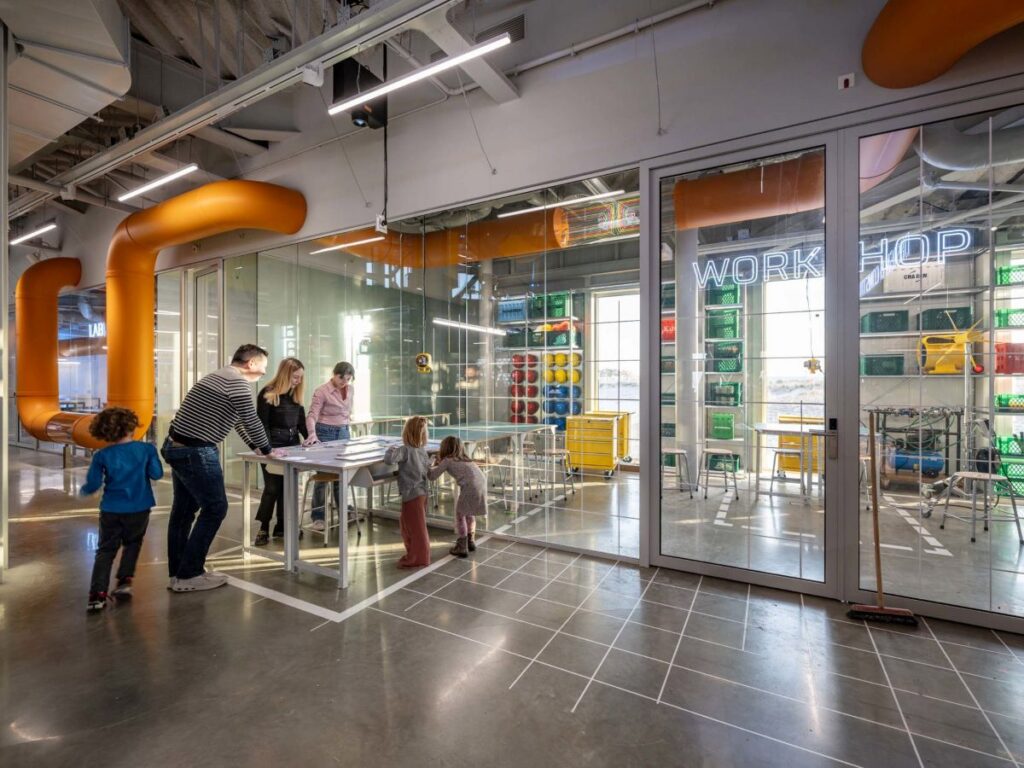
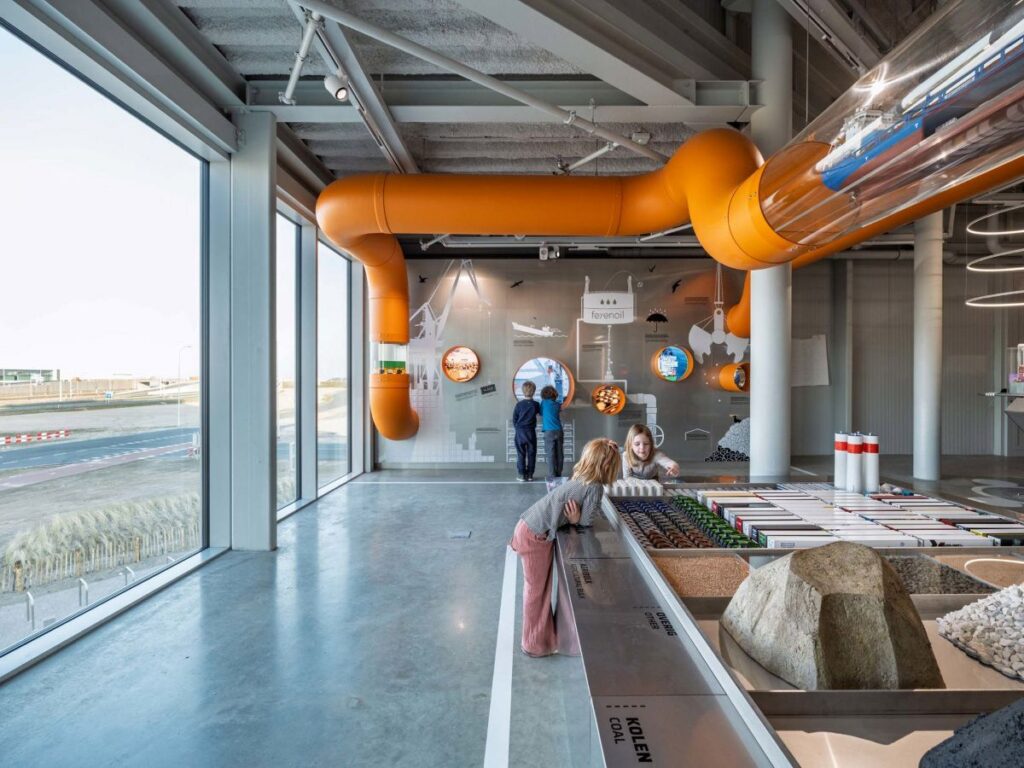
Permanent exhibit designed by Kossmanndejong is spread across the three middle levels in the form of artifacts. Each level covers a different theme that relates to the history of the port, with the panorama windows on all three levels strengthening the themes visually by connecting directly to the action happening at the port outside.
Exhibition floor interior showing the industrial material palette, exhibition objects by Kossmanndejong, and the panorama window framing a specific element of port activity © MVRDV
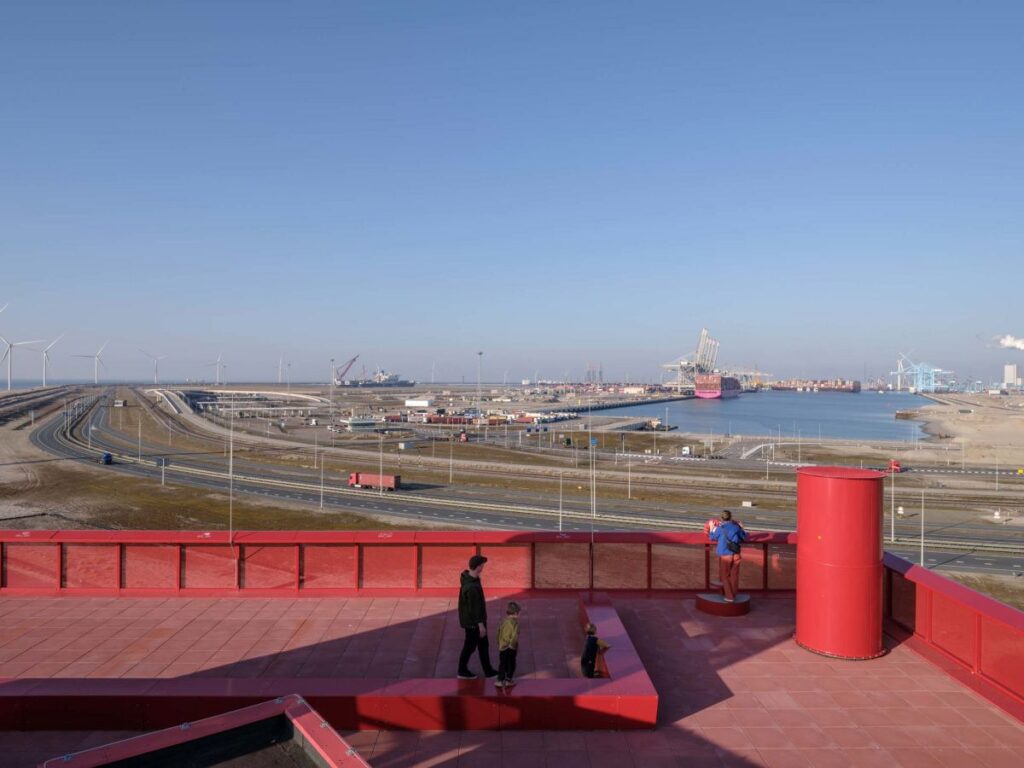
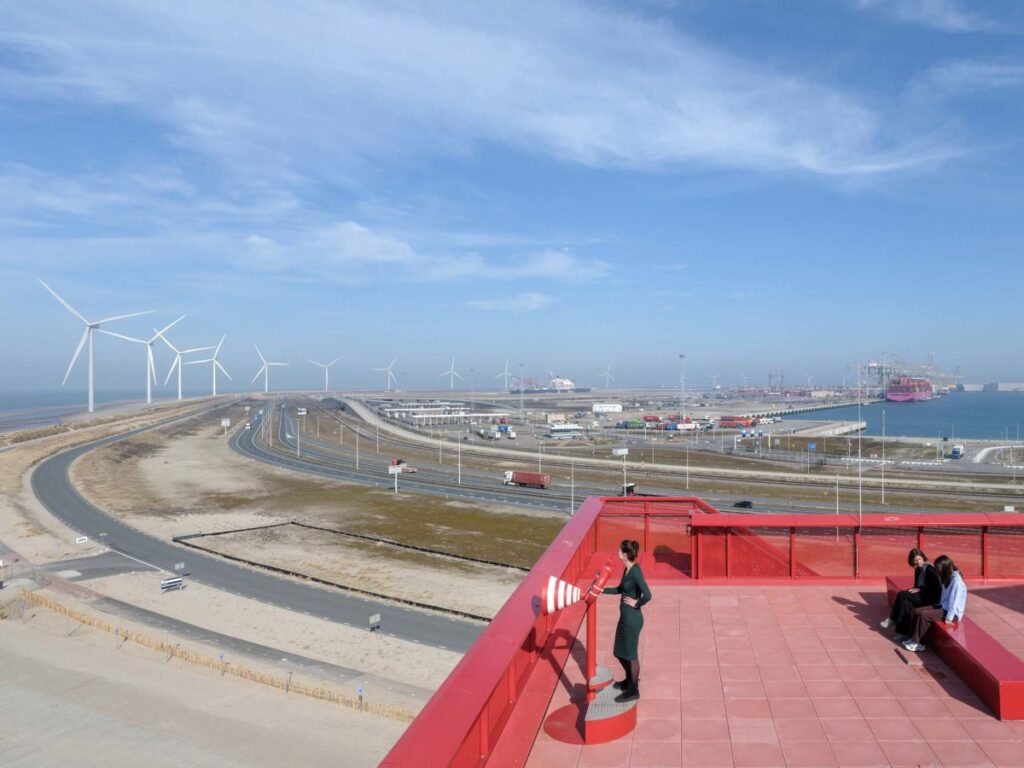
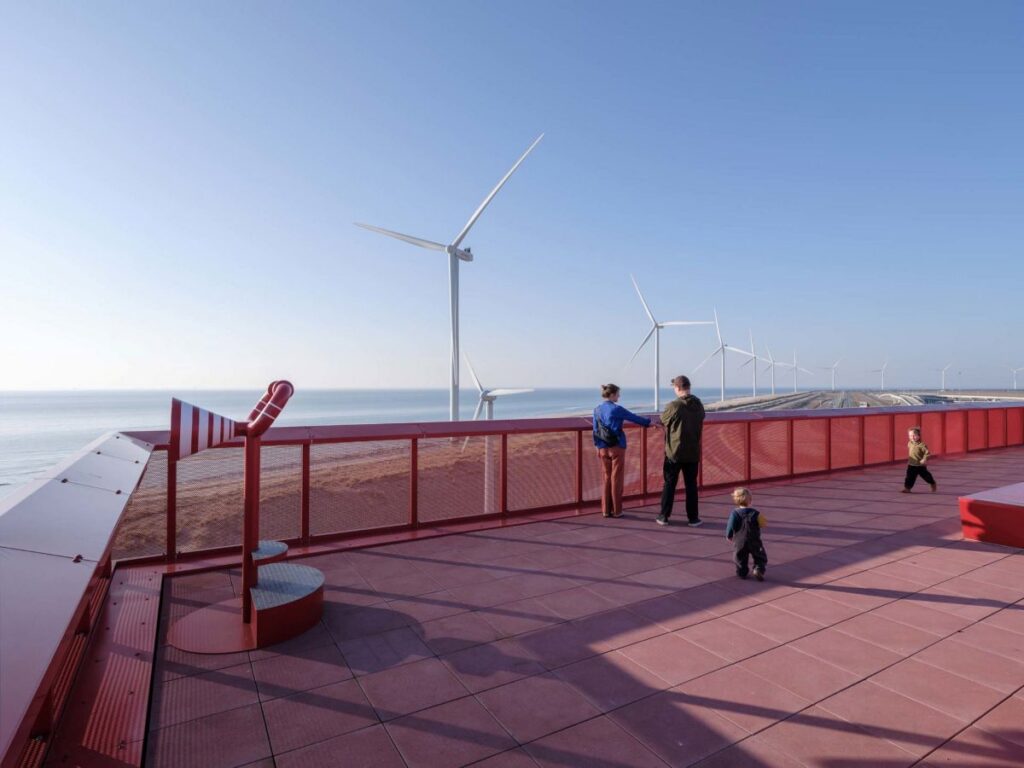
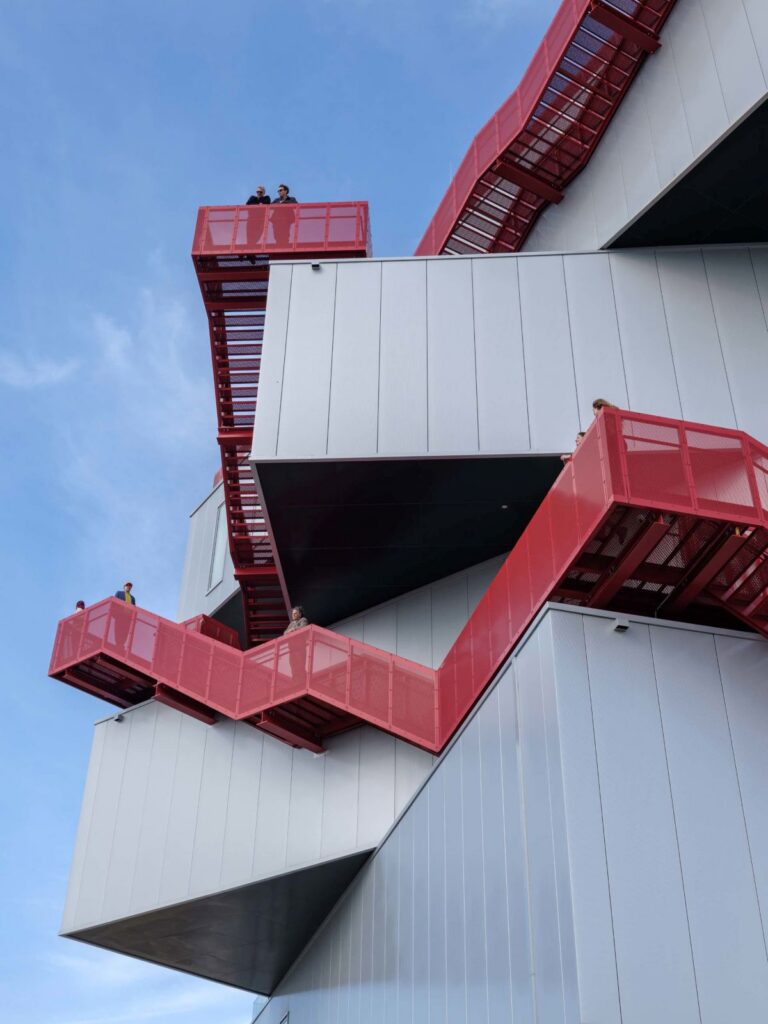
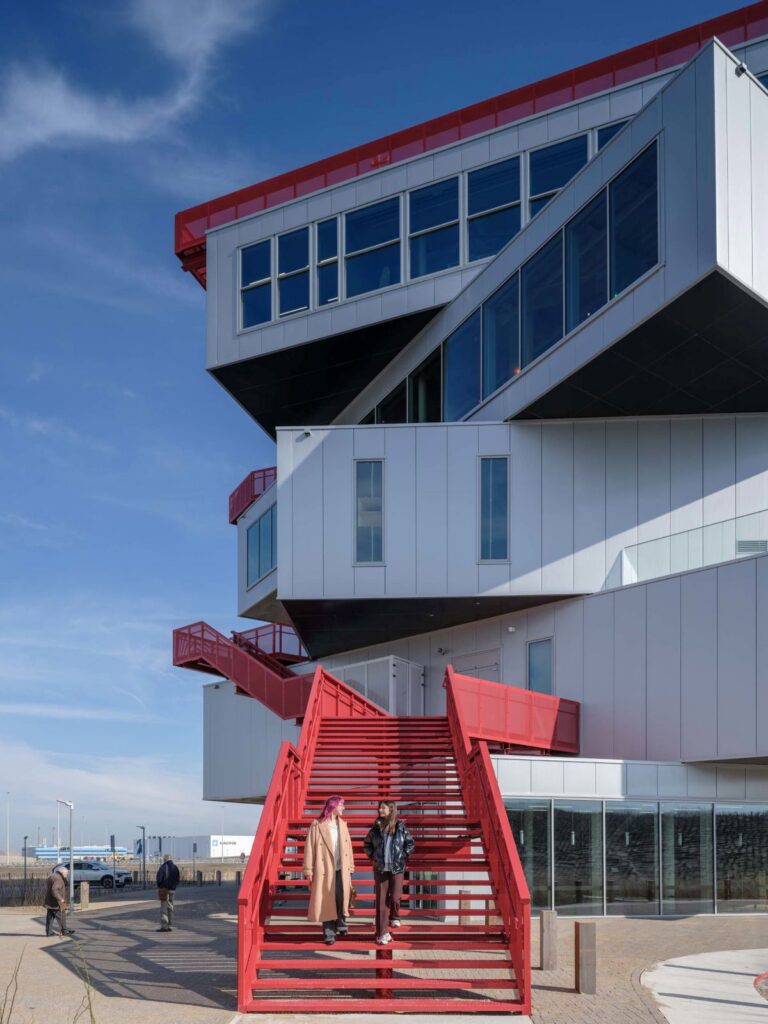
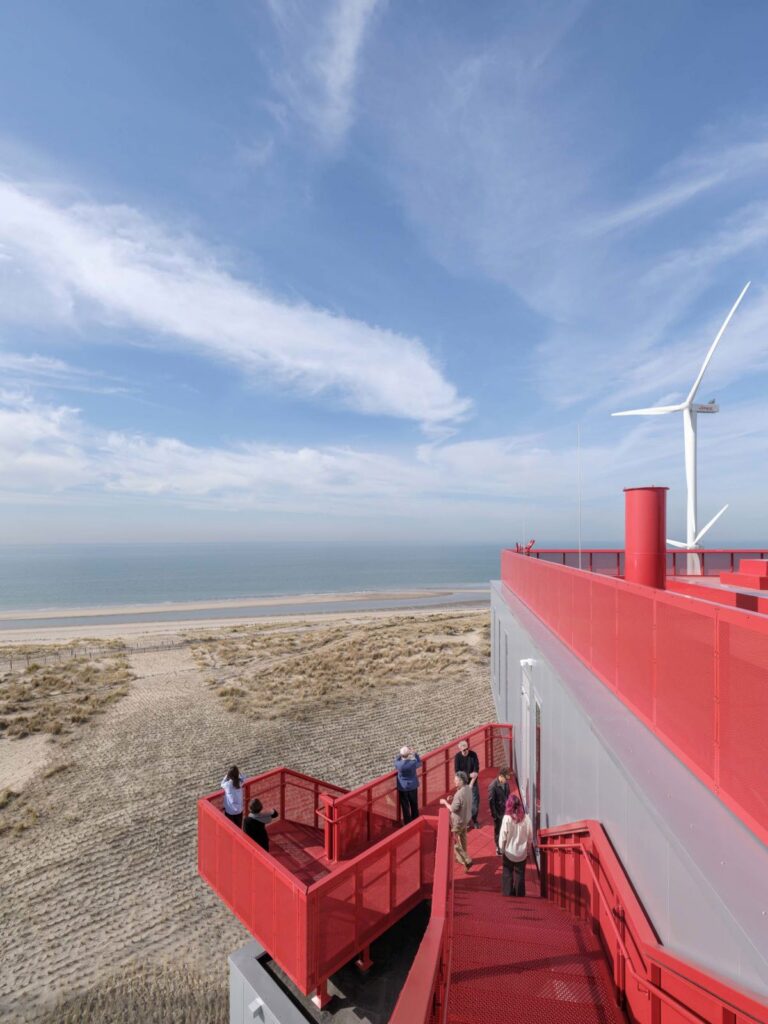
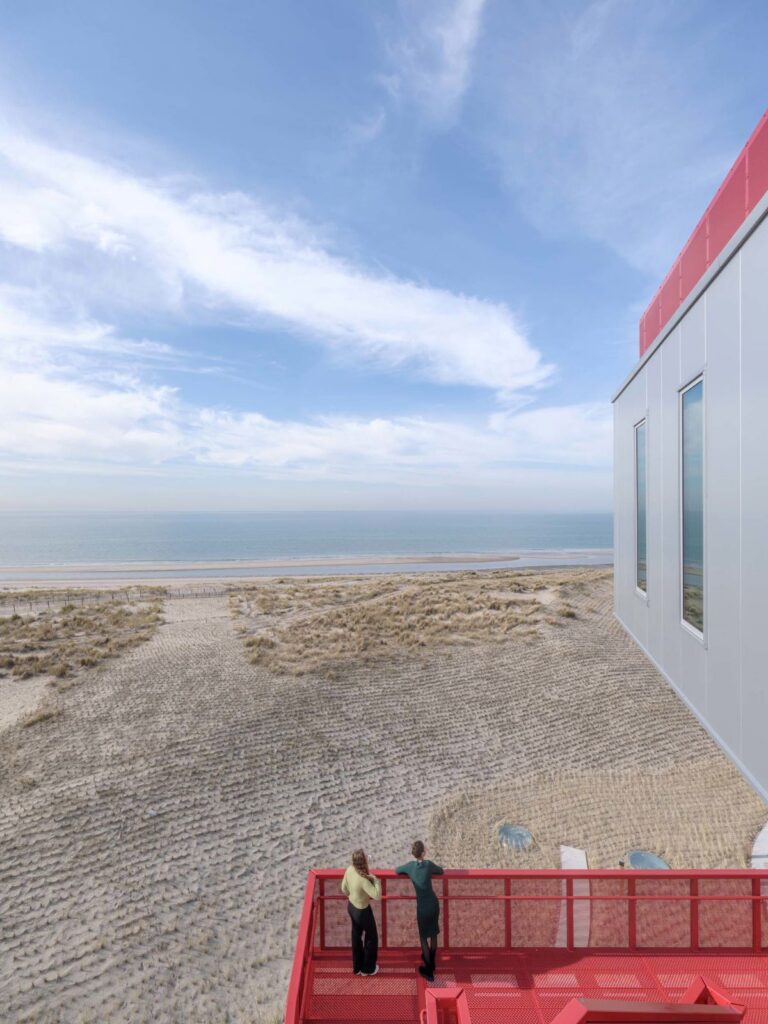
The blood-red external stairway is the building’s most obvious expression of its publicness. Climbing from the entrance to the dunes level at the bottom up to the rooftop, it links all the platforms on the outside of the building together in one walkway. This pathway is accessible for free, so Portlantis is not only a paid museum but also a truly public observation tower. Looking out of the rooftop, one can see all around: the North Sea, the coastline, and the entire panorama of the industrial port, all the way to Rotterdam.
View from the rooftop showing the 360-degree panorama of the North Sea, the Maasvlakte 2 coastline, and the port infrastructure extending toward Rotterdam © MVRDV
Close-up of the crimson-red external staircase showing the structural detailing, the twisting circulation route between platform levels, and its relationship to the industrial façade material © MVRDV
This is accomplished by designing a building that uses circular economic concepts. The entire structure is made so that everything can be disassembled and used again when the building comes to the end of its useful life. Panels on the façade will be recycled back into the manufacturer according to existing agreements.
Even the foundations have been created so that they leave no mark — concrete piles were avoided altogether. The building achieves net-positive energy efficiency through effective insulation and heat pumps, which require less energy; meanwhile, there is an additional windmill on-site that produces 30 percent more energy than consumed.
“The building has one simple function: Portlantis provides a platform that allows people to discover what is going on within the port area, and how it connects to their lives as urban inhabitants,” says Winy Maas, founder and principal of MVRDV. Completed in 2025.
Architect: MVRDV
Founding Partner in Charge: Winy Maas
Partner: Fokke Moerel
Design Team: Competition Design: Klaas Hofman, Jonathan Schuster, Monica Di Salvo Schematic Design: Arjen Ketting, Klaas Hofman, Pim Bangert, Samuel Delgado, Duong Vu Hong, Efthymia Papadima, Luis Druschke, Maximilian Semmelrock, Antonio Pliz Construction Supervision: Klaas Hofman, Arjen Ketting
Sustainability Advisor: Arjen Ketting
Strategy & Development: Magdalena Dzambo
Copyright: MVRDV — Winy Maas, Jacob van Rijs, Nathalie de Vries
Collaborators: Exhibition Designer: Kossmanndejong Structural Engineer: van Rossum MEP, Building Physics & Environmental Advisor: Nelissen Cost Calculation: Laysan Photography: © Ossip van Duivenbode