Typologies: Pavilion, Cultural, Temporary, Exhibition
Themes: Leisure, Public, Sustainability, NEXT, Culture
Status: Realised
Location: Bangkok, Thailand
Year: 2024–2025
Surface: 875 m²
Client: Creative Economic Agency, Thailand
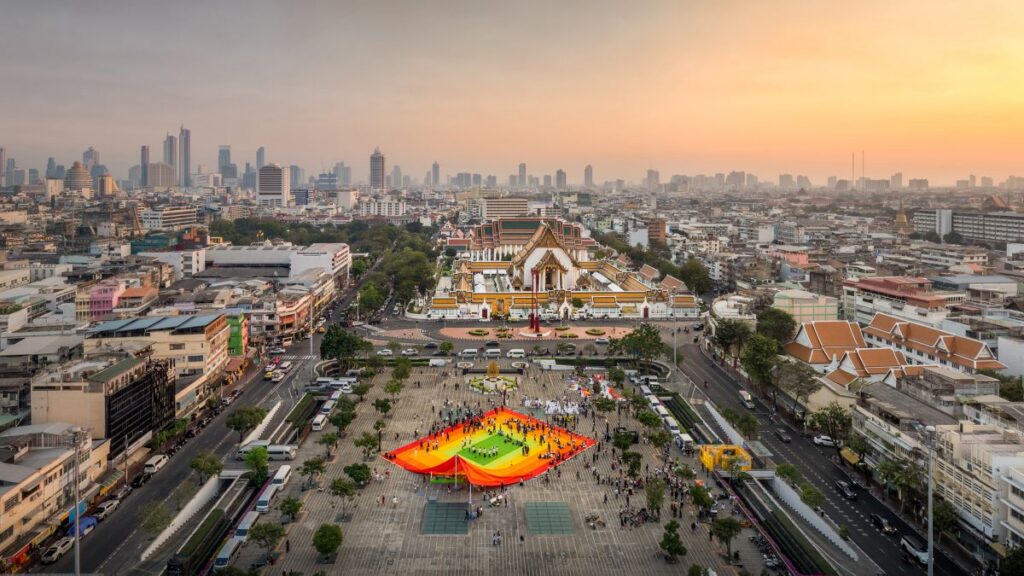
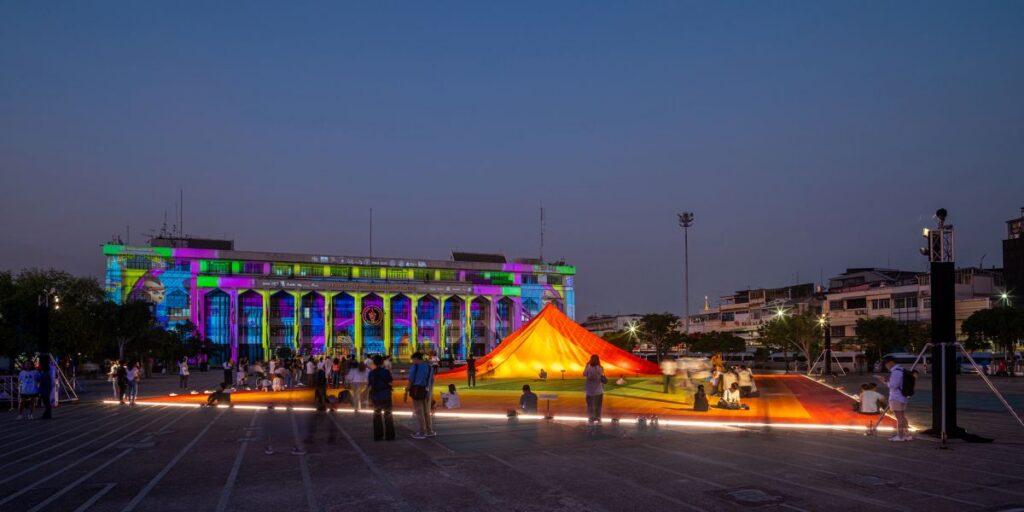
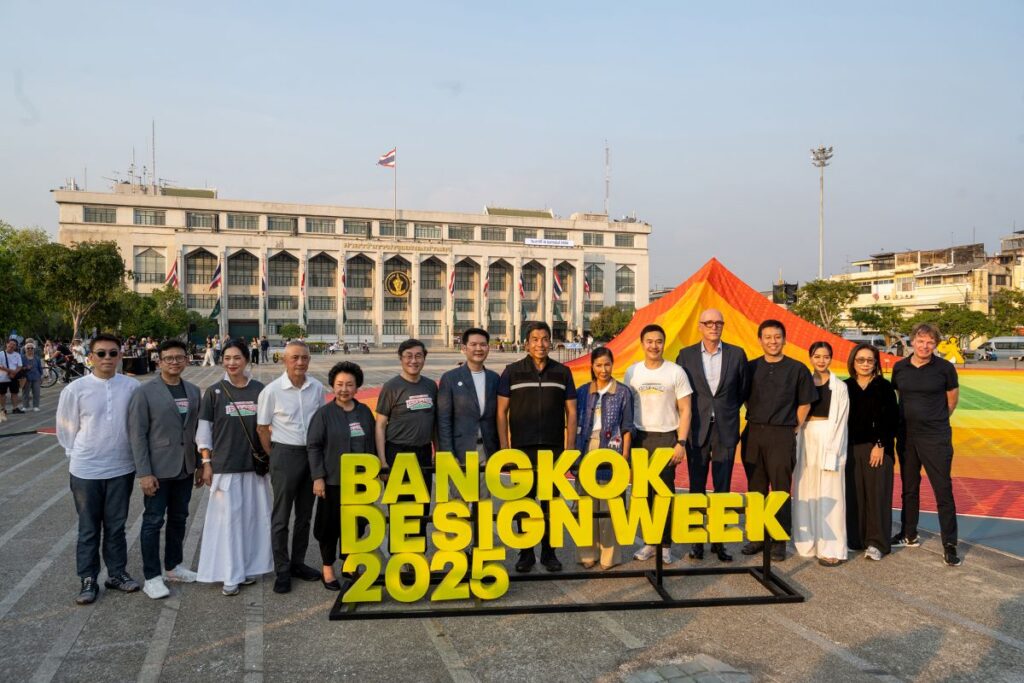
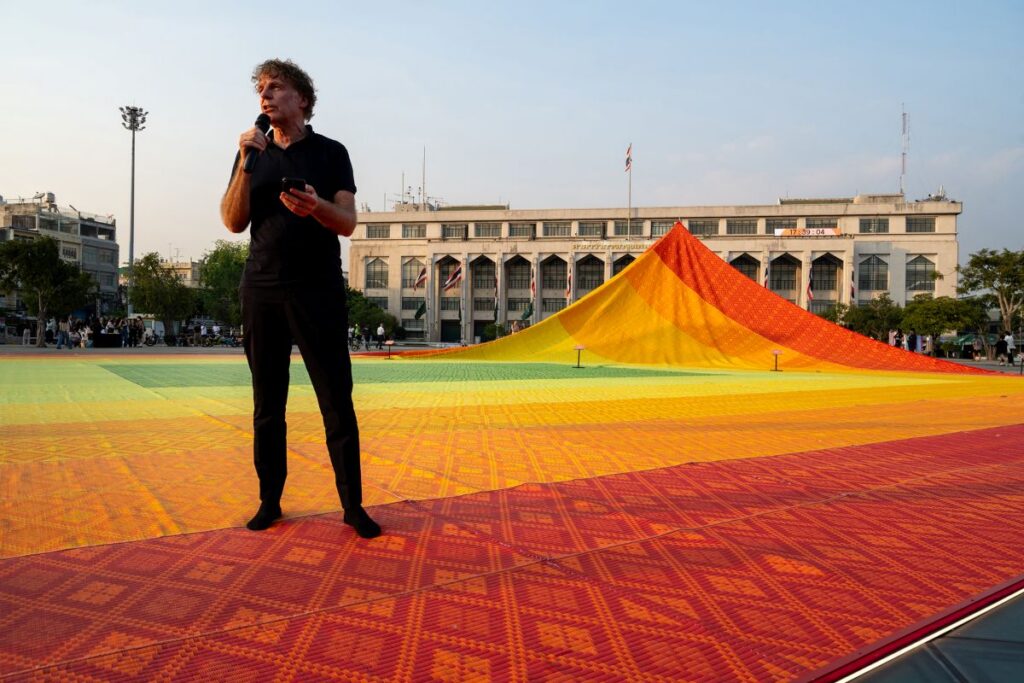
Mega Mat Bangkok Design Week, MVRDV, is an installation built for the occasion of Bangkok Design Week that took place on Lan Khon Mueang Town Square, right in front of the Bangkok Metropolitan Administration City Hall. The installation is finished in 2025 and turns more than 500 used plastic mats into an artwork serving multiple functions.
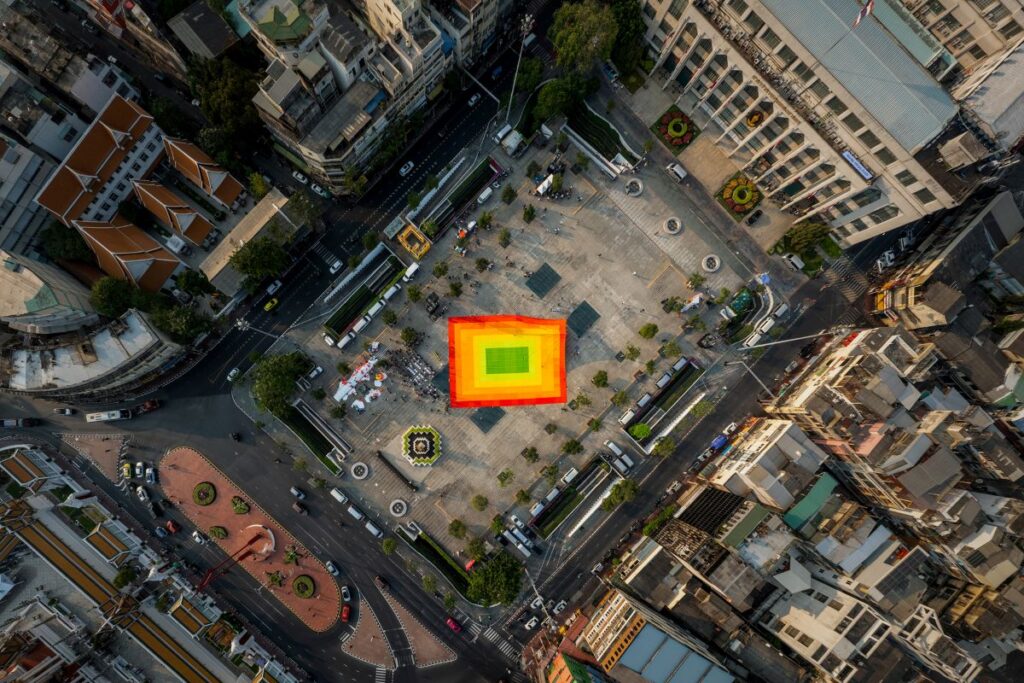
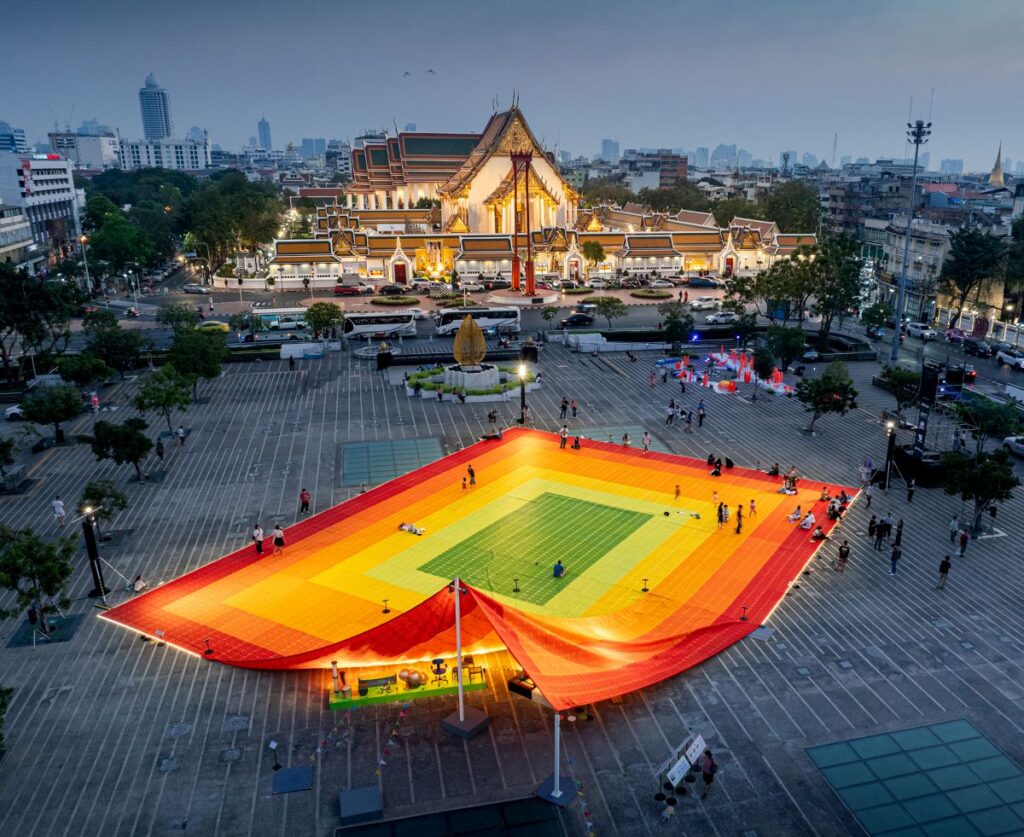
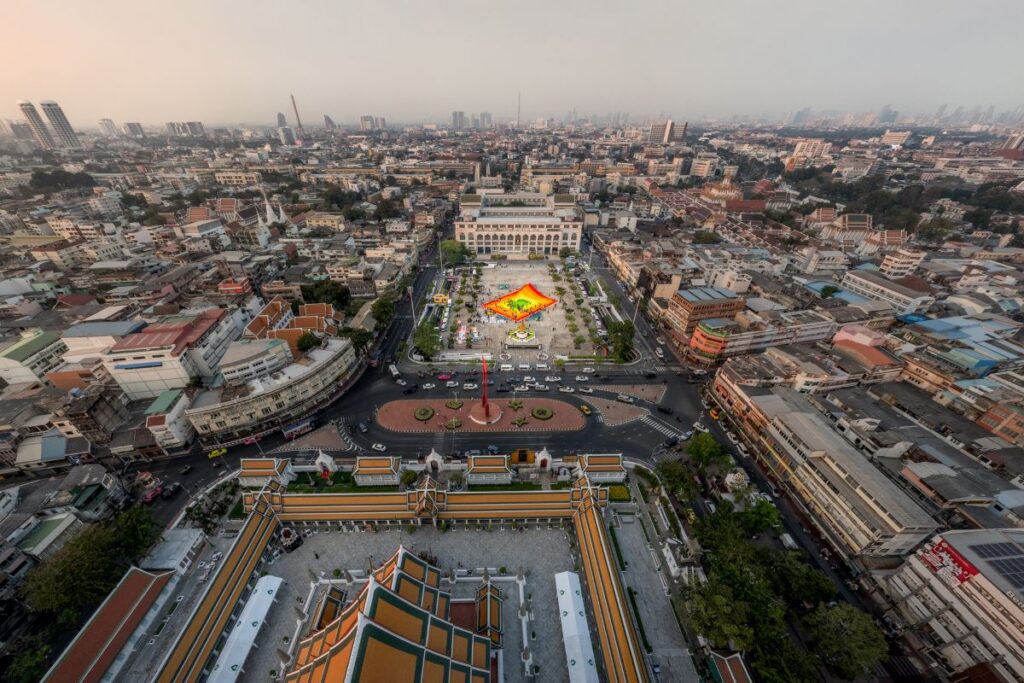
Aerial view of Mega Mat installation covering Lan Khon Mueang Square with color gradient pattern © MVRDV
The installation reflects the reality of Thailand’s plastic waste problem. Being one of the world’s largest generators of plastic waste producing around 2 million tonnes of it annually, the country feels the necessity to invest more in recycling processes and cut down on landfills. Mega Mat addresses the challenge in the sense that it converts waste into something useful for society.
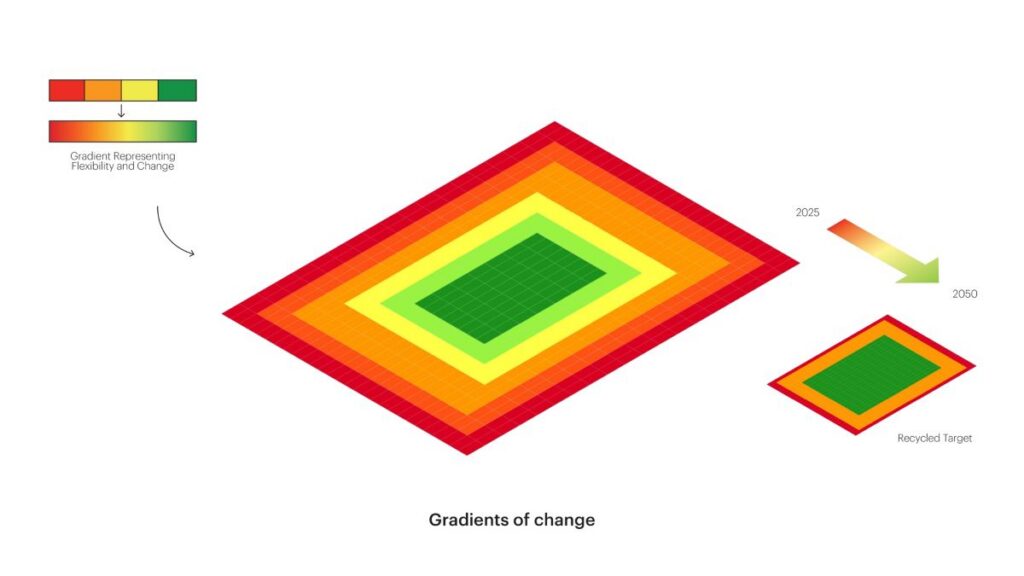
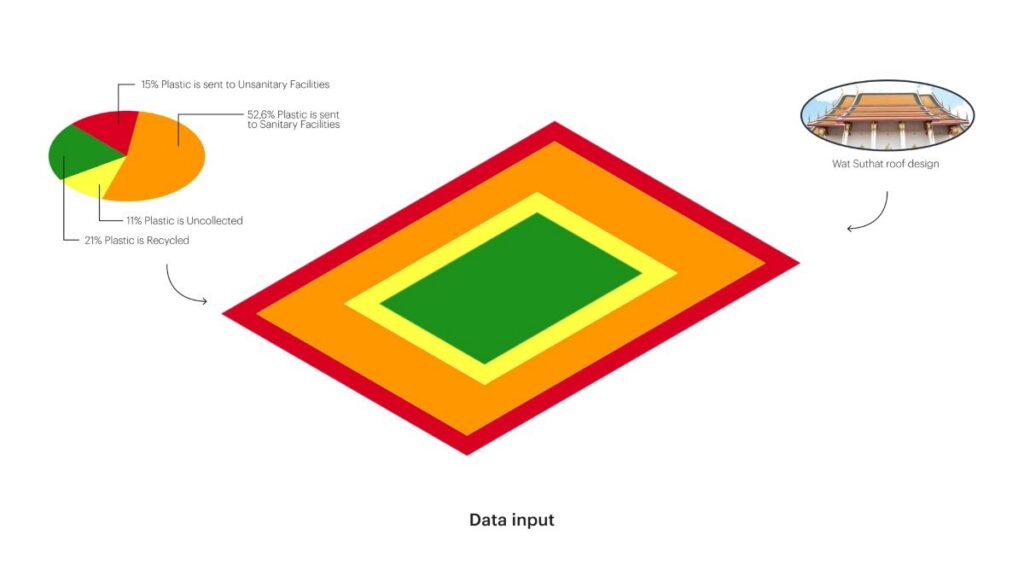
Diagrammatic view showing plastic waste flow represented through Mega Mat color system © MVRDV
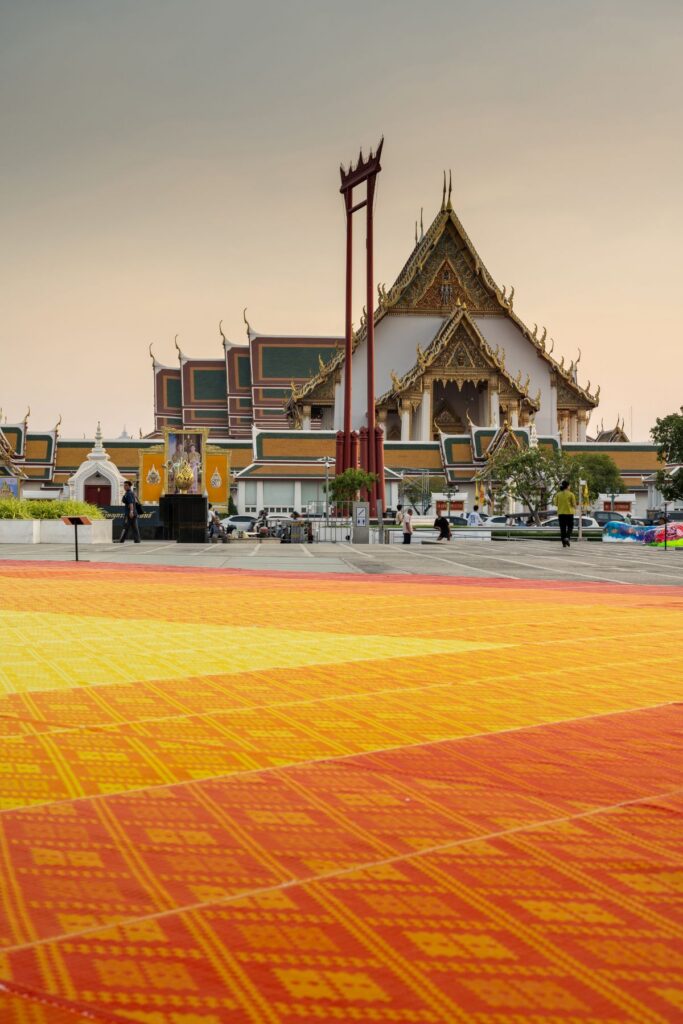
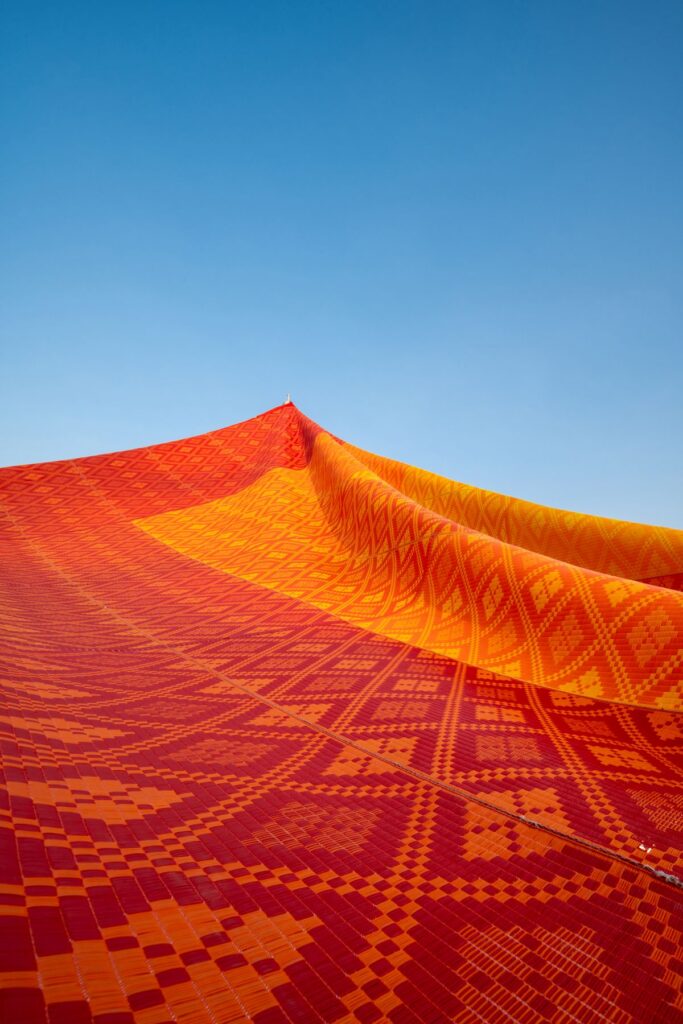
Inspired by the concept of “Sua” – the everyday Thai household mat for seating, the idea combines domestic material culture to develop a public infrastructural system through scaling up the object into an urban-scale surface consisting of 532 units. The size of each unit is approximately 1.8 meters by 0.9 meters, woven together using patterns reflecting traditional Thai fabric structures.
Close-up of modular mat units showing woven plastic texture and pattern variation © MVRDV
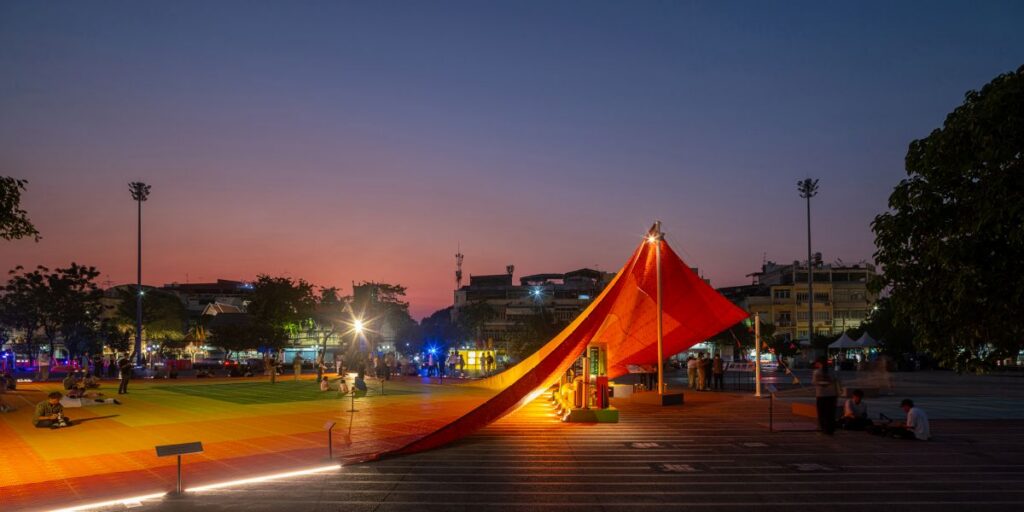
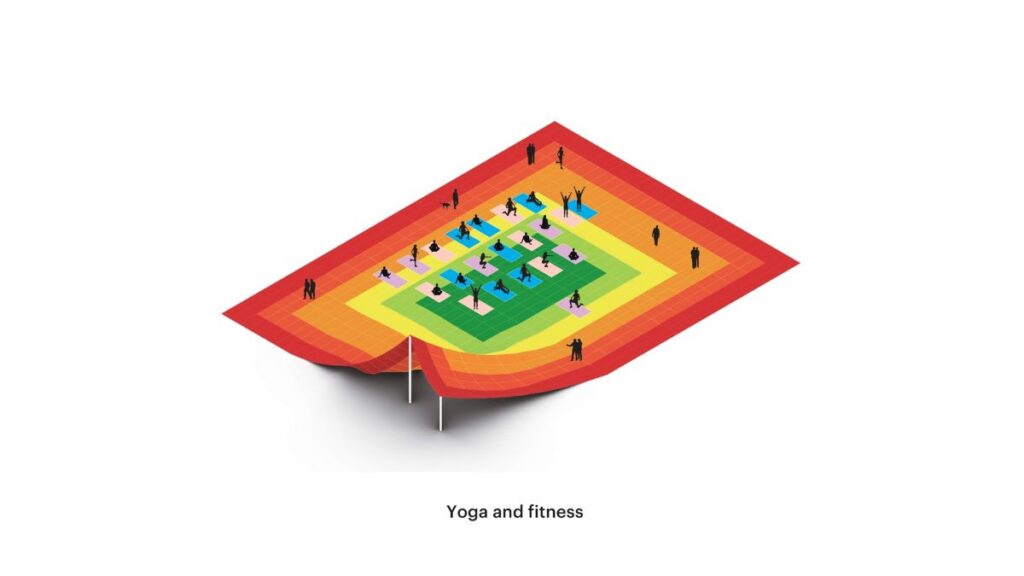
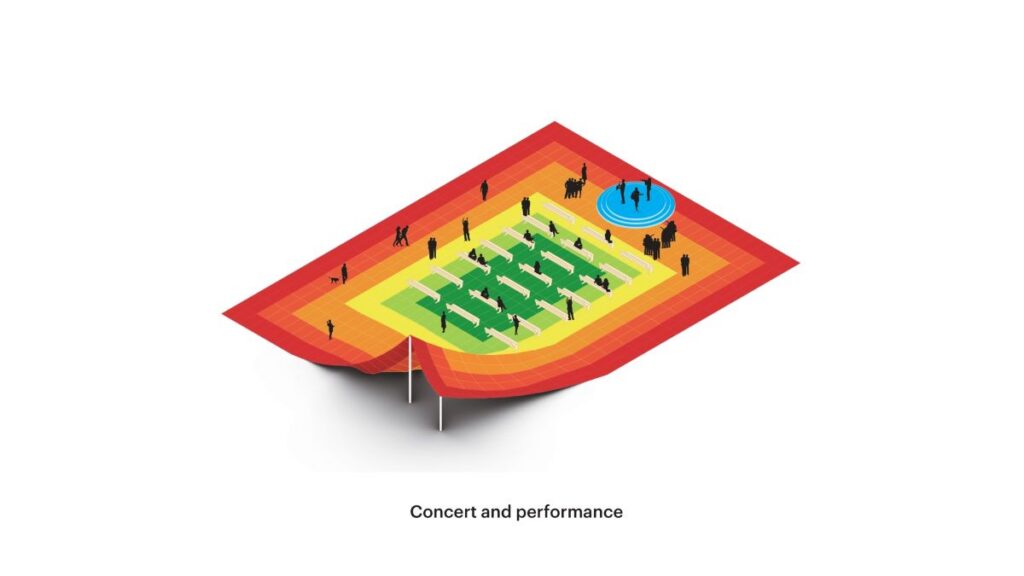
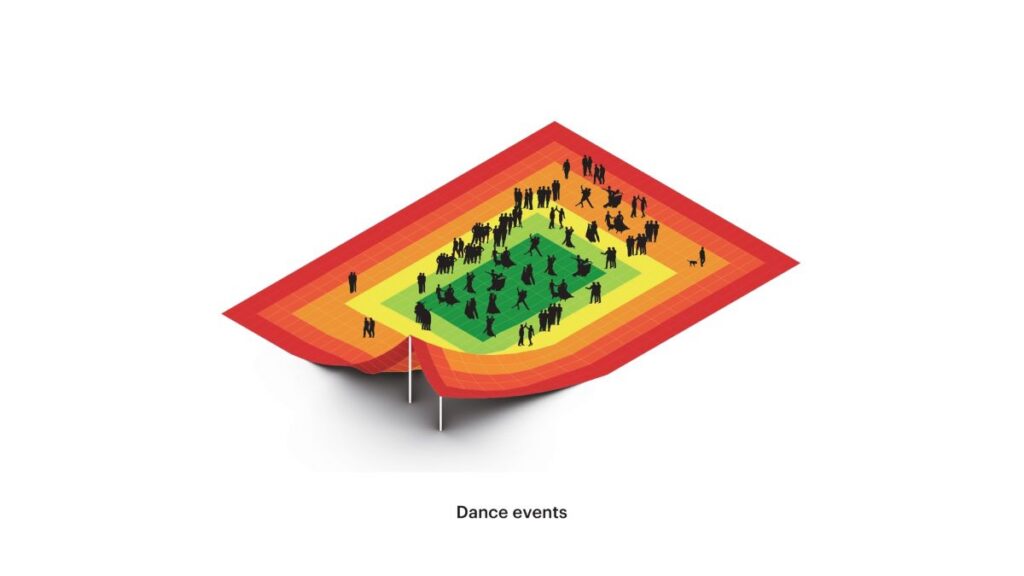
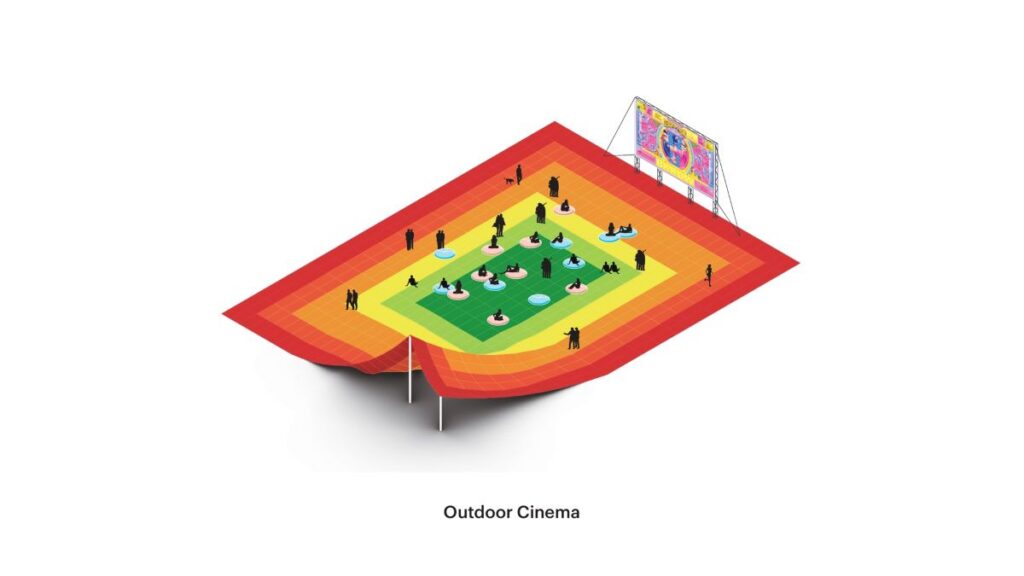
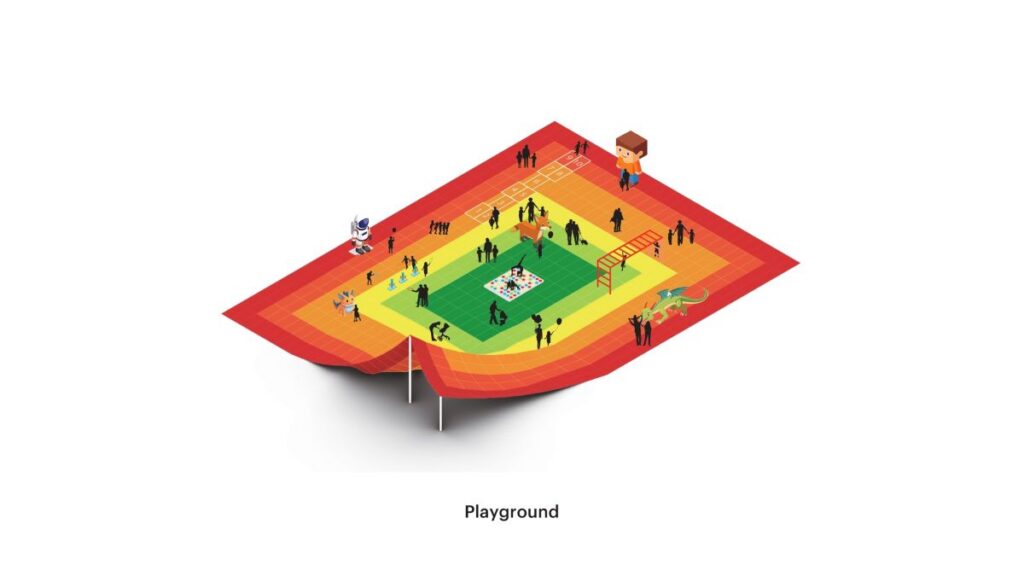
Instead of serving as a piece of immobile art, Mega Mat functions as a space to congregate, move around in, and make sense of. The use of colour is not only aesthetically pleasing but also serves as an infographic illustrating the flow of plastic waste in Thailand. The colour red symbolises plastic dumping at unsanitary landfills; orange represents plastic dumped at sanitary landfills, yellow depicts uncollected plastics, and green depicts recycled plastic materials. The circular formation of the gradient is reminiscent of the colours of the roof at Wat Suthat Thepwararam Temple nearby.
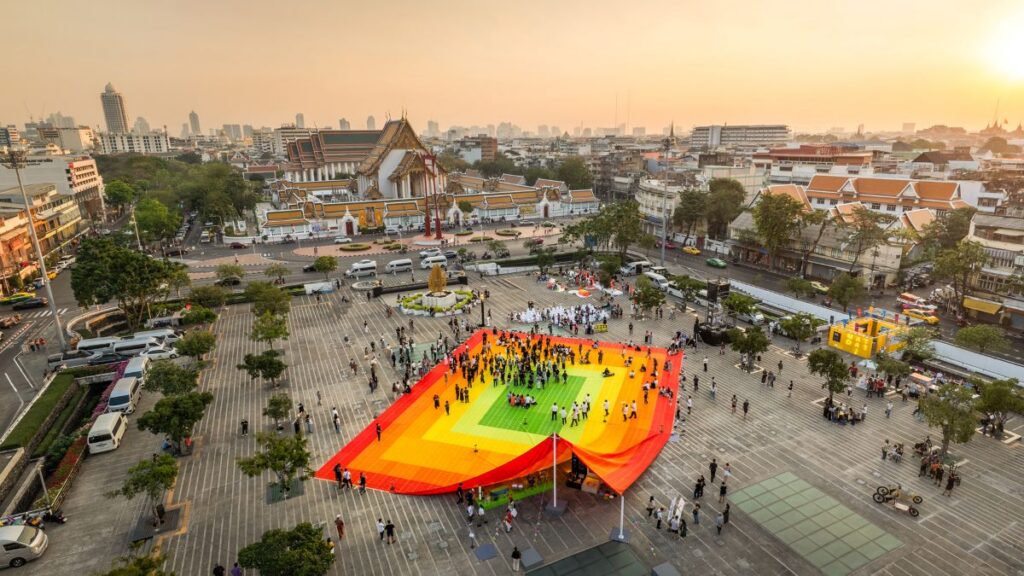
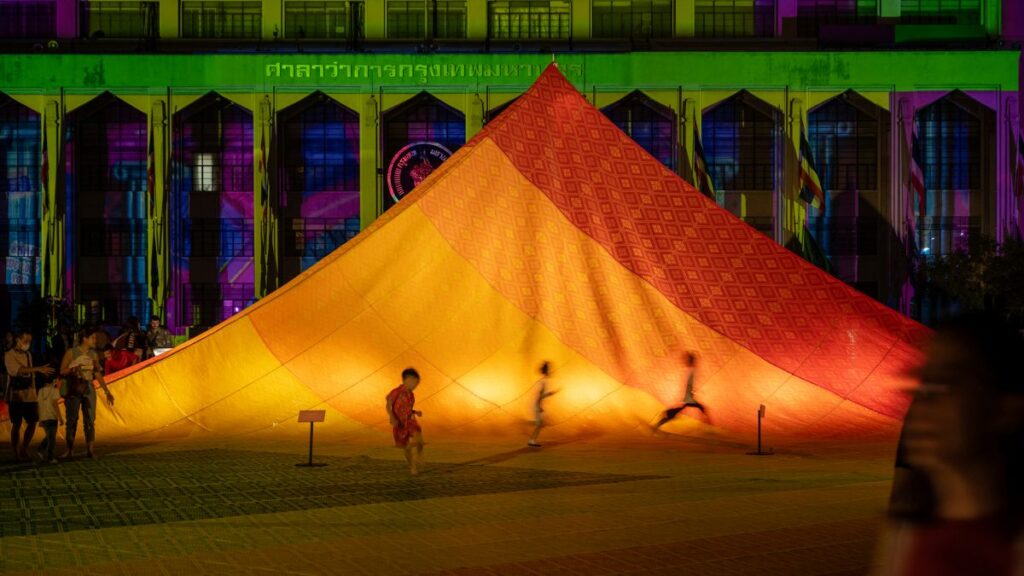
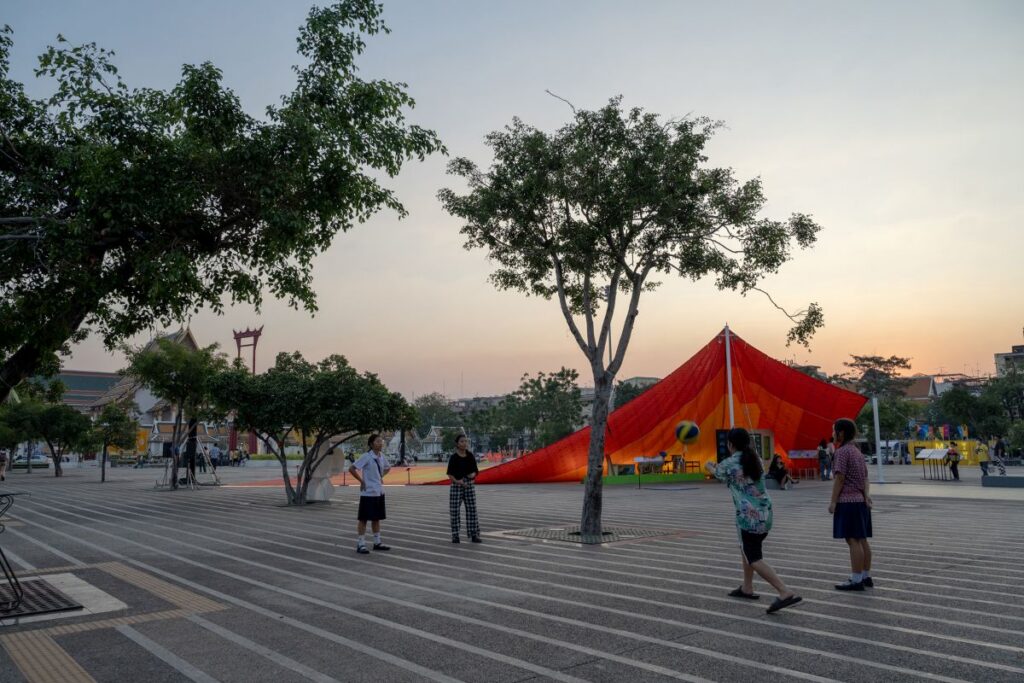
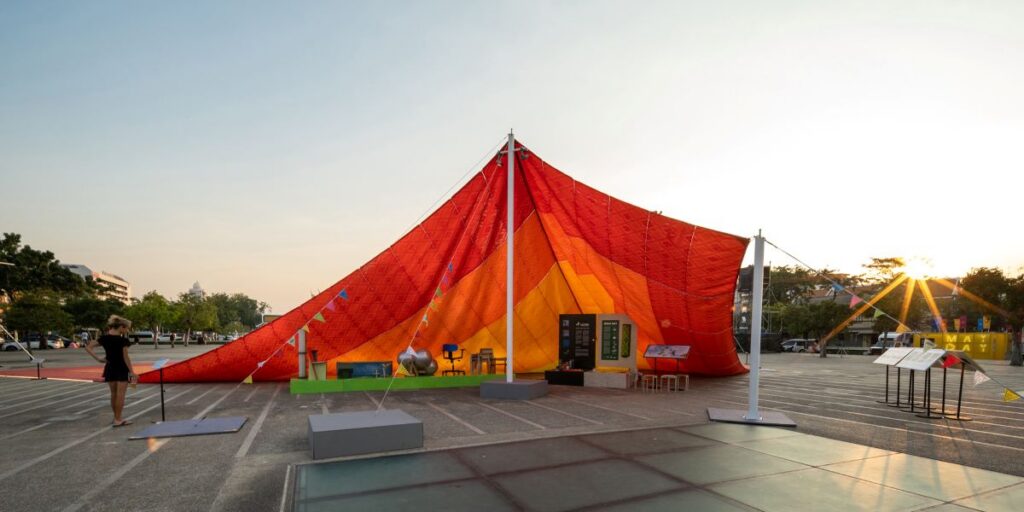
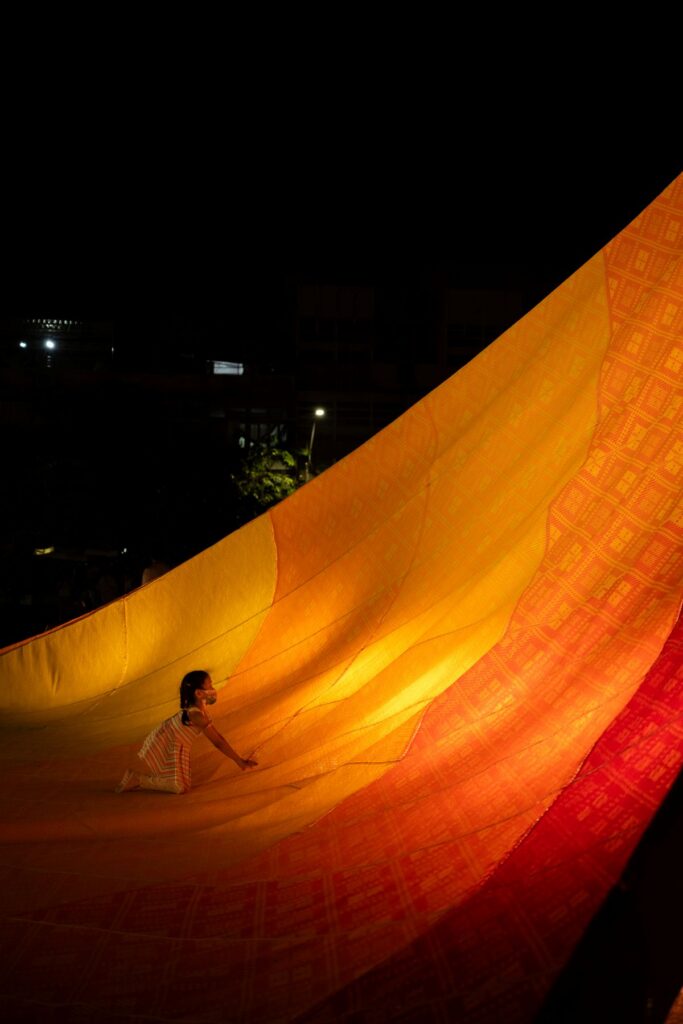
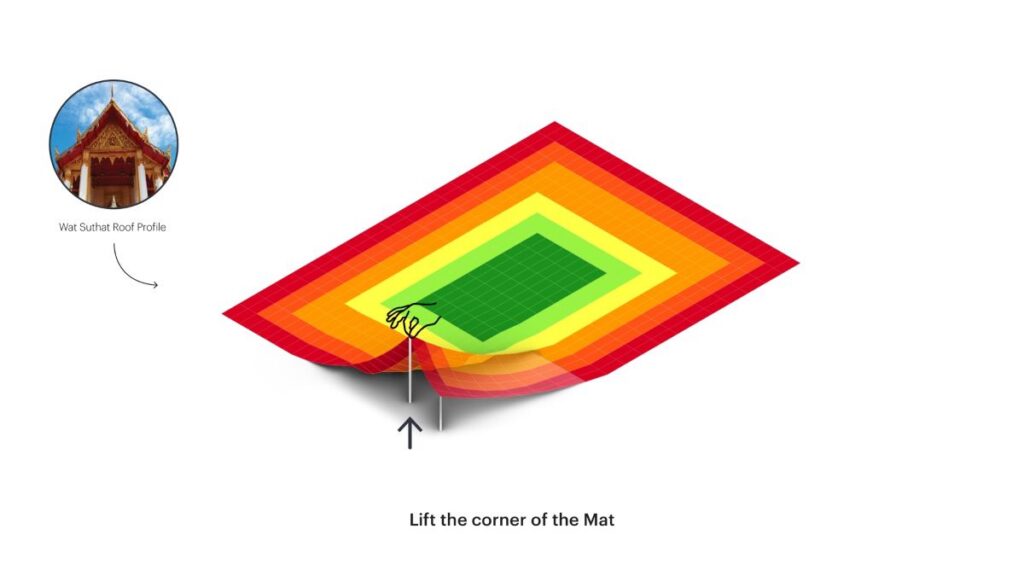
One side of the artwork is elevated, creating a sheltered space where people can learn about the consumption and recycling of plastics in Thailand without losing sight of the larger public space of the square.
Raised corner of Mega Mat forming shaded pavilion-like space for information display © MVRDV
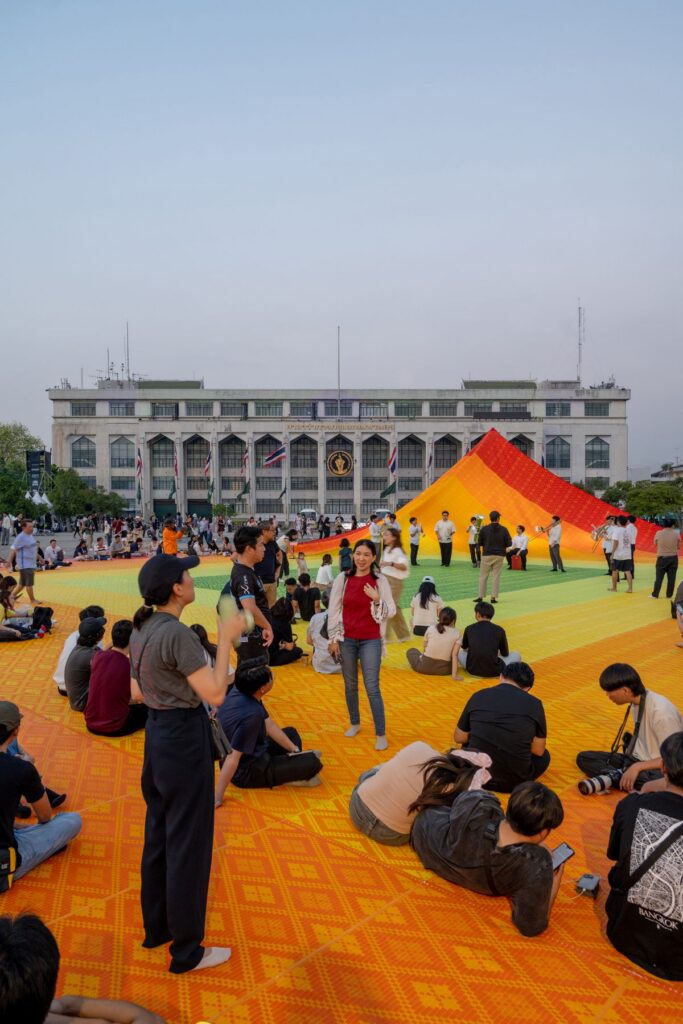
As stated by Winy Maas, the principal architect at MVRDV, the work is part of a larger trend in understanding everyday objects as part of ecology, viewing design not just as an act of creation but also as a form of environmental education and reuse. In the densely built-up city setting where hard structures predominate, the installation offers a soft structure for people to sit on, gather around, and read from.
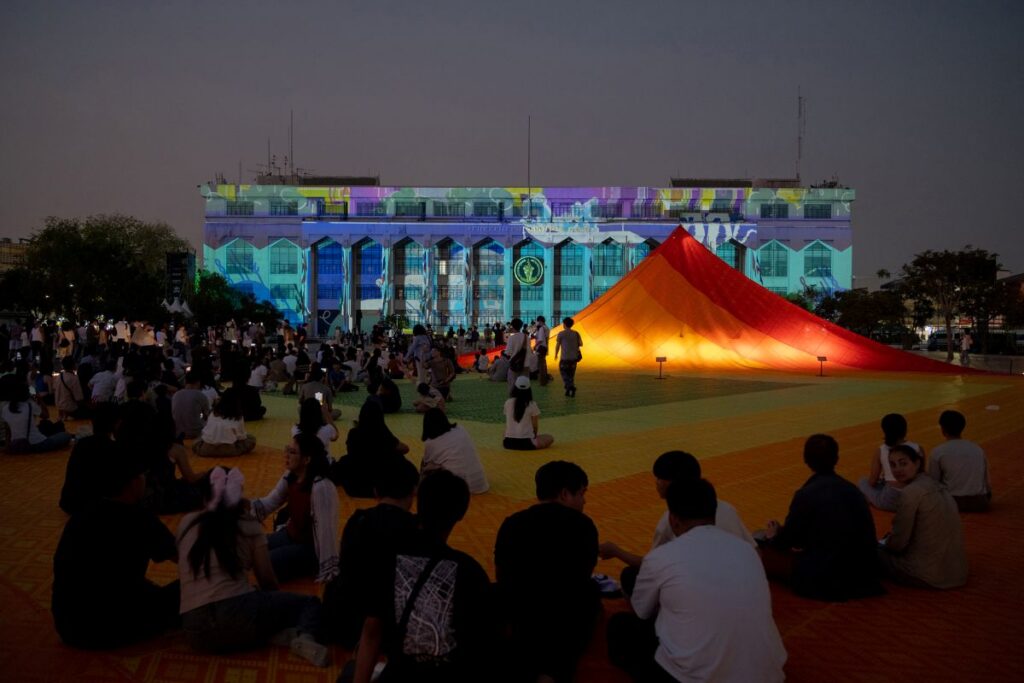
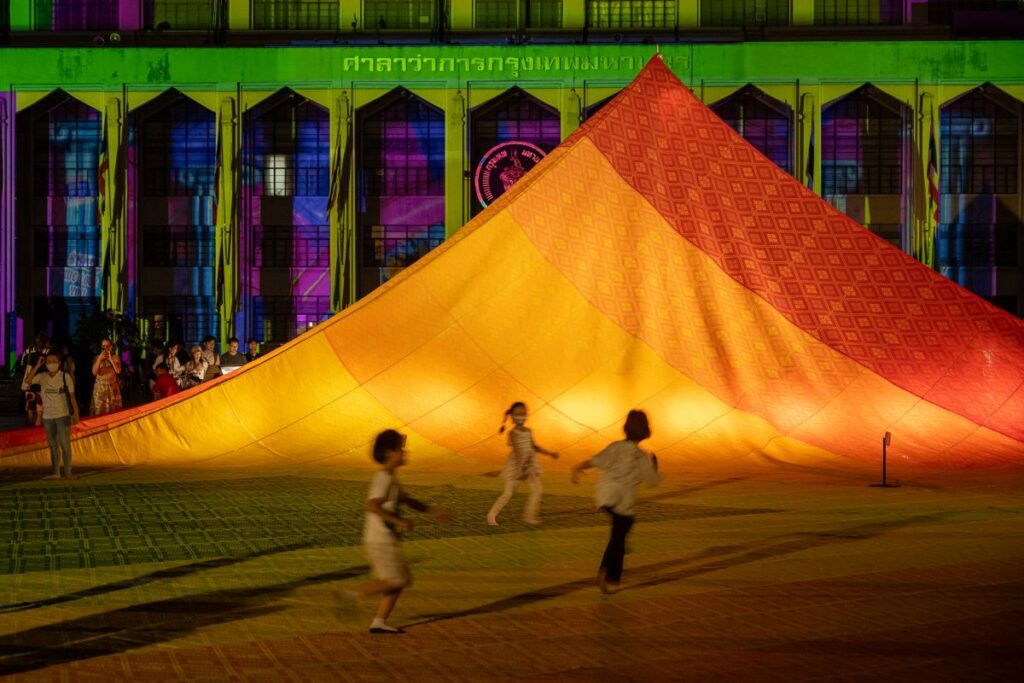
Ground-level view of people interacting with Mega Mat as public seating space © MVRDV
The installation project transcends the time frame of the Bangkok Design Week period. Post-installation disassembly will see individual mat units being used for further use elsewhere, including the donation of mats to community spaces, being recycled as yoga mats, and being re-used for daily items like bags.
Module reconfiguration concept showing post-event reuse scenarios of recycled mats © MVRDV
The Mega Mat also contributes to the sustainability investigation by MVRDV through its application of carbon-free design approaches and circular material systems at different scales of application. In relation to that, the artwork functions both as an urban space and as a material narrative for the city.
Full Plaza view showing Mega Mat integrated into urban context around City Hall © MVRDV
Mega Mat Bangkok Design Week (2025) illustrates how waste can be transformed to create civic infrastructures, integrating ecological information, cultural memory, and the public domain in one common plane.