Typologies: Offices, Bar-Restaurant, Transformation
Themes: Architecture, Sustainability, Adaptive Reuse, Workplace, Urban Regeneration
Status: Realised
Location: Berlin, Germany
Year: 2020–2023
Surface: 2,575 m²
Client: Fabrix
Awards: Dezeen Awards 2024 — Shortlisted (Sustainable Renovation); Dezeen Awards 2024 — Shortlisted (Workplace); Archello Awards 2024 — Longlisted
Photographer: Schnepp Renou, Lukas Drobny
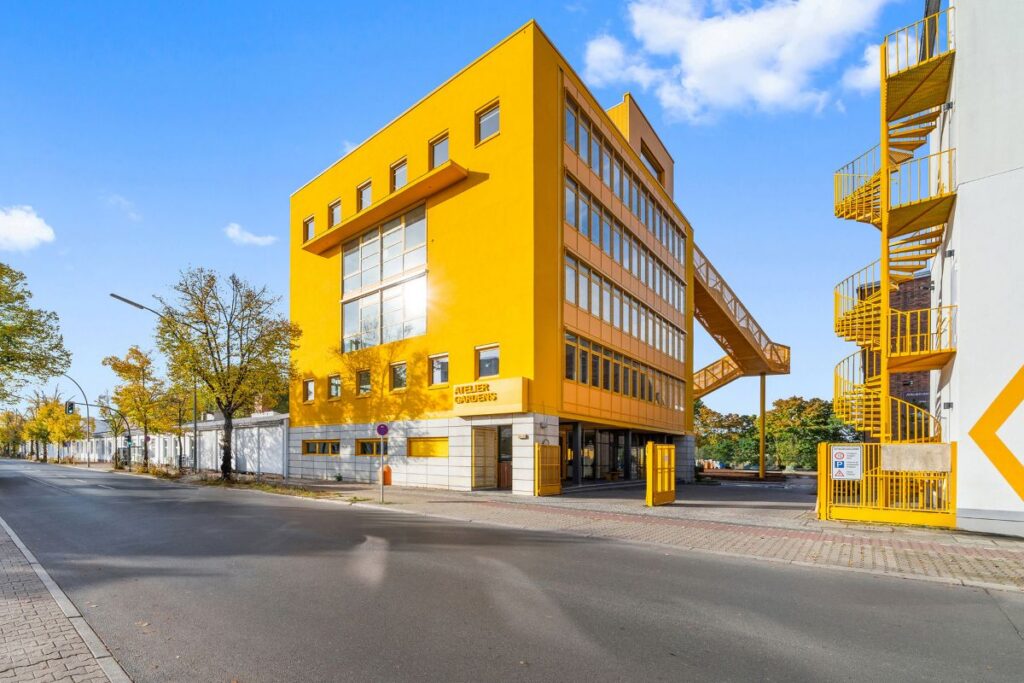
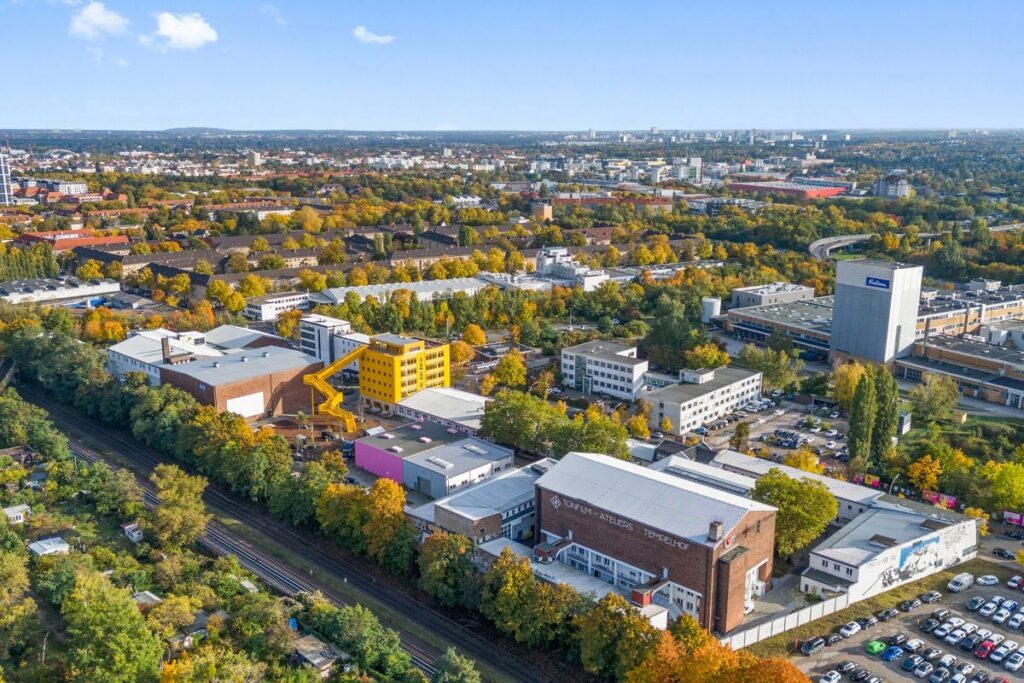
HAUS 1 Berlin by MVRDV is an example of how a regular office structure can transform into a representation of urban renewal. Sited on the border of the innovative Atelier Gardens – a sustainable and impactful campus on the site of the former Berliner Union Film Ateliers near the Tempelhof Airport – the structure transforms a nondescript 1990s office tower into an iconic and meaningful structure reflective of the area’s new identity. Completed in 2023, the 2,575 square metre makeover is a component of MVRDV’s master plan for the Atelier Gardens campus.
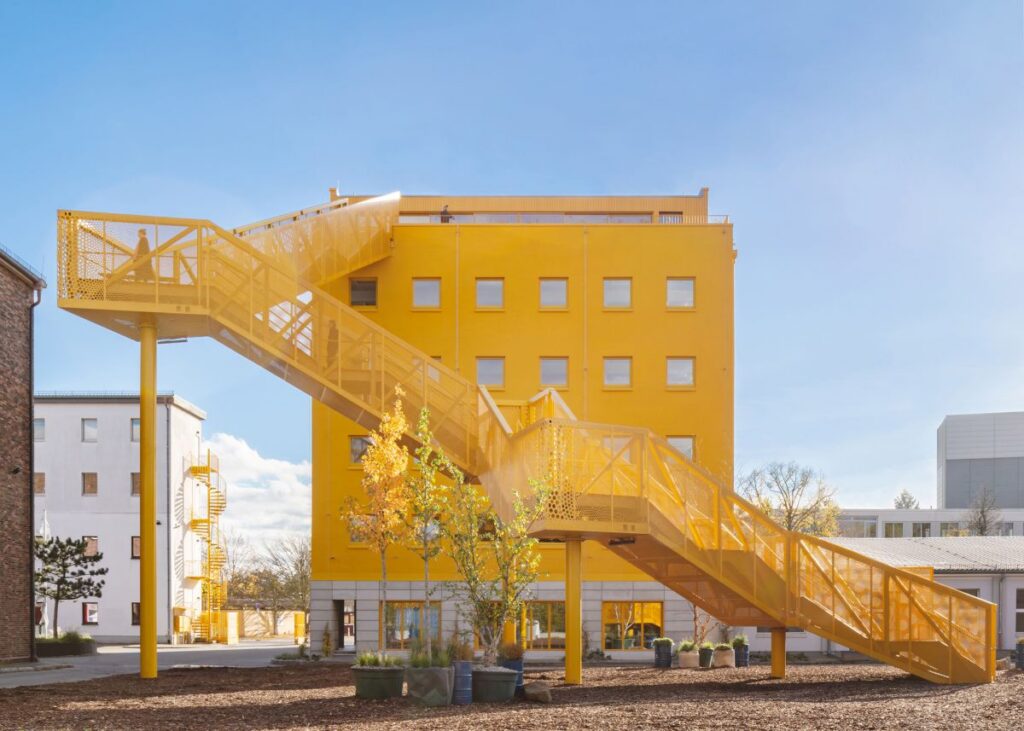
Exterior view of HAUS 1 showing the bright yellow façade and its position at the entrance of Atelier Gardens © MVRDV
Unlike many other regeneration plans based on demolition and rebuilding, HAUS 1 is built around the concept of making something more out of what already exists. This original structure, erected in 1997, did very little in terms of shaping the image of the entire university campus, despite being located within the site’s most important space. Being visible not only from Oberlandstraße but also the large Tempelhofer Feld, this building offered the chance to give shape to the image of the growing campus through further transformations rather than complete reconstruction.
Before-and-after comparison illustrating the transformation from a white office block to a bright yellow landmark © MVRDV
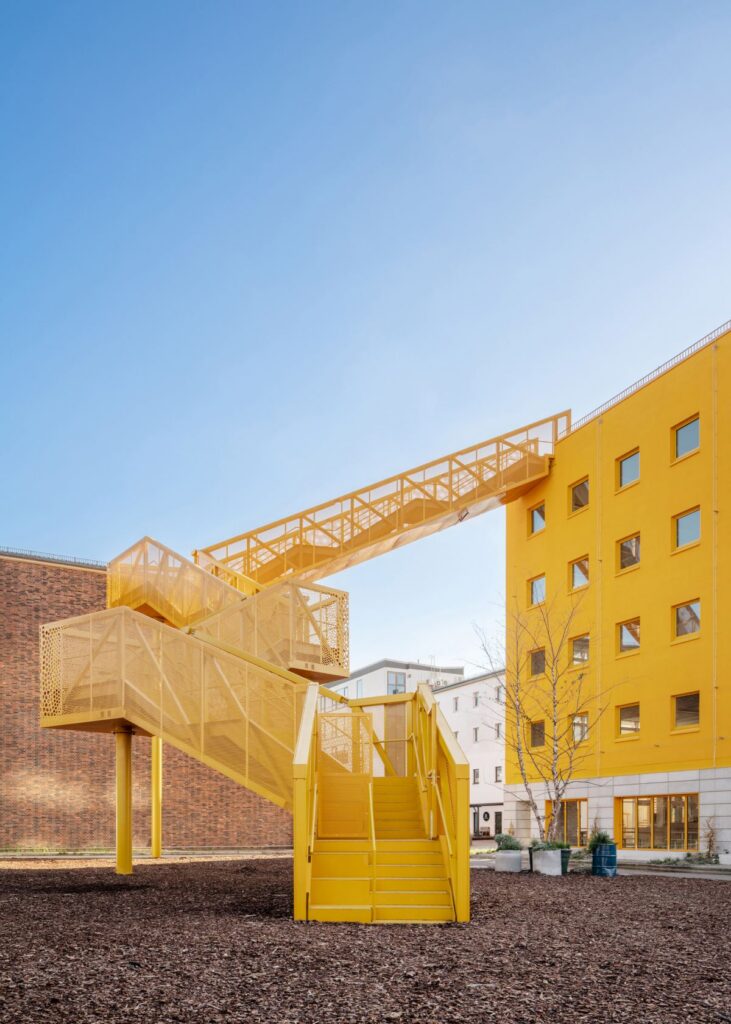
The first major intervention involves changing the color of the building. Having originally been a standard white structure, the HAUS 1 building is completely coated with a bright yellow pigment that sets it apart from everything else in the environment. The coloration here does not serve only to make it stand out; rather, it functions as a signifier, communicating both the presence of Atelier Gardens and a sense of hope and ambition characteristic of the university community.
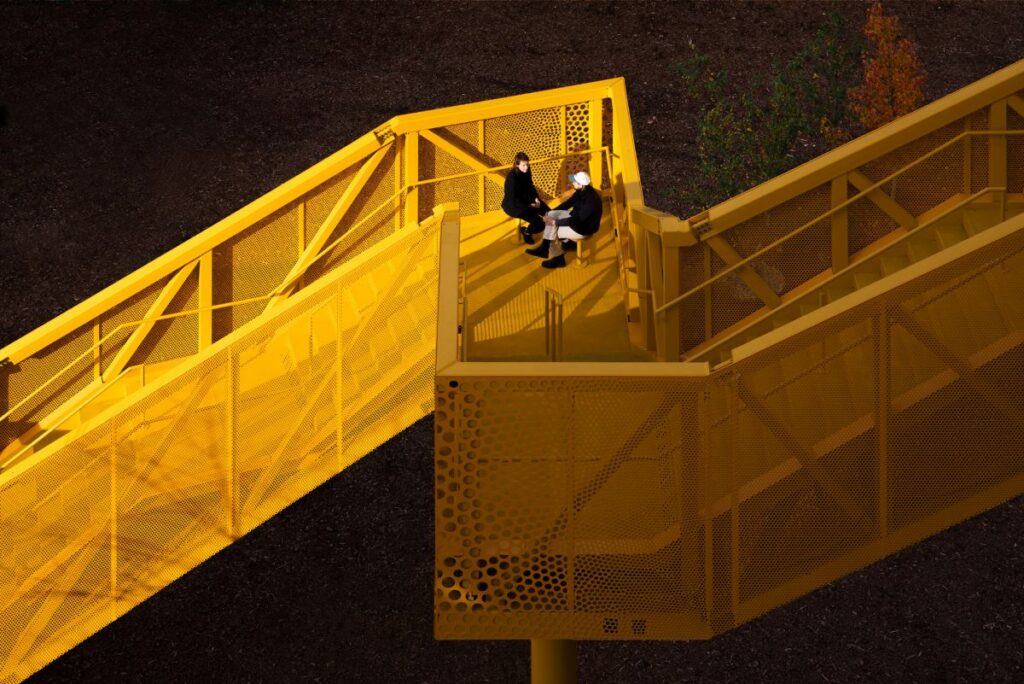
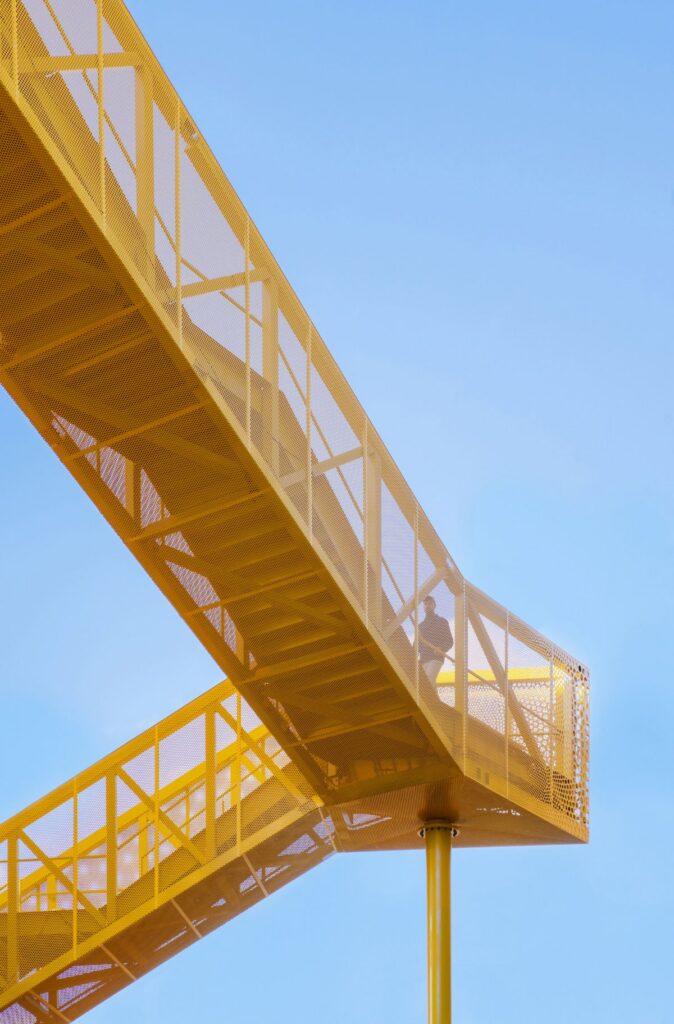
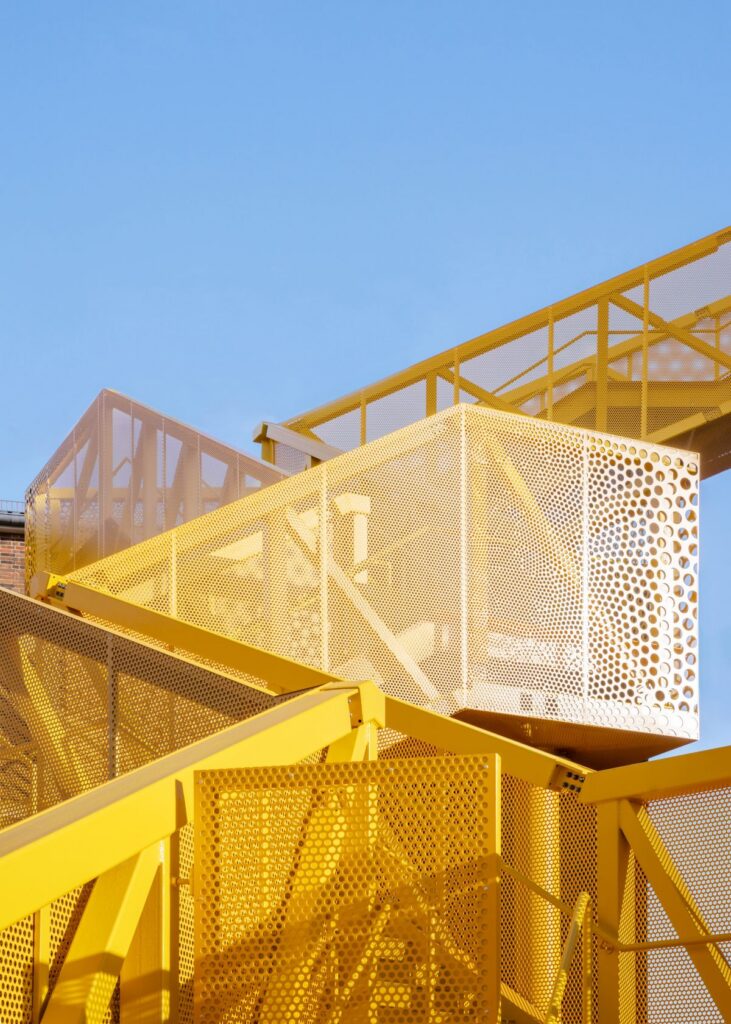
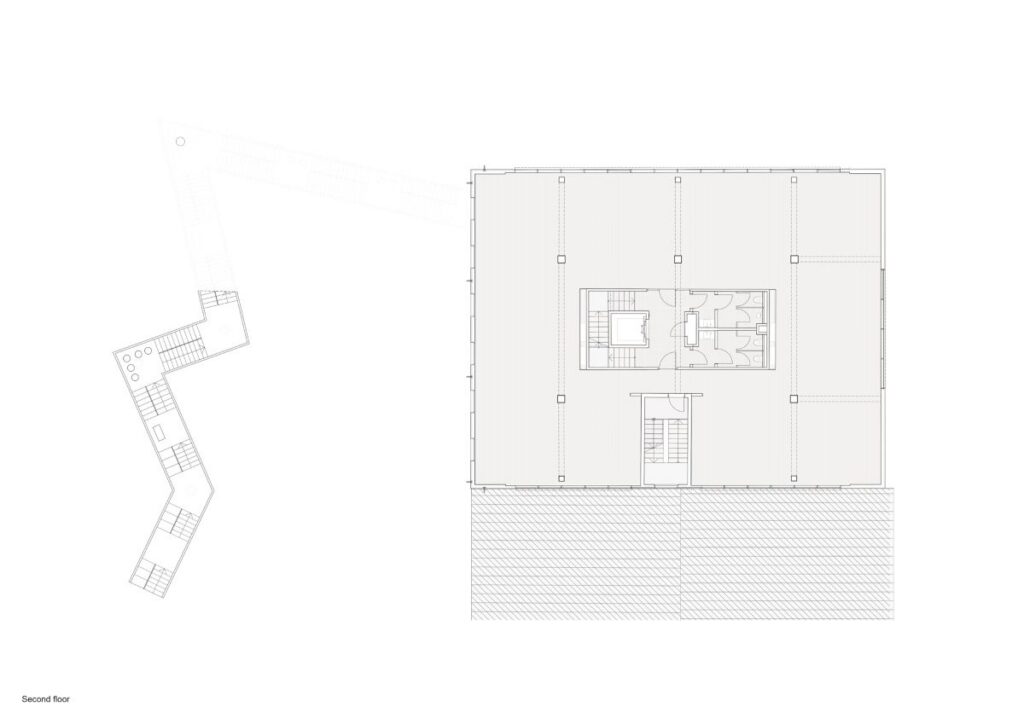
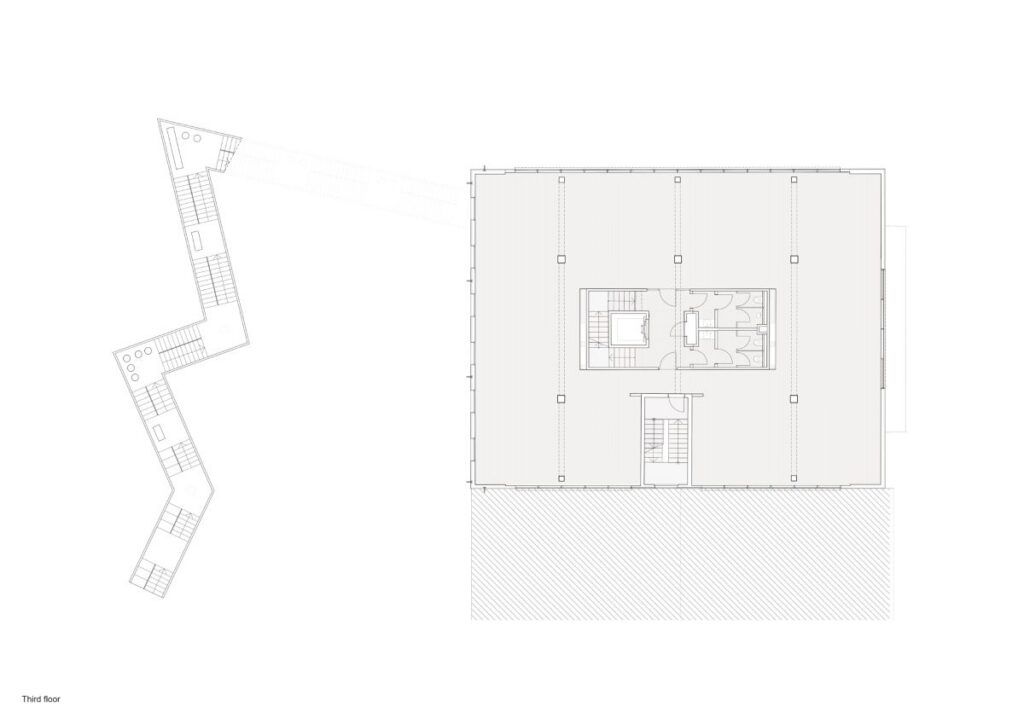
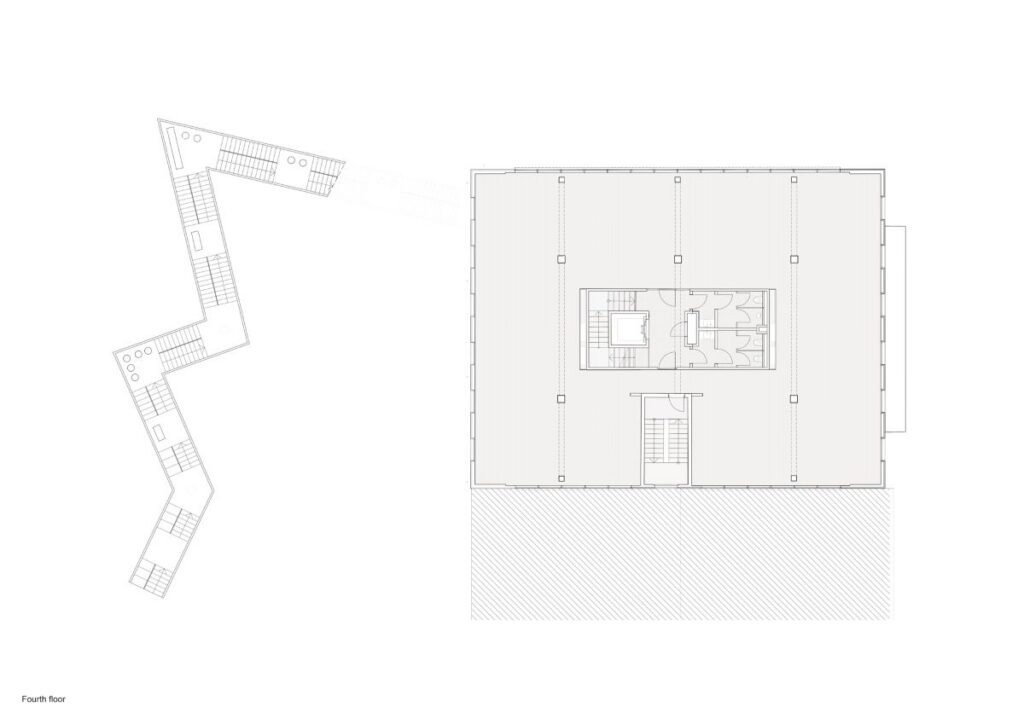
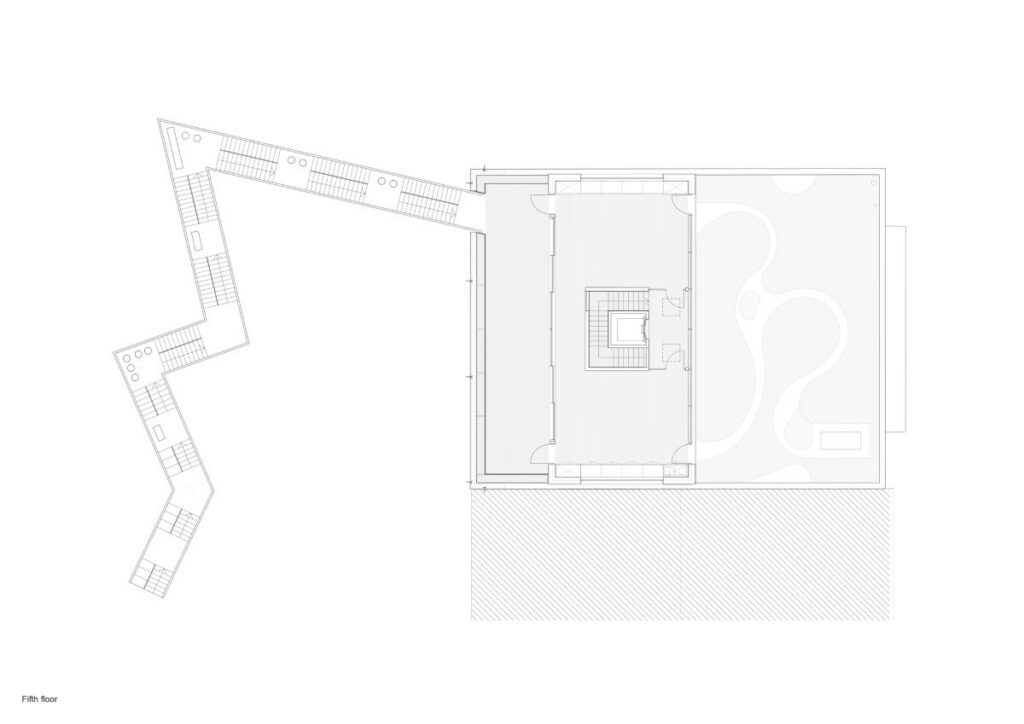
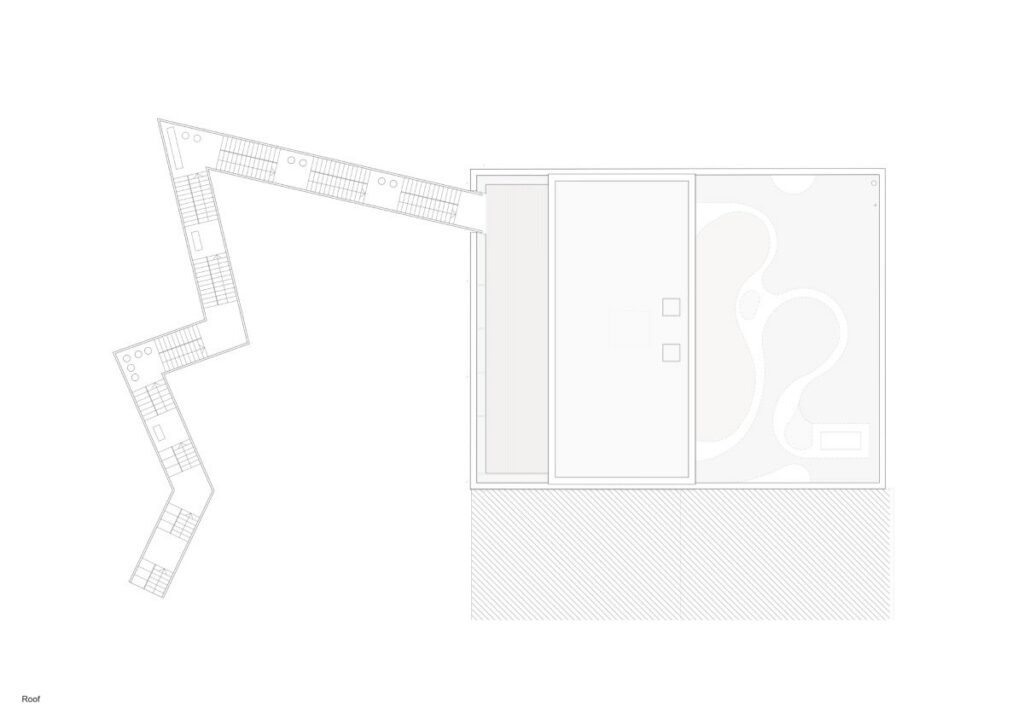
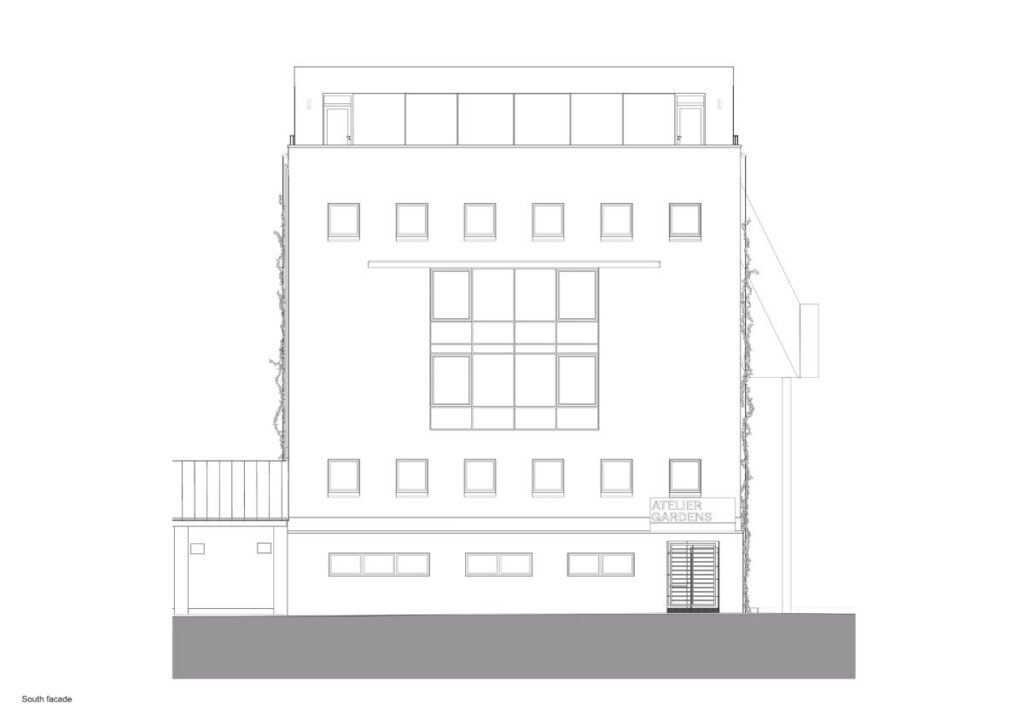
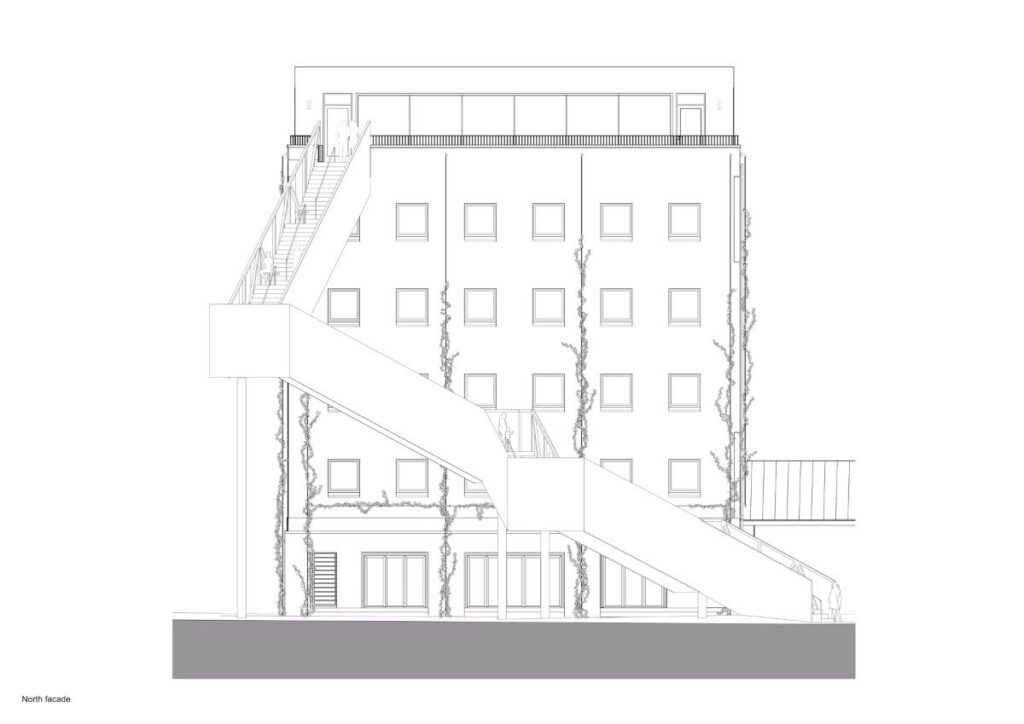
The second intervention changes the dynamic between the building itself and the open spaces. On the other side of the central plaza at Atelier Gardens, there is a very distinctive zig-zagged set of stairs leading up the façade of the building toward the roof. While serving a functional purpose of providing access, these staircases also contain seats and viewing platforms that allow visitors to take a rest and look out at Tempelhofer Feld and beyond into the Berlin cityscape.
External yellow staircase connecting the campus plaza to the rooftop terrace © MVRDV
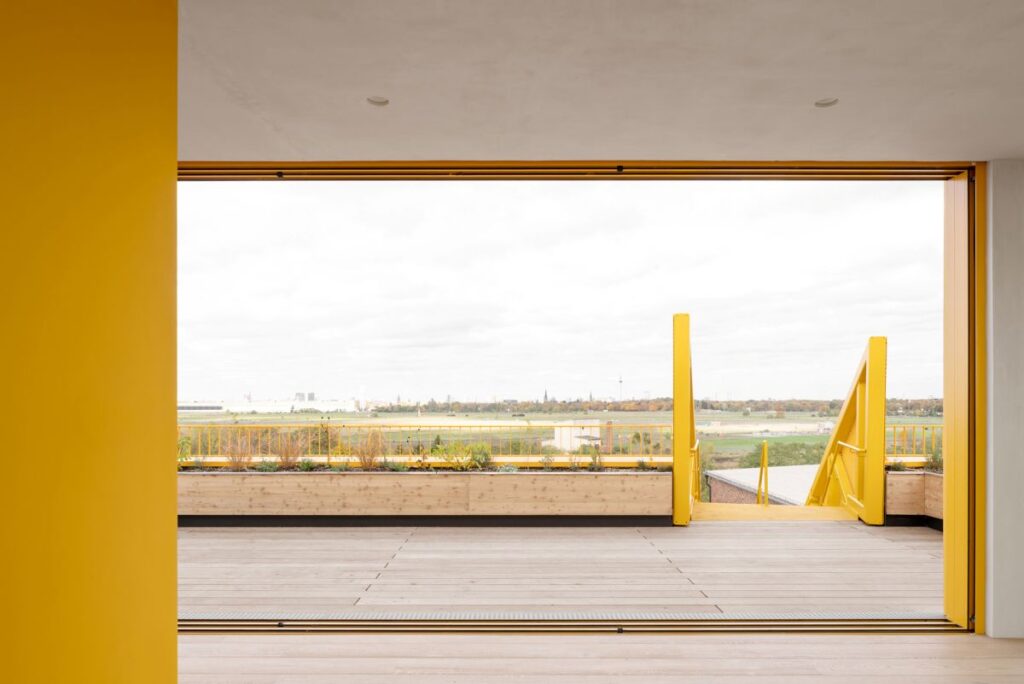
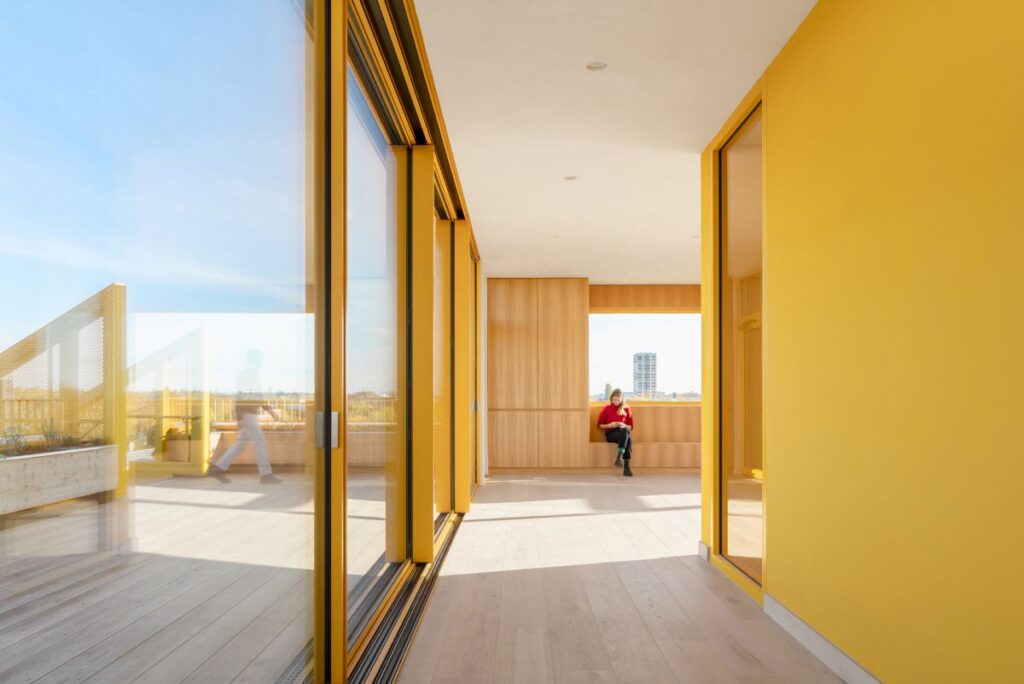
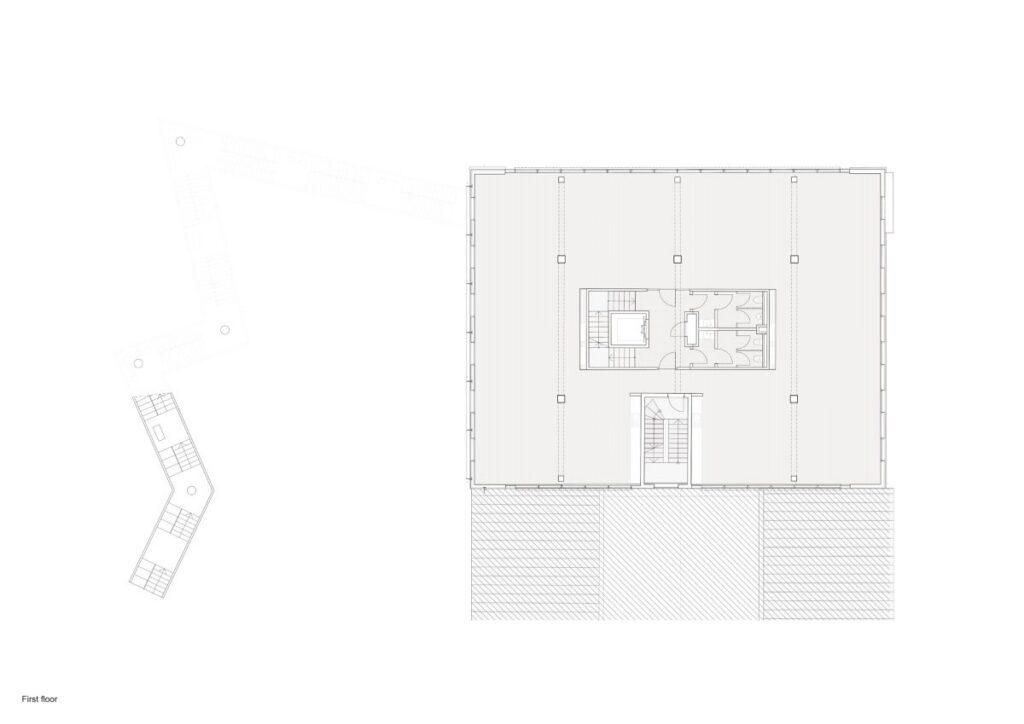
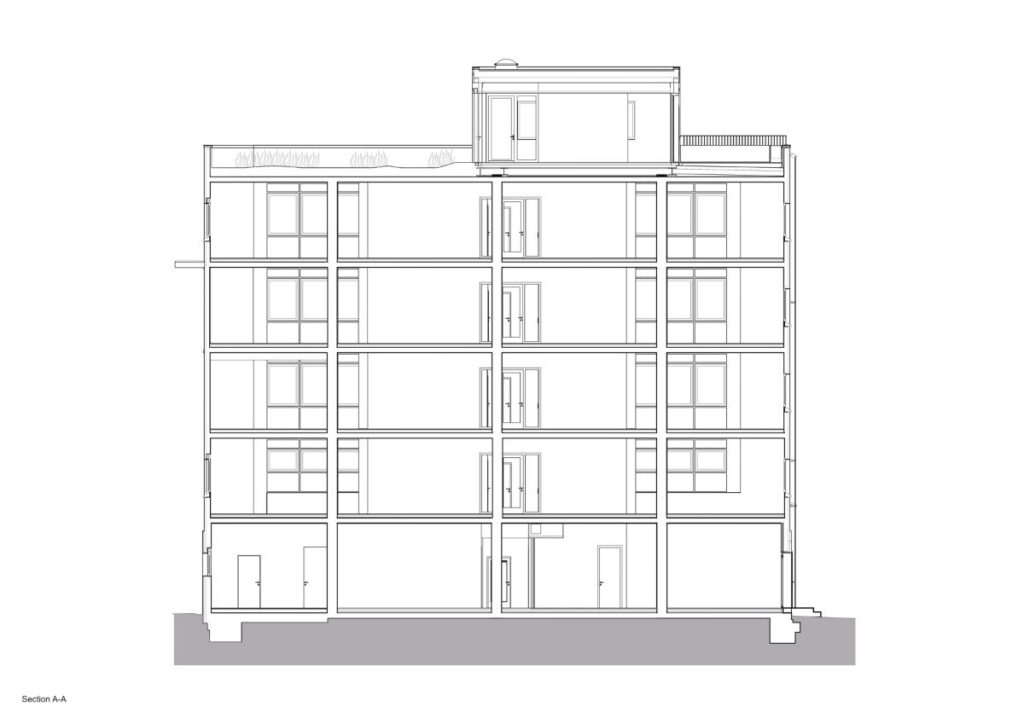
The addition of the timber pavilion at roof level was done by MVRDV. The pavilion uses prefabricated modules of cross-laminated timber and was designed to be sustainable through the use of bio-based materials and healthier internal finishes such as clay ceiling, thus increasing the space and offering new facilities. The pavilion shows that a building can be extended through lightweight timber without straining the structure.
Rooftop timber pavilion overlooking Tempelhofer Feld and the Berlin skyline © MVRDV
The pavilion has a green living roof covered with indigenous plants. Aside from its aesthetic purposes, the roof has been designed as part of an environmental strategy aimed at promoting diversity and improving the site’s capacity for rainwater retention, among other benefits related to climate resiliency. The rainwater collected in the roof helps contribute to the improved water management system of Atelier Gardens.
These strategies go beyond the pavilion to encompass the whole building. Insulation and sun shading measures have been installed on the building’s external surfaces, thereby improving its overall thermal performance and ensuring that overheating does not occur during the warmer seasons. Low-energy underfloor heating has been installed inside the building to help moderate conditions inside during the cold season, while energy-saving LED lights have also been installed.
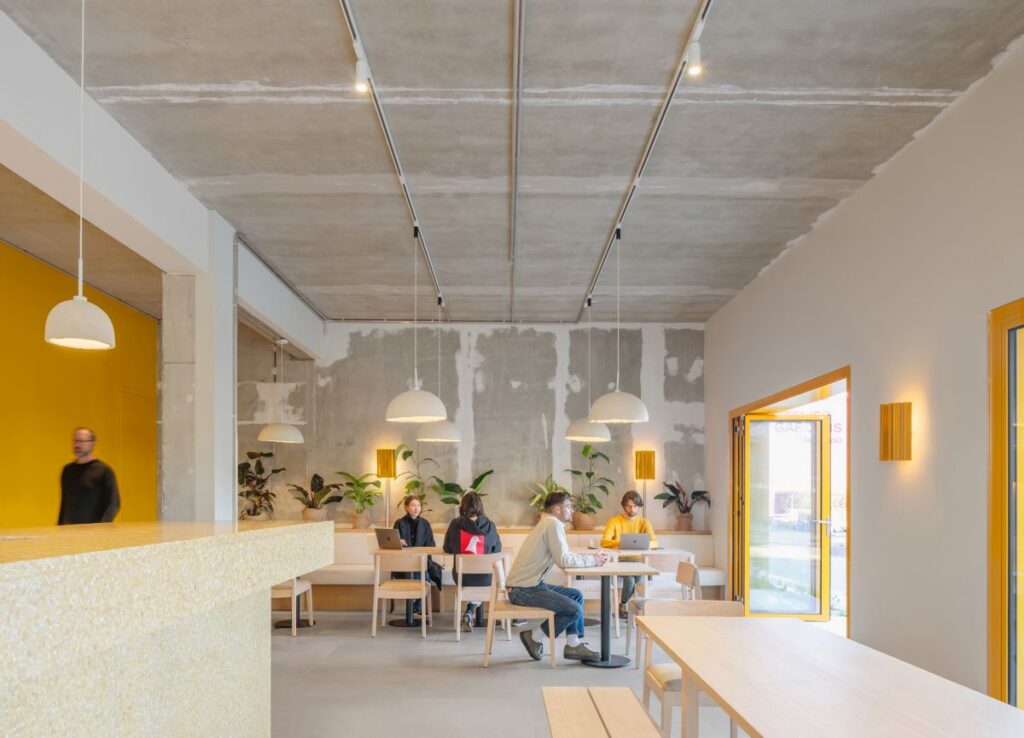
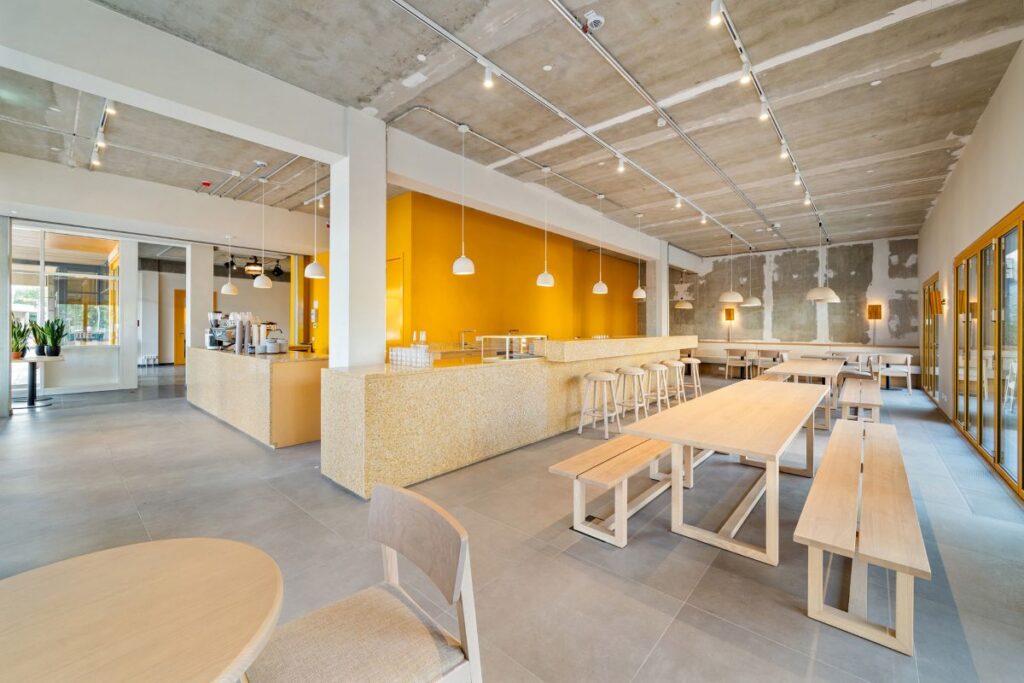
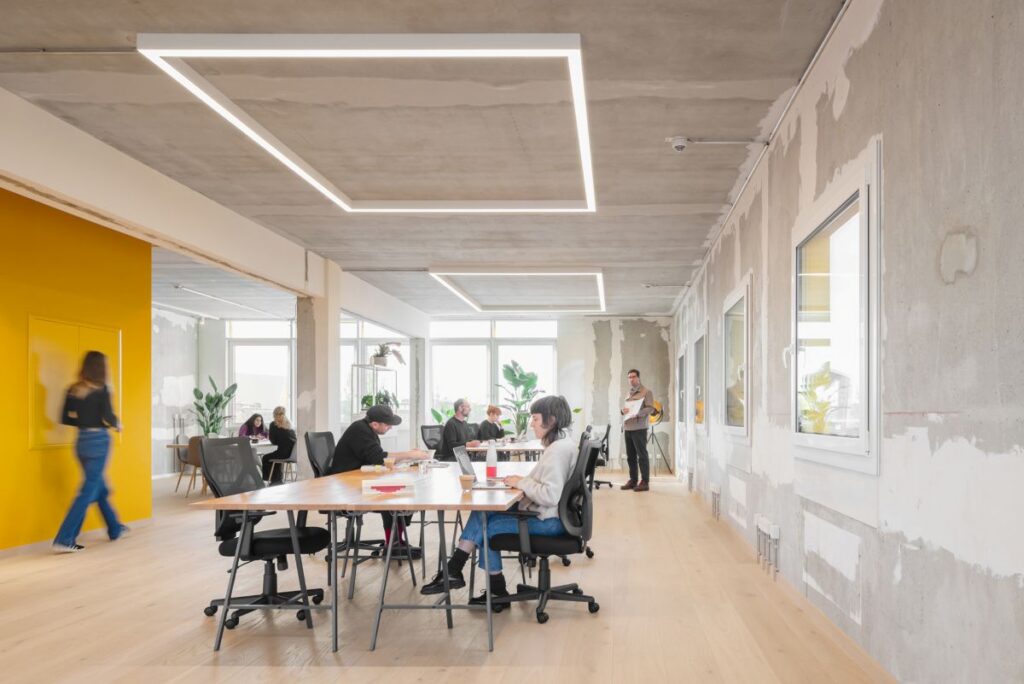
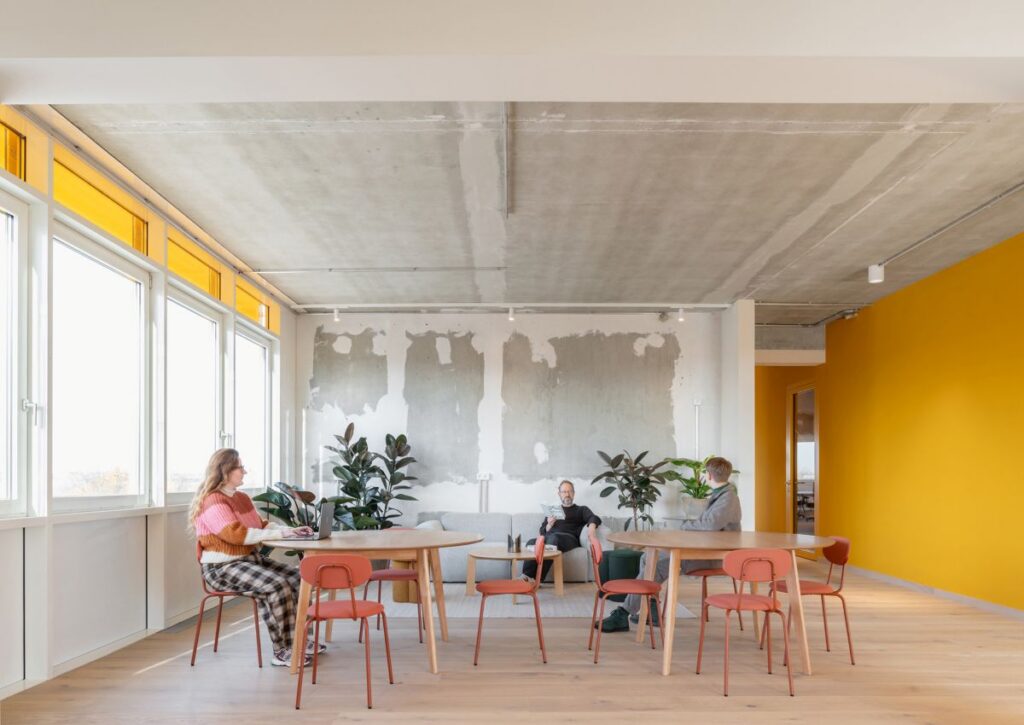
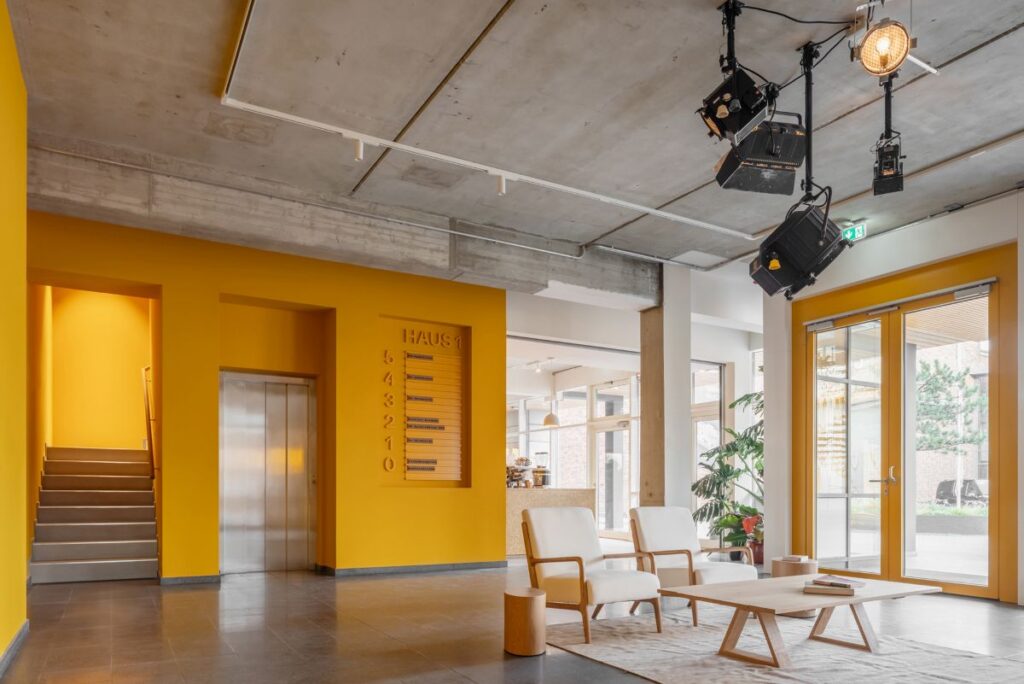
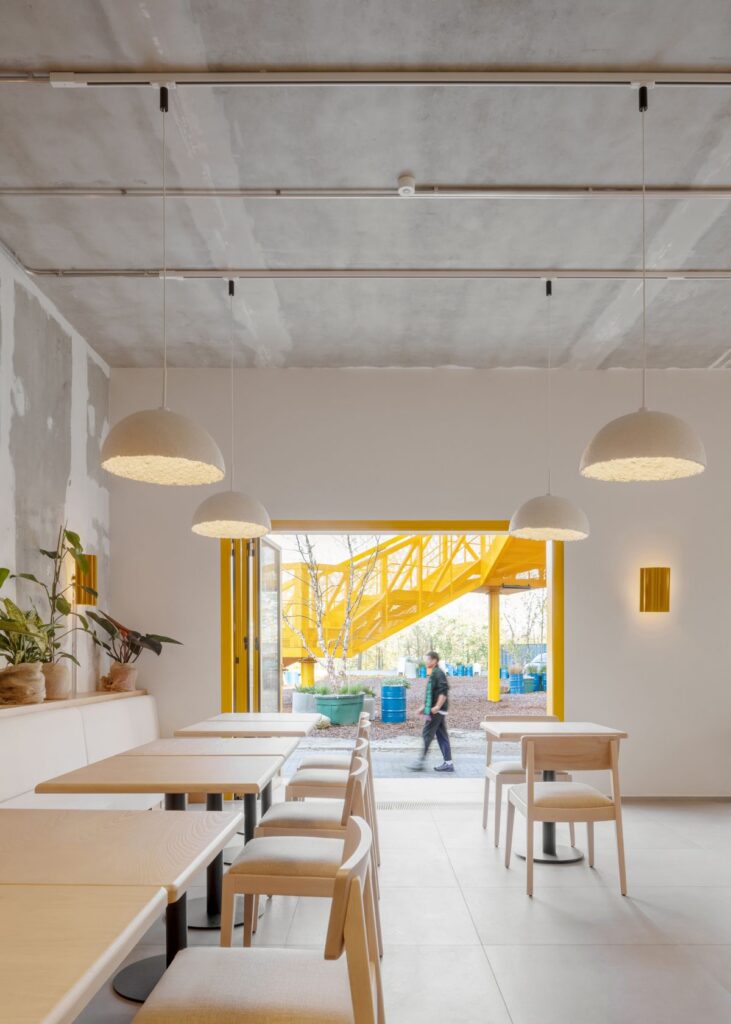
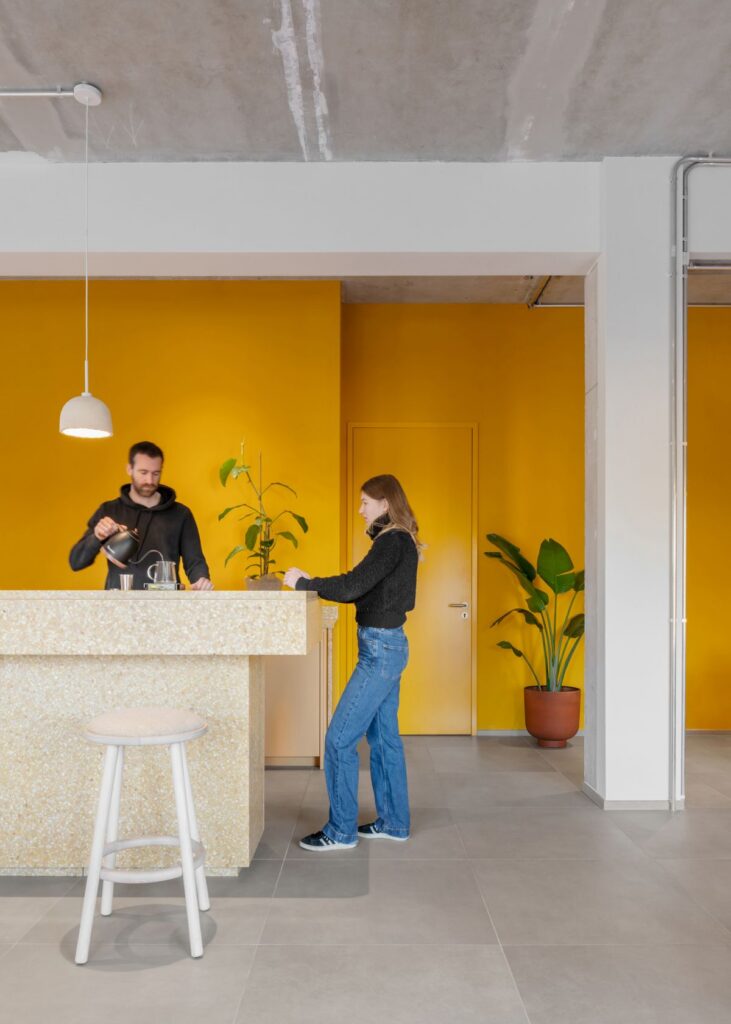
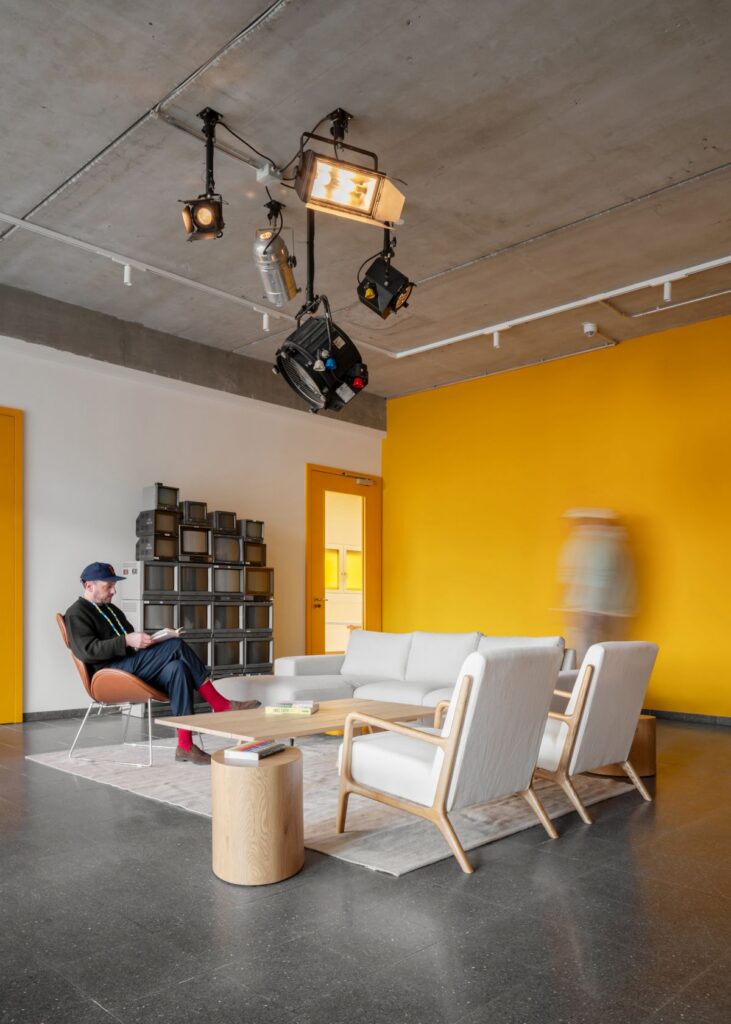
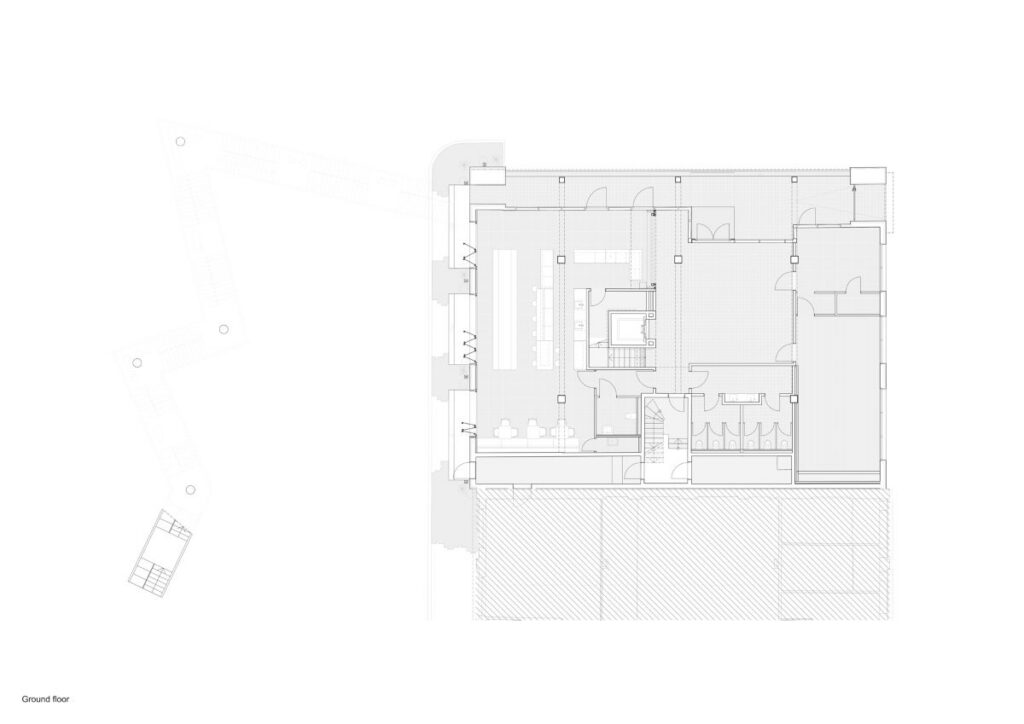
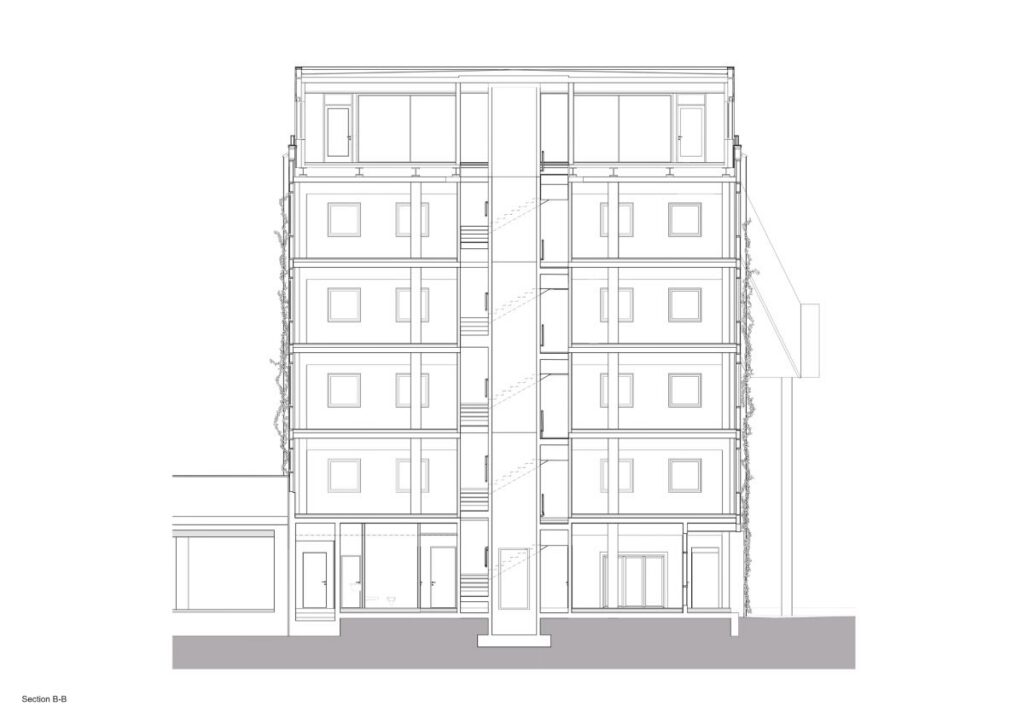
The interior has been designed such that there is room for flexible work areas, meeting facilities, and other hospitality features, including the head office of Atelier Gardens and a cafe. The layout of the floor has been made simple and adaptable for future renovations and change in functions. This makes the building more durable and less prone to destruction in future.
Interior workspace showing adaptable office environments and collaborative meeting areas © MVRDV
What makes HAUS 1 unique is that it perceives transformation as an advantage and not as a disadvantage. Far from attempting to hide the structure’s past life, the scheme utilizes adaptive reuse as a form of architecture to demonstrate that it is indeed possible to transform old buildings to fit into today’s environmental and social standards. Through HAUS 1, the Atelier Gardens brand remains in the constant process of transformation.