
Curated by ArchiRev Editorial | Feature Story | Published May 12th, 2026 | Source: Snøhetta
Typologies: Museum & Gallery
Status: Completed
Location: Lillehammer, Norway
Client: Lillehammer Art Museum
Size: 2,700 m²
Photography: Lars Petter Pettersen, Mark Syke
In 1994, Lillehammer prepared to host the Winter Olympics. Rather than centering that moment solely on sport, the city made a deliberate choice to invest in art and culture — and at the heart of that decision was an expansion of the Lillehammer Art Museum. Snøhetta was commissioned to design an addition to the original building by Erling Viksjø, completed in 1963. It would be the firm’s first museum building, and it remains one of the most recognized works in Norwegian museum architecture today.
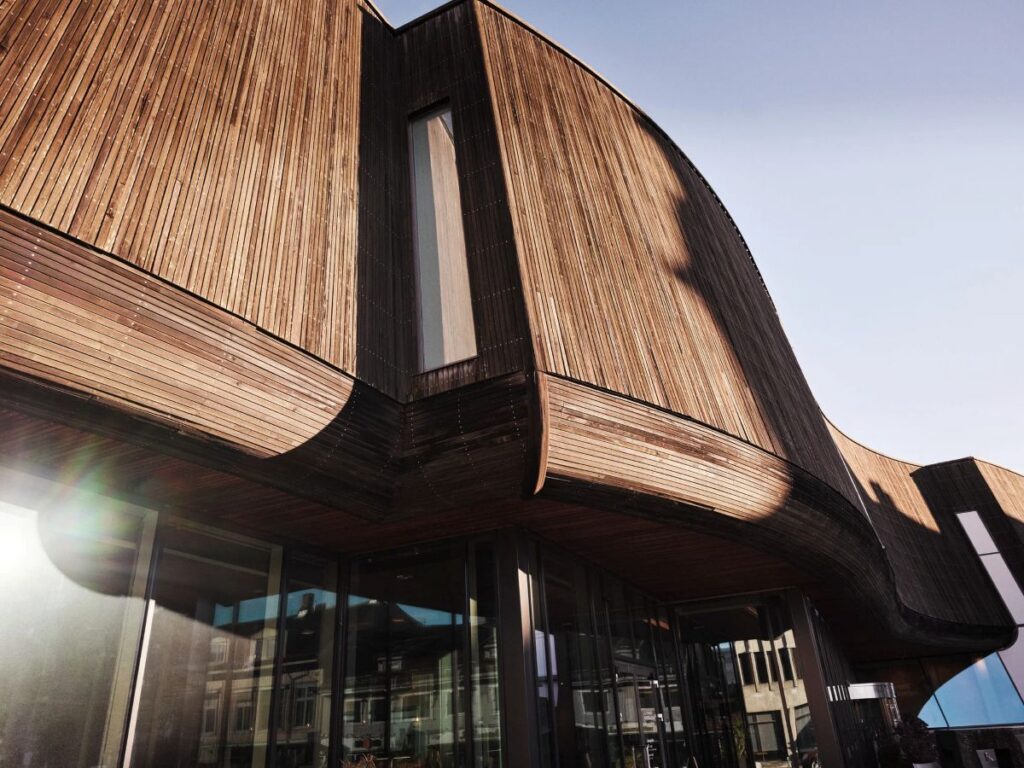
Viksjø’s original building is defined by natural concrete — a façade treatment he developed himself, textured and raw in its character. Snøhetta’s response moves in a different direction. The extension presents a pronounced, softly swinging wooden façade to Stortorget, the main square of Lillehammer. Where the existing building meets the city with weight and mineral solidity, the new addition introduces warmth and curvature — a contrast that is neither competitive nor apologetic, but deliberate.
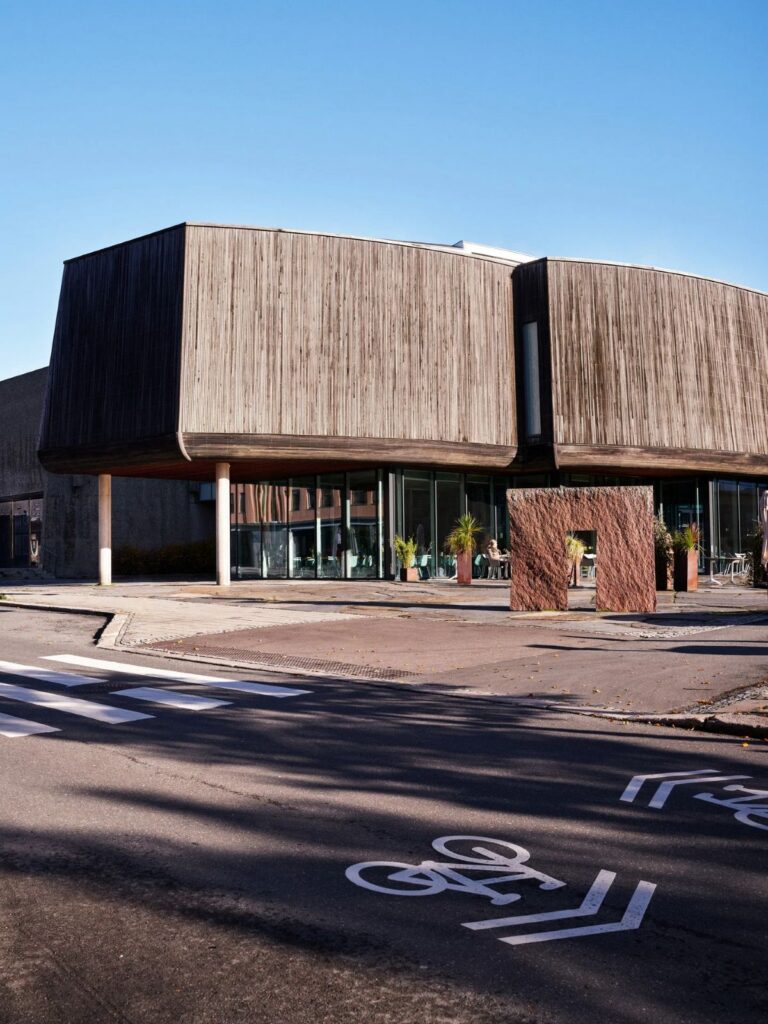
Exterior view of the Snøhetta extension facing Stortorget © Snøhetta
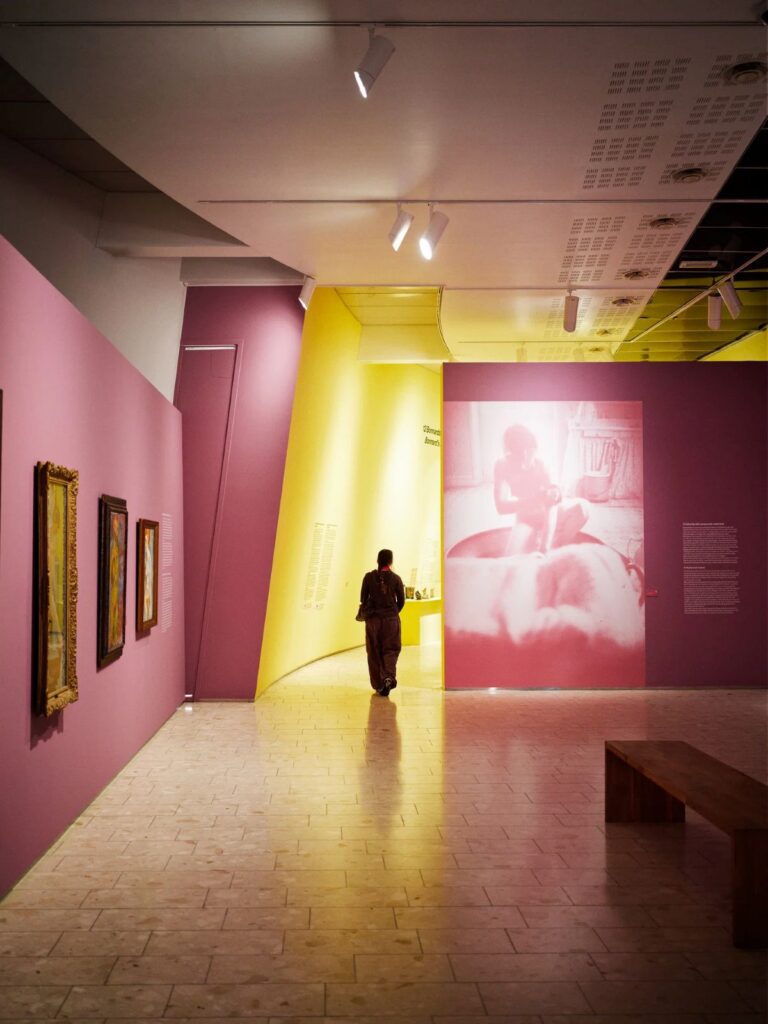
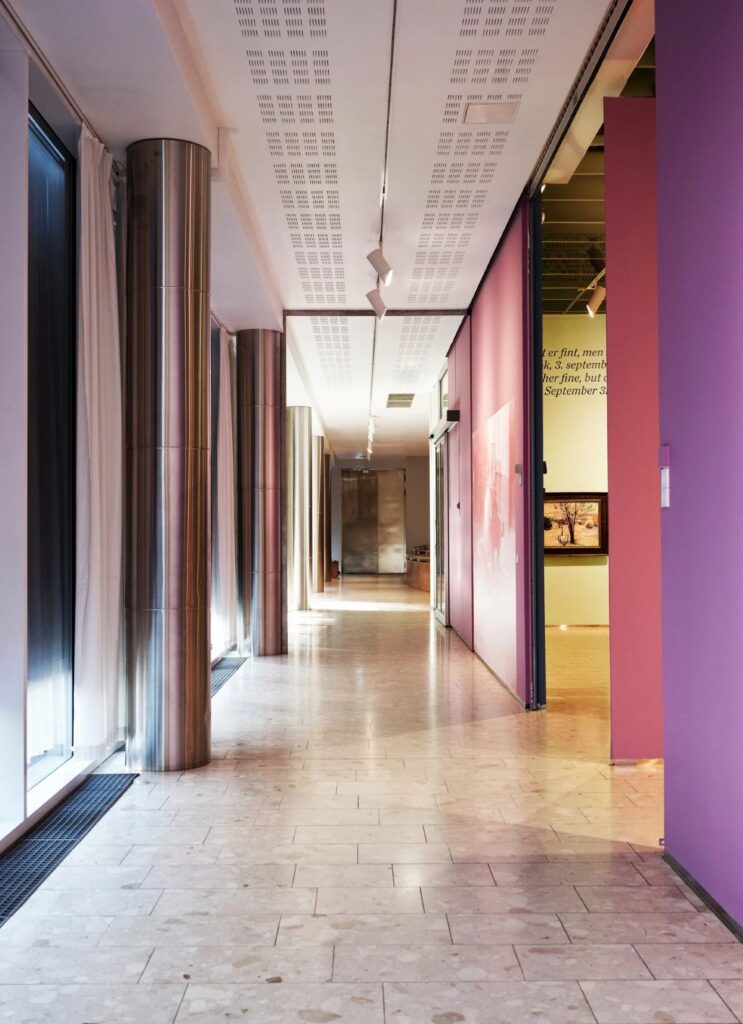
Inside, the division between public and exhibition spaces shapes the building’s internal logic. The entrance level and public areas are kept as transparent as possible, open to the geometry of the surrounding urban fabric and the adjacent plaza.
The exhibition spaces above are different in character entirely — softly tilted, curved volumes clad in untreated Siberian larch. Their forms draw not from the city grid below, but from the distant outline of Lillehammer’s gently curved mountains visible on the horizon. The building, in this way, negotiates between two scales simultaneously: the immediate urban context at its base and the wider landscape at its crown.
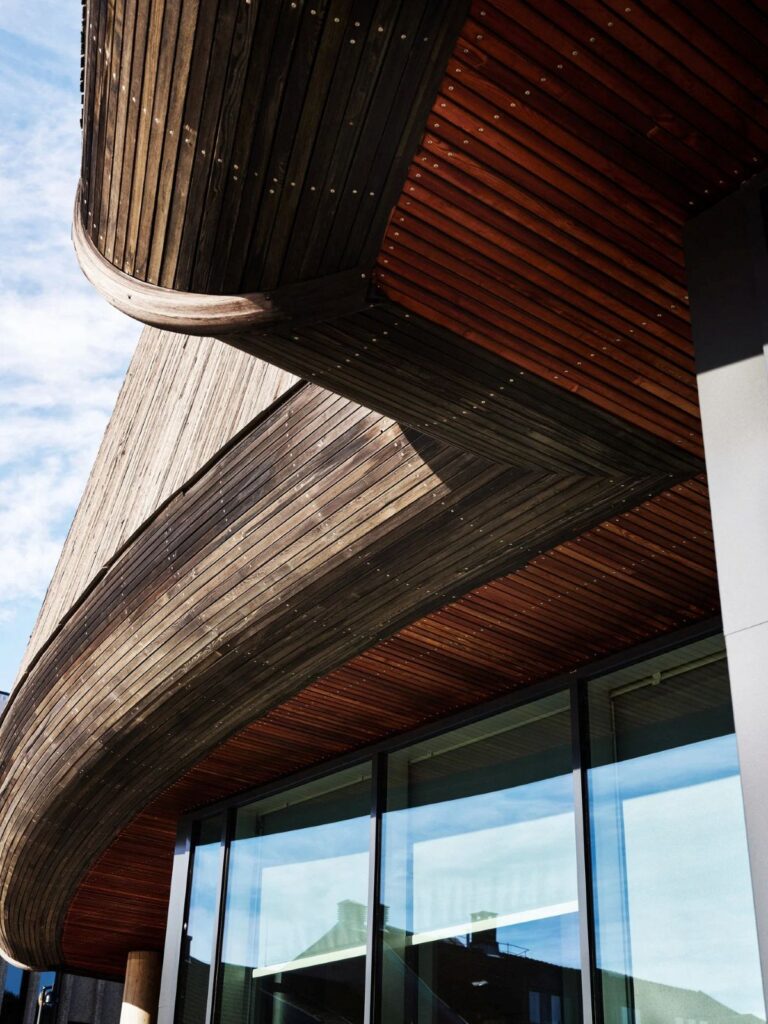
Curved wooden façade of the extension facing the public square © Snøhetta
The curved, instrument-like quality of those upper volumes eventually gave the building an informal name among locals — “the grand piano.” The nickname arrived without prompting, but it echoes an idea that was already present in the design: the museum as a resonance body, a space that amplifies and holds what is placed within it.
Interior exhibition gallery with curved larch-clad walls © Snøhetta
Connecting the new Snøhetta building to the original Viksjø structure is a glass bridge — a light, transparent joint that links two generations of the museum without blurring the distinction between them.
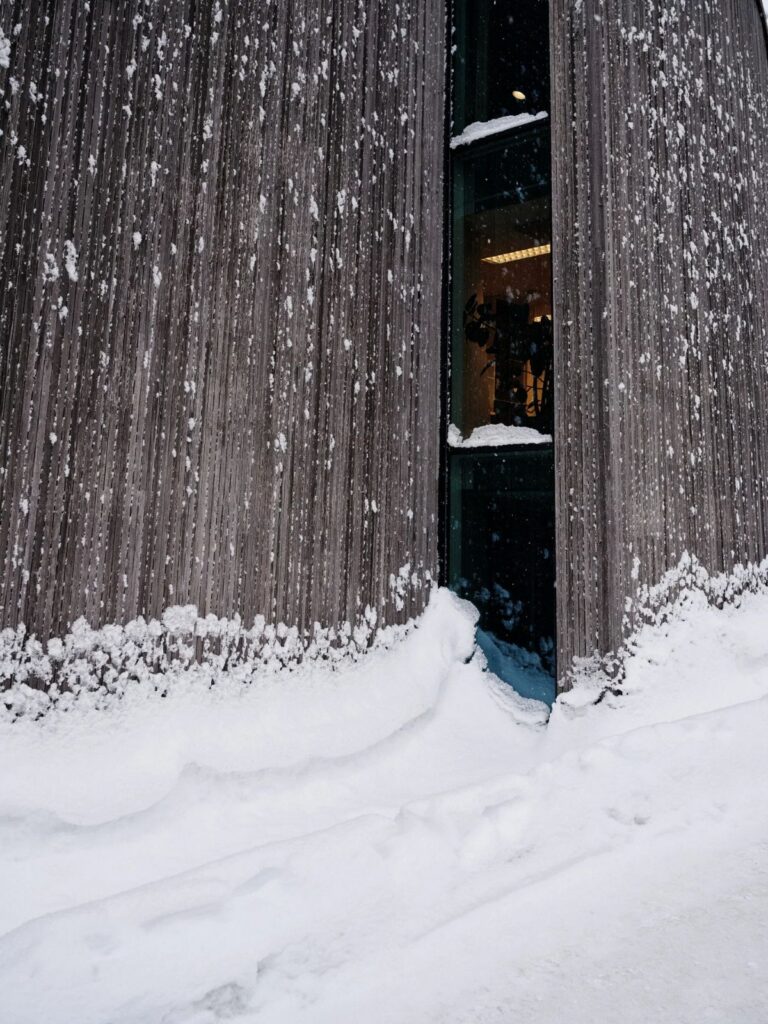
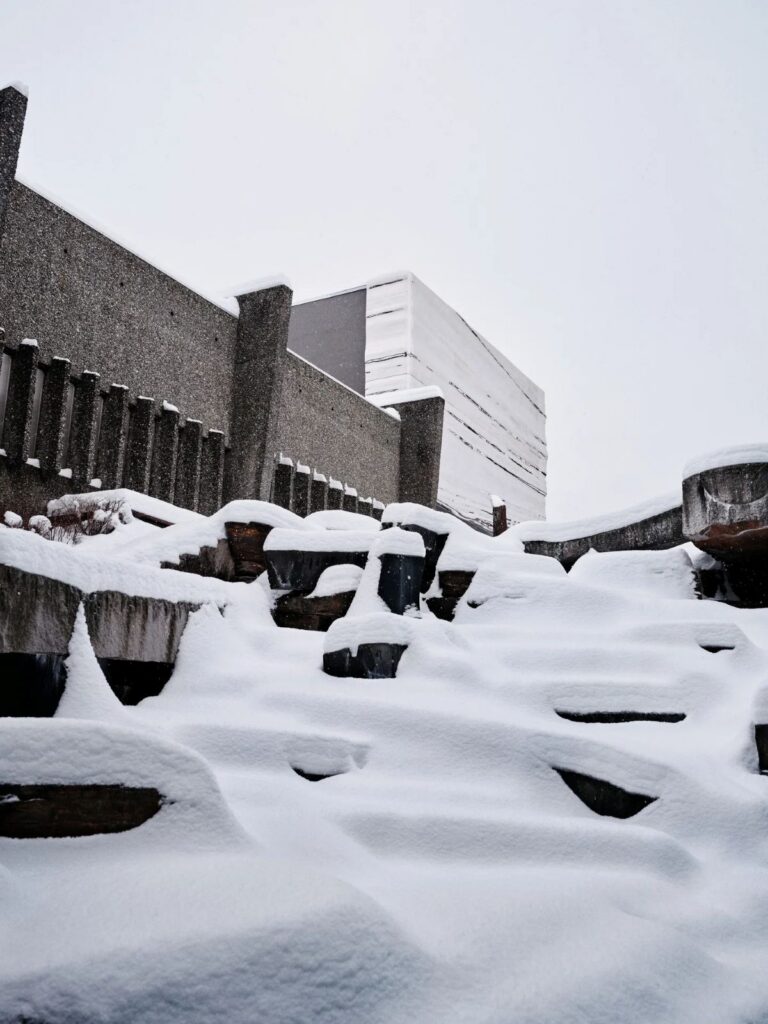
Upper gallery volumes showing the curved larch-clad forms © Snøhetta
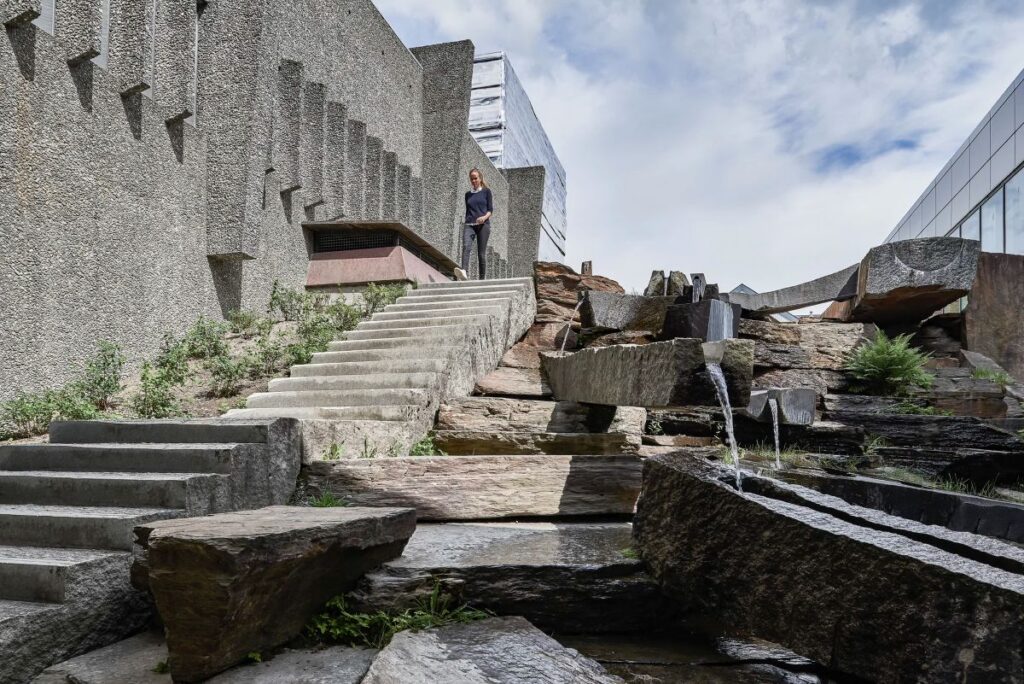
Beneath it, an art garden was developed in collaboration with artist Bård Breivik, featuring watercourses and natural stone gutters set between the two buildings. The garden functions as both a threshold and a destination — a quiet outdoor space that makes the passage between old and new into something worth pausing in.
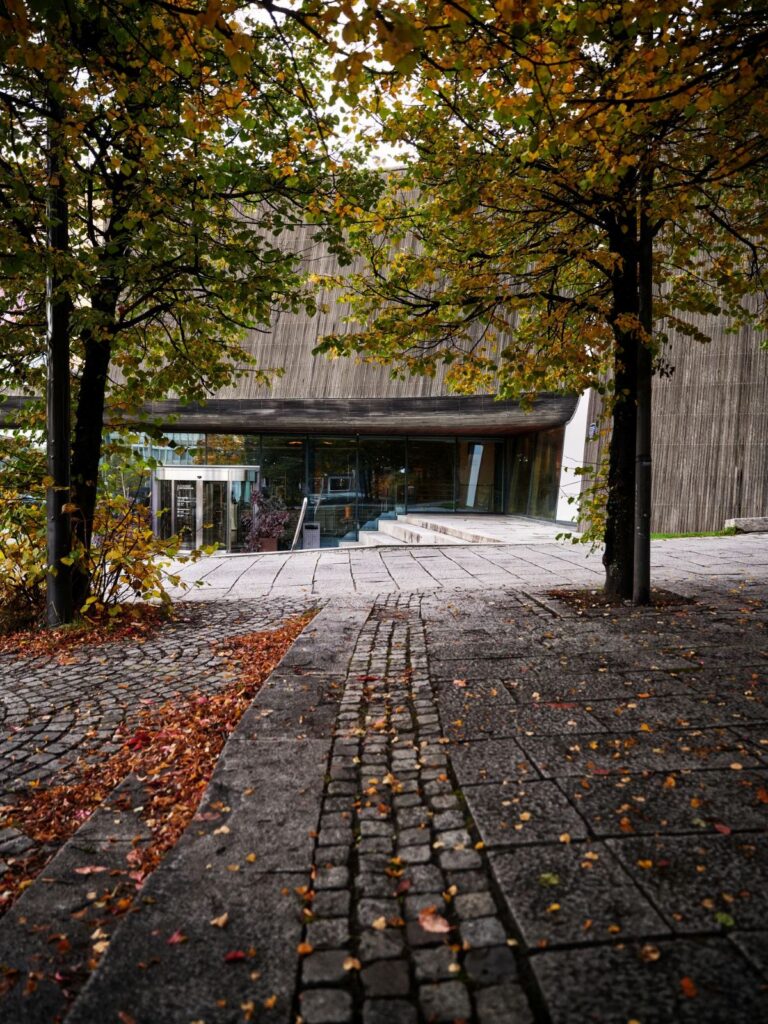
Art Garden with watercourses and stone gutters between the two museum buildings © Snøhetta
The Snøhetta extension is now considered the main building of the museum. What began as an addition to an existing structure became, over time, the face of the institution. That shift was not the result of scale alone — the extension measures 2,700 square meters — but of a design that found a way to be both responsive and independent, rooted in its site while remaining open to what surrounds it.
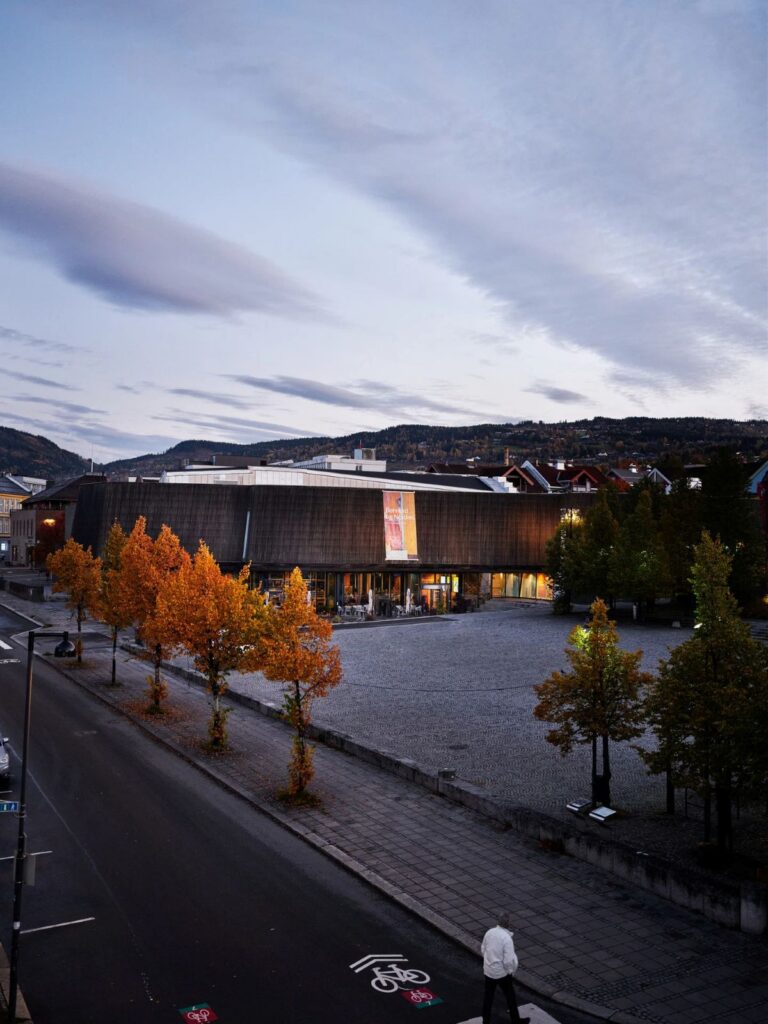
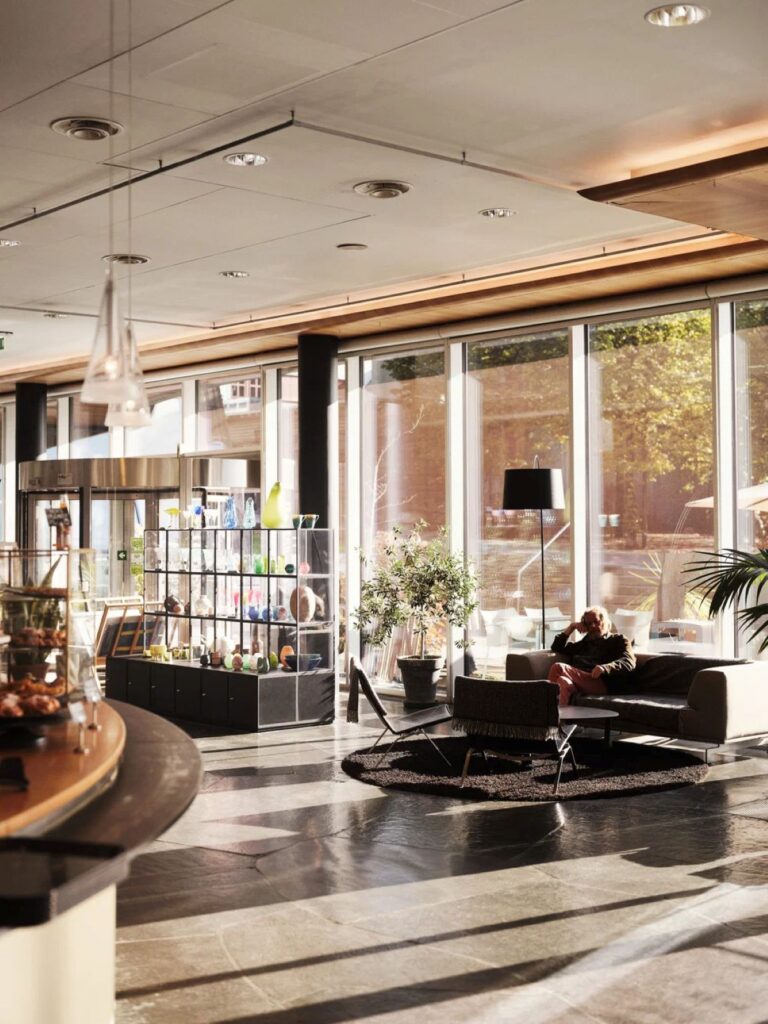
Interior public entrance level with views toward the plaza © Snøhetta