
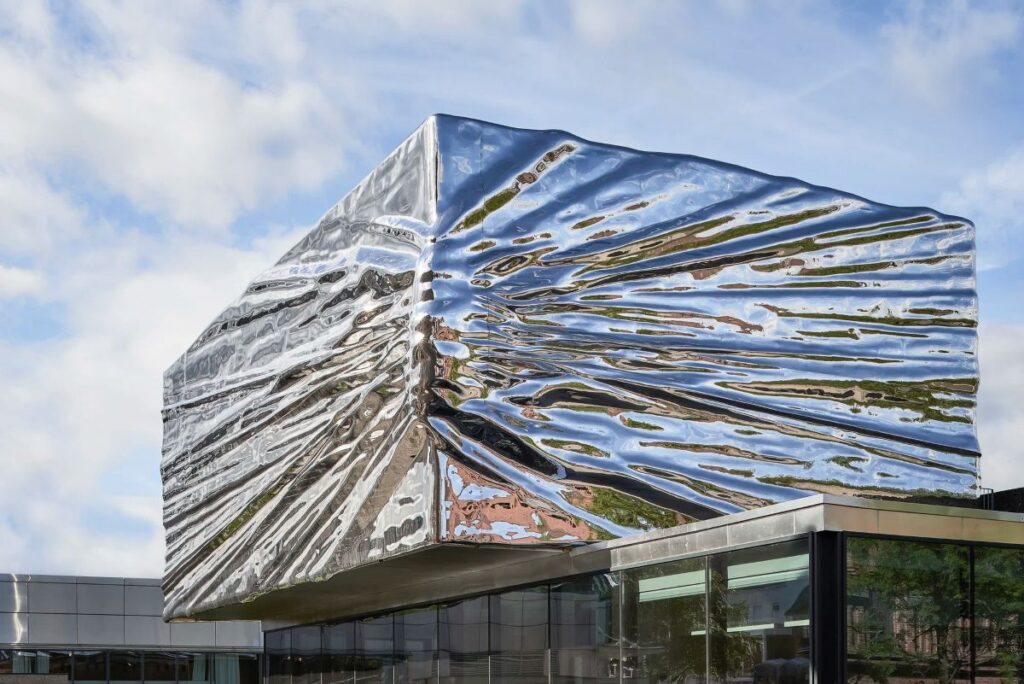
Overview of the full museum and cinema complex from the plaza © Snohetta
Curated by ArchiRev Editorial | Feature Story | Published May 12th, 2026 | Source: Snøhetta
Art Typologies: Museum & Gallery, Transformation & Expansion
Status: Completed
Location: Lillehammer, Norway
Client: Lillehammer Municipality
Size: 1,700 m²
Photography: Mark Syke, Ketil Jacobsen, Lars Petter Pettersen
22 Years after finishing their first renovation of the Lillehammer Art Museum, the architectural firm of Snøhetta had returned once again to Lillehammer to create an even larger development. Unlike the previous expansion where they built one building, this new project was to integrate three different buildings (the original Erling Viksjø designed building from 1964 and Snøhetta’s own addition built in 1994 and the adjacent Lillehammer Cinema) into a cohesive design.
The new 1700m2 expansion was completed in 2016 and provides additional space to each of the three facilities while connecting them through the use of landscaping, walkways and entrances.
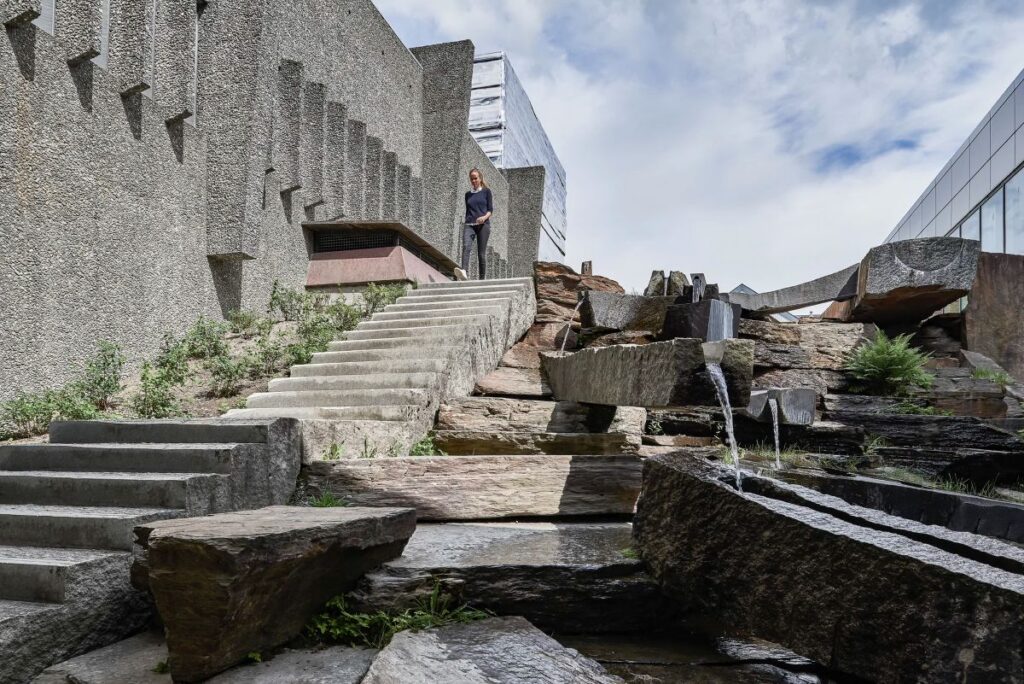
Exterior view showing the relationship between the three buildings © MVRDV
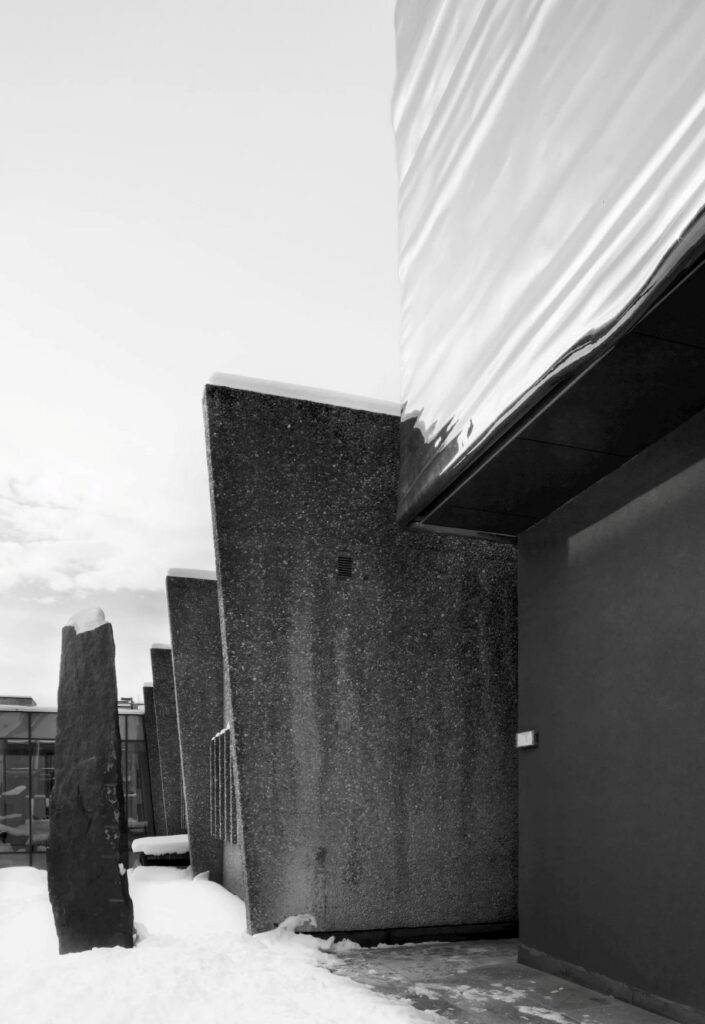
The site’s history is prevalent in every aspect and decision made on the new project. In fact, Viksjø’s original building, built in 1964, is viewed today as an example of a pure work of architecture from that time period; i.e., this building has been constructed of textured, natural concrete, carries the weight of a civic building, and is oriented towards the public life found at Lillehammer’s central square.
The 1994 addition by Snøhetta responded to this history with the introduction of larch-wood clad, curved volumes that bridge the orthogonal geometry of the city and the soft curves/contours of the surrounding landscape. In comparison to either of these two historical references, the 2016 addition was designed to connect the existing structures to each other to create an overall identity for the site while preserving the existing individual voices of the individual buildings.
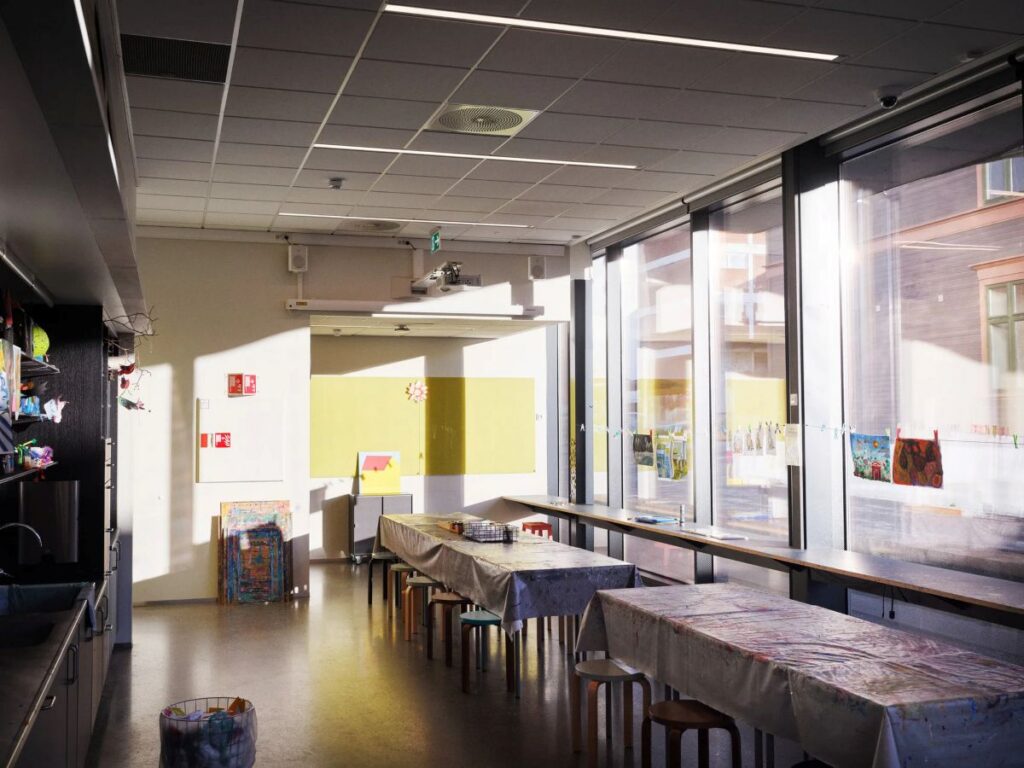
Ground-level children’s workshop with floor-to-ceiling glazing © Snohetta
The new gallery is built on the premise that art will float above a transparent element. The new gallery will have a children’s workshop that has been created behind a wall of windows, which can be seen through from the street and the art-created garden behind.
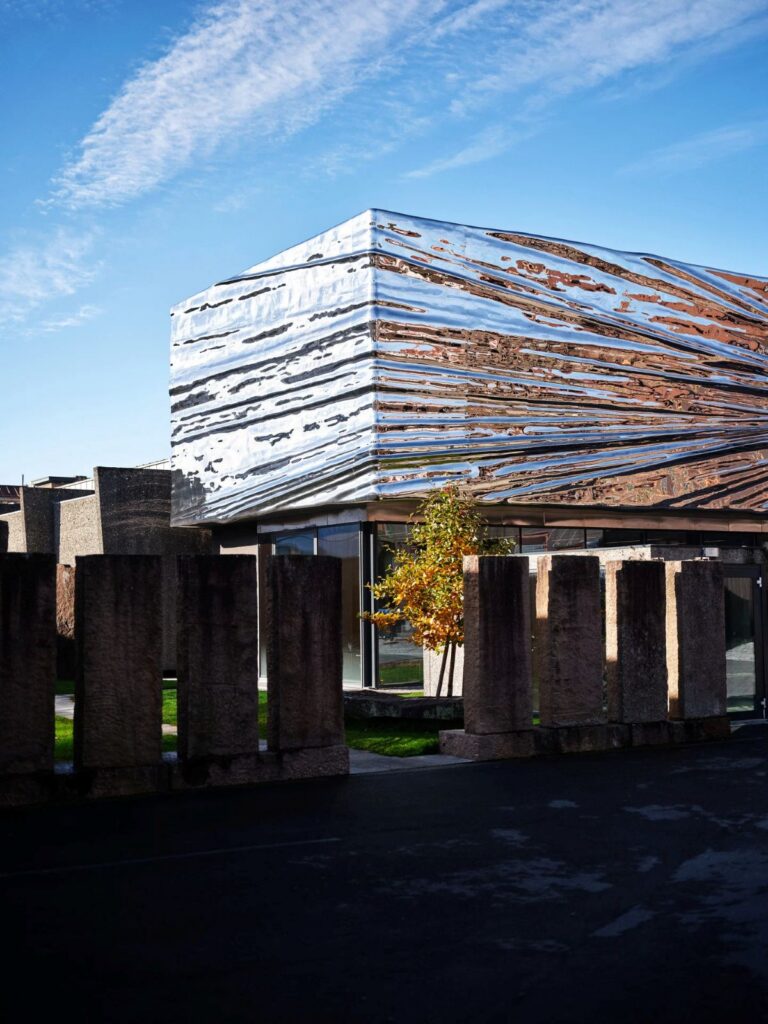
The new gallery will also include an exhibition hall that will extend beyond the edge of the wall, creating a visually stimulating shape made of metal that changes with light during different times of the day. Each of the two parts of this gallery, an open, accessible area for the children and a closed space for exhibiting artwork, created in different levels in relation to the flooring, creates a spatial hierarchy by virtue of their differences in scale alone.
The Weidemannsalen hall, located above this gallery, has been specifically designed to accommodate the artist Jakob Weidemann, an artist born in Lillehammer in 1923 whose work is pivotal in shaping the art history of Norway. The metal outer shell of this gallery was created by the late Norwegian artist Bård Breivik, who previously collaborated with Snøhetta on the design of the art garden developed during the 1994 expansion of the museum.
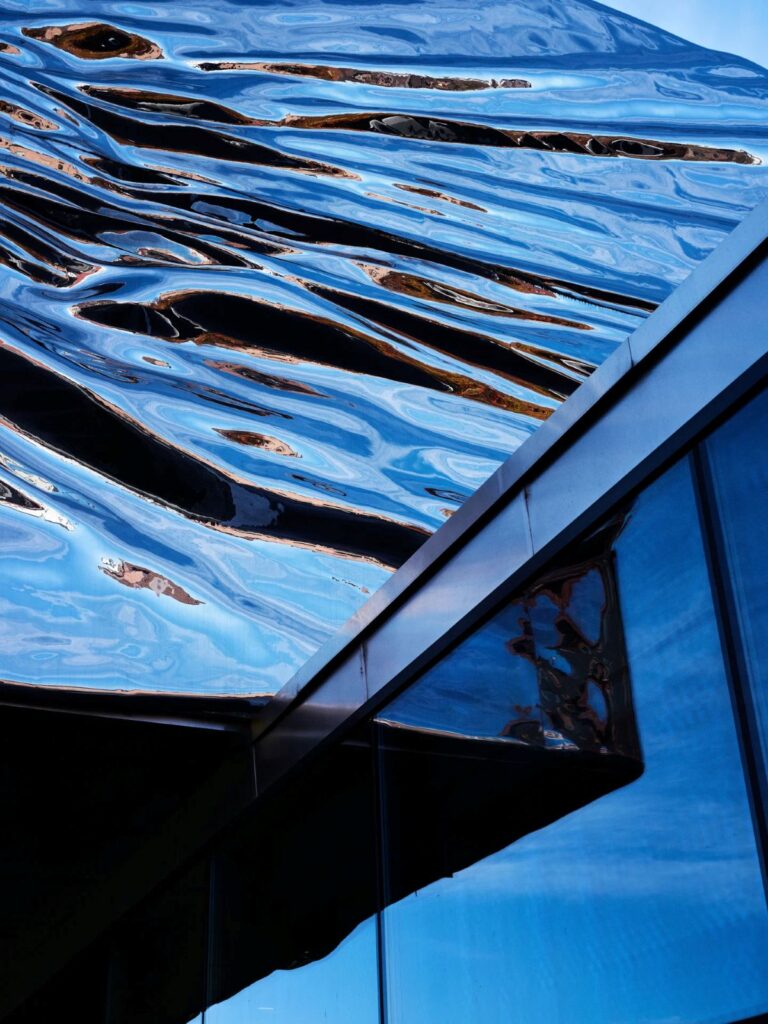
Weidemannsalen metallic façade with stainless steel relief panels © Snohetta
Breivik’s outer metal shell consists of driven, highly polished stainless steel with approximately 25 cm deep reliefs. Its conceptual basis is derived from the concept of a shooting star, which was used as a metaphor to represent Weidemann’s place in Norwegian painting. The outer metal shell reflects its surroundings and changes as the light changes, making the gallery have an appearance that is both dynamic and neutral.
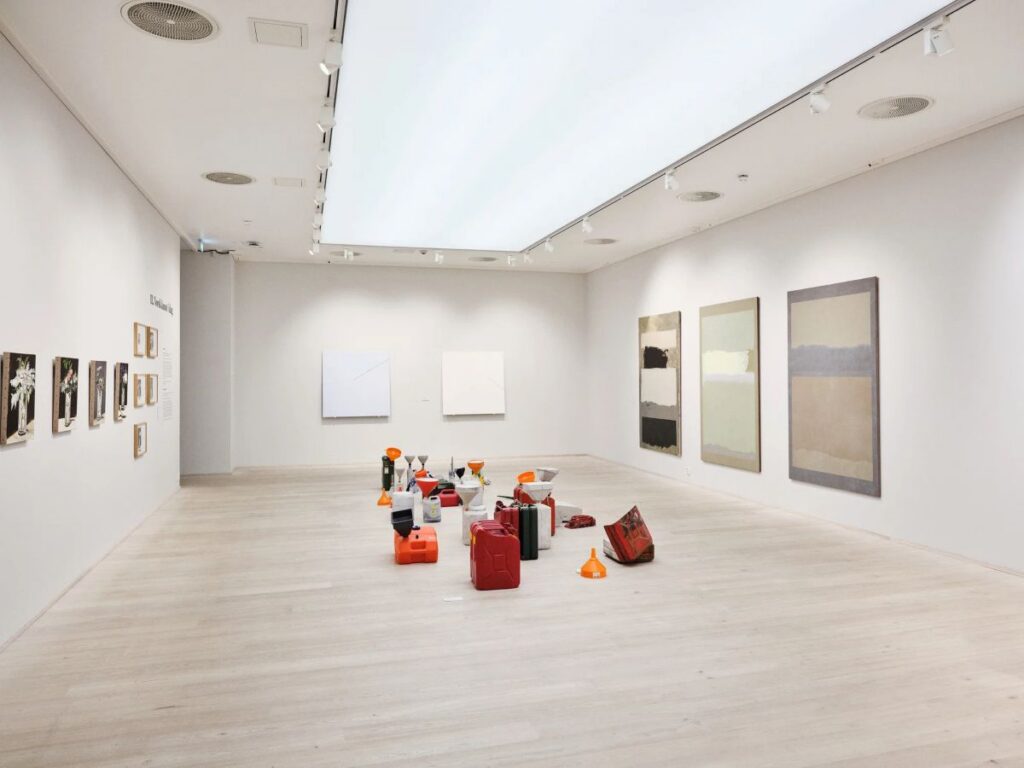
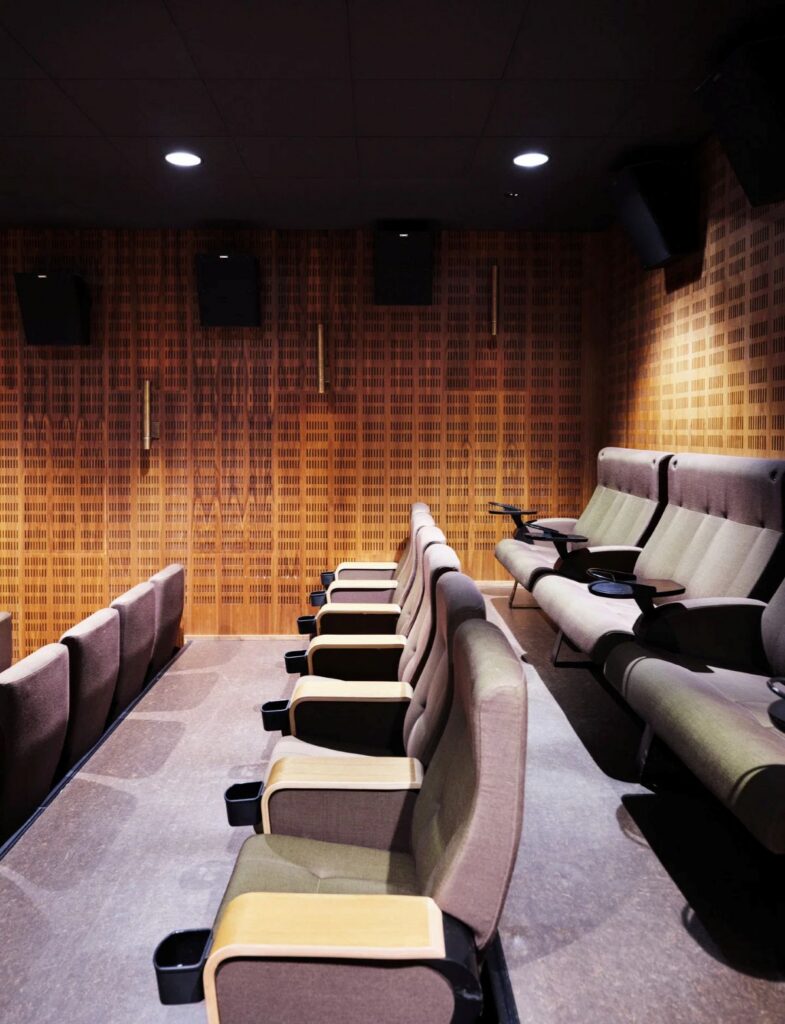
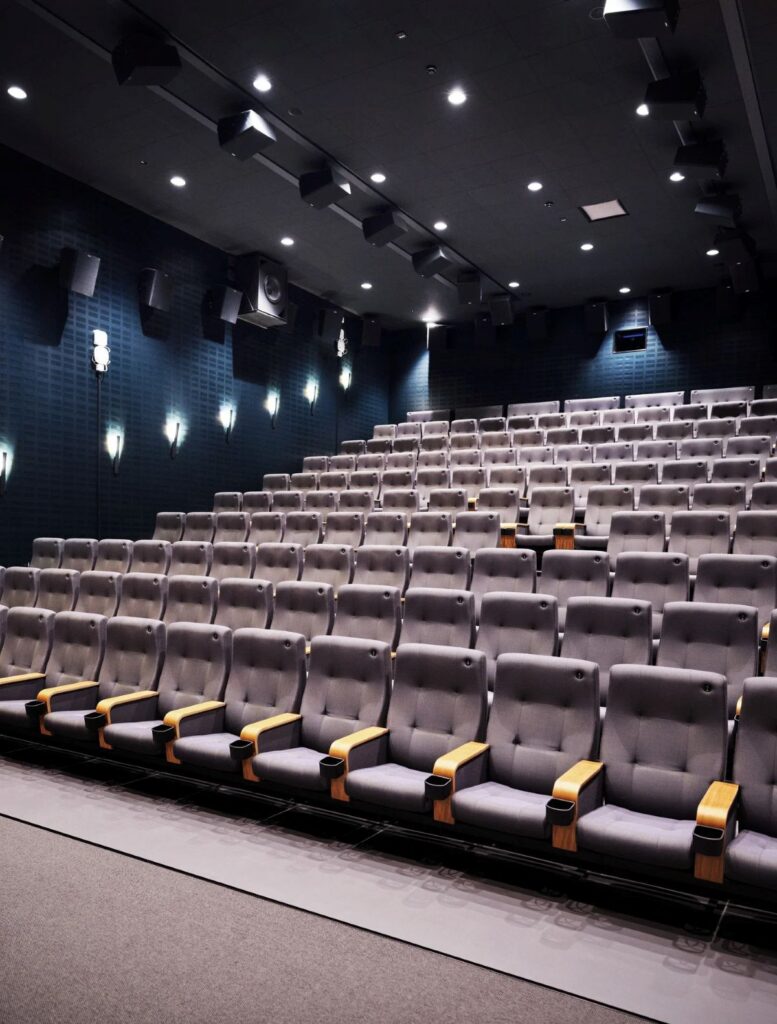
The project includes adding two new auditoriums to the Lillehammer Cinema while also renovating existing circulation areas. One of the new auditoriums has been integrated directly into the existing building; the other is positioned below the art garden, in the space between the museum and the cinema, and is buried underground in a way that uses landscaping as both structural elements and a cover.
The entrance facade of the cinema has been completely renewed and upgraded to pair well with the character of the original Viksjö building, which features a wall incorporated with artwork created by Odd Tandberg.
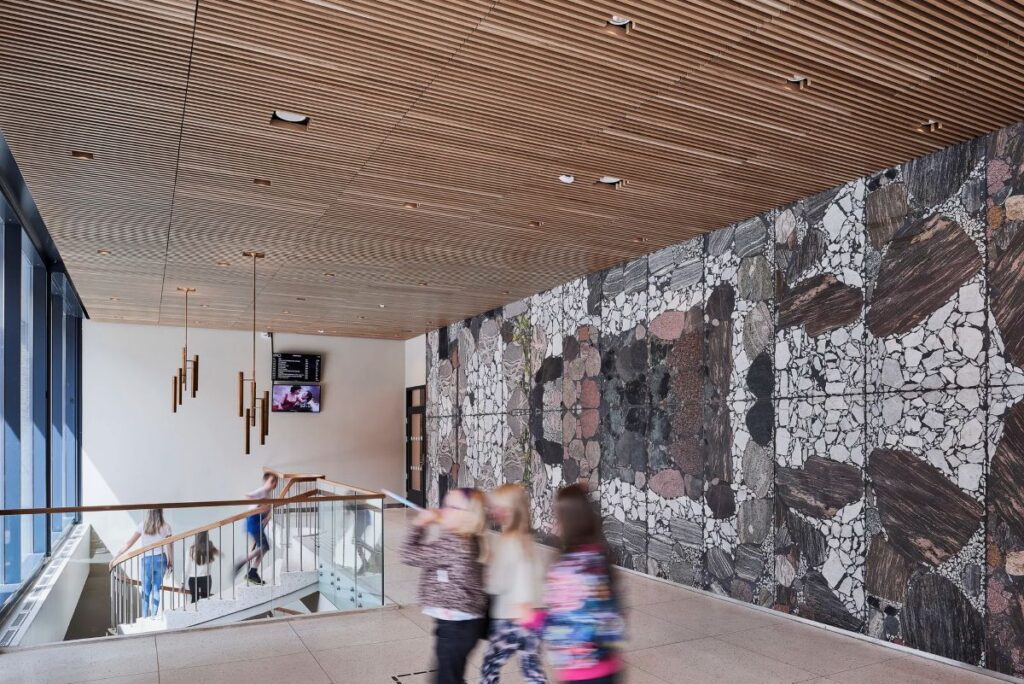
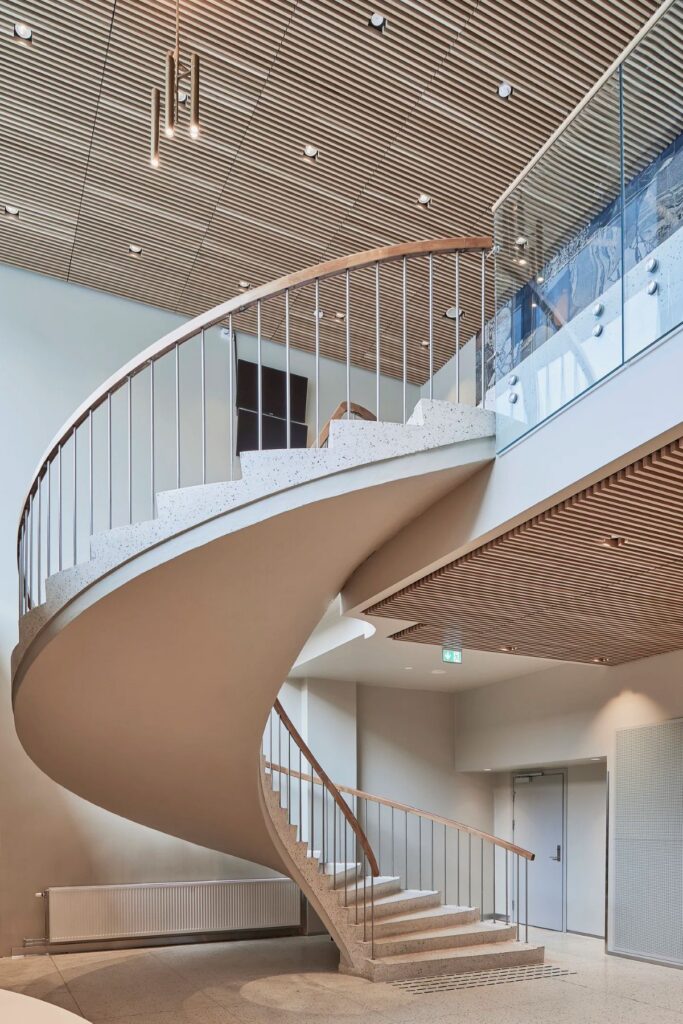
Renovated cinema entrance façade with Tandberg’s integrated wall art © Snohetta
The purpose of the work that was done to the cinema was inspired by Viksjö’s original vision for the building. In his original design, Viksjö imagined that the foyer would be an extension of the plaza located directly in front, continuing public space and not creating an interior vs. exterior division.
This relationship diminished over time, but the renovation in 2016 has restored that relationship, reopened the foyer back to the square, and returned Tandberg’s wall art back to its intended use as part of the city instead of simply being a feature located inside a building.
Art Garden with watercourses connecting the museum and cinema volumes © Snohetta
The three volumes, both old and new, the museum, and the cinema, are connected through the Art Garden, which was developed in collaboration with Bård Breivik as part of the expansion in 1994. The project for 2016 included enhancing how the spaces between the buildings worked together. The garden continues to function as the unifying element on which each structure was built, with water features and natural stone features. It is not a leftover space between the buildings; it is an element that permits the whole group of buildings to exist as one connected whole.