
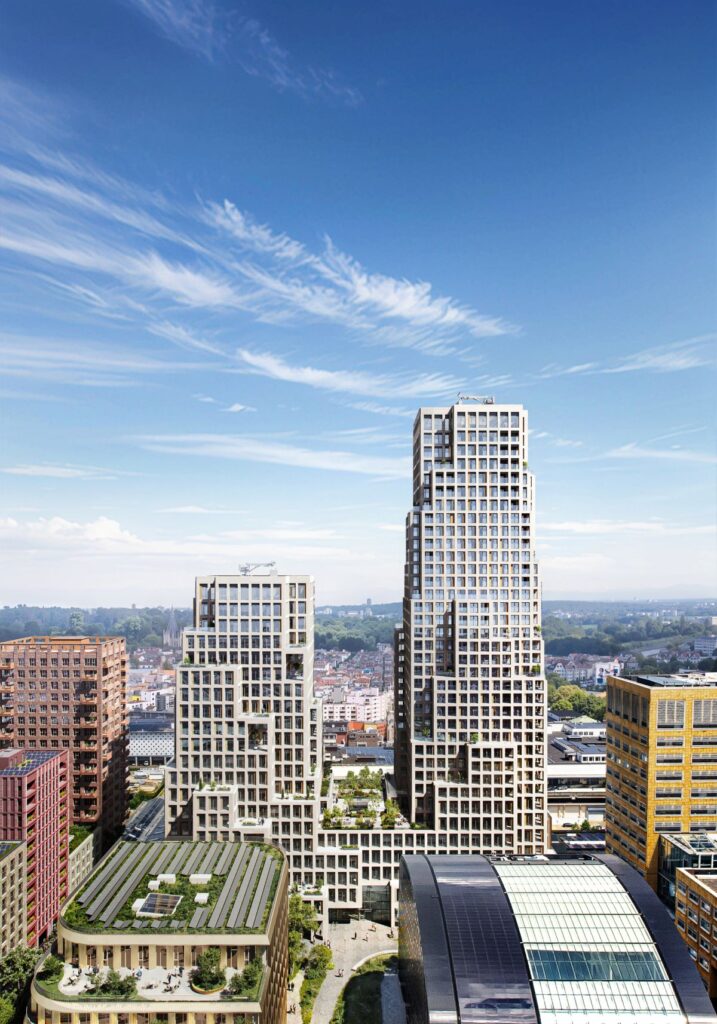
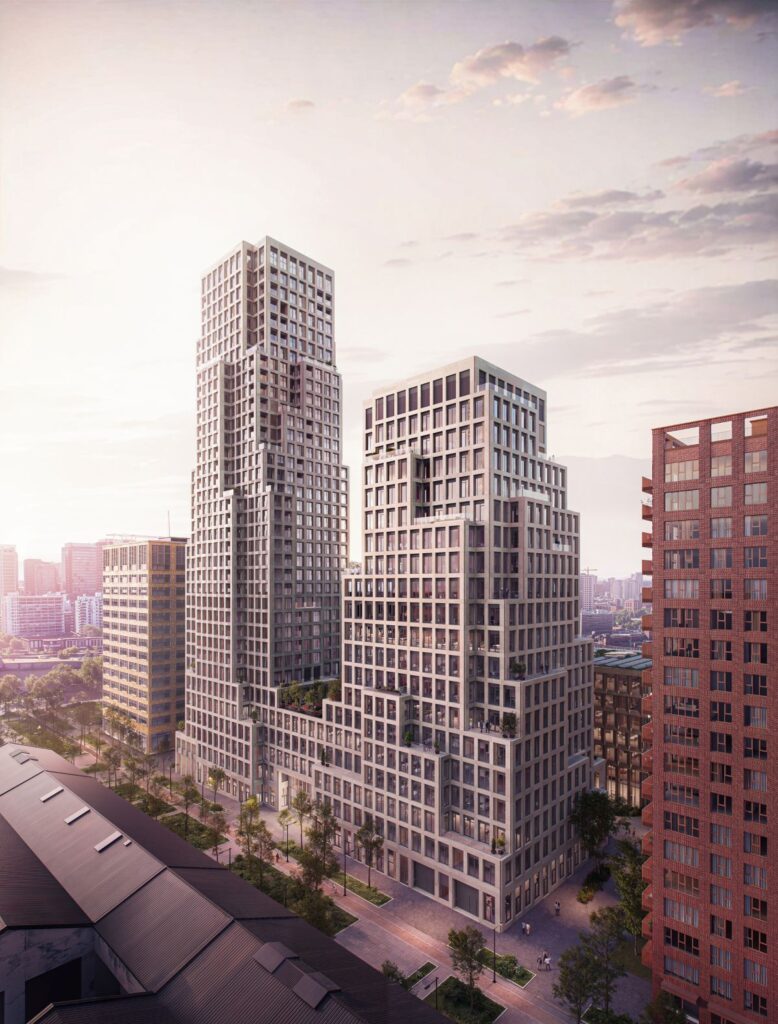
Aerial/hero view of the dual towers © MVRDV
Curated by ArchiRev Editorial | Feature Story | Published May 9th, 2026 | Source: Snøhetta
Location: Brussels, Belgium
Year: 2021–
Surface: 58000 m²
Client: Nextensa
Programmes: Mixed use, Offices, Retail, Residential
Themes: Architecture, Housing, Mixed use, Sustainability, NEXT
Certifications: BREEAM Outstanding, WELL Platinum, DGNB Gold
The Tour and Taxis Towers represent a deliberate shift in how we build, measure, and experience density and are therefore a part of an ongoing urban strategy to consolidate residential, commercial, and public functions in one vertically stacked profile to resist sprawl but promote adaptiveness.
The 126-meter-tall towers, while the tallest structure on the Tour and Taxis site, represent more than height alone; their value lies in the relationship of programme, carbon, and continuity of the urban environment.
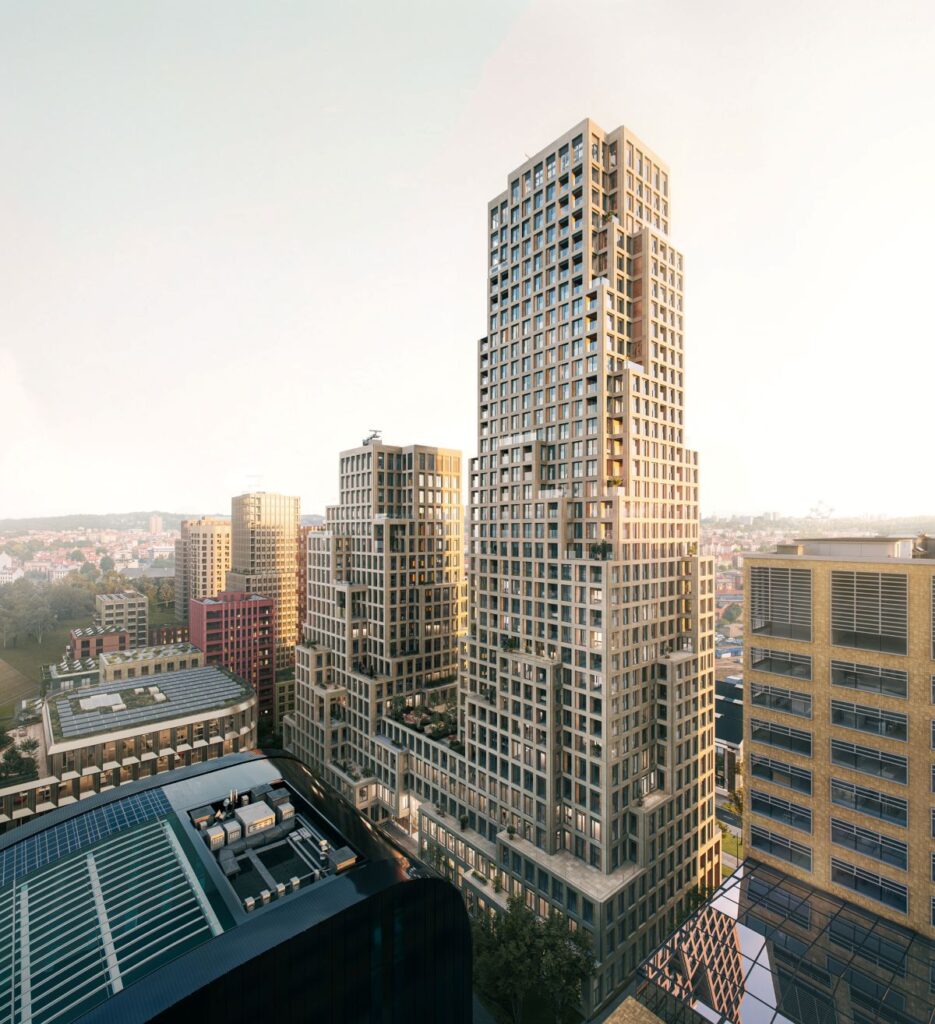
Street-level exterior view © MVRDV
The towers are made up of two distinct towers anchored to a 5-story base building; one tower creates 20 floors of office space, while the other creates 35 floors of residential apartments, providing 199 residential units. The base acts as a working and public utility space for both towers, with an expansive terrace that stitch together part of the base’s=programme.
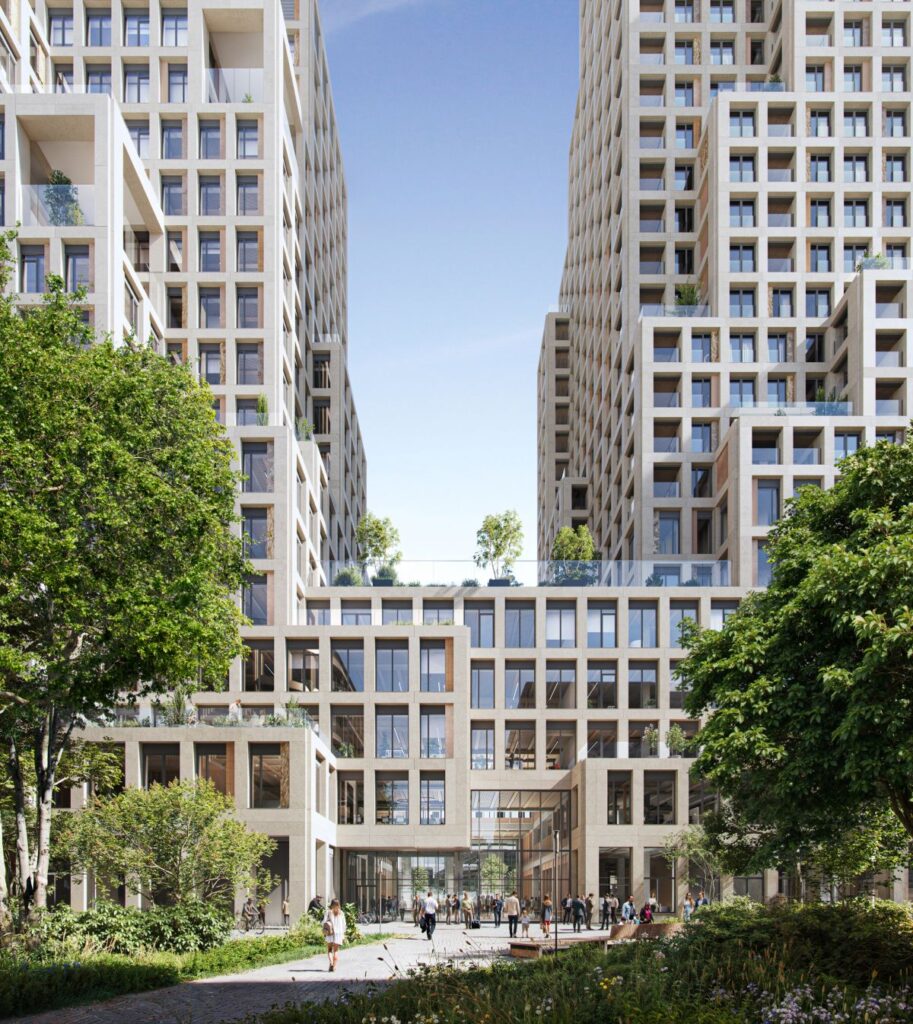
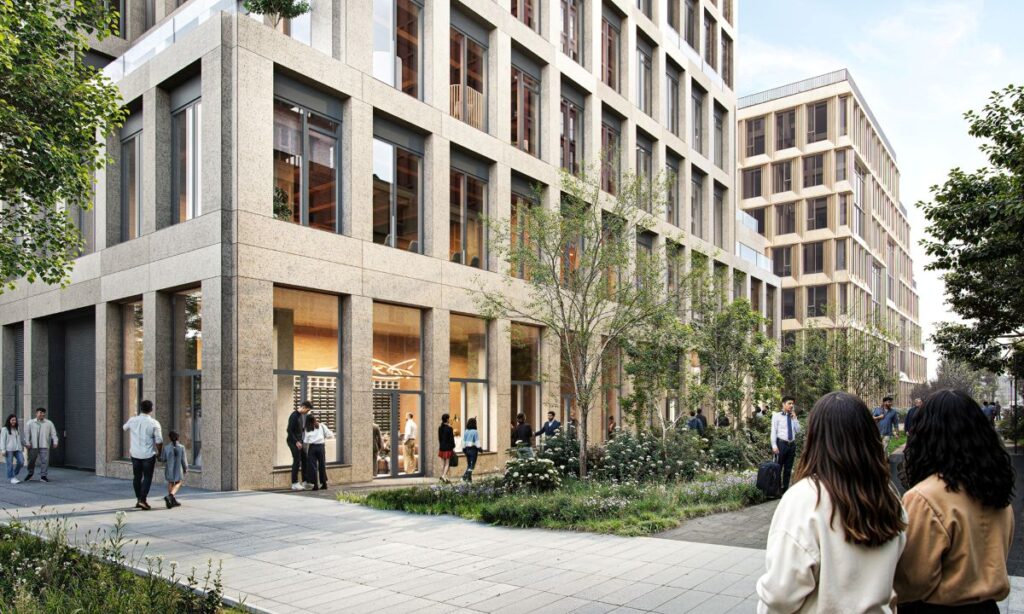
However, the base itself is not entirely passive. A central corridor runs through the base, providing connectivity to the adjacent neighborhoods while at the same time spilling into a large atrium, in the manner of an indoor plaza that visually connects to the activity taking place within both towers directly above. In this way, the base acts as a continuous connection between the building and the surrounding urban environment.
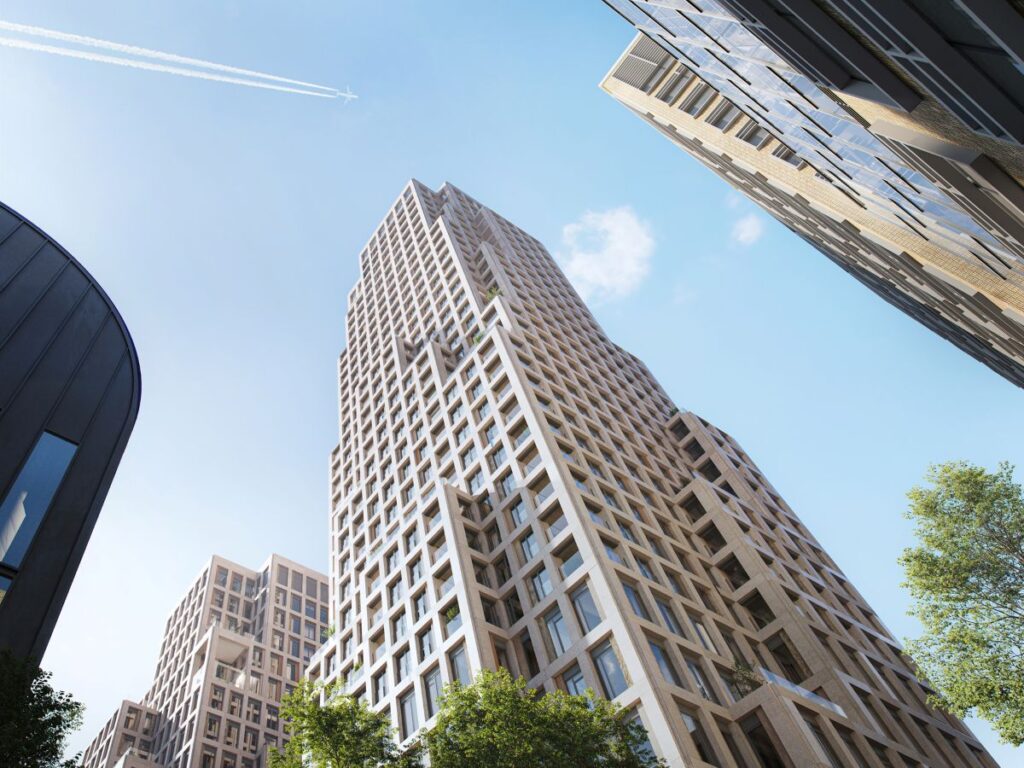
Tower facade detail © MVRDV
Instead of limiting the use of the building with a defined purpose, the design utilizes an adaptable modular system based on 2.7-metre (9’) increments of the facade, providing flexibility for the ways in which the building can be utilized as the needs of the area change.
The programming of the project is also hybrid in nature with a combination of retail, residential and office uses. This hybrid nature provides a physical connection between the residential zones created by the towers, and the administrative and commercial areas adjacent to the towers.
Plinth and ground-level view © MVRDV
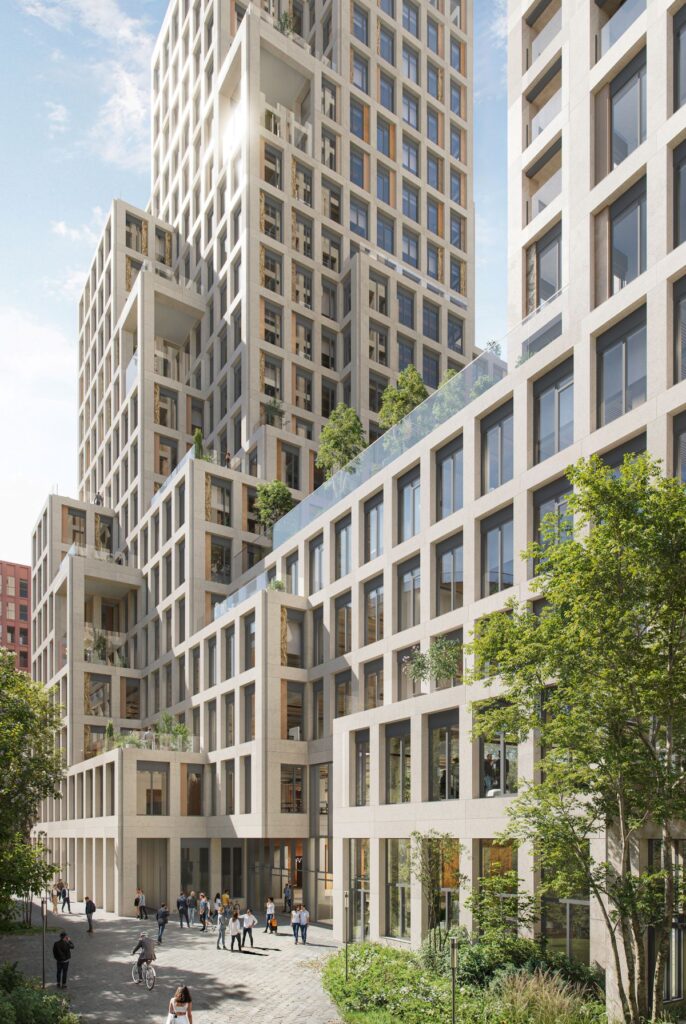
The towers are designed as carved forms rather than extruded forms, creating multiple levels of terraces to provide both private and public outdoor space. The design of the terracing was based on environmental studies focused on light and wind, allowing for the massing to be shaped to deliver a better level of comfort while maximizing the view through additional corner windows.
The form of the towers has been fragmented, reducing the scale of the towers to better transition between the different urban contexts within which the towers were located and introducing a more human-friendly vertical dimension to the buildings.
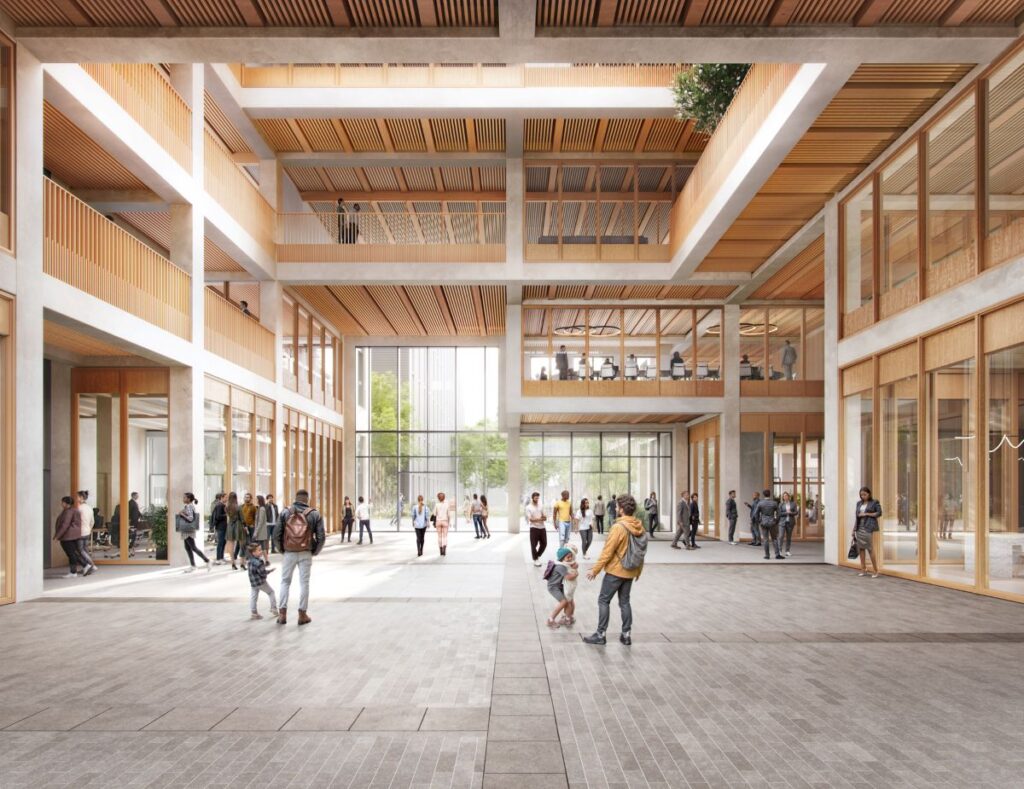
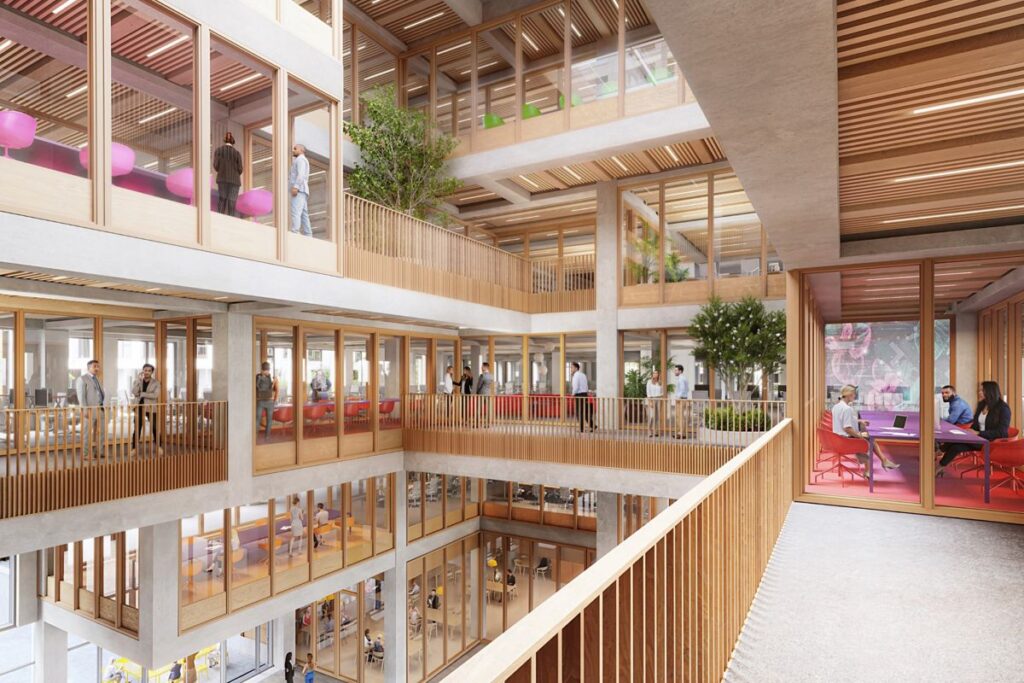
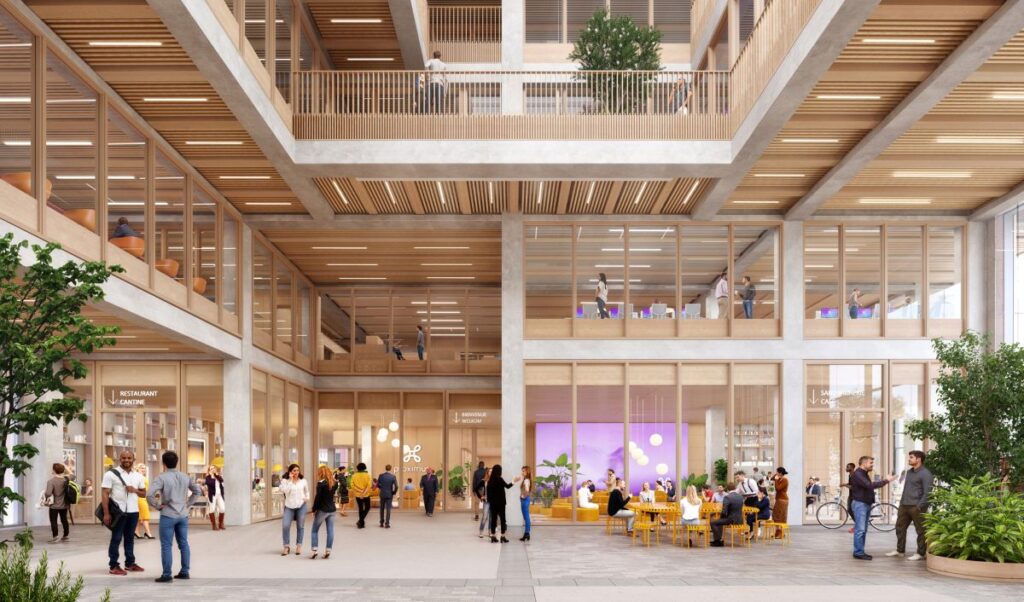
Atrium interior view © MVRDV
The residential tower has been designed with variation in mind. The apartments within the residential tower are range from small studios to medium-sized apartments, allowing residents to enjoy access to private and public outdoor terraces as well as views of the city from large windows or balconies. The outdoor terraces help to relieve the physical and social isolation that people experience between the various levels of the building.
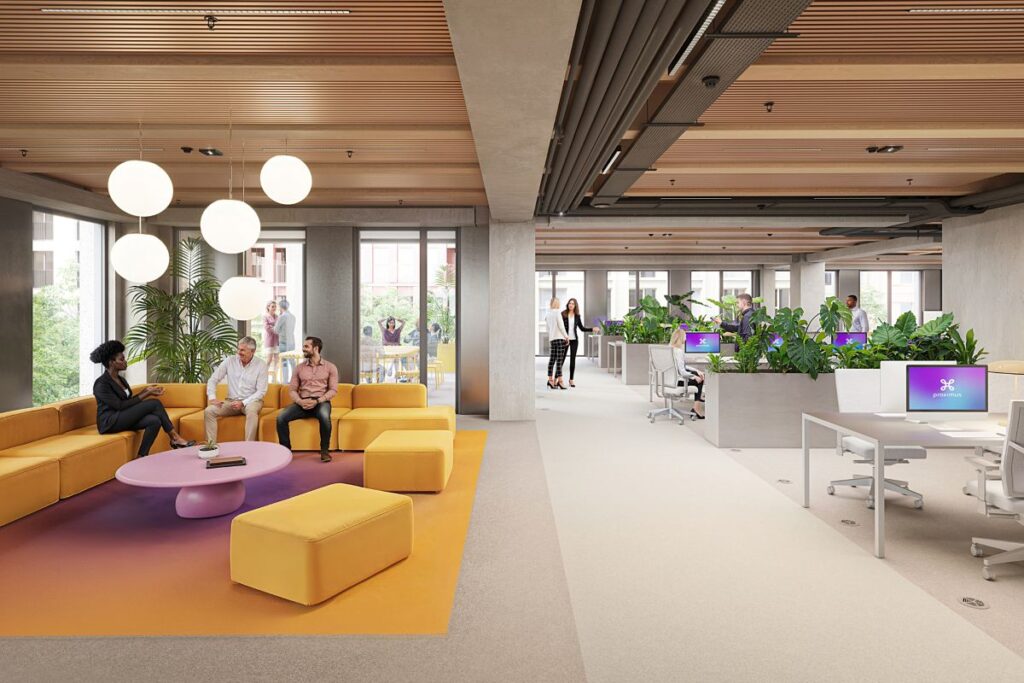
Interior office space © MVRDV
The project’s primary goal of achieving low carbon emissions creates a strong impetus for its development within a hybrid structure, combining concrete and cross-laminated timber floor slabs. This combination substantially reduces the overall weight of materials used in construction while also significantly decreasing the reliance on high carbon-emission construction techniques.
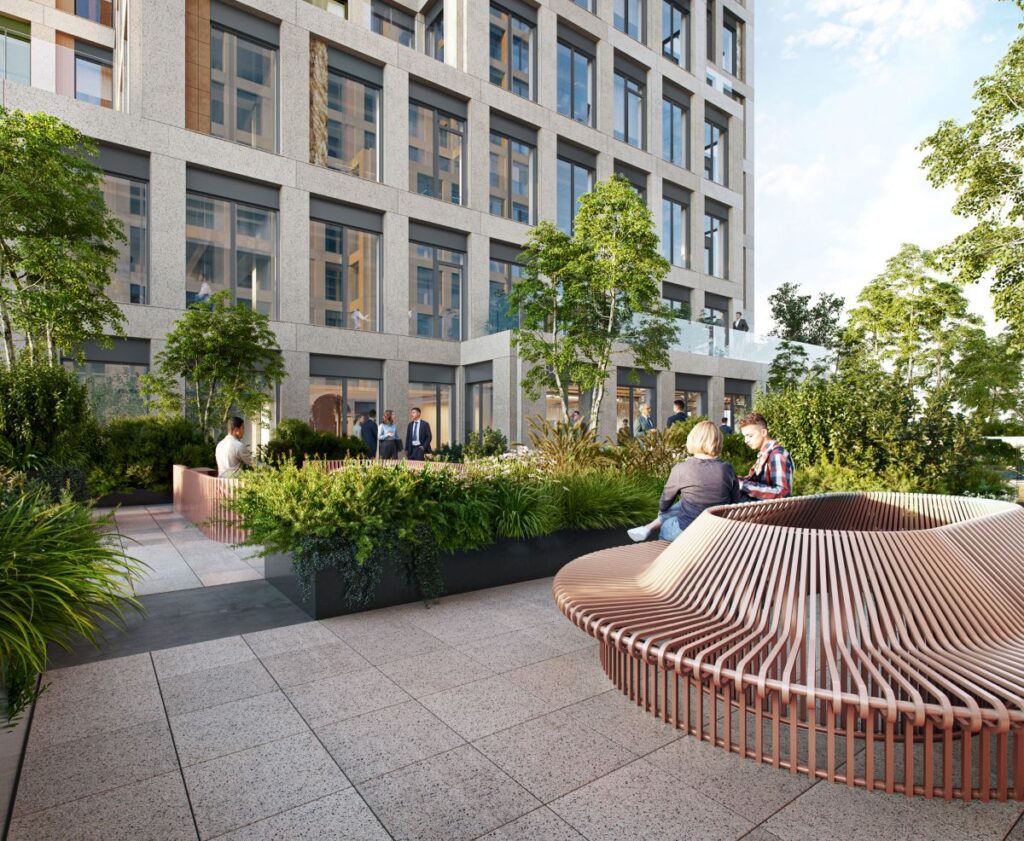
Terrace/outdoor space © MVRDV
This hybrid structure is further supported by having lightweight façade systems as well as developing tools for performing carbon calculation early in the design phase, so that issues related to environmental performance can be contemplated when making design decisions rather than being considered after the design is complete.
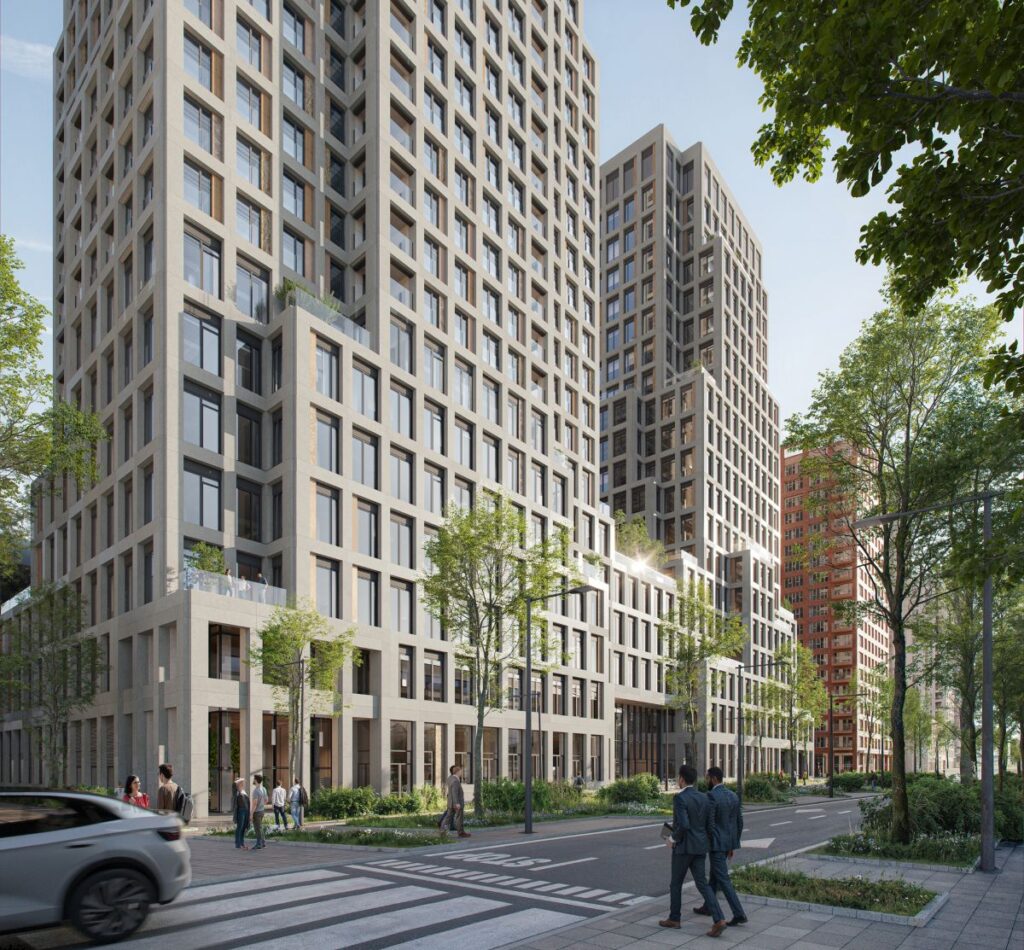
Urban context showing integration with surrounding buildings © MVRDV
Particularly in the context of the larger master plan, these two towers provide an affordable means to develop a more dense but livable community that incorporates a mix of uses, along with adequate public spaces.
Moreover, the project is committed to achieving exceptionally high sustainability targets per BREEAM pre-qualification and WELL certification guidelines, thereby representing a shift towards performance based urban development.
Night view or atmospheric rendering of the towers © MVRDV
The Tour & Taxis Towers convey very clearly a vision for the future of tall buildings. Previously density has been defined by either height or volume but now has come to be defined by many factors including adaptability, environmental responsibility and the ability to support urban life over time.
Thus, architecture is becoming less about creating objects and instead is about providing a framework for continuing evolution within the limits of existing cities.