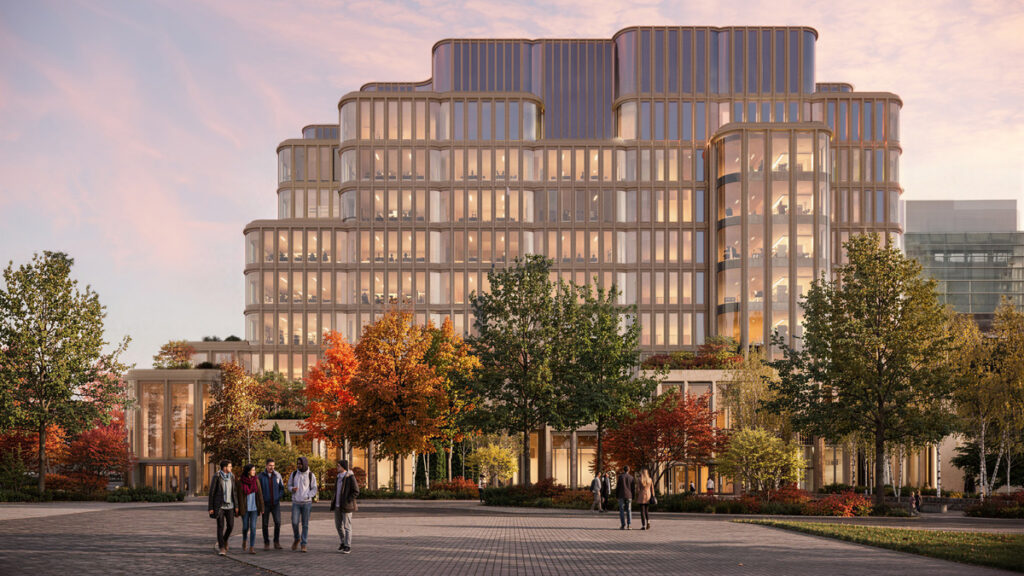
Temerty Building at King’s College Circle © MVRDV
Curated by ArchiRev Editorial | Feature Story | Published May 9th, 2026 | Source: Snøhetta
Location: Toronto, Canada
Year: 2022–
Surface: 37,000 m²
Client: University of Toronto
Programmes: Educational, Medical
Themes: Architecture
Collaborators: MVRDV, Diamond Schmitt Architects, Two Row Architect
The Temerty Building at the University of Toronto is an interesting case study of modern construction’s dual position as a research centre and an integral component of the civic experience on a historic campus.
This 37,000 square meter project, which replaces the old west wing of the Medical Sciences Building (from 1969), reimagines the confluence of King’s College Road and King’s College Circle, creating an open, transparent, and welcome entrance to the University’s front campus.
The facility, which houses both the Temerty Faculty of Medicine and the Department of Cell & Systems Biology (Faculty of Arts & Science), serves more than just one purpose. Instead, the Temerty Building promotes a synergistic interaction between cutting-edge research, the academic community, and the larger campus environment, strengthening the University of Toronto’s civic fabric.
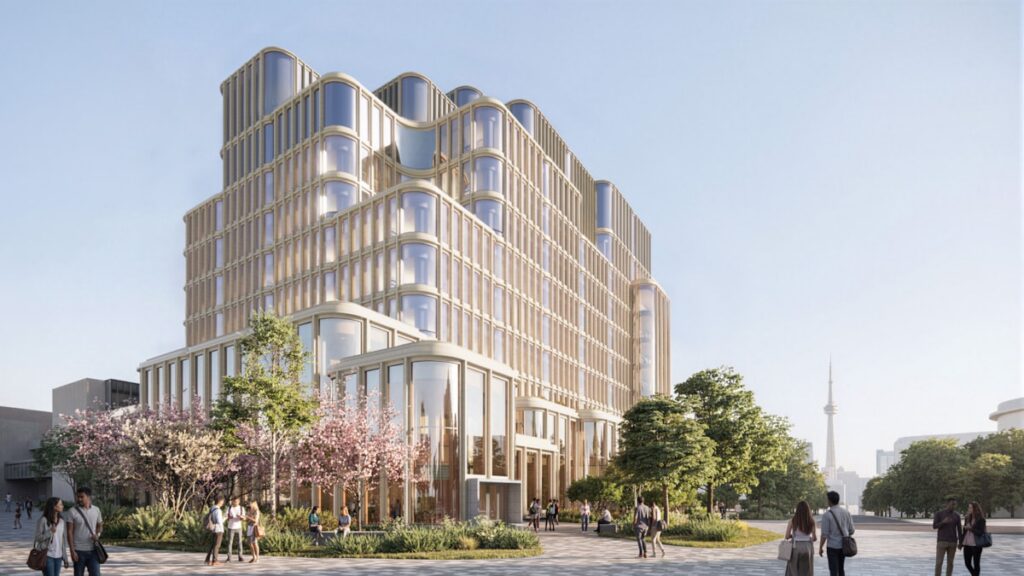
Full building facade render showing glass and sandstone treatment © MVRDV
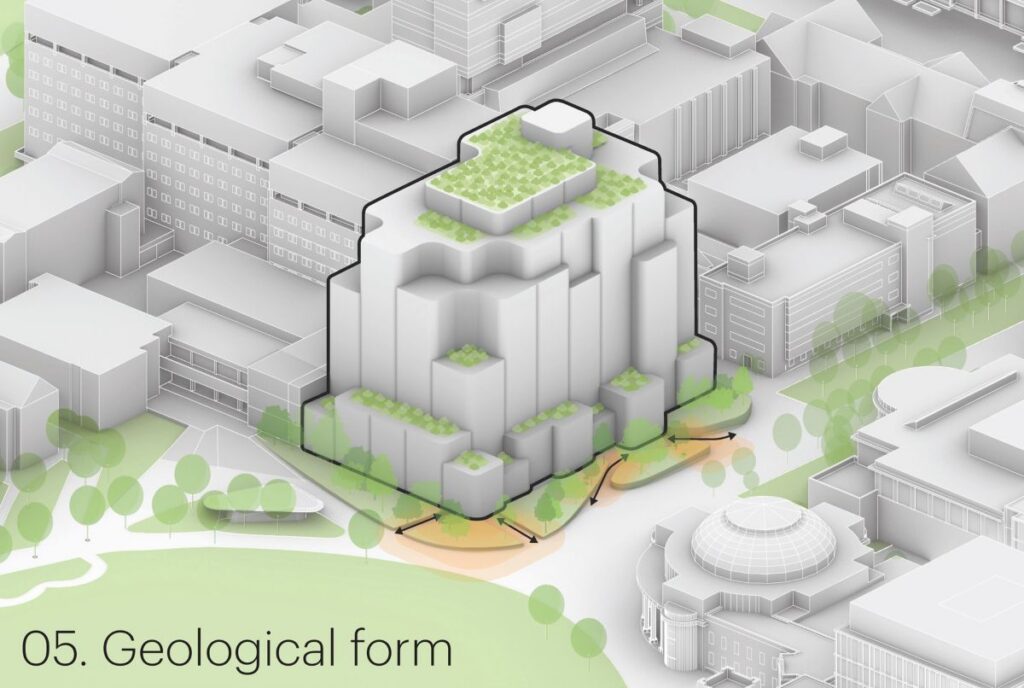
The Temerty Building (MVRDV+Diamond Schmitt) was developed in collaboration with Indigenous design firm Two Row Architect and draws its formal inspiration from the land itself. The massing reflects the escarpment qualities of the Toronto region, resulting in a built form that feels “geologically” attached rather than simply imposed on.
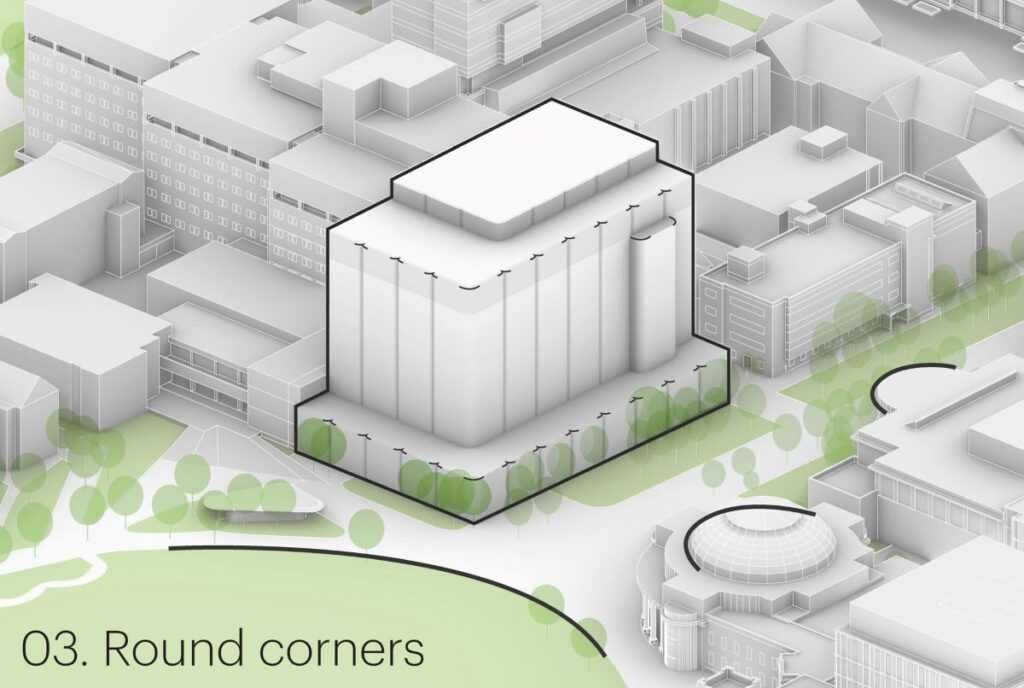
Glass and sandstone are used to create a façade that responds to its immediate surroundings through verticality, reflecting the introduction of gothic elements from nearby buildings at King’s College Circle and the curved corners that resemble the neoclassical colonnade at the Convocation Hall to the north.
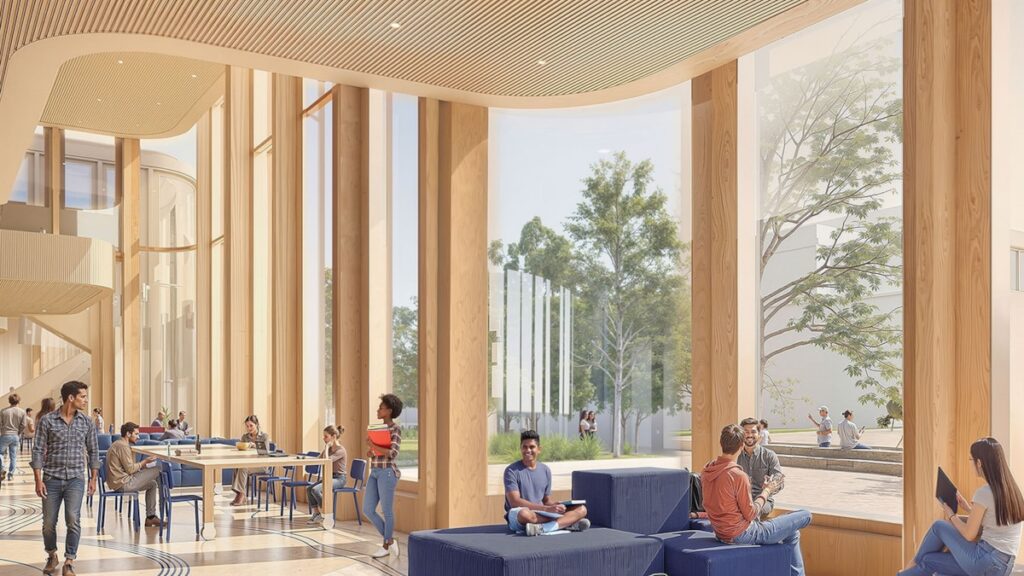
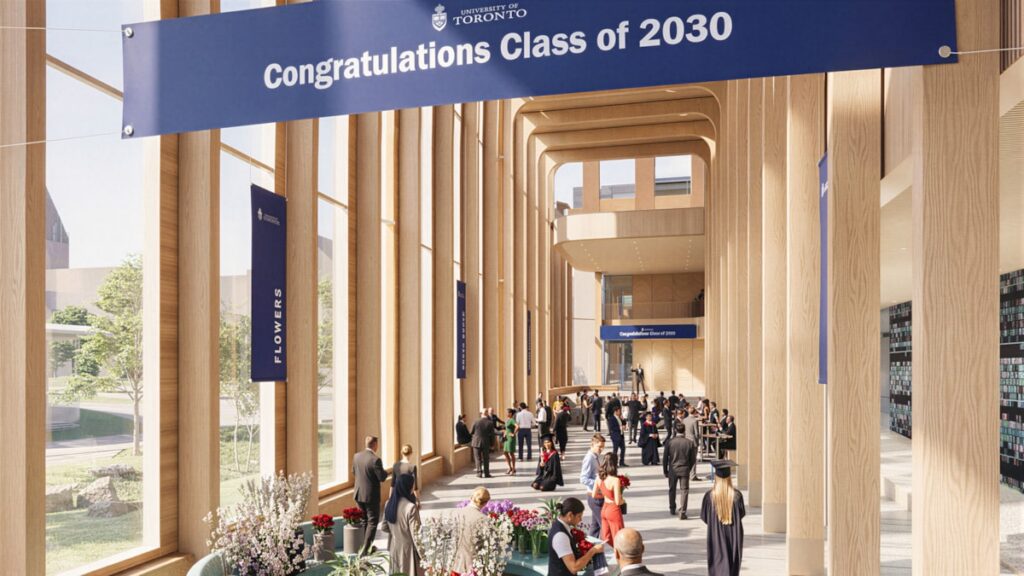
Ground floor communal hall interior, triple-height space © MVRDV
People, not science, are the starting point on the first floor. A sizable triple-height shared common area in front of King’s College Circle will be used as a ceremonial venue during university events and celebrations in addition to being a gathering place for regular social interaction.
Designed to support Indigenous Elders and Knowledge Keepers, the Elder & Knowledge Keepers area in the southwest corner is connected to an Indigenous Teaching Garden within the landscape that you are in charge of providing to your community.
The architectural idea of “designing with the land rather than on top of it” is reflected in this technique, according to Erik Skouris of Two Row Architect. Moveable partitions in the building’s centre area on the first floor can change the space from a studio-style learning environment to one suitable for larger activity events, such as graduations
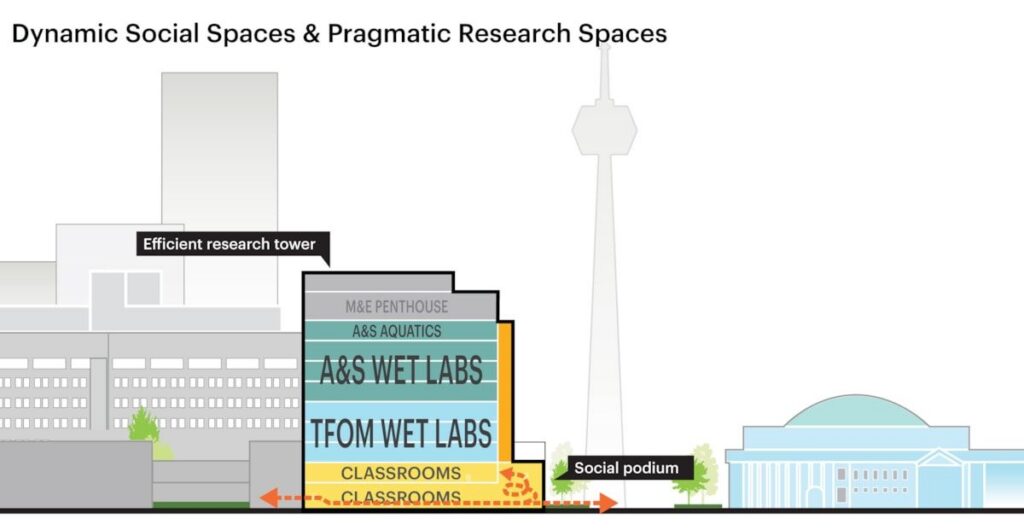
Programme diagram showing spatial distribution across floors © MVRDV
Approximately 60% of the building’s total area is used for research. The second floor has classroom and seminar space in addition to the first level’s flexible space. The next seven stories above are laboratory levels with three general zones: an open social area, a dry lab, and a wet lab.
This three-pronged strategy encourages collaboration amongst different disciplines to establish a cooperative research environment while simultaneously offering targeted solutions to scientific problems. Free corridor loops connect the laboratories to the Medical Science structure, bringing natural light into formerly enclosed circulation sections and providing a simple way to move around the structure, which was previously somewhat challenging.
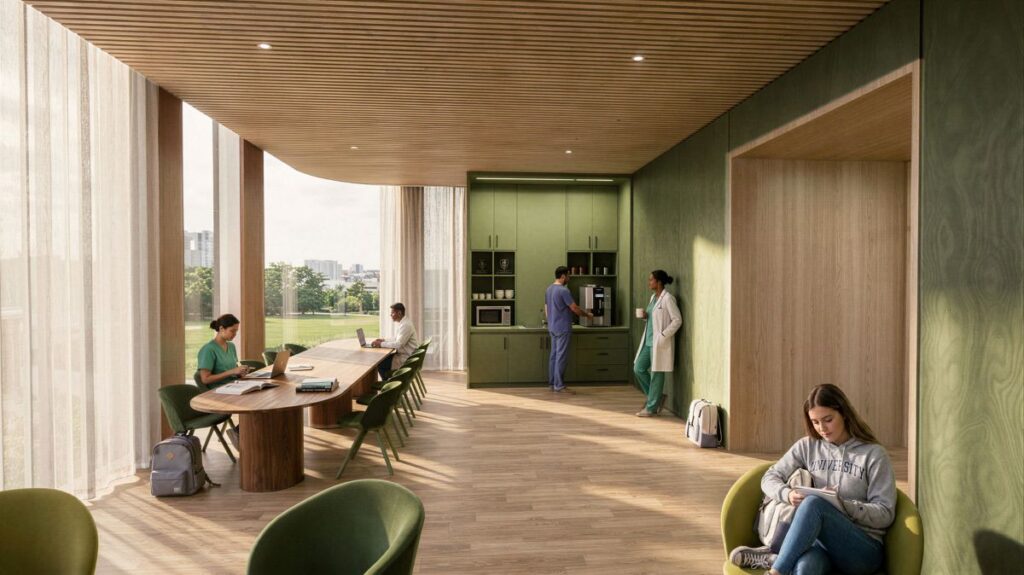
Lab floor interior showing the three-zone arrangement © MVRDV
Productive adjacency is supported by the building’s internal layout. In order to allow informal encounters between researchers, professors, and students—which frequently result in new information that formal settings are unable to support—wet and dry labs are included in the same layout as informal meeting spaces.
According to MVRDV partner Nathalie de Vries, “The Temerty Building, which offers excellent research and learning environments, presents ample opportunity for shared space and stimulating gathering places where individuals can build relationships and share ideas.”
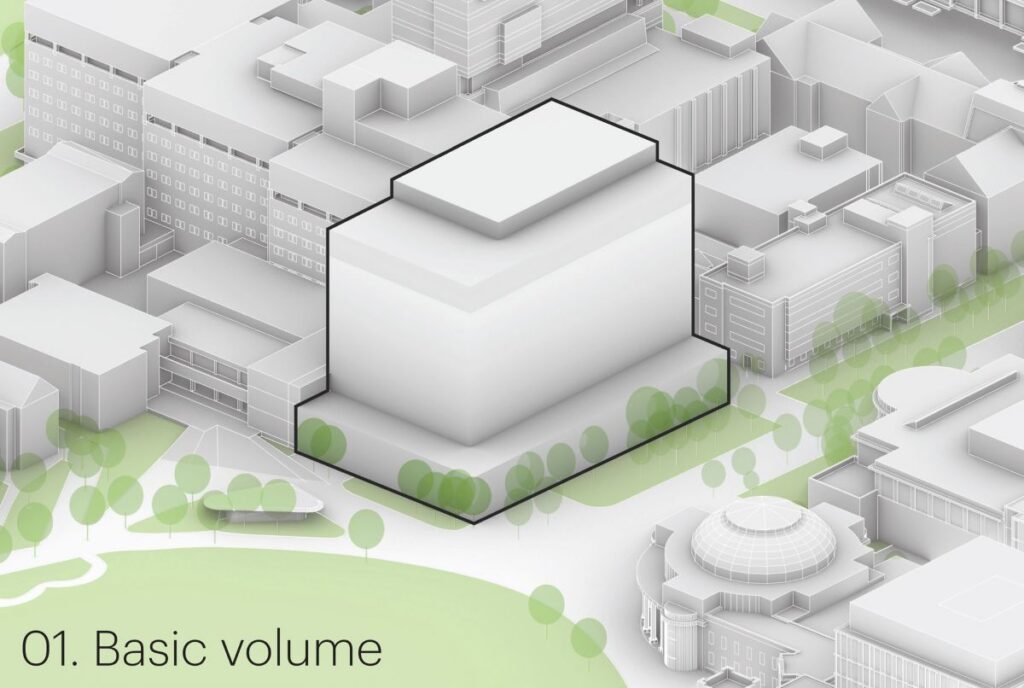
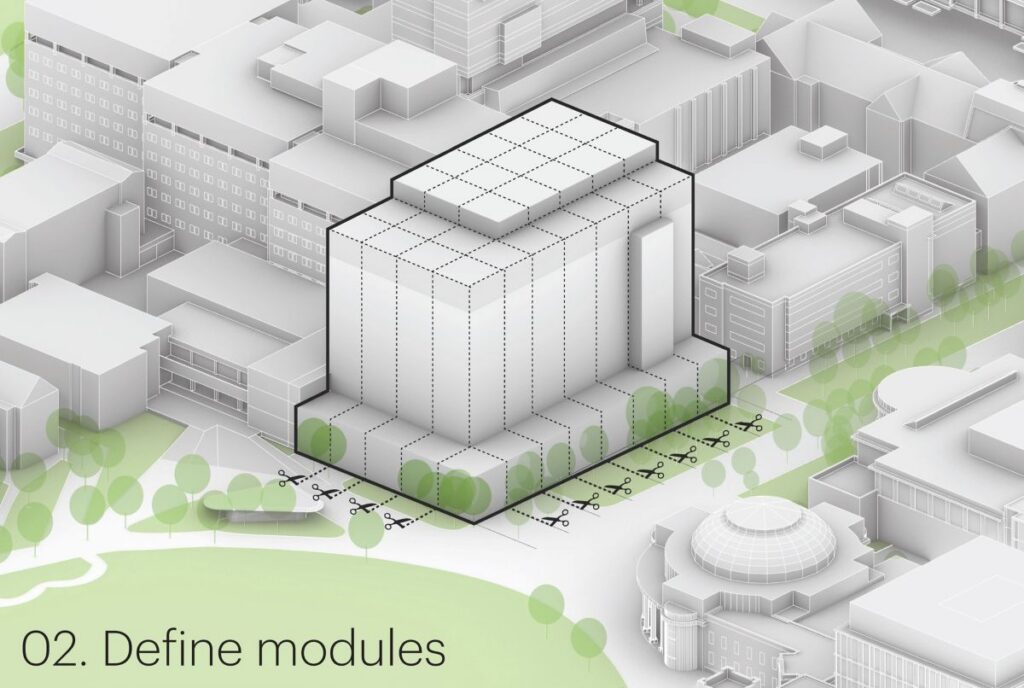
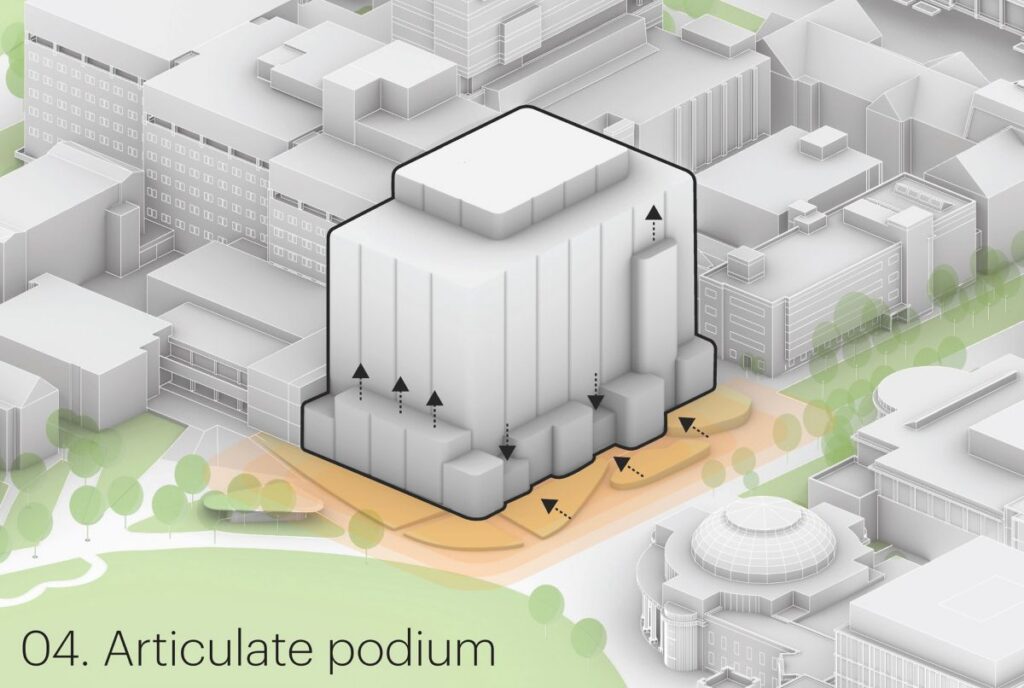
Step story diagrams: Basic volume through to Geological form © MVRDV
Massing, modular definition, corner rounding, podium articulation, and geological inflection/characterization are the five phases of the building’s growth.
The building was designed with environmental sustainability, dorm usage, and the neighbouring King’s College Circle in mind at every stage. In the end, the building’s integration into the current campus preserves King’s College Circle’s historic identity.
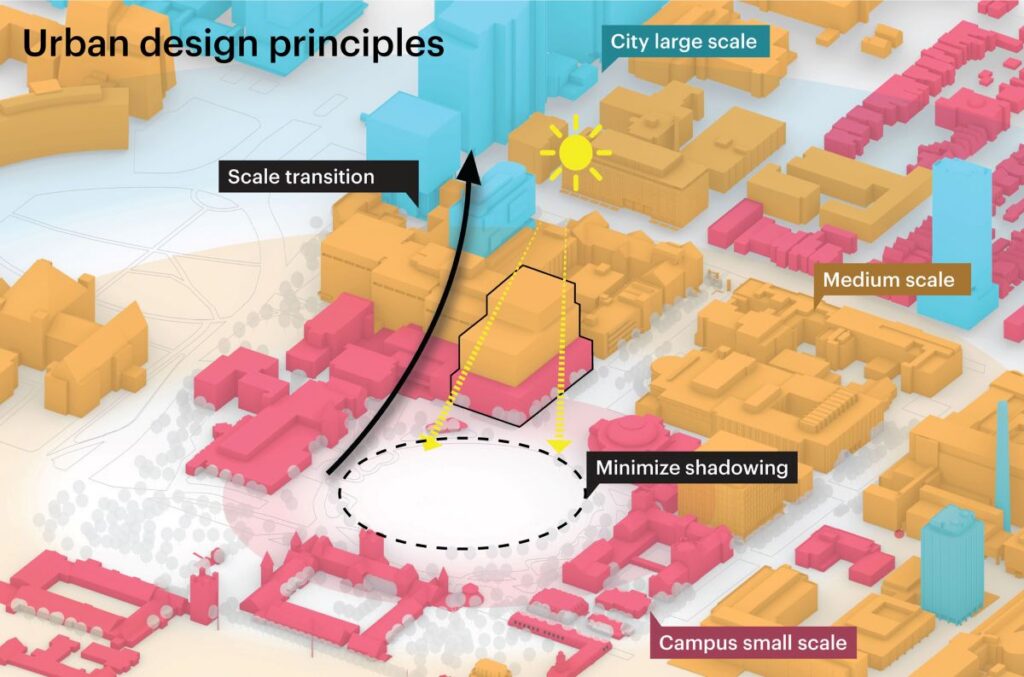
Urban design diagram: site plan within St. George Campus © MVRDV
The larger St. George Campus is connected to the Temerty Building. It establishes an entrance to Front Campus and links to Convocation Hall. The building will be able to participate in the academic, social, and ceremonial life of the entire university community to some extent because to its multiple uses of its common space. It will also foster a sense of ownership among all campus stakeholders, not just two faculties.
One of Diamond Schmitt Architects’ principals, Don Schmitt, states that “the lower floors of the Temerty Building represent a crossroads for the university community and allow for access to the surrounding landscape for the first time in 50 years.”
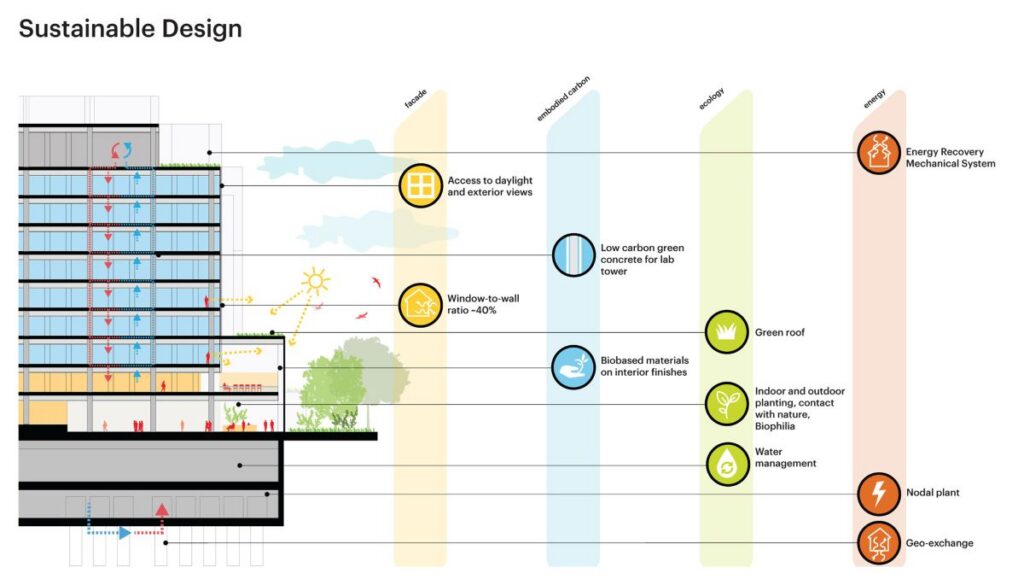
Sustainability diagram © MVRDV
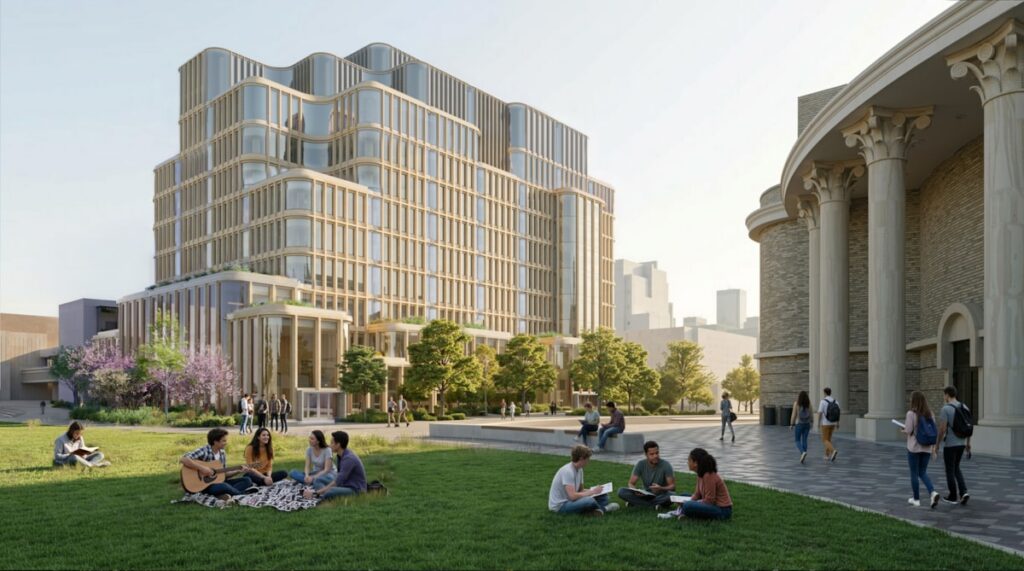
Evening or atmospheric exterior render © MVRDV
In support of the University of Toronto’s goal to be climate-positive by 2050, the Temerty Building embraces sustainability by integrating renewable energy systems and using a district energy nodal plant to supply heating and cooling to adjacent buildings.
As a result, the Temerty Building considers more than just its physical footprint; it directly and significantly affects the campus’s overall environmental sustainability. The Temerty Building establishes a clear stance regarding the possible function of institutional architecture. Institutional architecture is established by the Temerty Building.
While the technical specifications of the “space” are often what define research facilities, the Temerty Building goes above these standards to reach a much higher civic purpose: to be an exemplary institution that symbolizes openness and transparency and is rooted in its community.