

Curated by ArchiRev Editorial | Feature Story | Published November 9th, 2026 | Source: Snøhetta
Project Details
Architect: Snøhetta
Executive Architect: Clark Nexsen (formerly PBC+L)
Location: Raleigh, North Carolina, United States
Typologies: Education & Research, Library, Public Space, Workspace & Production Facility, Sustainability
Themes: Technology, Collaborative Learning, Interior Architecture, Social Space, Innovation, Sustainable Design
Status: Completed
Year: 2008–2013
Surface Area: 230,000 ft²
Client: NCSU Libraries
Scope: Design Architect, Interior Architect
Awards: AIA/ALA Library Building Award; Fiatech CETI Award, Intelligent & Automated Construction Site Category
James B. Hunt Jr. Library of North Carolina State University was envisioned to be a high-tech learning centre where the architecture could enable collaboration, experimentation, and social interaction. This building has been designed by Snøhetta and is located on NC State University’s Centennial Campus, and it acts both as the second largest library and a hub for intellectuals. The design of the James B. Hunt Jr. Library breaks away from the conventional concept of the library as a silent space.
The interior of the building combines traditional study spaces and innovative study spaces. Colourful “disruptive” learning spaces are combined with traditional study spaces, providing diversity in the types of spaces that suit different types of learners and different types of interactions. The dynamic furniture and dynamic spaces take into account the element of chance and allow learners and researchers to engage in either individual or group studies.
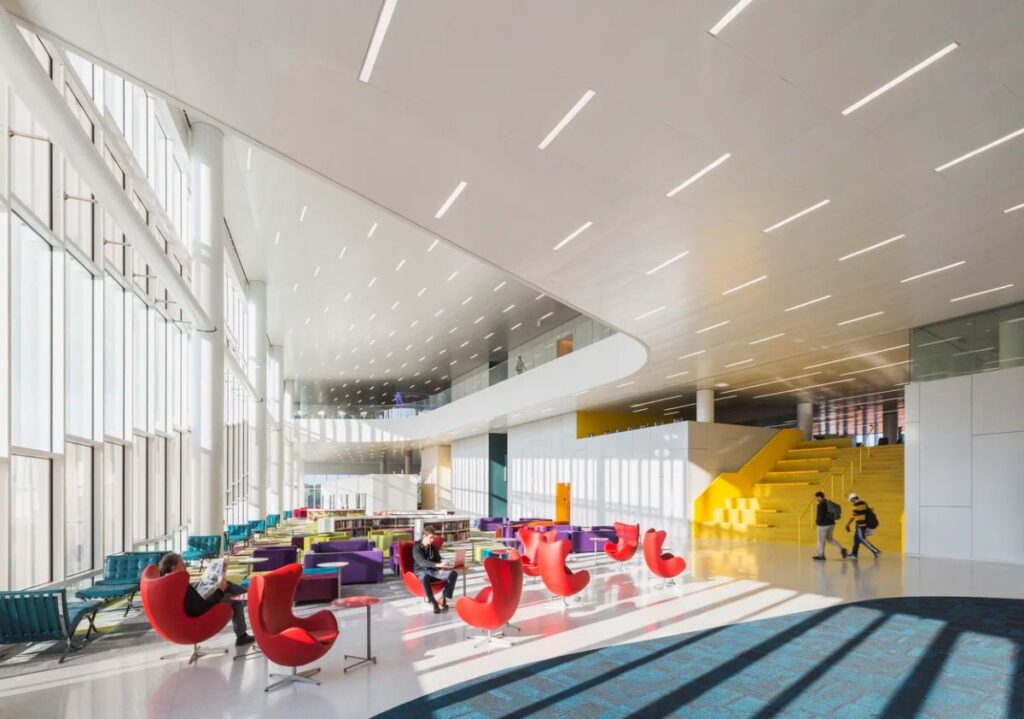
Interior learning space showing the library’s colourful collaborative areas and varied study environments © Snøhetta
Technology is integrated into the entire library system and is not a stand-alone unit. Interactive digital screens and HD video screens offer programmed and live information, and special technology stations offer users the opportunity to experience new technologies. The Game Lab assists in the design and development of video games and serves as both a test bed and a break room for informal learning. In the nearby Tech Showcase, students can experiment with new technology and check out electronic devices.
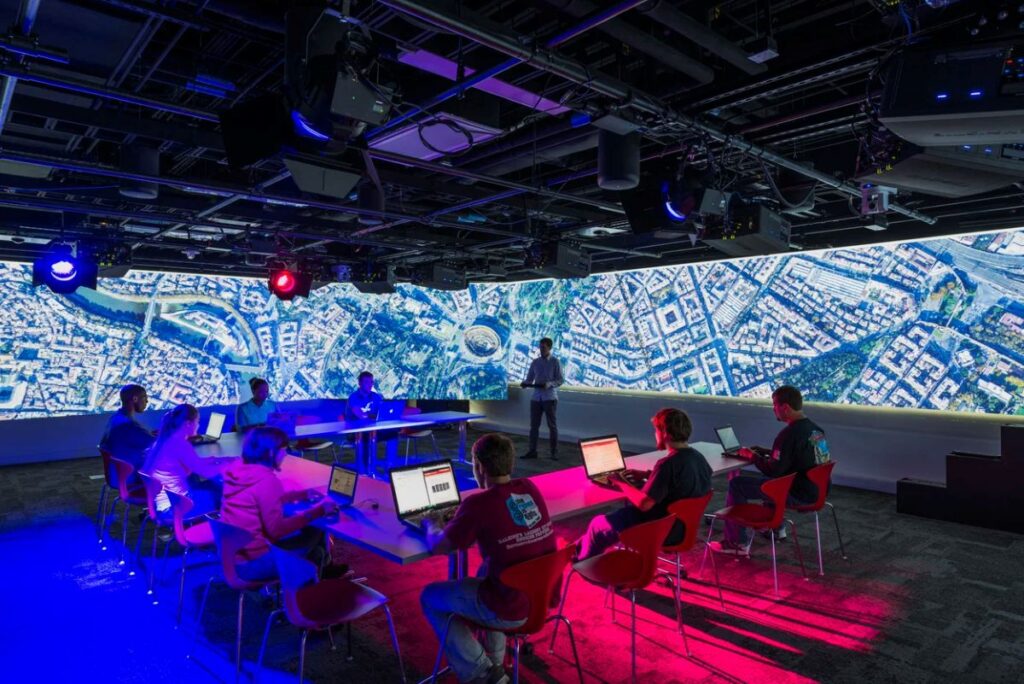
Technology-rich interior with digital displays, collaborative furniture and integrated learning facilities © Snøhetta
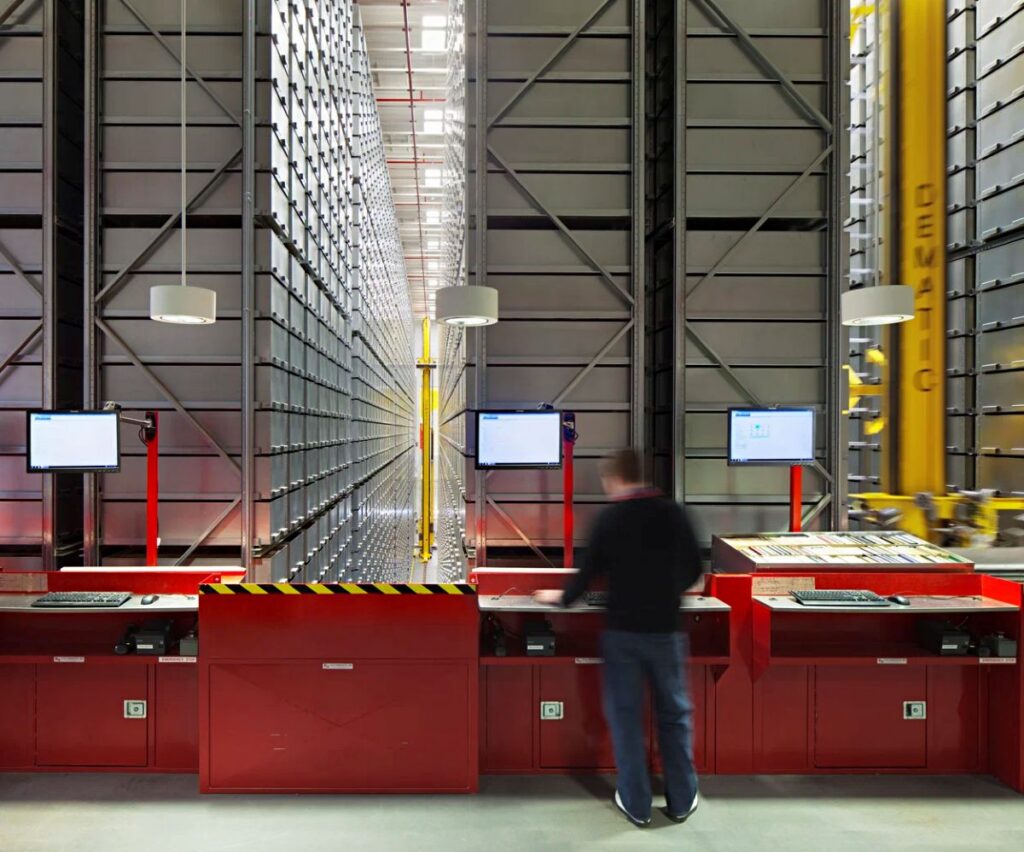
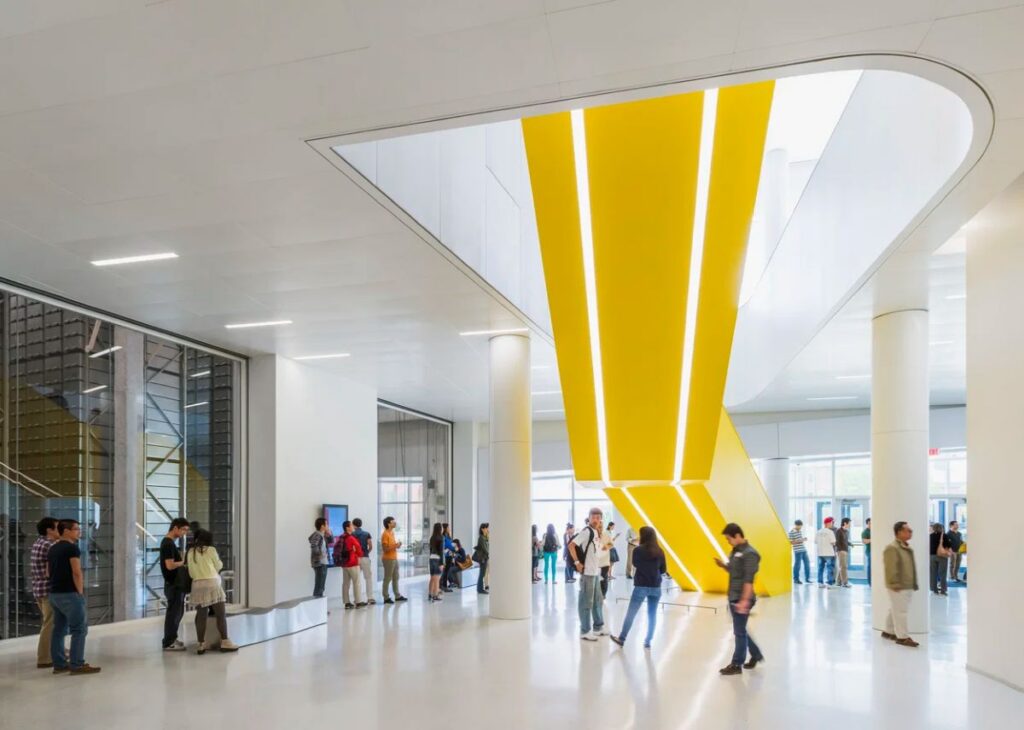
Also, the building takes into account how the library collection can make use of the space. While other libraries have staff areas located on every floor, the Hunt Library has made administration of the building a responsibility for one floor, thus making room on the other floors for student activities. The two-million-volume library is managed through bookBot, an automatic book retrieval system that provides books for the patrons. As reported by Snøhetta, this helped reduce the size of the building by 200,000 gross square feet.
Library interior showing open floor space dedicated to students, study, and collaborative activity © Snøhetta
The use of natural lighting and views also becomes another factor influencing the user experience of the building. The library has provided its users with outdoor study places, and there are also views toward the lake located close by. Fritted glass and a fixed aluminium shading system on the outside of the building help minimize the effect of solar heat while preserving the views and natural light. Inside the building, the active chilled beams and radiant panels are involved in heating and cooling.
Outdoor workspace or terrace overlooking the nearby lake, demonstrating the library’s connection to its landscape © Snøhetta
Built in 2013, the James B. Hunt Jr. Library exemplifies the possibility that exists for the organization of a modern university library not solely on the basis of collections but on the basis of people, technology, and interactions. By combining automation, flexible learning environments, technology infrastructure, social spaces, and sustainability, the design of the library ensures that architecture plays a critical role in adapting to new ways of learning and working.