
Curated by ArchiRev Editorial | Feature Story | Published June 9th, 2026 | Source: Snøhetta
Typologies: Library
Themes: Architecture, Interior Architecture, Culture, Education, Public
Status: Realised
Location: Beijing, China
Year: 2018–2023
Surface: 75,000 m²
Client: Beijing Municipal Commission of Planning and Natural Resources
Certification: Green Building Evaluation Label (GBEL) Three-Star
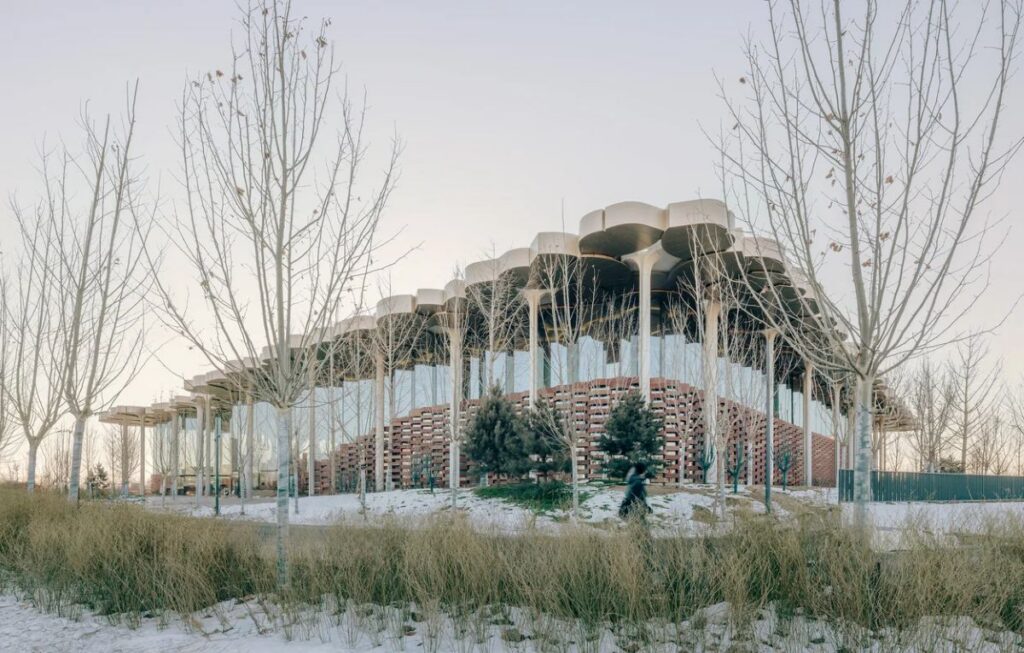
The Beijing Library, designed by Snøhetta, is an example of how libraries should be reinvented in the age of technology. The impressive building, situated in the developing Tongzhou district in Beijing, China, covers 75,000 square meters of space. Designed to be much more than a simple book depository, the structure has become an emblematic cultural centre, where education, community engagement, and socializing all take place. Constructed in 2023, this ambitious building is now considered one of the world’s great examples of modern library architecture.
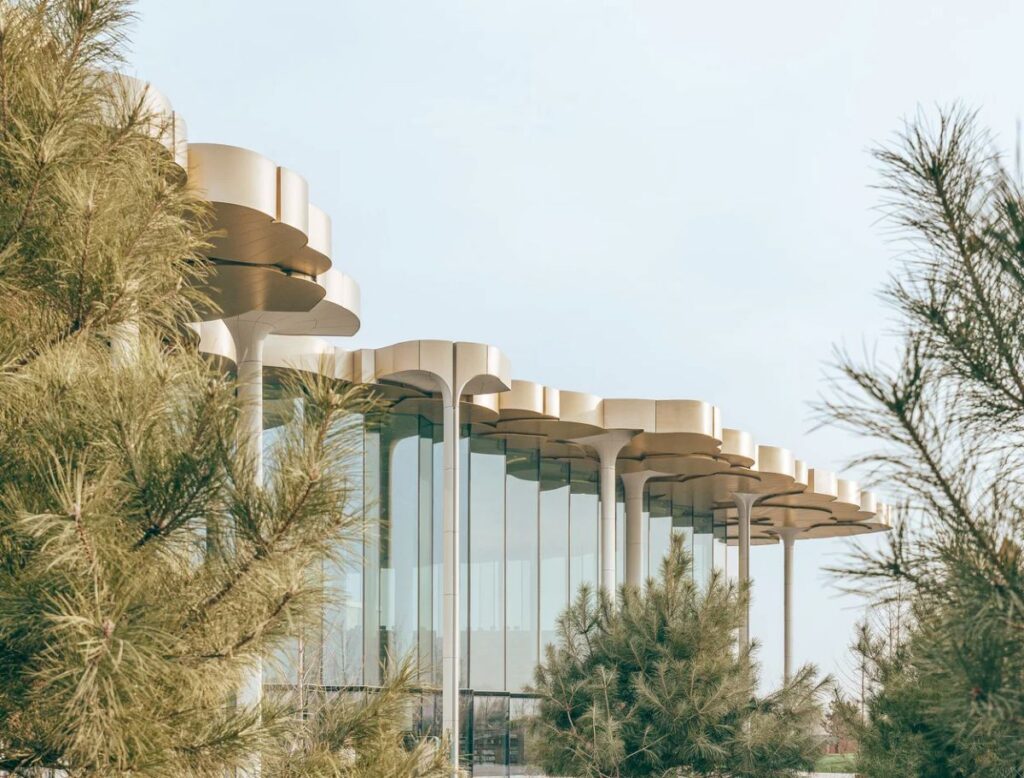
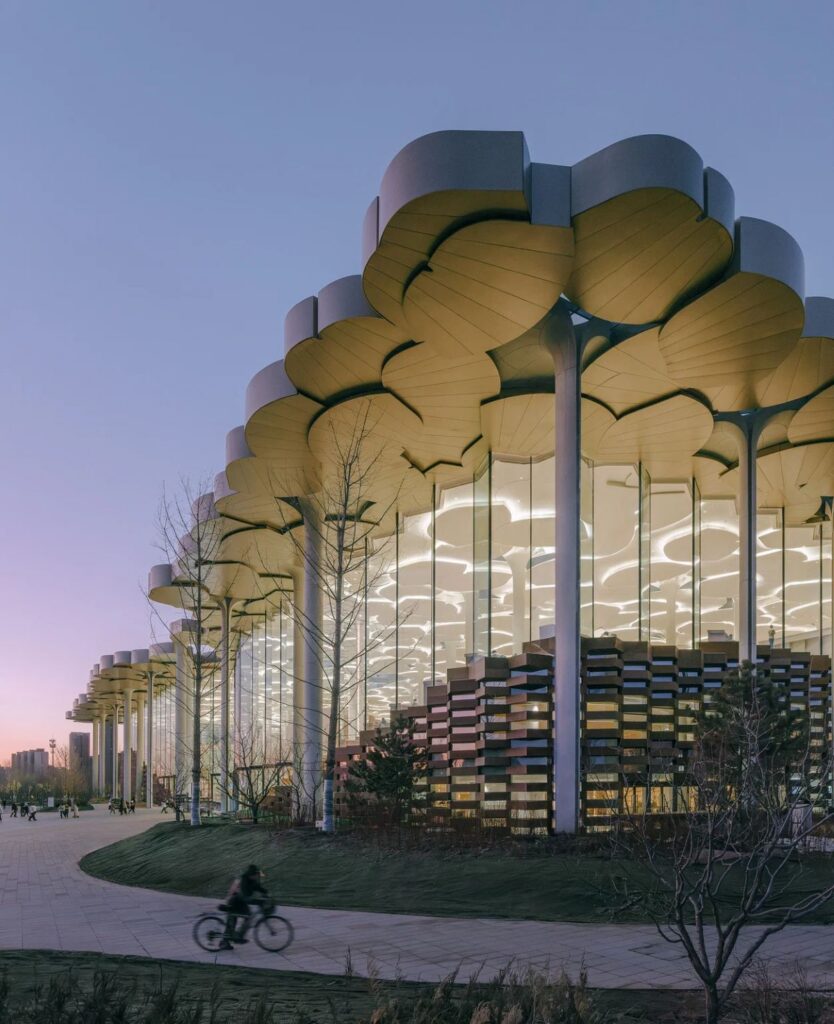
Exterior view of Beijing Library showing the expansive glass façade and sculptural roof canopy © Snøhetta
As a part of Beijing’s newly established sub-centre, this library represents a larger cultural strategy of developing Tongzhou into a destination rich with artistic and educational activities. Such a vision is expressed by the architectural monumentality and friendliness of the structure where the residents and guests of the city can find themselves in an environment based on curiosity and communication.
The primary sensation one experiences comes immediately after stepping inside. Contrary to the traditional layout of library spaces, the visitor finds himself in an open forum spanning over 16 meters in height. This open space becomes a starting point for the journey through the world of terraces, hills, routes, and plateaus, where the visitor moves from architecture to landscape.
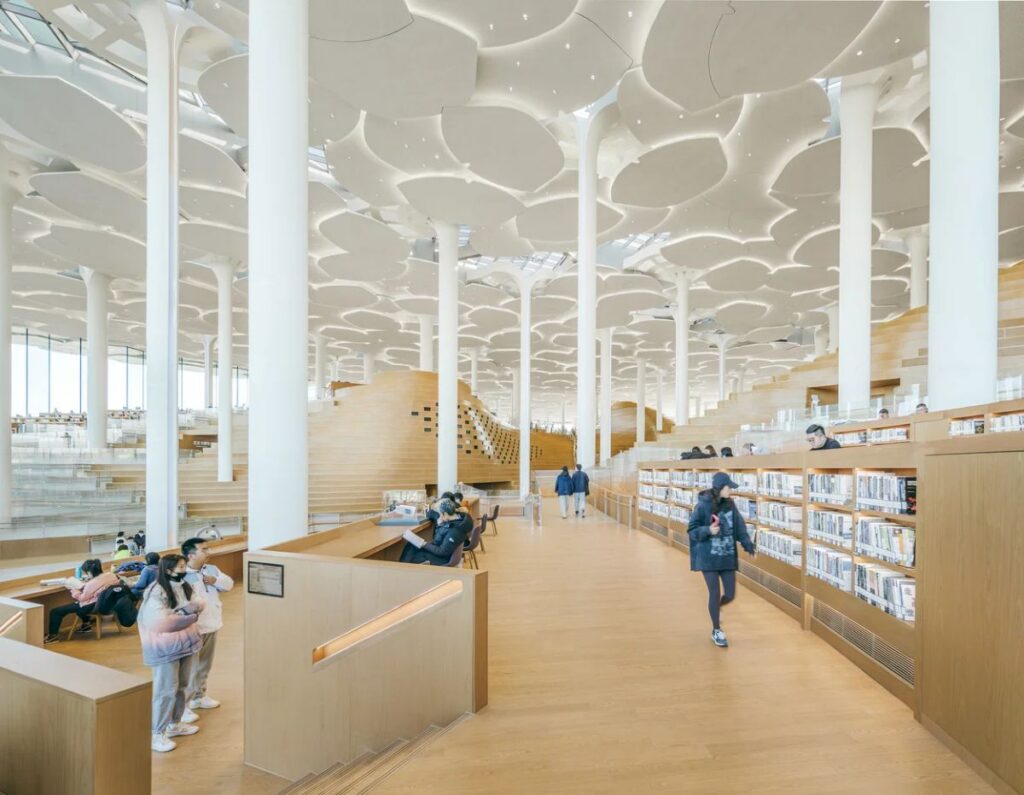
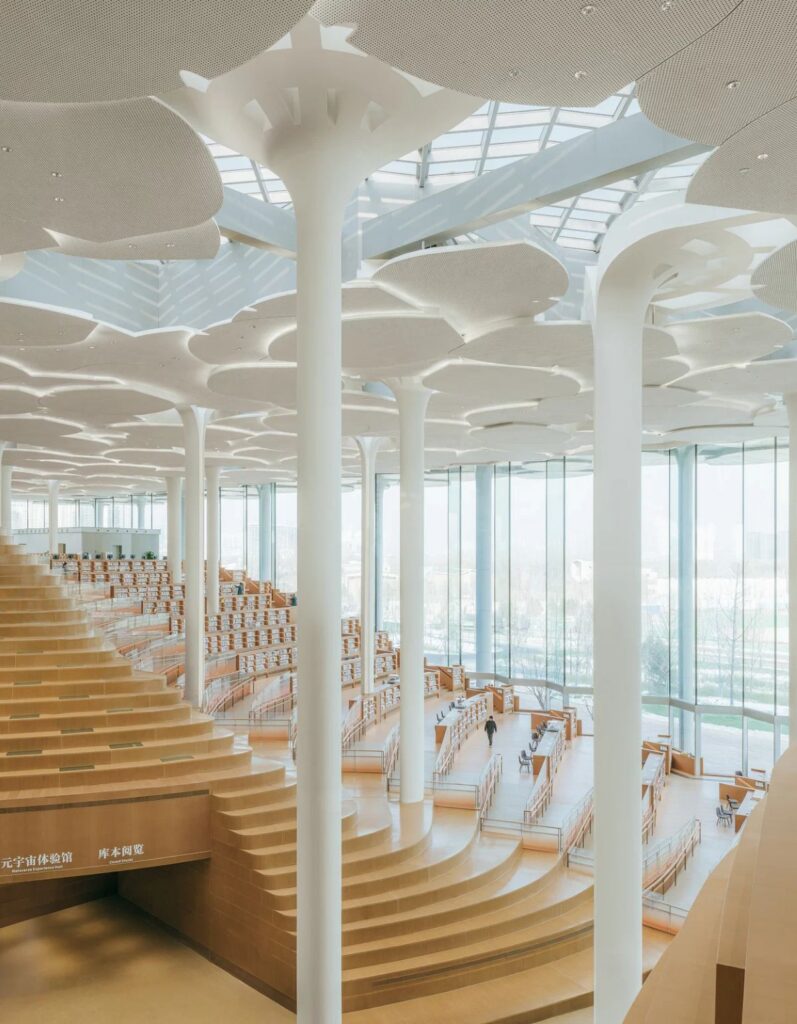
Interior overview of the central forum and terraced reading landscape © Snøhetta
Cutting across the heart of the library is a serpentine circulation path called Valley, which is inspired by the river called Tonghui River running close to the library. This path serves the purpose of connecting all entrances of the building to each other while leading visitors through various programs of the library. At either side of the path lie terraces with several steps serving as seating spaces, shelves, gathering zones and reading zones.
The landscape theme extends further up into the roof structure of the building. Columns stretch out from various points in the library until they spread out in branches and form canopies like those of a ginkgo tree, which is one of the most historic and culturally important species in China. The combination of these structural features gives the effect of a forest over the building roof.
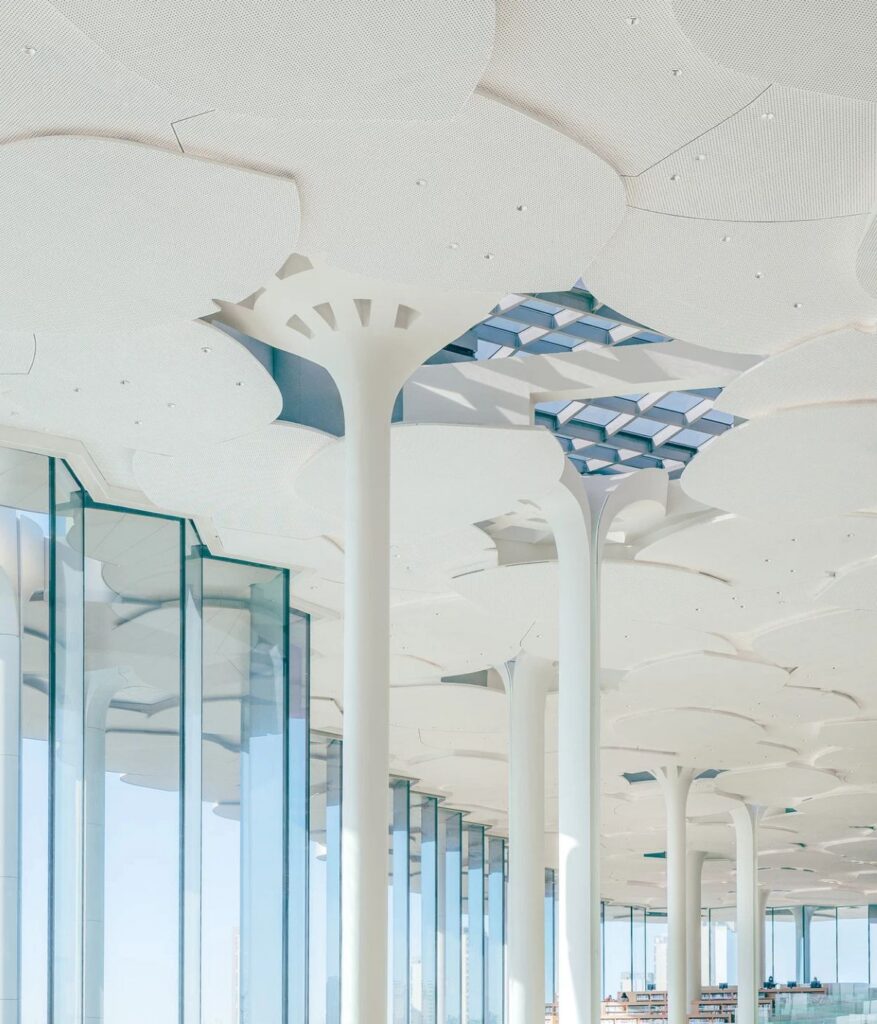
View beneath the ginkgo-inspired canopy showing the branching structural columns © Snøhetta
Transparency is very essential to the project. With so many glass facades on the building, there is maximum light penetration into the building and also the views to the outside landscape are endless. This is important since the library is a public space where information is made available to everyone by being visible. Bringing nature inside the library makes one feel calm and open-minded, spending more time in the library than just coming in for borrowing books.
The library is more than a book house. It is used for organizing exhibitions, performances, conferences, education programs, restoration of rare books and other various activities. Today’s libraries have evolved from a place for storing books to becoming platforms for cultural activities. In its short life span, the building has attracted millions of visitors, which goes to show the importance of physical libraries, as long as they are built to be destination points.
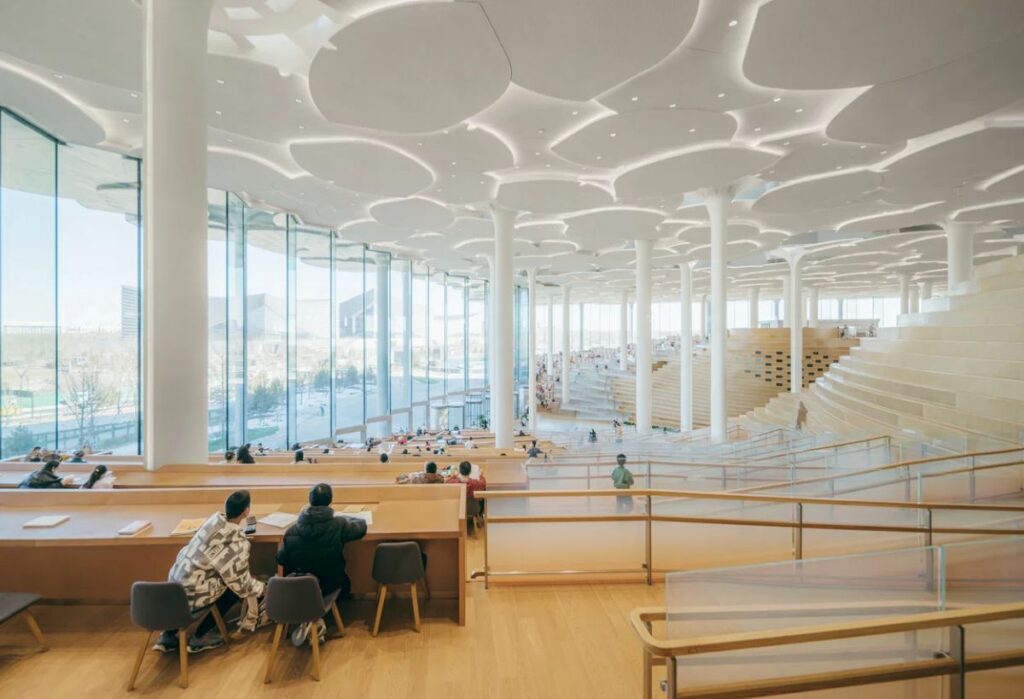
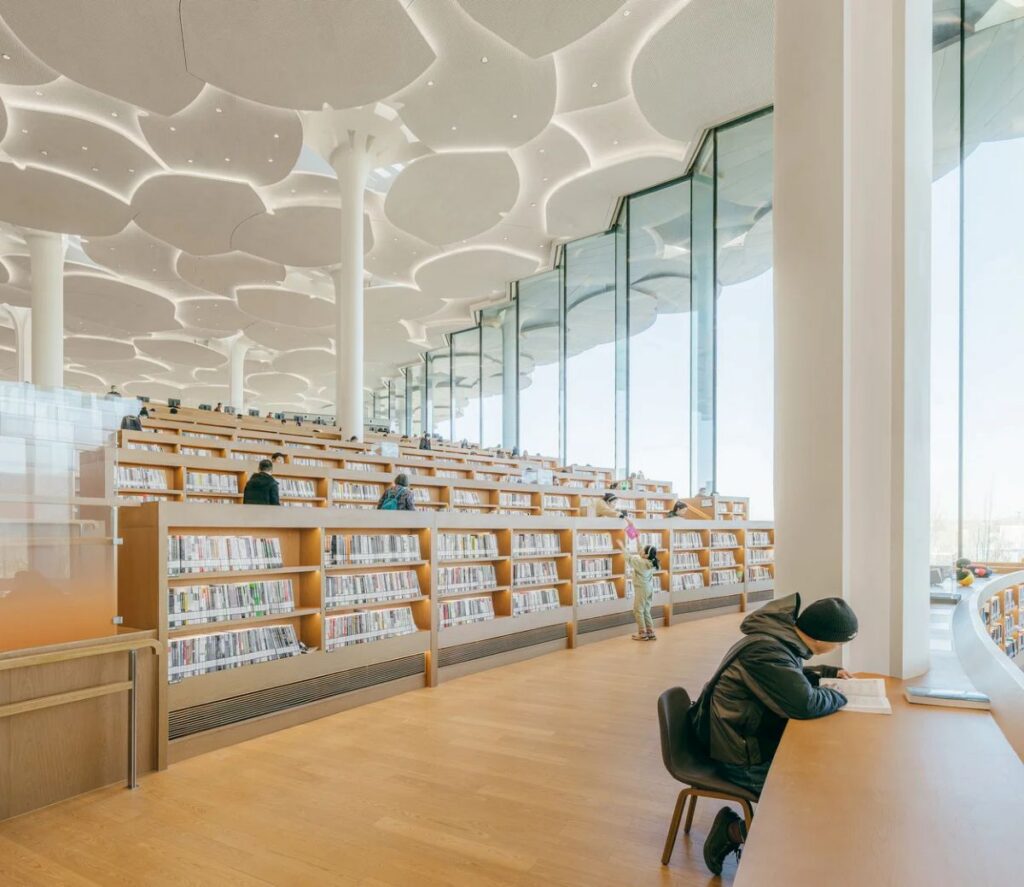
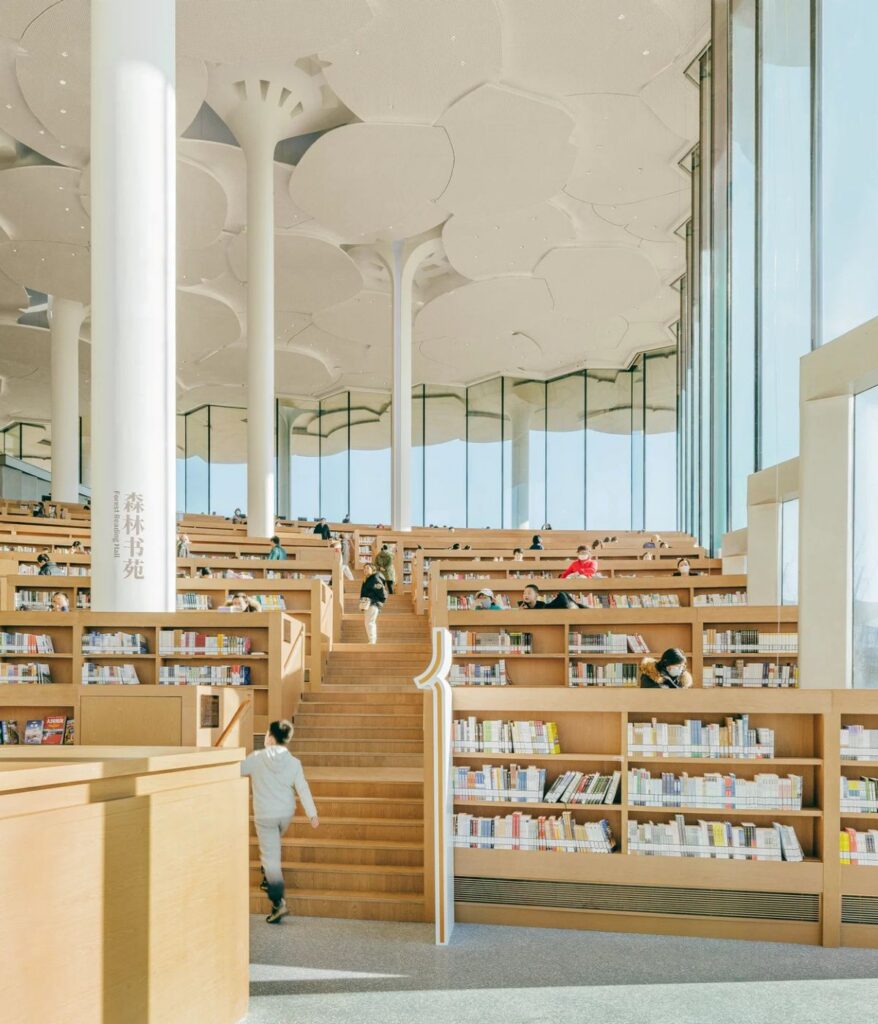
Reading terraces overlooking the central valley and book collections © Snøhetta
The concept of sustainability is fully ingrained into the design. The project managed to achieve the highest Green Building Evaluation Label in China by means of both passive and active environmental techniques. The modular building system minimizes material waste, whereas the logical structure grid increases building efficiency. The ginkgo-based columns feature environmentally friendly technologies that help regulate climate, acoustics, lighting, and water collection. Large roof overhangs minimise solar gain, whereas the building’s photovoltaic elements generate renewable energy.
Interior reading landscape with natural daylight filtering through the canopy structure © Snøhetta
The building is also home to one of the biggest automated book storage and retrieval systems ever created, showcasing cutting-edge technology and an extremely human-centered approach to architecture. This innovative solution, which brings together modernity and atmosphere, is part of the firm’s larger attempt to revive the relevance of libraries in a digital age society.
Opened in 2023, the Beijing Library is a prime example of architecture reinventing a traditional cultural site as a modern civic icon. Through the design of its organic landscape of books, a canopy inspired by the forest, and its dedication to the communal experience, the project offers an inspiring vision of the future library space.
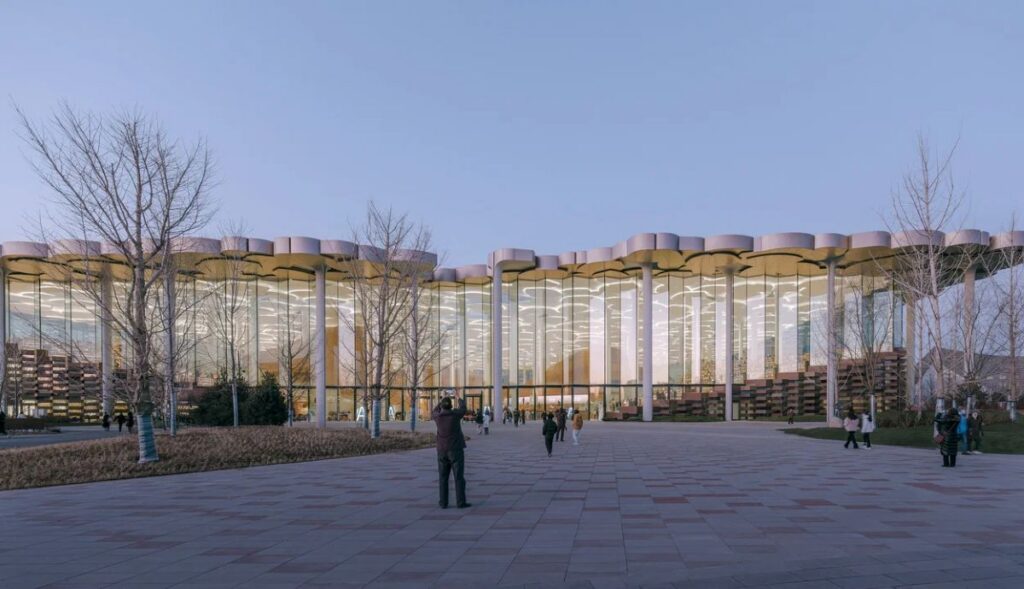
Evening view of Beijing Library illuminated within the Tongzhou cultural district © Snøhetta