
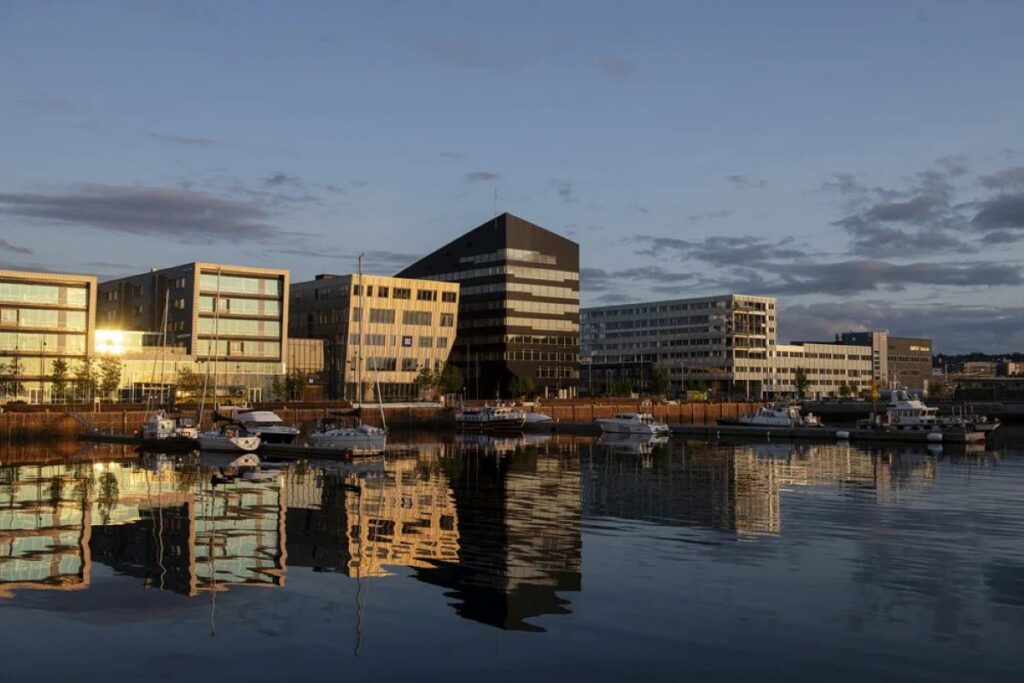
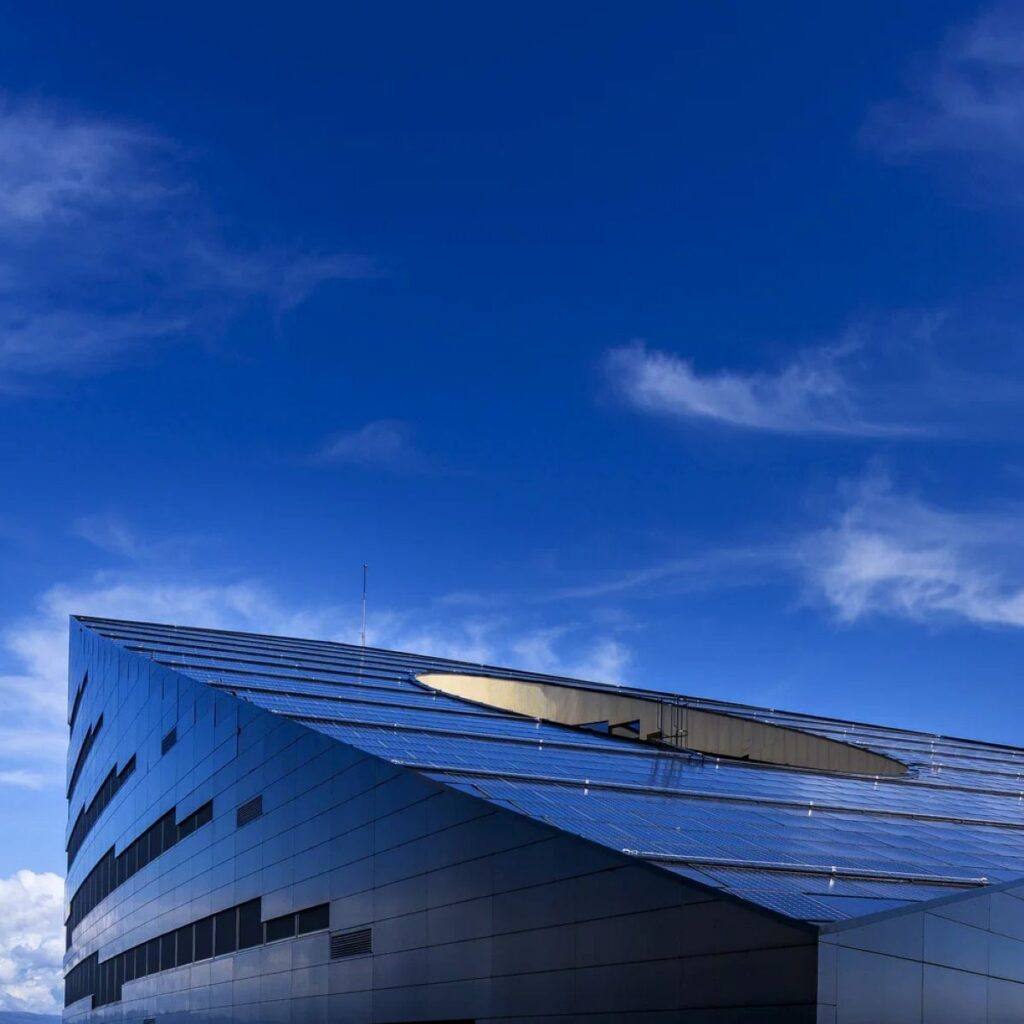
Exterior view of Powerhouse Brattørkaia showing the full building massing, the skewed pentagonal roofline clad with solar panels, and its relationship to the Trondheim waterfront © Snohetta
Curated by ArchiRev Editorial | Feature Story | Published May 26th 2026 | Source: Snohetta
Typologies: Workspace & Production Facility, Sustainability
Disciplines: Architecture, Interior Architecture
Status: Completed
Location: Trondheim, Norway
Year: 2012–2019
Size: 17,800 m²
Client: Entra ASA
Certification: BREEAM Outstanding
Energy Performance: 458,457 kWh per year
Awards: Fast Company Innovation by Design Awards 2020 — Sustainability Category
Powerhouse Brattørkaia Trondheim is the world’s northernmost energy-positive building — a 17,800-square-metre office building completed in 2019 by Snøhetta that produces more energy than it consumes across its entire lifespan, including the energy embodied in its construction materials, its operational period, and its eventual demolition.
Located on the Brattørkaia waterfront in central Trondheim, the building was designed around three interlocking ambitions: to maximise the production of clean renewable energy, to minimise the energy required to run it, and to provide a genuinely pleasant environment for its tenants and the wider public.
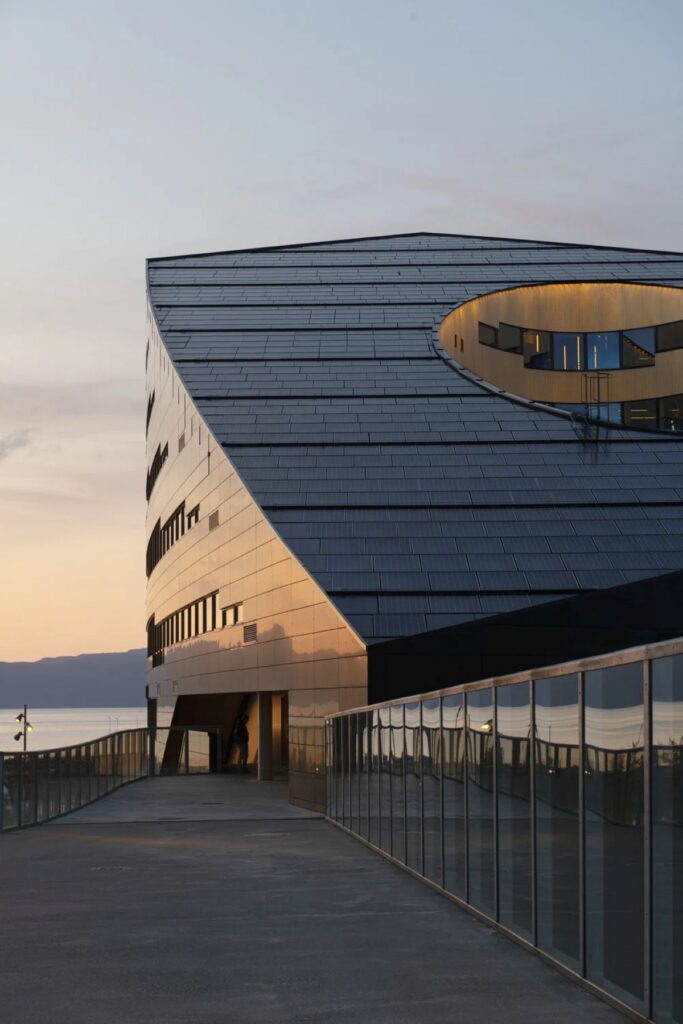
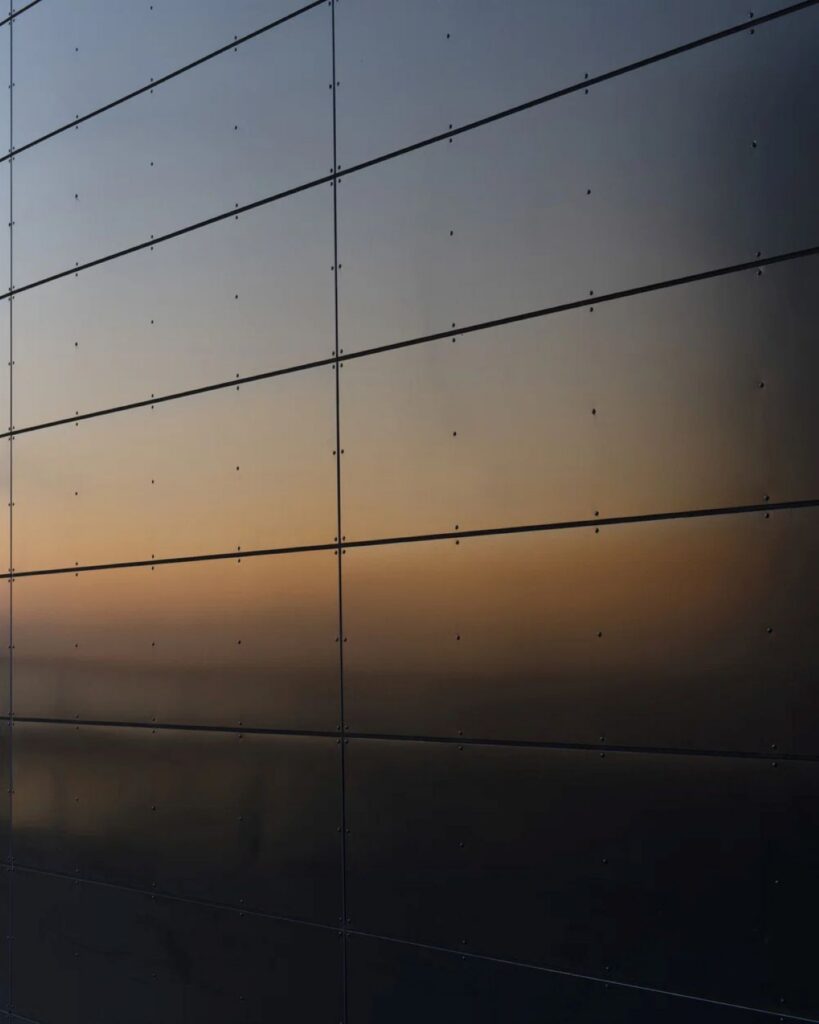
Close-up of the south-facing solar panel cladding on the skewed roof and upper façade showing the panel geometry, orientation strategy, and surface articulation © Snohetta
Together, the construction industry and the energy sector produce over 40% of all greenhouse gases emitted worldwide. In this regard, the Powerhouse Brattørkaia is not only a highly efficient construction but, additionally, an example demonstrating that it is possible to use buildings in order to provide energy for the surrounding area.
The building design incorporates the surrounding environment from the very beginning. In the case of the Powerhouse Brattørkaia, the location selected ensures that the greatest amount of sunlight falls upon it within each hour and season. Given that the city of Trondheim itself lies 63 degrees above the equator, there is a very significant variance in the amount of sunshine that it gets during each season, thus making it the perfect Powerhouse project location.
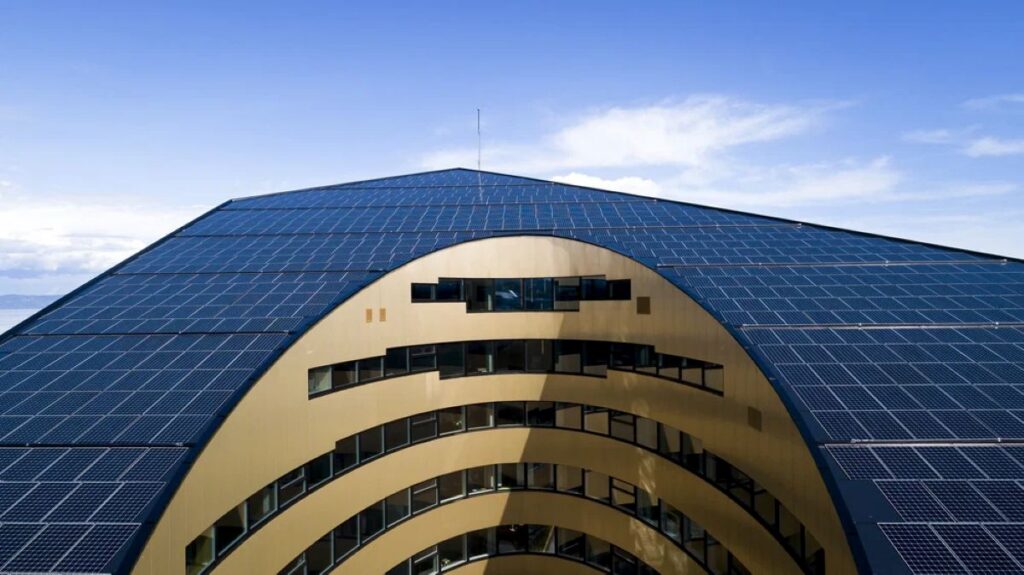
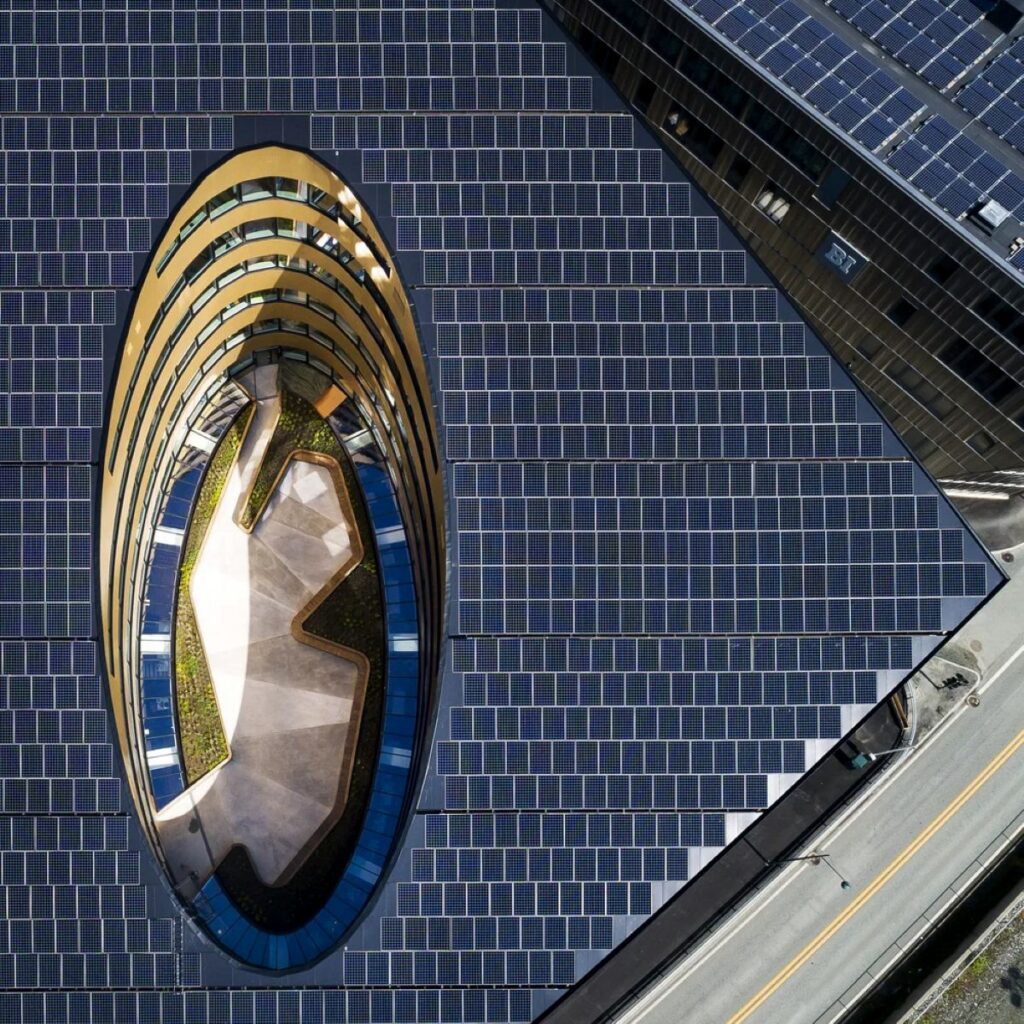
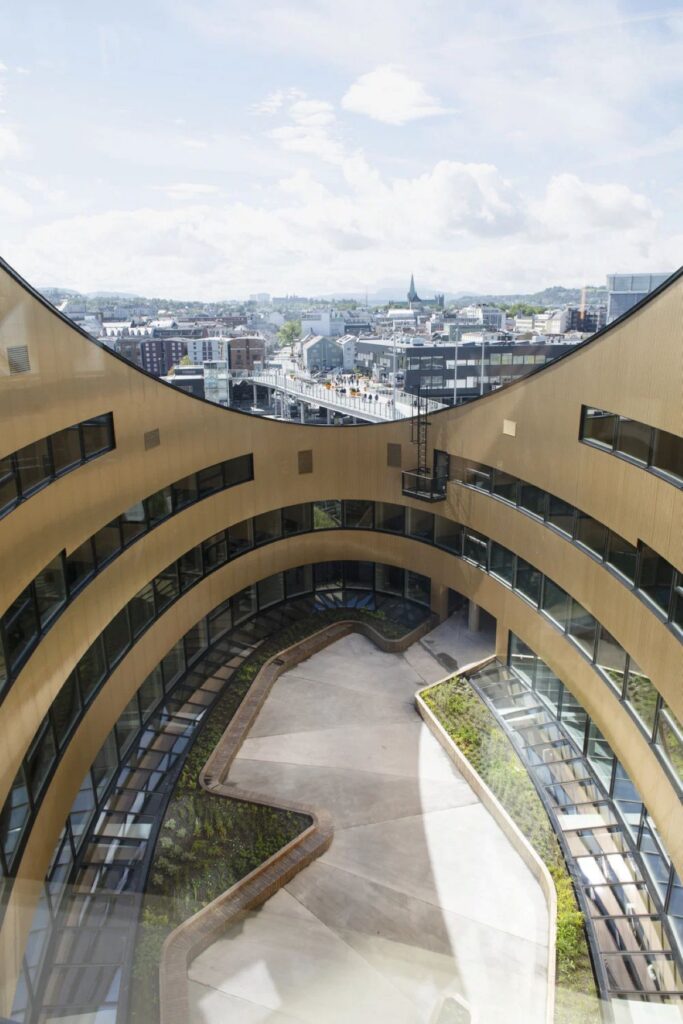
Interior view of the indoor amphitheatre space formed by the solar plate, showing the spatial quality of the learning environment, the timber materiality, and the sectional relationship between the plate and the occupied floor below © Snohetta
The angular roof, as well as the upper half of the building’s façade, has been fitted with more than 2,954 m² of photovoltaic solar panels. These solar panels have been fitted in such a way as to harness the maximum energy possible from the sun on an annual basis. This angle and orientation of the roof is not stylistic but energy related following solar studies carried out at Trondheim.
Energy production is higher than energy consumption when the amount of energy that the building requires has been reduced to the barest minimum. The environmental engineering technology used at Powerhouse Brattørkaia works through an interconnected system whereby all the systems are dependent on one another.
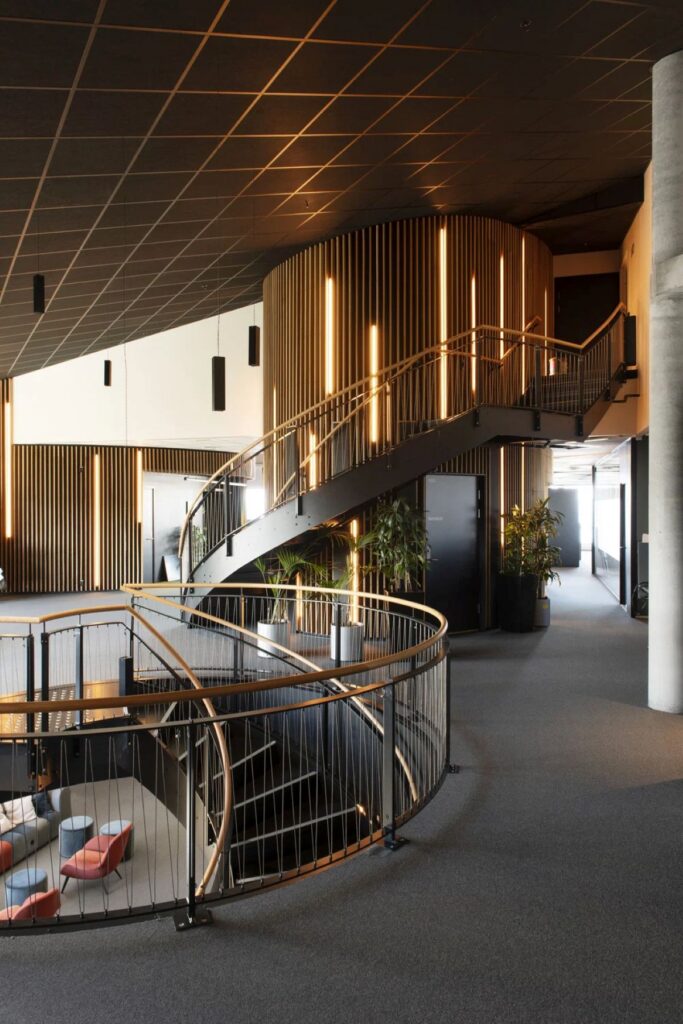
Interior view showing the exposed low-emission concrete ceiling with strategic cutouts, demonstrating the thermal mass strategy and its integration into the spatial quality of the workspace © Snohetta
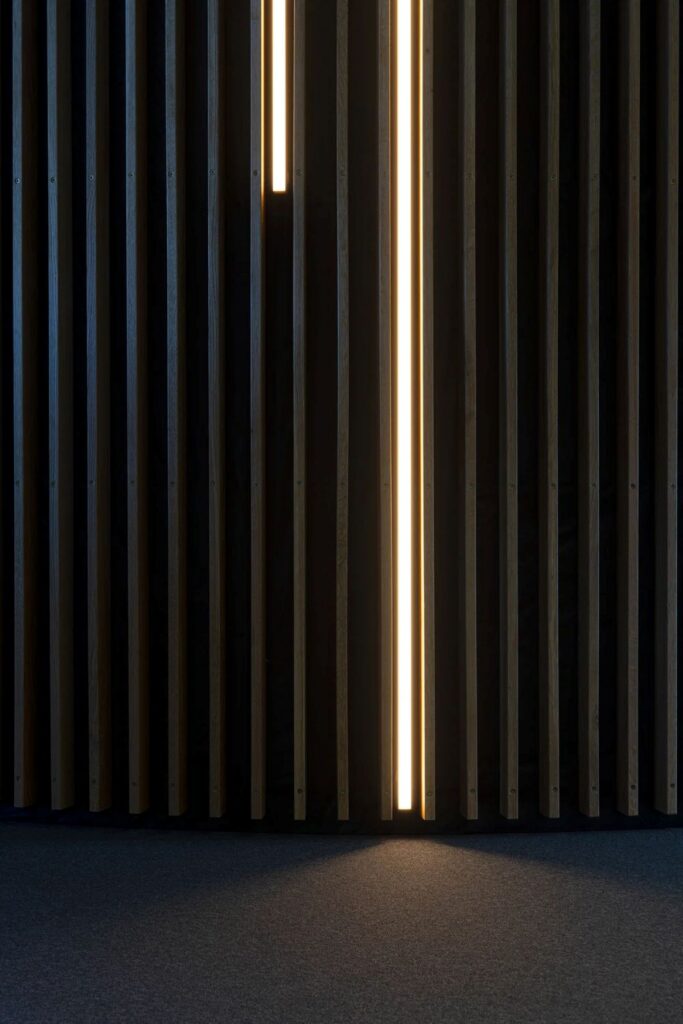
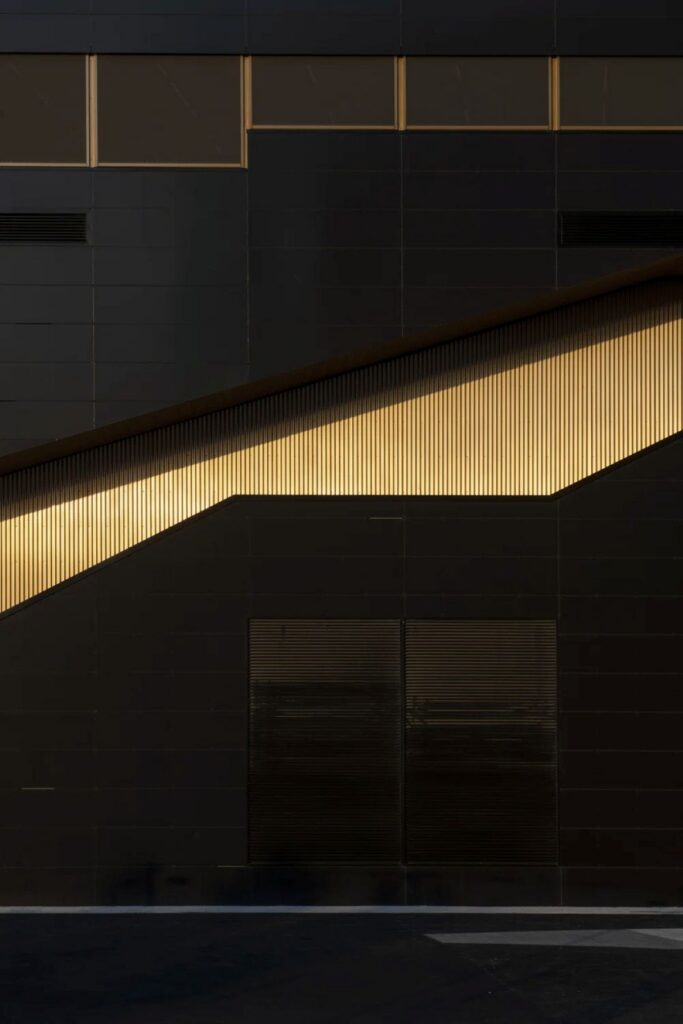
Interior workspace view showing the optimised daylighting conditions, the energy-efficient artificial lighting strategy, and the quality of the working environment for tenants © Snohetta
The architecture of the building uses low emitting concrete as the thermal mass material, which is revealed through cut-out sections in the ceiling, and the heat produced during the day gets absorbed by the concrete and dissipates at night without using any machinery. The seawater from the harbor is used as the source of energy for heating and cooling, as it takes advantage of the fact that the body of water near the building remains stable.
The energy recovery through ventilation air and gray water (waste water except for toilet drainage) occurs and gets recharged into the thermal system of the building. The smart ventilation systems have been utilized in order to reduce heating demands, and all of the electrical appliances are energy efficient.
In normal circumstances, the building produces well over twice the amount of energy it consumes every single day. On an annual basis, this adds up to about half a million-kilowatt hours of energy produced from renewable sources which then feed into a micro-grid powering not only the building but also other buildings in the vicinity, e-buses, cars, and boats as well. Essentially, the building acts as a mini power station right in the middle of town.
Exterior evening or winter view showing the building in reduced daylight conditions, demonstrating its presence and performance in Trondheim’s most challenging seasonal context © Snohetta
The building in the coming time will have enough space for storing energy. The reason for this is that the building will have the ability to store extra energy that will be produced due to excessive sunlight during summers for its usage during winters when there will be less sunlight available. Energy Storage Tank for providing energy to the microgrid has already been set up in the area.
BREEAM Outstanding represents the highest level of assessment for a globally acknowledged criterion for measuring sustainable development in construction projects. Only one structure has managed to receive this rating – Powerhouse Brattørkaia. It is noteworthy that the energy strategy of this facility corresponds to the objectives of the United Nations Framework Convention on Climate Change Paris Agreement.
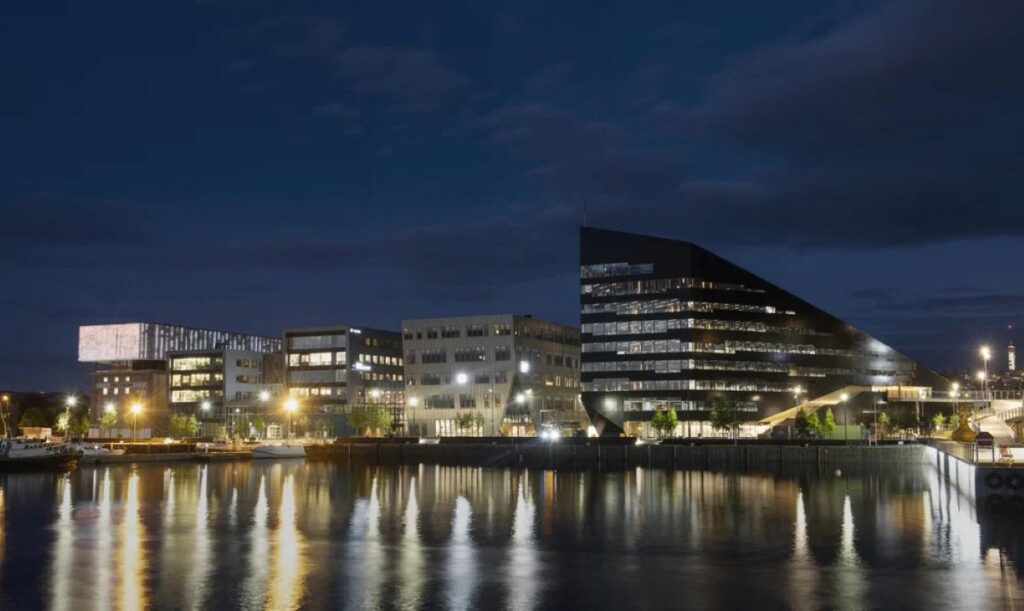
Exterior view from the waterfront showing the building’s full profile, its relationship to the Trondheim harbour edge, and the public ground floor interface © Snohetta
Architect: Snøhetta
Collaborators:
Developer: Entra ASA
Contractor: Skanska
Environmental Organisation: ZERO
Engineering: Asplan Viak
Photography: © Ivar Kvaal/Snøhetta, Synlig.no/Snøhetta