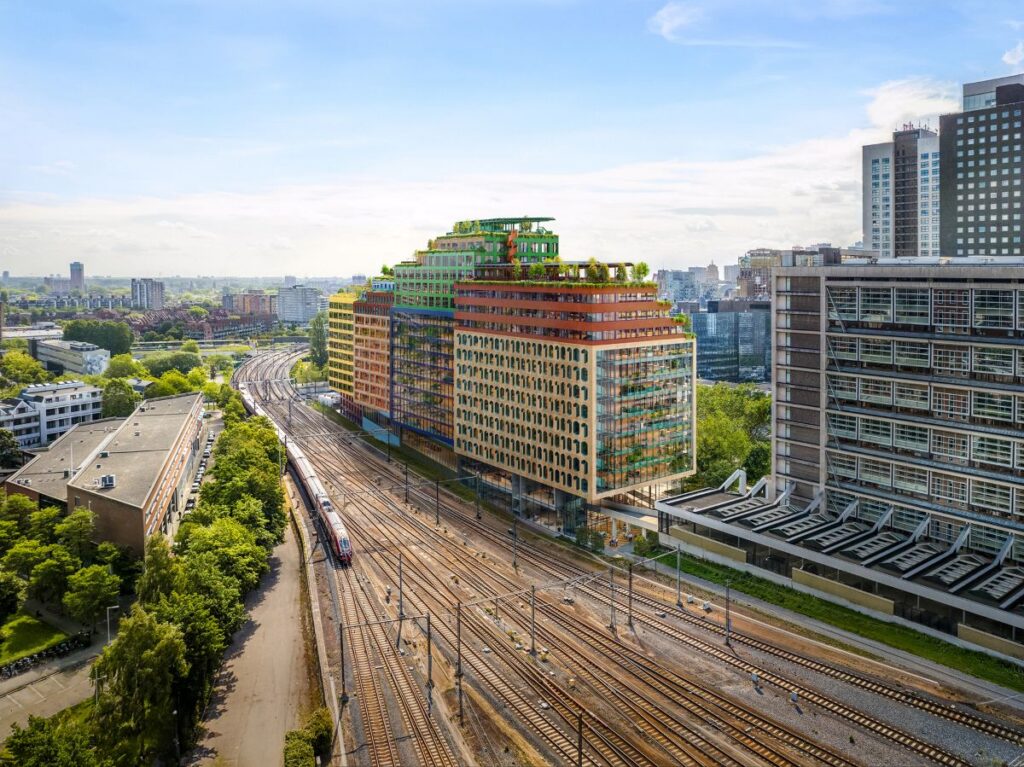
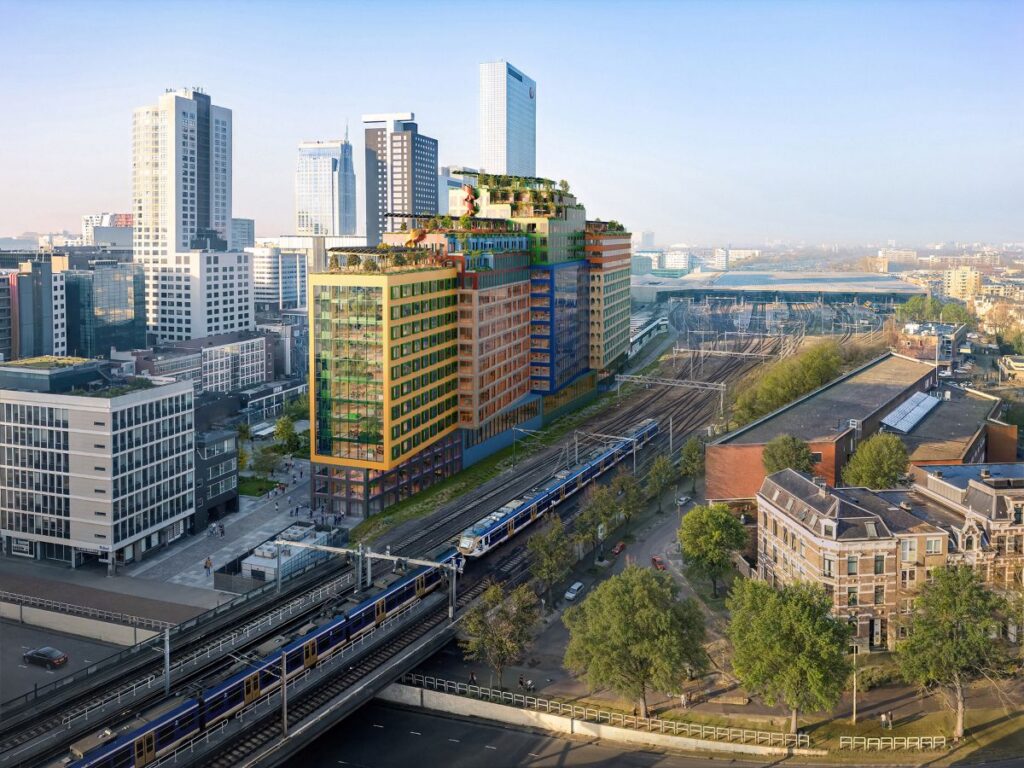
Aerial render showing the full Schieblocks development positioned along the railway corridor within Rotterdam’s Schiekadeblok district © MVRDV
Curated by ArchiRev Editorial | Feature Story | Published June 4th, 2026 | Source: MVRDV
Typologies: Mixed Use, Offices, Retail, Bar-Restaurant
Themes: Architecture, Leisure, Public, Mixed-Use
Status: In Progress
Location: Rotterdam, Netherlands
Year: 2023–
Surface: 47,000 m²
Client: LSI
Certifications: BREEAM Excellent, WELL Platinum
Schieblocks Rotterdam by MVRDV is a 47,000-square-metre mixed-use development in Rotterdam’s Schiekadeblok district. Along the railway corridor, this spot’s one of the city’s most culturally layered post-war areas. The project rises 61 metres and stretches almost 150 metres long, adding a big new presence while fitting in with the local architecture and community.
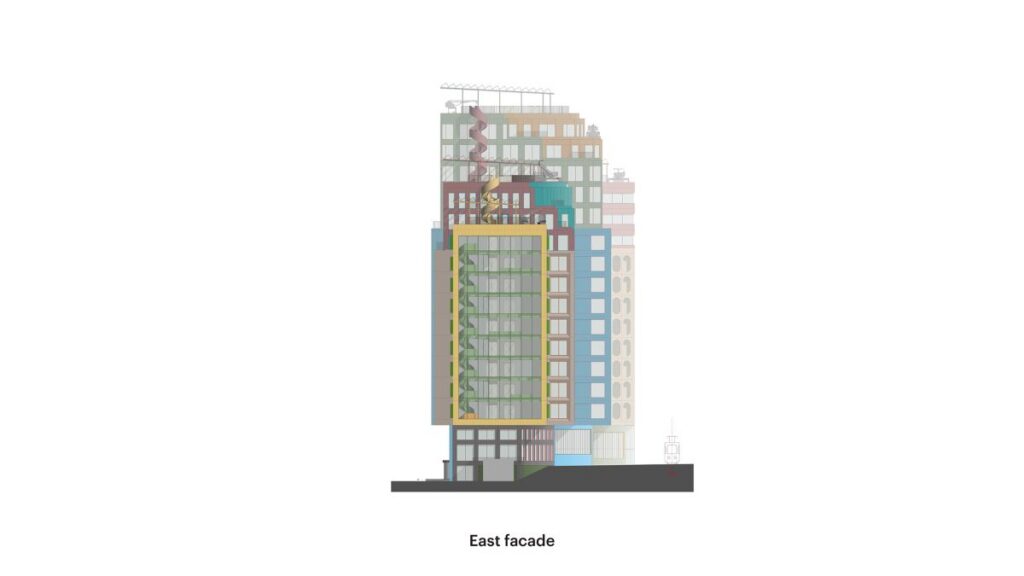
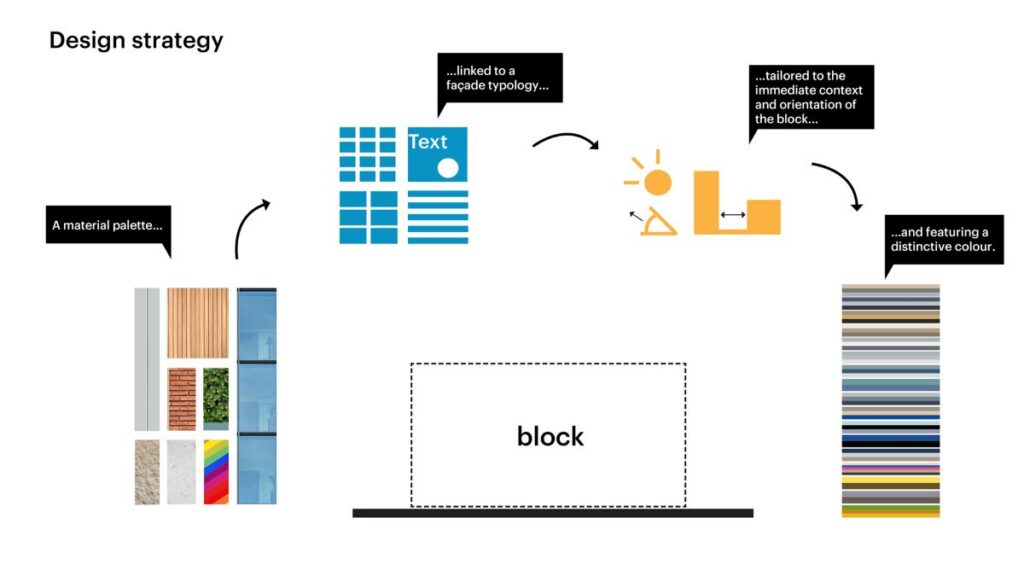
The building isn’t one big structure, but rather eleven vibrant, stacked blocks that pay homage to Rotterdam’s past architecture. Using colors, window designs, and materials, it turns its huge size into an engaging urban scene that fits right in with its surroundings. MVRDV calls this Rotterdam’s “second reconstruction” – a continuation of the city’s post-war growth while staying true to its roots.
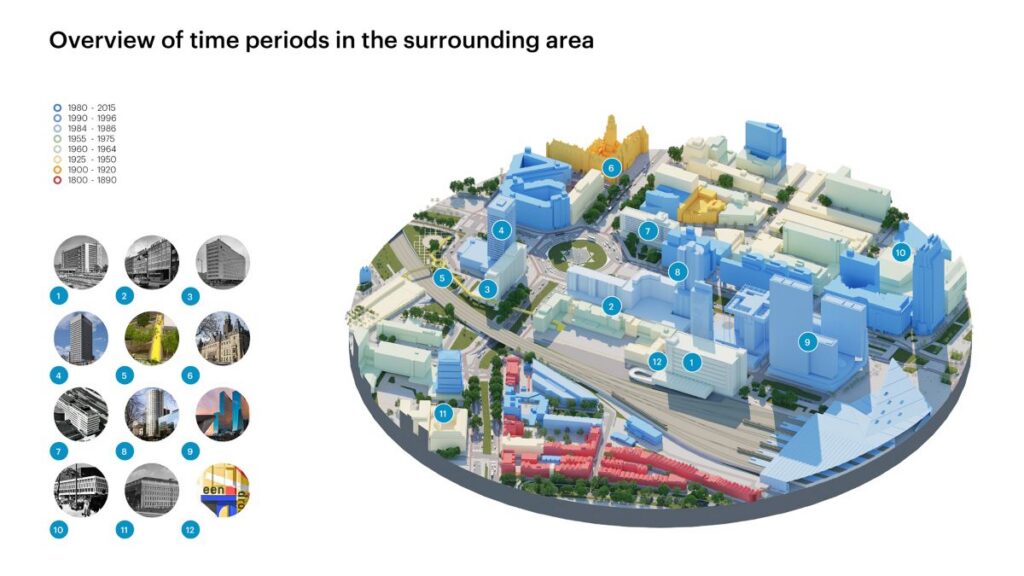
The Schiekadeblok area started as a reconstruction zone but grew into a spot for creatives, bars, cafes, and culture. Even though it got surrounded by bigger buildings in the nineties, it kept its unique vibe. Schieblocks Rotterdam joins this evolving area, making sure to increase density without losing the community feel.
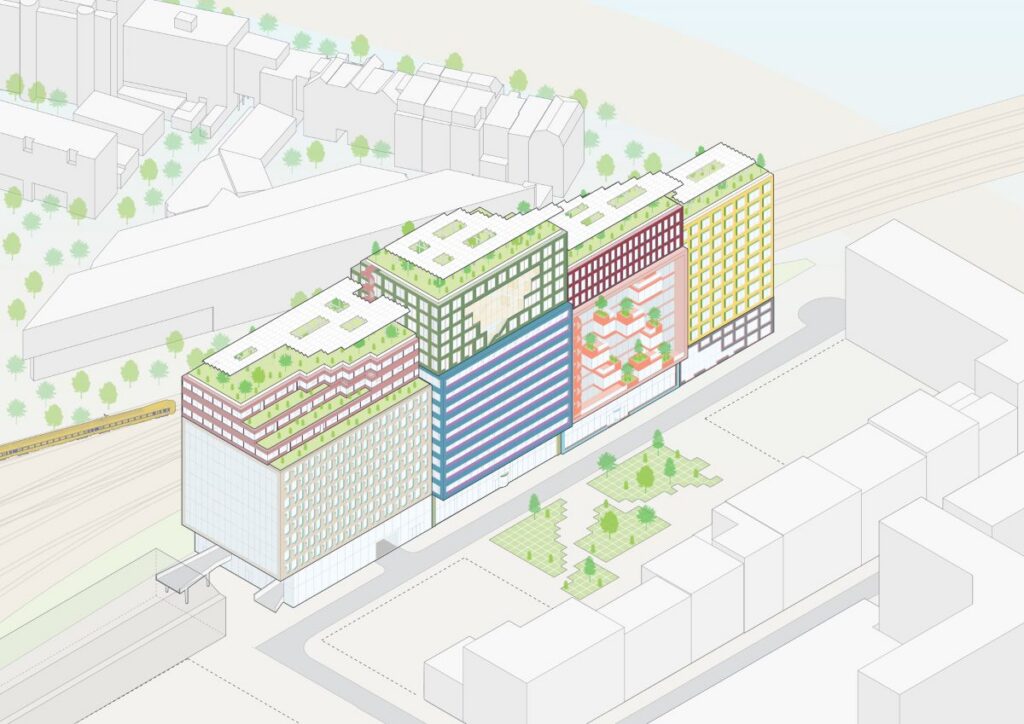
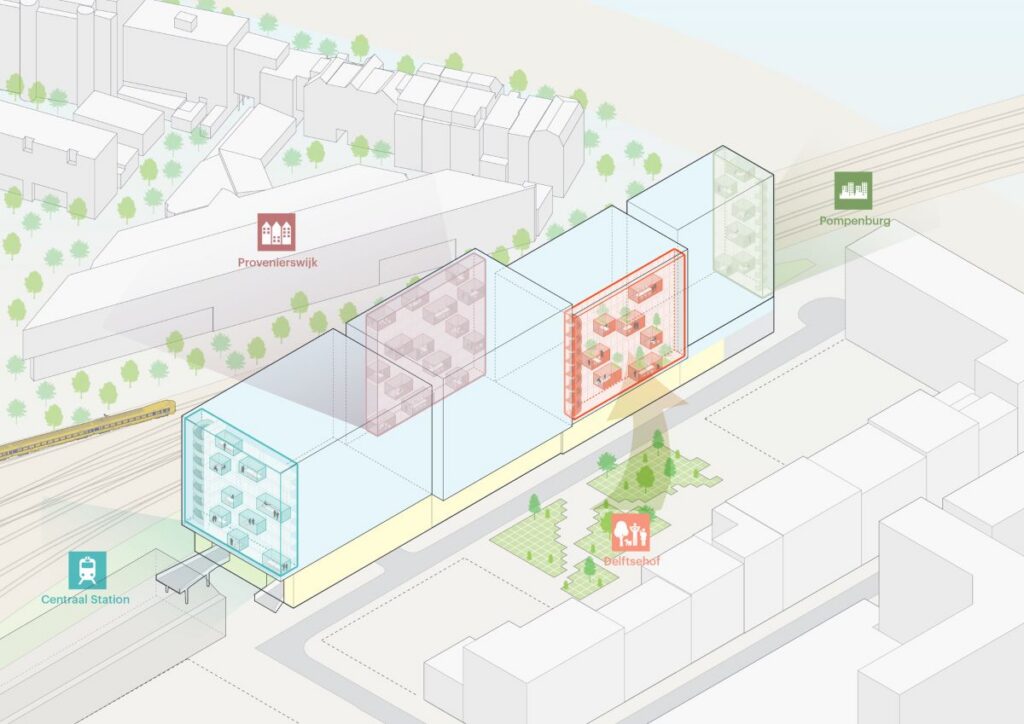
Diagram illustrating the stacked massing strategy and sectional composition of the 11 colourful blocks © MVRDV
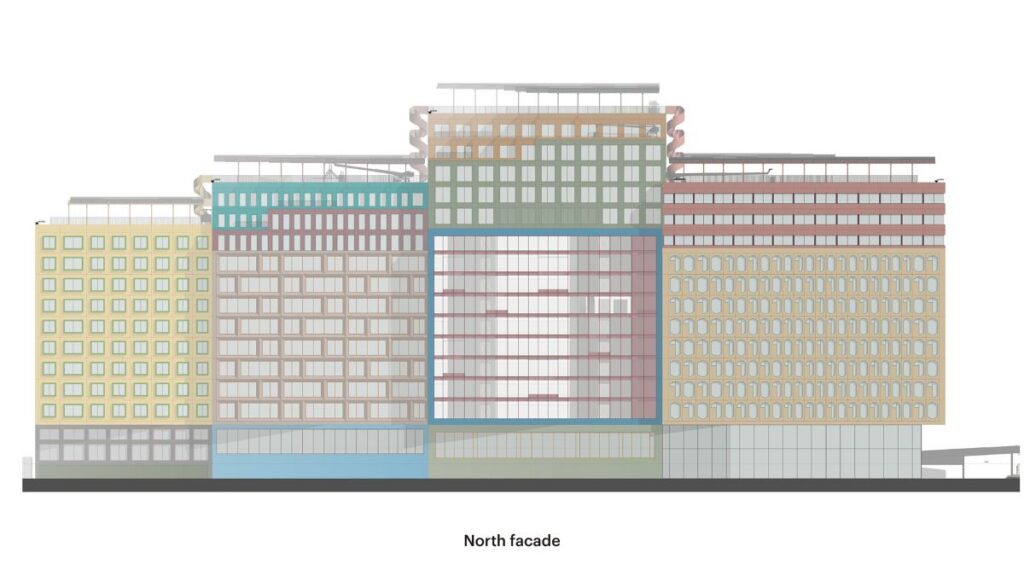
The massing strategy in this project is super important. It splits the overall form into four horizontal sections, each sitting on its own plinth with either one or two blocks stacked on top. This design pays homage to the rhythm and proportions of the surrounding reconstruction-era buildings along Delftsestraat but stacks it higher vertically. Because of this, the façade has an interesting variation that helps soften the building’s huge scale.
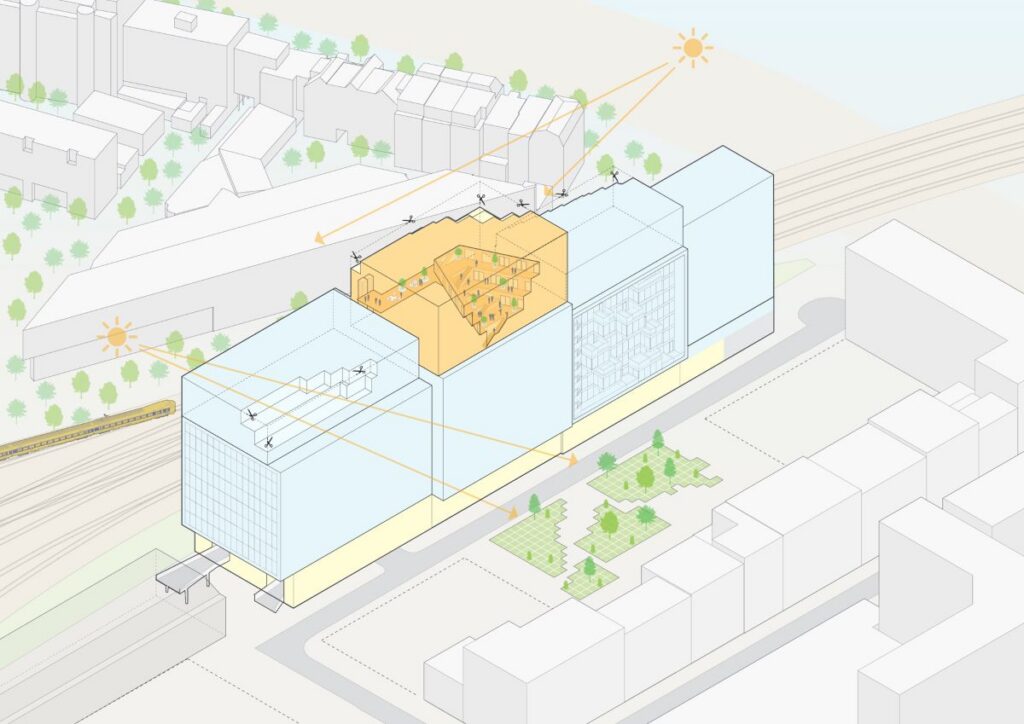
Environmental performance has a big say in how the building looks too. The tops get sliced based on solar studies, all to keep from blocking the sun on nearby homes. These cuts have a practical purpose; they’re not just there for style. So, the building fits both nicely and greenly into its spot.
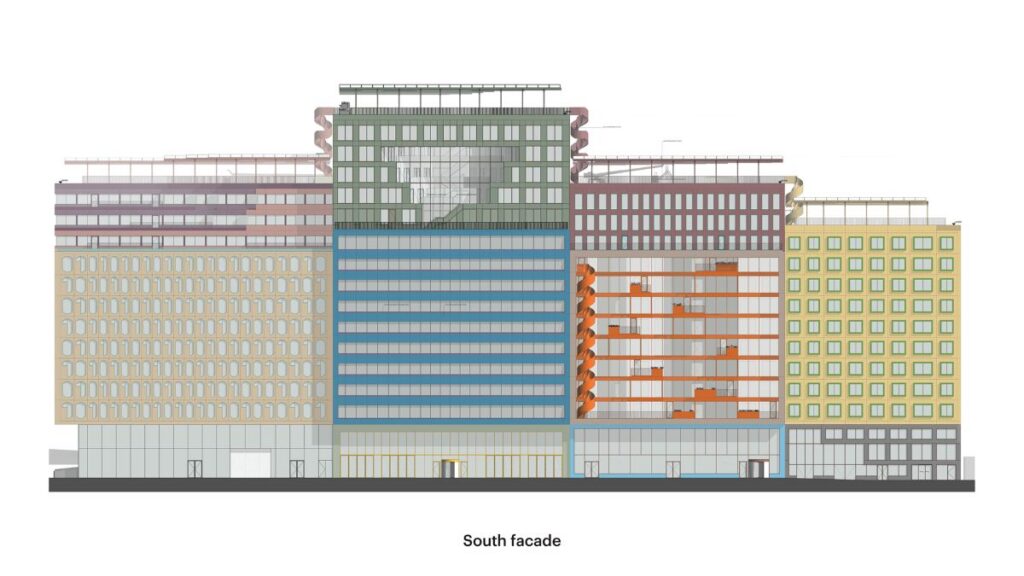
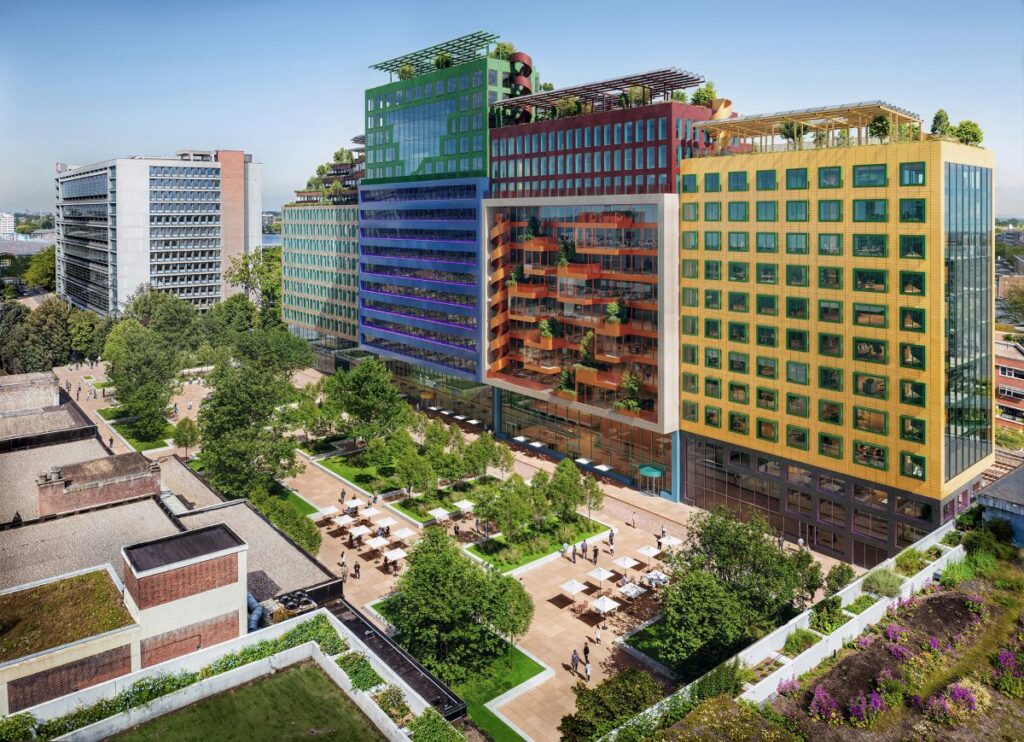
Render of the south-facing façade highlighting the varied colours, fenestration patterns, and historical references across the 11 blocks © MVRDV
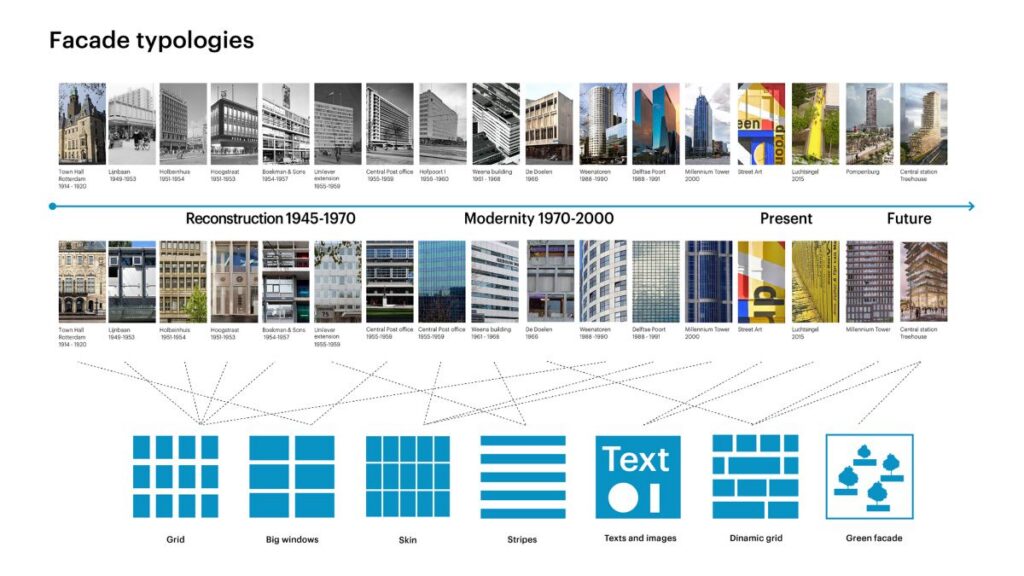
Each part shows off an architectural style inspired by Rotterdam’s landmarks and materials. One area takes its cues from the Citrusveiling building with projecting bay windows and the sunny yellow colour of the Luchtsingel bridge. Another area uses sandstone hues from Rotterdam City Hall. Elsewhere, you’ll spot octagonal windows from nearby Hofplein 19, which spell out “”010″—the city’s dialling code.
Now, while these designs draw on the past, they still keep one eye on the future. They do this with an eco-friendly approach. The facades use bricks made from recycled materials, cutting down on carbon. Also, there are building-integrated photovoltaic panels slapped across the south-facing sides. This is great because they create clean energy and reduce operating emissions.
When you hit street level, it gets really interactive. Retail spots, a bakery, and a bike café add life to the front area, blending right in with the already bustling Schiekadeblok vibe. Plus, the bike café is placed next to where cyclists park their rides, supporting Rotterdam’s strong cycling community.
Street-level render showing the transparent plinth with retail spaces, café frontage, and pedestrian activity © MVRDV
The project includes a spiral car ramp from the neighboring Central Post building, which is a protected national monument. It can’t be removed, but rather than hiding it, MVRDV made something cool. They enclosed it in glass and turned it into the centerpiece for the Wokkelbar, a new spot for nightlife fun. “Wokkelbar” actually means spiral in Dutch.
Up top, there are more public spaces like a restaurant and a two-story area for events that looks out at Rotterdam’s skyline. The rooftop was designed with Juurlink & Geluk, and it’s a place where people, plants, and rain can all interact. Different levels on the roof are connected by spiral staircases. Plus, there’s a solar-panel pergola to give shade and help generate more renewable energy.
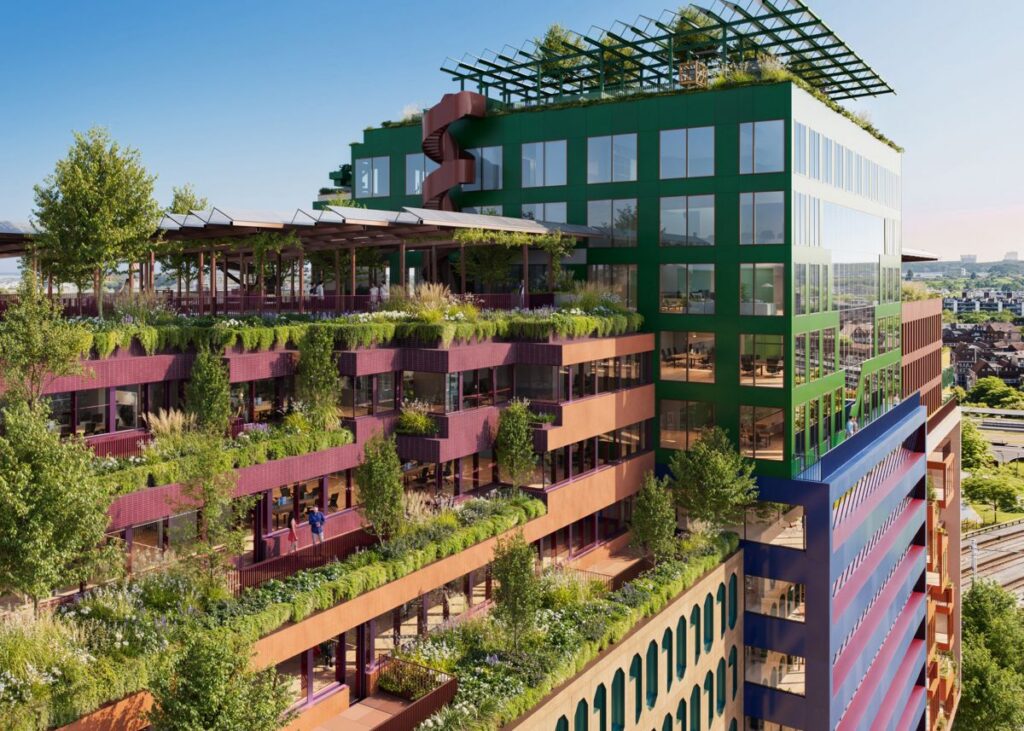
Render of the accessible rooftop landscape with solar pergola, planted terraces, and views over Rotterdam © MVRDV
Schieblocks Rotterdam isn’t just any mixed-use office building. It makes a bigger point about Rotterdam’s future growth through its design. The architects use fragmentation, historical nods, public areas, and eco-goals to make a statement. So, the building talks about how the city can evolve next.
GALLERY