Typologies: Residential
Themes: Architecture, Housing
Status: Realised
Location: Singapore
Year: 2020–2025
Surface: 35,800 m²
Client: City Developments Limited
Awards: EdgeProp Singapore Excellence Award 2025 — Top Development; RoSPA Occupational Safety Awards 2025 — Gold; WSH Awards Performance 2025 — Safety and Health Award Recognition for Projects
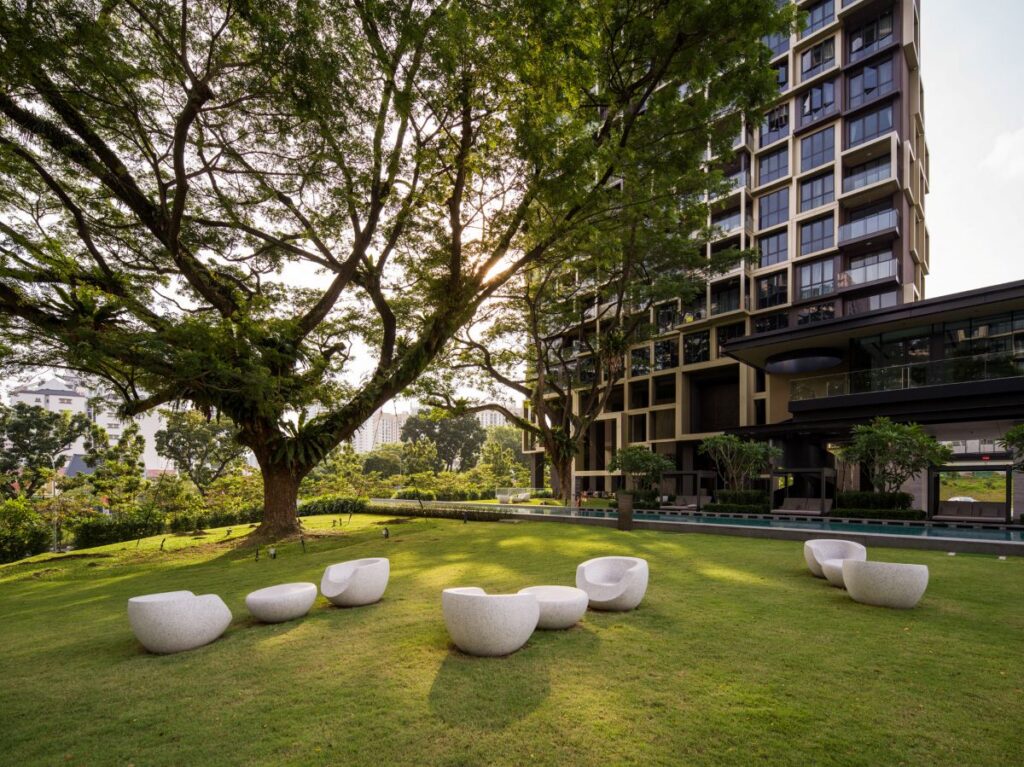
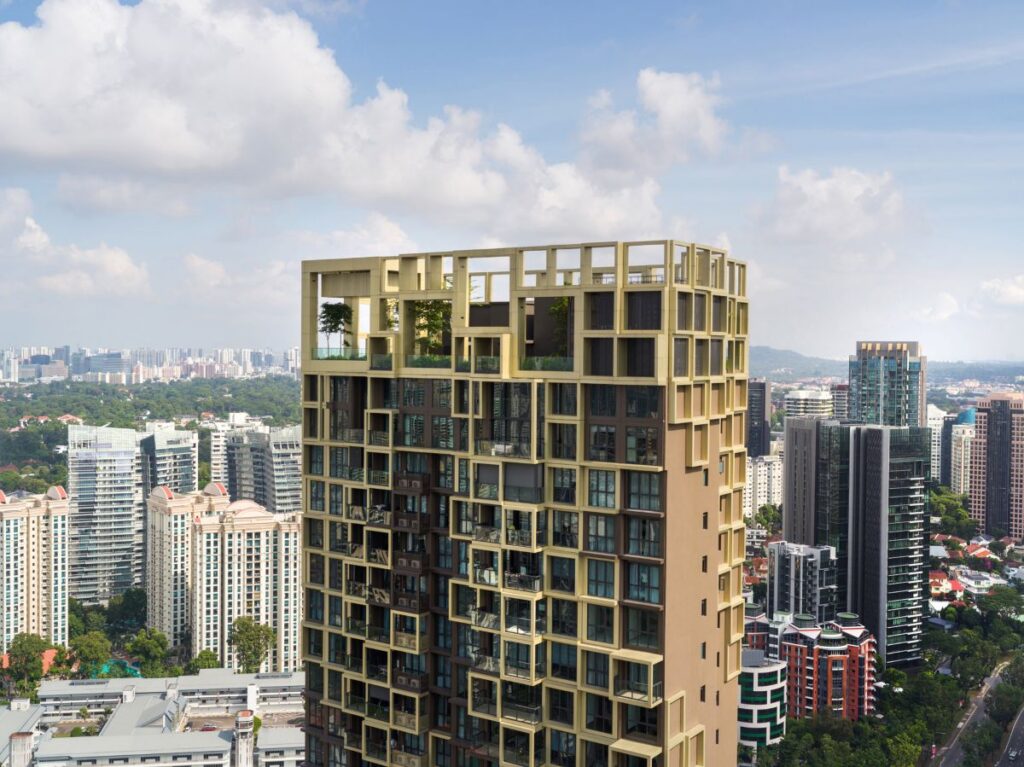
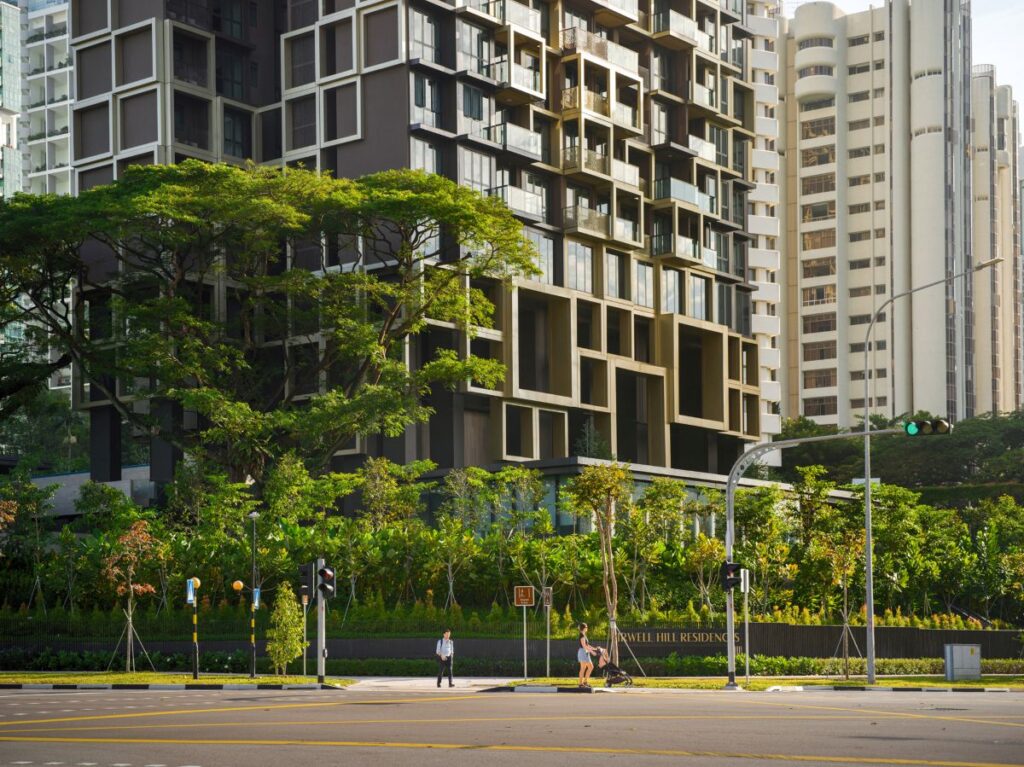
Irwell Hill Residences, by MVRDV in Singapore, shows the studio’s work in one of Asia’s super-regulated and tech-savvy places for building homes. Right in the city center along Irwell Bank Road, there are two 36-story towers made by City Developments Limited and designed by ADDP Architects. They used something called PPVC, which is Prefabricated Prefinished Volumetric Construction. MVRDV joined in as the façade architects because PPVC usually leads to buildings that look too similar and don’t really stand out. The goal was to give this place its own special look, even though such construction is speedy and efficient.
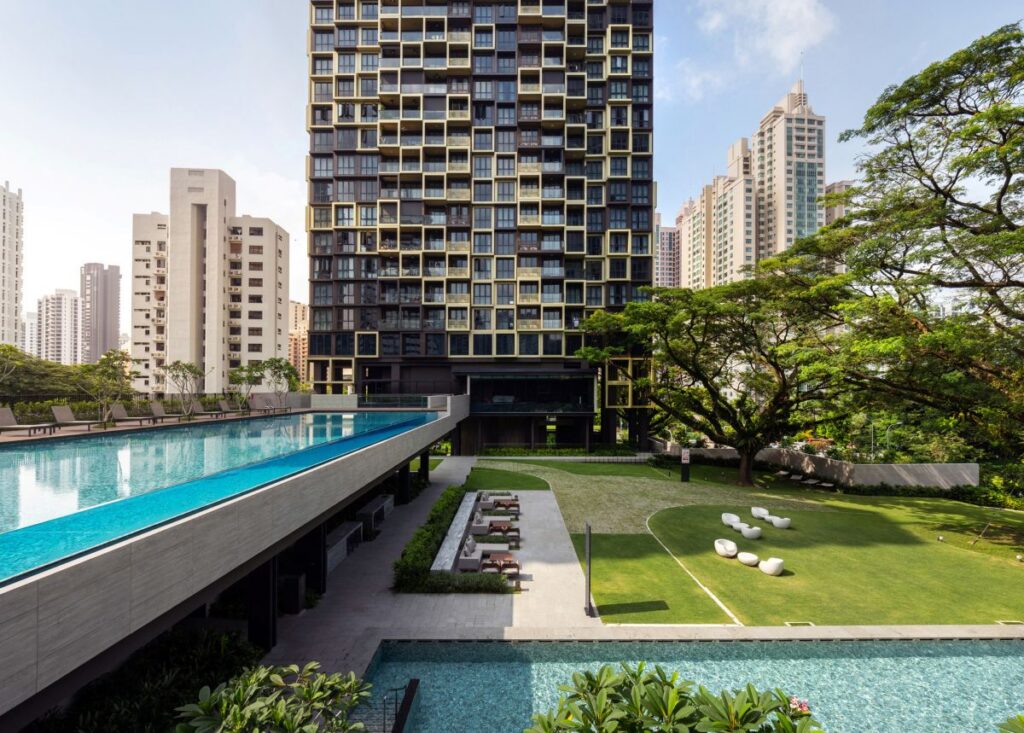
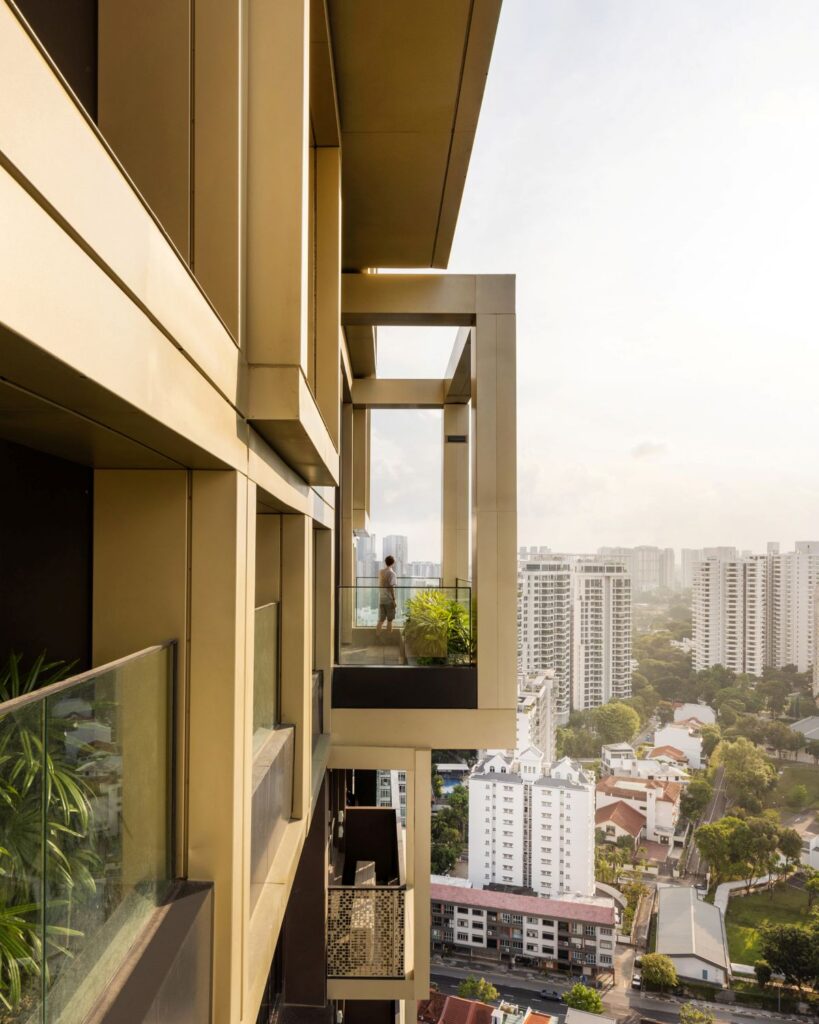
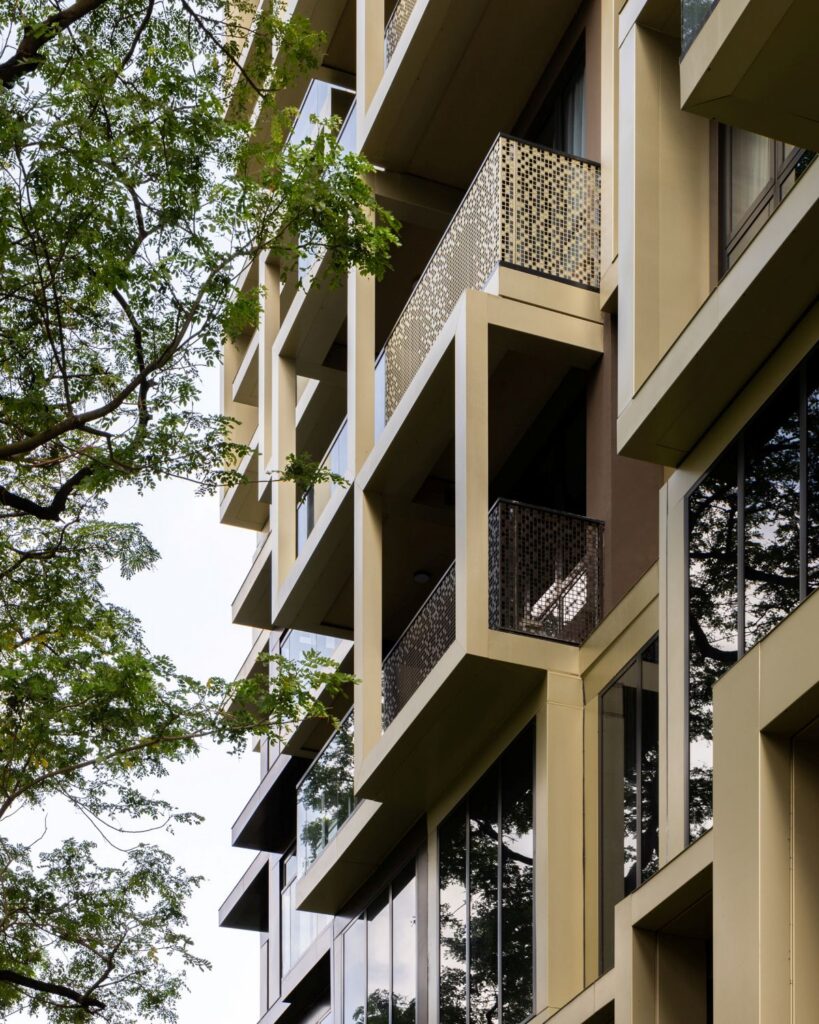
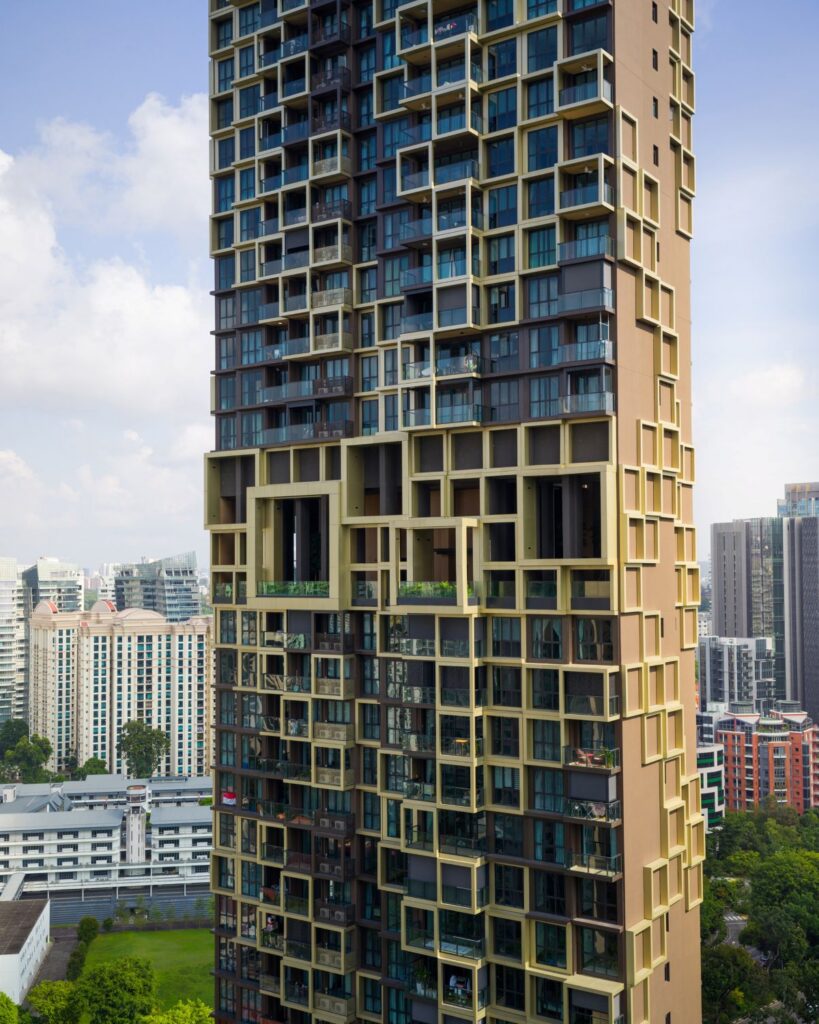
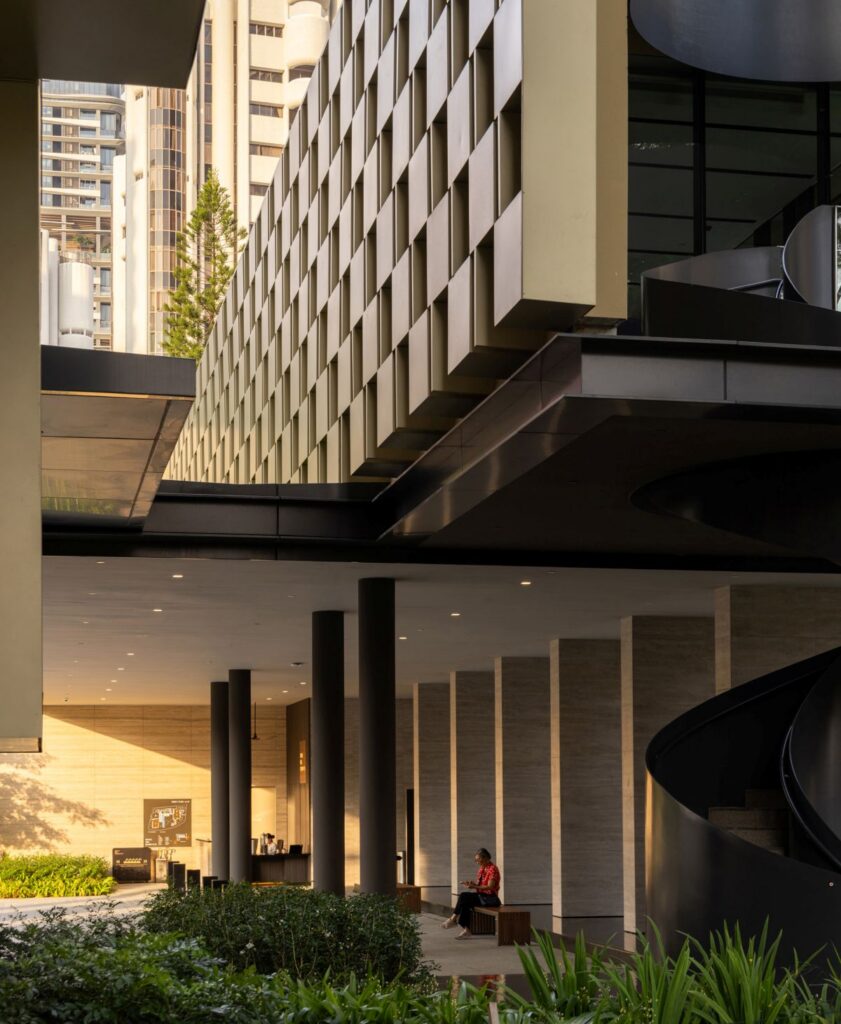
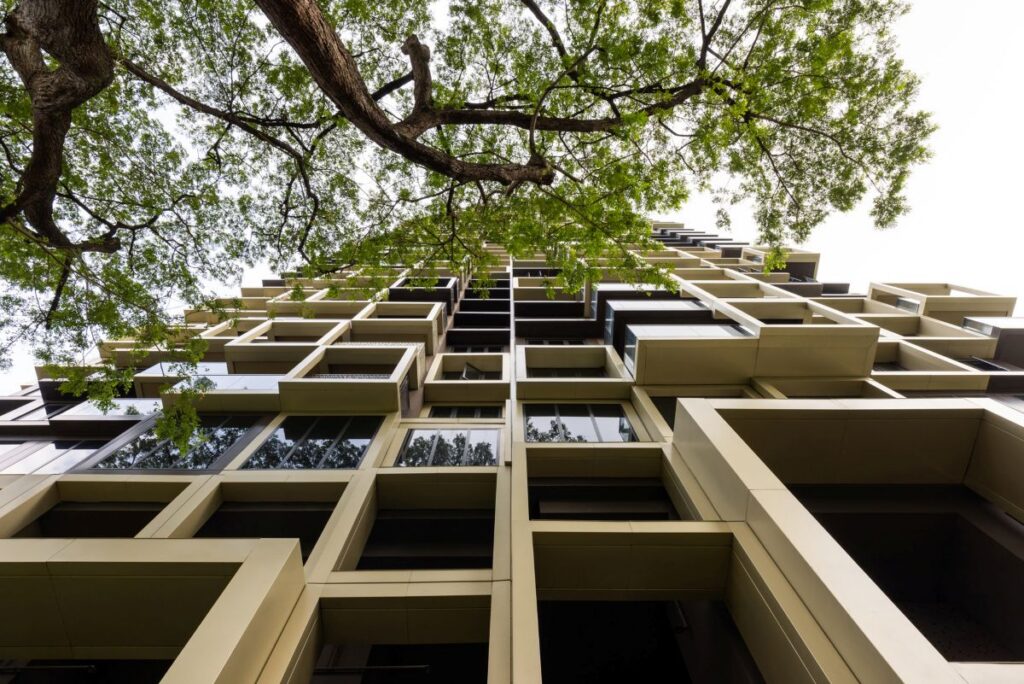
Façade detail showing PPVC module depth variation, balcony projections, and material palette © MVRDV
PPVC is a construction method where fully finished room modules are made off-site and put together on location. Backed by Singapore’s Building and Construction Authority, it cuts down construction time, site disturbance, labor intensity, and carbon emissions thanks to industrial production and less material waste. In Singapore’s packed city, PPVC offers a smart solution for land shortages and sustainability goals, like the city’s Green Plan 2030.
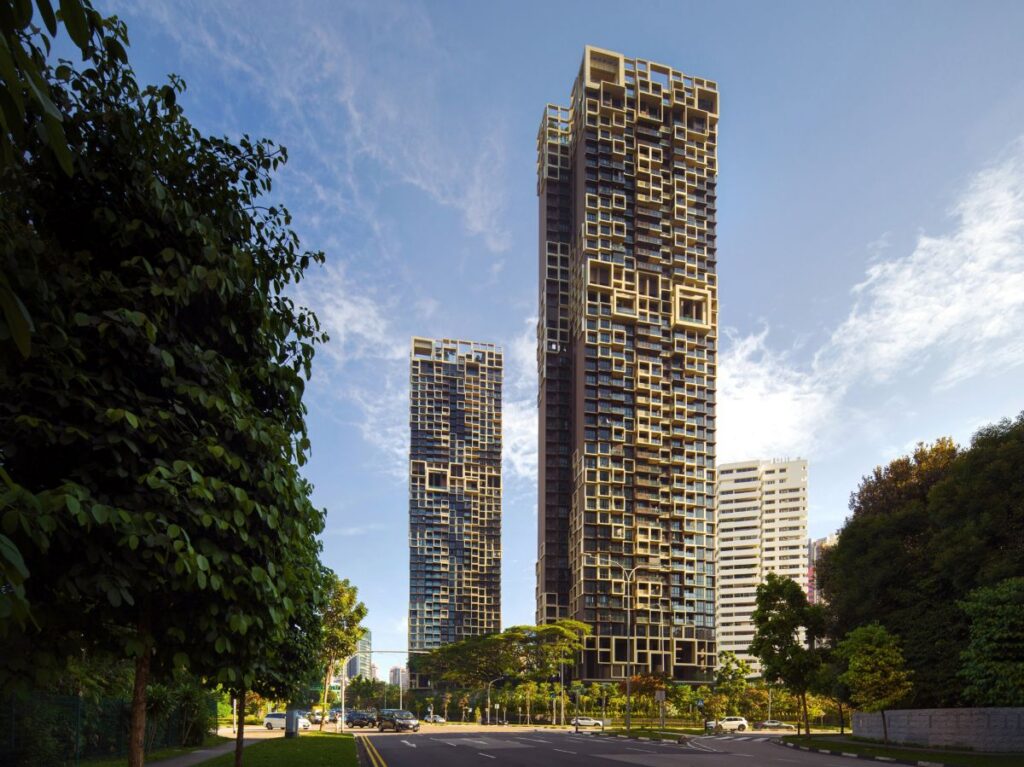
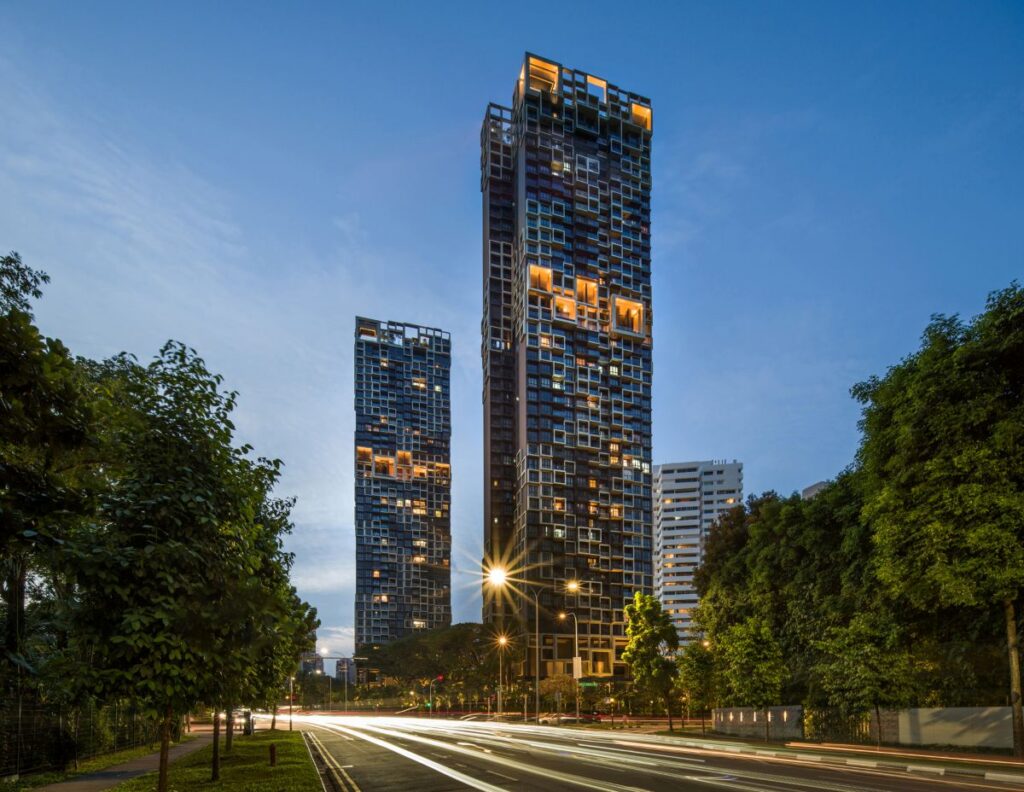
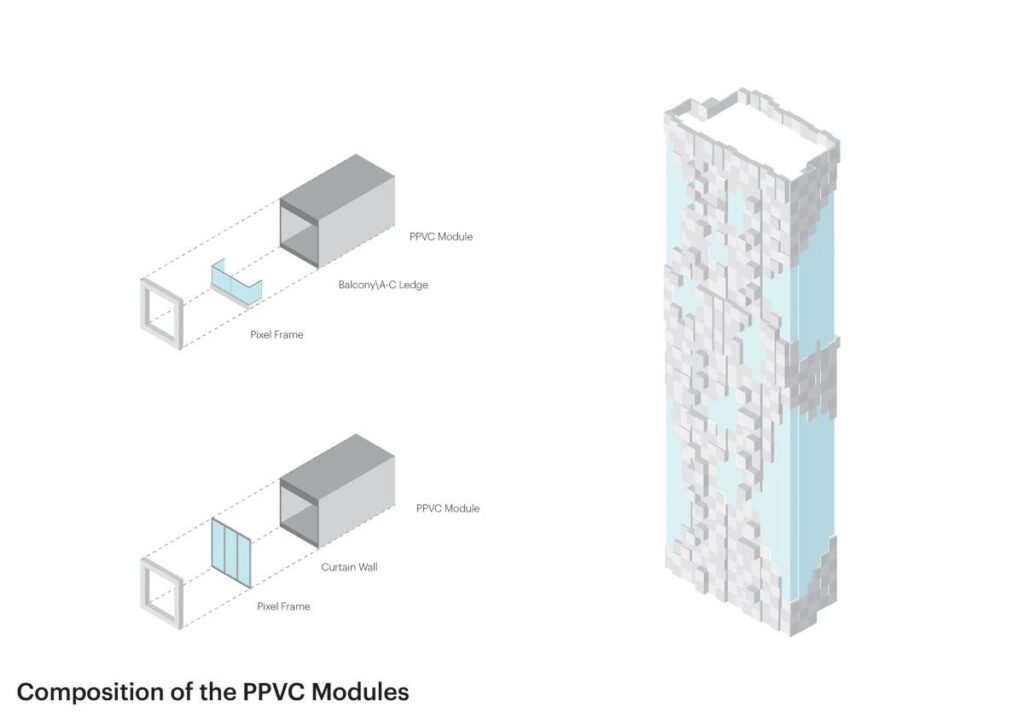
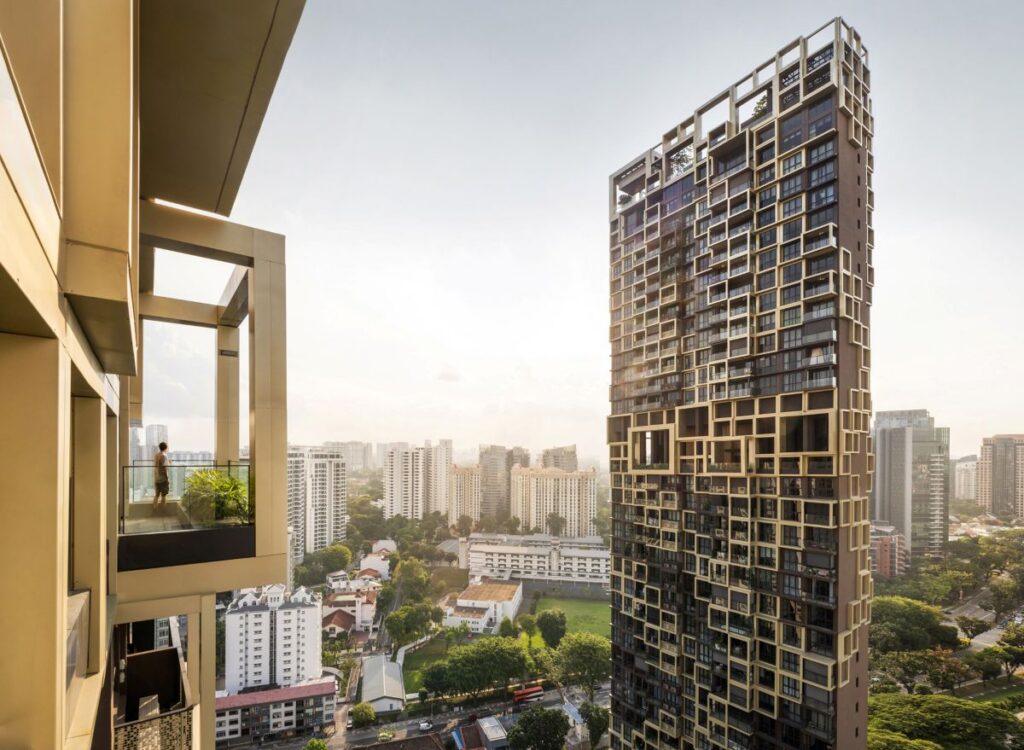
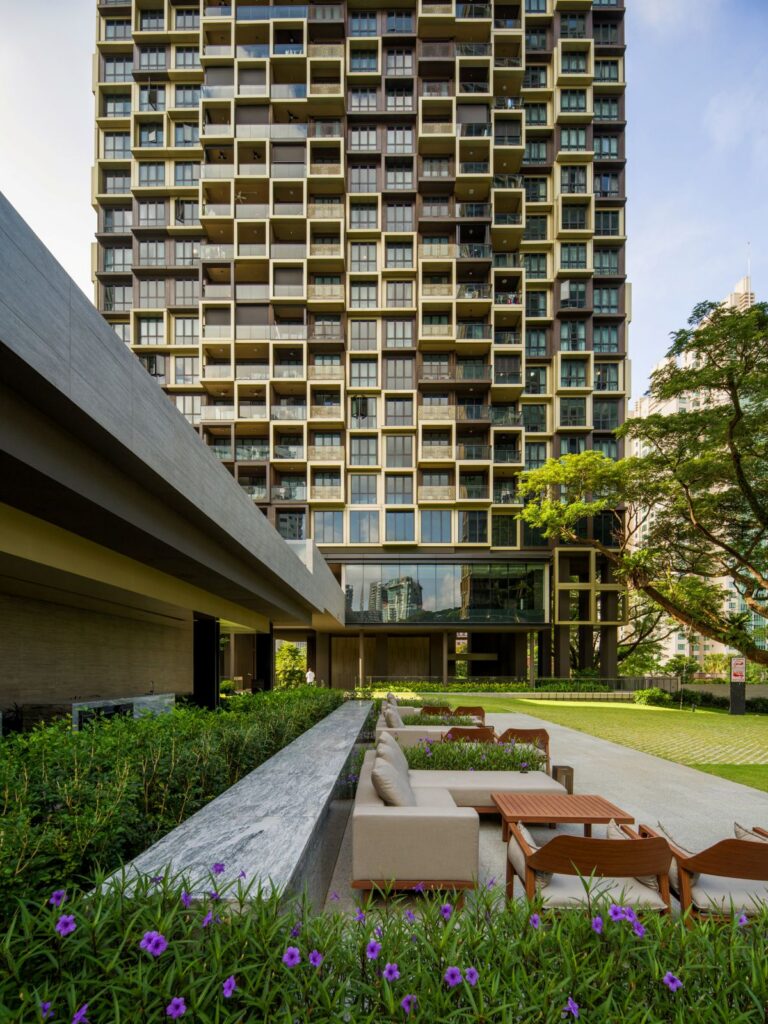
The main architectural task here is about how it looks in the end. Traditional PPVC construction usually creates repetitive façades from uniformly stacked parts. But MVRDV tackles this by treating each prefabricated module like a “pixel.” Instead of hiding the construction method, they emphasize it, creating a cool effect with how the modules stick out or recede. Some units jut out thanks to metal frames, making balconies, while others get pushed back. This makes a unique vertical pattern that changes based on the light and your view angle.
Using this pixel idea, the façade becomes a system you can almost read, where building construction and how it looks are one and the same. What you see isn’t just added decoration; it’s actually showing the structure inside.
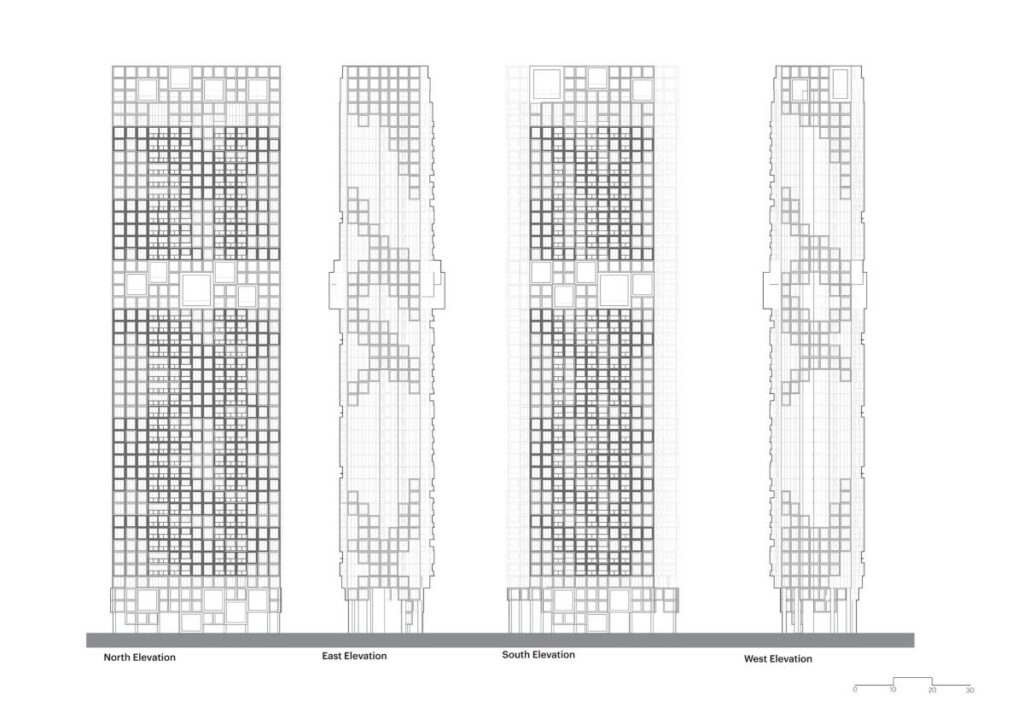
Diagram illustrating PPVC pixel strategy with recessed and projected modules forming façade pattern © MVRDV
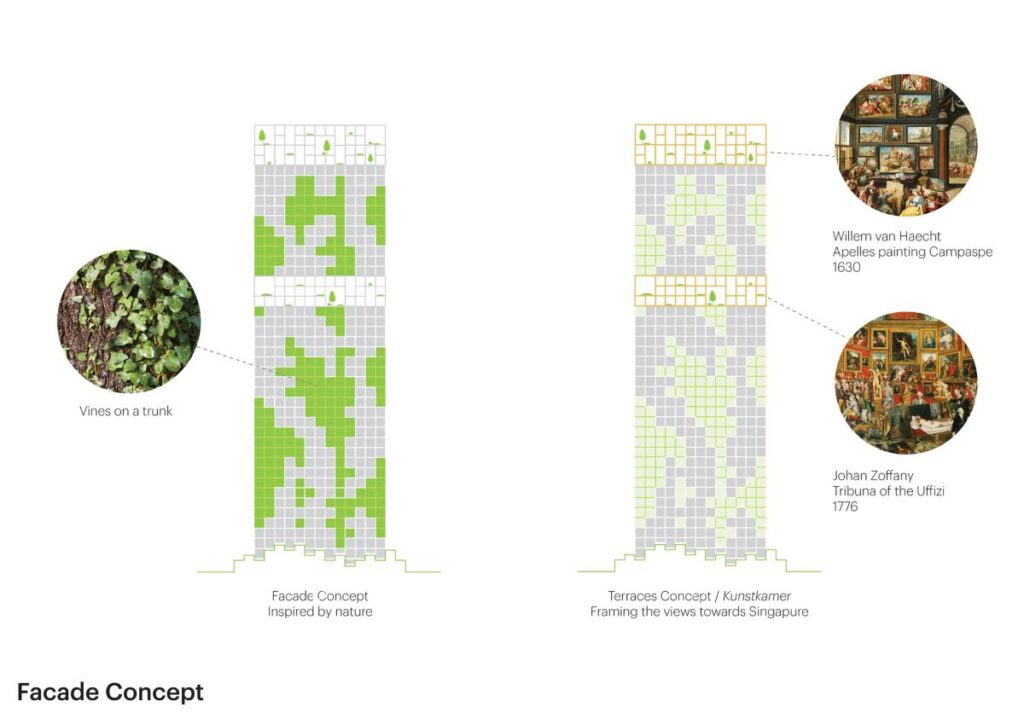
The color scheme of gold and dark brown highlights the modular design, making the façade look deeper. Inspired by how climbing plants grow, the design adds variety while sticking to an underlying grid. The identity comes from repeating elements, not fighting against them, so the building keeps things clear yet complex.
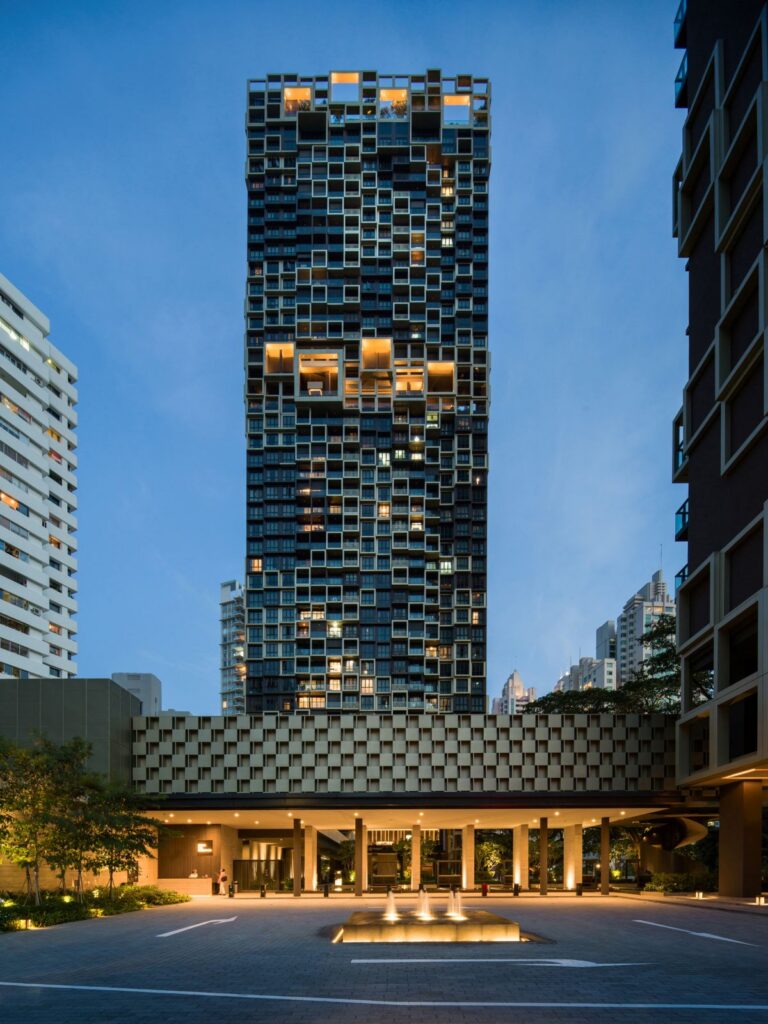
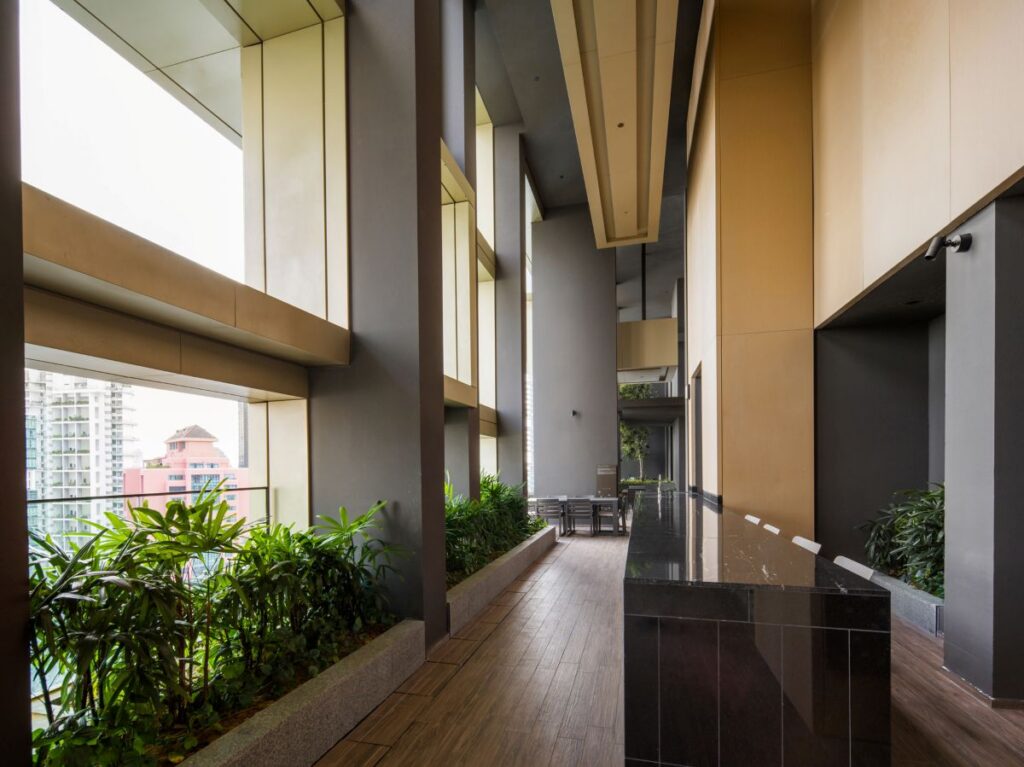
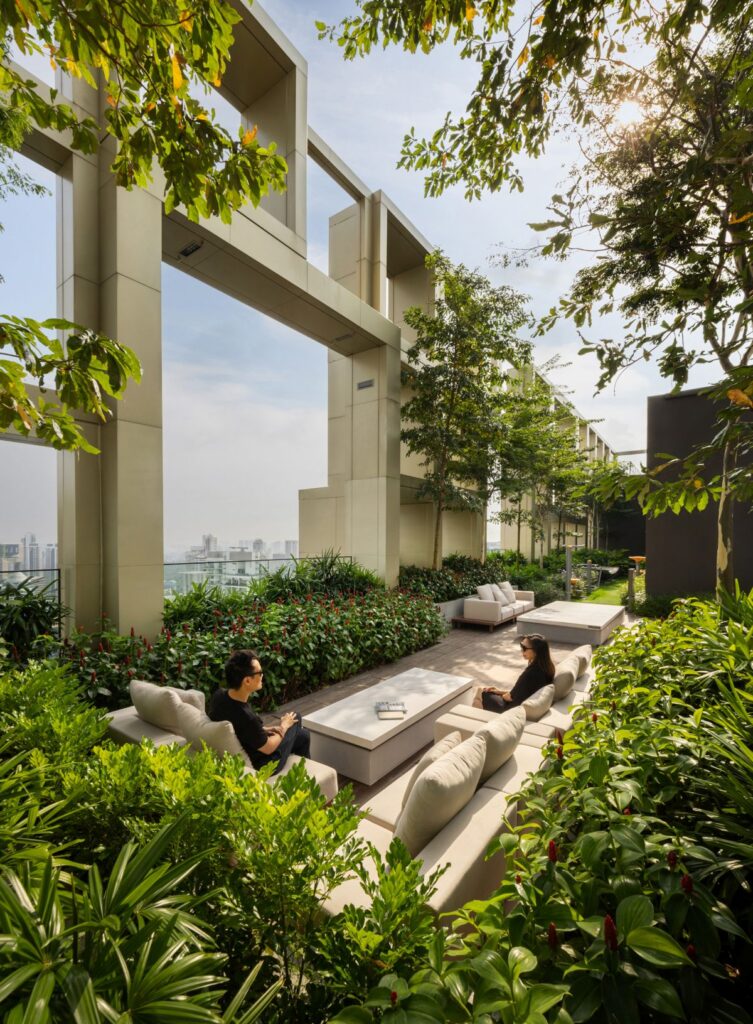
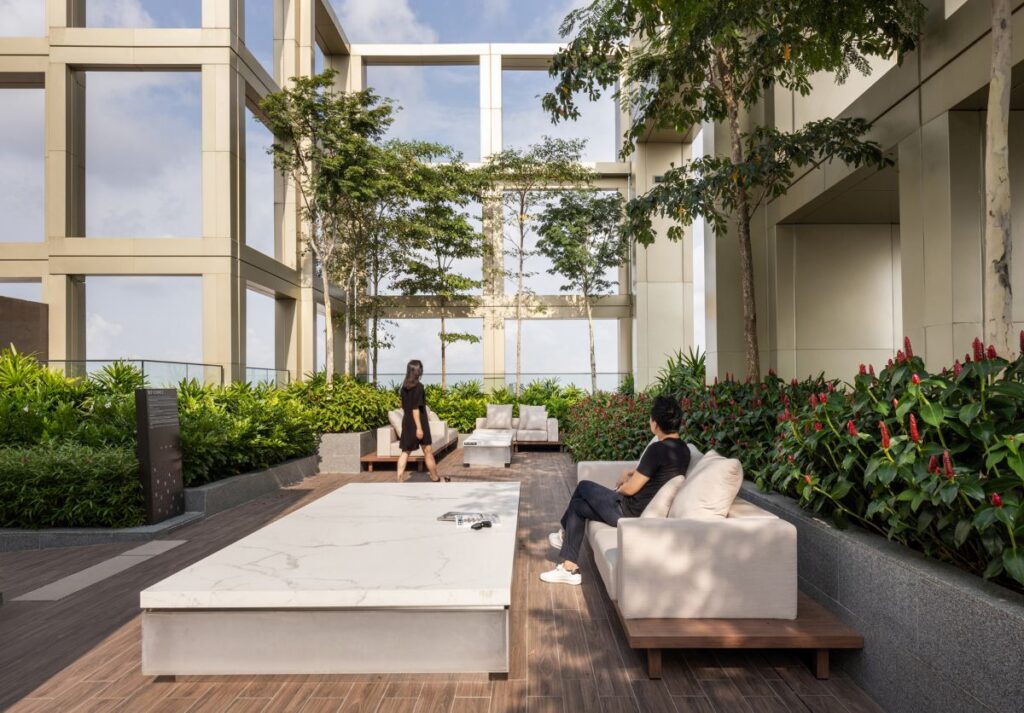
At certain spots, the structured façade gives way to communal areas. For instance, on the 24th floor, a sky garden changes the usual grid pattern, doubling and tripling frame sizes. This lets plants, sunlight, and shared spaces remake the link between inside and out. At the towers’ peak, Irwell Sky tacks on a rooftop common area, breaking the consistent layout to connect personal living spaces with a community vibe.
24th-floor sky garden showing expanded modules and planted communal space © MVRDV
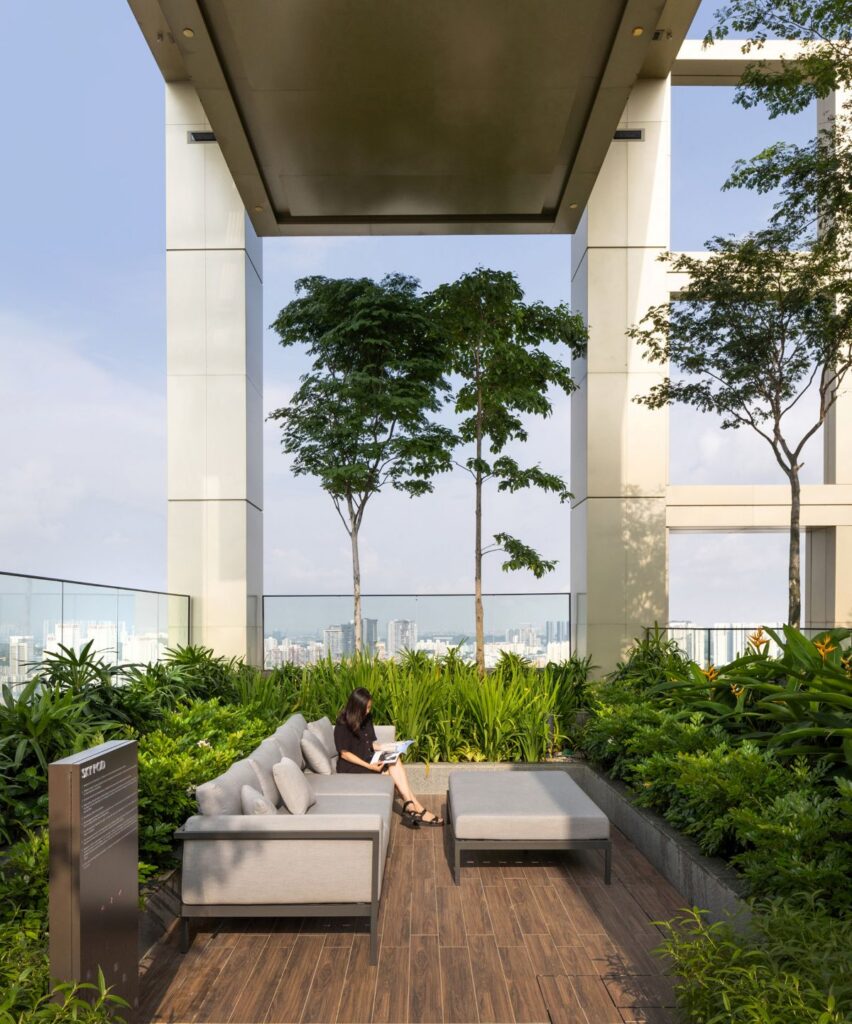
Interior view of sky garden showing double-height space and landscaping integration © MVRDV
Rooftop Irwell Sky communal space with expanded façade framing and city views © MVRDV
These spatial changes aren’t exceptions to the system; they’re key parts of the story. The project uses different module sizes to show how spaces will be used and felt.
This work makes a bigger case for discussing industrial building methods and how we see architecture. MVRDV shows that while PPVC offers clear eco-gains like less waste and smoother builds, long-term worth matters too. If a structure isn’t memorable, it could become outdated, even if it’s great technically. So, the architects prove that standardization and creativity can coexist through their design.
Elevation drawing showing full façade composition, sky garden interruption, and rooftop crown articulation © MVRDV
Completed in 2025, Irwell Hill Residences in Singapore shows how prefab homes can be unique, not just repetitive. MVRDV’s design lets the construction logic show on the façade, making the building’s identity come from its structure, not added decorations.