
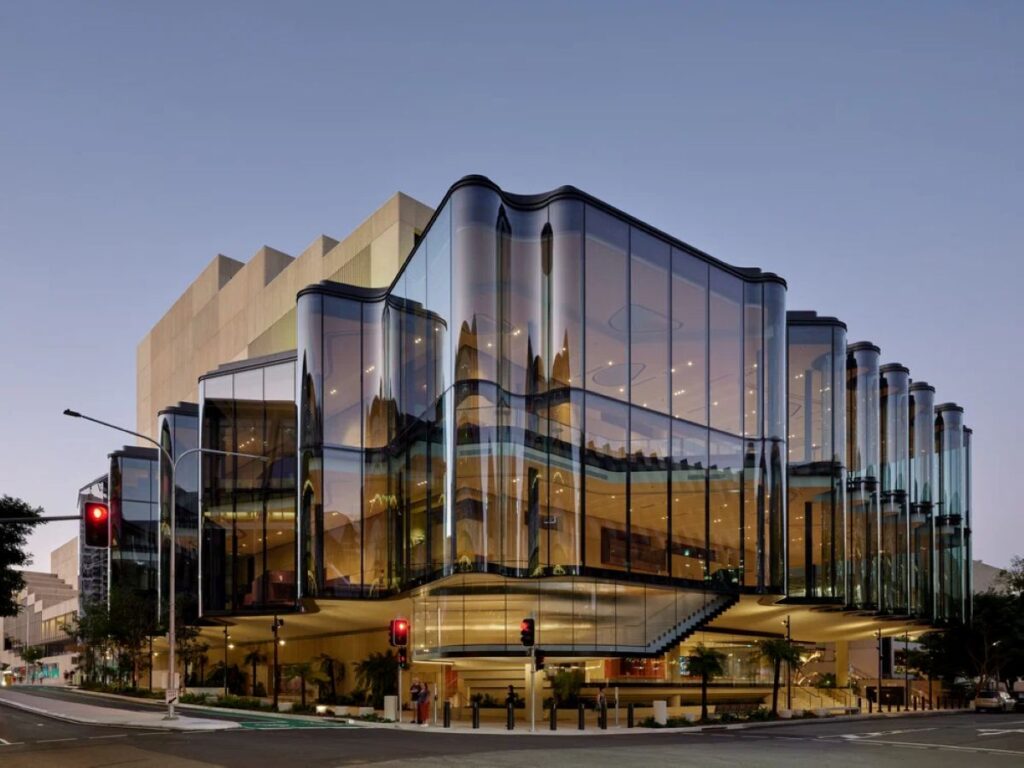
The rippling glass facade of the Glasshouse Theatre outside © Snøhetta
Curated by ArchiRev Editorial | Feature Story | Published April 23rd, 2026 | Source: Snøhetta
Typologies: Performance Space
Status: Completed (2018 – 2026)
Location: Meanjin / Brisbane, Australia
Client: Arts Queensland, QPAC, Queensland Government’s Department of Housing, Local Government, Planning and Public Works
Collaborators: Blight Rayner
Size: 13, 423 m2
Blight Rayner Architecture and Snøhetta won an international design competition in May 2019 for the Queensland New Performing Arts Venue, which is currently known as Glasshouse Theatre (part of the QPAC) at South Bank. With its expanded 1,500 seats, QPAC can now hold ballet, opera, theatre, dance, and symphony at an international standard, making it Australia’s largest Performing Arts Centre (PAC). This is a significant increase of the PAC’s current offerings.
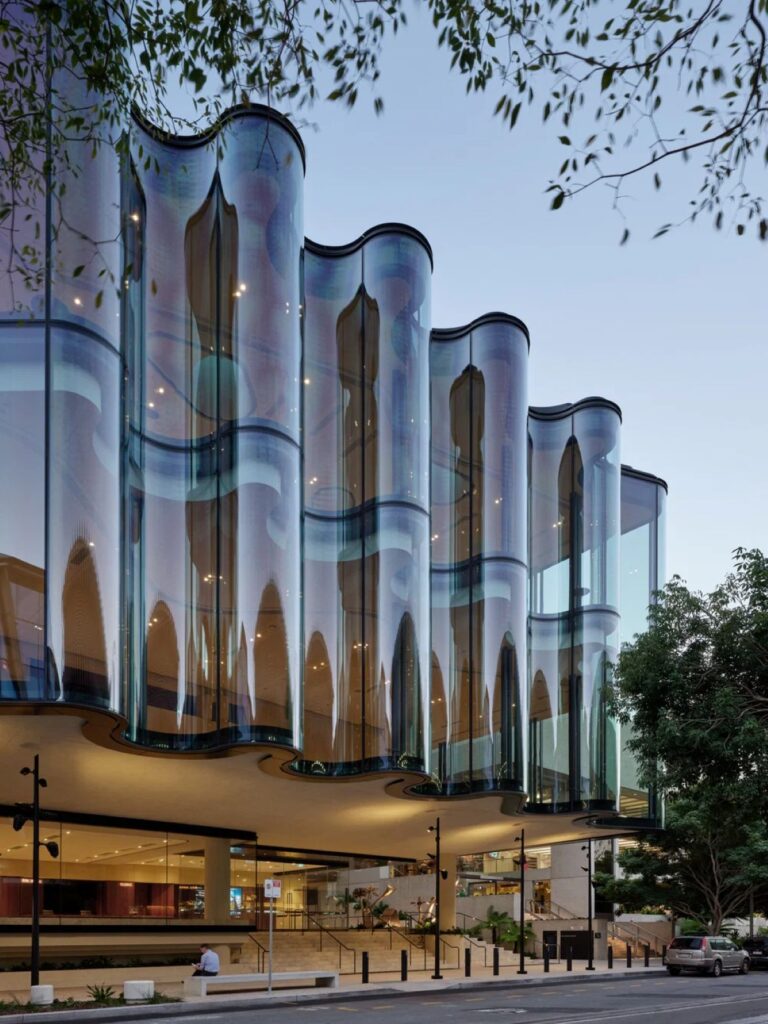
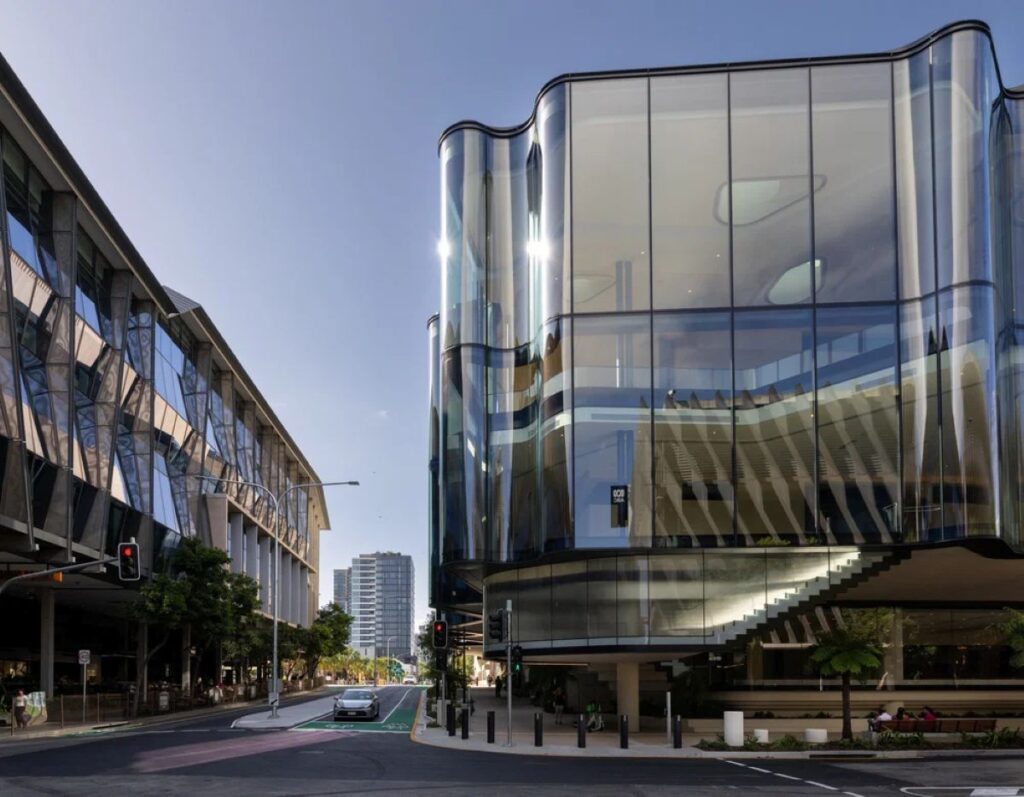
Glass facade detail with undulations © Snøhetta
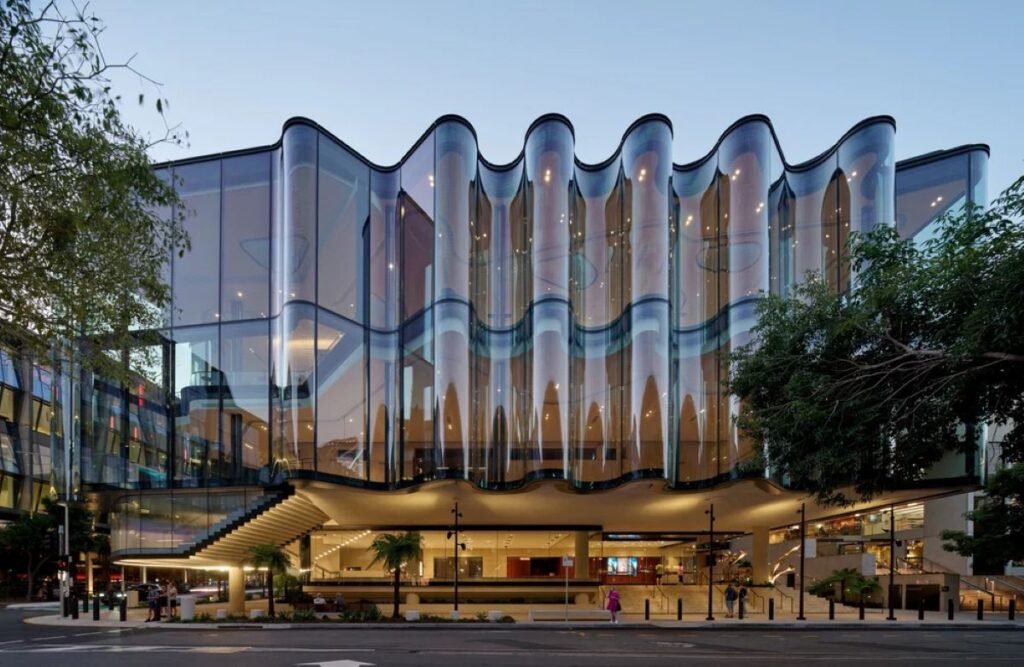
The building’s design takes into account the site’s urban context as well as its physical constraints. It is positioned to blend in with its surroundings and is intended to extend about six meters beyond the building’s footprint along two street frontages above Playhouse Green. Ada Lilla Watson’s prose-poem and the natural ebbs and flows of tidal waters connected to the Brisbane River serve as inspiration for the building’s distinctive ovoid, rippling glass front. The building’s flowing facade, which lessens the building’s apparent weight and enhances the larger QPAC architectural language (designed by Robin Gibson), is an example of this idea.
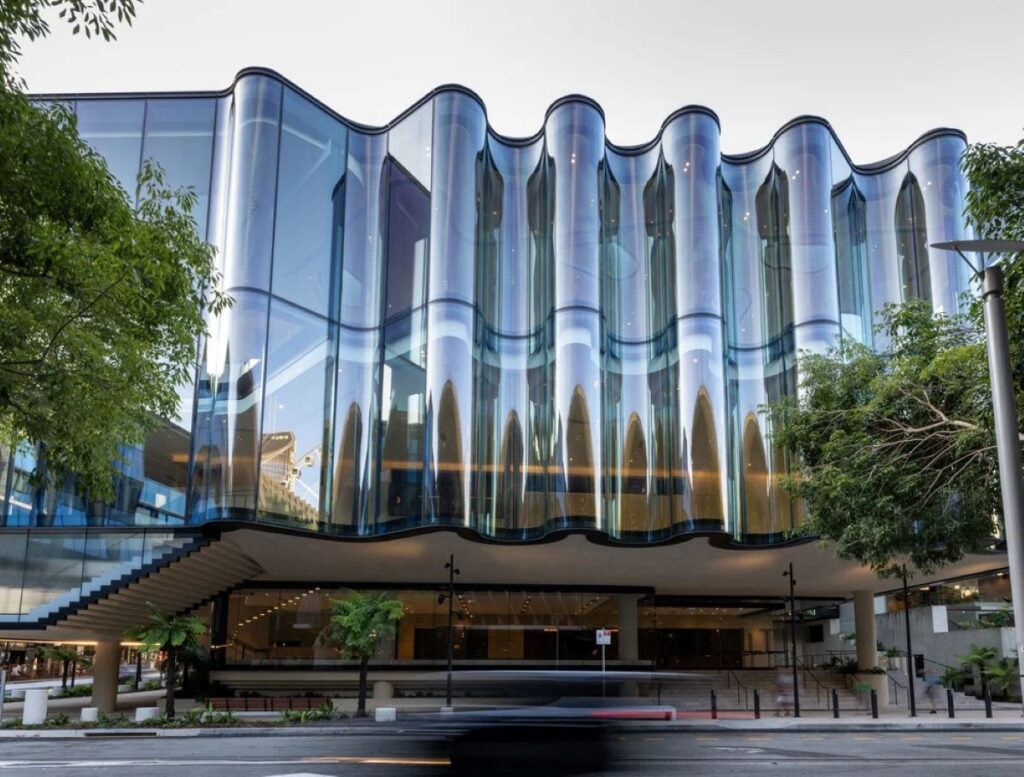
Outside view of the foyer© Snøhetta
By allowing the public to view the interior of the foyers from the street, the transparency of the glass facade establishes a link between the building and the activity of the city. The foyers serve as a hub for civic involvement, providing a short introduction to the interior’s activities. Through the spatial experience, this two-level feature of visibility highlights the tales of First Nations people and makes performing arts more accessible.
Interior lighting from skylights © Snøhetta
First Nations Elder Aunty Colleen Wall has contributed important information regarding the design of the seven skylights that represent Queensland’s seven watersheds, building on the six references already cited. Furthermore, Brian Robinson’s (Torres Strait Islander) piece “Floriate” continues the history of First Nations people through shape and light by incorporating aspects of Queensland’s seven flowering native species.
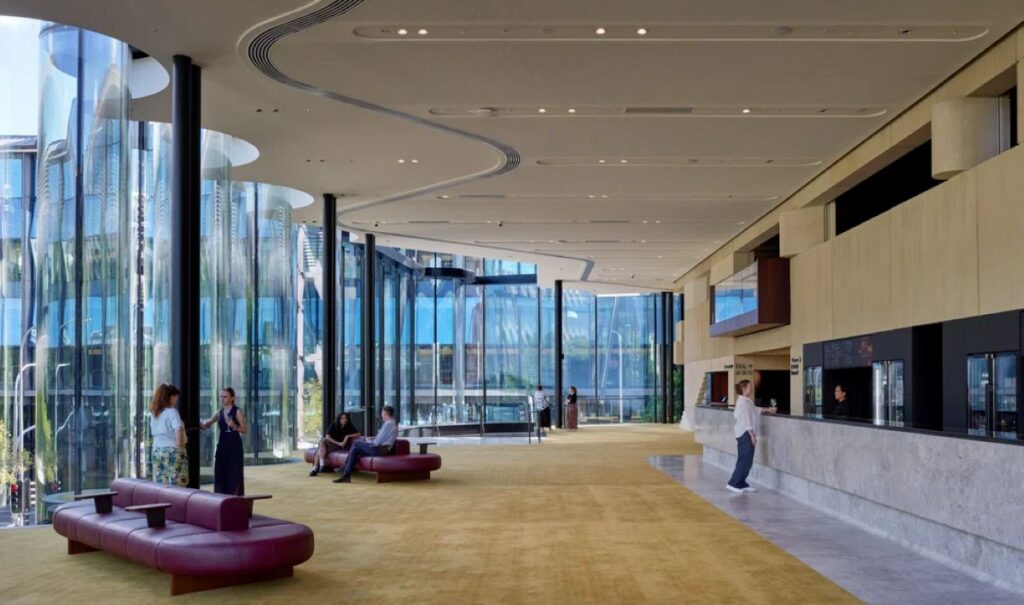
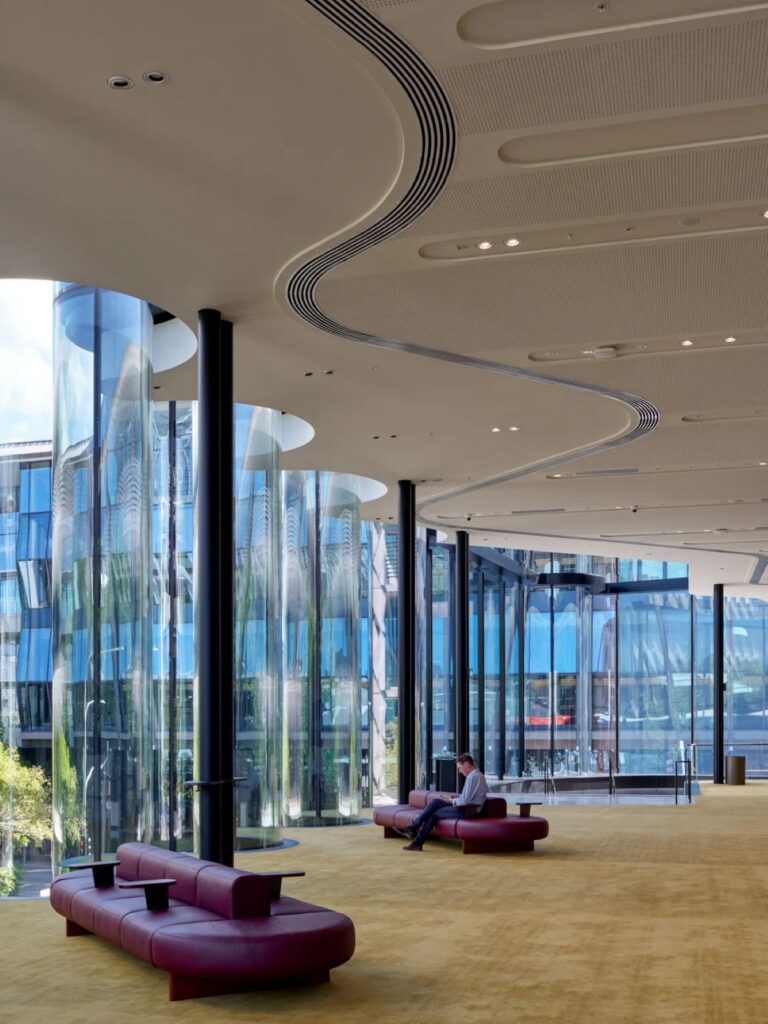
Construction detail of the facade © Snøhetta
With an air cavity to enhance thermal efficiency, the glass façade was created as a four-layered, high-performance system. Additionally, integrated black ceramic louvres are positioned outside of the sun-exposed glass parts to minimize glare and solar gain while maintaining transparency.
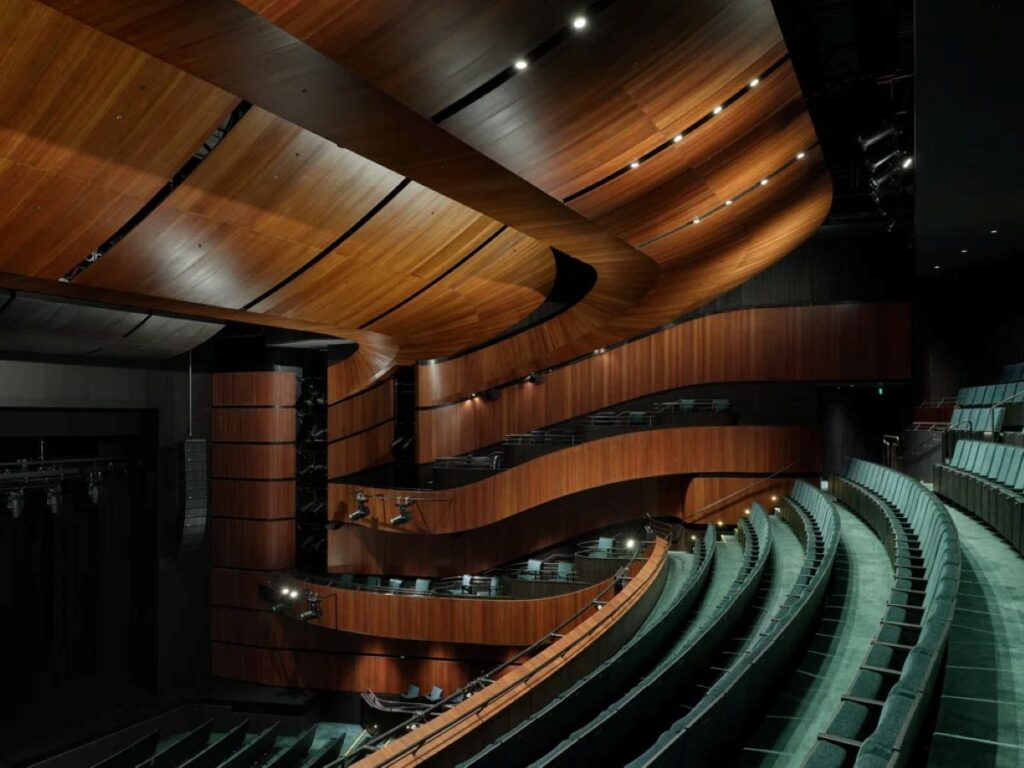
Interior seating in the auditorium © Snøhetta
Openness gives way to immersion in the inner experience. The usage of rainforest green carpeting and dark ironbark contributes to the performance’s focused atmosphere. Because side balconies have been moved closer to the stage, the seating arrangement fosters closeness between the audience and performers. Side box seats have also been added to improve balance and intimacy.
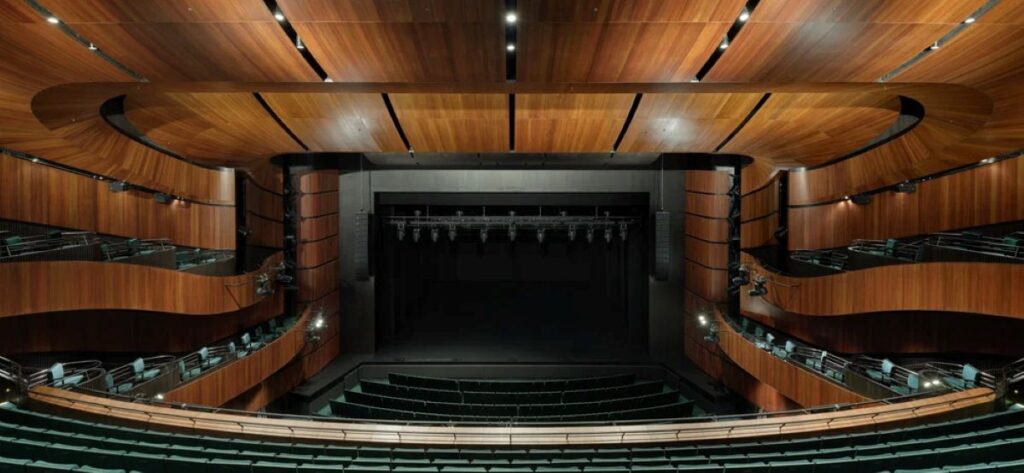
View of the stage from the audience © Snøhetta
With the furthest seat being roughly twenty-eight meters from the stage, the layout of the spaces further contributes to the intimate atmosphere. The utilization of wrap-around balconies not only brings the seats closer to the performances, but it also strengthens the bond between the audience and the artists.
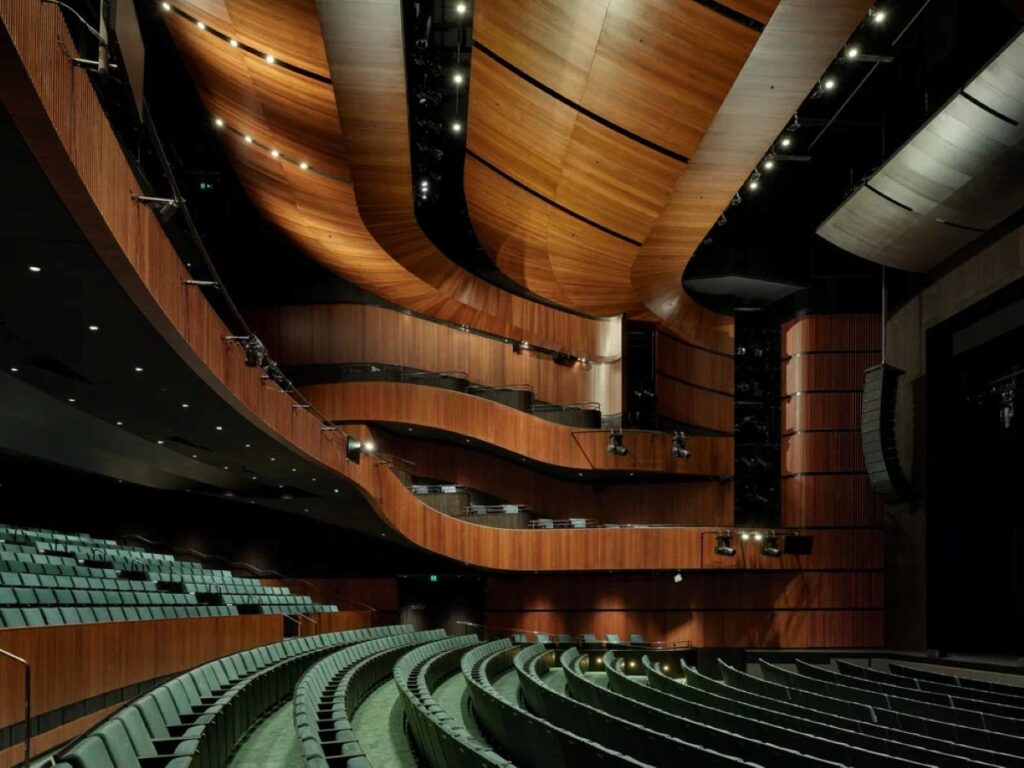
Interior details of timber © Snøhetta
The theater’s technical assistance defines its operational flexibility. Three separate, movable pits for the orchestra are among the performance size options that the auditorium can accommodate. Additionally, the fly system is completely automated and has a mounting height of more than twenty-four meters, enabling intricate set arrangements.
The Glasshouse Theatre’s materials combine warmth and precision, drawing inspiration from string instrument design. The space will have rhythm and acoustic quality thanks to the stacked wood elements, and the many seating configurations offer accessibility and the chance to create an audience experience.
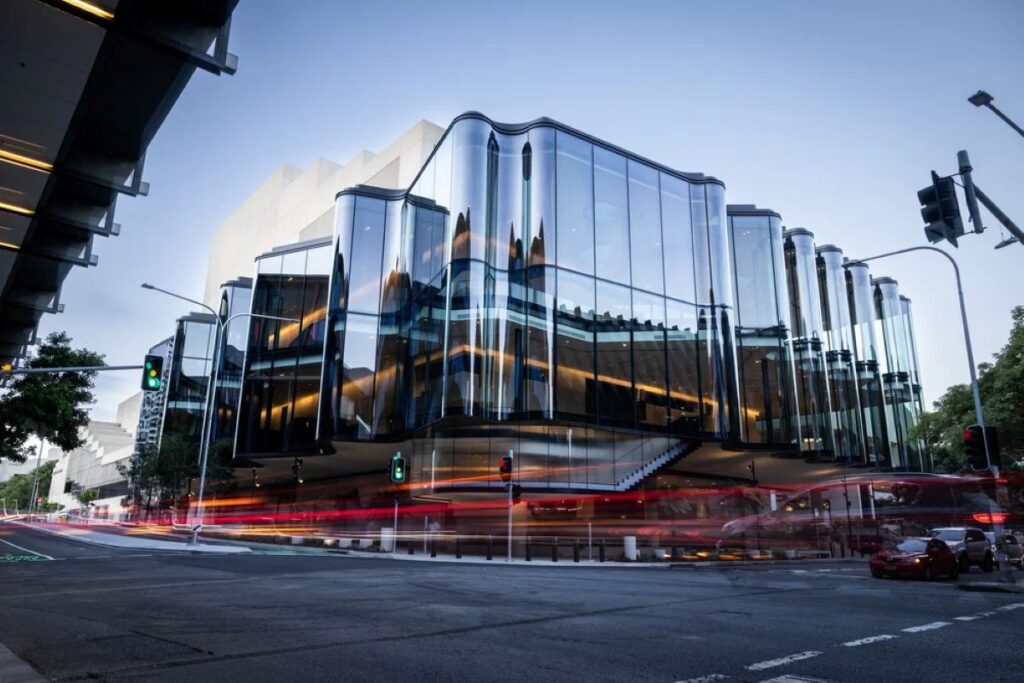
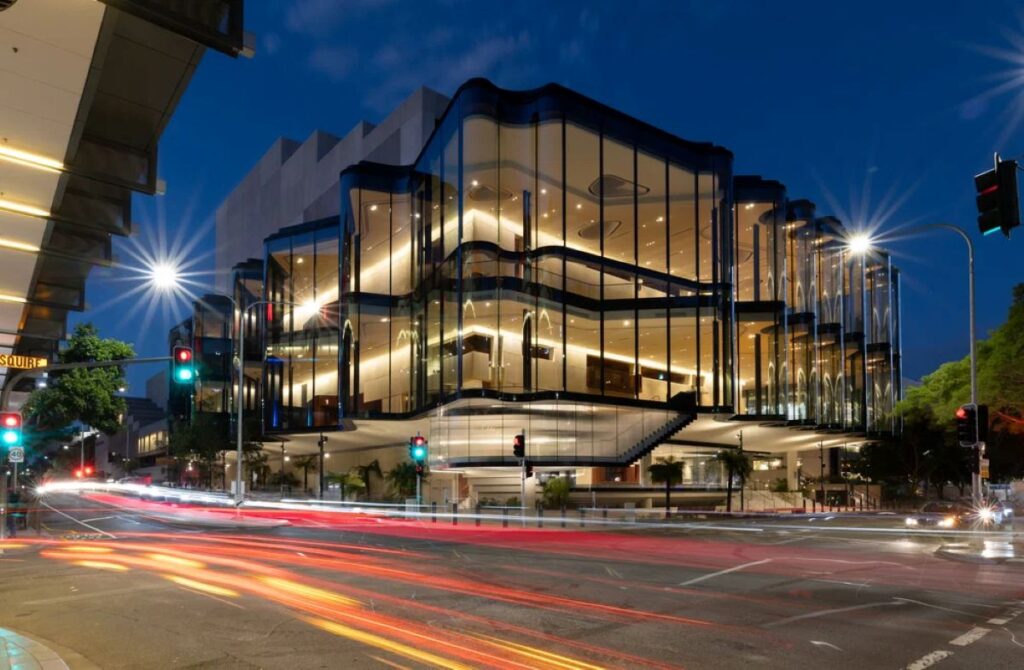
Cultural precinct theatre © Snøhetta
As a component of the Queensland Cultural Precinct on Meanjin Country, the Glasshouse Theatre enhances Brisbane’s cultural infrastructure by enhancing the Cultural Centre as an important civic and cultural hub and offering a greater capacity to host international plays.