Curated by ArchiRev Editorial | Feature Story | Published June 6th, 2026 | Source: MVRDV
Typologies: Research
Themes: Sustainability, Research, NEXT
Status: Realised
Year: 2021–2025
Developed By: MVRDV NEXT in collaboration with Studio AvW
Awards: Not specified
Photographer: MVRDV NEXT / Studio AvW
CarbonSpace is the MVRDV embodied carbon design tool that marks a change in how architects interact with sustainability issues within their work process. Created by MVRDV NEXT in cooperation with Studio AvW, this innovative free platform for carbon accounting seeks to assist architects in incorporating carbon considerations from their initial sketches. In other words, unlike traditional approaches, CarbonSpace aims to place carbon thinking at the heart of decision-making right from the start.
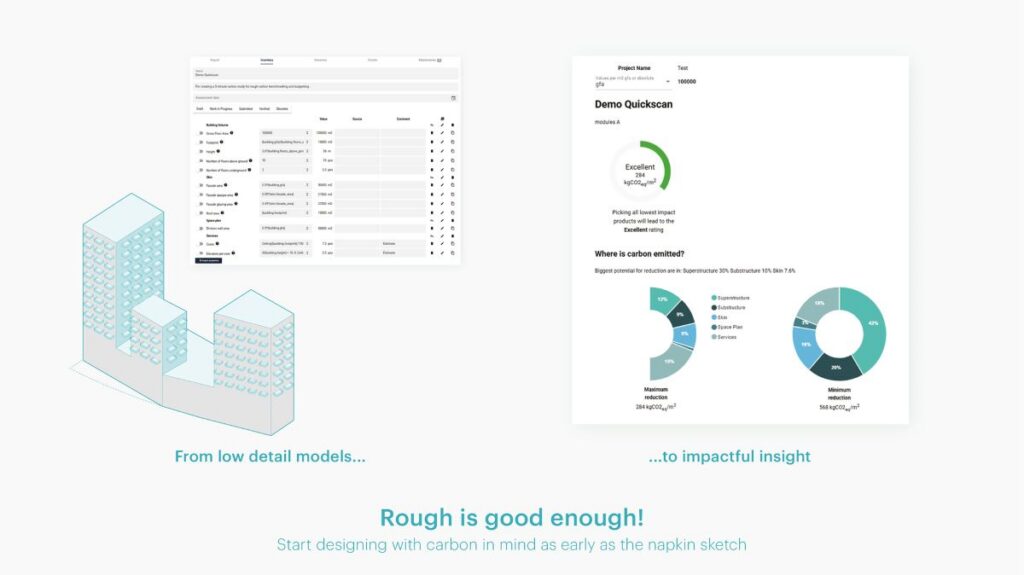
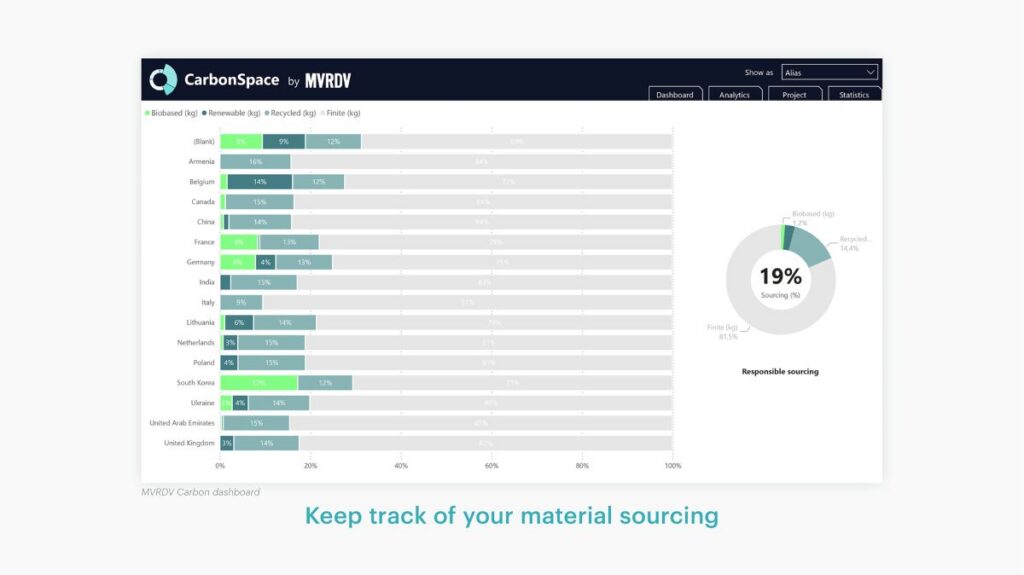
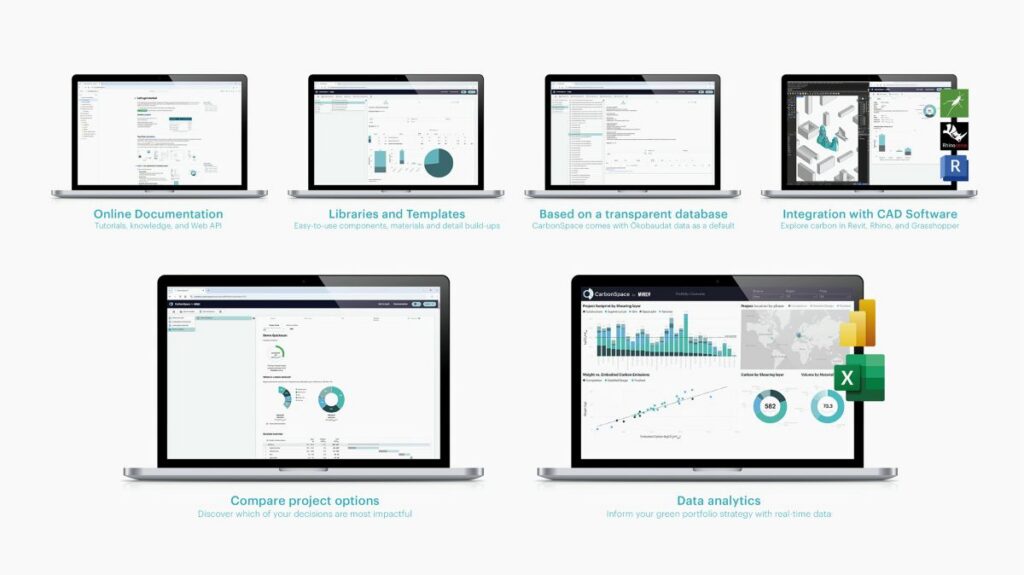
CarbonSpace interface showing project dashboard, carbon calculations, and comparative design options © MVRDV
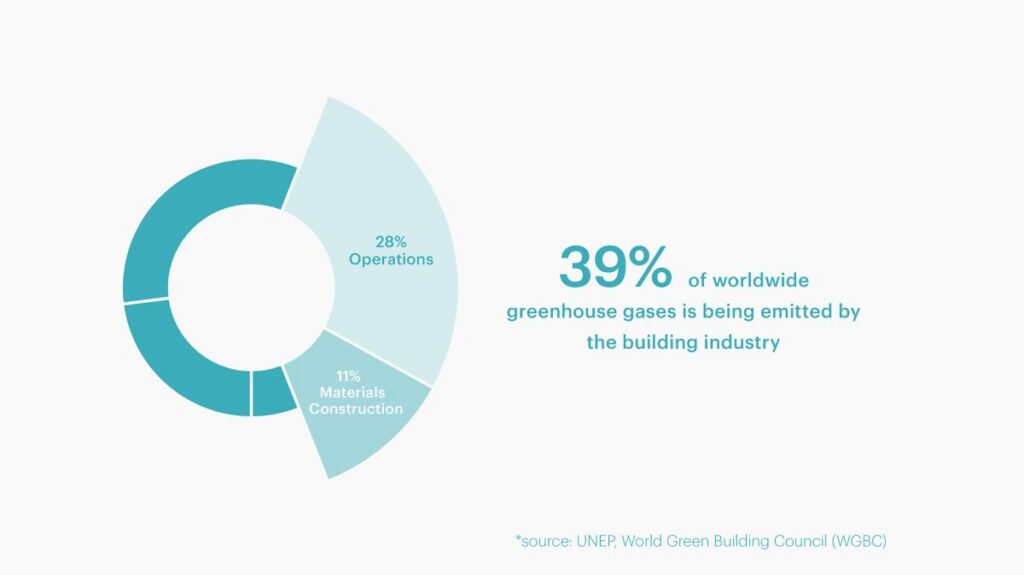
Despite its ongoing evolution, the construction sector remains one of the biggest carbon emitters globally. Although there has been a growing awareness of embodied carbon within the architectural profession, current evaluation methods necessitate extensive computer modelling, complicated databases, and expert knowledge before providing feedback. At the point when the feedback is provided, some critical decisions regarding the design may have already been taken.
As an alternative solution to this problem, CarbonSpace was created. It does not stress accuracy at the final stage but emphasizes well-informed decision-making at the very start of the process. An architect can make an approximate calculation using indicators like total floor area, façade surface, volume of structure, etc., and get instant feedback on what kind of carbon footprint his decisions create.


Workflow diagram illustrating the transition from conceptual design inputs to real-time carbon feedback © MVRDV
In connection with the quantification of these parameters, this tool connects these quantities with a compact carbon database, based on a simplified database of Ökobaudat, which is an open-source application. The use of a catalogue of commonly used building components, materials, and construction systems enables comparing several options at once without creating a separate database, making it possible to use it much more widely and transparently.
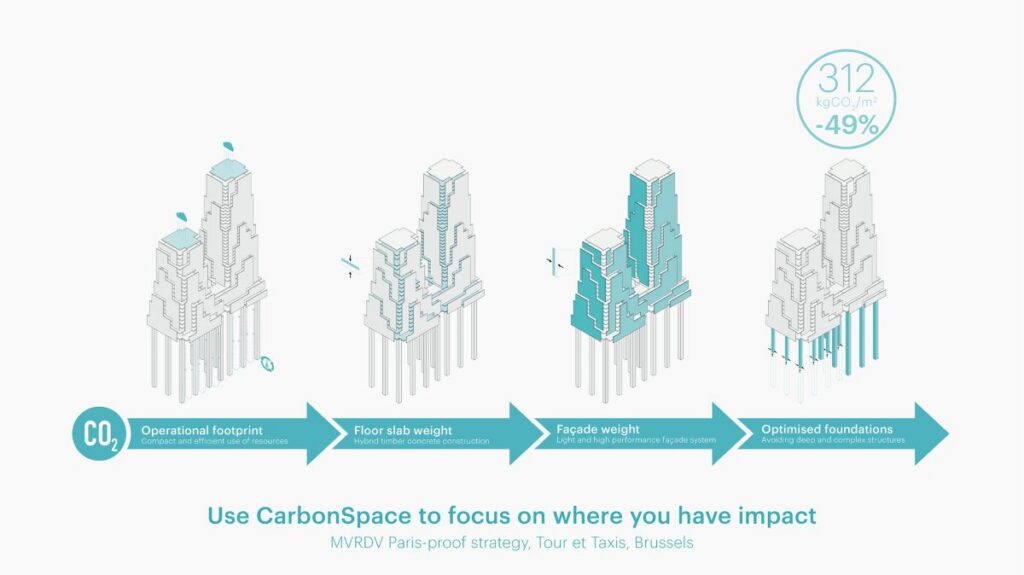
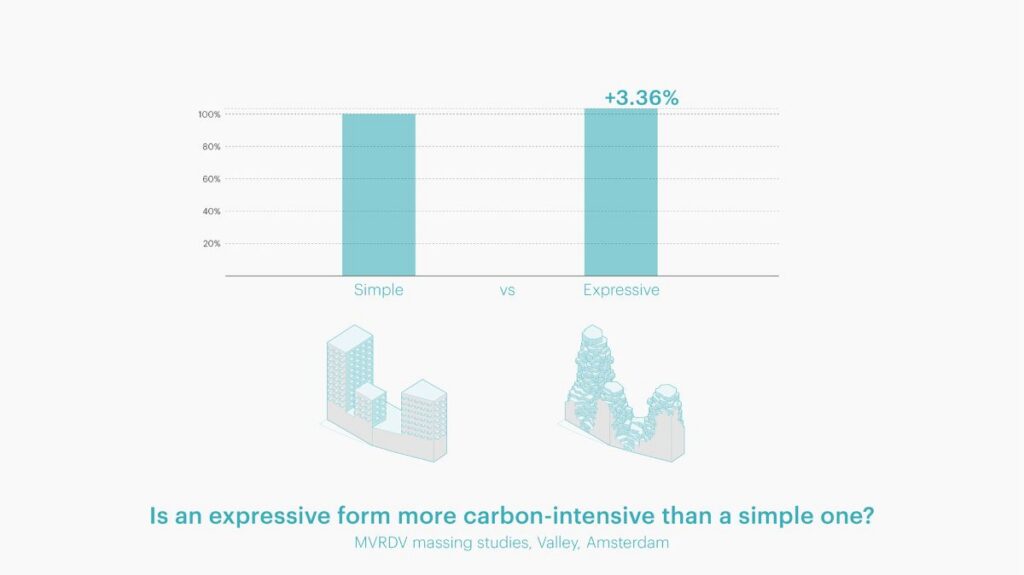
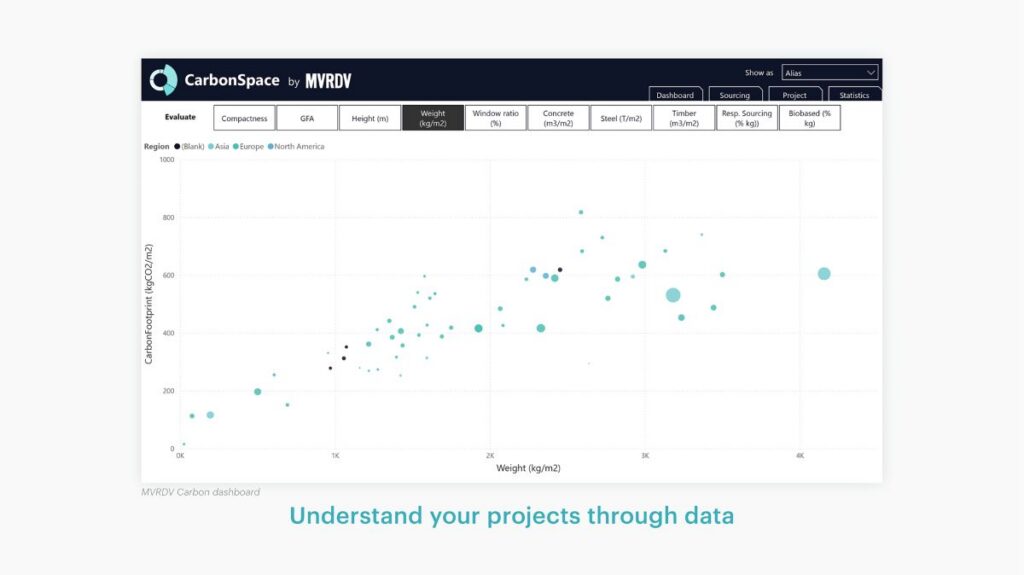
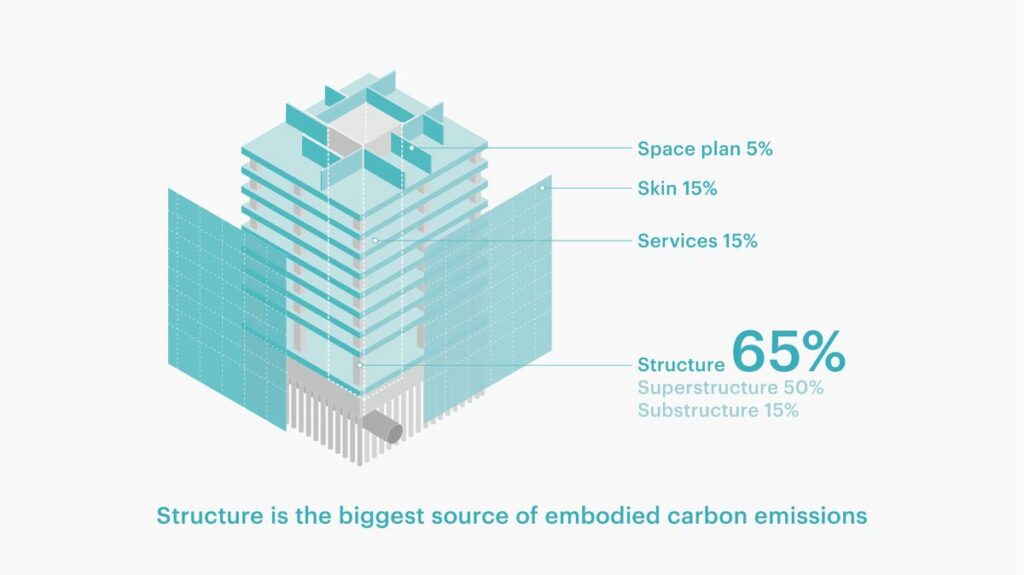
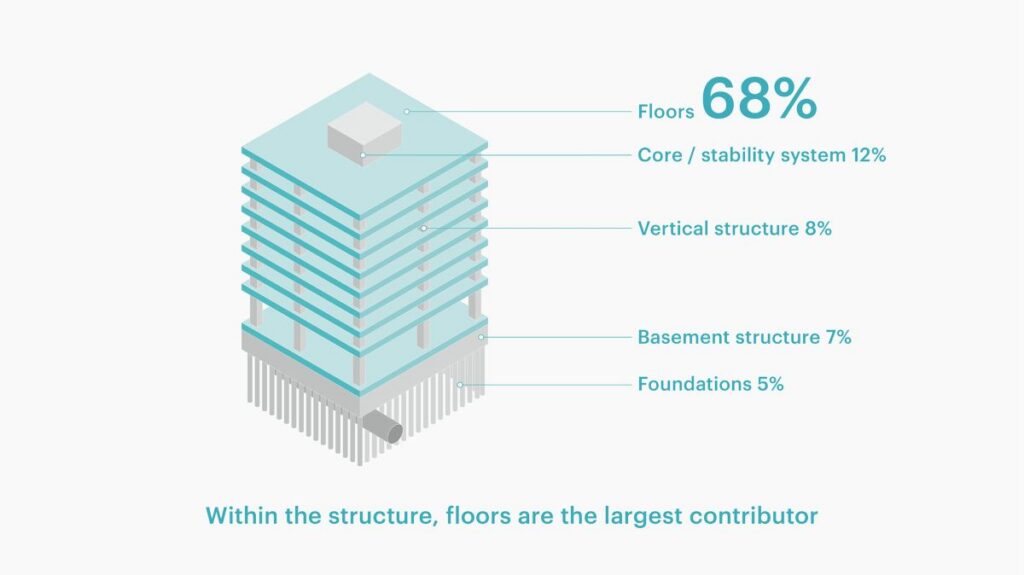
Comparing different options quickly is one of the best things about using CarbonSpace. It enables evaluating various types of construction methods, materials, and structures in parallel, which allows design teams to know how specific decisions affect the final amount of embodied carbon. Thanks to CarbonSpace itself, the architects working at MVRDV discovered that using lightweight structures was one of the most successful tactics to reduce the embodied carbon of their buildings.
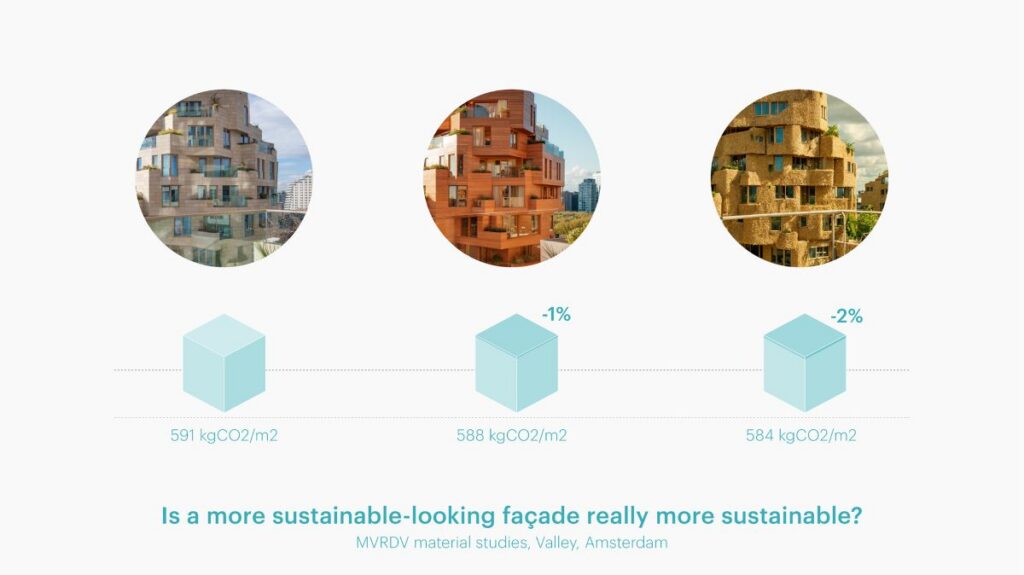
Comparative carbon assessment dashboard showing multiple structural and material options © MVRDV
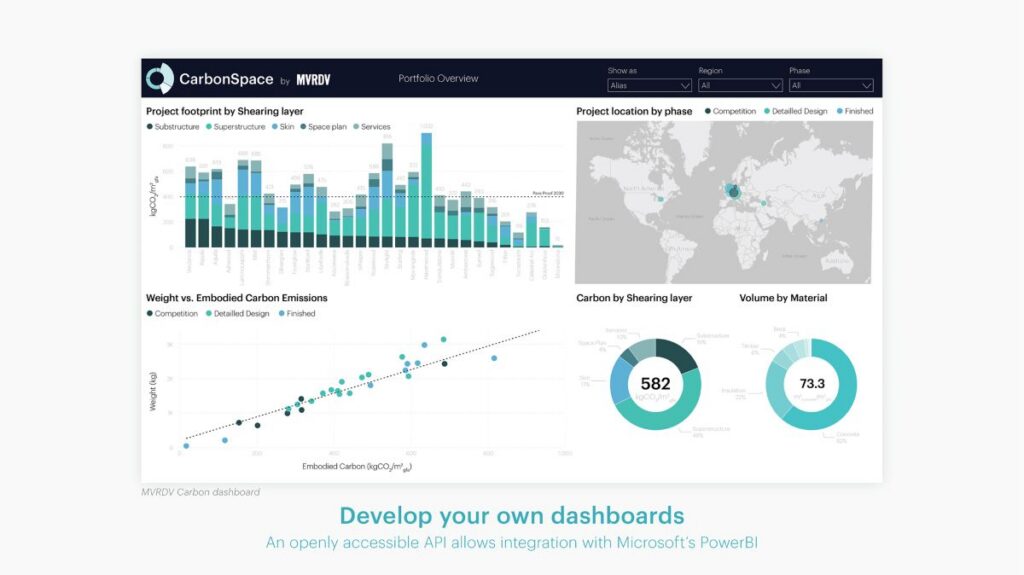
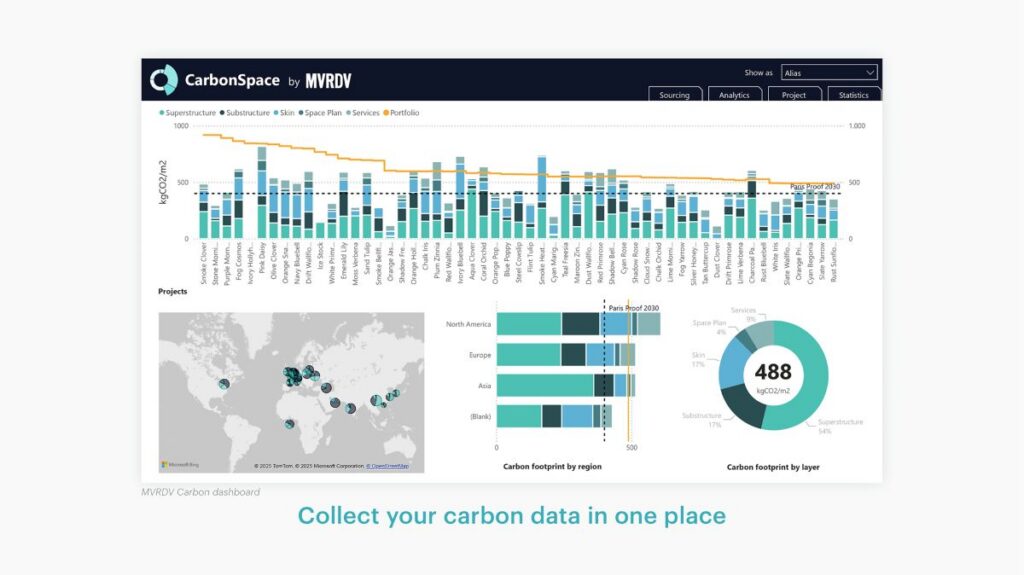
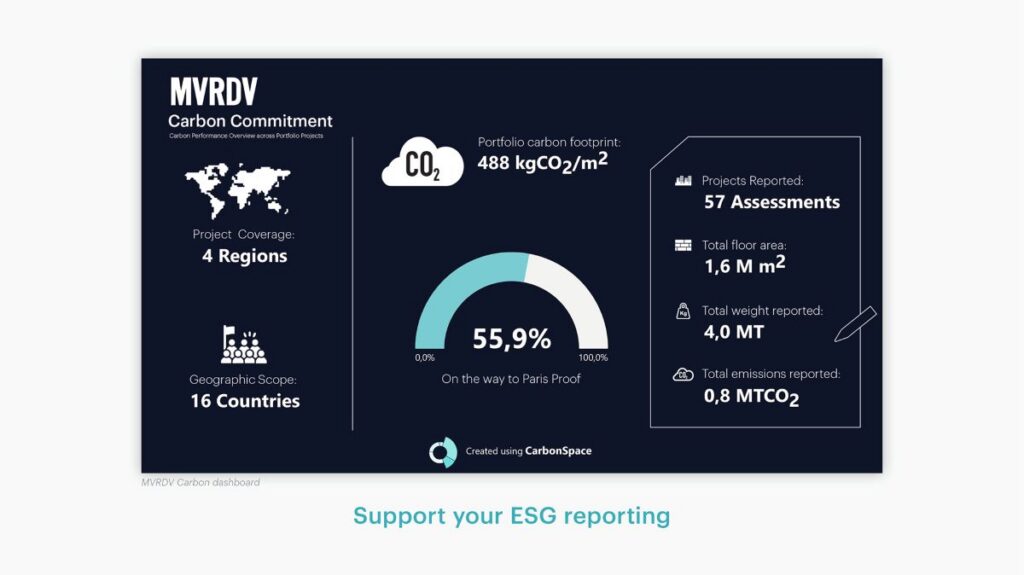
In addition to being used at a project level, CarbonSpace is based on openness and collaboration. CarbonSpace is an open-source program that comes with an open API, which can help integrate the tool into other applications like Rhino, Revit, and Microsoft Power BI. Such connections allow one to use CarbonSpace analysis within the design process and even build custom visualization dashboards. At the moment, the architecture firm MVRDV has successfully used this feature to monitor the carbon impact of its own projects.

Power BI dashboard visualising embodied carbon performance across multiple projects © MVRDV
An additional level of collaboration is provided by Carbon Race, an optional public dashboard which anonymously consolidates the information on projects entered into the platform by various users. CarbonSpace promotes benchmarking and knowledge exchange as well as healthy competition among organizations working to minimize their carbon footprint. The goal is to develop a common metric for measuring embodied carbon and thus simplify the assessment of sustainable performance in different countries and project sectors.
Already a number of beta participants have become involved in the project. They include various architects, engineers, sustainability specialists, and universities. Moreover, CarbonSpace is collaborating with the Council on Tall Buildings and Urban Habitat (CTBUH) to provide a basis for comparison of tall building projects globally. This shows the potential of CarbonSpace as a platform for both designing and benchmarking purposes.
Carbon Race dashboard showing anonymised project benchmarks and industry carbon performance metrics © MVRDV
In this era where sustainability is taking the centre stage, it is clear that CarbonSpace is one example of software solutions that can transcend the realm of mere legal compliance into becoming full-fledged design partners. Through its emphasis on accessibility, transparency, and early decision-making, CarbonSpace provides a solution to the prevailing idea that carbon assessment happens only after decisions are made during the design process.
CarbonSpace is publicly available for free use through its platform as a beta version. Its importance does not solely stem from its ability to make calculations but also from its potential to facilitate meaningful conversations among architects and designers toward achieving lower-carbon buildings.
GALLERY