Typologies: Lighting
Status: Completed
Client: Viabizzuno
The AURA is intended to be a spatial instrument for studying light, constructed in a natural location as a building that arranges its surrounds in a controlled geometric connection that reflects seasonal and atmospheric variations in the built environment. The structure’s form does not establish its surroundings, but rather dictates how light, shadow, and reflection interact with the constructed environment throughout time.
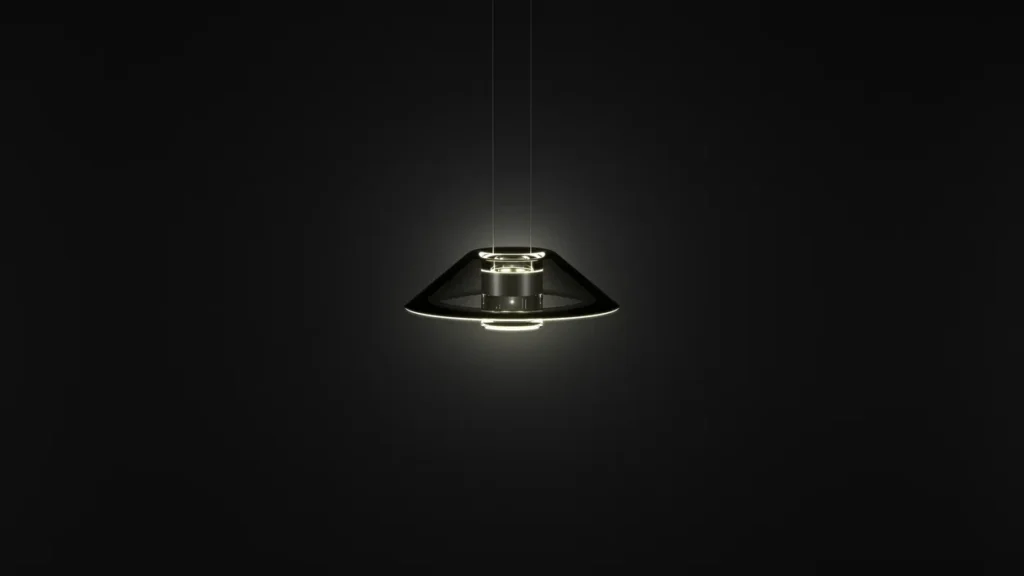
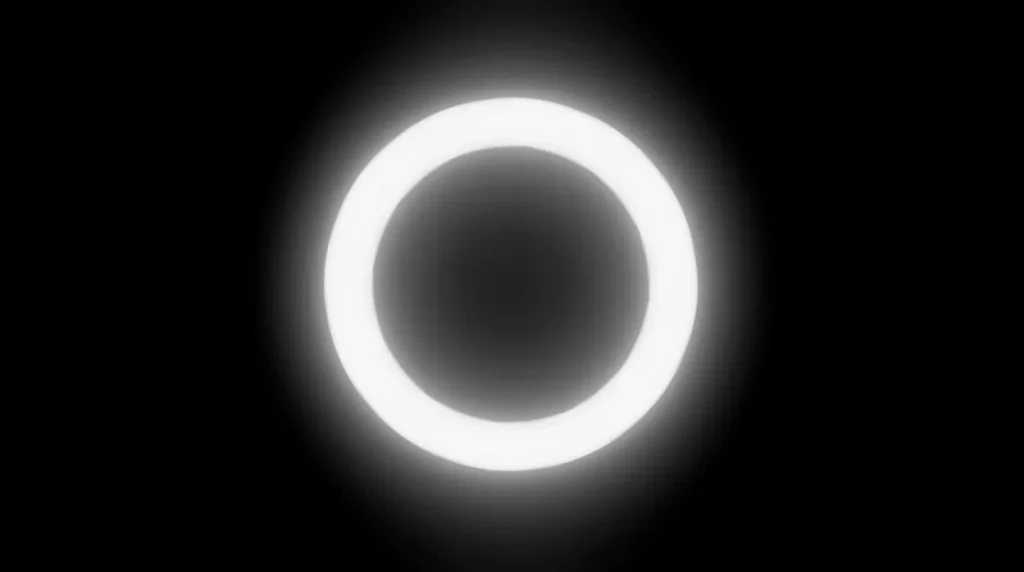
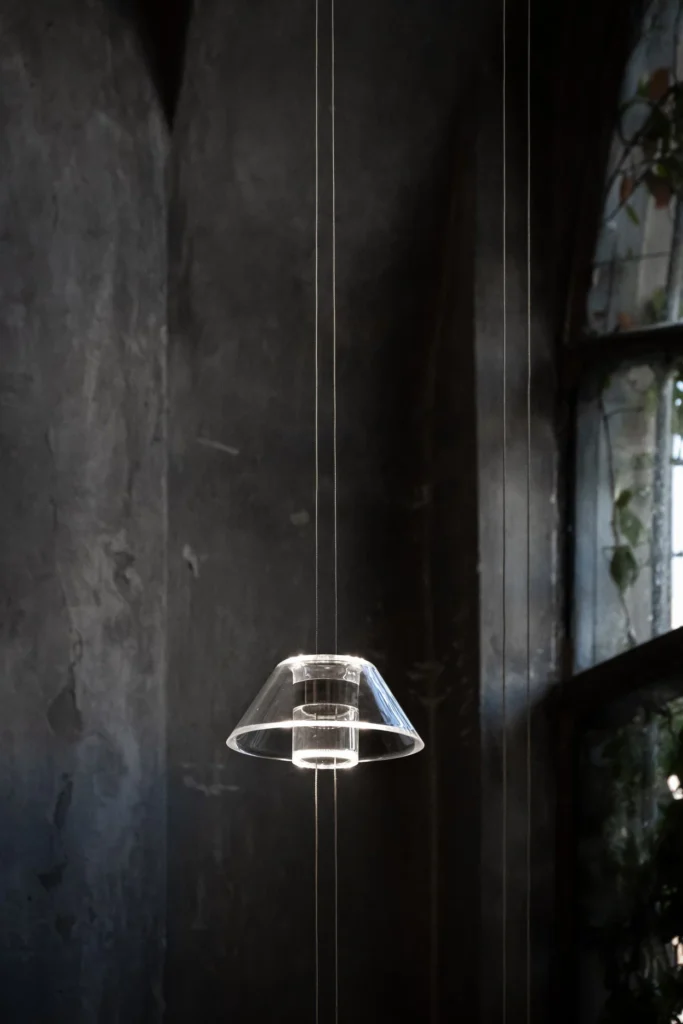
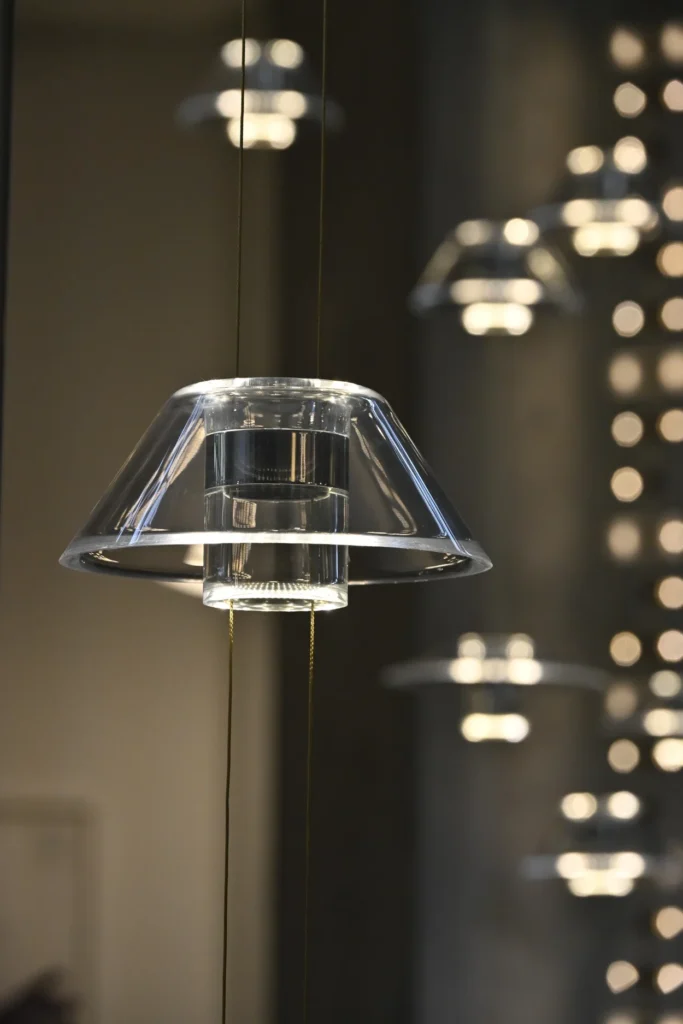
Close-up of a single Aura pendant highlighting the vortex of light effect © Snøhetta
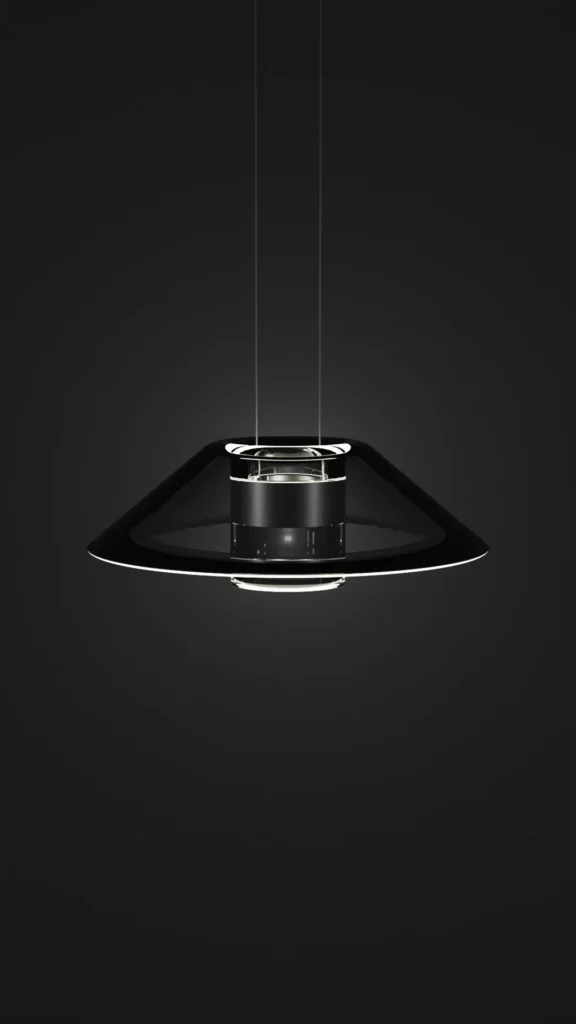
Aura pendant collection showing the three different diameters (Ø180mm, Ø210mm, Ø240mm) © Snøhetta
The project has been planned using a circular concept, which produces a clear order of organized space while connecting indoor and outdoor areas. The project’s primary opening directs attention upward toward an enclosed sky, creating an intimate relationship with the sky. The central void acts as both a visual landmark and a climatic mechanism, controlling the amount and distribution of light in the structure.
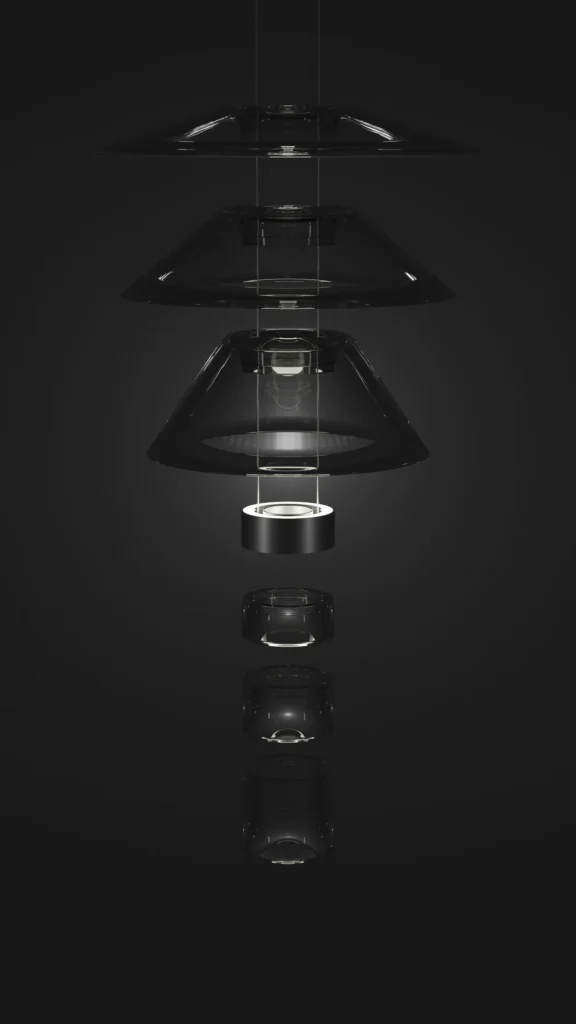
Detailed view of the light prism and internal optical system © Snøhetta
Light is used as the major building material in the project. The positioning of the openings provides for control over the strength and direction of light, allowing the inside of the structure to alter with the position of the sun throughout the day. As external conditions change, the structure’s internal illumination shifts from diffused light to concentrated beams, creating a dynamic environment with varying experiences.
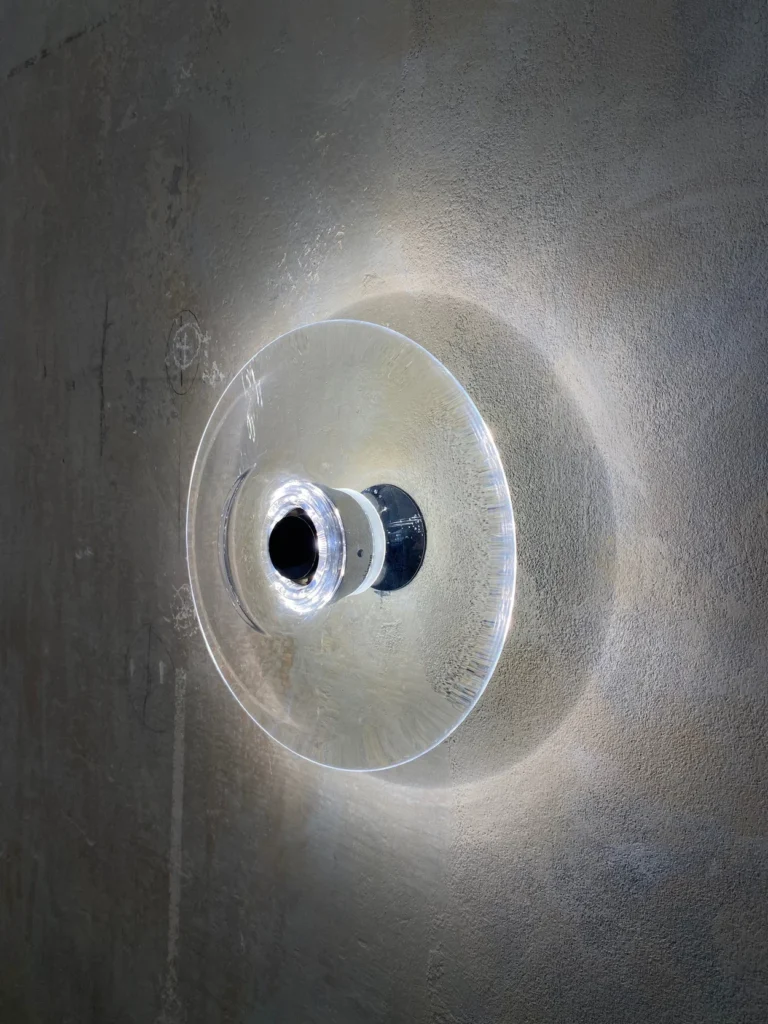
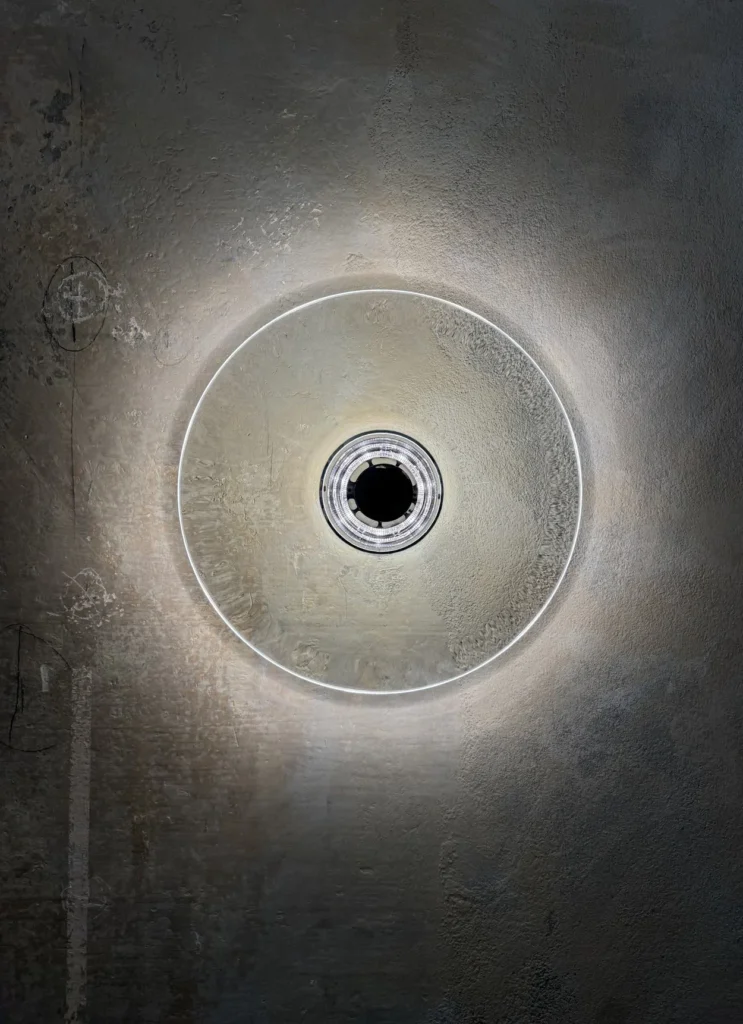
Wall-mounted Aura fixture in situ, showing light grazing on a vertical surface © Snøhetta
The interaction of materials facilitates this form of contact. Surfaces are kept limited so that light can define texture, depth, and space, rather than relying only on surface finishes. To increase the illusion of architectural movement, subtle tone and reflectance variations are used. This allows for responsive architecture without being visibly complex.
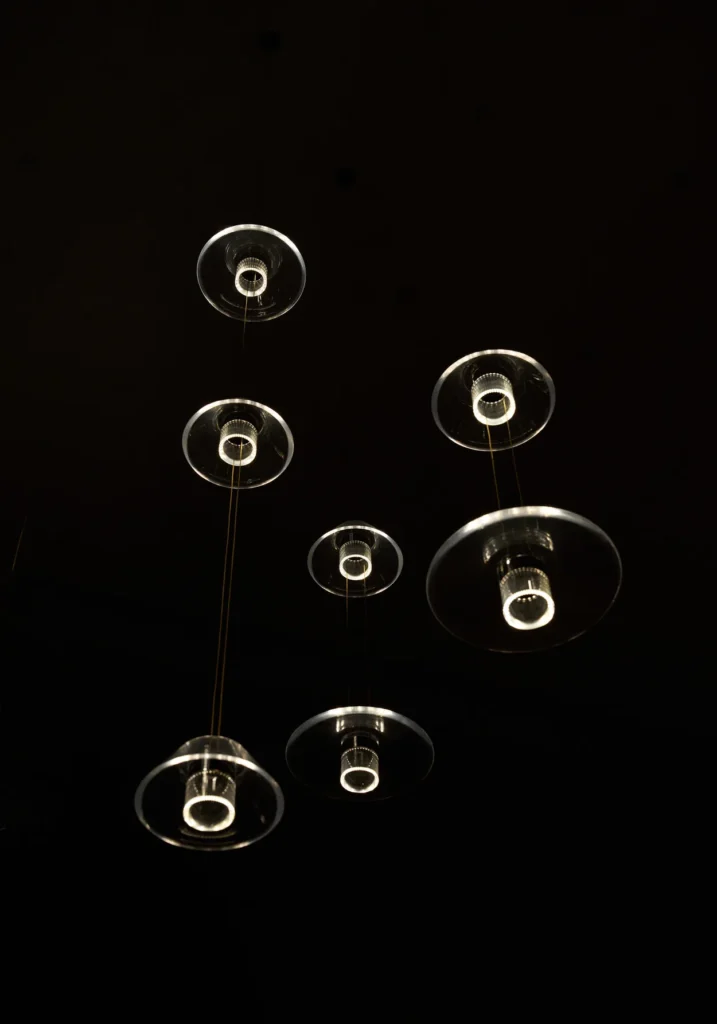
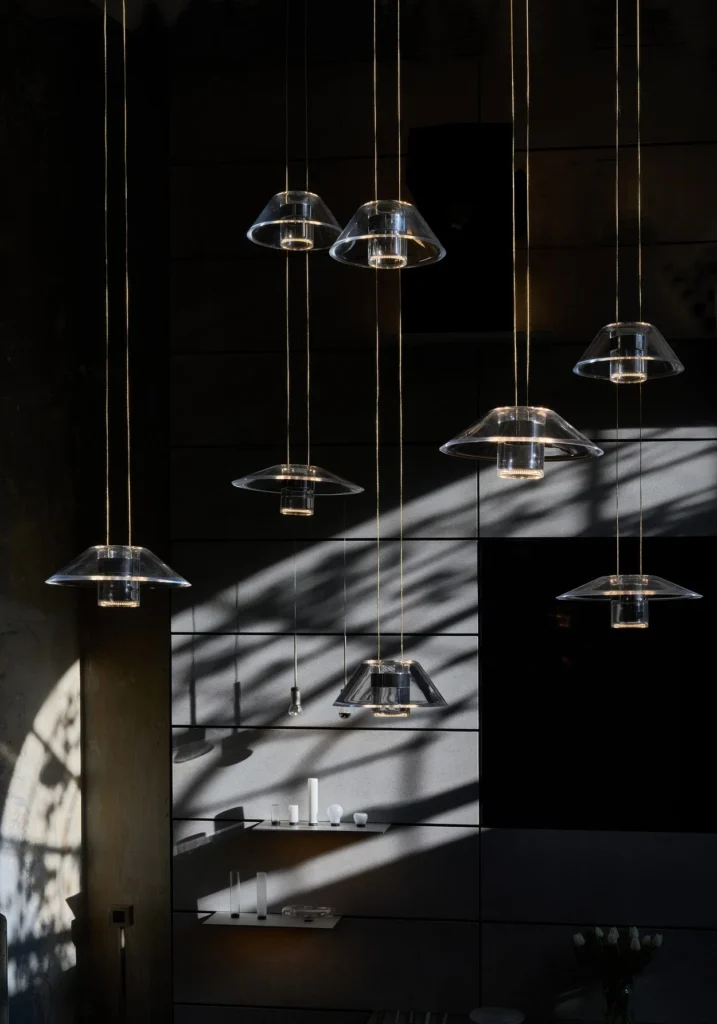
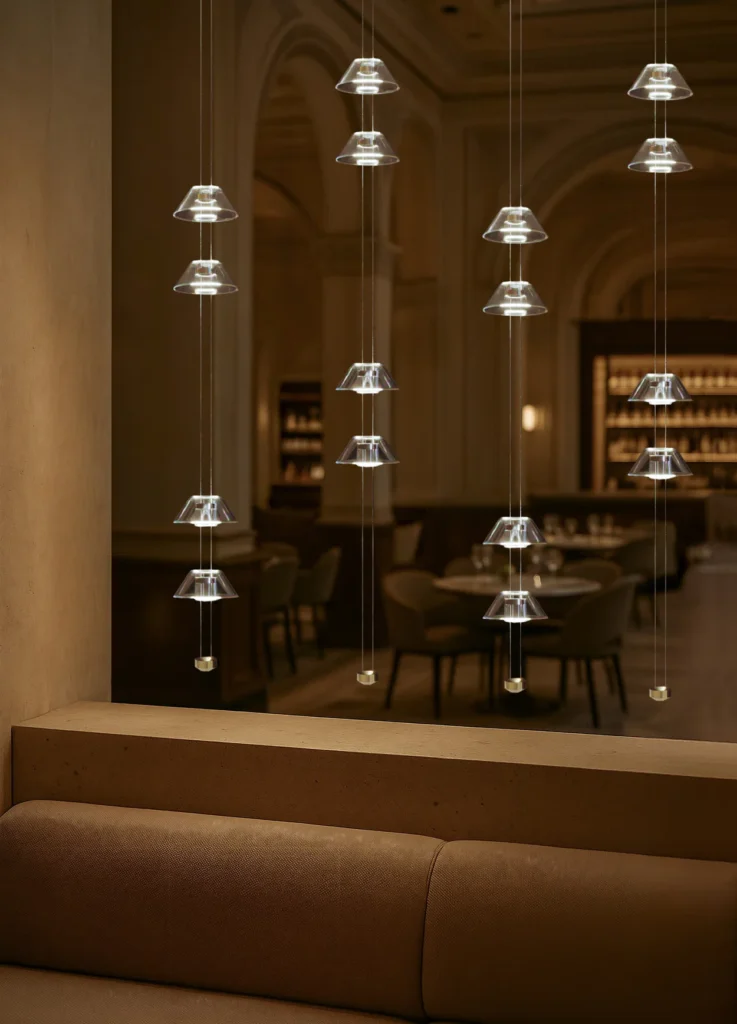
A cluster or veil arrangement of multiple Aura pendants creating a layered lighting installation © Snøhetta
From the outside, the pavilion appears to have a modest and controlled appearance. The pavilion’s geometry responds to the surrounding landforms while decreasing the pavilion’s visual impact on the existing environment, reinforcing its position as an observation instrument. The pavilion is integrated into the landscape rather than a separate object.
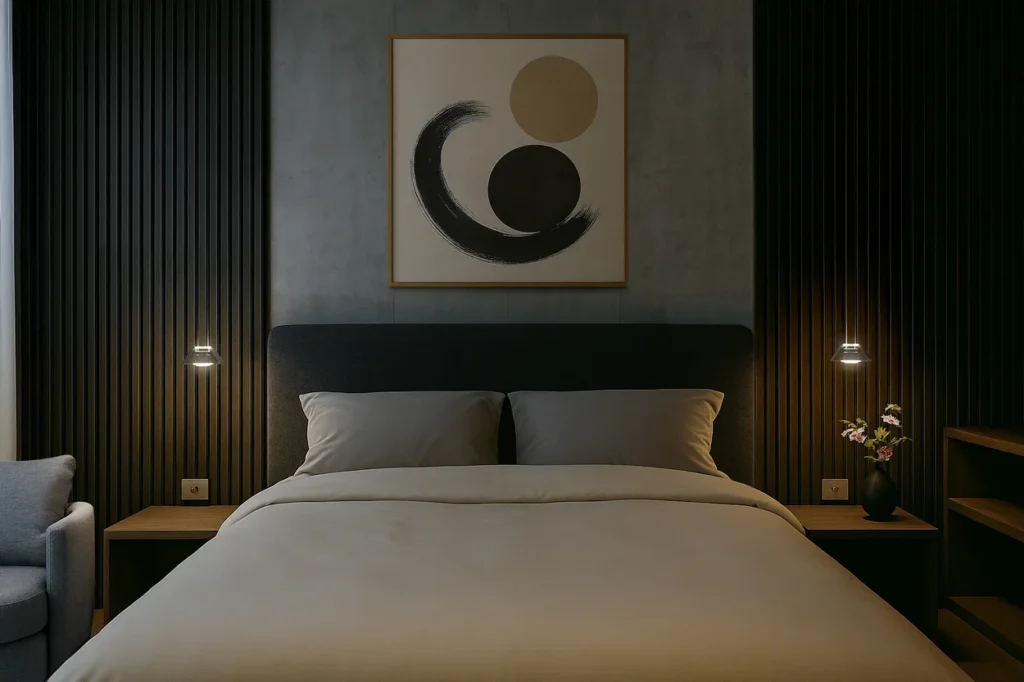
Atmospheric interior view with Aura lights illuminating a space © Snøhetta
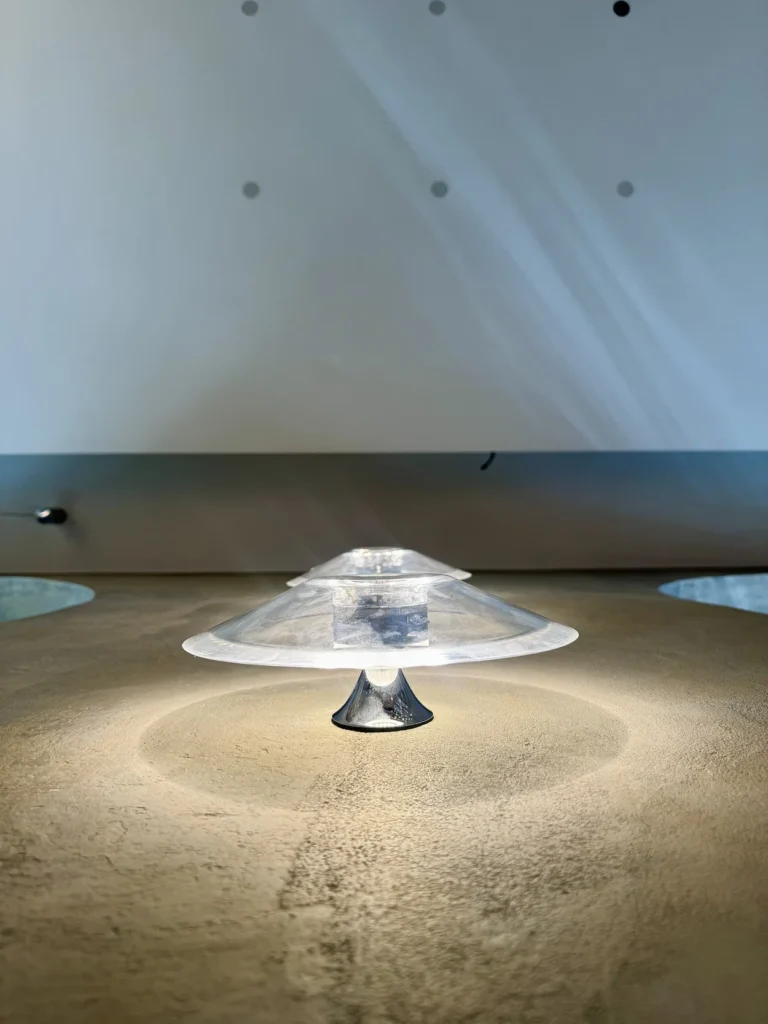
Technical detail showing the fixture’s minimal form and light diffusion © Snøhetta
Hero atmospheric shot of Aura lights creating a glowing vortex effect in a dark environment © Snøhetta
AURA positions architecture as a tool for constructing environmental perception through geometry and material restraint, demonstrating that space can be created not just through geometry, but also through the constant interaction of light, time, and context.